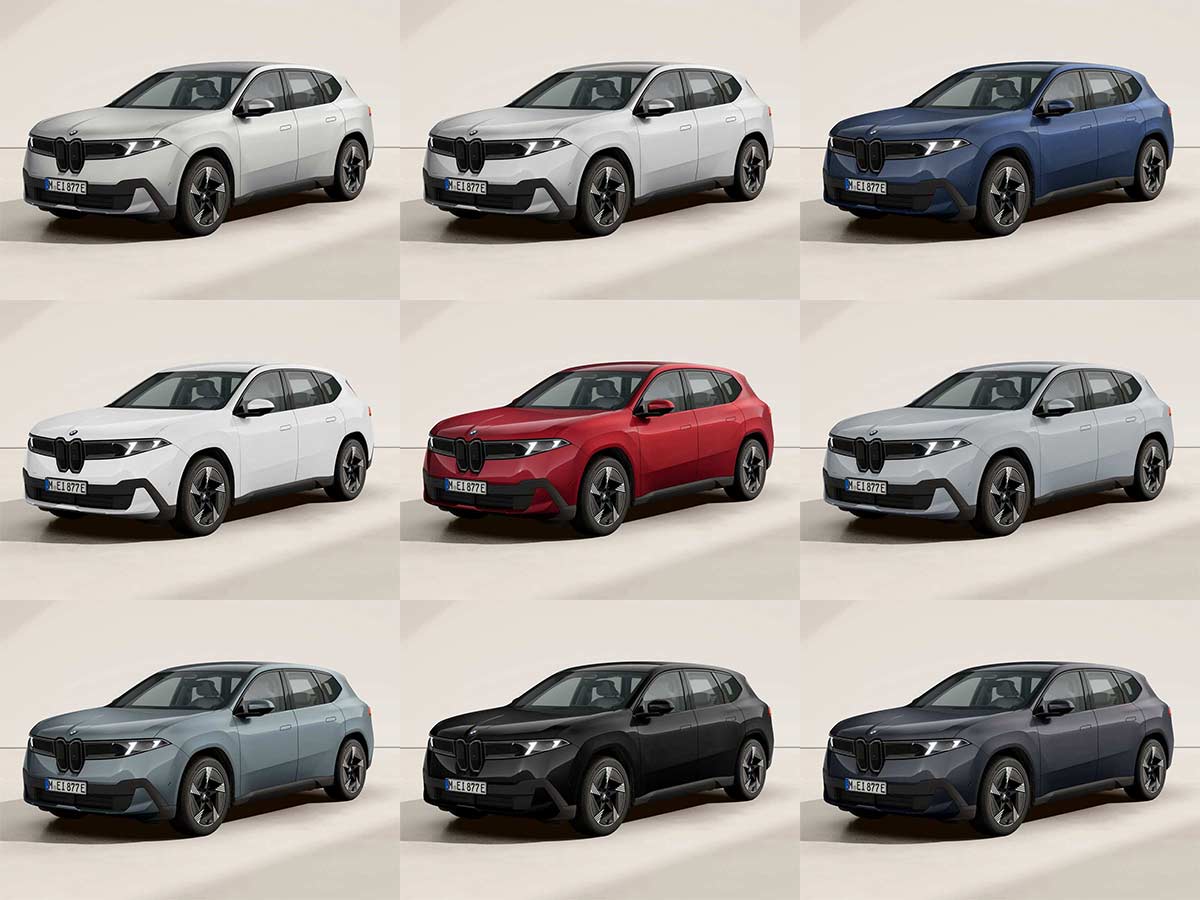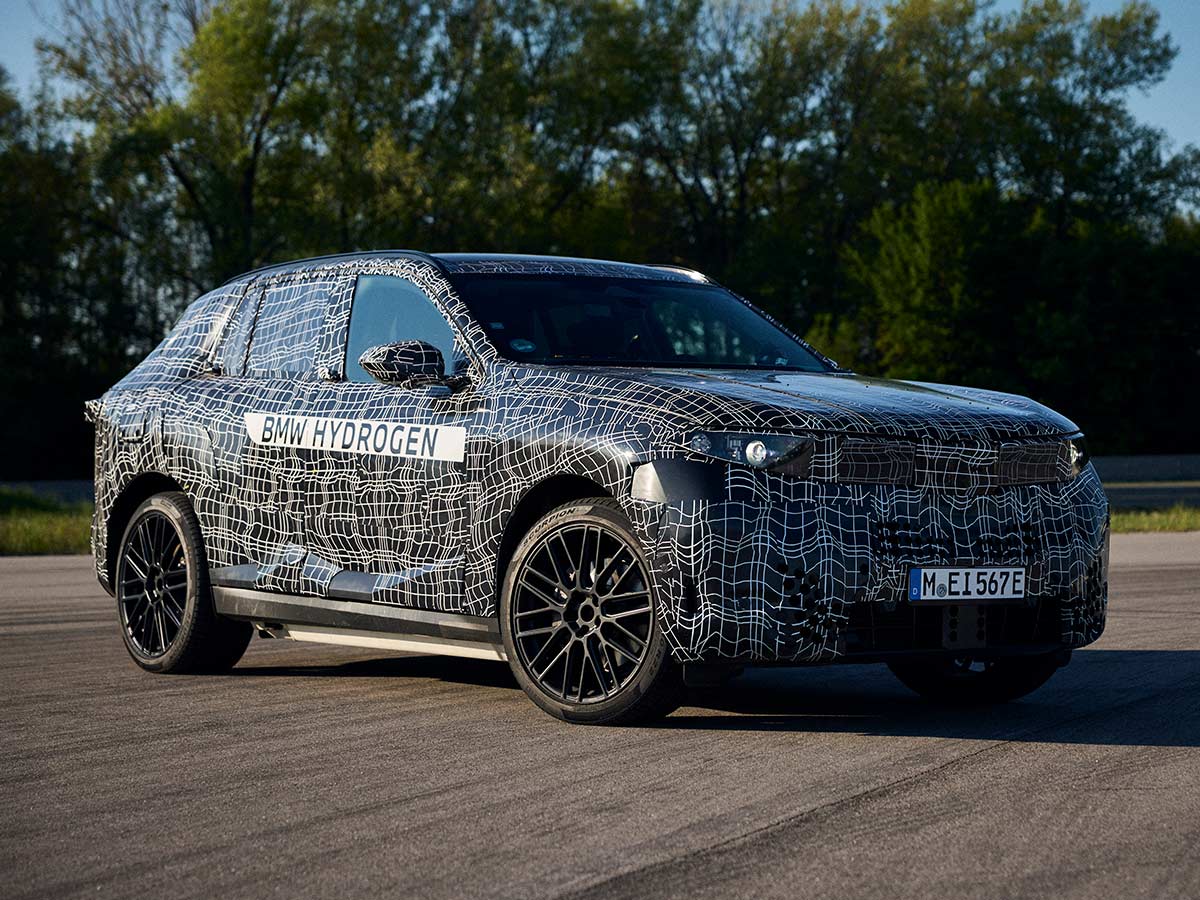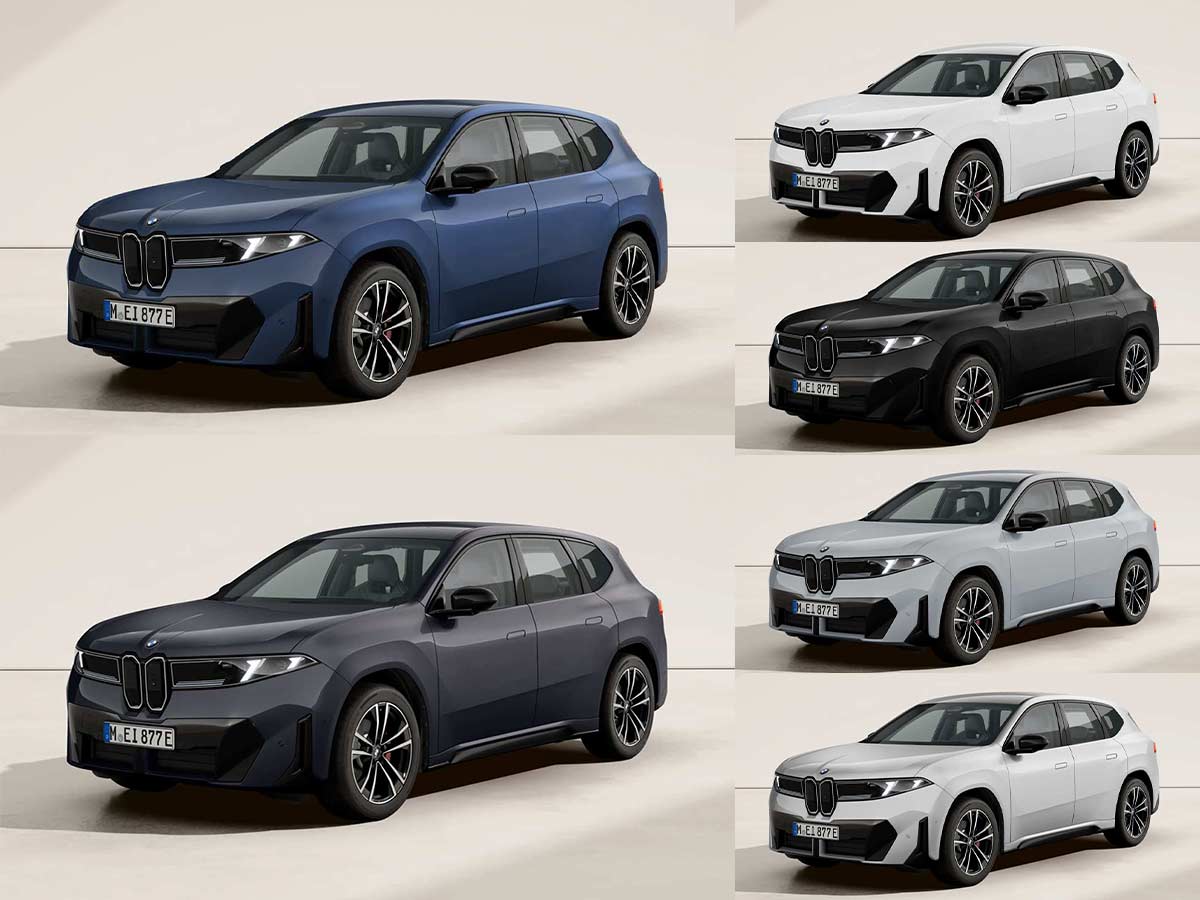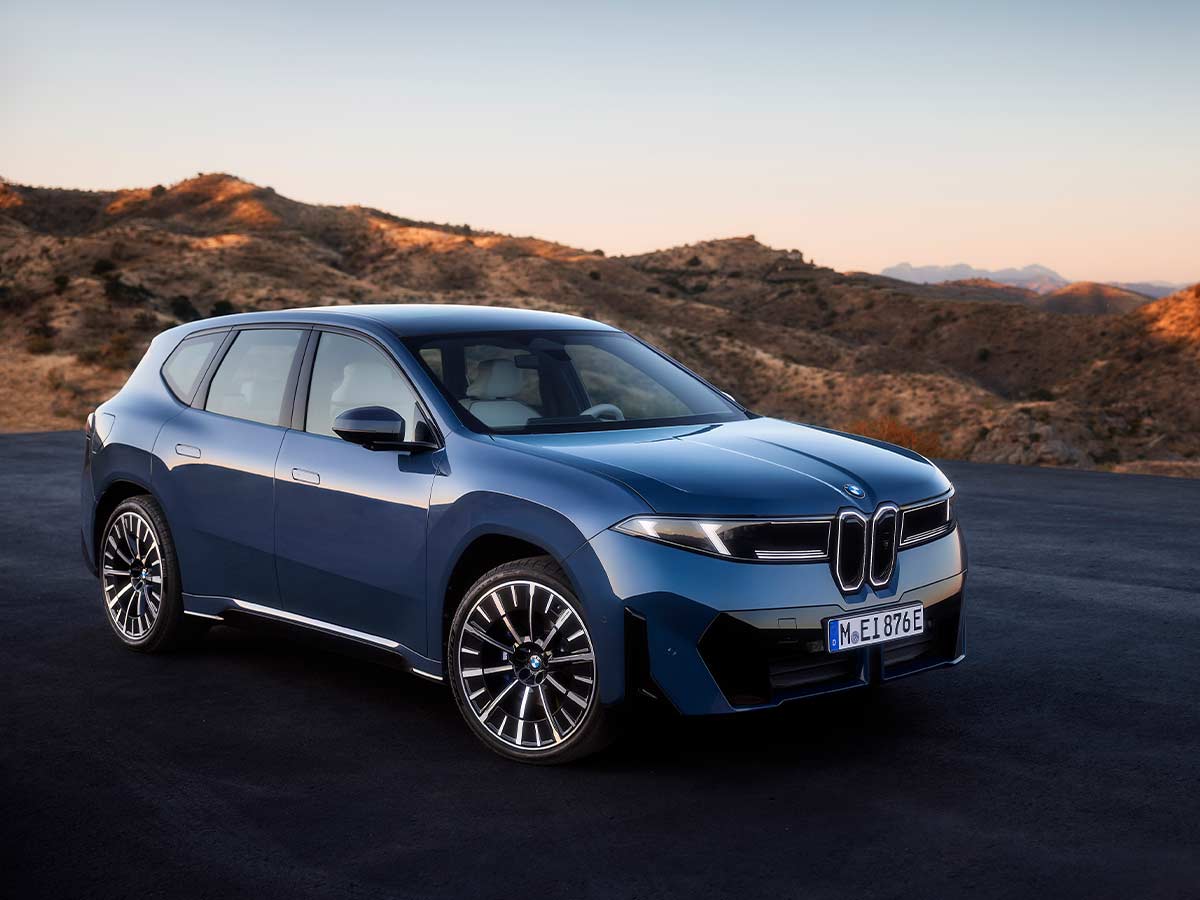







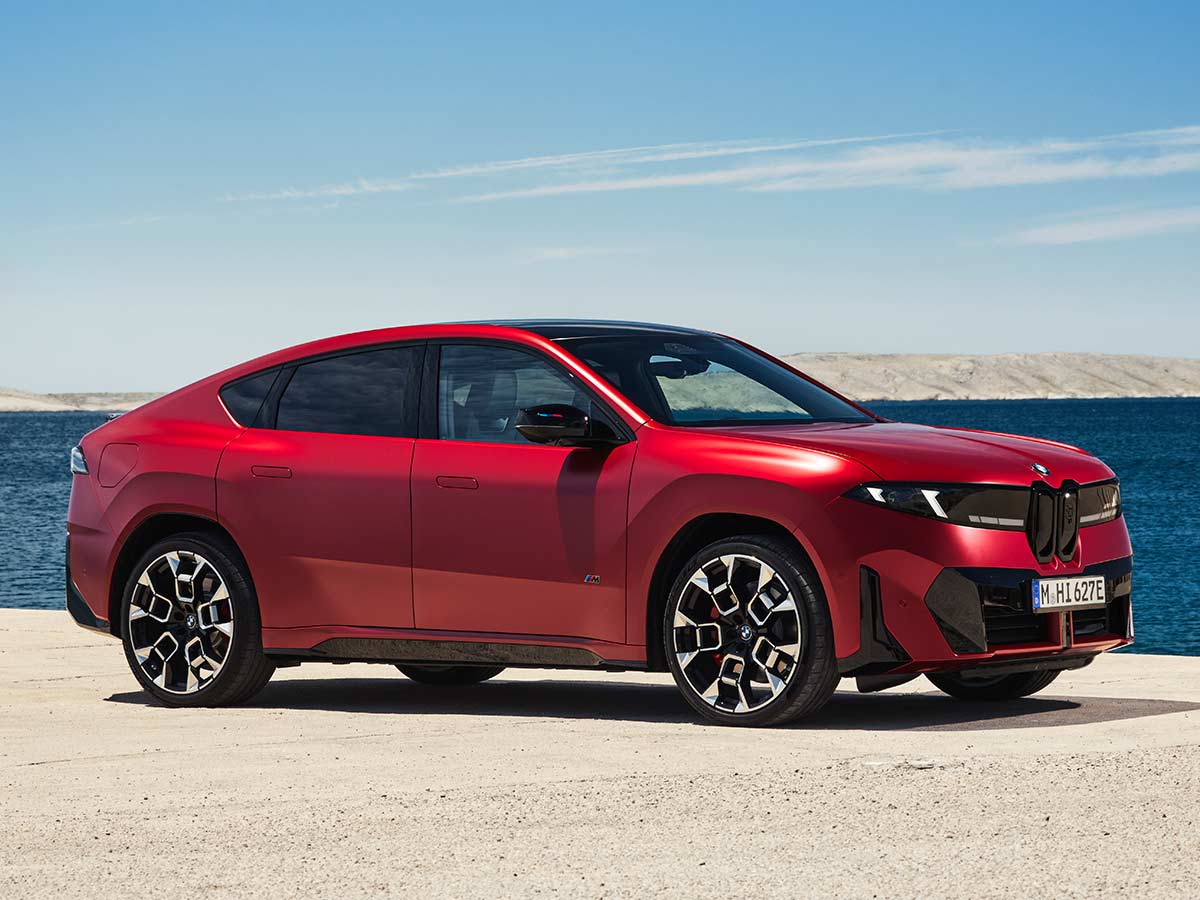
BMW’s next-generation electric SUV coupé combines Neue Klasse design, an 800-volt electrical architecture, a software-defined driving experience and the blistering performance of the BMW iX4 M60 xDrive. Here is everything you need to know about its range, powertrain, technology, practicality and market significance.
The electric car is entering a more interesting phase. Maximum range is no longer the only headline, enormous touchscreen displays are no longer enough to distinguish a premium cabin, and instant acceleration has become almost commonplace among high-performance EVs. The next challenge is bringing these capabilities together in a car that feels desirable, charges quickly, drives with precision and makes everyday ownership more convenient.
The new BMW iX4 is BMW’s answer to that challenge.
Unveiled as part of the brand’s expanding Neue Klasse family, the fully electric BMW iX4 takes the familiar SUV coupé formula and builds it around a new generation of electric motors, cylindrical battery cells, 800-volt technology and an integrated computing architecture. Its most striking numbers are difficult to ignore: a claimed WLTP range of up to 828 kilometres (514 miles), DC charging at up to 400 kW and, in the flagship BMW iX4 M60 xDrive, 612 hp and a 0-100 km/h sprint in just 3.9 seconds.
But the significance of the BMW iX4 extends beyond performance statistics. This is a vehicle intended to demonstrate how BMW wants its next generation of electric cars to look, behave and evolve over time.
The central question is straightforward: what makes the 2027 BMW iX4 different from an electric SUV with a fashionable sloping roof? The answer lies in the combination of its Gen6 BMW eDrive powertrain, fast-charging capability, aerodynamic design, driver-focused digital interface and software-led chassis control. Together, these technologies position the iX4 as a much broader statement of intent than a styling exercise.
2027 BMW iX4: Key Specifications at a Glance
The new BMW iX4 will initially be offered in two dual-motor, all-wheel-drive configurations, followed by the range-topping BMW iX4 M60 xDrive.
| Specification | BMW iX4 40 xDrive | BMW iX4 50 xDrive | BMW iX4 M60 xDrive |
|---|---|---|---|
| Powertrain | Dual-motor EV | Dual-motor EV | BMW M eDrive, dual-motor EV |
| Maximum power | 374 hp | 469 hp | 612 hp |
| Maximum torque | 520 Nm | 645 Nm | 875 Nm |
| Battery capacity, usable | 82.6 kWh | 108.7 kWh | 108.7 kWh |
| Maximum WLTP range | 638 km / 396 miles | 828 km / 514 miles | 777 km / 483 miles |
| 0-100 km/h | 5.6 seconds | 4.9 seconds | 3.9 seconds |
| Top speed | 200 km/h / 124 mph | 210 km/h / 130 mph | 240 km/h / 149 mph |
| Maximum DC charging power | 300 kW | 400 kW | 400 kW |
| Claimed range added in 10 minutes | Up to 301 km / 187 miles | Up to 387 km / 240 miles | Up to 360 km / 224 miles |
| Maximum AC charging power | 22 kW | 22 kW | 22 kW |
| Bidirectional charging | Yes | Yes | Yes |
The BMW iX4 50 xDrive stands out as the range-focused all-rounder, while the 40 xDrive offers a lower-capacity battery and slightly less power. The M60 xDrive trades some range for substantially stronger acceleration, higher output and more specialised chassis hardware.
That distinction is important. BMW is not simply offering three different power levels. It is creating three interpretations of the same electric SUV coupé: efficiency-oriented performance, long-distance grand touring and high-performance motoring.
Neue Klasse Design: A More Focused BMW Identity
The Neue Klasse name carries considerable weight within BMW’s product strategy. Rather than treating electrification as a change of propulsion alone, BMW is using this new vehicle generation to rethink exterior proportions, cabin architecture, software integration and the relationship between driver and machine.
The BMW iX4 represents the sportier, more expressive side of that transformation.
A coupé silhouette with SUV proportions
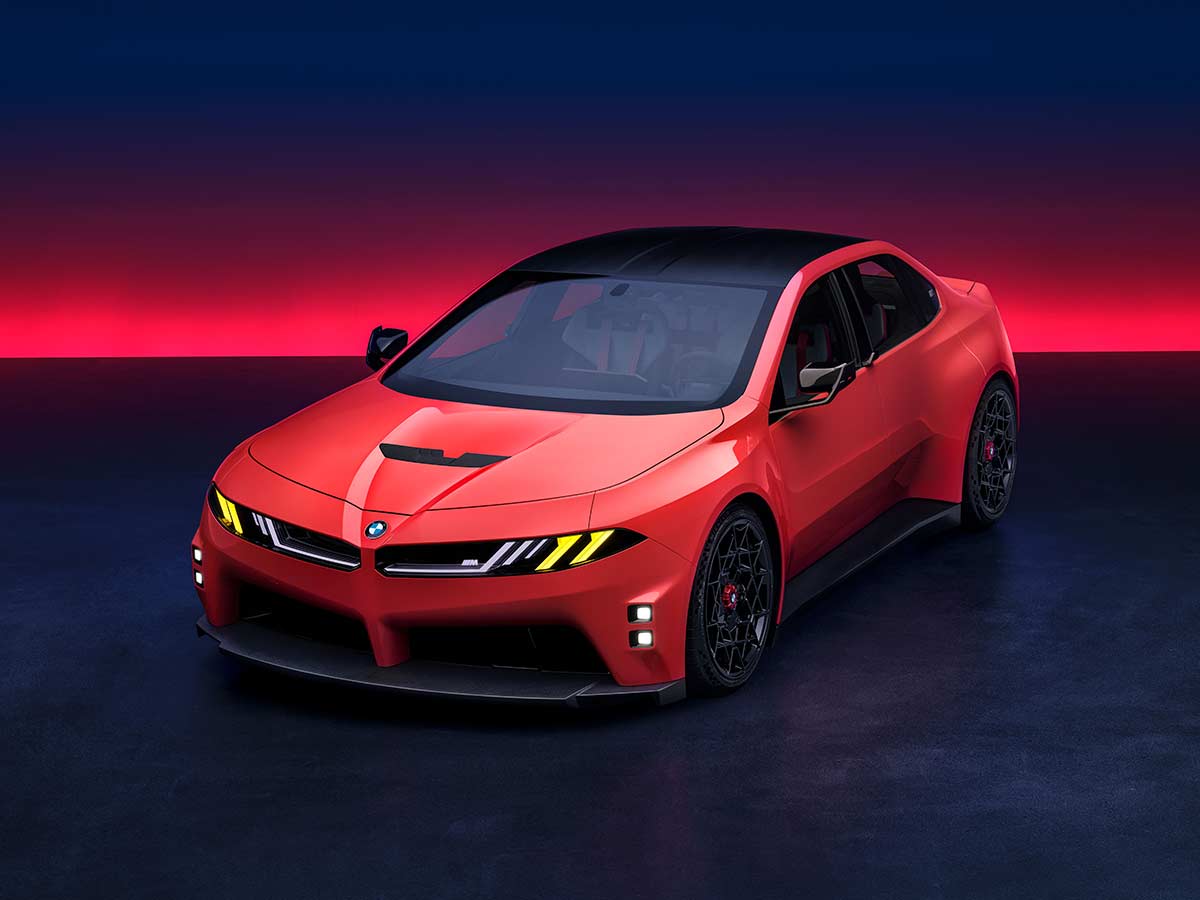
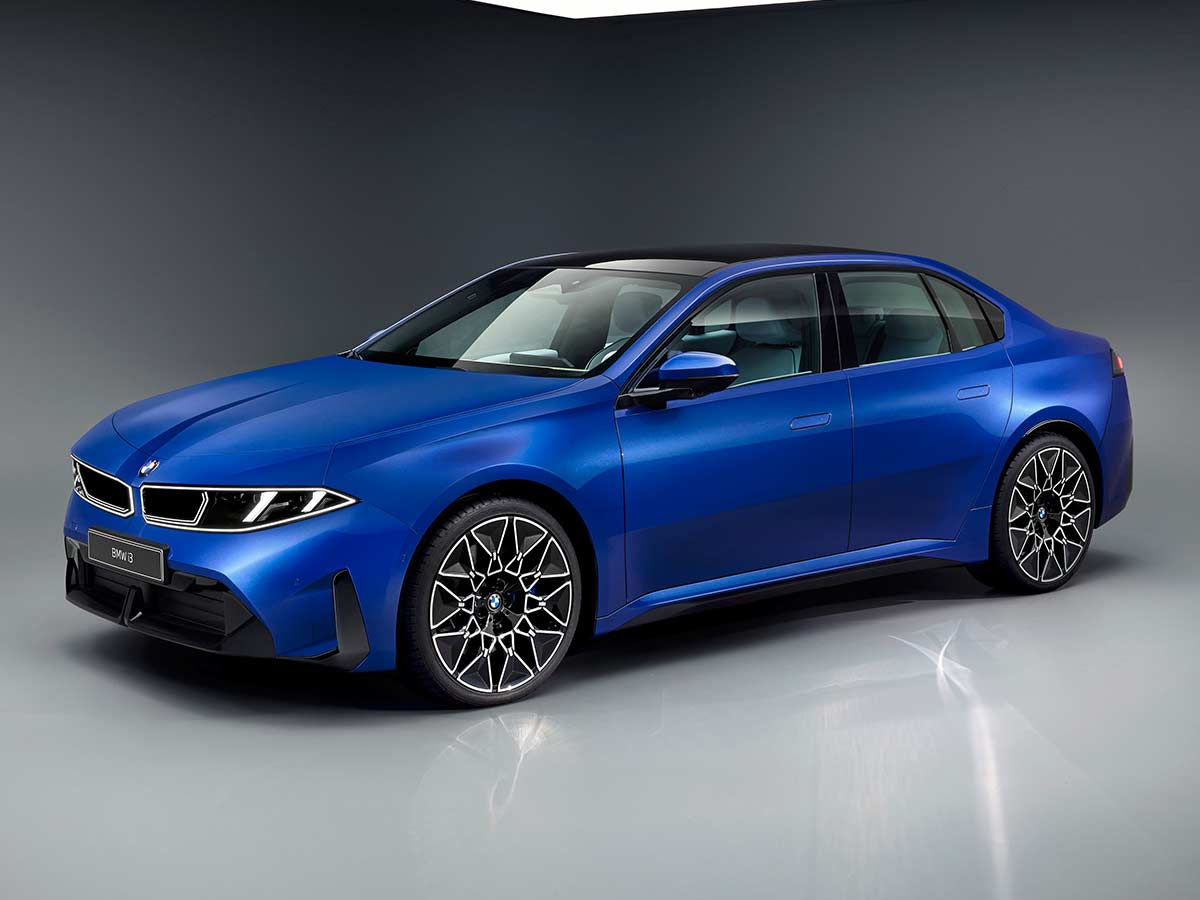
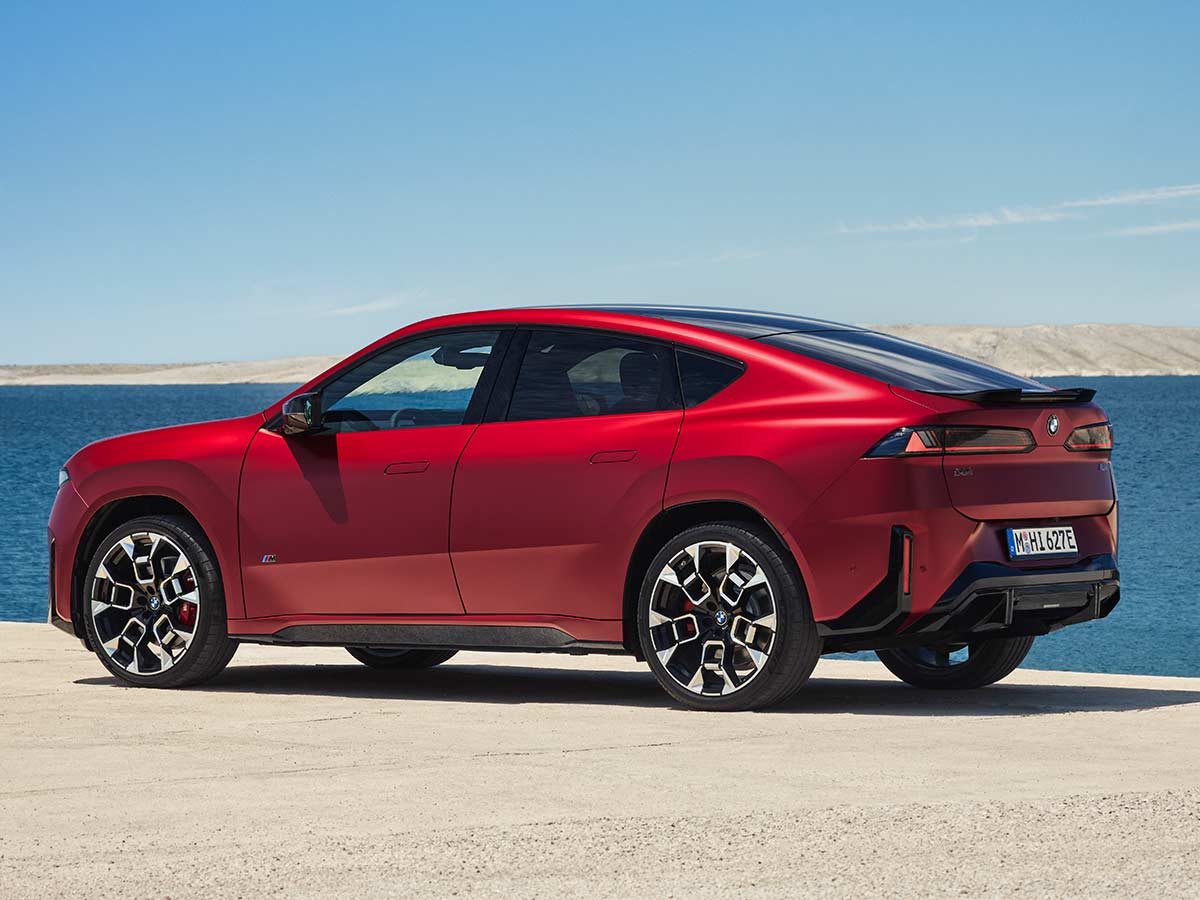
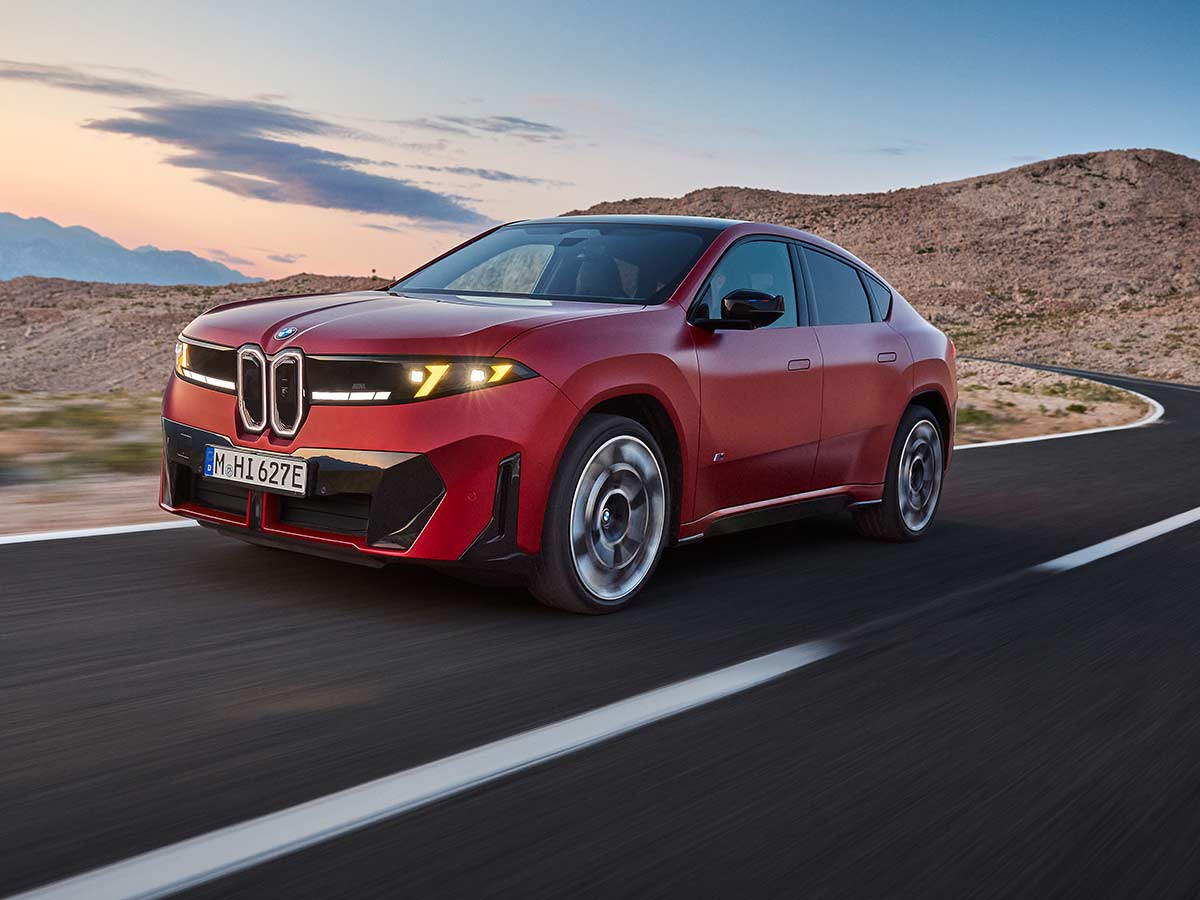
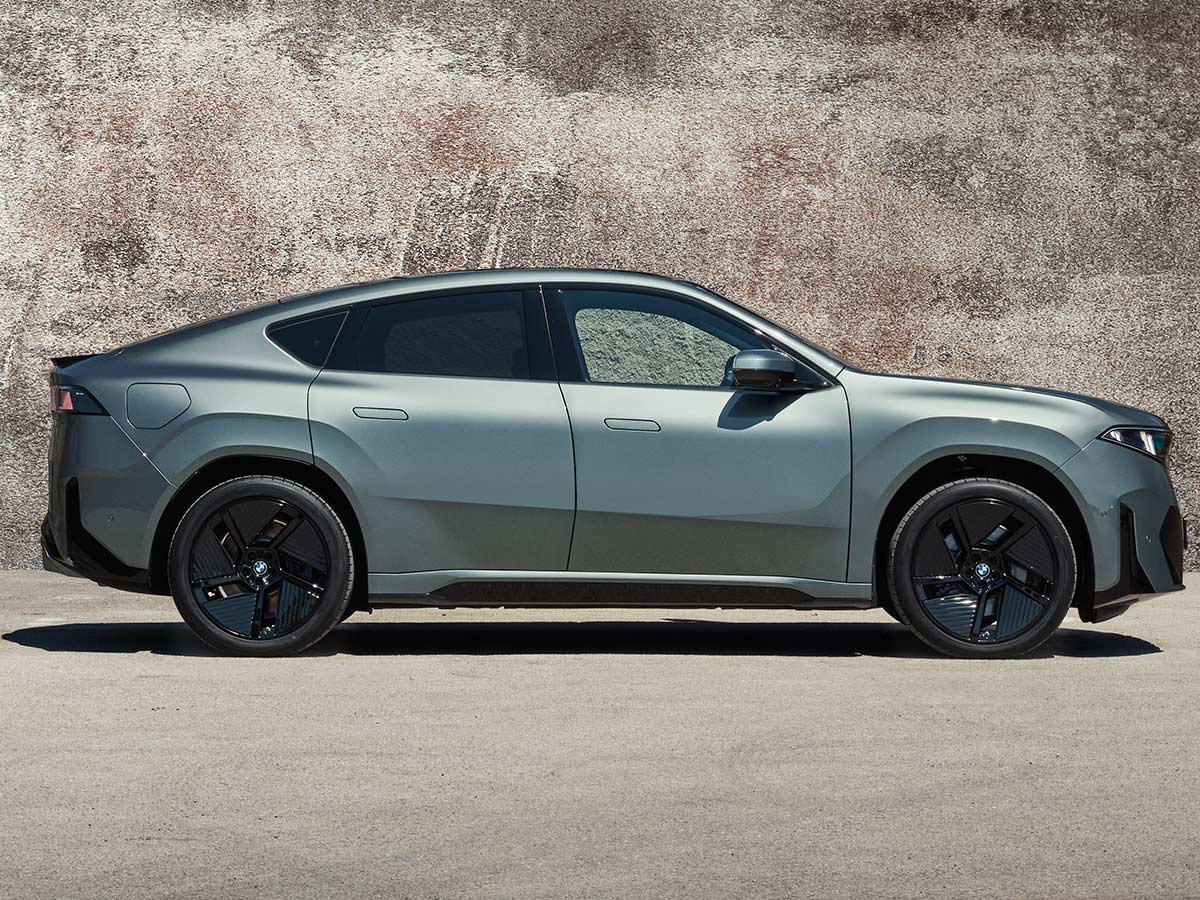
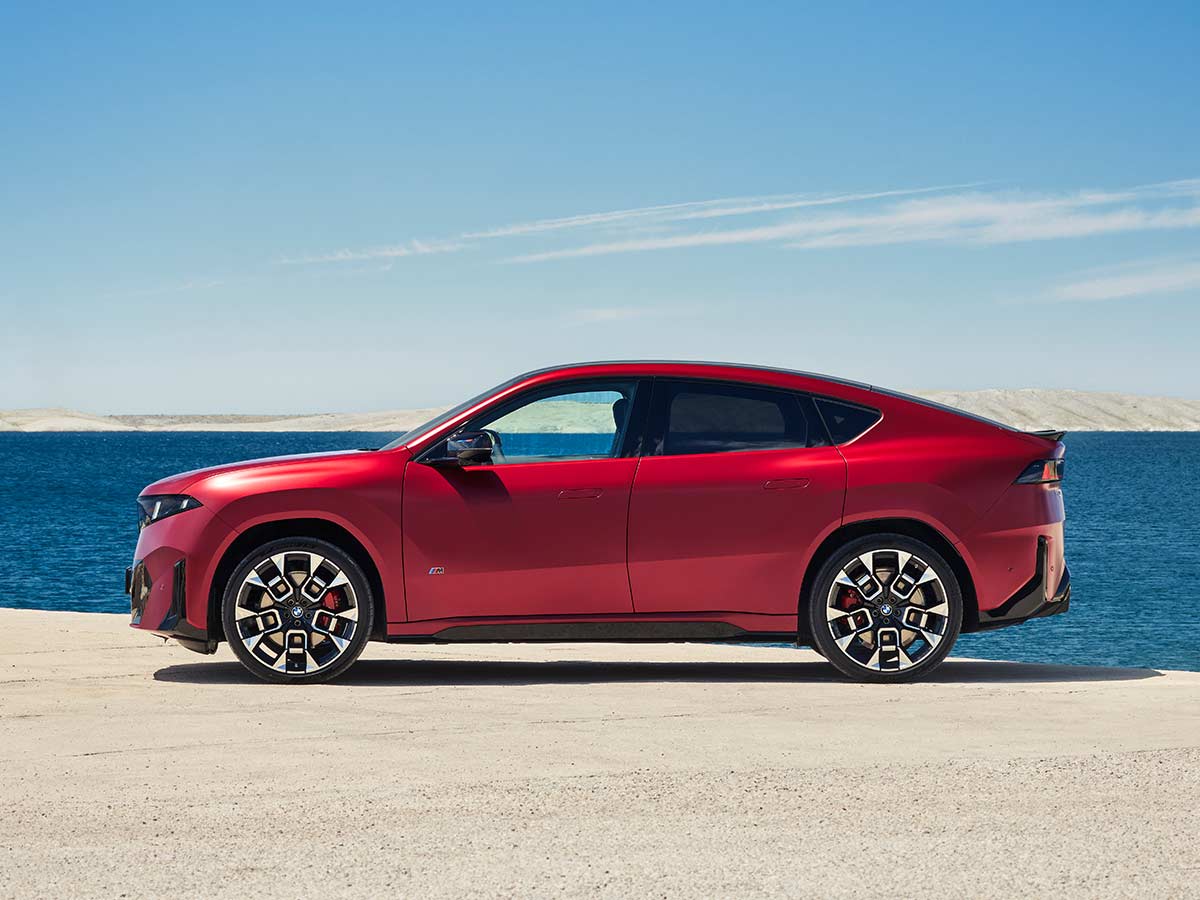
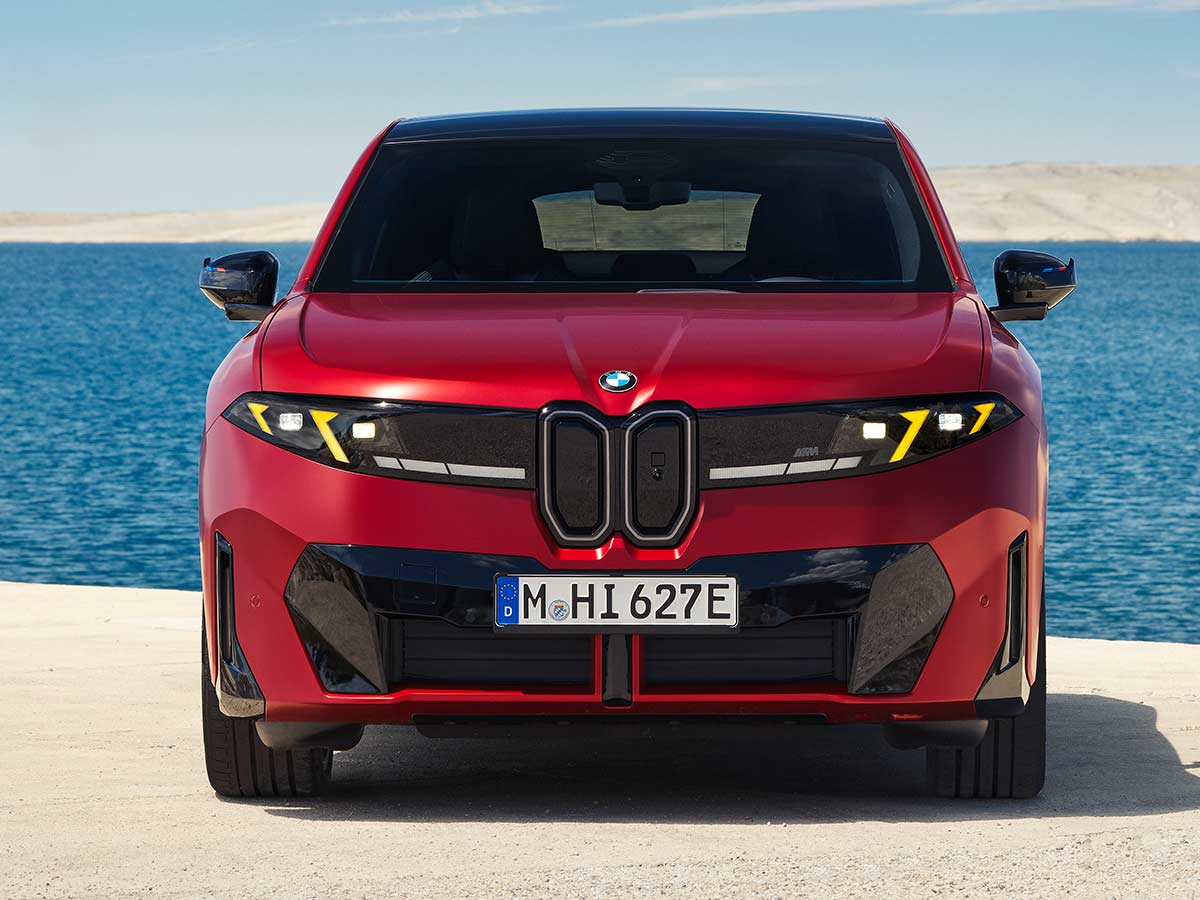
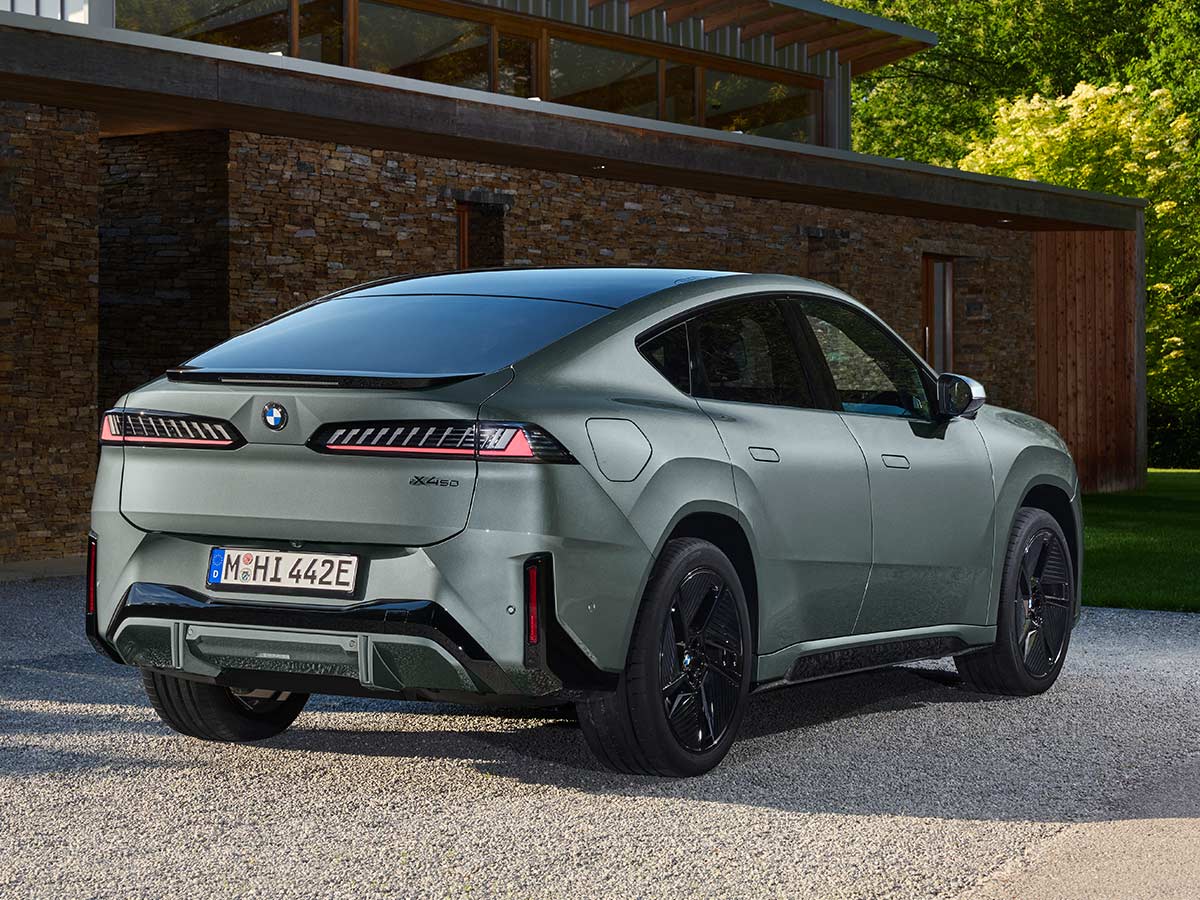
The roofline is the defining visual feature. It sweeps rearwards into a more pronounced taper, giving the BMW iX4 the profile of a sporty coupé while retaining the elevated stance expected of a premium SUV.
A long 2,897 mm wheelbase and short overhangs help prevent the body from appearing visually heavy. Strongly contoured wheel arches add muscularity, while the carefully reduced surface treatment avoids the visual clutter that can make some contemporary SUVs look unnecessarily complicated.
The proportions are doing more than making the iX4 look dynamic at a standstill. The long wheelbase also provides a useful foundation for cabin packaging and directional stability, while the sloping roofline and short overhangs help establish the car’s sporting character.
The BMW kidney grille evolves into a graphic identity
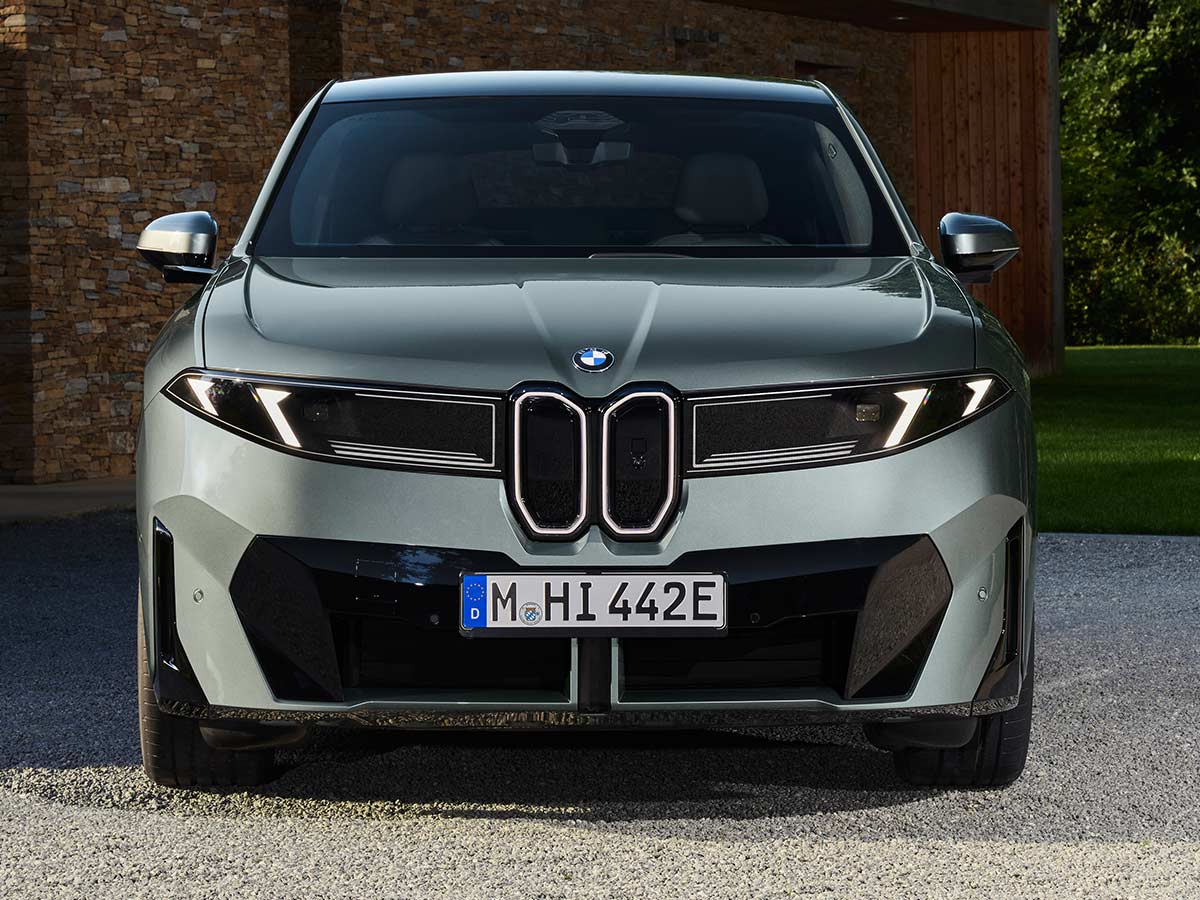
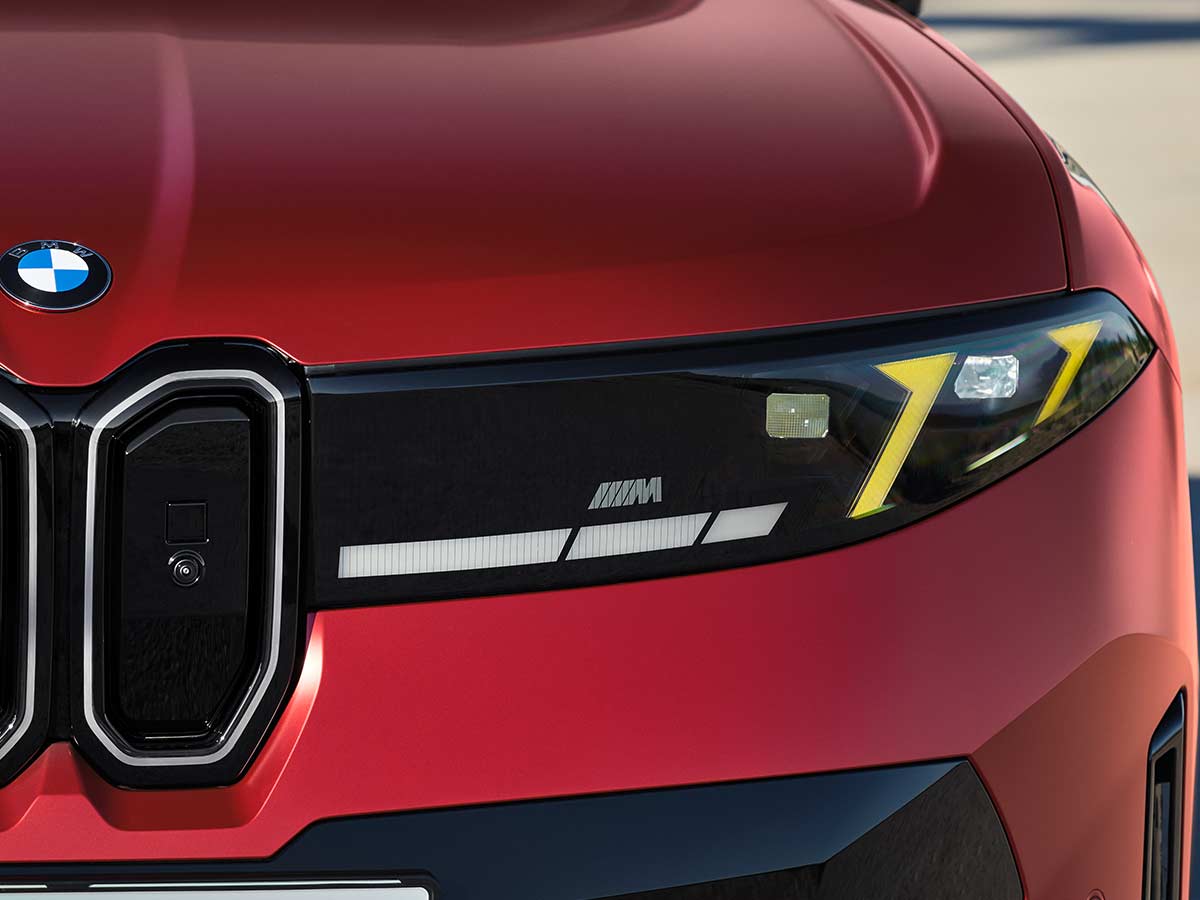
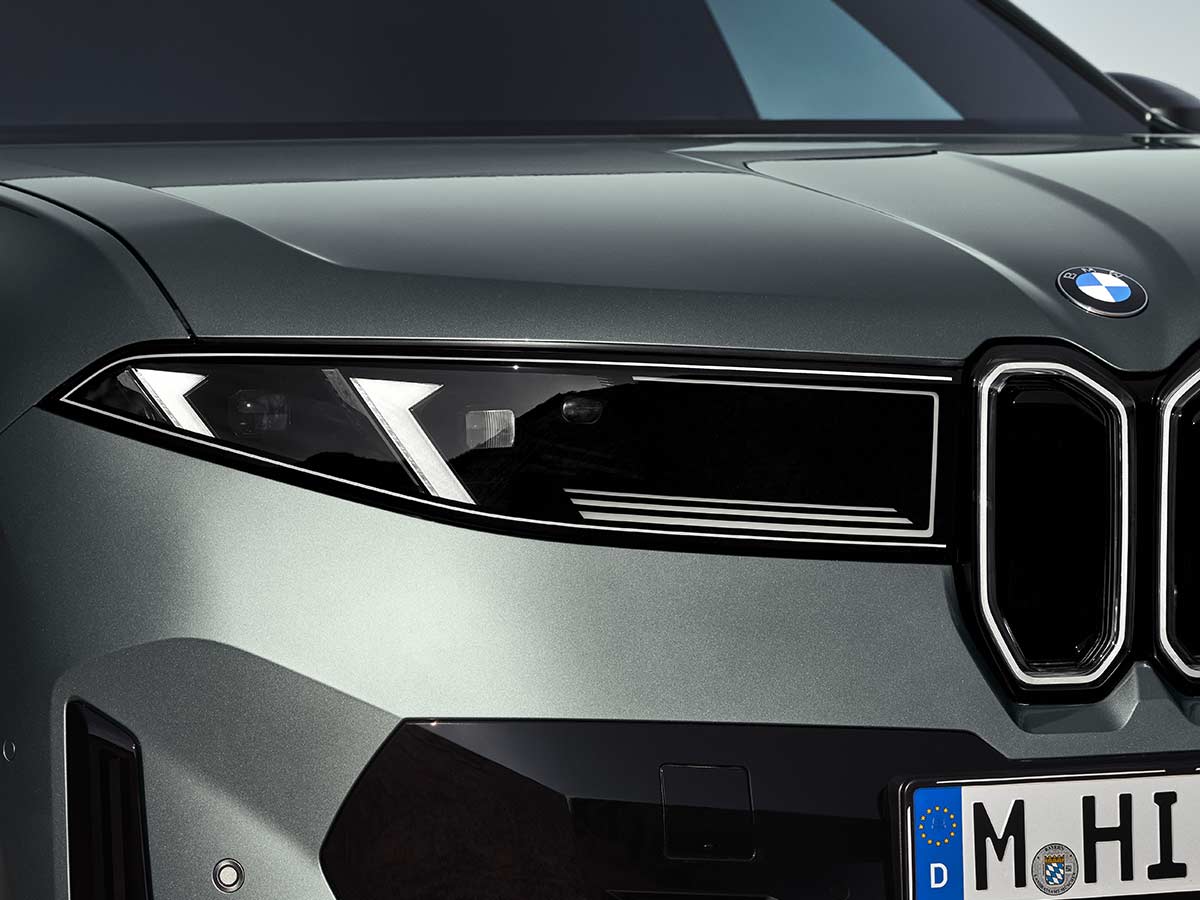
At the front, the traditional BMW kidney grille and twin-headlight signatures merge into a unified graphic element. The result is less about a conventional grille dominating the nose and more about creating a recognisable visual signature through geometry, illumination and integrated sensor placement.
It is a meaningful change in emphasis. On an electric vehicle, the front-end design no longer needs to accommodate the same cooling requirements as a combustion-powered car. BMW can therefore treat the nose as a more integrated aerodynamic and visual surface.
Active air-flap control contributes to the BMW iX4’s claimed drag coefficient of just 0.23. That is a significant figure for a vehicle with SUV proportions, although the ultimate energy-consumption benefit will depend on speed, tyres, temperature and other operating conditions.
At motorway speeds, aerodynamic efficiency matters disproportionately because air resistance rises sharply with velocity. Reducing drag can therefore improve high-speed efficiency, help preserve range and reduce the energy needed to maintain cruising speed.
The rear spoiler is functional, not merely decorative
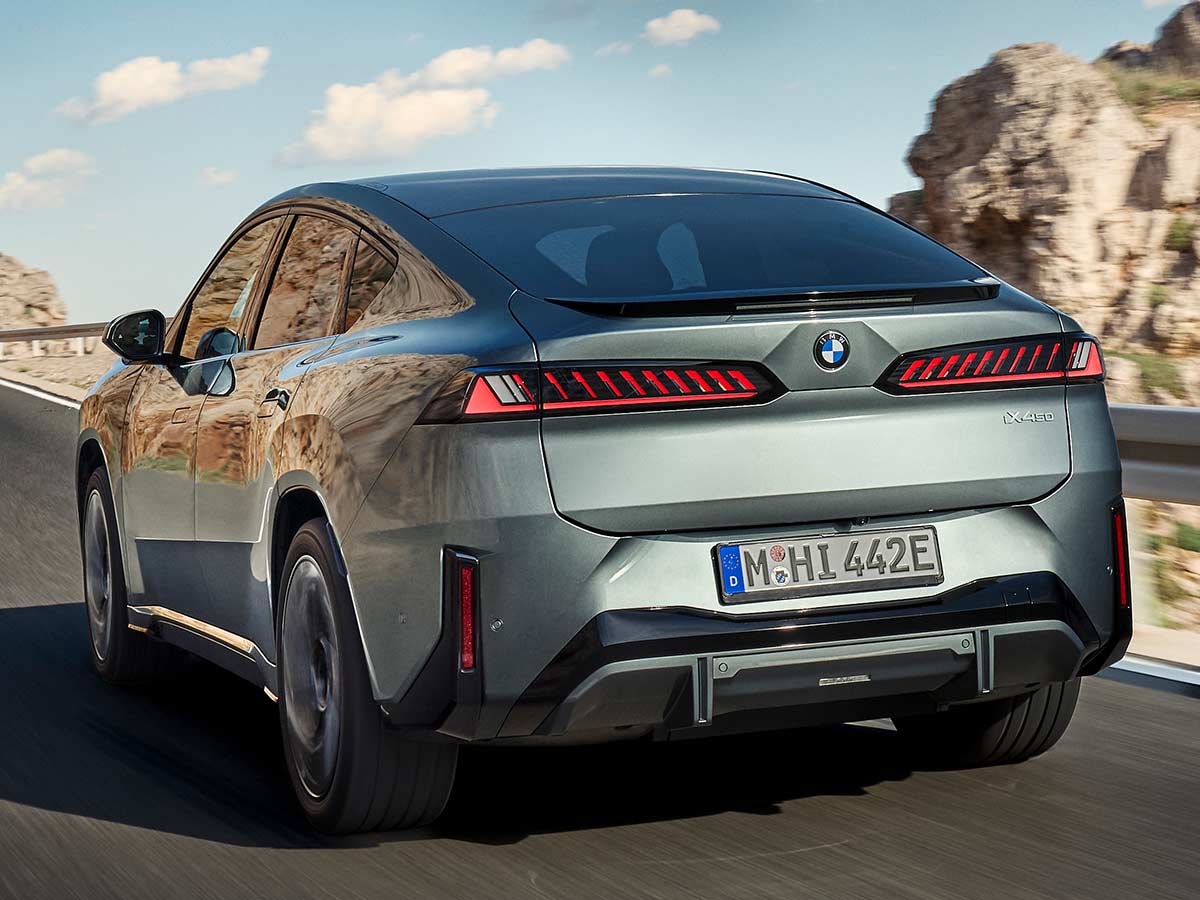
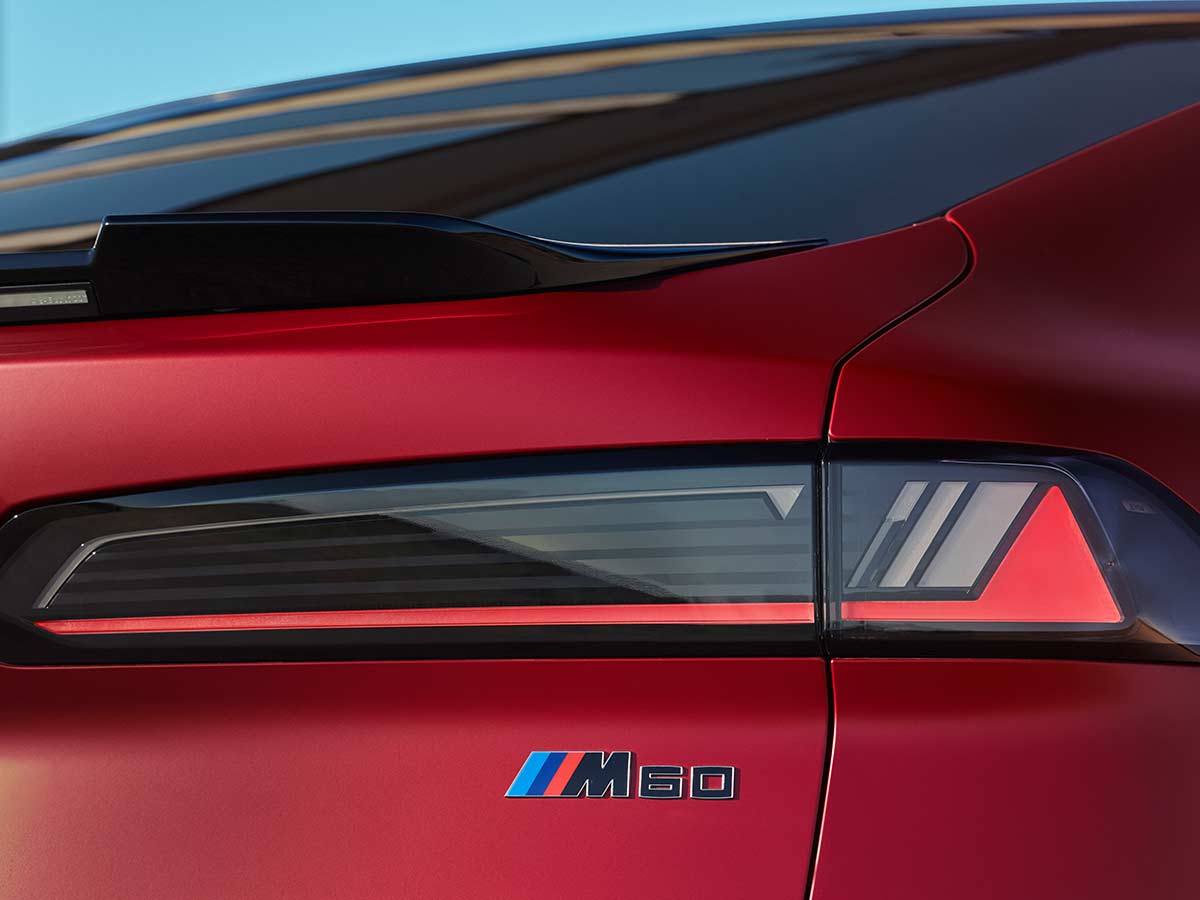
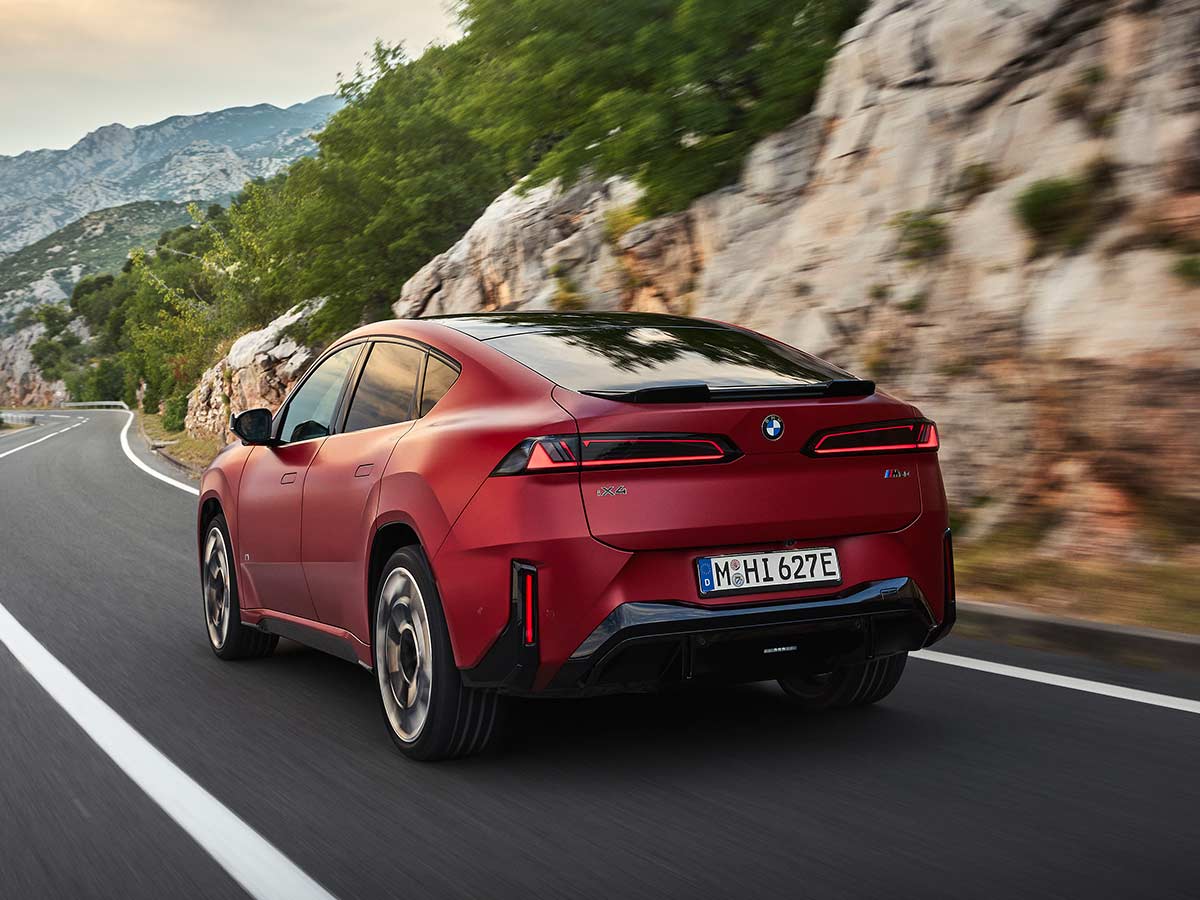
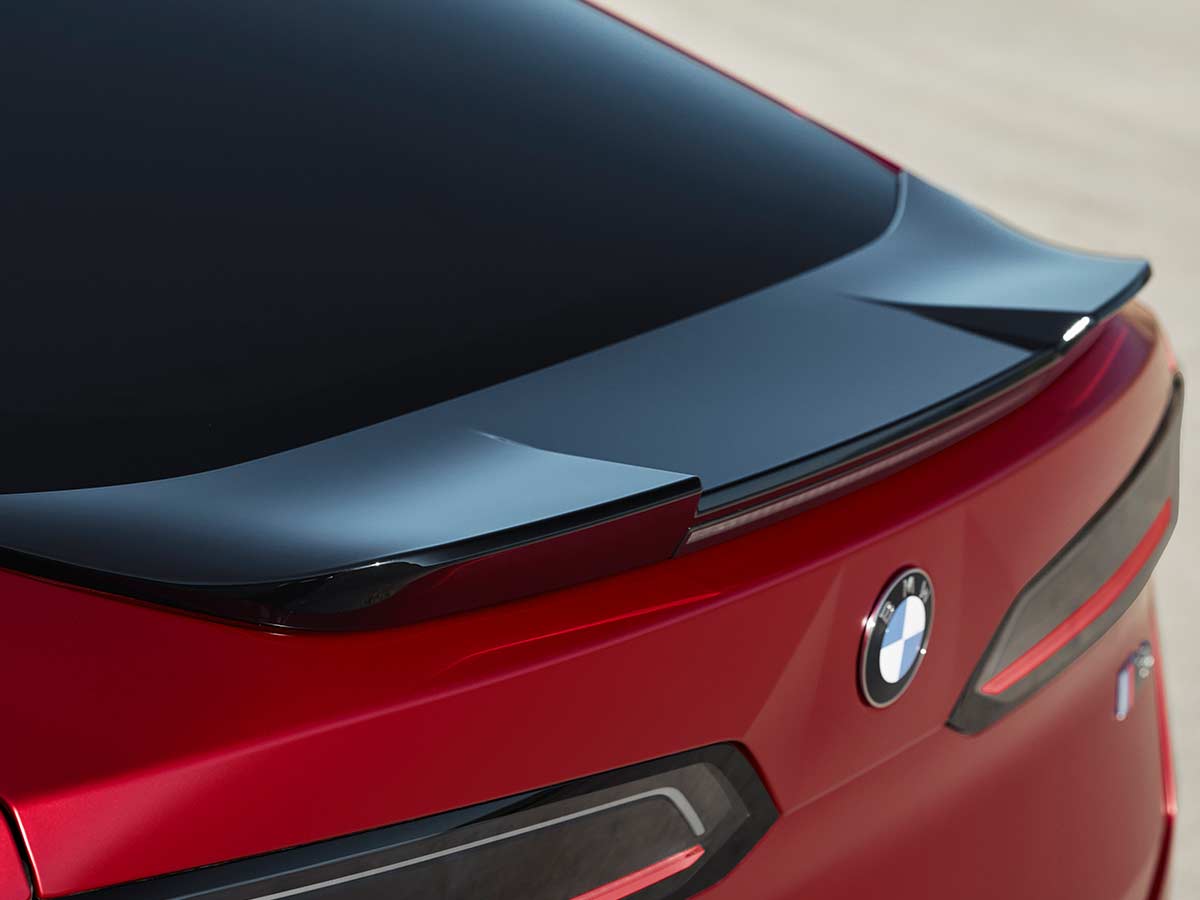
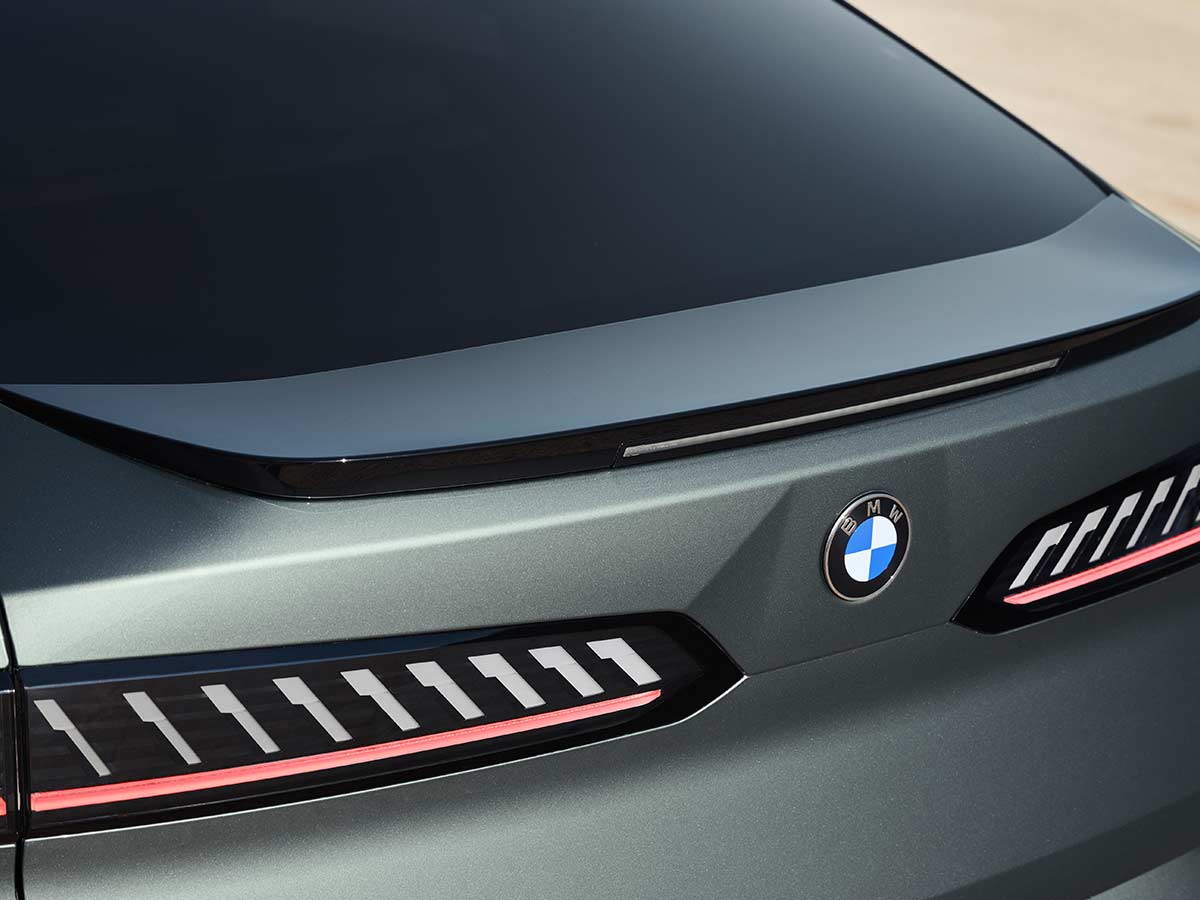
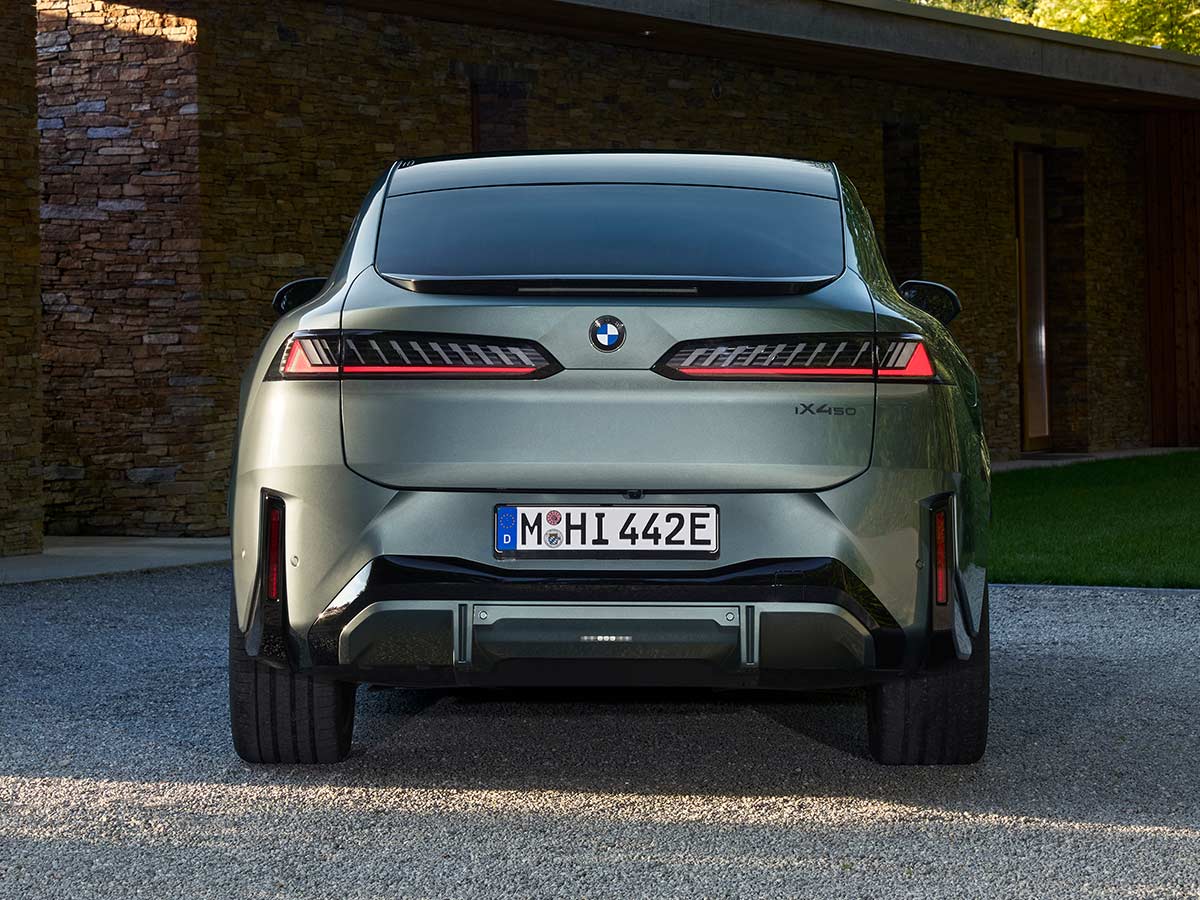
The rear design is more assertive. Slim horizontal tail-lights emphasise the body’s width, while a pronounced spoiler with an integrated brake light emerges from the rear-window area.
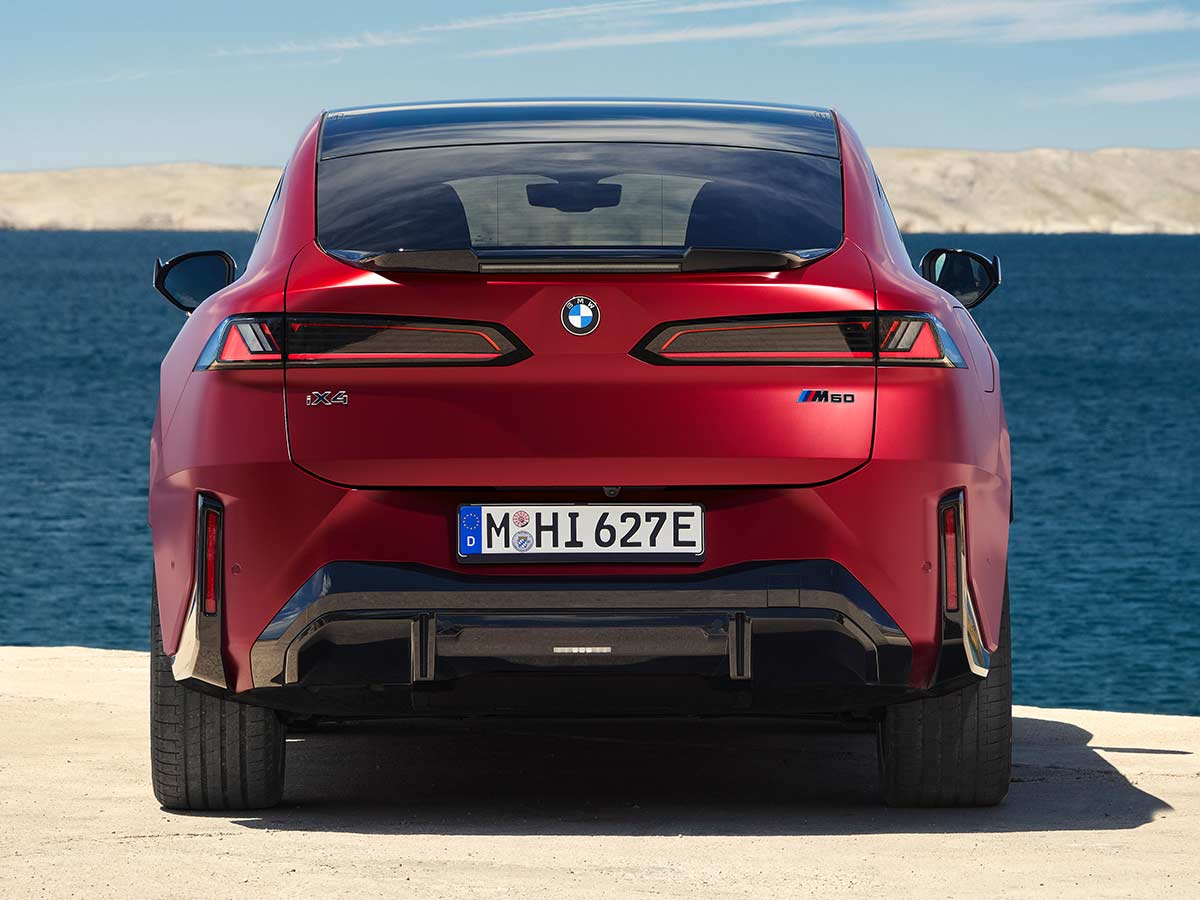
On standard models, BMW says the spoiler supports aerodynamic efficiency and operating range. The BMW iX4 M60 xDrive receives a dedicated M rear spoiler designed to increase rear-axle downforce and help the car remain composed under demanding driving conditions.
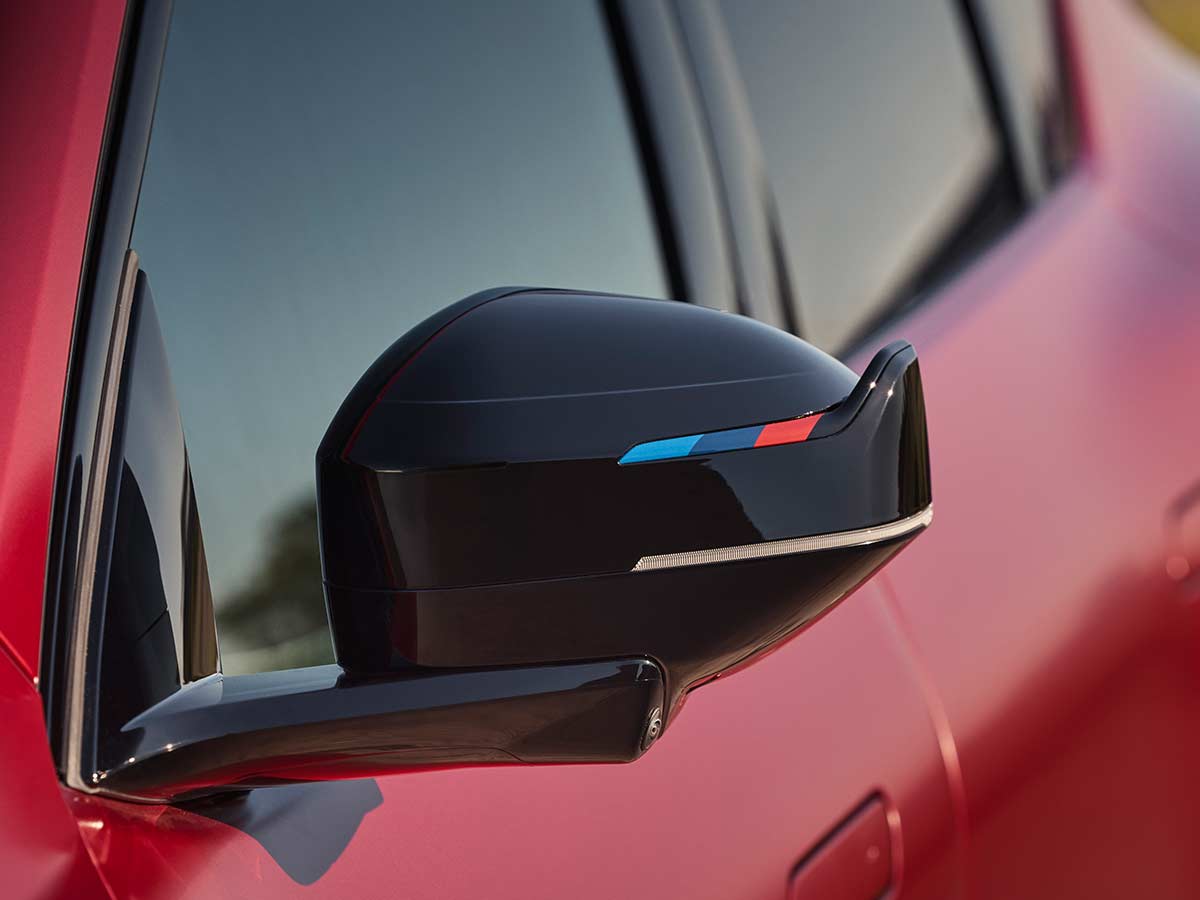
The M60 also gains model-specific styling details, including black BMW kidney trim, an M-specific diffuser, M mirror caps, distinctive light signatures and motorsport-inspired M Yellow Lights.
Those yellow lighting elements draw inspiration from BMW’s GT racing programme and the BMW M Hybrid V8. Their purpose is primarily visual, establishing a more direct connection between the road-going M Performance model and BMW’s motorsport identity.
Standard M Sport equipment raises the baseline
BMW is including the M Sport package as standard across the iX4 range. That means the entry-level version is not visually separated from the sportier variants by a basic-looking exterior specification.
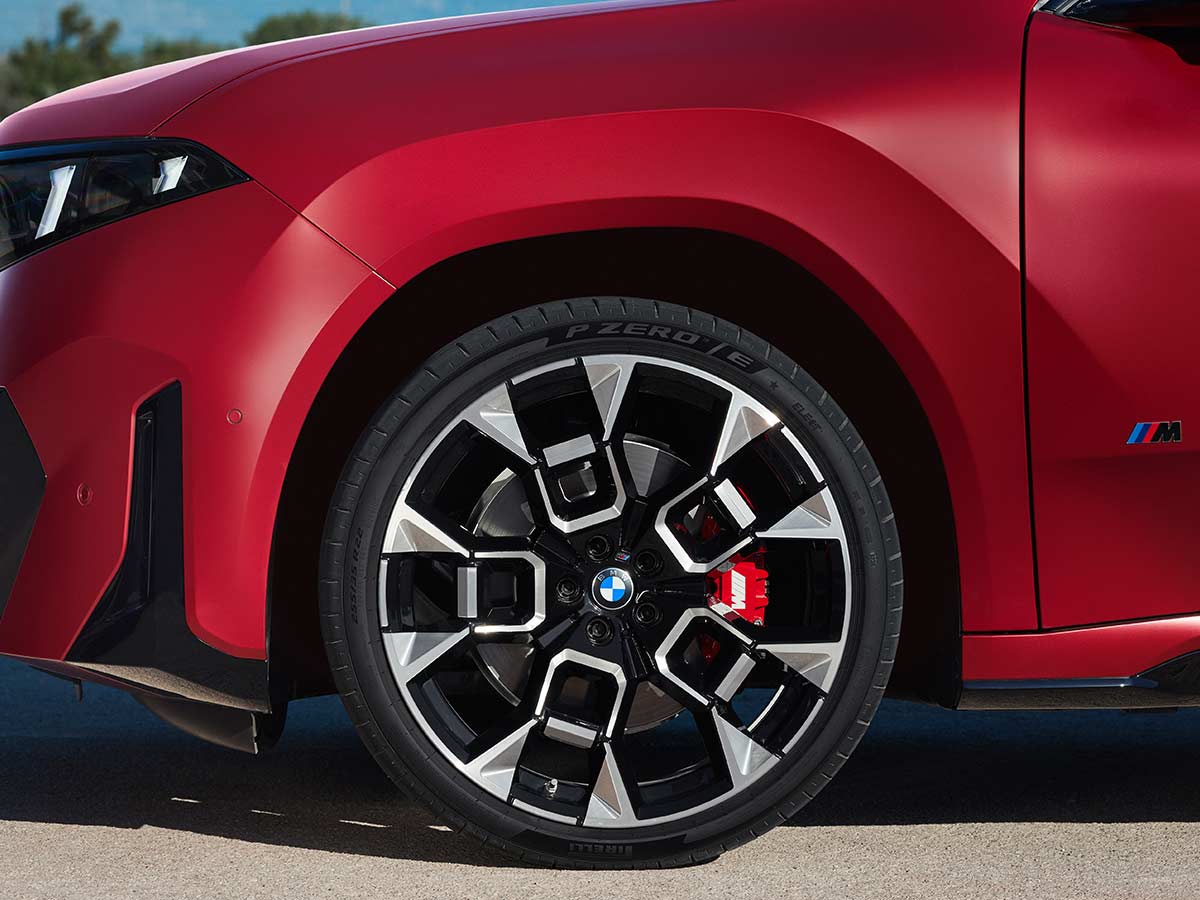
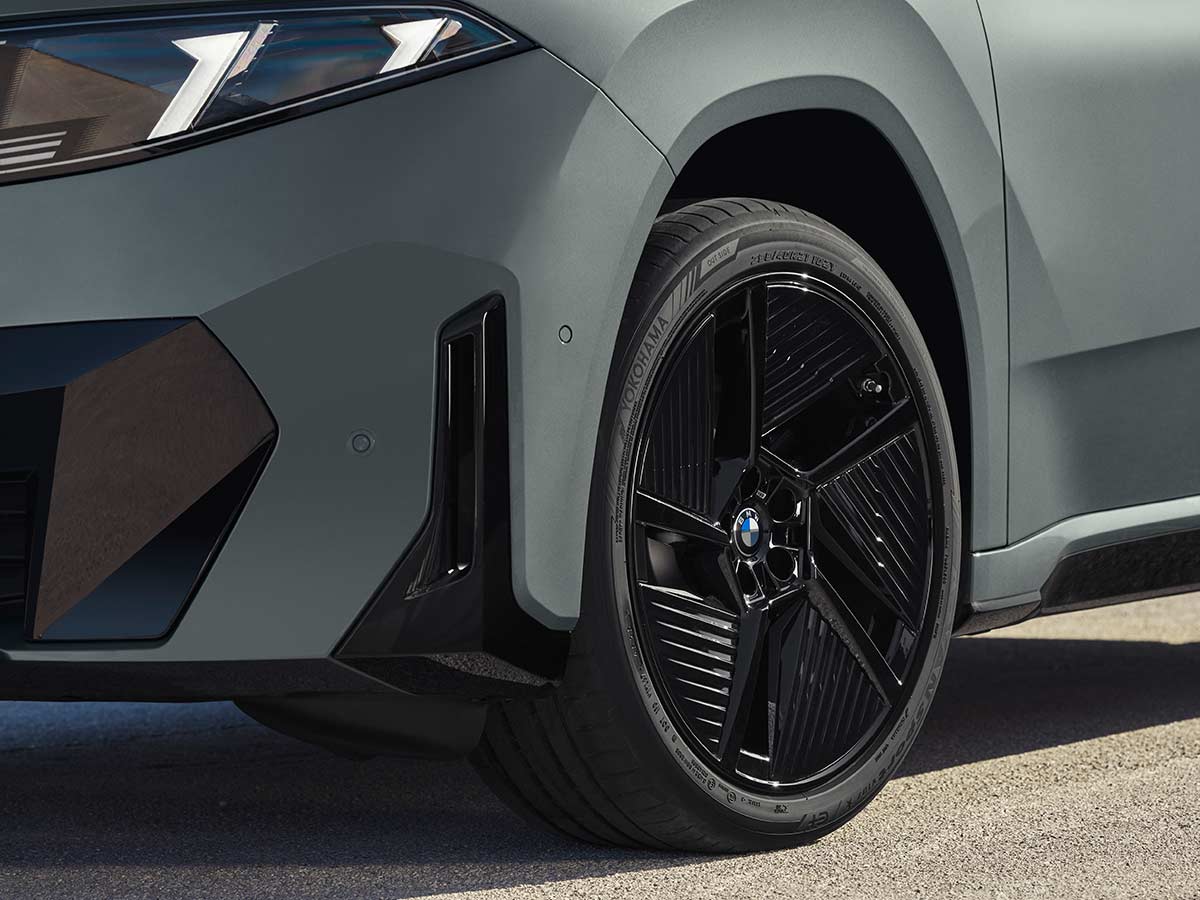
Standard equipment includes 20-inch M light-alloy wheels and M Sport brakes with blue-painted callipers. The M60 xDrive moves to 21-inch wheels and more extensive M-specific exterior treatment, while wheels measuring up to 22 inches can be ordered on the wider range.
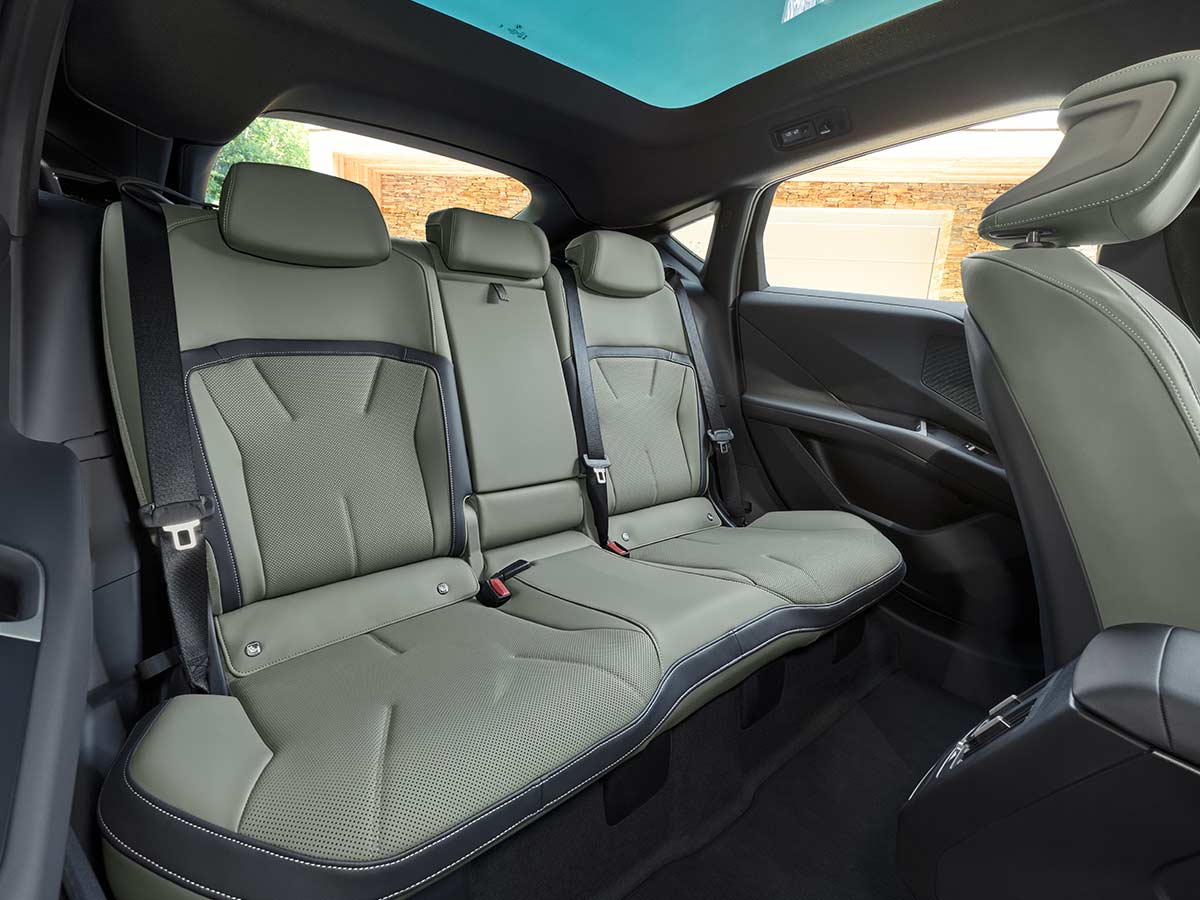
The large panoramic sunroof with climate comfort glazing is also standard. Its broad glass surface reinforces the cabin’s open atmosphere while preserving the clean visual transition along the coupé roofline.
BMW iX4 Powertrain: Three Electric Personalities
Every BMW iX4 variant uses an electric motor at the front axle and another at the rear. This dual-motor arrangement enables all-wheel drive and gives BMW considerable flexibility in balancing efficiency, traction and performance.
The more significant development is the introduction of sixth-generation BMW eDrive technology, known as Gen6.
What is Gen6 BMW eDrive technology?
Gen6 is BMW’s next-generation electric propulsion architecture for the Neue Klasse family. It combines new cylindrical high-voltage battery cells, an 800-volt electrical system and further-developed electric motors.
The significance lies in how these systems work together. Battery chemistry and packaging influence energy capacity and charging behaviour. Electrical architecture affects how quickly energy can be transferred through the system. Motor efficiency influences how much of that stored energy becomes useful motion.
Improving these areas together is more effective than treating each as an isolated component.
BMW also uses two different motor technologies within its drive-system strategy: electrically excited synchronous motors (EESM) and asynchronous motors (ASM). Their application allows the company to balance performance, efficiency and operating characteristics across the two axles.
The headline result is a range of outputs spanning 374 hp to 612 hp, with every version delivering the immediate torque response associated with electric propulsion.
BMW iX4 40 xDrive: The balanced entry point
The BMW iX4 40 xDrive produces 275 kW, equivalent to 374 hp, and 520 Nm of torque. Its 82.6 kWh usable battery supports a claimed maximum WLTP range of 638 km.
Acceleration from 0 to 100 km/h takes 5.6 seconds, and the maximum speed is 200 km/h.
Those numbers put the entry variant firmly in performance-car territory for everyday driving. The instant delivery of electric torque should make it responsive when pulling away from traffic lights, joining faster roads or overtaking.
The smaller battery also gives this version a clear role in the line-up. Buyers who prioritise everyday usability and performance without requiring the longest possible quoted range may find it the most rational choice.
Its maximum DC charging power is 300 kW, and BMW quotes up to 301 km of WLTP-cycle range added during a ten-minute high-power charging session under the prescribed conditions.
BMW iX4 50 xDrive: The long-distance specialist
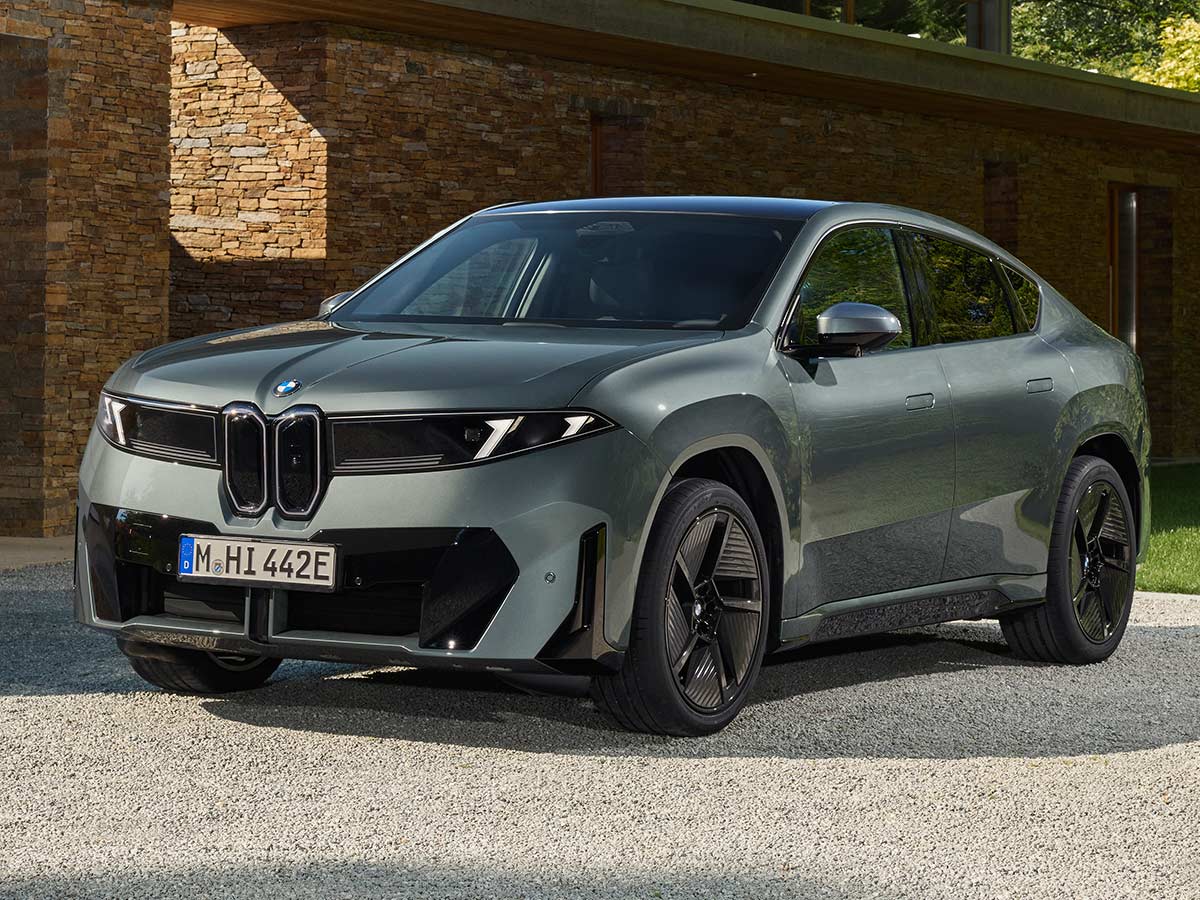
The BMW iX4 50 xDrive is the range leader among the three variants.
Its 108.7 kWh usable battery supports a maximum claimed WLTP range of 828 km. The dual-motor powertrain develops 345 kW, or 469 hp, and 645 Nm of torque.
The result is a 0-100 km/h time of 4.9 seconds and a maximum speed of 210 km/h.
More significant for frequent travellers is the combination of the larger battery and 400 kW maximum DC charging capability. BMW claims that ten minutes connected to a sufficiently powerful charger can add up to 387 km of WLTP-cycle range.
That is a theoretical charging-performance milestone rather than a promise that every charging stop will deliver that distance. Actual results depend on the battery’s temperature and state of charge, the vehicle’s charging curve, ambient conditions and the station’s available output.
Nevertheless, the iX4 50 xDrive makes a compelling technical case for long-distance electric motoring. Its larger battery offers a substantial energy reserve, while its higher charging ceiling creates the potential to spend less time waiting when the right infrastructure is available.
BMW iX4 M60 xDrive: The electric performance flagship
At the top of the range sits the BMW iX4 M60 xDrive, which uses sixth-generation BMW M eDrive technology.
Output rises to 450 kW, or 612 hp, while torque reaches 875 Nm. The 0-100 km/h sprint takes a claimed 3.9 seconds, and the electronically limited top speed is 240 km/h.
The M60 uses the same 108.7 kWh usable battery capacity as the 50 xDrive but has a lower quoted maximum WLTP range of 777 km. Its stated energy-consumption range is also higher, at 20.2-17.1 kWh/100 km.
That difference illustrates a fundamental electric-performance trade-off. More power, more aggressive driving capability and a more performance-focused setup can increase energy demand, even when battery capacity remains unchanged.
BMW has also equipped the M60 with dedicated chassis and control hardware, including adaptive M suspension and an electronically controlled M locking differential at the rear axle.
The objective is not simply to produce a vehicle that accelerates hard in a straight line. It is to create an SUV coupé that can manage its considerable torque with composure through corners and under acceleration.
For drivers who regard an M badge as a promise of involvement rather than just speed, those chassis details may ultimately matter more than the headline horsepower.
Battery and Charging: The 800-Volt Advantage
Range remains one of the most searched and most misunderstood aspects of electric-car ownership. The BMW iX4 addresses it through a combination of battery capacity, aerodynamic efficiency, powertrain development and higher-power charging.
Its 800-volt architecture is central to that proposition.
Why 800 volts matters
For a given electrical power, increasing voltage allows current to be reduced. Lower current can help reduce resistive losses and thermal demands in the electrical system, provided the components and overall design are engineered accordingly.
An 800-volt architecture can also support much higher charging power than many older electric-vehicle systems when paired with a compatible battery, charging hardware and thermal-management strategy.
The BMW iX4’s maximum DC charging rates reflect this approach: up to 300 kW for the 40 xDrive and up to 400 kW for both the 50 xDrive and M60 xDrive.
These are peak figures. Charging power does not remain at its maximum throughout a session because the battery’s ability to accept energy changes with state of charge and temperature.
Consequently, peak charging power should not be confused with average charging power, nor should it be used alone to predict the duration of a full charge.
BMW iX4 charging figures
| Charging metric | 40 xDrive | 50 xDrive | M60 xDrive |
|---|---|---|---|
| Usable battery capacity | 82.6 kWh | 108.7 kWh | 108.7 kWh |
| Peak DC charging power | 300 kW | 400 kW | 400 kW |
| Maximum AC charging power | 22 kW | 22 kW | 22 kW |
| WLTP range added in 10 minutes, claimed | 301 km | 387 km | 360 km |
| Bidirectional charging | Yes | Yes | Yes |
The quoted ten-minute range additions assume high-power charging infrastructure capable of providing the maximum supported output and are calculated using the relevant WLTP-based methodology.
For prospective owners, the practical takeaway is to assess the charging network on regular routes, not just the number printed on the specification sheet. A 400 kW-capable vehicle cannot deliver its maximum rate when connected to a lower-powered charger, and a high-output station may divide its capacity among multiple vehicles.
What is bidirectional charging?
Bidirectional charging allows energy to flow in both directions, subject to the vehicle’s supported functions and compatible equipment. Instead of treating the battery solely as a storage device that powers the car, it opens the possibility of using stored energy for other purposes.
BMW lists bidirectional charging for all three iX4 variants. The precise functionality, compatible hardware, market availability and operating conditions must be checked for the relevant country and equipment specification.
The wider significance is clear: as electric vehicles become more integrated with home energy systems and charging infrastructure, their batteries may become useful beyond transport.
That does not automatically mean every iX4 can power a house or export electricity to the grid in every market. Those applications depend on the specific supported charging functions, local regulations and compatible systems.
Range in the real world
BMW quotes up to 828 km for the iX4 50 xDrive, but WLTP range is a standardised comparison figure, not a universal driving promise.
High motorway speeds, cold weather, frequent rapid acceleration, heavy loads, large wheels and climate-control use can all reduce the distance achieved on a charge.
For buyers, the better question is not whether the iX4 can achieve its maximum laboratory range every day. It is whether the vehicle provides sufficient usable range for regular journeys while leaving a comfortable margin for weather, detours and charging availability.
The iX4 50 xDrive’s large battery and fast-charging capability make that proposition particularly attractive for long-distance travel, although independent road testing will be needed to establish its real-world efficiency and sustained charging performance.
Heart of Joy: BMW’s New Approach to Driving Dynamics
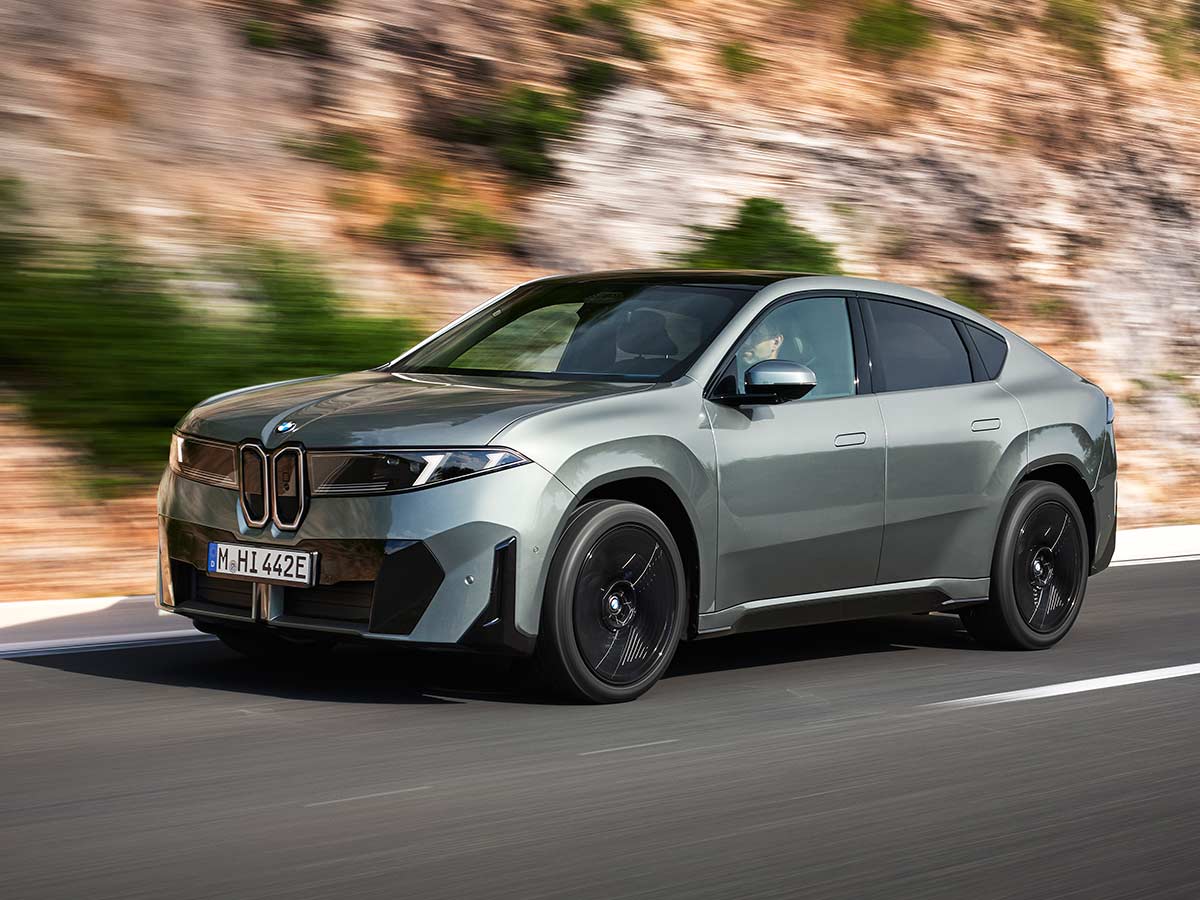
BMW’s reputation has long rested on the way its cars respond to a driver’s inputs. With the BMW iX4, the company is placing software and computing power closer to the centre of that experience.
The key technology is called Heart of Joy.
BMW describes Heart of Joy as a high-performance computer that works with its Dynamic Performance Control Driving Stack to coordinate powertrain behaviour and driving dynamics. The company says it operates ten times faster than previous systems and reduces the number of control inputs required.
The intended result is a more coherent response to steering, acceleration and braking.
Why software matters in an electric BMW
An electric vehicle can adjust motor torque rapidly and independently at different axles. That creates opportunities to influence traction, stability and the car’s response to changing conditions.
But speed alone is not enough. The vehicle must coordinate those responses so that the driver experiences a predictable, progressive and natural reaction rather than a collection of separate electronic interventions.
A tightly integrated control system can help manage that relationship between power delivery and chassis behaviour. It also creates a platform for software updates and future refinements, subject to the hardware and functions supported by the vehicle.
Heart of Joy is therefore best understood as an effort to make the BMW iX4 feel like a unified machine. The driver should not need to think about the computing architecture when turning into a corner or slowing for traffic. They should simply experience a car that responds accurately.
A low centre of gravity and balanced weight distribution
The battery’s flat installation is another important part of the dynamic equation. BMW says the high-voltage battery helps give the iX4 a very low centre of gravity, while the chassis benefits from an almost perfectly balanced weight distribution and long wheelbase.
A low centre of gravity can reduce body-roll tendencies, while balanced weight distribution can help engineers develop predictable handling. The long wheelbase can contribute to high-speed stability.
Those benefits are not automatic guarantees of superior handling. Tyre choice, suspension calibration, steering response, vehicle mass and electronic control all influence the final result. However, the architecture gives BMW a strong foundation on which to build its preferred driving character.
Adaptive M suspension for the M60
The BMW iX4 M60 xDrive receives adaptive M suspension as standard. It includes electronically controlled shock absorbers and sport steering with a variable rack-and-pinion ratio.
The aim is to reconcile two demands that often pull in opposite directions: body control during spirited driving and comfort on imperfect roads.
The M60 also gets an electronically controlled M locking differential at the rear axle, intended to improve the management of traction and the car’s response when cornering under power.
Two additional drive modes, M Sport and M Sport Plus, provide more focused settings for drivers who want a sportier experience.
These are meaningful hardware distinctions. They suggest BMW understands that making a fast electric SUV coupé enjoyable requires more than adding power to its motors.
BMW Panoramic iDrive: A Digital Cabin Built Around the Driver
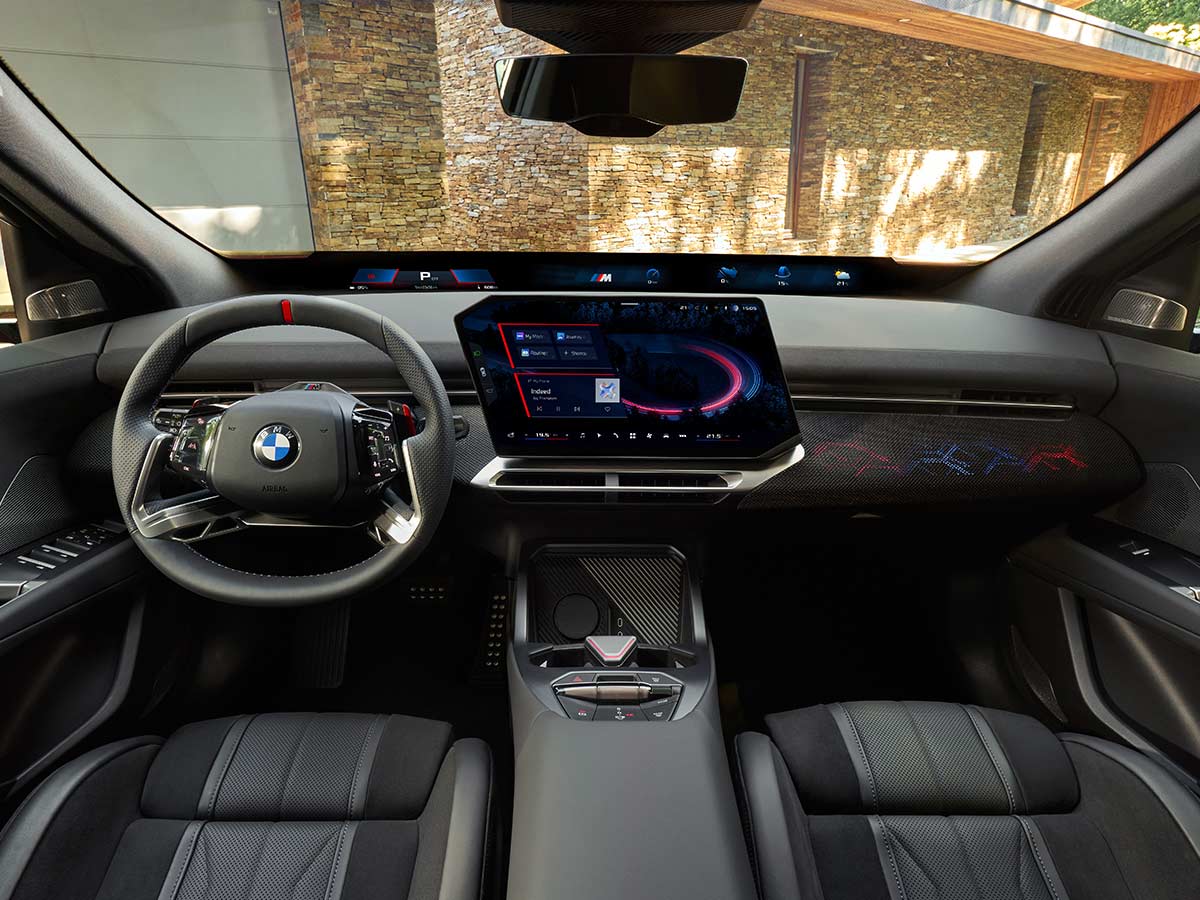
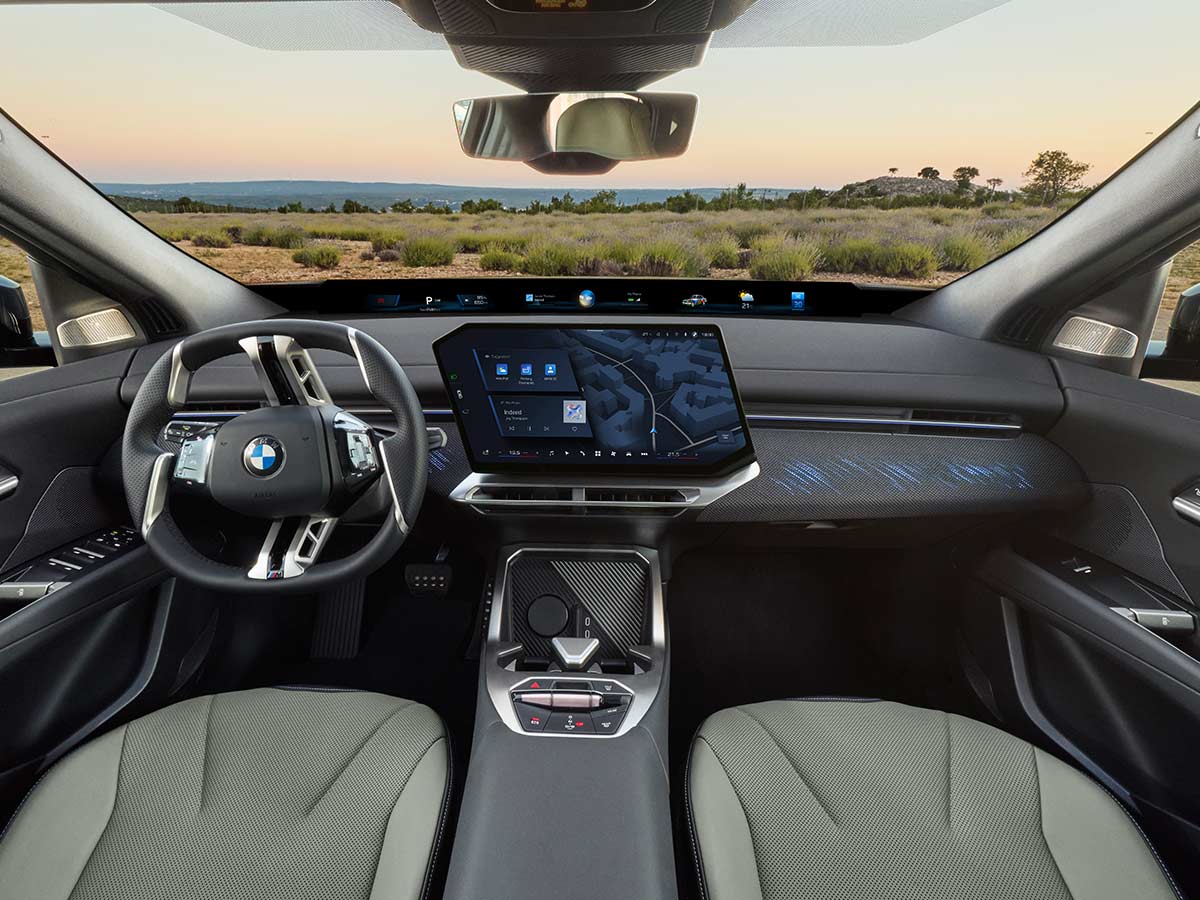
The BMW iX4’s cabin introduces a different approach to dashboard design. Rather than relying on a conventional instrument cluster and a single dominant central screen, BMW Panoramic iDrive distributes information across a coordinated display system.
The system combines BMW Panoramic Vision, an optional BMW 3D Head-Up Display, a 17.9-inch central touchscreen and a multifunction steering wheel with illuminated, touch-sensitive or haptic controls.
BMW Operating System X provides the software foundation.
BMW Panoramic Vision
The most distinctive element is BMW Panoramic Vision, which projects information across the lower portion of the windscreen.
Driving-related information appears in the driver’s field of vision, while other portions of the display can be personalised. The objective is to make key information easier to access without repeatedly looking down at a traditional instrument panel.
The optional 3D Head-Up Display adds another layer, projecting selected navigation and driver-assistance information into the driver’s line of sight.
The central screen remains important. Its 17.9-inch free-cut design is angled towards the driver and uses matrix backlighting for readability. BMW says its QuickSelect menu structure is intended to simplify access to frequently used functions.
The value of this arrangement will depend on how naturally the displays work together in everyday driving. More display area does not automatically produce better ergonomics. The strongest system is one that reduces distraction and makes essential information easy to understand.
BMW Operating System X and software-defined vehicles
BMW Operating System X is designed to support a software-defined vehicle architecture. It is based on the Android Open Source Project and allows BMW to update and expand digital functions over time.
Drivers can personalise widgets, display colours, backgrounds and other interface elements. Up to seven users can sign in using their BMW ID and access their individual settings.
This has implications for ownership beyond the initial showroom experience. In principle, an adaptable software platform allows the car’s digital functions to evolve after purchase, rather than remaining frozen at the moment of delivery.
The exact scope of future upgrades will depend on the hardware installed, the function in question, regional availability and BMW’s update policy. Software architecture creates the opportunity for evolution, but it does not guarantee that every new feature will become available to every vehicle.
AI voice assistance with Amazon Alexa+ technology
BMW’s Intelligent Personal Assistant can respond to natural-language requests for vehicle functions, navigation and entertainment. BMW also describes the integration of Amazon’s Alexa+ AI technology, based on large language models, to support more conversational interactions.
The intended improvement is a move away from rigid, memorised commands towards a more natural exchange between driver and vehicle.
The assistant can also support routines that combine several actions. For example, a driver could configure a winter routine that coordinates selected heating and defrost functions.
Availability is important here. BMW’s media information says the Alexa+ integration will roll out gradually, beginning with selected markets, rather than being universally available from day one.
Connected entertainment and premium audio
The BMW iX4’s standard audio system has seven speakers and 205 watts of output. The M60 xDrive comes with a 13-speaker, 430-watt Harman Kardon system that supports Dolby Atmos. That premium system is optional on the other variants.
The connected entertainment offering includes streaming video when the car is parked, in-car gaming and access to additional apps through BMW’s digital ecosystem. BMW Digital Premium adds further entertainment, security and navigation-related features.
These functions are most relevant when the iX4 is stationary, charging or waiting. They broaden the car’s role as a connected digital space, although the usefulness of individual services will depend on subscriptions, connectivity and market availability.
Cabin Comfort and Practicality: Does the Coupé Roof Compromise Space?
SUV coupés face an enduring design challenge: their rooflines look sleek, but a tapering rear roof can compromise passenger headroom and luggage capacity.
BMW says the iX4’s electric-specific architecture helps address that compromise.
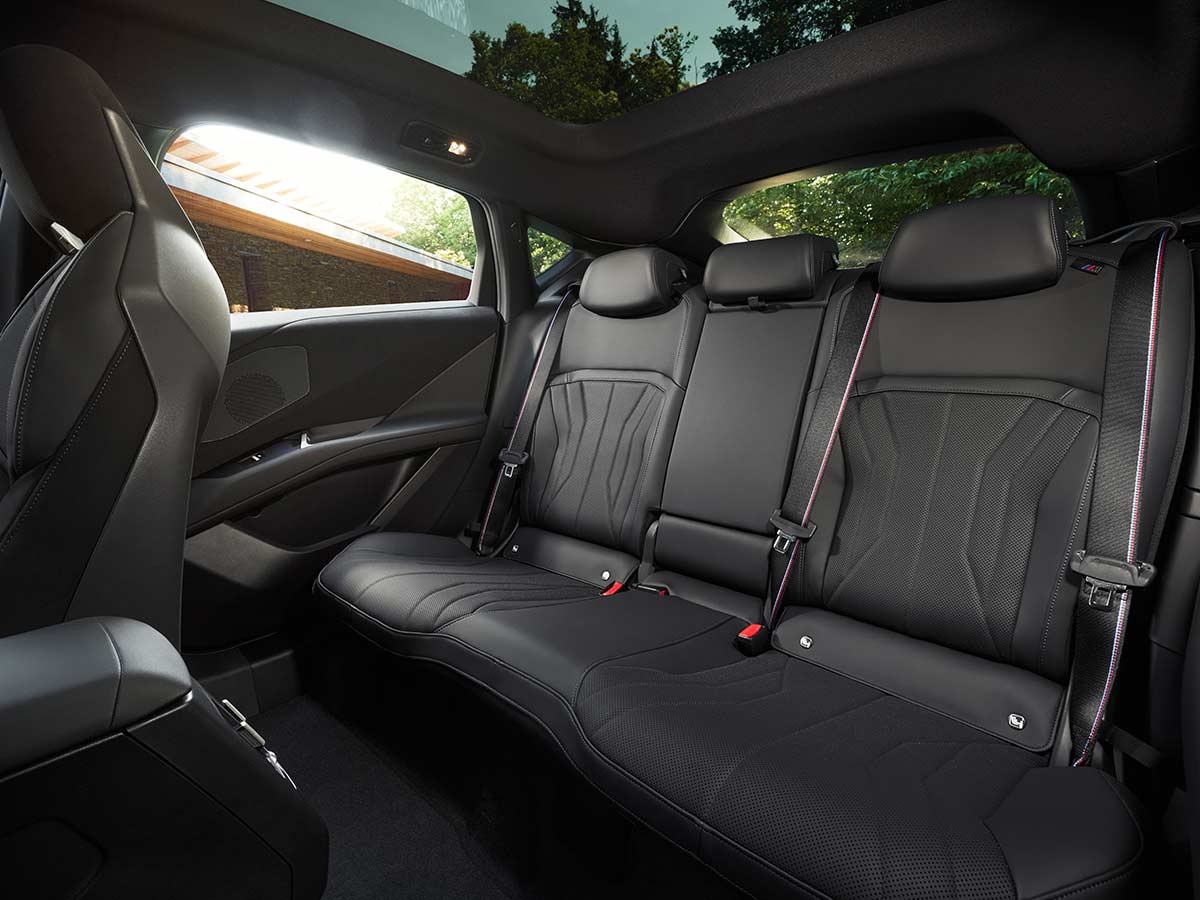
The 2,897 mm wheelbase is designed to provide generous front and rear legroom, while the cabin’s large window surfaces and panoramic roof create an open ambience. BMW also says the roofline has been shaped to preserve useful rear headroom.
The claim will need to be tested with passengers of different heights, but the underlying packaging strategy is sensible. A dedicated electric platform gives engineers more freedom to organise the cabin around occupants and the battery rather than adapting a layout originally developed for combustion engines.
Boot space and storage
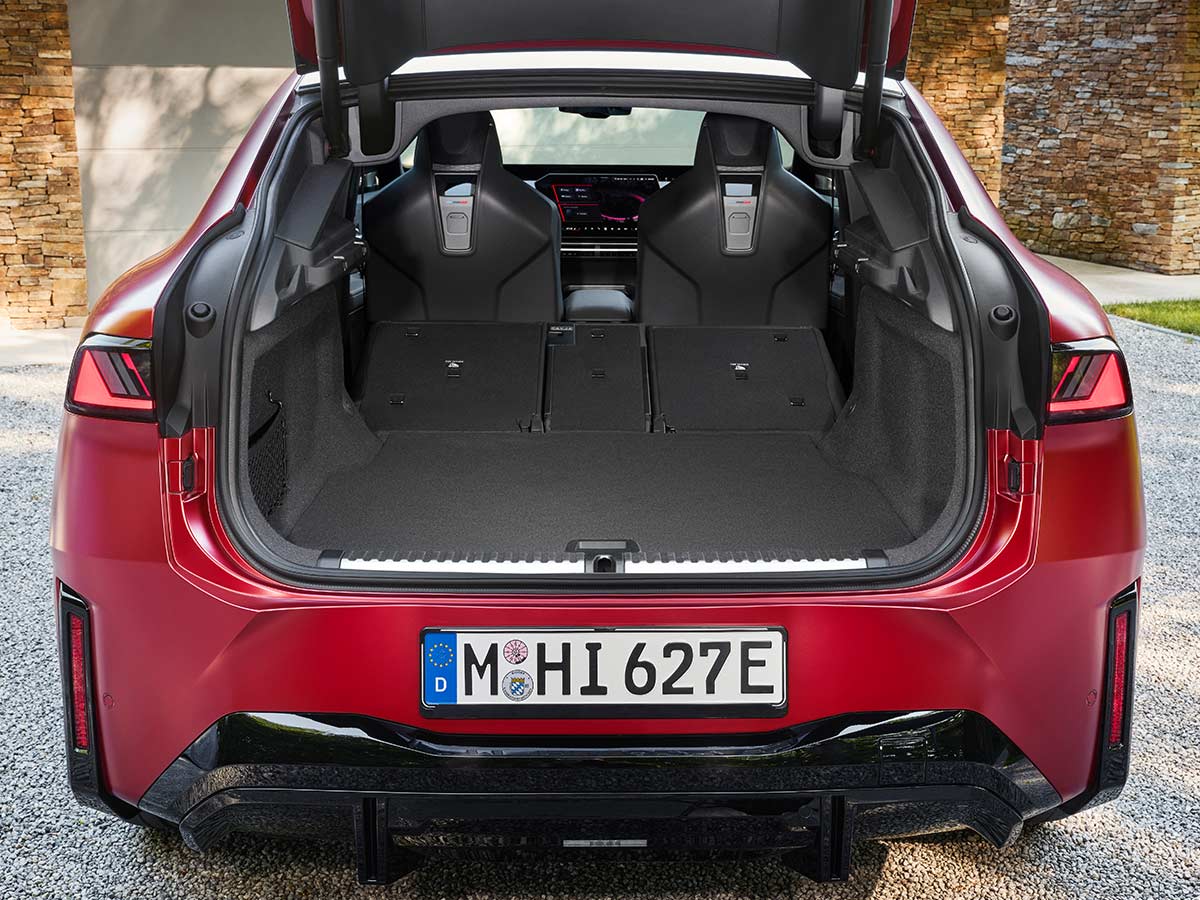
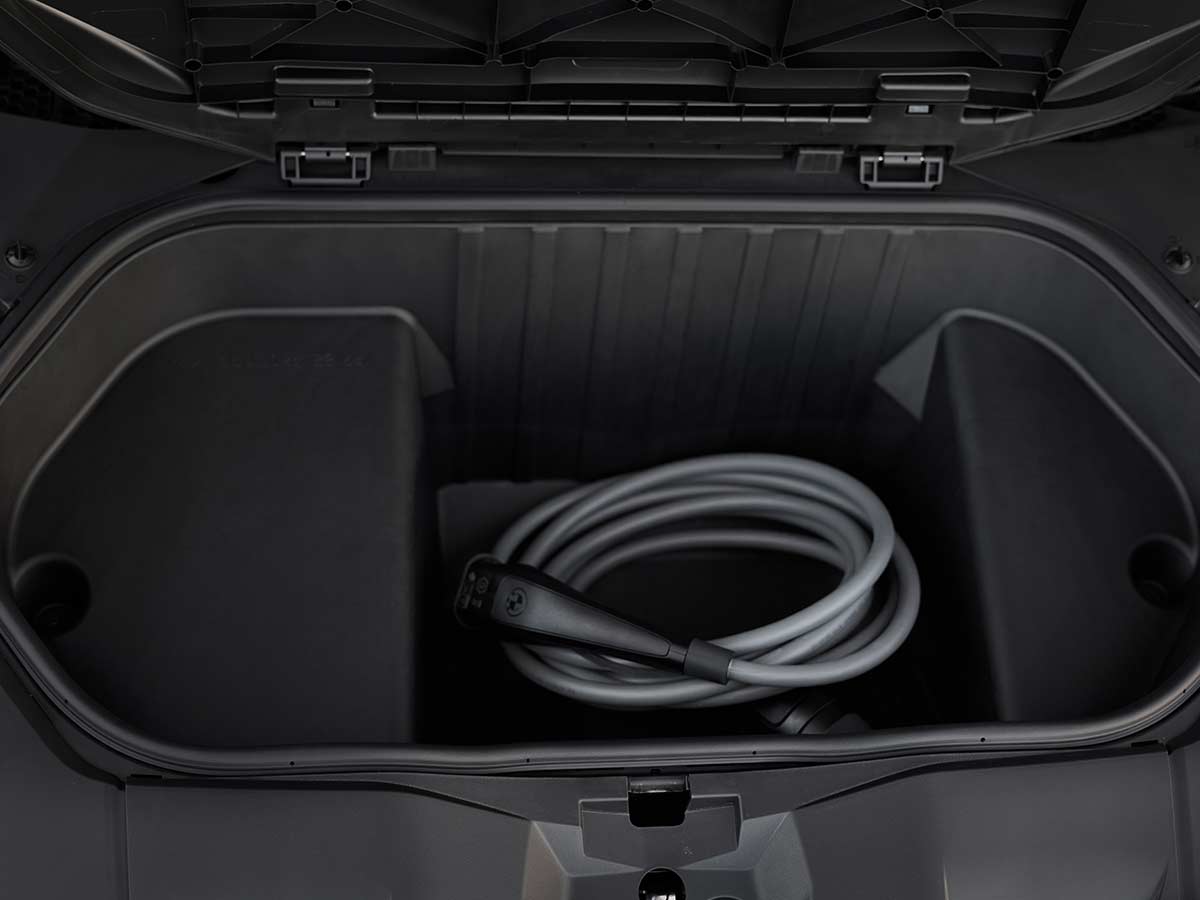
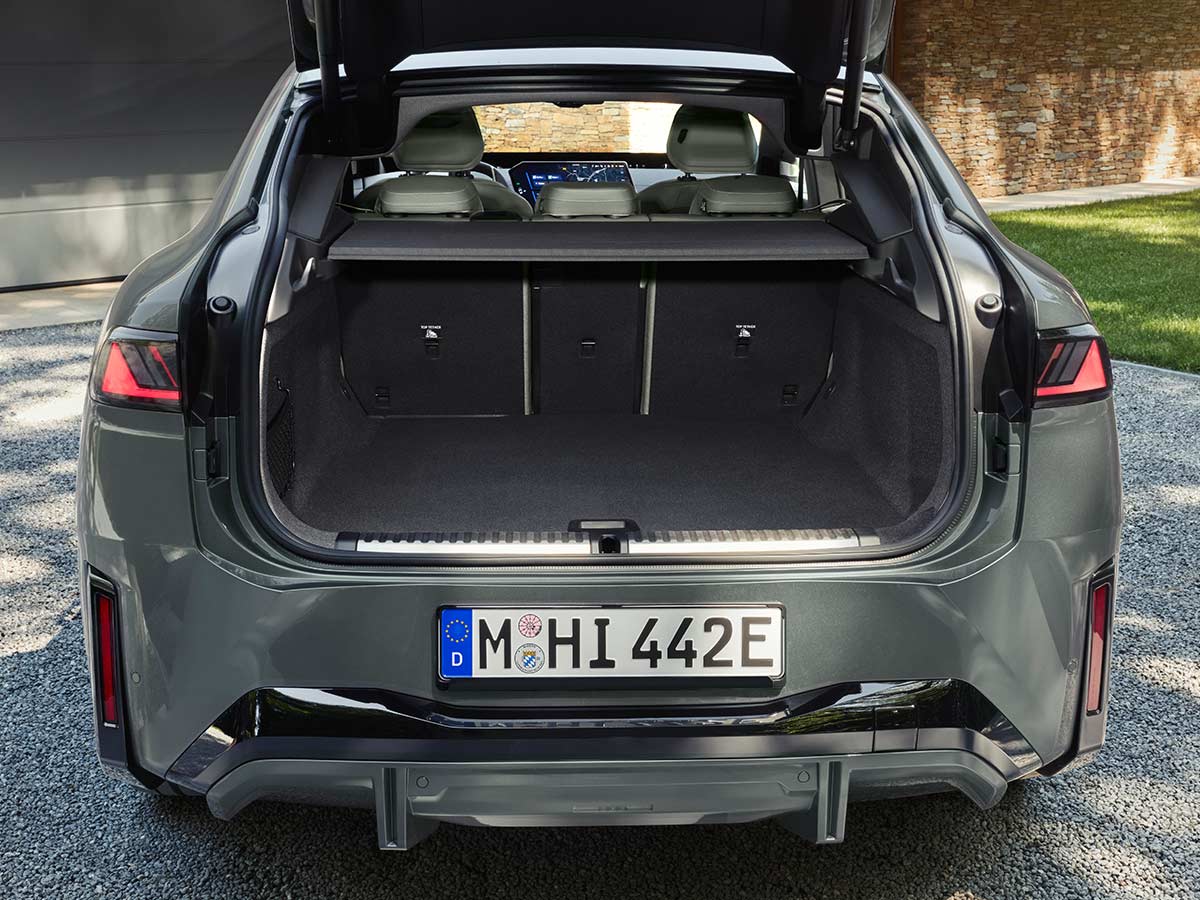
BMW quotes luggage capacity of 490 litres, expanding to 1,600 litres with the rear seats folded. A separate 58-litre storage compartment under the bonnet adds room for smaller items or charging equipment, depending on how the space is configured for the market.
The rear seatback folds in a 40:20:40 arrangement, allowing a mix of passengers and longer cargo to be accommodated. This is more flexible than a simple 60:40 split when, for example, a long item needs to pass through the centre while two rear passengers remain seated.
An electrically extending and retracting tow hitch is available, with a maximum trailer load of 2,000 kg when suitably equipped.
That is a useful reminder that the iX4 is not intended to be a style-first vehicle with limited practical capability. Its coupé silhouette is paired with meaningful cargo capacity and towing potential.
Seats, materials and comfort features
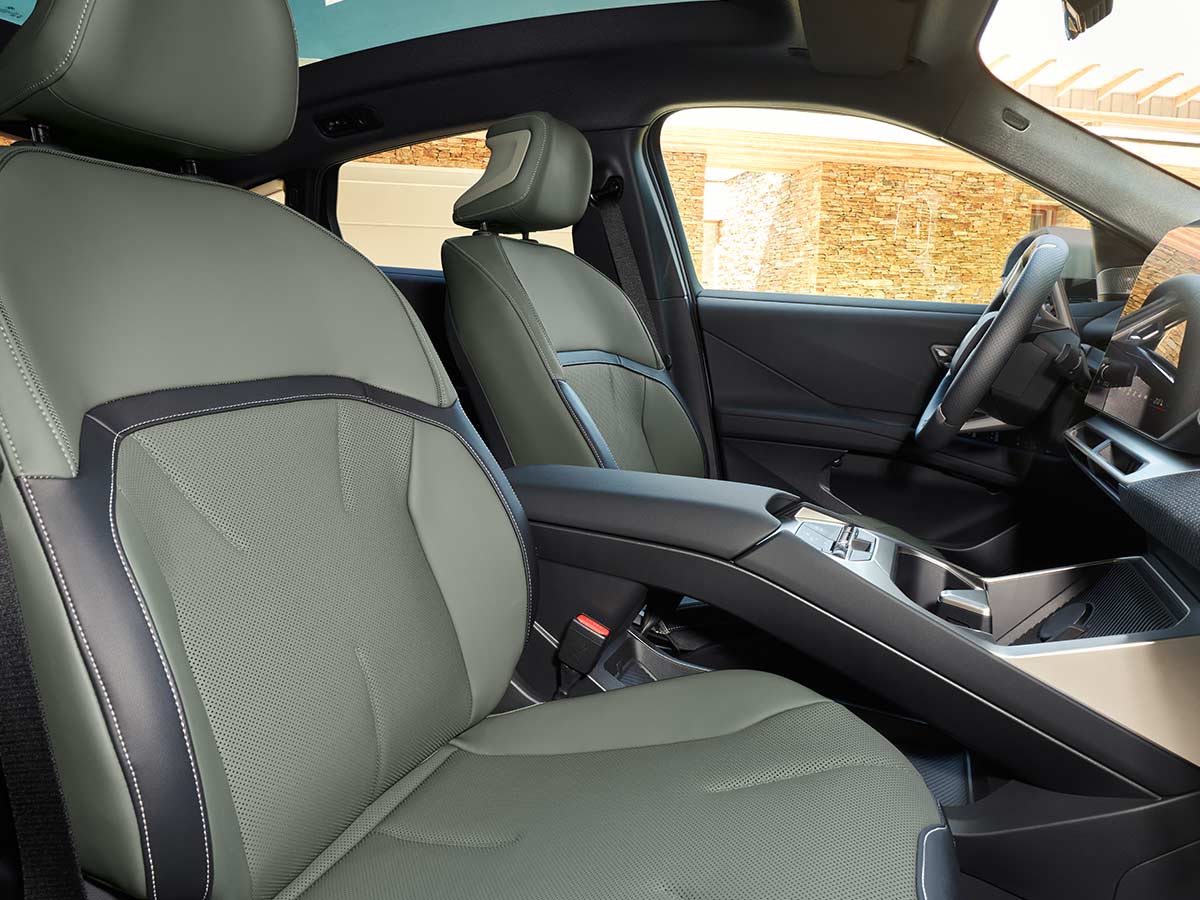
Standard seats offer electric adjustment, memory functionality and the Travel & Comfort System. Multifunction seats with massage functionality are available as an option, while the M60 xDrive receives electrically adjustable M Sport seats as standard.
BMW offers several interior design themes and a range of upholstery choices. Depending on specification, materials include Veganza, M PerformTex and optional Merino leather combinations.
The M60’s cabin adds model-specific details, including an M Sport steering wheel with a red 12-o’clock marker, shift paddles and dedicated controls for Boost Mode and M Mode.
For music lovers, the optional Harman Kardon system on non-M models brings the opportunity to specify the same 13-speaker, 430-watt setup that comes standard in the M60.
The broader impression is one of personalisation rather than a single prescribed luxury aesthetic. Buyers can lean towards a sportier, darker cabin or select more contrasting colours and materials.
Driver Assistance and Safety: BMW Symbiotic Drive
The BMW iX4 combines conventional driver controls with a more advanced suite of assistance systems under the BMW Symbiotic Drive concept.
BMW describes Symbiotic Drive as an approach that aims to make interaction between the driver’s behaviour and the vehicle’s assistance systems more intuitive. The car is designed to help with selected driving and parking tasks while leaving the driver responsible for the overall driving task.
Motorway Assistant and assisted lane changes
BMW says its Motorway Assistant can support hands-free driving at speeds of up to 130 km/h (81 mph) on approved routes in numerous countries. The system can also assist with lane changes on supported roads.
These capabilities are subject to the applicable market, route approval, system conditions and driver-monitoring requirements. They should not be interpreted as permission to stop paying attention or as autonomous driving in every situation.
The BMW iX4’s assistance functions are described as SAE Level 2. At this level, the driver must remain responsible for monitoring the driving environment and be ready to intervene when required.
Software integration and smoother braking
BMW also highlights the relationship between Heart of Joy and its automated-driving computing system. The company says this integration can improve the smoothness of assisted braking by using electric-motor recuperation to bring the vehicle to a stop, except during emergency braking.
Regenerative braking is already a central advantage of electric vehicles because it can recover energy during deceleration. Making that process smoother and more predictable also matters for comfort, especially in traffic.
For drivers and passengers, the ideal outcome is an assistance system that feels less abrupt and more naturally coordinated with the car’s motion.
As with all driver-assistance technology, the real-world assessment will depend on independent testing across different road conditions, traffic patterns and weather.
Sustainability: Looking Beyond Tailpipe Emissions
An electric powertrain eliminates tailpipe emissions during driving, but the overall environmental impact of a vehicle also depends on its materials, manufacturing, energy supply and eventual recycling.
BMW says it has applied a lifecycle approach to the iX4, covering development, the supply chain, production, vehicle use and end-of-life recovery.
According to the company’s preliminary estimates, measures taken during product development reduced supply-chain CO₂-equivalent emissions by around one-third. BMW also estimates that the use of selected lower-emission aluminium reduced the car’s overall CO₂e footprint by 2.1 tonnes.
The company says approximately 30 per cent of the BMW iX4 consists of secondary materials. It also identifies recyclable textile composites and recycled polyester in optional Econeer seat covers as examples of its circular-design strategy.
These figures require context. BMW labels them preliminary forecast values, with final figures to be published in the vehicle’s footprint documentation before production begins. They should therefore be treated as manufacturer estimates rather than independently verified lifecycle results.
Production at BMW Group Plant Debrecen
BMW plans to build the iX4 at its Debrecen plant in Hungary. According to the company’s media information, the facility uses electricity from renewable sources during normal operation, with a photovoltaic installation supplying around one-quarter of its annual electricity demand.
The plant also uses thermal storage to retain surplus solar energy.
This manufacturing approach forms part of BMW’s attempt to reduce the carbon footprint associated with producing the vehicle, including the energy-intensive stages of battery and material supply.
For consumers, the broader lesson is that the environmental credentials of an electric car cannot be judged by its battery capacity or zero-tailpipe-emission status alone. Manufacturing emissions, material recovery and the electricity used during ownership all influence its total lifecycle footprint.
BMW iX4 Price, Launch Timeline and Market Position
BMW’s October 2026 media information gives German starting prices of €70,900 for the iX4 40 xDrive and €75,900 for the iX4 50 xDrive.
The initial launch programme is scheduled for March 2027, with the two standard variants leading the range. BMW’s information also identifies January 2027 as the point when orders for the M60 xDrive can begin, with production of that flagship model scheduled to start in March 2027 and its market introduction taking place in stages.
These dates describe BMW’s announced programme and may differ by market.
BMW iX4 pricing in Germany
| Model | Announced starting price |
|---|---|
| BMW iX4 40 xDrive | €70,900 |
| BMW iX4 50 xDrive | €75,900 |
| BMW iX4 M60 xDrive | To be announced |
The 40 xDrive and 50 xDrive are separated by €5,000 in the announced German starting prices. For that difference, the 50 xDrive provides a larger battery, 95 hp more power, greater torque, a longer quoted range and a higher maximum DC charging rate.
On paper, the 50 xDrive makes a strong value argument for buyers who regularly travel longer distances. The 40 xDrive, however, may remain attractive to those whose everyday routes do not justify the larger battery.
The M60 occupies a different part of the market. Its value proposition rests on performance, dedicated M hardware and a more specialised driving experience.
The competitive landscape
The BMW iX4 enters a premium electric market where manufacturers are competing across several overlapping priorities:
- Range and efficiency: Buyers increasingly expect a premium EV to cover long distances without requiring frequent charging stops.
- Charging speed: A high peak charging rate can shorten journeys, provided the public charging network can support it.
- Performance: Dual-motor all-wheel drive and immediate electric torque have made high acceleration widely available, increasing the importance of chassis tuning and driver engagement.
- Digital experience: Infotainment, software updates, personalisation and driver assistance now form a major part of the premium ownership proposition.
- Design identity: Distinctive styling remains essential in a segment where many electric SUVs share similar packaging and performance figures.
The iX4’s strongest argument is that it addresses all five priorities in a single product. Whether that translates into a class-leading result will require comparisons against rivals with equivalent pricing, equipment, range-testing methodology and charging conditions.
BMW iX4 vs the Typical Premium Electric SUV: What Matters Most?
A useful comparison should focus on the areas that affect ownership rather than simply comparing peak horsepower.
| Buying consideration | BMW iX4’s stated proposition | What buyers should verify |
|---|---|---|
| Long-distance driving | Up to 828 km WLTP range in the 50 xDrive | Real-world motorway range and cold-weather efficiency |
| Rapid charging | Up to 400 kW DC | Average charging power and time from 10% to 80% |
| Driving dynamics | Heart of Joy control architecture, low centre of gravity and available adaptive M suspension | Ride comfort, steering response and handling in independent tests |
| Cabin technology | Panoramic Vision, 17.9-inch central display and Operating System X | Display usability, voice-assistant availability and update policy |
| Everyday practicality | 490-1,600 litres of luggage capacity and 58 litres under the bonnet | Actual loading access, rear-seat comfort and storage layout |
| Performance | Up to 612 hp and 875 Nm in the M60 xDrive | Repeatability of acceleration, braking performance and thermal management |
| Sustainability | Approximately 30% secondary materials, according to BMW | Final lifecycle footprint and independently verified data |
The most revealing future comparison will be a complete road test that measures energy consumption, charging time and driving behaviour under consistent conditions. Peak figures establish potential; repeatable performance determines how useful that potential is in daily ownership.
The Details That Could Make or Break the BMW iX4
The specification sheet is impressive, but several questions deserve attention before the iX4 can be judged on its merits.
First, real-world charging performance. The 400 kW headline is compelling, yet the shape of the charging curve matters more than a momentary peak. Independent testing should establish how long the car can sustain high charging power and how its performance changes with battery temperature and state of charge.
Second, ride quality on larger wheels. The standard M Sport equipment and optional 21- and 22-inch wheels support the iX4’s sporting image. However, wheel and tyre specifications can influence comfort, road noise, efficiency and replacement costs. The adaptive M suspension will need to demonstrate that it can balance those competing priorities.
Third, digital usability. Panoramic Vision and a 17.9-inch touchscreen promise a distinctive cabin experience. Their success will depend on whether common tasks remain intuitive, whether information is easy to read and whether drivers can operate key functions without unnecessary distraction.
Fourth, the practical consequences of the coupé roofline. BMW says the cabin offers generous headroom, but actual rear-seat comfort, visibility and ease of entry will be important to families and frequent passengers.
Finally, market-specific availability. Charging standards, connected services, assistance functions and equipment can vary by country. The car’s advertised capabilities must be assessed against the version that buyers can actually order.
These are not necessarily weaknesses. They are the questions that separate an ambitious specification from a convincing ownership experience.
Final Verdict: The BMW iX4 Is About More Than Range
The new BMW iX4 arrives at a pivotal moment for premium electric vehicles. Buyers increasingly expect an EV to offer more than rapid acceleration and a large battery. They want convincing range, short charging stops, a sophisticated cabin, everyday practicality and the sort of steering and chassis response that makes driving enjoyable rather than merely efficient.
BMW’s Neue Klasse SUV coupé is designed to deliver precisely that combination.
The iX4 40 xDrive provides a strong entry point with 374 hp and a 638 km claimed WLTP range. The iX4 50 xDrive looks like the long-distance sweet spot, combining 469 hp with the line-up’s best quoted range of 828 km and charging capability of up to 400 kW. At the top, the iX4 M60 xDrive brings 612 hp, 875 Nm and a dedicated M chassis package to the electric SUV coupé formula.
Yet the most consequential developments may be less obvious than the performance figures. The Gen6 electric architecture, integrated Heart of Joy control system, panoramic digital interface and bidirectional charging capability point towards a BMW that treats electrification, software and driving dynamics as parts of one engineering programme.
That is the real promise of the BMW iX4. It is not simply a combustion-era luxury SUV converted to electric power, nor is it a technology demonstrator that sacrifices traditional BMW character for digital novelty. It is an attempt to make the next generation of electric motoring feel coherent, desirable and distinctly BMW.
The final judgement will depend on independent testing, real-world efficiency, charging-curve performance, pricing and the availability of its advanced features in individual markets. But the technical foundations are promising.
If BMW can make the iX4’s software as intuitive as its performance is effortless, the Neue Klasse could mark a defining chapter in the evolution of the electric driver’s car. The next benchmark will not be how quickly an EV reaches 100 km/h, but how convincingly it combines speed, range, comfort and connection on every journey.
Source: BMW