






Unveiled at the world’s most iconic endurance race, BMW’s latest concept offers a glimpse into a future where electrification and motorsport DNA coexist.
There are few venues more symbolic for a performance car debut than Le Mans.
For more than a century, the legendary Circuit de la Sarthe has served as a proving ground for automotive innovation, where manufacturers push the limits of engineering, efficiency, and endurance under the harshest conditions imaginable. Technologies developed for racing have consistently found their way onto public roads, making the 24 Hours of Le Mans not just a race, but a showcase of the future.
That significance makes BMW’s latest reveal particularly noteworthy.
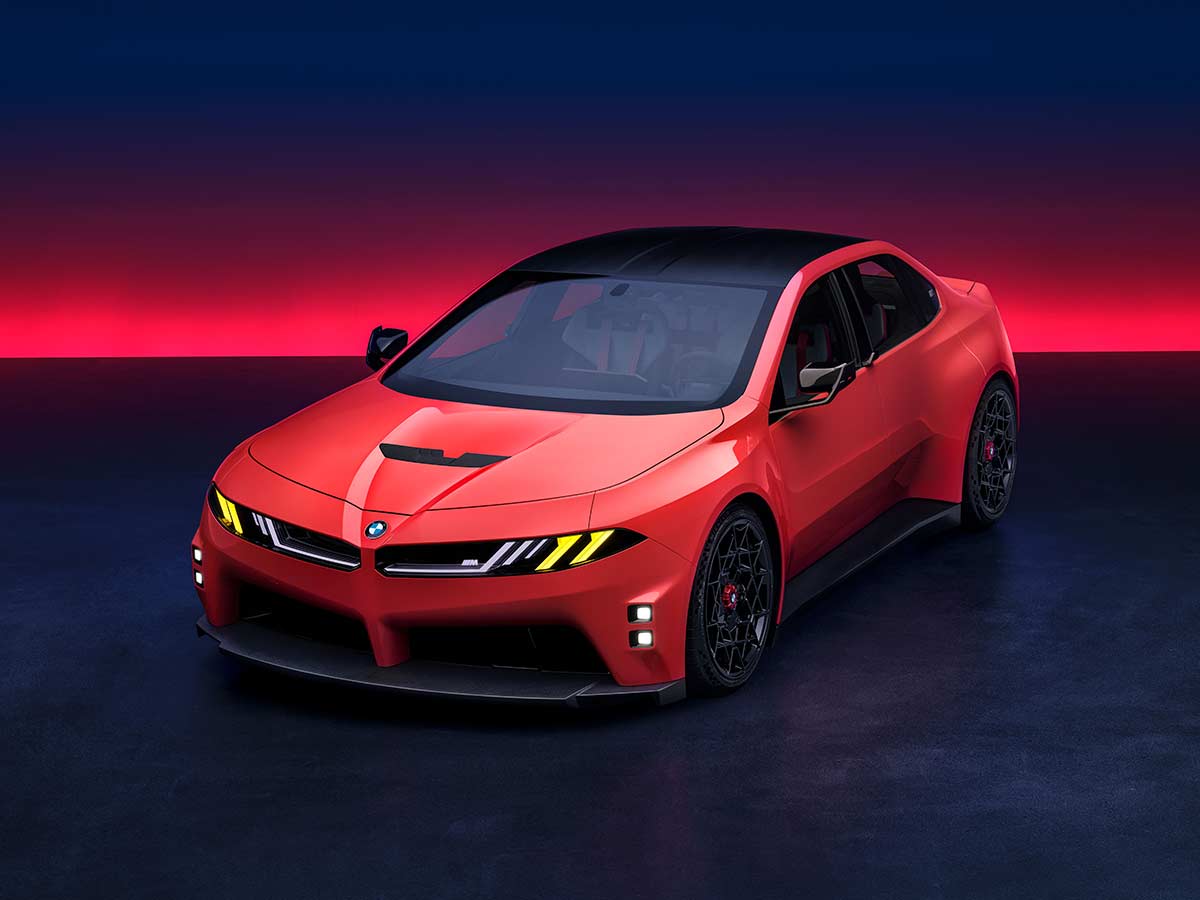
Ahead of the 2026 running of the world’s most famous endurance race, BMW M unveiled the Concept Neue Klasse, a striking electric performance concept that previews the next chapter of the brand’s evolution. More than a design study, the vehicle serves as a manifesto for what BMW M intends to become in the electric era. It combines a dramatically new design language, advanced drivetrain technology, sustainable materials, and motorsport-inspired engineering into a single machine designed to answer one of the industry’s biggest questions:
Can an electric performance car still deliver the character, precision, and excitement that enthusiasts expect from a BMW M?
BMW believes it can.
The BMW M Concept Neue Klasse represents the clearest look yet at how the company plans to preserve its performance identity while embracing electrification. From its race-inspired aerodynamics and aggressive proportions to its four-motor drivetrain and sophisticated control systems, the concept demonstrates that the transition to electric power does not have to come at the expense of driver engagement.
And perhaps fittingly, BMW chose to make that statement at a place where performance credentials still matter more than marketing slogans.
>>> Great Discounts on Car & Bike Accessories <<<
Why This Concept Matters More Than Most
Concept cars often fall into one of two categories. Some are realistic previews of upcoming production vehicles, while others exist primarily to generate headlines before quietly disappearing into history.
The BMW M Concept Neue Klasse feels different.
This is not simply a futuristic design exercise created to showcase bold styling ideas. Instead, it appears to be a carefully constructed roadmap that outlines BMW M’s future direction across multiple fronts. Design, materials, technology, performance engineering, and electrification are all represented here in a form that feels surprisingly tangible.
For BMW M, the stakes could hardly be higher.
The division has spent more than five decades building some of the world’s most celebrated performance cars. From the original M1 and E30 M3 to modern icons like the M2, M3, and M5, the formula has remained remarkably consistent. Precision handling, balanced performance, and driver engagement have always mattered more than headline horsepower figures.
The challenge facing BMW today is preserving those values in a world increasingly defined by batteries, software, and electric motors.
The Neue Klasse concept offers the strongest indication yet that BMW intends to tackle that challenge head-on rather than simply adapting existing electric vehicle architectures for performance applications.
A New Design Language Built Around Purpose
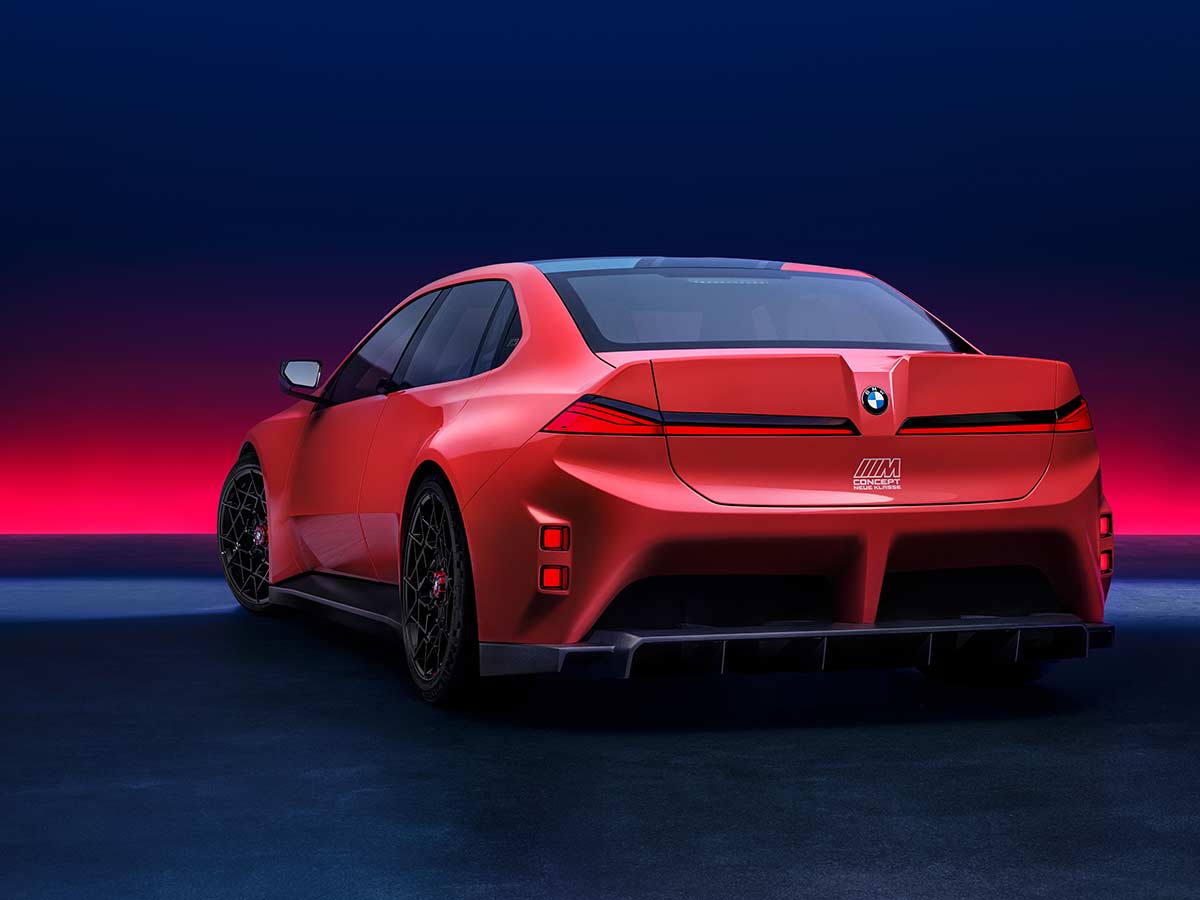
The first thing that stands out about the BMW M Concept Neue Klasse is how unmistakably purposeful it appears.
While many electric performance concepts rely on exaggerated proportions and futuristic styling gimmicks, BMW’s approach feels more disciplined. The visual drama comes from stance, surfacing, and aerodynamic detailing rather than unnecessary ornamentation.
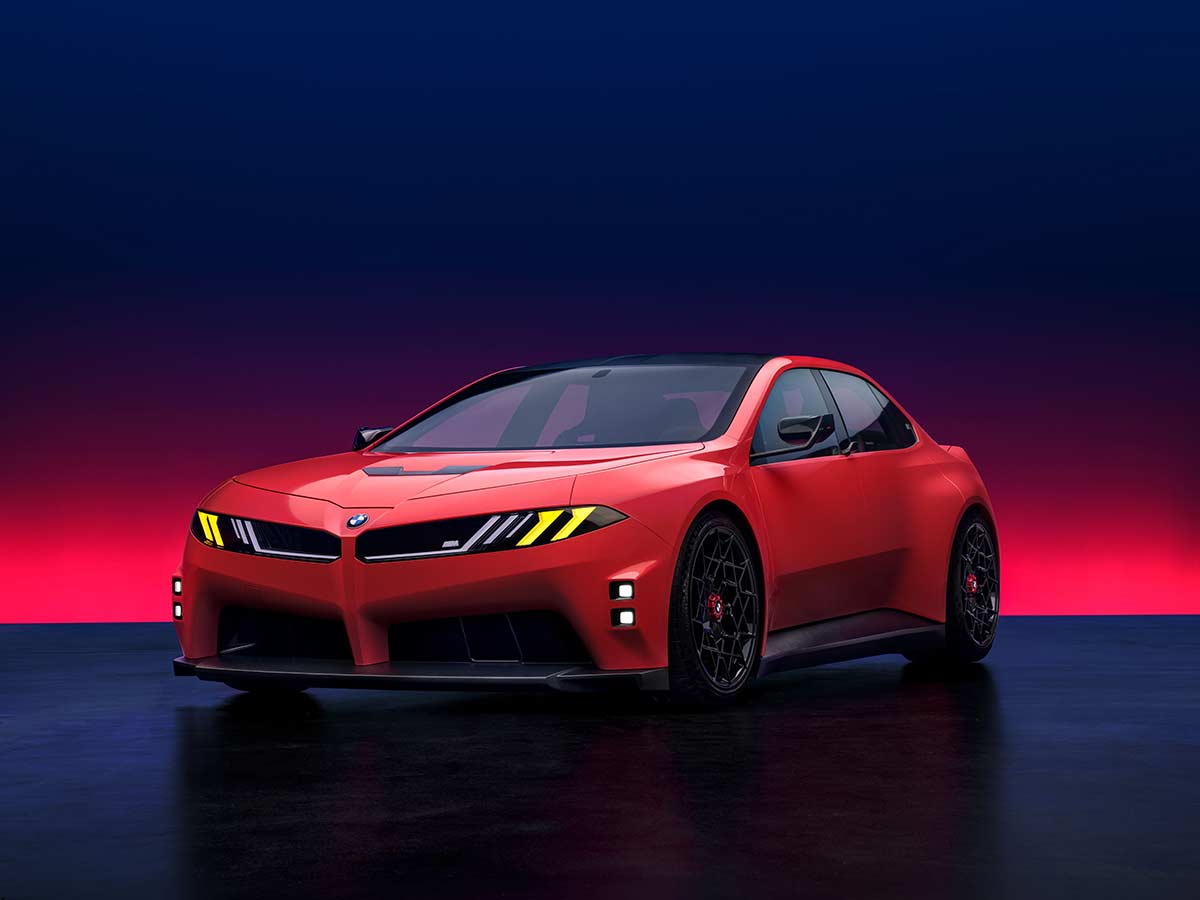
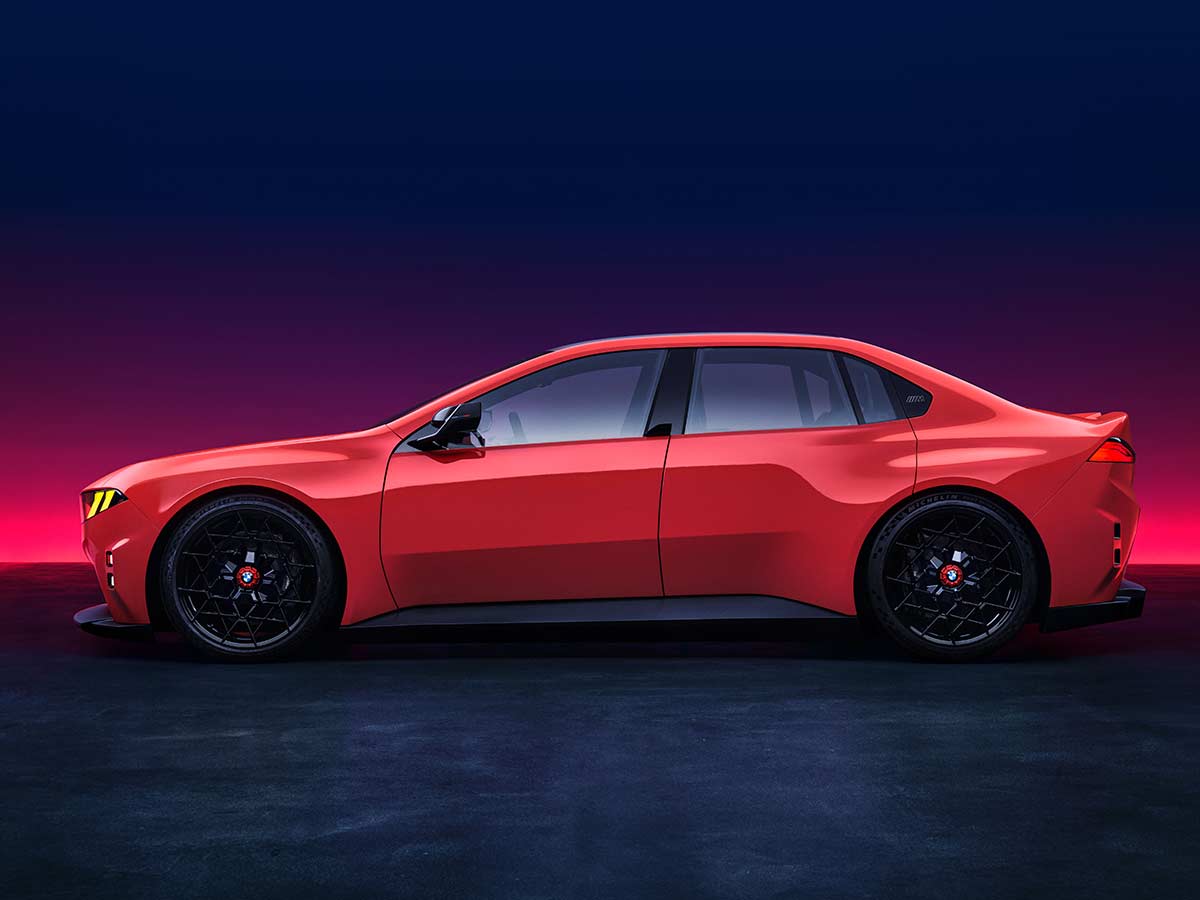
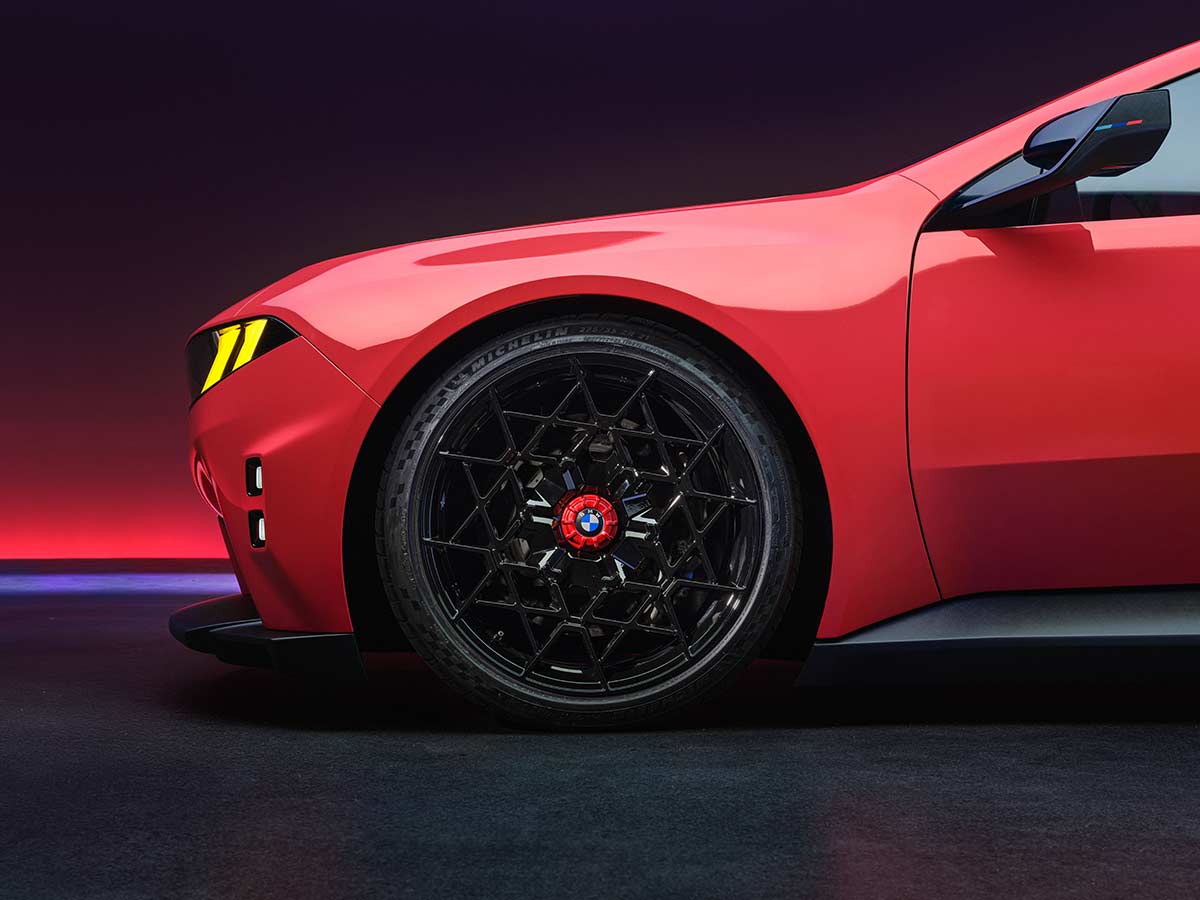
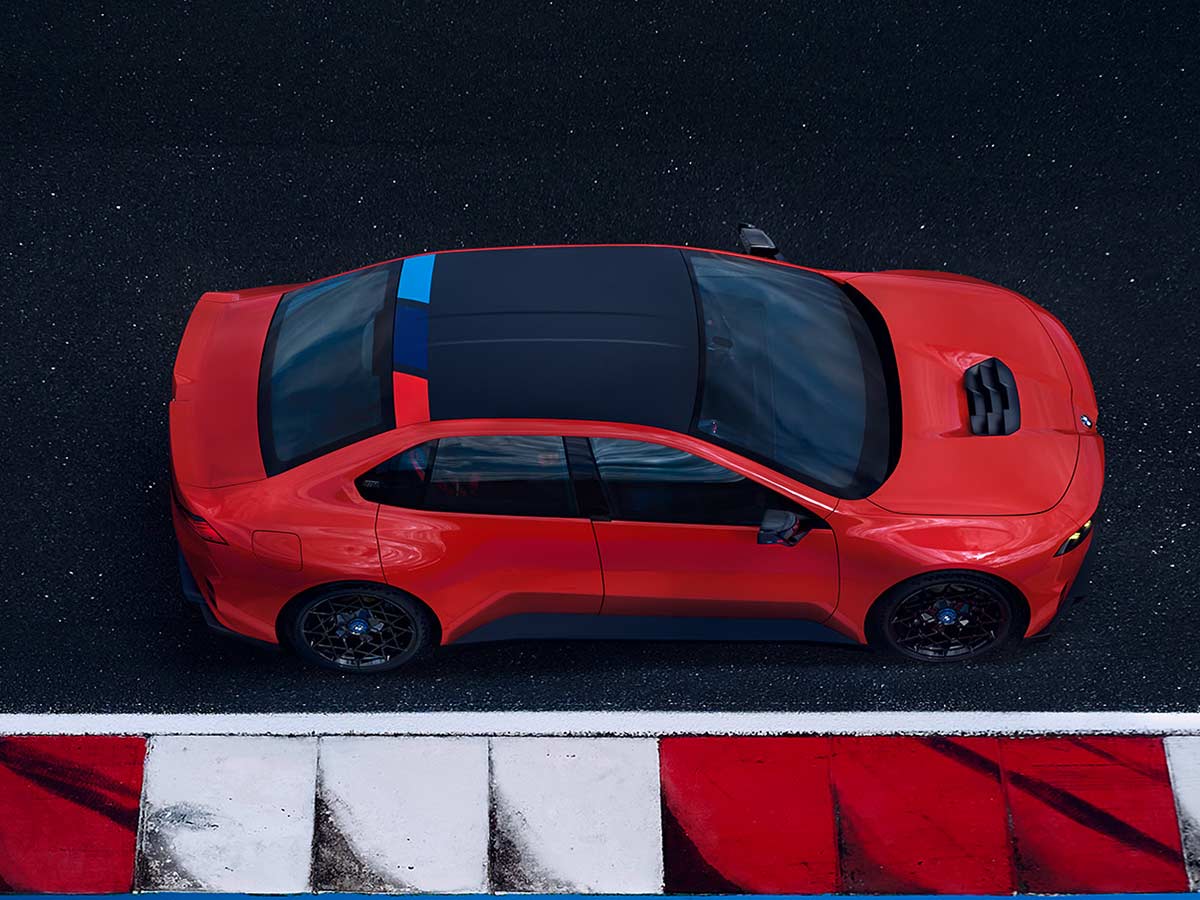
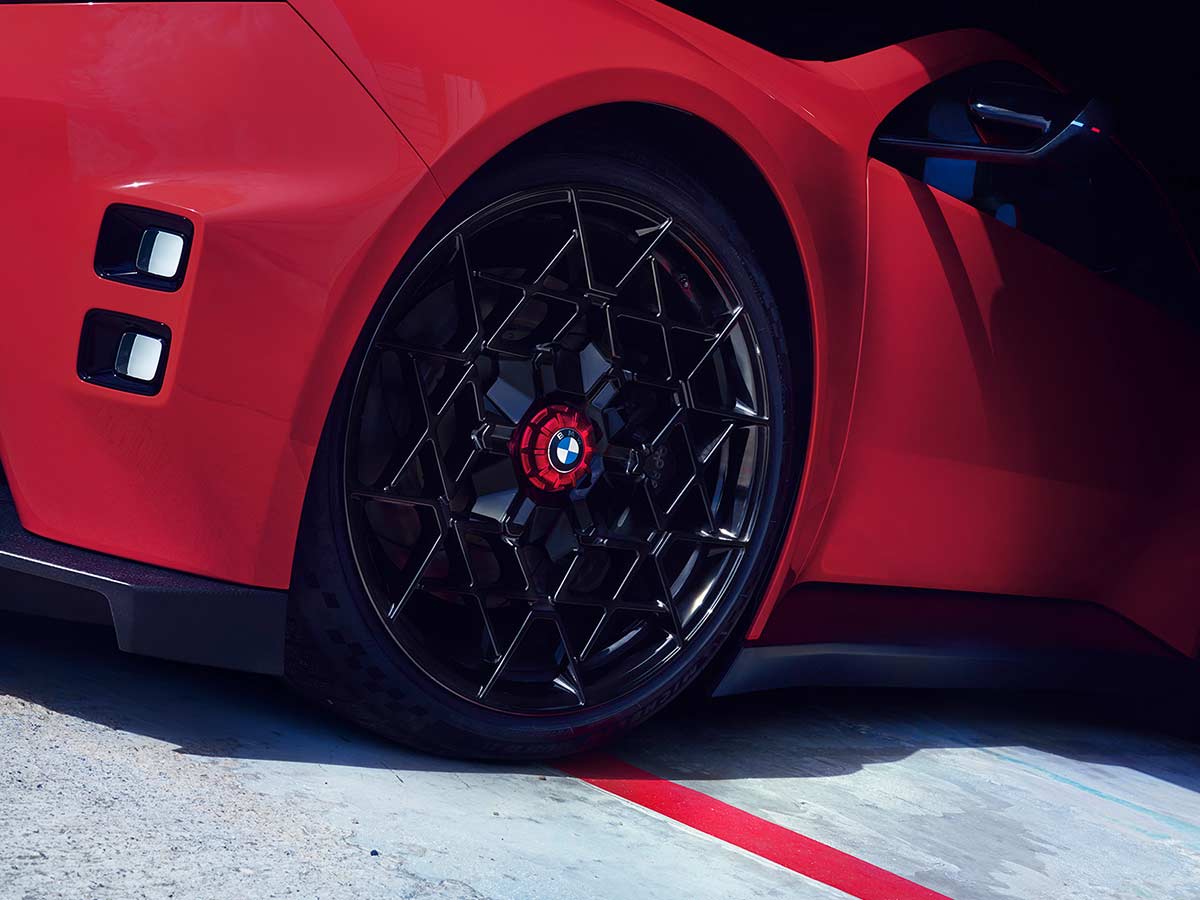
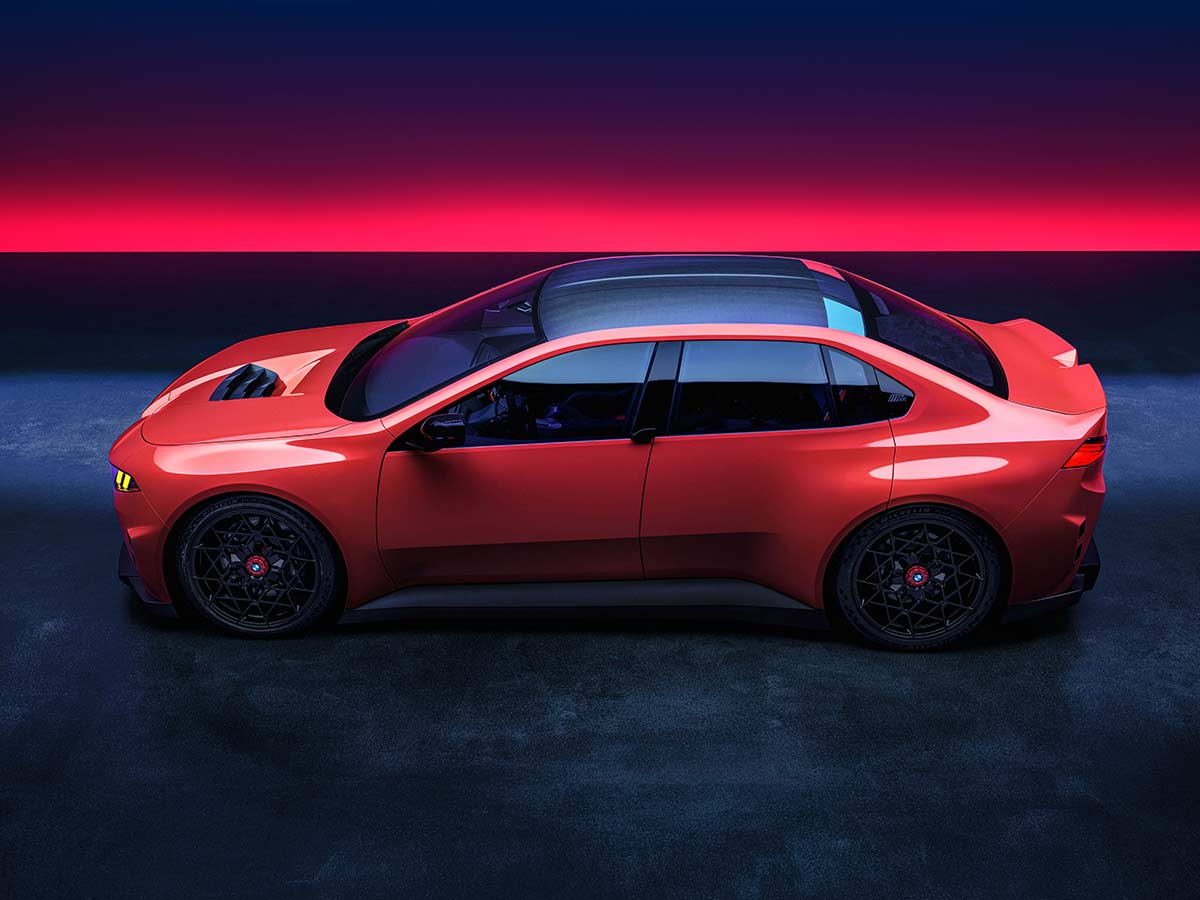
Wide wheel arches, a muscular shoulder line, and tightly controlled body surfaces immediately establish the vehicle’s identity as a high-performance machine. It carries the confidence expected of a modern M product while introducing a significantly more progressive design language than anything currently found in BMW showrooms.
According to BMW’s designers, every major element follows a strict form-follows-function philosophy. That principle has long defined the company’s most successful performance cars, and the Neue Klasse concept demonstrates how that philosophy is evolving for the electric age.
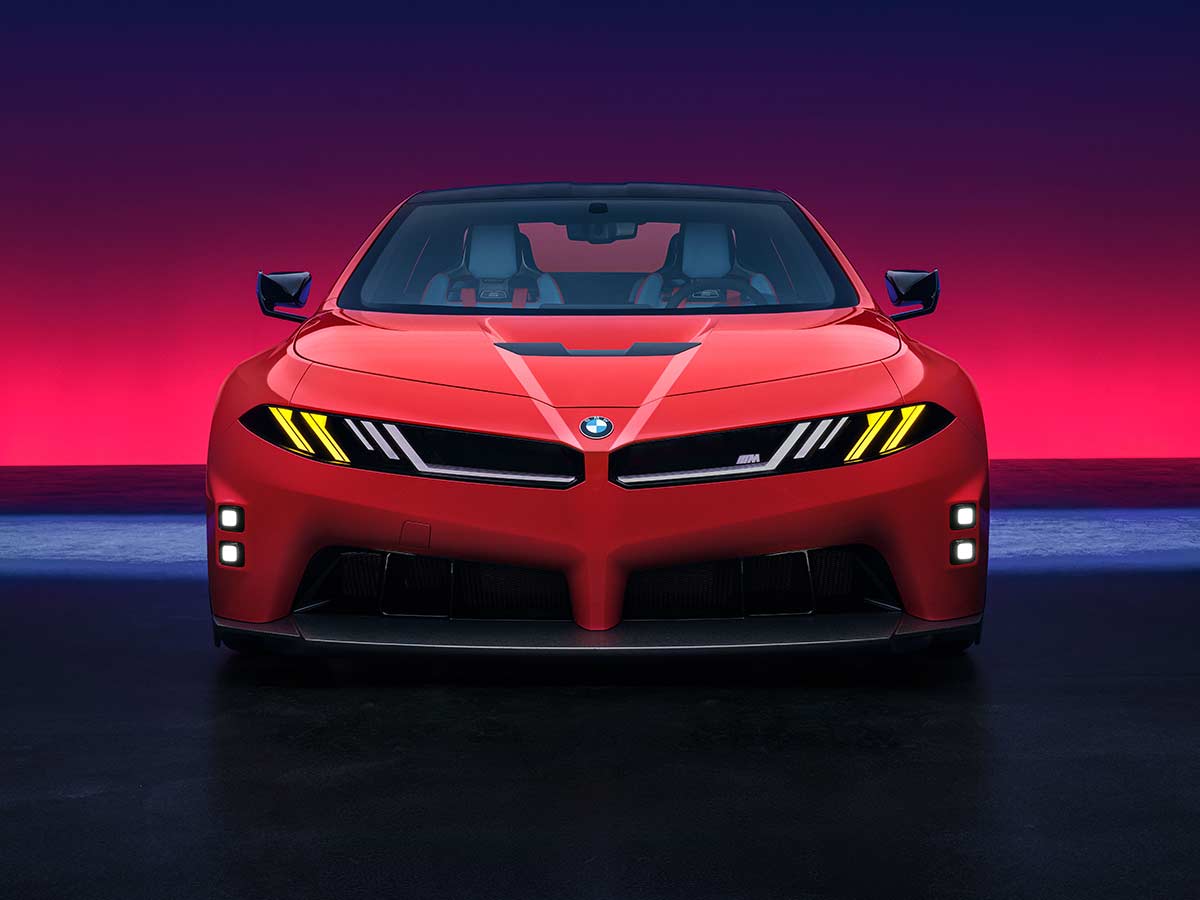
At the front, the traditional BMW shark nose has been reinterpreted into a sharper, more technical expression. The headlights and kidney grille are visually integrated into a single element, creating a cleaner and more cohesive front-end design while maintaining one of BMW’s most recognizable signatures.
A dramatic V-shaped air outlet integrated into the hood serves as both a visual focal point and a functional cooling solution for the electric powertrain beneath. It is a reminder that despite its futuristic appearance, the concept remains firmly rooted in performance engineering.
Perhaps the most distinctive feature is the introduction of BMW M’s new yellow lighting signature.
Inspired by endurance racing machinery and BMW’s own M Hybrid V8 race car, the yellow light elements create an unmistakable visual identity. BMW says the feature is expected to become a defining characteristic of future M products, strengthening the connection between the company’s motorsport activities and its road-going vehicles.
Motorsport Influence Runs Deep
BMW’s racing heritage is visible throughout the concept.
The front apron incorporates a trimaran-inspired design that draws influence from high-speed sailing vessels. While the inspiration may seem unusual, the resulting architecture provides both structural support for the front splitter and enhanced airflow management around the vehicle.
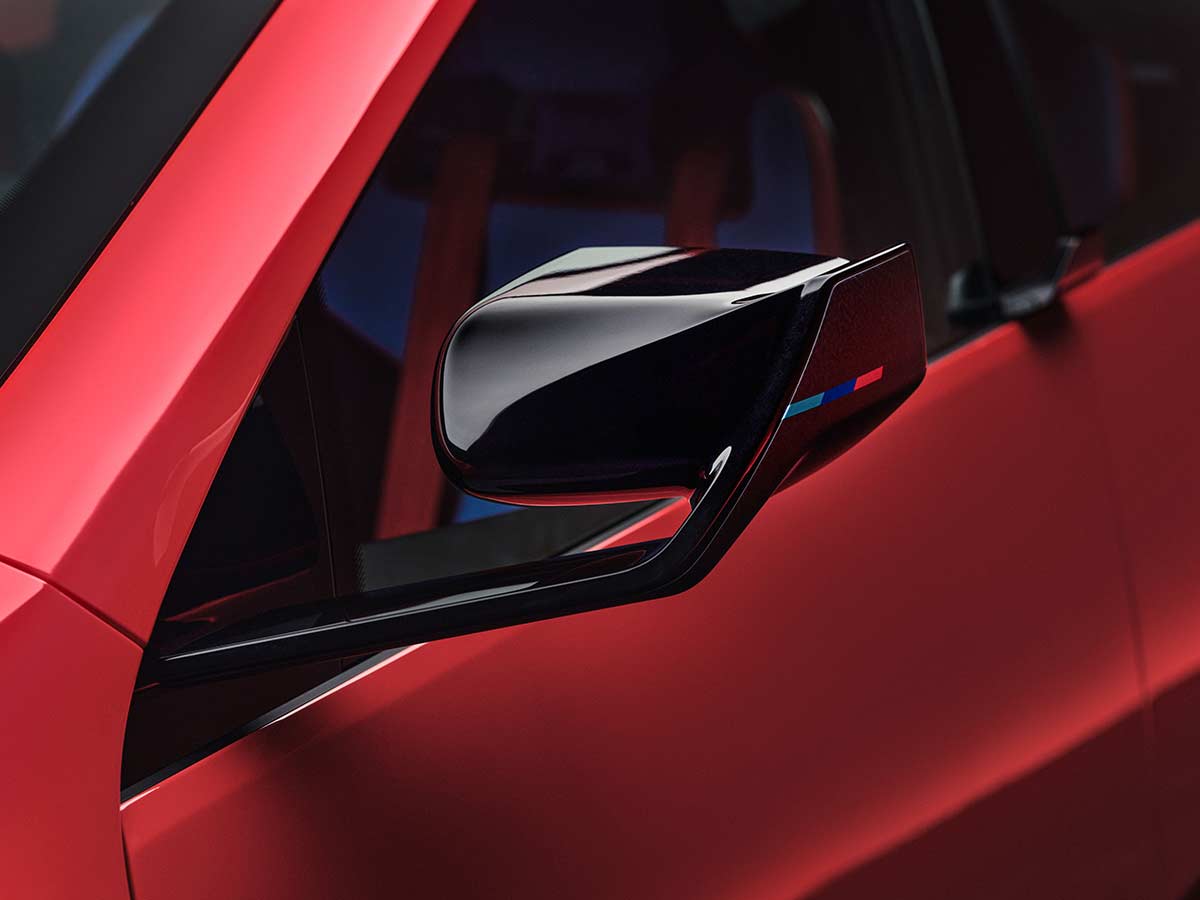
M-specific aerodynamic mirrors continue the performance-focused theme while adding visual links to BMW’s racing programs.
The rear of the vehicle is equally dramatic.
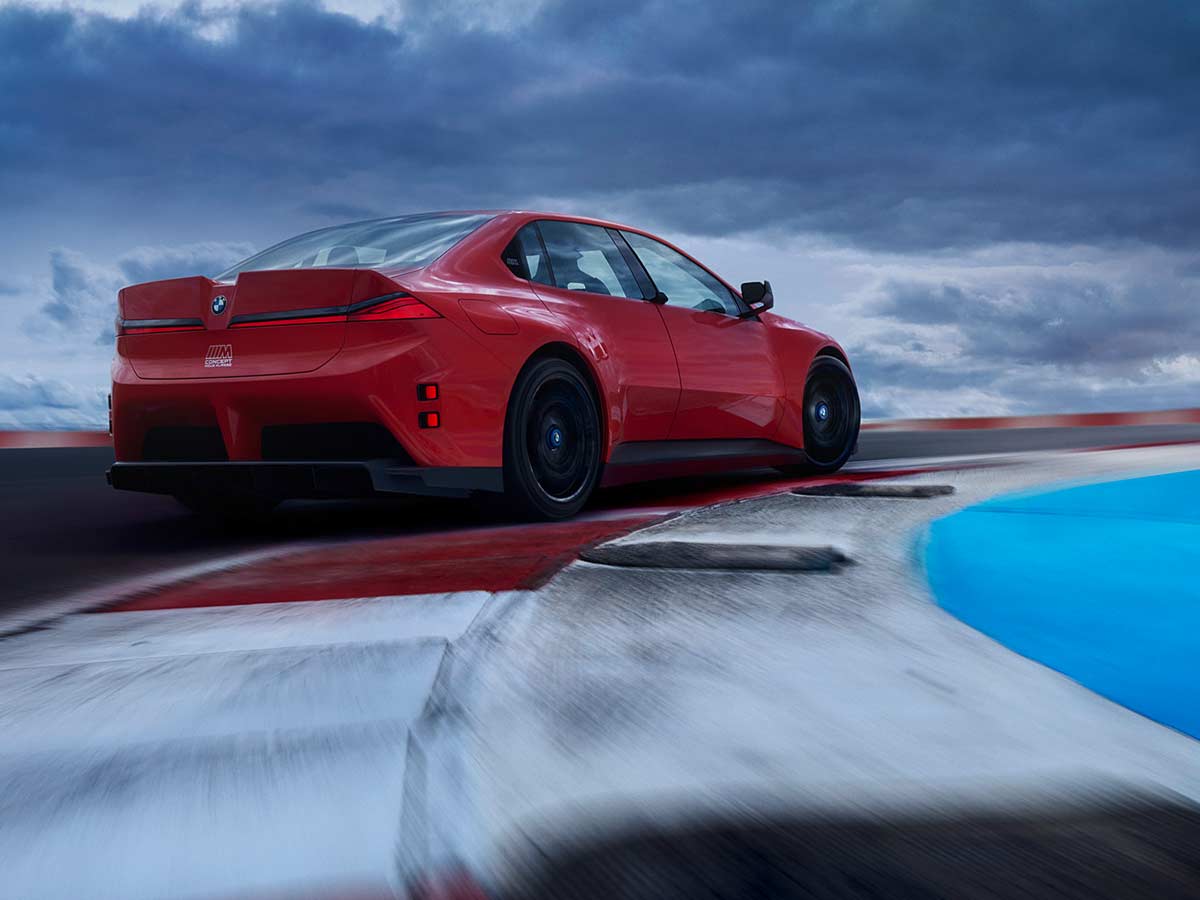
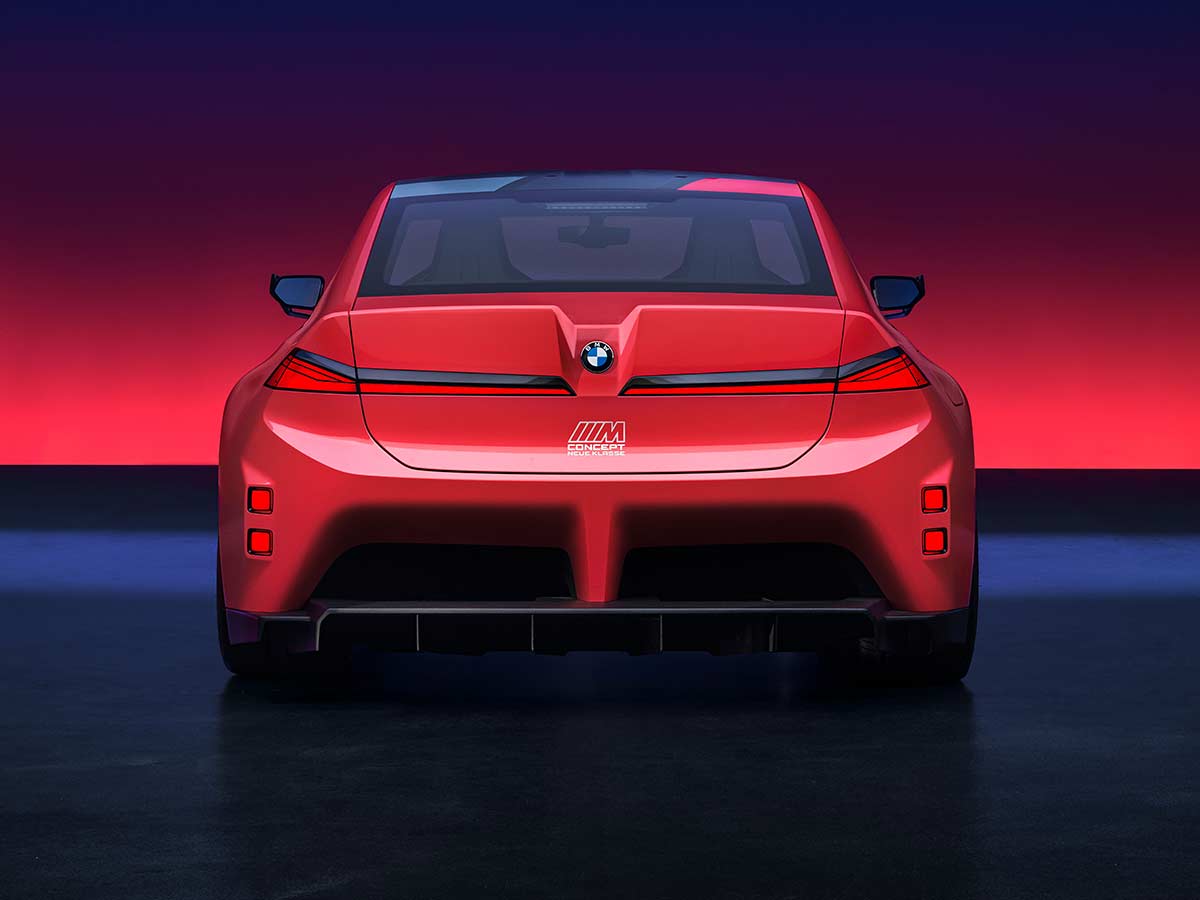
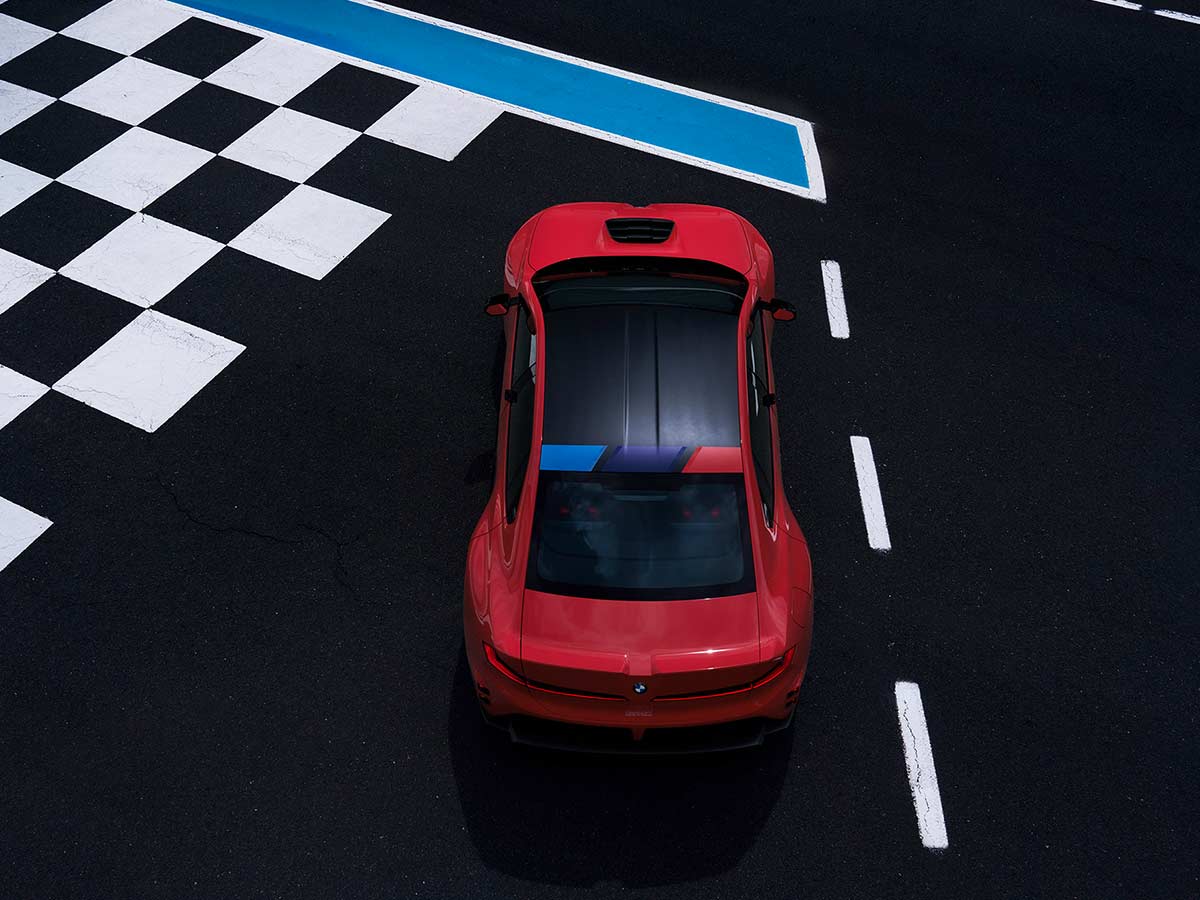
A prominent ducktail spoiler rises naturally from the bodywork, helping increase downforce while maintaining the clean overall design. Beneath it sits a floating diffuser that reinforces the car’s technical appearance while contributing to aerodynamic efficiency.
BMW has also introduced a new lighting feature known as Track Lights.
Positioned within the rear apron, these three-dimensional light elements create a unique nighttime signature while framing the aerodynamic architecture of the vehicle. Together with the yellow front lighting elements, they establish a distinctive visual identity that future BMW M models are likely to adopt.
Unlike many concept cars where aggressive styling exists purely for aesthetic impact, nearly every design feature on the Neue Klasse concept serves a measurable purpose.
That authenticity may ultimately prove to be one of the vehicle’s greatest strengths.
Sustainable Materials Meet High Performance
One of the most interesting aspects of the BMW M Concept Neue Klasse is its extensive use of natural-fibre materials.
Traditionally, lightweight performance vehicles have relied heavily on carbon fibre to achieve weight savings and increased structural rigidity. BMW is now exploring how advanced natural-fibre composites can deliver similar benefits while improving sustainability.
The materials appear throughout both the exterior and interior.
Natural-fibre components are used in the front splitter, hood air outlet, and rear diffuser. For the first time, BMW has also incorporated refined natural-fibre finishes featuring integrated M branding within the roof graphic.
The approach reflects a broader shift in automotive engineering.
As manufacturers pursue sustainability targets, reducing emissions during vehicle production is becoming just as important as reducing emissions during operation. Advanced natural-fibre materials offer the potential to lower environmental impact without compromising performance.
BMW’s challenge is ensuring these materials meet the demanding standards expected of an M product.
The Neue Klasse concept suggests the company is confident they can.
A Driver-Focused Interior for the Electric Age
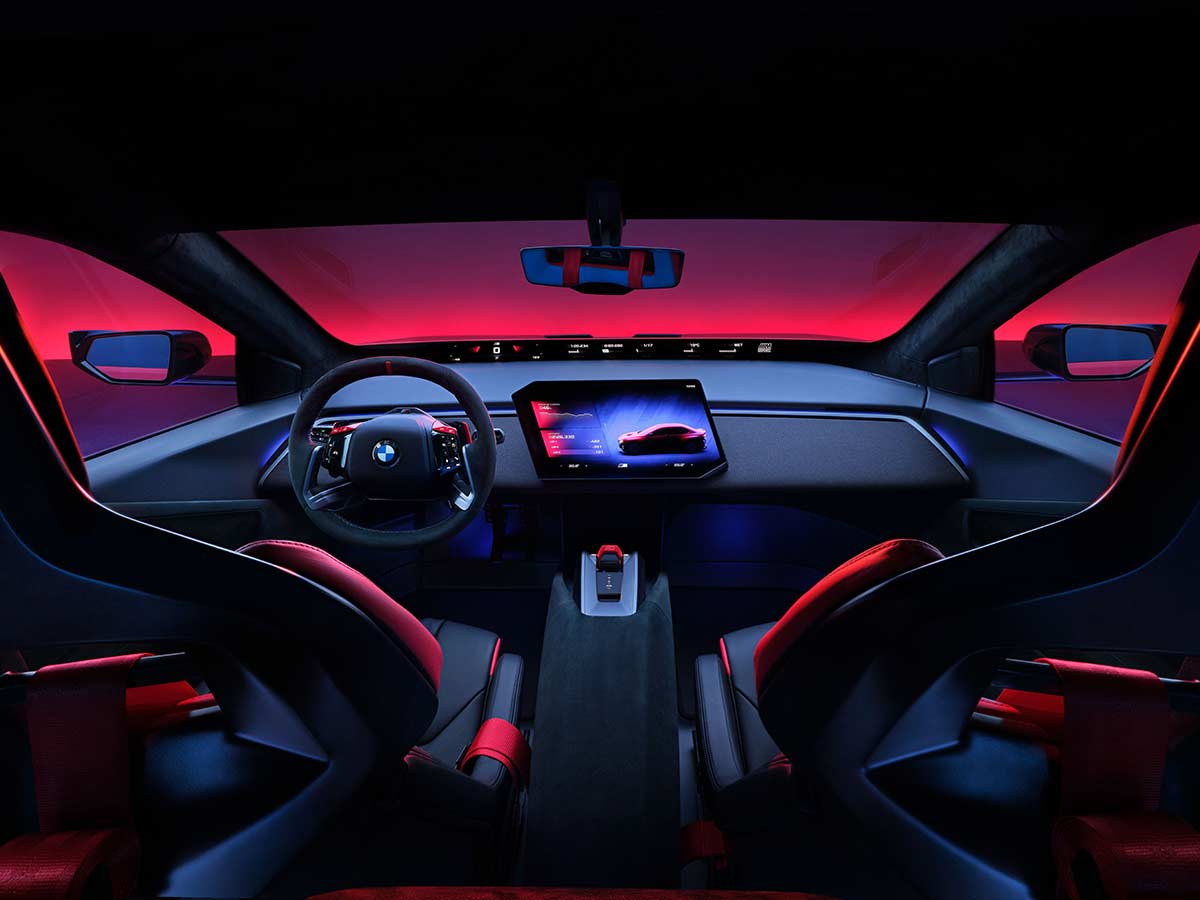
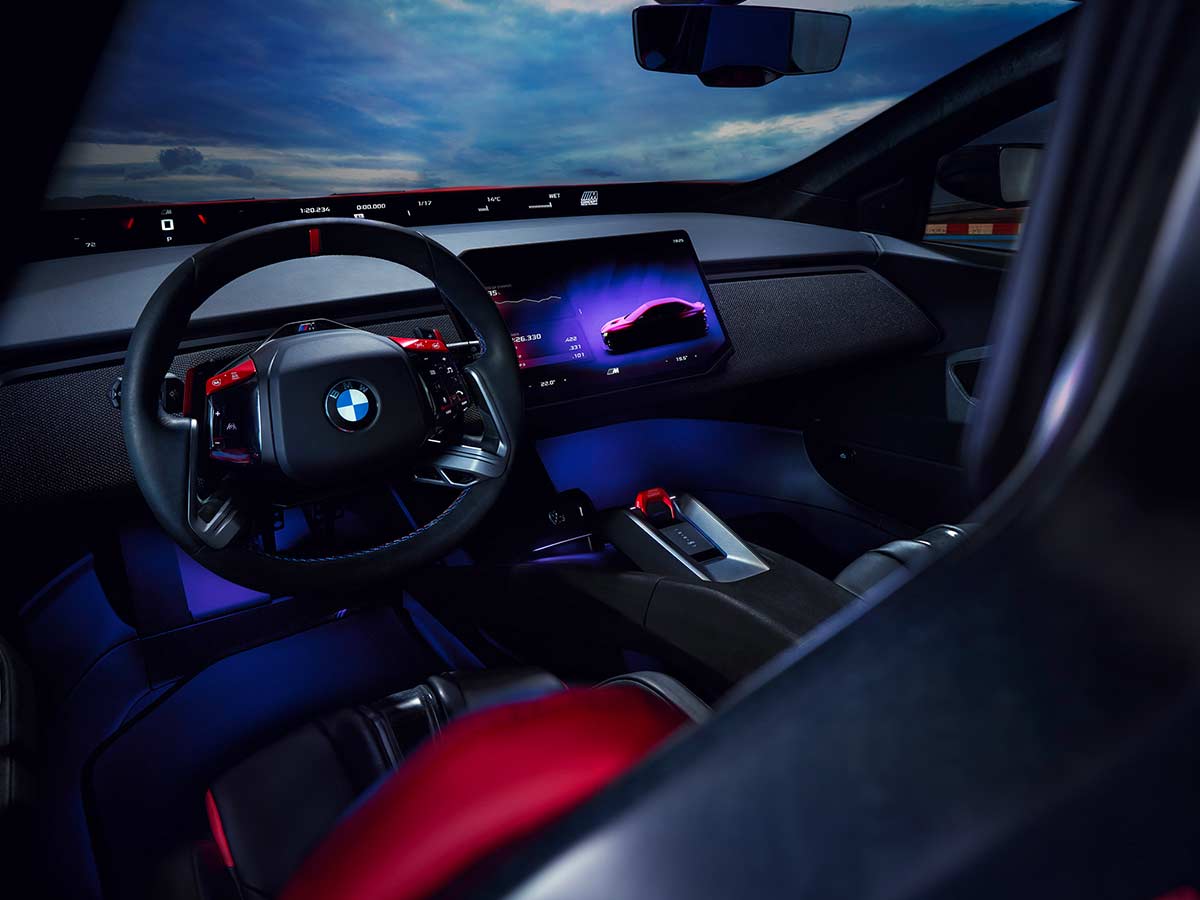
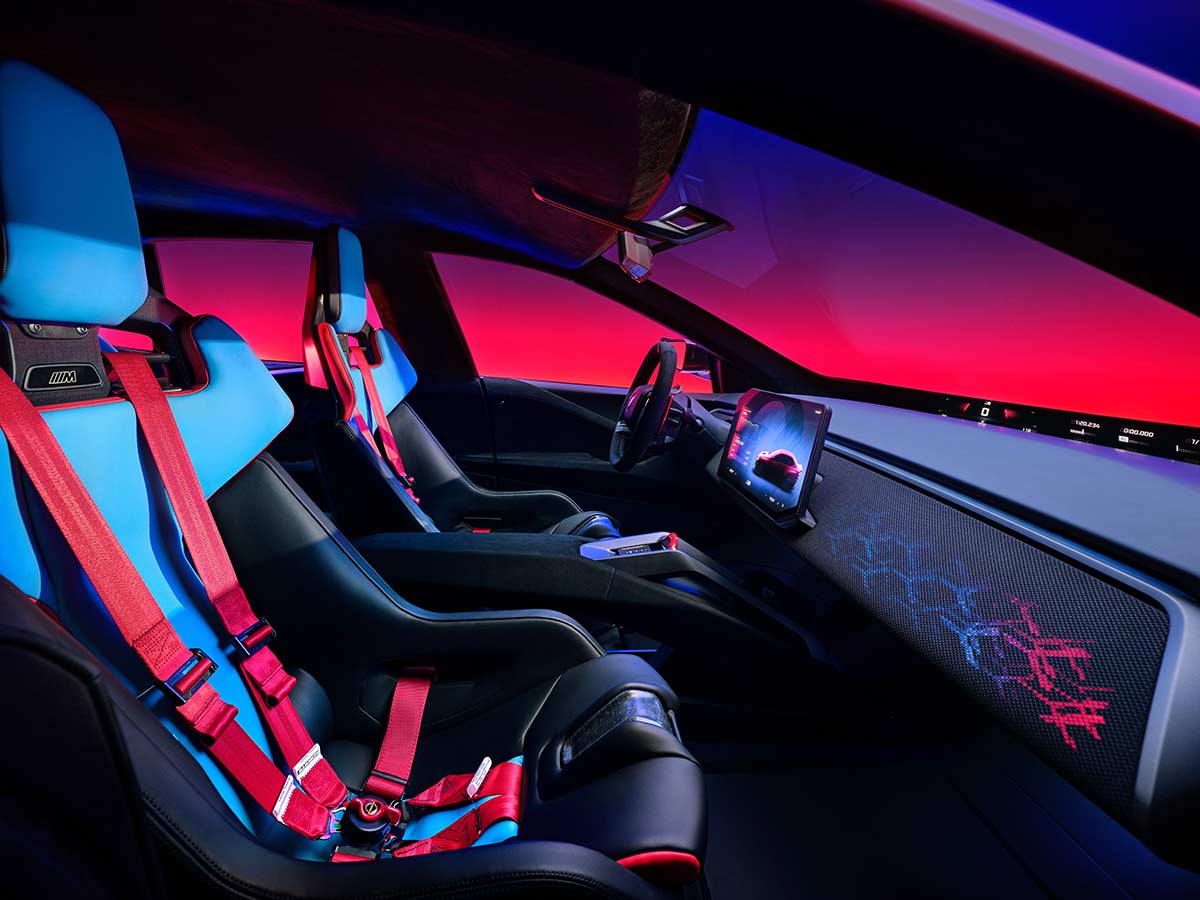
Inside, the BMW M Concept Neue Klasse adopts a minimalist approach that places the driving experience above all else.
Rather than overwhelming occupants with screens and technology for its own sake, the interior has been designed around engagement and functionality.
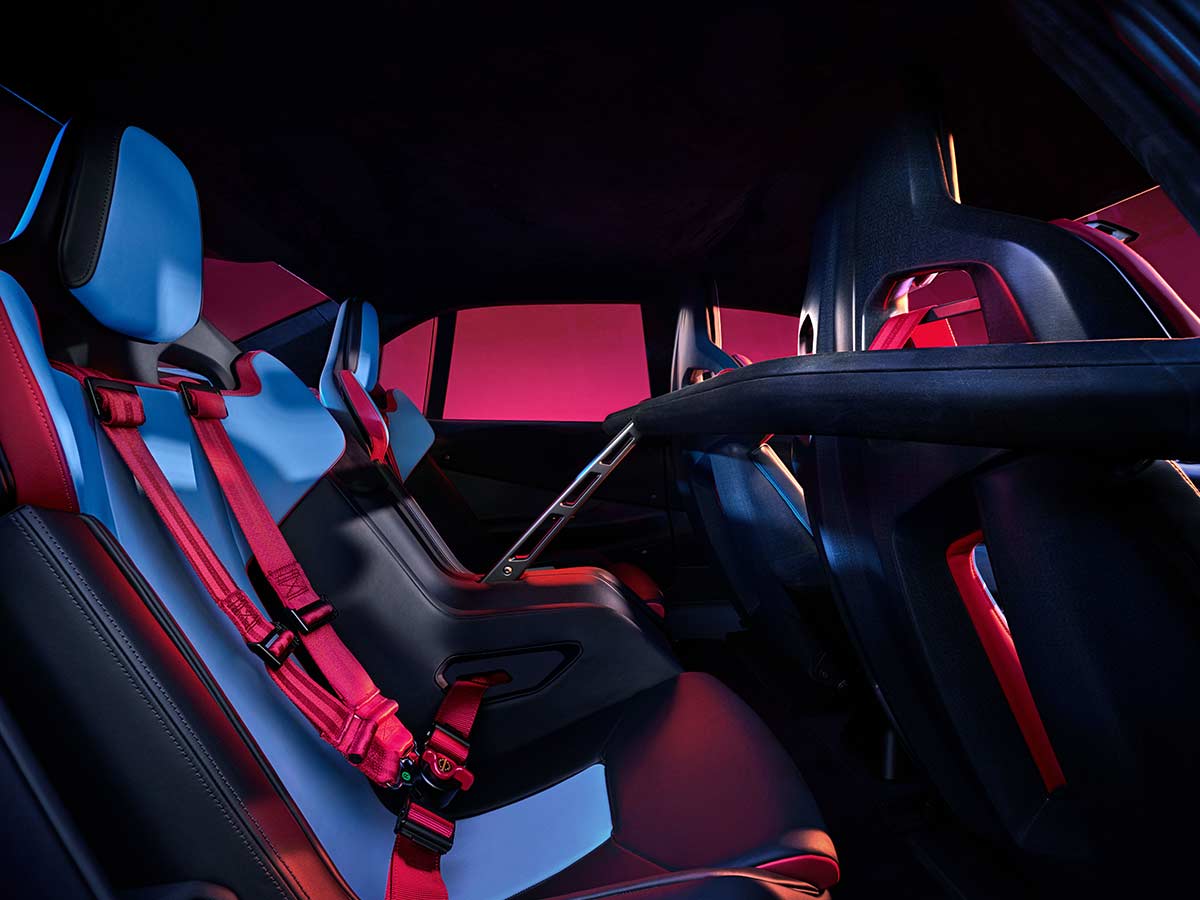
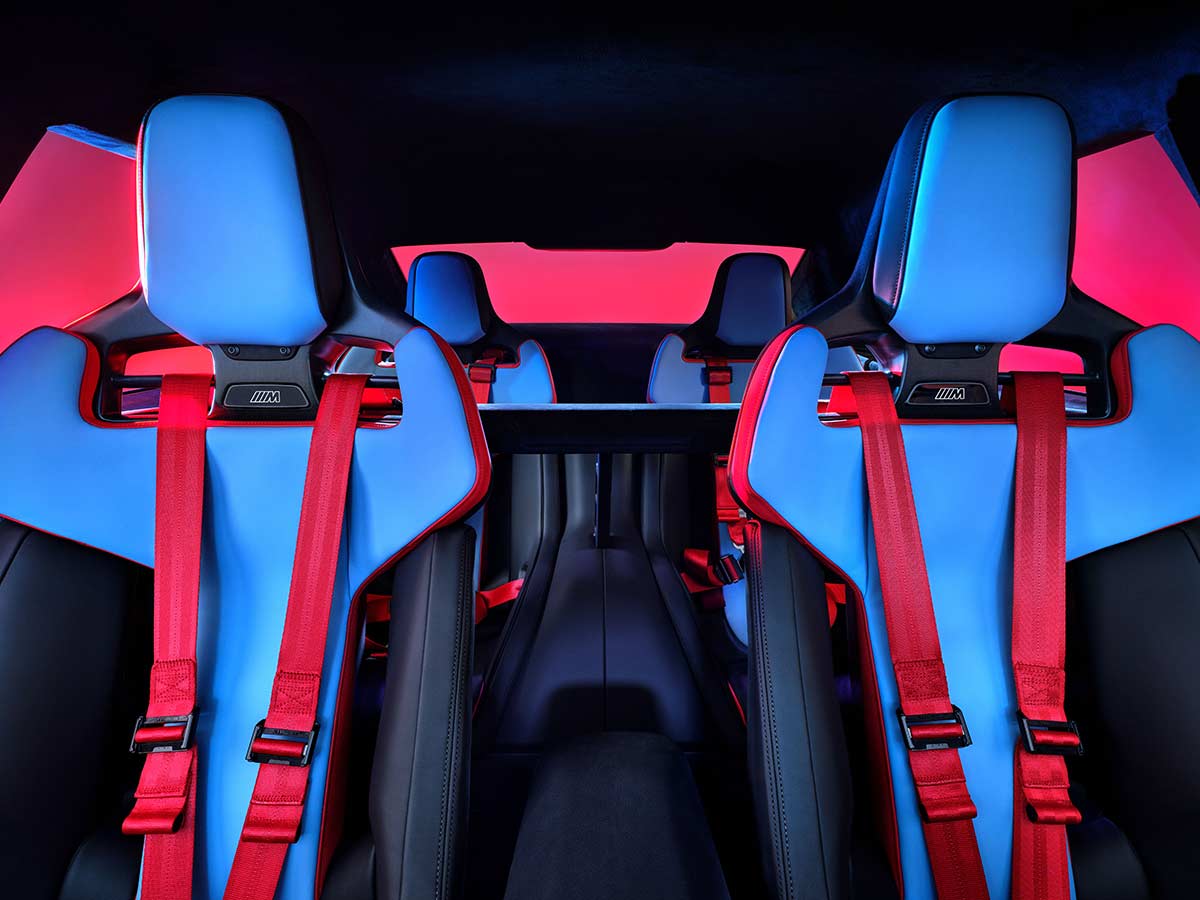
Four newly developed bucket seats dominate the cabin. Engineered to provide maximum support during high-performance driving, the seats incorporate structural elements made from natural-fibre materials while remaining visually lightweight.
The upholstery combines Bathurst Blue and Berry Red Merino leather in a striking two-tone design inspired by BMW M’s traditional color palette.
Red five-point harnesses further reinforce the motorsport atmosphere.
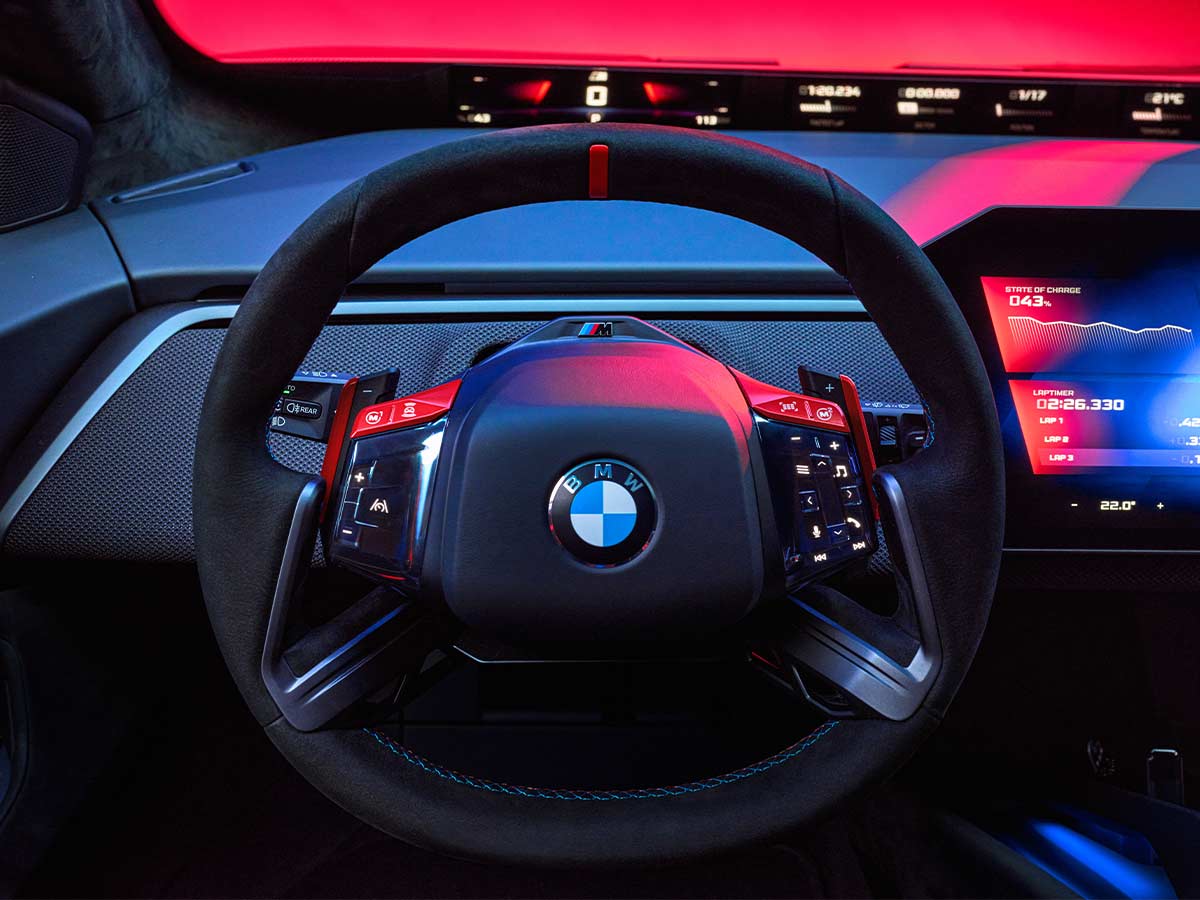
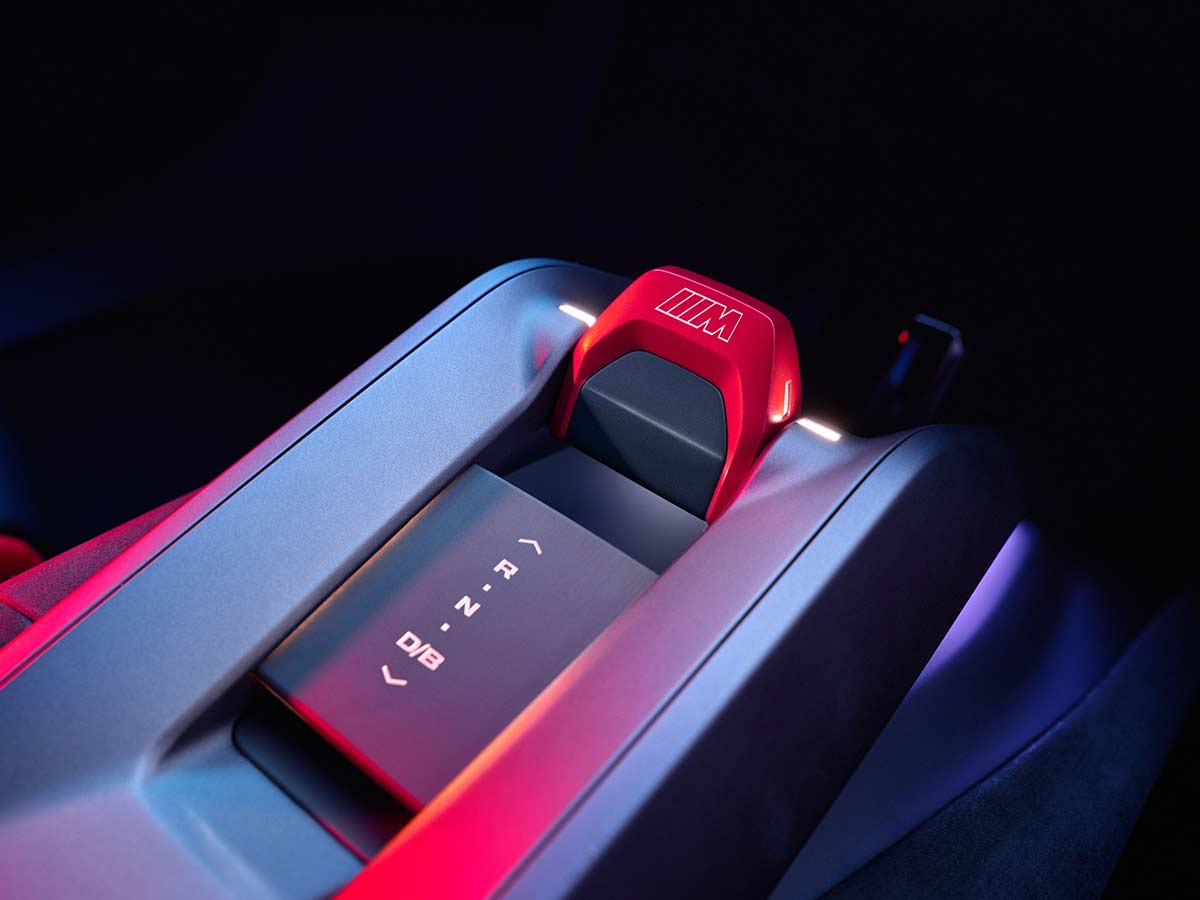
BMW has also introduced black nubuck leather for the first time in an M vehicle. The material appears on the steering wheel, door panels, and roll structure, creating a tactile and premium environment that feels focused rather than extravagant.
A floating dashboard finished in black knit material incorporates hexagonal M-specific illumination patterns, while carefully placed red accents throughout the cabin ensure performance remains the central theme.
Every detail appears designed to remind the driver that this is not simply an electric vehicle.
It is an M car.
Four Motors, One Mission
While the design attracts immediate attention, the most important innovations are hidden beneath the bodywork.
The BMW M Concept Neue Klasse introduces the next-generation BMW M eDrive system, a drivetrain architecture developed specifically for future all-electric M vehicles.
At its heart are four electric motors working in conjunction with a sophisticated software platform known as BMW M Dynamic Performance Control.
Unlike traditional all-wheel-drive systems, the setup enables wheel-specific management of both propulsion and braking functions. This allows engineers to control torque delivery with extraordinary precision, improving agility, traction, and stability.
BMW says the system creates entirely new possibilities for performance driving.
Power can be distributed instantly between individual wheels, maximizing cornering capability and ensuring optimal traction even at the limits of grip.
The objective is not simply straight-line acceleration.
It is precision.
That focus on precision has always separated BMW M from many of its rivals, and the Neue Klasse concept suggests the company intends to preserve that characteristic in the electric era.
Meet the “Heart of Joy”
Supporting the drivetrain is BMW’s advanced high-performance computing system known as the Heart of Joy.
The name may sound unconventional, but its role is critically important.
The central computer coordinates power delivery, braking performance, stability systems, and vehicle dynamics in real time. By integrating these functions into a unified platform, BMW aims to deliver faster responses and more predictable behavior than conventional vehicle architectures can achieve.
The system also supports increased regenerative braking performance and enhanced energy recovery, helping maximize efficiency without compromising driving enjoyment.
For BMW engineers, software is becoming just as important as hardware.
The Heart of Joy represents the company’s belief that the future driving experience will be defined as much by intelligent control systems as by mechanical engineering.
800 Volts and More Than 100 kWh
The Neue Klasse concept also previews BMW’s next-generation electrical architecture.
Built on the company’s sixth-generation platform technology, the vehicle employs an 800-volt system paired with a high-voltage battery exceeding 100 kWh in capacity.
BMW has developed an M-specific version of its latest cylindrical battery cells, optimized not only for charging performance but also for sustained high-power output during demanding driving situations.
This distinction is important.
Many electric vehicles can deliver impressive acceleration figures, but maintaining peak performance under repeated high-load conditions remains a challenge. BMW’s approach aims to ensure consistent performance whether on a mountain road or a racing circuit.
The battery structure itself also contributes to vehicle dynamics.
Rather than functioning solely as an energy storage component, the battery housing is structurally integrated into both axle assemblies, increasing chassis rigidity while helping optimize weight distribution.
The result is an electric performance platform engineered from the outset with driving dynamics as a priority.
Also Read: The New BMW i3: How the Neue Klasse is Redefining the Electric Sport Sedan
Why Le Mans Was the Perfect Stage
BMW could have unveiled the Neue Klasse concept anywhere.
The company chose Le Mans because the message matters.
Le Mans remains the ultimate showcase for endurance, efficiency, and engineering innovation. Technologies proven there eventually influence the road cars that enthusiasts purchase years later.
By revealing the Concept Neue Klasse during one of motorsport’s most important weekends, BMW is reinforcing a message that has defined M for decades: racing remains central to the brand’s identity.
The yellow lighting signatures, aerodynamic philosophy, and direct references to the BMW M Hybrid V8 are all reminders that the company’s future performance vehicles will continue drawing inspiration from competition.
Even as the powertrain changes, the philosophy remains remarkably familiar.
The Beginning of a New Chapter
The BMW M Concept Neue Klasse may be a concept car, but its significance extends far beyond show-car status.
It offers an unusually detailed preview of the technologies, design principles, materials, and engineering solutions that will define BMW M’s next generation of performance vehicles.
Most importantly, it demonstrates that BMW is approaching electrification as an opportunity rather than a compromise.
The company’s goal is not simply to build fast electric cars. It is to build electric cars that feel worthy of the M badge.
Whether the production versions ultimately deliver on that promise remains to be seen.
But standing at the intersection of motorsport heritage and technological transformation, the BMW M Concept Neue Klasse makes one thing clear: BMW M’s future will be electric, and if this concept is any indication, it intends to be every bit as exciting as its past.
Source: BMW