








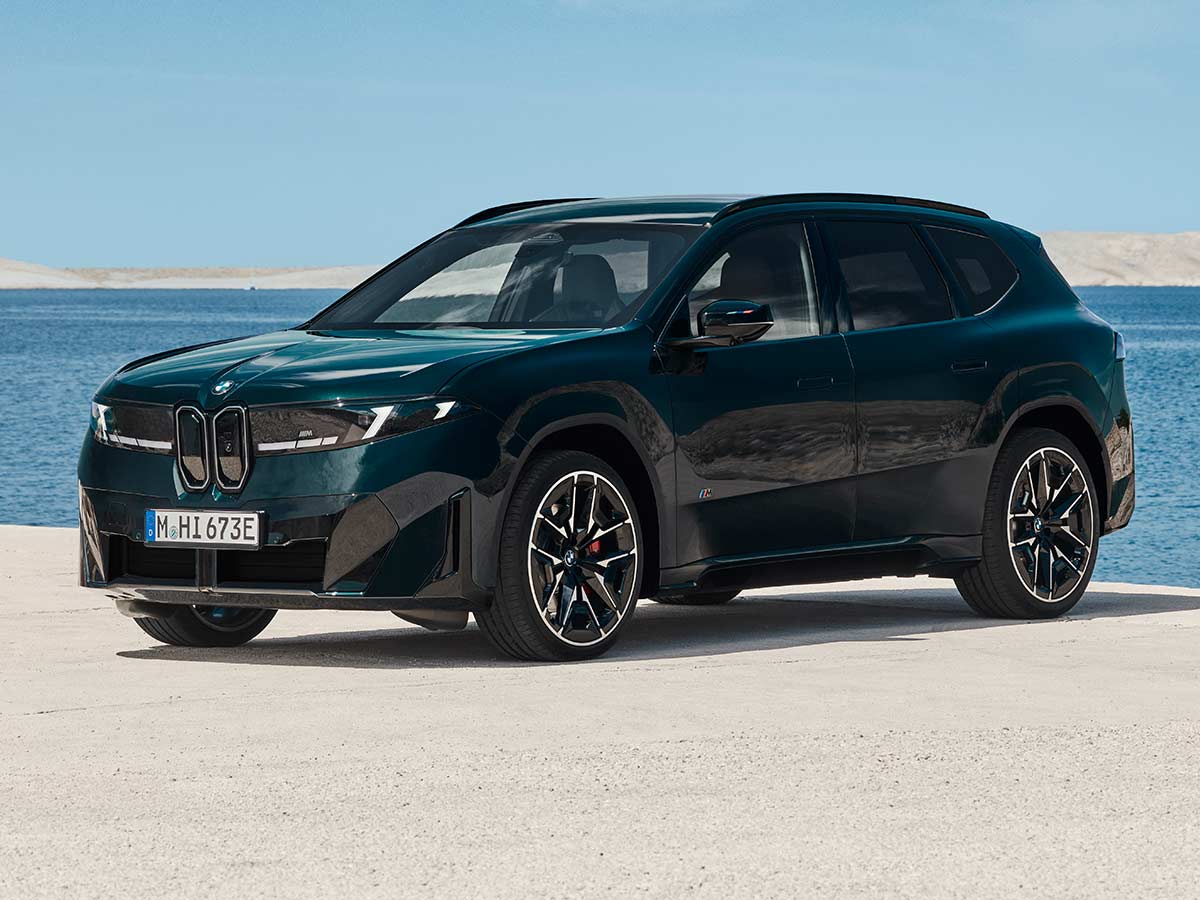
BMW’s most powerful Neue Klasse SUV combines dual-motor all-wheel drive, a claimed 3.9-second sprint to 100 km/h, up to 754 km of provisional WLTP range and motorsport-inspired chassis technology. The result is a high-performance electric SUV designed to make driving excitement and long-distance usability work together.
The electric performance car is entering a more interesting phase. Horsepower figures that once belonged to exotic supercars are becoming increasingly common, but outright acceleration is no longer enough to make a premium EV special. The real challenge is building an electric vehicle that can deliver repeatable performance, precise handling, rapid charging and genuine everyday comfort without allowing any one of those qualities to compromise the others.
That is the challenge BMW is taking on with the new 2027 BMW iX3 M60 xDrive, unveiled on 8 October 2026. Positioned as the most powerful variant of the new-generation BMW iX3, this all-electric M Performance SUV introduces a 612 hp dual-motor powertrain, an 800-volt electrical architecture, a substantial 108.7 kWh usable battery and a new generation of integrated driving-dynamics control.
The headline numbers are formidable. The BMW iX3 M60 xDrive produces 450 kW (612 hp) and 875 Nm of torque, accelerates from 0 to 100 km/h in 3.9 seconds and targets a maximum speed of 240 km/h. Yet the more consequential story lies beneath those figures: BMW is using its Neue Klasse platform to rethink how an electric SUV generates, manages and delivers performance.
Orders are scheduled to open at the end of January 2027, with production due to begin in spring 2027 at BMW Group Plant Debrecen in Hungary. For buyers considering the next generation of premium electric SUVs, the iX3 M60 xDrive arrives at a moment when battery technology, software-defined vehicle architecture and driving character are becoming just as important as acceleration.
>>> Great Discounts on Car & Bike Accessories <<<
2027 BMW iX3 M60 xDrive: Key Specifications at a Glance
The BMW iX3 M60 xDrive is more than a power upgrade over the standard Neue Klasse SUV. It combines a dedicated M Performance chassis setup with BMW’s sixth-generation electric-drive technology and a charging system designed to reduce downtime on long journeys.
| Specification | BMW iX3 M60 xDrive |
|---|---|
| Vehicle type | Fully electric premium performance SUV |
| Platform generation | BMW Neue Klasse |
| Electric-drive technology | Gen6 BMW M eDrive |
| Motor configuration | One electric motor at each axle |
| Maximum power | 450 kW / 612 hp* |
| Peak torque | 875 Nm / 645 lb-ft* |
| 0-100 km/h (0-62 mph) | 3.9 seconds* |
| Maximum speed | 240 km/h / 149 mph* |
| Usable battery capacity | 108.7 kWh* |
| Maximum WLTP range | Up to 754 km / 468 miles* |
| WLTP energy consumption | 17.6-20.5 kWh/100 km* |
| Maximum DC charging rate | 400 kW* |
| Maximum AC charging rate | 22 kW* |
| Claimed range added in 10 minutes | Up to 340 km / 211 miles* |
| Length | 4,782 mm |
| Width | 1,895 mm |
| Height | 1,635 mm |
| Wheelbase | 2,897 mm |
| Standard suspension | Adaptive M suspension |
| Standard wheels | 21-inch M light-alloy wheels |
| Orders open | End of January 2027 |
| Production begins | Spring 2027 |
*BMW identifies the performance, battery, range and charging figures as provisional. WLTP range and consumption are subject to final homologation and real-world conditions.
Neue Klasse Design: A More Focused, More Muscular BMW iX3
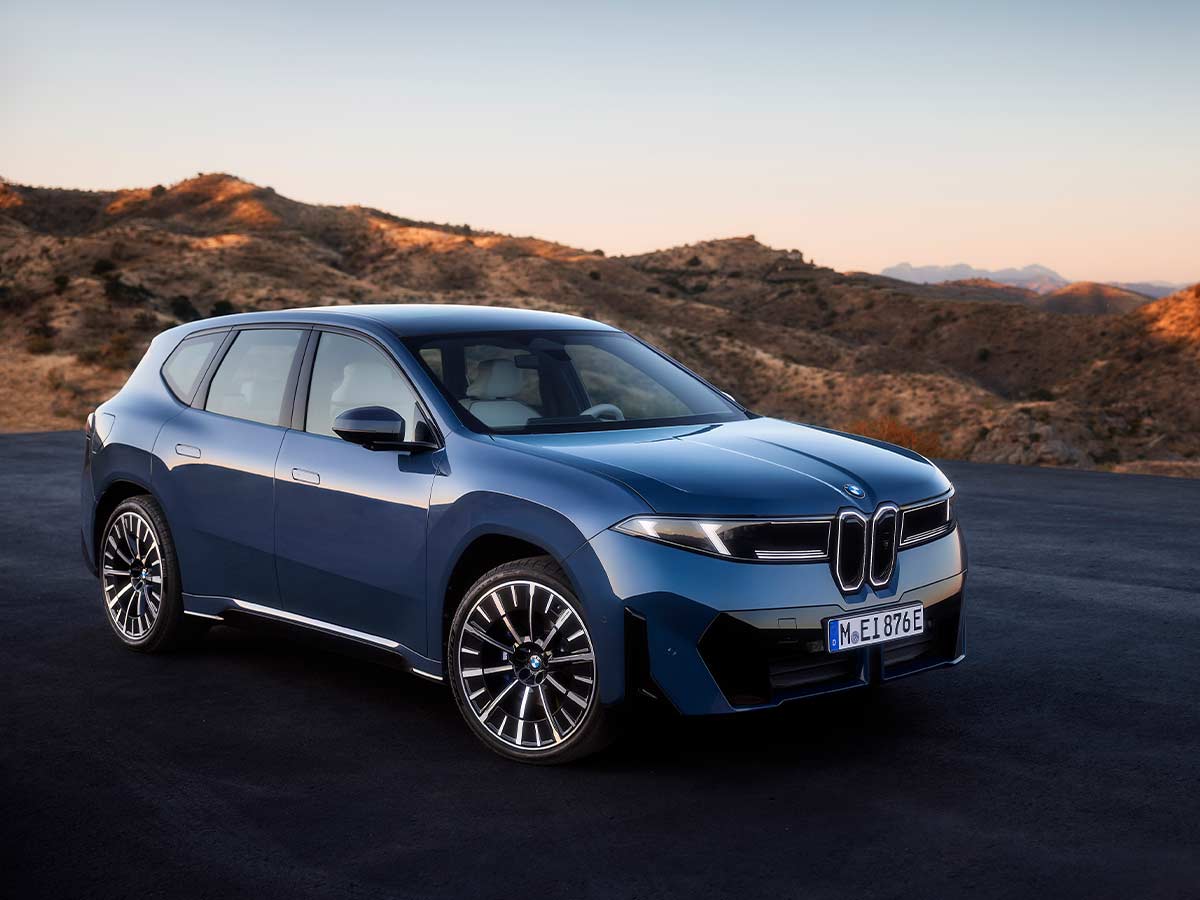
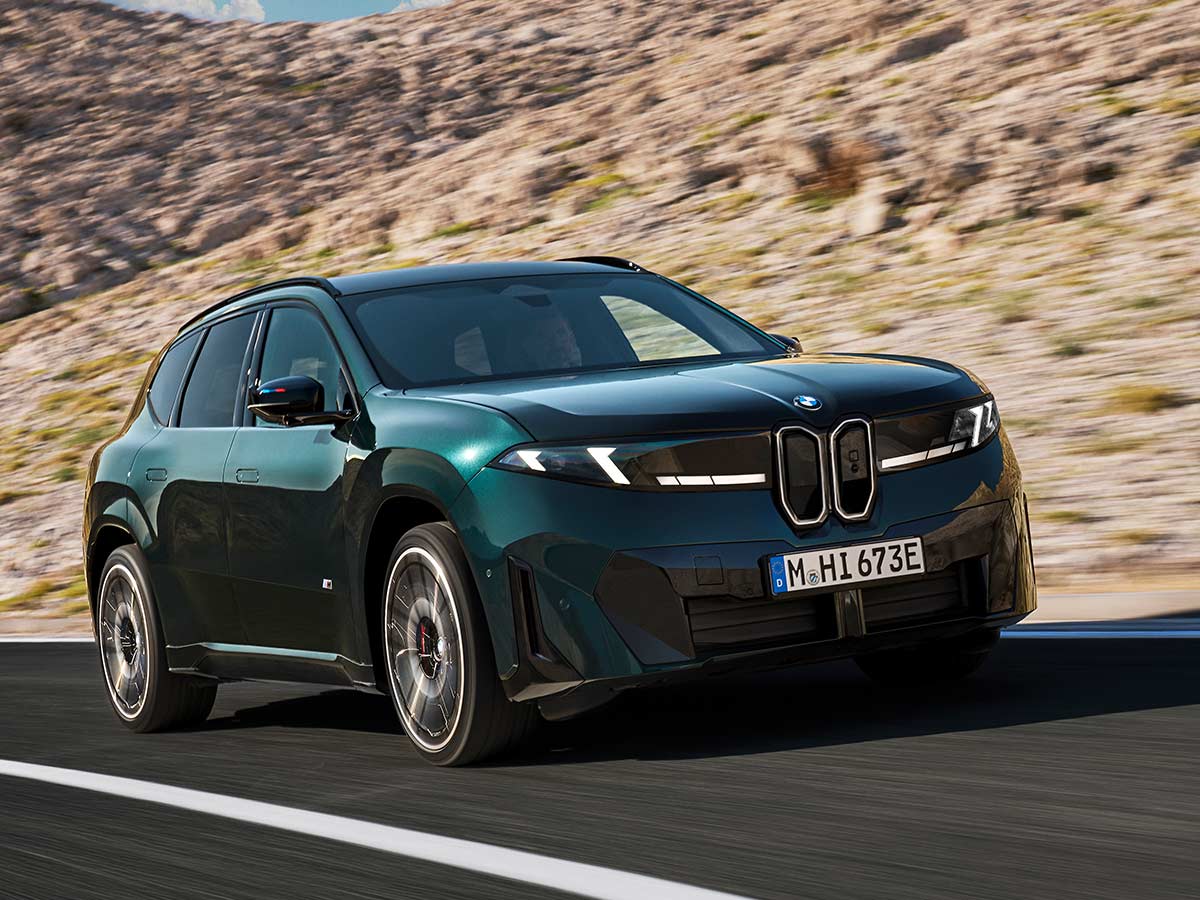
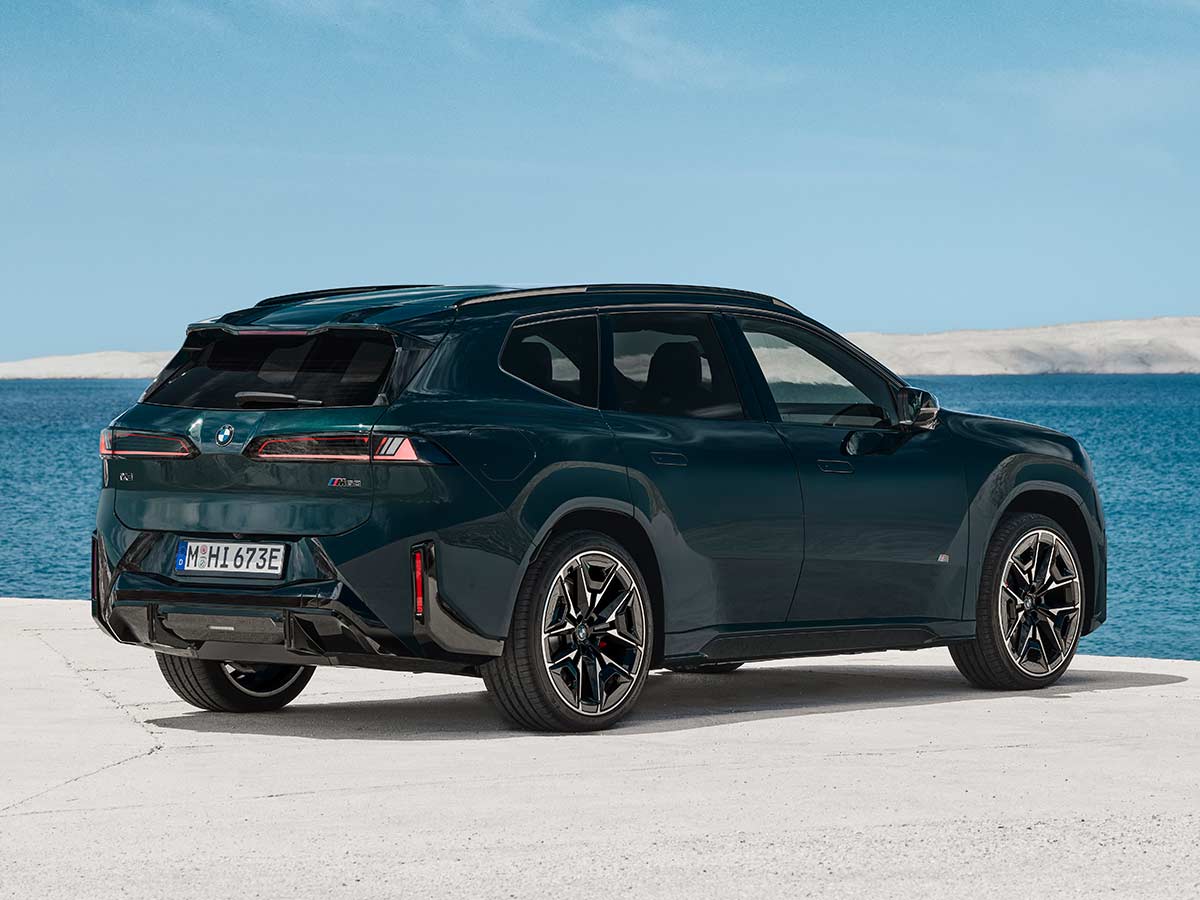
The BMW iX3 M60 xDrive adopts the pared-back design language introduced with the Neue Klasse generation, but it gives that visual simplicity a distinctly more aggressive interpretation. Rather than relying on excessive creases or oversized decorative elements, BMW uses proportion, sculpted surfaces, lighting and carefully selected M details to establish the SUV’s performance credentials.
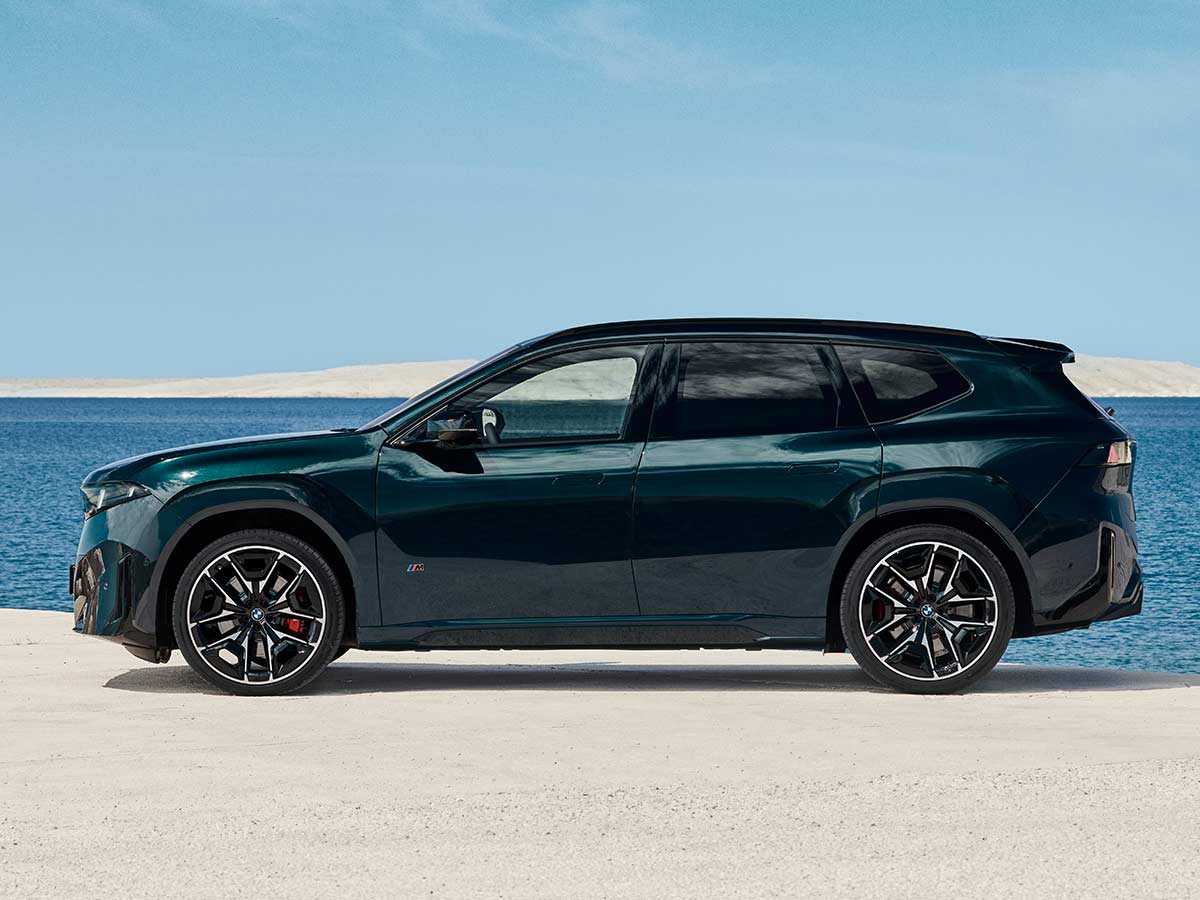
At 4,782 mm long, 1,895 mm wide and 1,635 mm tall, the iX3 M60 xDrive has the footprint of a substantial premium SUV. Its 2,897 mm wheelbase, short overhangs and pronounced wheel arches create a planted stance, while the long distance between the axles gives the side profile a purposeful, athletic character.
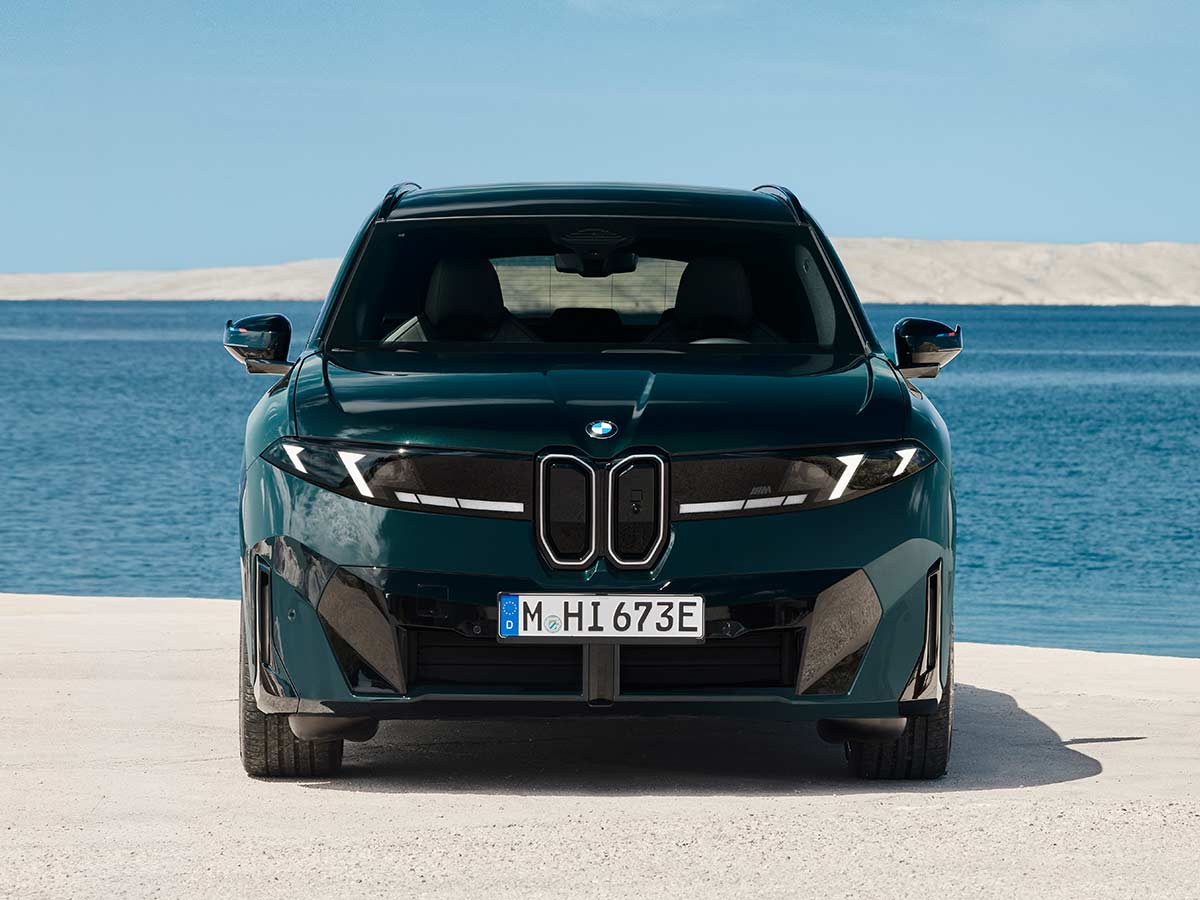
M Yellow Lights bring motorsport identity to the road
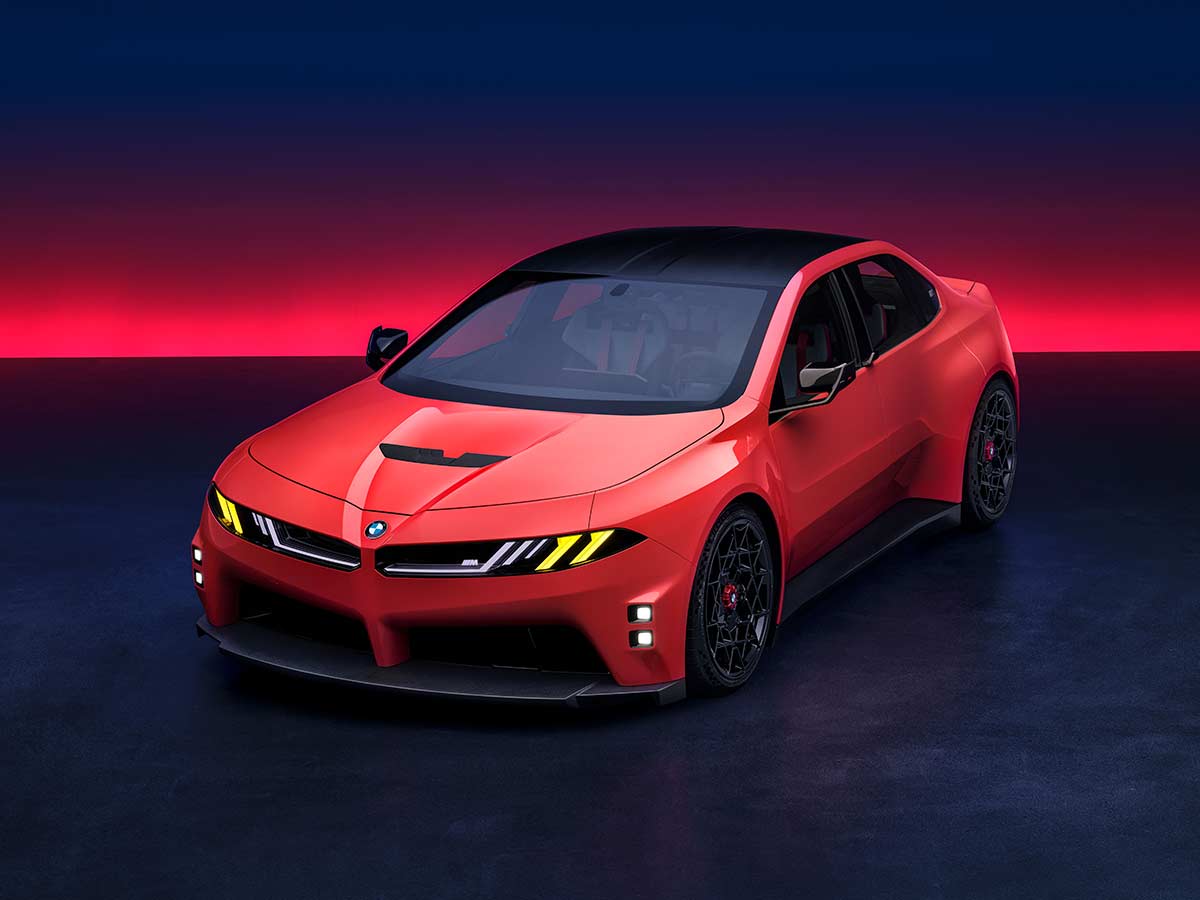
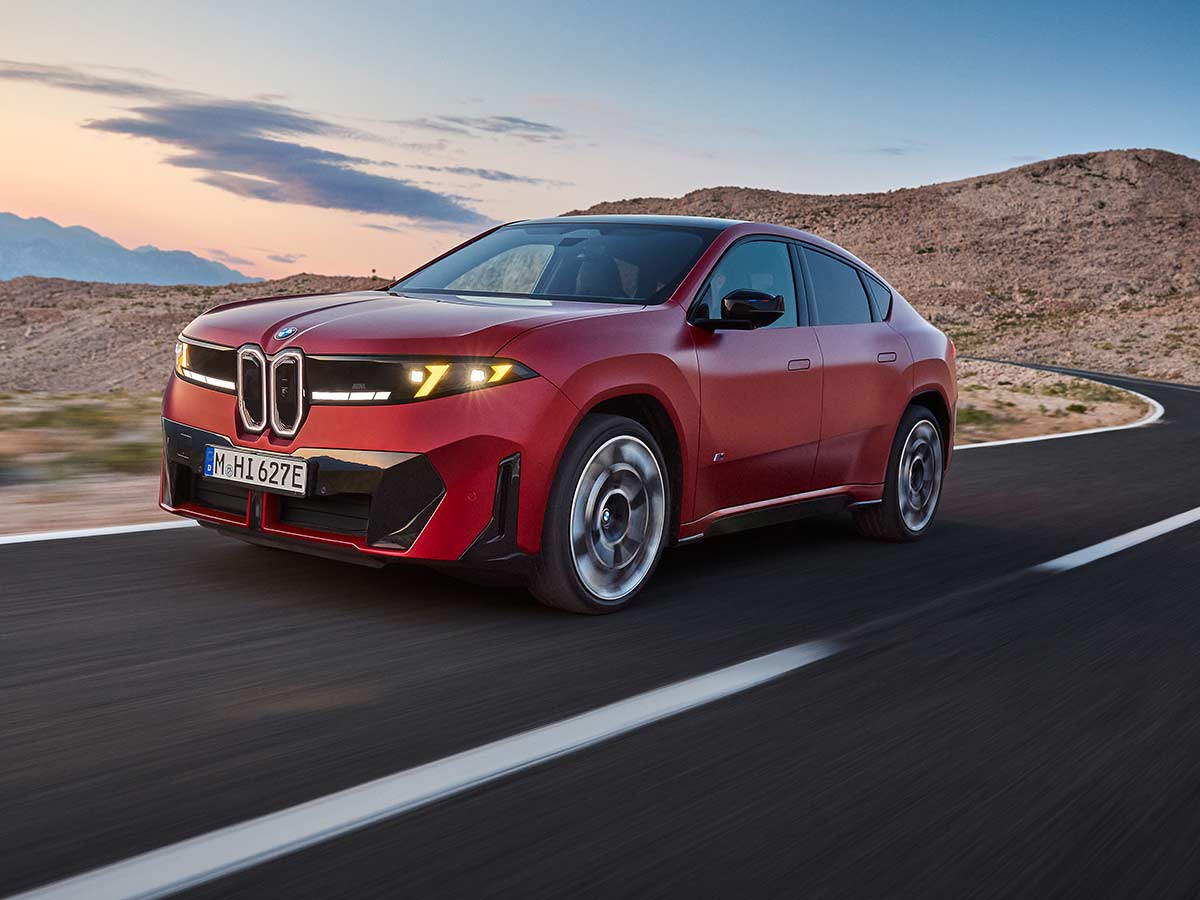
One of the most distinctive visual features is the new M Yellow Lights signature. Inspired by the appearance of BMW’s motorsport machinery, including the BMW M Hybrid V8, the yellow lighting elements give the front end an unmistakable performance identity.
The treatment is integrated with the redesigned kidney-grille area. Three light elements on either side draw inspiration from BMW M’s familiar striped motif, while the M logo forms part of the lighting signature. Depending on the market, the M Yellow Lights are available only in combination with the low-beam headlights.
The standard BMW Iconic Glow exterior package adds illuminated kidney-grille contours, increasing the visual depth of the front fascia. It also incorporates adaptive lighting features, including BMW Selective Beam non-dazzling high-beam assistance, Adaptive Headlights and a motorway light pattern.
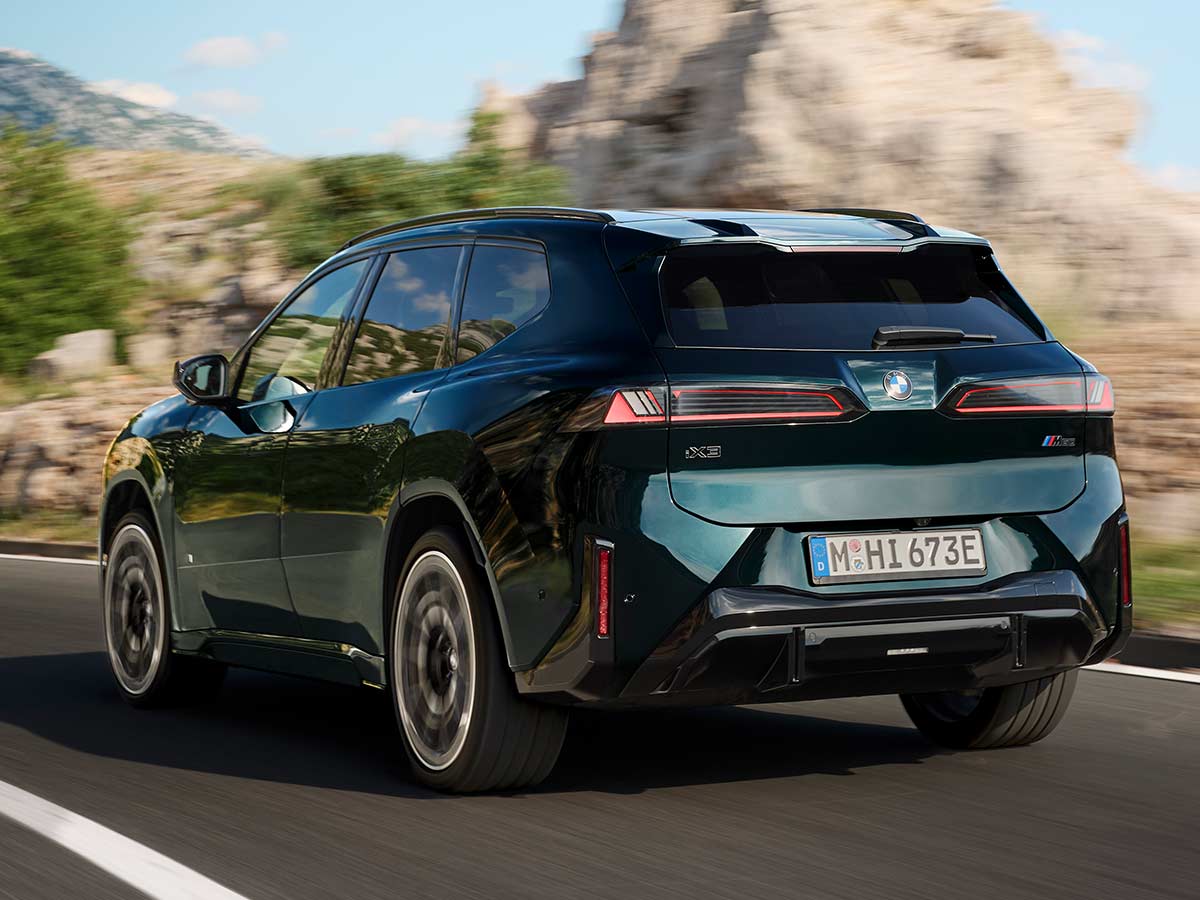
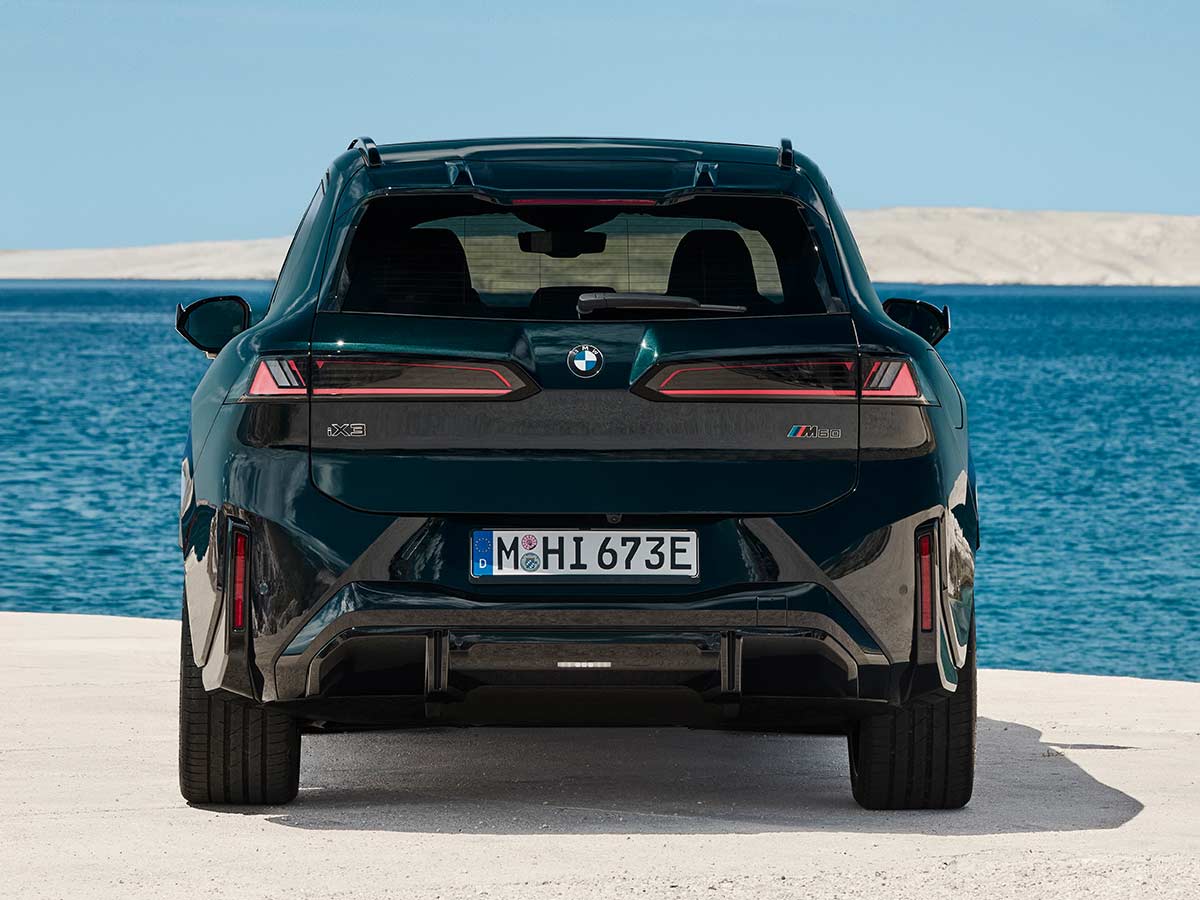
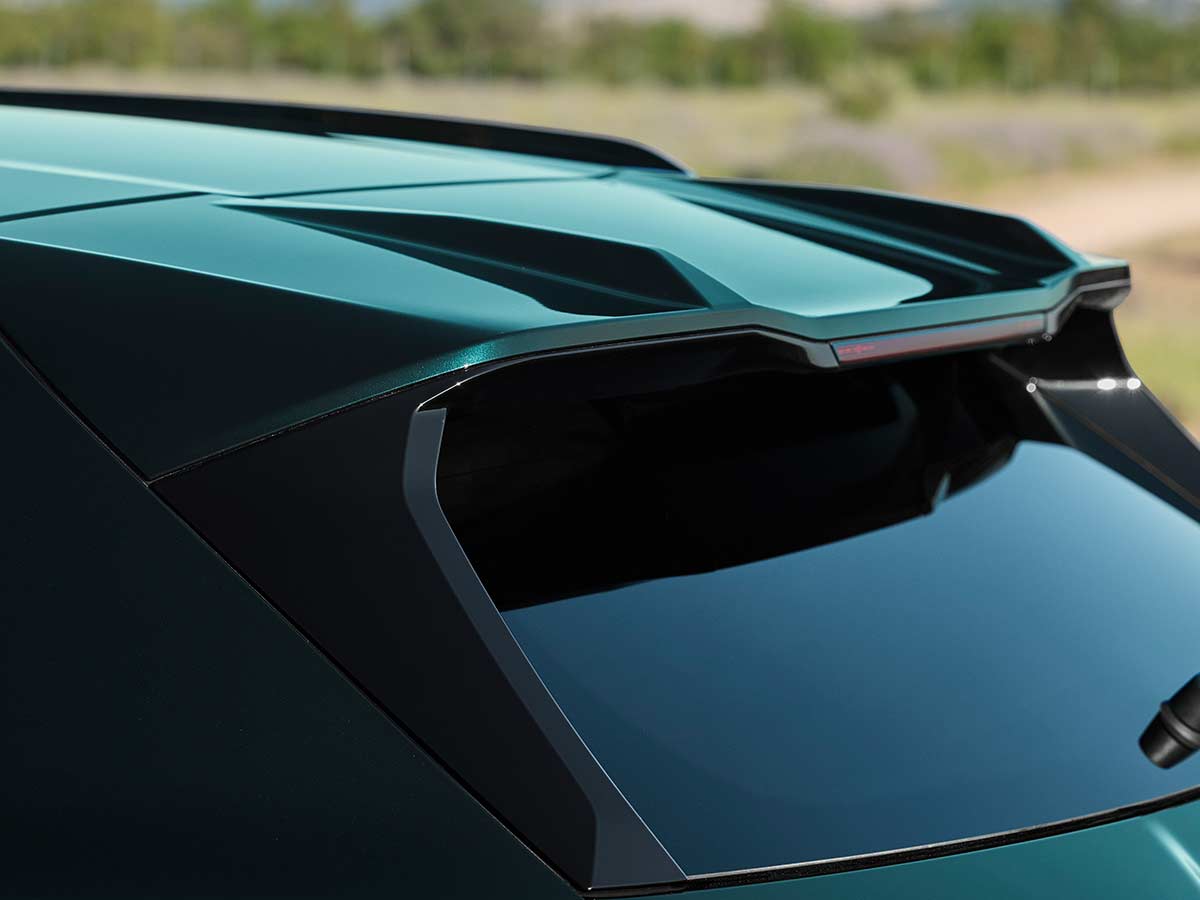
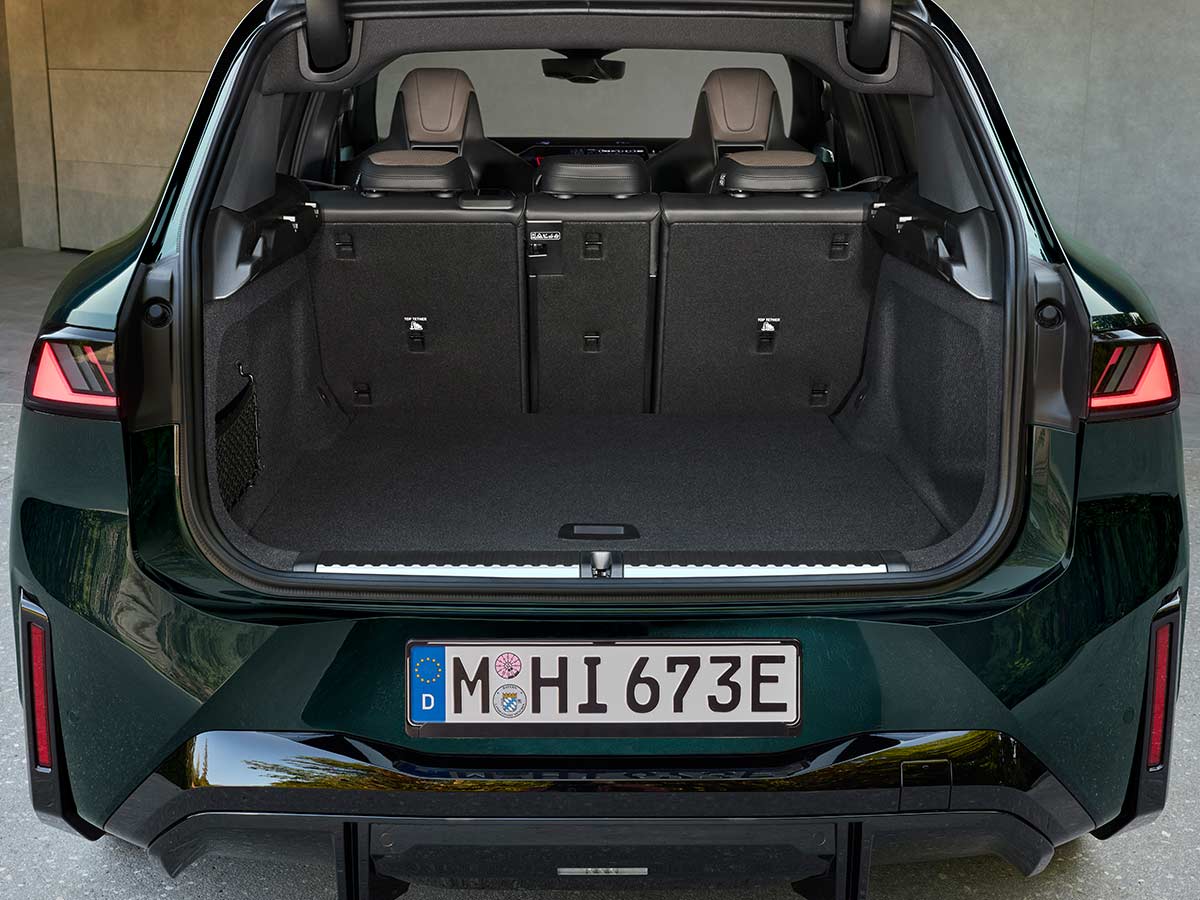
At the rear, a black diffuser, distinctive tail-light graphics and a dark-finished M60 badge reinforce the SUV’s performance positioning. An M-specific roof-edge spoiler incorporates two aeroblades designed to increase downforce at the rear axle.
These are meaningful distinctions in a market where electric SUVs increasingly share similar proportions. BMW is giving its most powerful iX3 a recognisable visual identity without abandoning the cleaner design philosophy of the Neue Klasse.
Wheels, tyres and aerodynamic details
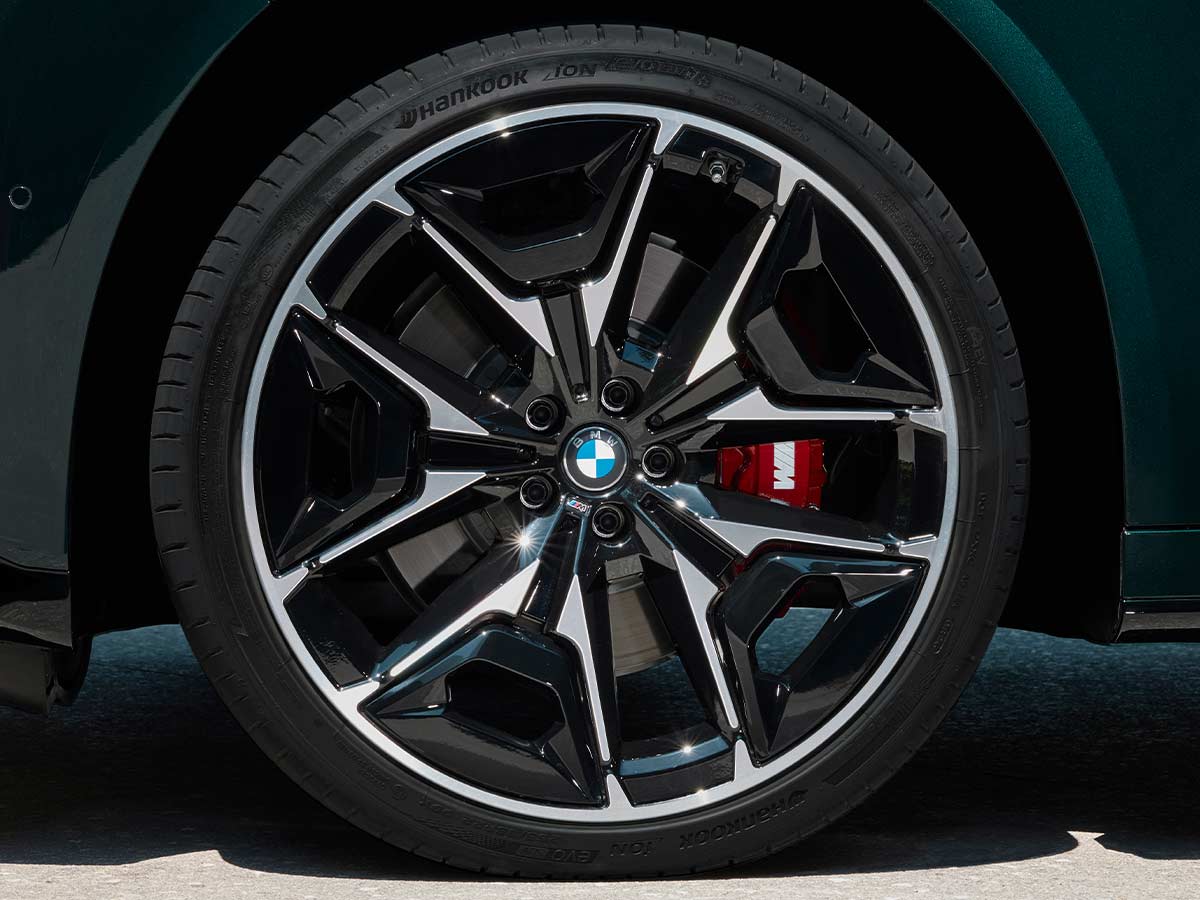
The BMW iX3 M60 xDrive comes standard with 21-inch M light-alloy wheels. Customers can also choose wheels up to 22 inches, including M aerodynamic wheels exclusive to this M Performance variant. Specially developed 21-inch sport tyres are available as an option.
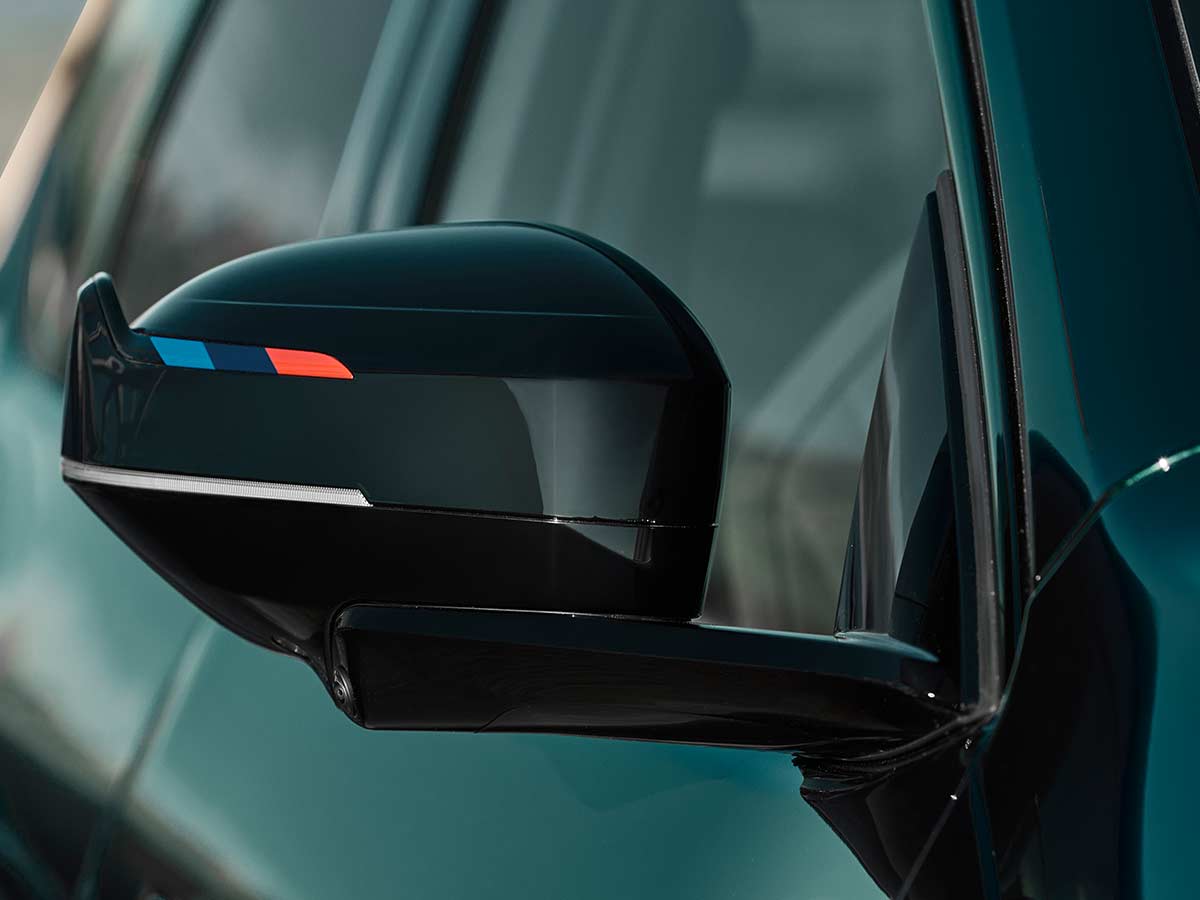
Aerodynamically optimised M mirror caps, finished with stripes in BMW M colours against a black background, add another subtle motorsport reference. Black high-gloss roof rails maintain the SUV’s practical character, while the M logos on the flanks make its positioning clear.
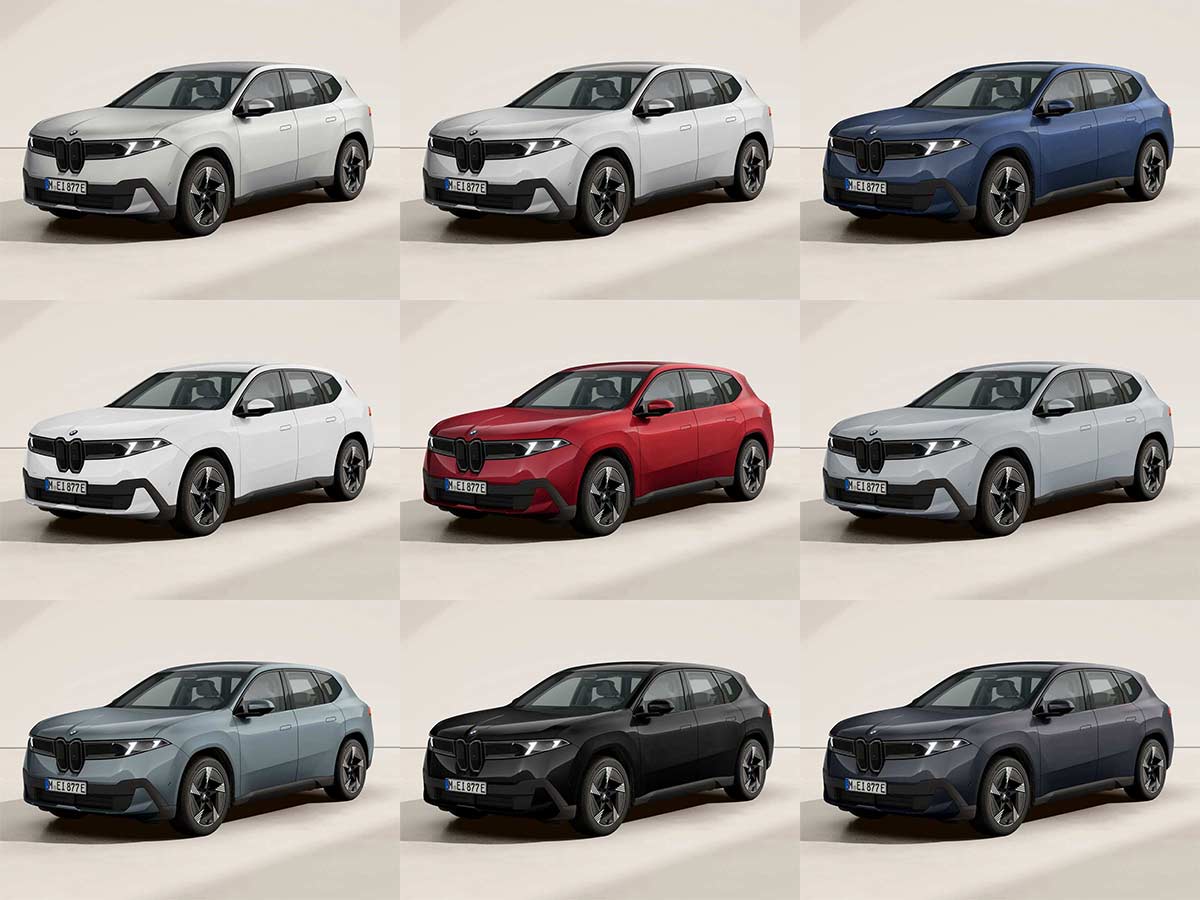
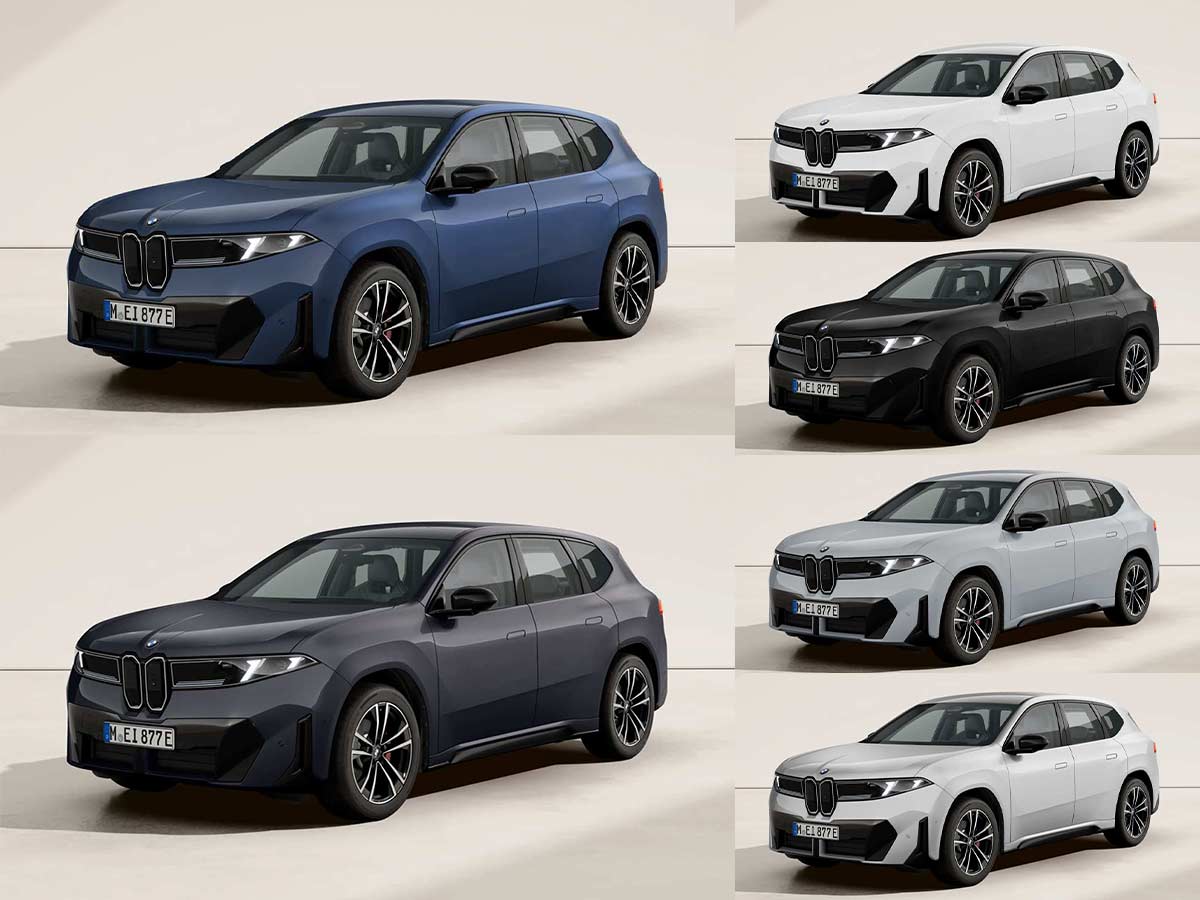
The available palette includes 25 special-request paint finishes at launch, with additional colours planned.
The design takeaway: The iX3 M60 xDrive is not simply a standard electric SUV wearing an M badge. BMW has used dedicated lighting, aerodynamic details, wheel options and model-specific exterior elements to distinguish its range-topping version.
Powertrain and Performance: 612 HP from Two Electric Motors
The heart of the BMW iX3 M60 xDrive is its Gen6 BMW M eDrive powertrain. One electric motor drives the front axle and another drives the rear, giving the SUV an electrically powered all-wheel-drive configuration.
Together, the motors produce a provisional maximum output of 450 kW, equivalent to 612 hp, and 875 Nm of peak torque. BMW quotes a 0-100 km/h time of 3.9 seconds and a top speed of 240 km/h.
Those numbers place the iX3 M60 xDrive firmly in the high-performance electric SUV conversation. But the engineering behind the output figure is more revealing than the headline horsepower alone.
A more powerful rear motor is central to the upgrade
BMW identifies a new sixth-generation electrically excited synchronous motor, or EESM, at the rear axle as one of the key reasons for the M60’s higher output.
The revised motor incorporates a newly developed stator and a more powerful inverter rated at 420 amps, up from 300 amps. BMW has also combined a longer gear ratio with a higher maximum usable rotor speed, contributing to the SUV’s increased top speed.
This is an important technical distinction. Performance is not determined by a motor’s peak output in isolation. The motor, inverter, gearing, thermal capability and software must work together to deliver power effectively across different operating conditions.
BMW’s announcement says the new rear motor improves both peak and continuous output, as well as peak and continuous torque. That matters because sustained performance depends on more than the ability to deliver a brief burst of maximum power. Continuous capability is also relevant during repeated acceleration and extended high-speed driving, although BMW has not yet published a complete set of independently verified performance or thermal test results.
What does 875 Nm mean in everyday driving?
The appeal of electric torque is its immediate availability. There is no conventional multi-speed gearbox waiting to select a ratio before the car can surge forward, and there is no need to build engine speed before accessing the strongest thrust.
In the BMW iX3 M60 xDrive, 875 Nm provides the basis for rapid acceleration and strong in-gear response. That should prove useful not only during hard launches but also when overtaking on faster roads or accelerating out of a corner.
The two-motor configuration also gives BMW more freedom to coordinate the delivery of torque between the front and rear axles. This becomes particularly important when the driver asks for strong acceleration while cornering, where the tyres must manage longitudinal and lateral forces simultaneously.
The objective is not merely to make the SUV feel fast in a straight line. It is to make its performance controllable and repeatable.
M eDrive and the character of an electric M Performance car
The M60 xDrive retains an important distinction within BMW’s performance hierarchy: it is an M Performance model, not a full BMW M vehicle. Its mission is to combine substantial performance with everyday usability rather than focus exclusively on maximum circuit capability.
That positioning helps explain the combination of a high-output dual-motor system, adaptive suspension, variable steering, a rear M Sport differential and comfort-oriented equipment. The hardware suggests a vehicle designed to be exciting when pushed and civilised when used for routine journeys.
BMW also promises a customised, speed-sensitive sound design and dynamic handling feedback. Since electric motors do not reproduce the sound and mechanical sensations of a traditional combustion engine, these elements become part of how the car communicates acceleration and driver inputs.
The important question will be how convincingly the final production car connects its impressive performance numbers to a natural, involving driving experience. That assessment will have to wait for road testing.
The Heart of Joy: BMW’s New Approach to Driving Dynamics
The most significant technology in the BMW iX3 M60 xDrive may not be its battery or even its motors. It could be the Heart of Joy, BMW’s high-performance computer for managing key driving functions.
BMW says the system operates ten times faster than previous systems. It works with the BMW M Dynamic Performance Control Driving Stack to coordinate the powertrain and driving-dynamics functions, with the stated aim of translating driver inputs into a more direct, precise and consistent response.
The Heart of Joy manages functions associated with the drive system, braking, steering, charging and energy recuperation. Rather than treating these systems as isolated components, BMW is integrating their responses into a more coordinated control strategy.
Why integrated control matters
Consider a fast corner. The driver turns the steering wheel, lifts off the accelerator and then applies power on the exit. During those few seconds, the vehicle must manage several competing demands:
- Steering: Respond to the driver’s chosen line with predictable front-axle behaviour.
- Torque distribution: Deliver drive to the front and rear axles without unsettling the vehicle.
- Braking and stability: Manage deceleration and maintain control when grip changes.
- Energy recuperation: Recover energy during deceleration without creating an abrupt or inconsistent pedal response.
- Suspension response: Keep the tyres in contact with the road while controlling body movement.
The more effectively these functions coordinate, the less the driver has to compensate for conflicting responses. A well-calibrated system can make a heavy electric SUV feel more intuitive and composed than its dimensions might suggest.
BMW says the Heart of Joy reduces the number of control inputs required to achieve consistent, repeatable cornering behaviour. The company also highlights the role of BMW M Dynamic Performance Control in delivering precise responses within milliseconds.
The significance is not simply processing speed. A faster computer is useful only if the software, sensors, actuators and mechanical systems can translate that speed into a measurable improvement in vehicle behaviour. The final proof will come from how the iX3 M60 xDrive handles uneven surfaces, rapid transitions and repeated high-load driving.
Shift paddles in an electric SUV
The iX3 M60 xDrive includes steering-wheel paddles that allow the driver to influence the responses of the M eDrive powertrain and adapt performance to the situation.
Their purpose differs from that of traditional transmission paddles in a combustion-powered BMW. Here, they are part of the driver’s interaction with the electric-drive system rather than simply a means of selecting a conventional gear.
Combined with the car’s customisable driving modes and sound design, this gives BMW another way to make electric performance feel participatory rather than purely automatic.
Soft Stop and regenerative braking
The Heart of Joy also supports BMW’s Soft Stop feature, which aims to bring the SUV to a smooth halt without the jerking or braking noise that can accompany abrupt transitions between regenerative and conventional braking.
BMW says everyday deceleration can be handled almost entirely through energy recuperation, with conventional friction brakes brought into use for emergency braking or sporty driving.
That approach has two benefits. It recovers energy that would otherwise be lost during deceleration, and it can improve comfort in stop-start traffic. The challenge is calibration: drivers expect braking to remain predictable whether the battery is cold, nearly full or able to accept substantial regenerative power.
BMW’s claimed smooth stopping performance is therefore a small but revealing example of its broader engineering objective. Making an electric car feel premium depends as much on the quality of its transitions as on its maximum acceleration.
Adaptive M Suspension, Variable Steering and Rear Differential
A 612 hp SUV needs more than a powerful powertrain. It also needs suspension, steering and differential systems capable of controlling the forces generated by that output.
BMW equips the iX3 M60 xDrive with adaptive M suspension as standard, including electronically controlled dampers. The suspension has model-specific tuning intended to improve steering response, reduce body movement and preserve ride comfort.
Adaptive dampers that react to the road
The dampers can adjust their response to the driving situation, with BMW saying the system calculates suitable damping forces within milliseconds.
The driver can select the basic suspension character through My Modes, including the M Sport and M Sport Plus settings developed specifically for the M60 xDrive.
This is a useful approach for a vehicle expected to perform multiple roles. Firm damping can help control body movement during enthusiastic driving, but excessive stiffness can compromise ride quality on broken urban roads. Adaptive control gives the engineers more room to balance those competing requirements.
BMW says its calibration aims to deliver direct handling and improved steering feel while retaining supple damper responses and lower noise levels.
Variable sport steering
The adaptive M suspension package also includes sport steering with a variable rack ratio. The steering response changes with the steering input, allowing a different relationship between steering-wheel movement and front-wheel angle at different points in the turn.
In principle, this can combine easier manoeuvring at low speeds with more immediate responses when driving enthusiastically. BMW specifically identifies urban turns and parking manoeuvres as situations where reduced steering effort can improve comfort.
The key is consistency. Variable-ratio steering must avoid making the front axle feel nervous on a motorway while still responding accurately when the driver asks for a sharper line.
An electronically controlled M Sport differential
At the rear axle, an electronically controlled M Sport differential is standard. BMW says it improves traction when cornering and on slippery surfaces, supporting greater lateral acceleration and more dynamic handling.
The differential is especially relevant to an electric performance SUV because acceleration, cornering and traction management often happen simultaneously. Effective rear-axle torque control can help the car maintain composure when the driver applies power before the steering wheel has returned to centre.
BMW has also modified the chassis beyond the electronic systems. The iX3 M60 xDrive receives bespoke spring and damper tuning, anti-roll-bar links at the front axle and additional front-end bracing to increase transverse and torsional stiffness.
These measures work together. Stronger structural support gives the suspension a more consistent foundation, while revised anti-roll-bar connections help manage body roll and improve steering precision.
M Sport brakes for repeated deceleration
The M60 xDrive receives M Sport brakes as standard, available in red or blue finishes. BMW says the conventional brakes are used during emergency braking and sporty driving, while regenerative braking handles much of the deceleration in normal conditions.
For drivers, the important question is how the brake pedal feels as the car transitions between recuperation and friction braking. Smooth, predictable blending is essential in a performance vehicle because confidence under braking shapes how aggressively a driver is willing to approach a corner.
Why this chassis package matters: The iX3 M60 xDrive combines electronic coordination with meaningful mechanical changes. That is a more credible foundation for sporting ability than simply increasing motor output and fitting larger wheels.
Battery, Range and Charging: 800-Volt Technology Takes Centre Stage
Performance is only half the equation for a long-distance electric SUV. Battery capacity, energy consumption and charging speed determine how much of that performance can be used without making every journey revolve around charging stops.
BMW specifies a usable battery capacity of 108.7 kWh for the iX3 M60 xDrive. The company quotes a maximum WLTP range of 754 km, or 468 miles, and combined energy consumption of 17.6-20.5 kWh per 100 km.
All of those figures are provisional, and BMW notes that the final values will depend on the vehicle’s configuration and homologation results.
What does a 754 km WLTP range actually mean?
The claimed range makes the iX3 M60 xDrive a potentially compelling option for buyers who want a high-performance electric SUV without giving up long-distance capability.
However, WLTP range is a standardised test-cycle figure, not a promise of how far the car will travel on every real-world journey. Actual range varies with speed, temperature, driving style, route elevation, passenger and luggage load, tyre specification, battery condition and climate-control use.
For a performance SUV, driving style is especially important. Repeated acceleration and sustained high-speed driving can increase consumption substantially. Cold weather and cabin heating can also reduce the distance available between charges.
The correct way to interpret BMW’s 754 km claim is as a provisional laboratory-based benchmark. Real-world testing will establish how closely the production iX3 M60 xDrive approaches it under different conditions.
Why 800 volts matters
The sixth-generation BMW electric-drive architecture introduces 800-volt technology alongside new cylindrical battery cells and further-developed electric motors.
Higher system voltage can enable very high charging power while limiting current for a given power level. That can support more efficient electrical-system design, although the actual charging performance depends on the battery, charging hardware, thermal management and charging station.
BMW quotes a maximum DC charging rate of 400 kW. At a suitably capable 800-volt DC fast charger, the company says the iX3 M60 xDrive can add up to 340 km of WLTP-rated range in ten minutes.
That is a headline figure worth understanding carefully. It is not a guarantee that every ten-minute stop will add 340 km, nor does it mean the vehicle can sustain 400 kW throughout a full charging session.
Peak charging power is usually available only under suitable conditions. Battery temperature, state of charge, charger capability, the vehicle’s charging settings and the charging curve all affect how much energy enters the battery during a particular stop.
Nevertheless, the combination of a large battery and a high maximum charging rate is strategically important. A large battery provides substantial energy storage, while faster charging can reduce the time needed to replenish it on long journeys.
Charging specifications
| Charging feature | BMW iX3 M60 xDrive |
|---|---|
| Usable battery energy | 108.7 kWh* |
| Electrical architecture | 800 volts |
| Maximum DC charging power | 400 kW* |
| Maximum AC charging power | 22 kW* |
| Claimed range added in 10 minutes | Up to 340 km / 211 miles* |
| Battery technology | Gen6 high-voltage battery with cylindrical cells |
| Bidirectional charging | Supported by the Gen6 technology; specific vehicle functionality depends on implementation |
*Figures and capabilities are based on BMW’s announcement. The 340 km figure assumes charging infrastructure capable of supplying the maximum DC charging power and is calculated using the WLTP cycle. Final market-specific functionality and homologation details should be confirmed before purchase.
The significance of 22 kW AC charging
BMW also lists AC Charging Professional with a maximum charging rate of 22 kW as standard.
This is relevant for owners who can access a compatible three-phase AC charging installation at home, work or a destination. DC fast charging is designed to replenish the battery quickly on longer journeys, while AC charging is often more practical when the car is parked for extended periods.
The available rate at any particular location will depend on the installed equipment and electrical supply. Buyers should therefore distinguish the vehicle’s maximum AC capability from the power available at their own property or charging destination.
Efficiency is the real long-term test
A large battery and 612 hp output create an appealing specification, but energy consumption ultimately determines how much of the battery’s capacity translates into useful driving distance.
BMW’s provisional consumption figure of 17.6-20.5 kWh/100 km provides an initial reference point. Independent testing will be needed to determine efficiency at motorway speeds, in cold weather and during more enthusiastic driving.
The best outcome would be a vehicle that delivers its sporting character when required without demanding disproportionate energy during ordinary use. That balance, rather than the maximum range number alone, will define the iX3 M60 xDrive’s long-distance credentials.
Cabin and Technology: A Digital Cockpit with a Clear M Identity
The interior of the BMW iX3 M60 xDrive follows the same principle as its exterior: simplify the overall design, then give the details a distinct purpose.
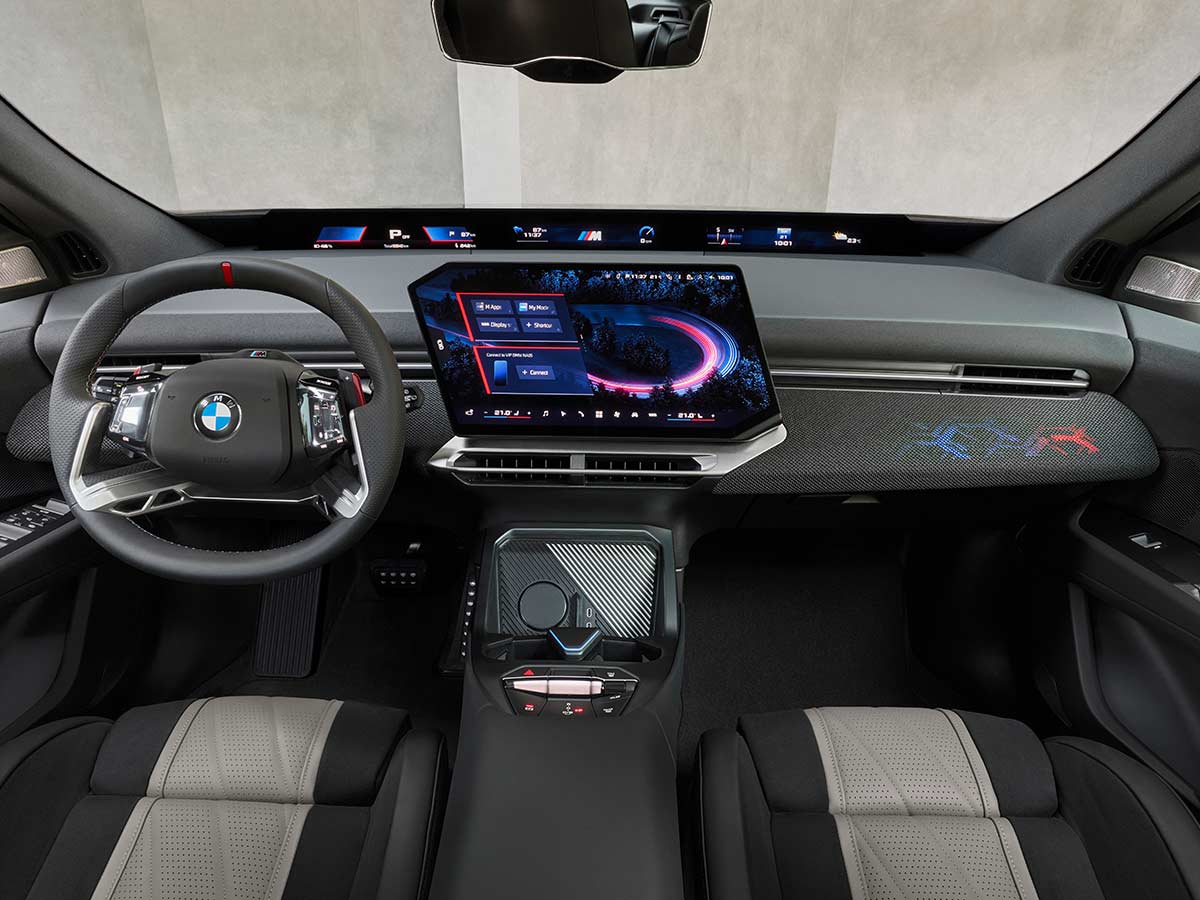
The cabin adopts BMW’s latest driver-oriented approach, built around BMW Panoramic iDrive and BMW Operating System X. A wide field of information across the driver’s line of sight is combined with a central touchscreen and physical steering-wheel controls for frequently used functions.
The result aims to make a technologically complex vehicle easier to operate without sacrificing the sporting character expected of an M Performance model.
BMW Panoramic Vision and the 17.9-inch central display
The standard BMW Panoramic Vision system projects driving-related information into the driver’s field of view. The central display measures 17.9 inches and uses a free-cut design angled towards the driver.
An optional BMW 3D Head-Up Display adds another way to present driving information in the driver’s line of sight.
BMW’s approach is significant because it moves away from relying on a single conventional instrument cluster. Information can instead be distributed across different display areas according to its relevance, with the intention of helping the driver access key data without repeatedly looking away from the road.
The challenge for any such system is prioritisation. A large screen is not automatically a better interface. The strongest implementation is one that makes essential information easy to read, limits unnecessary distraction and keeps commonly used controls intuitive.
An M Sport steering wheel with dedicated driving controls
The M Sport steering wheel has a red marker at the 12 o’clock position, a familiar visual reference from performance driving. Its multifunction controls include dedicated buttons for Boost Mode and M Mode.
Drivers can also activate the M Sport and M Sport Plus driving profiles directly from the steering wheel. These settings adjust the responses of the powertrain, chassis and steering to suit different driving preferences.
The steering wheel’s shy-tech controls are designed to integrate with the cabin’s clean visual theme while retaining direct access to important functions. That matters in a performance SUV, where the driver should not have to navigate multiple touchscreen menus to access a key driving setting.
M Sport seats designed for support and comfort
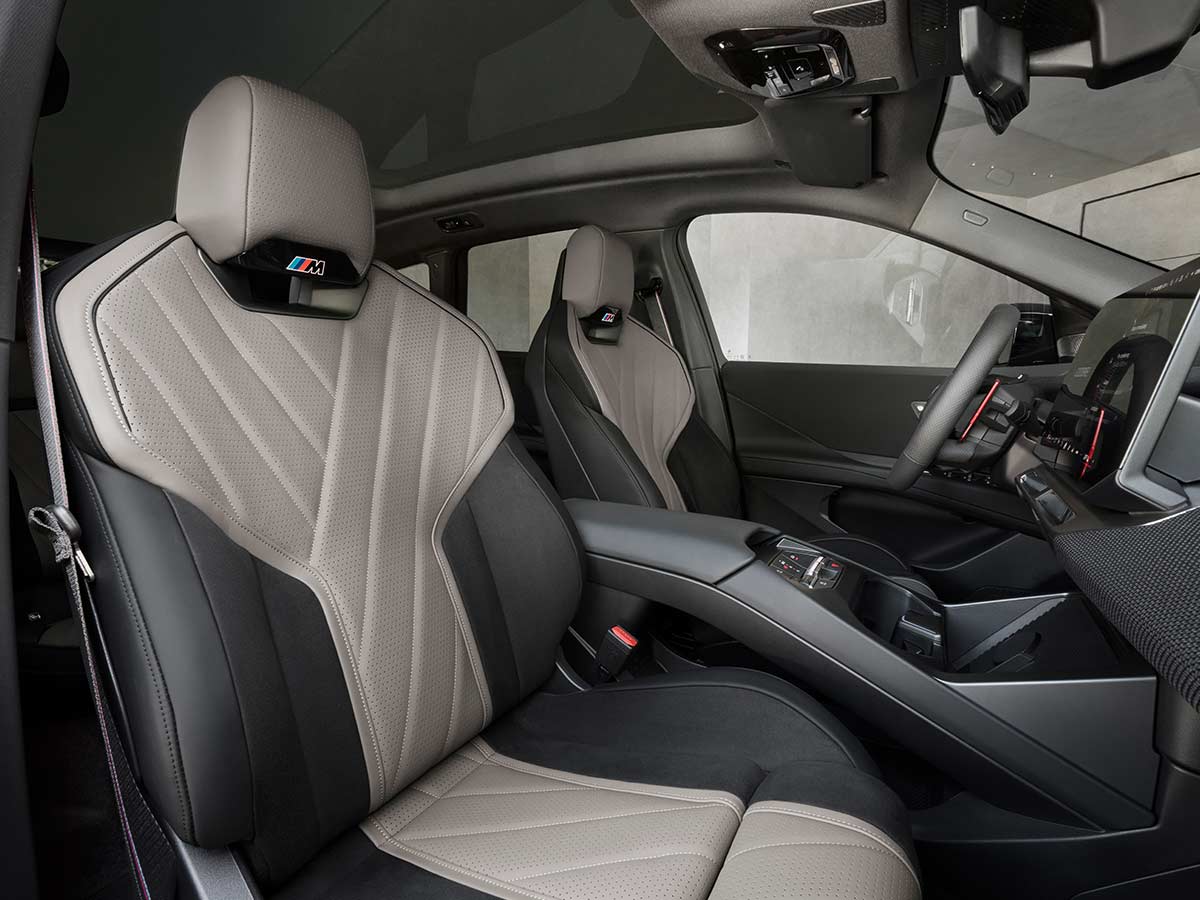
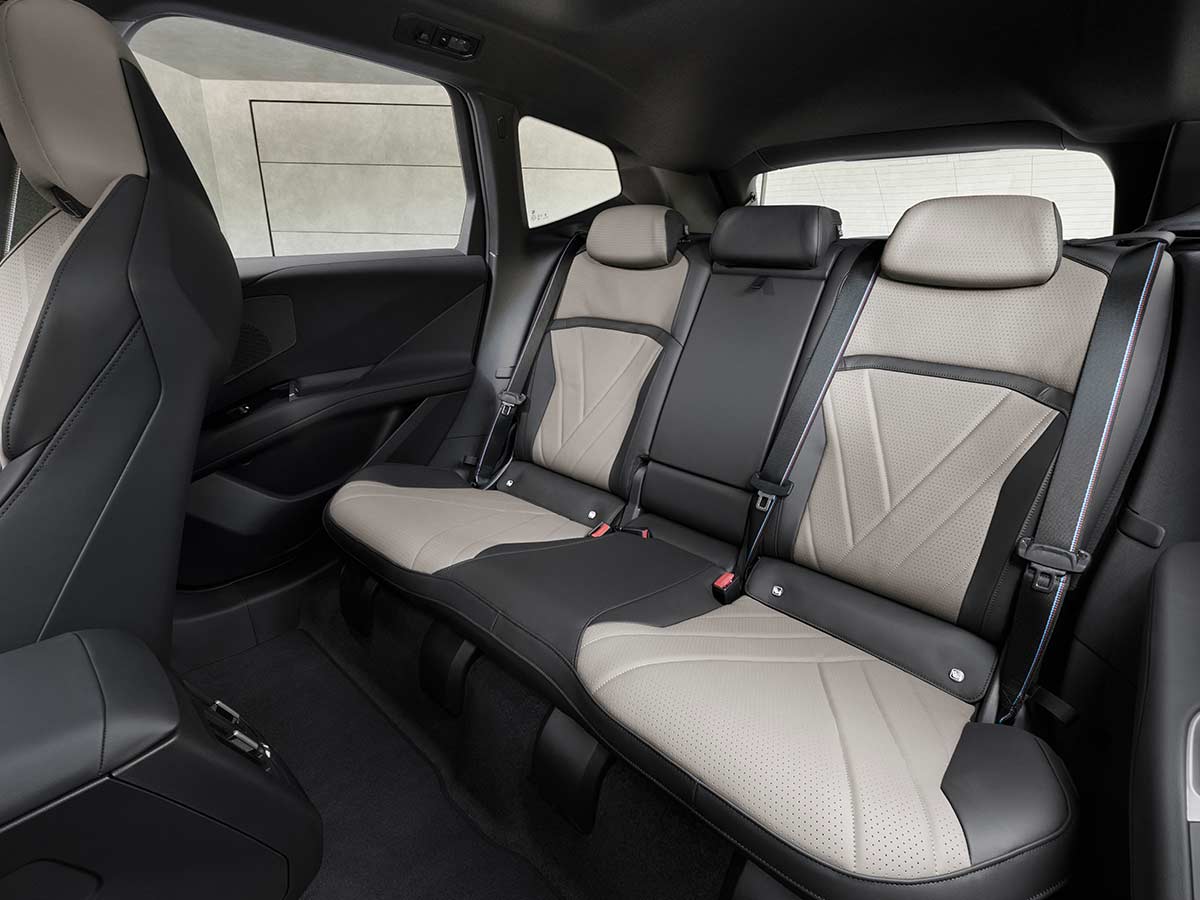
The BMW iX3 M60 xDrive comes standard with M Sport seats featuring pronounced side bolsters for lateral support during cornering.
The seats offer ten-way electric adjustment, including lumbar support, backrest-width adjustment and adjustable thigh support. A massage function adds a comfort-oriented feature that is not always associated with performance-focused seating.
Illuminated M logos are integrated into the head restraints, while the seat-adjustment controls are illuminated and positioned in the door panels. M seat belts add another distinctive detail.
The combination is intended to make the cabin feel special during everyday use without requiring owners to accept the compromises sometimes associated with aggressively bolstered sports seats.
An M-specific power meter
The driver’s display includes a dedicated M-specific presentation that differs from the standard BMW iX3 in its colours, typography and layout.
It also incorporates a power meter that shows the power currently being deployed, the remaining reserves and the rate of energy recuperation.
This is more than decorative instrumentation. In an electric performance vehicle, the relationship between power demand, battery energy and regenerative braking is central to understanding how the car behaves. A well-designed display can help drivers recognise how their inputs affect both performance and efficiency.
M Cockpit and M Drag Meter apps
With optional BMW Digital Premium, the iX3 M60 xDrive can access M-specific in-car applications that display vehicle signals and driving-dynamics data.
The M Cockpit app allows owners to configure dashboards with real-time information, while the M Drag Meter displays acceleration data.
These features bring some of the data-focused appeal of performance telemetry into a road-going SUV. They also reflect a wider change in the premium-car experience: digital personalisation is increasingly becoming part of the vehicle’s sporting identity.
Availability is subject to the equipment and software requirements BMW specifies for its M applications.
Harman Kardon audio with Dolby Atmos
BMW includes a Harman Kardon hi-fi system with 13 speakers and 430 watts of output as standard. The system supports Dolby Atmos for compatible content, creating a more spatial, three-dimensional listening experience.
In a quiet electric cabin, the quality of the audio system can become especially noticeable because there is less conventional engine noise competing with music and conversation.
BMW also provides several My Modes settings that can adapt lighting, sound, displays, chassis behaviour and powertrain responses. Drivers can even use the My BMW App to set personal images as wallpaper on the central display.
The interior is therefore designed to accommodate two different kinds of personalisation: the physical environment, through seating and materials, and the digital environment, through interfaces and driving profiles.
Interior materials and customisation
The standard BMW M interior features black Veganza upholstery with M PerformTex. Customers can also choose from the Contemporary and BMW Individual interior options.
The Contemporary design is offered in Black, Castanea, Digital White and Agave Green, using the leather-like Veganza material. BMW Individual combines Veganza with Merino leather on the seat cushion surfaces. An optional two-tone Adelaide Grey M Sport seat configuration combines M PerformTex with Merino leather seat-cushion surfaces.
Across the wider interior range, BMW identifies three design approaches and seven upholstery variants. The final combination of seating and trim depends on the selected configuration.
Taken together, these options give the iX3 M60 xDrive a broader luxury proposition than its acceleration figures alone suggest. It is intended to function as a comfortable daily SUV as well as a high-output performance vehicle.
Driver Assistance and Safety: Level 2 Automation with BMW Symbiotic Drive
The BMW iX3 M60 xDrive also introduces a broad suite of driver-assistance functions under BMW Symbiotic Drive.
BMW describes this approach as a fluid interaction between the driver and the vehicle’s assistance systems. The announced package includes SAE Level 2 driver assistance and active safety features designed to support the driver on motorways, country roads and city streets.
One of the headline capabilities is the Motorway Assistant, which BMW says enables hands-free driving on motorways at speeds of up to 130 km/h, or 81 mph.
That capability is relevant to long-distance touring, where sustained motorway driving can be demanding. Assistance systems that manage selected driving tasks can reduce the driver’s workload, provided they are used within their intended operating conditions.
There is, however, an important distinction between hands-free assistance and a fully autonomous vehicle.
SAE Level 2 systems remain driver-assistance technology. They can support simultaneous control of functions such as steering and speed, but the driver remains responsible for supervising the road and responding when necessary. Hands-free operation does not mean that the driver can disengage from the driving task.
The availability and permitted use of BMW’s Motorway Assistant may also depend on the market, road type, operating conditions and local regulations. Buyers should check the specification and restrictions applicable to their country rather than assume that every advertised function will operate identically everywhere.
BMW’s announcement does not provide a complete market-by-market breakdown of the assistance package, so final equipment details and local operating requirements remain important questions ahead of launch.
How the BMW iX3 M60 xDrive Fits into the Neue Klasse Strategy
The iX3 M60 xDrive matters because it demonstrates how BMW intends to extend the Neue Klasse platform beyond efficiency-focused electric mobility into the performance SUV segment.
The first new-generation BMW iX3 established the broader direction: a new electric-drive architecture, a redesigned digital interface and a different approach to vehicle control. The M60 xDrive builds on that foundation with higher power, model-specific chassis tuning and a more overt sporting identity.
Rather than developing performance as a separate layer of hardware added to an otherwise conventional electric SUV, BMW presents the M60 as a more deeply integrated package.
Its powertrain, braking, steering and recuperation functions are linked through the Heart of Joy and BMW M Dynamic Performance Control. Its adaptive suspension and electronically controlled rear differential address traction and body control, while the 800-volt architecture targets faster charging.
This integration could become increasingly important as premium EVs converge around similar acceleration figures. Peak power is relatively easy to communicate, but the driving experience depends on how the car manages the forces and energy that power creates.
Why the M Performance positioning matters
BMW’s M Performance models occupy a particular space in the brand’s hierarchy. They deliver a pronounced increase in performance and distinctive M styling, while retaining the comfort, technology and everyday usability expected of the core model range.
The iX3 M60 xDrive appears to follow that formula. It combines a 612 hp output with a substantial battery, a premium interior, driver assistance, massage seats and a sophisticated audio system.
That combination makes the car relevant to buyers who want serious acceleration without necessarily wanting a vehicle engineered primarily for track use.
It also raises a question for BMW’s traditional performance audience: how successfully can software, torque management, steering calibration and sound design create an involving driving experience when the mechanical character of a combustion engine is absent?
The answer will depend on the production car’s final calibration and the impressions of independent testers. BMW’s technical specification makes a strong case for its engineering ambition, but figures alone cannot settle the question of driver engagement.
Market Dynamics: The Premium Electric SUV Is Becoming a More Demanding Proposition
The premium electric SUV market has moved beyond the stage where an impressive range figure or a rapid 0-100 km/h time is sufficient to distinguish a product.
Buyers increasingly need a combination of usable range, efficient charging, premium cabin technology, comfort, driver assistance and performance that remains accessible in everyday conditions.
The BMW iX3 M60 xDrive addresses these requirements through a single vehicle concept. Its provisional 754 km WLTP range targets long-distance practicality, while its 400 kW peak DC charging capability is designed to reduce charging time when suitable infrastructure is available.
Its 612 hp output and dedicated M chassis components address the emotional side of the purchase, while the Panoramic iDrive system, high-quality audio, customisable interior and driver-assistance technology strengthen its luxury credentials.
There is a clear strategic logic here: BMW is attempting to make the electric SUV feel like a complete premium product rather than a battery-powered vehicle whose main selling point is acceleration.
What buyers should compare before making a decision
For anyone evaluating the iX3 M60 xDrive against other premium electric SUVs, five areas deserve particular attention.
- Real-world range: Look for independent testing at motorway speeds and in varied weather, not only the official WLTP figure.
- Charging performance: Compare full charging curves and average charging power, rather than relying exclusively on the highest advertised kW figure.
- Chassis behaviour: Assess steering feel, body control, ride quality and the consistency of braking under different driving conditions.
- Software usability: Examine how easily the driver can access essential settings and how reliably the infotainment and assistance systems operate.
- Total ownership proposition: Consider local pricing, equipment packages, warranty terms, charging access and the availability of service support.
The iX3 M60 xDrive’s potential appeal is clear, but its competitiveness will ultimately be determined by the complete ownership experience rather than by its European specification sheet alone.
Production Timeline, Launch Expectations and What Remains Unknown
BMW has confirmed two important milestones for the new iX3 M60 xDrive:
- Orders open: End of January 2027.
- Production begins: Spring 2027 at BMW Group Plant Debrecen, Hungary.
These dates establish the next stage in the vehicle’s launch programme, but several purchase-critical details remain unconfirmed in the announcement.
| Outstanding detail | Why it matters |
|---|---|
| Final retail price | Establishes its position in the premium performance SUV market |
| Final homologated range | Confirms the official driving range for each market |
| Market-specific equipment | Determines which features are standard, optional or unavailable |
| Final charging specifications | Clarifies real-world capabilities and local charging compatibility |
| Delivery dates | Helps buyers understand when orders may translate into customer vehicles |
BMW’s published performance, range and charging figures are provisional. The final production specification and independent testing will be needed to establish how closely the car’s real-world behaviour matches the announced targets.
This distinction matters particularly for a vehicle whose appeal rests on the combination of performance and practicality. The 3.9-second acceleration claim is compelling, but buyers will also want to know how the suspension behaves on poor surfaces, how efficiently the SUV travels at motorway speeds, how quickly it charges across a full session and how consistently it delivers performance in demanding conditions.
The next phase of the iX3 M60 xDrive story will be about proving those claims on the road.
Final Verdict: A New Kind of Electric BMW M Performance
The 2027 BMW iX3 M60 xDrive is an ambitious statement of intent. It combines 612 hp, 875 Nm, dual-motor all-wheel drive and a claimed 3.9-second sprint to 100 km/h with a large battery, 800-volt technology and a maximum charging rate of 400 kW.
Its most interesting features, however, are not necessarily the easiest to put in a headline. The Heart of Joy’s integrated vehicle control, the BMW M Dynamic Performance Control system, adaptive M suspension, variable steering and electronically controlled rear differential reveal a broader attempt to make electric performance feel precise, predictable and involving.
Inside, Panoramic iDrive, the 17.9-inch central display, M-specific driving modes, supportive seats and extensive personalisation options give the SUV a premium identity that extends well beyond its powertrain.
There are still important questions. The range and charging figures require final confirmation, real-world handling remains to be tested, and BMW has yet to announce pricing or confirm every market’s specification. Those details will determine whether the iX3 M60 xDrive becomes a class-defining electric performance SUV or simply another impressive entry in an increasingly competitive segment.
Nevertheless, the engineering direction is clear. BMW is betting that the future of electric performance will be decided not by horsepower alone, but by the quality of the relationship between driver, software, chassis and powertrain.
If the production car delivers on that promise, the BMW iX3 M60 xDrive could demonstrate something important about the next generation of performance vehicles: electrification does not have to reduce driving excitement to a stopwatch reading. It can create an entirely new way of delivering it.
Source: BMW