














The road disappears first.
Not literally, of course. It simply stops being relevant.
That is the moment the Mitsubishi Pajero has always been built for – when asphalt gives way to rock, mud, sand or a track barely deserving of the word road, and the vehicle beneath you has to become more than transportation.
On September 2, 2026, Mitsubishi Motors unveiled the fourth-generation successor to one of its most important names at a world premiere in Tokyo. The all-new 2026 Mitsubishi Pajero returns not as a nostalgic exercise, but as a new-generation flagship SUV designed around the same fundamental promise that established the nameplate more than four decades ago: genuine four-wheel-drive capability without abandoning everyday comfort.
And for buyers in markets where the Pajero name is sold as Montero, the story is the same. The badge may change with geography, but the engineering philosophy does not.
This is a Pajero that wants to be taken seriously both when the pavement ends and when the journey begins again on it.
Built in Thailand, the new-generation Pajero will launch first in Thailand before reaching Japan and Australia during fiscal 2026. Mitsubishi says it plans to expand availability to around 100 countries from fiscal 2027, including markets across ASEAN, Latin America and the Middle East.
That global ambition is significant. The Pajero is not simply another SUV returning to a crowded segment. It is a nameplate with more than 3.29 million vehicles produced across four generations and a following that Mitsubishi says extends across more than 170 countries and regions.
The question, then, is whether this new Pajero can carry that history forward without becoming trapped by it.
The answer, at least on paper, is unusually interesting.
>>> Great Discounts on Car & Bike Accessories <<<
2026 Mitsubishi Pajero: Specs at a Glance
| Specification | 2026 Mitsubishi Pajero |
|---|---|
| Engine | 2.4-liter clean diesel |
| Turbocharger | Single VGT |
| Maximum torque | Up to 480 Nm |
| Transmission | New 8-speed automatic |
| Drivetrain | Super Select 4WD-II + S-AWC |
| Drive modes | 7 |
| Seating | 3 rows, 7 seats |
| Length | 4,920 mm |
| Width | 1,925 mm |
| Height | 1,910 mm |
| Wheelbase | 2,870 mm |
| Ground clearance | 230 mm |
| Approach angle | 30.4 degrees |
| Breakover angle | 22.6 degrees |
| Departure angle | 25.8 degrees |
| Front/rear weight distribution | 52:48 |
Dimensions, clearance and approach/breakover/departure angles are specified by Mitsubishi for vehicles equipped with 20-inch tires. Equipment and specifications vary by market and trim.
The New Pajero Is Designed to Look Like a Pajero
There is a temptation with a returning icon to draw a retro body, add some heritage graphics and call the job finished.
Mitsubishi has taken a different route.
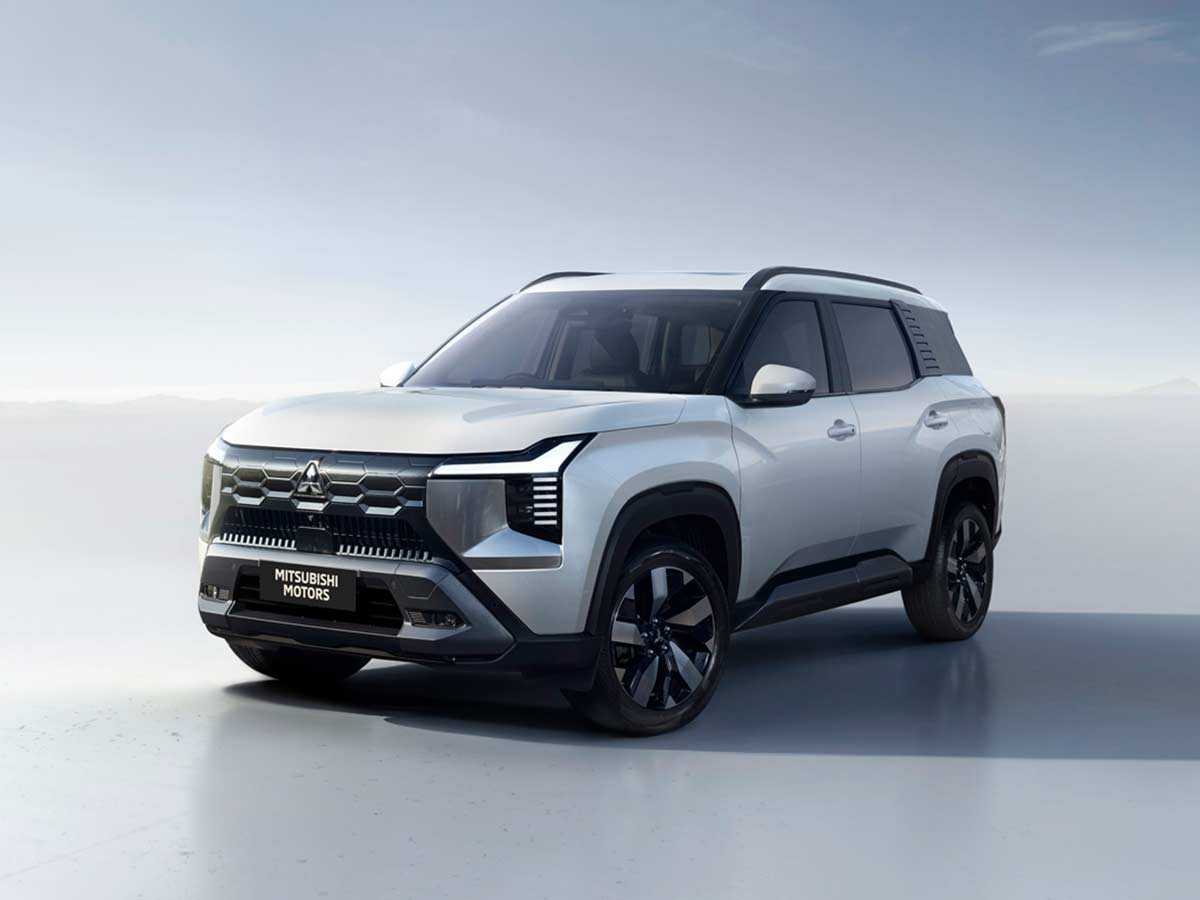
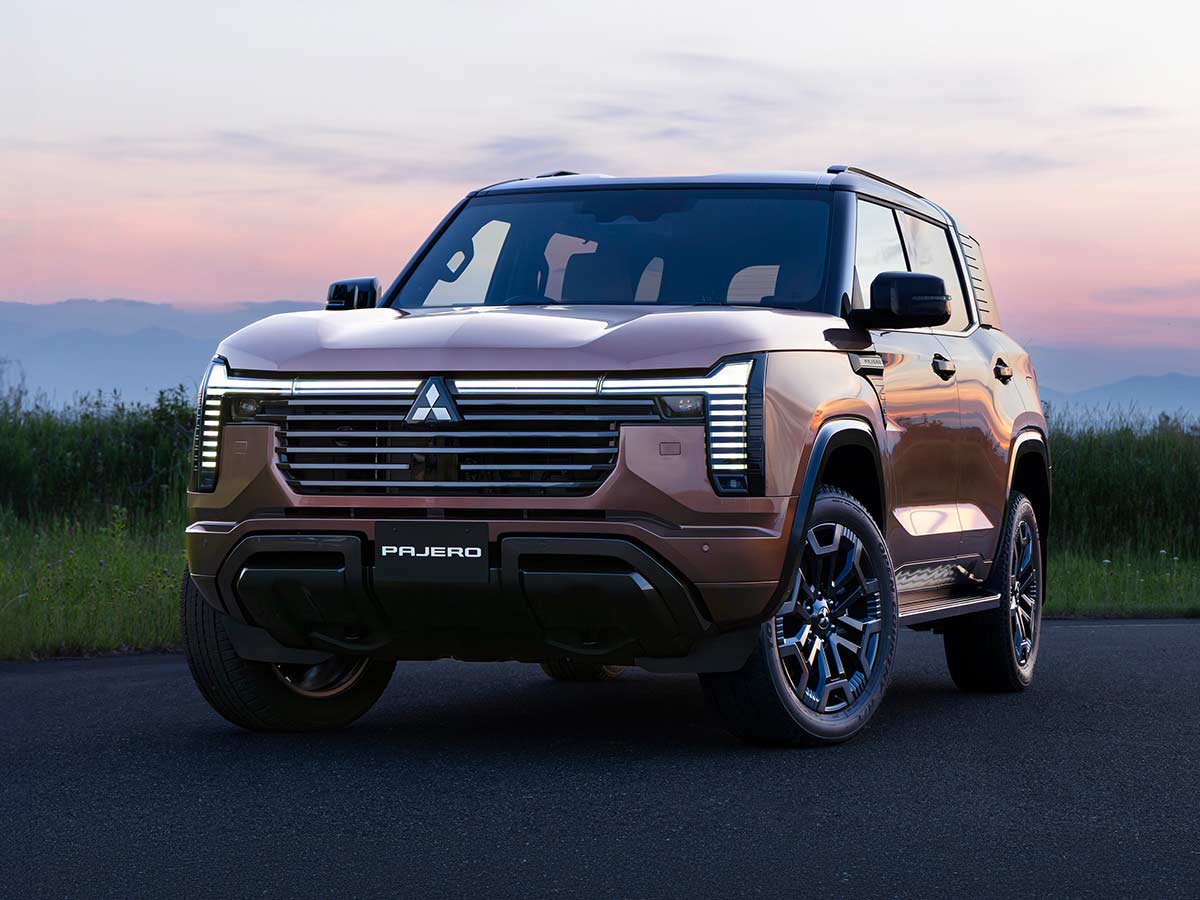
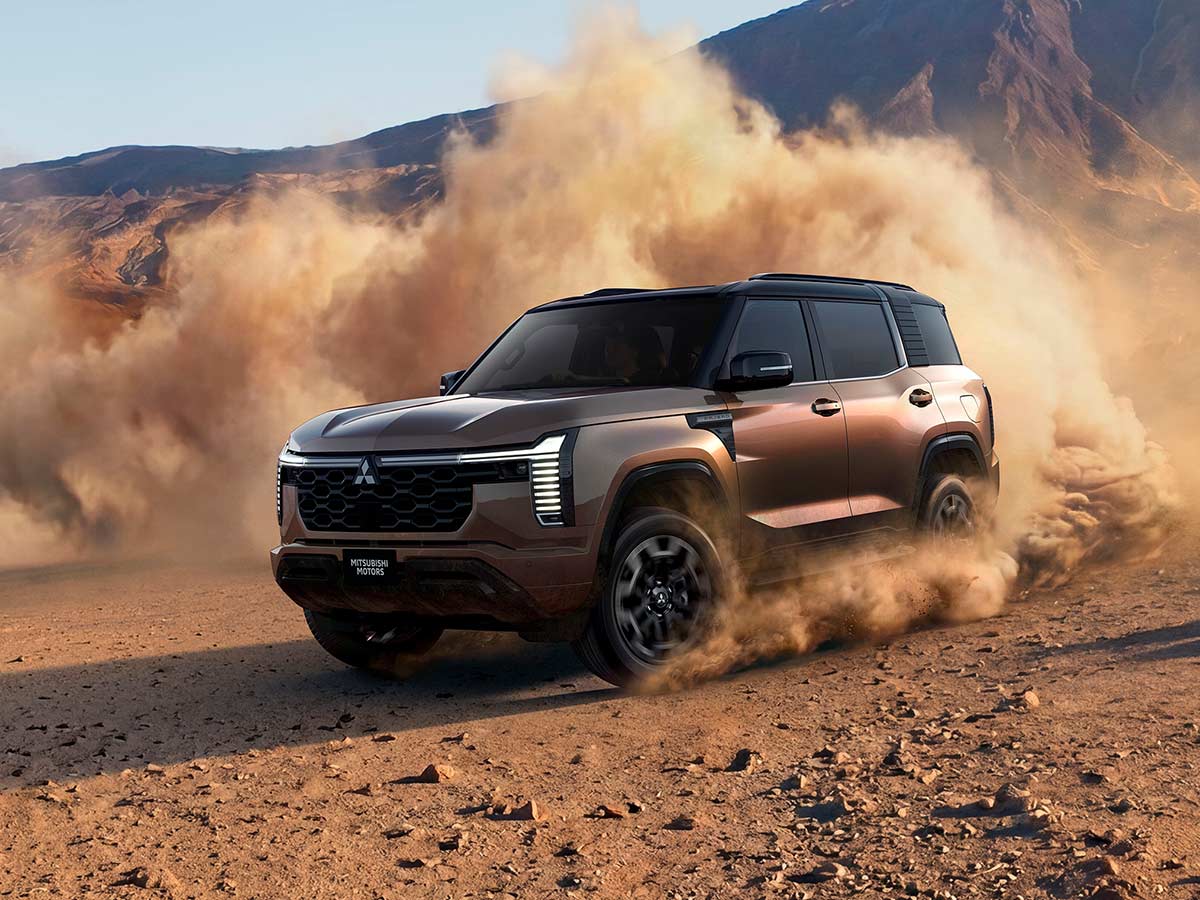
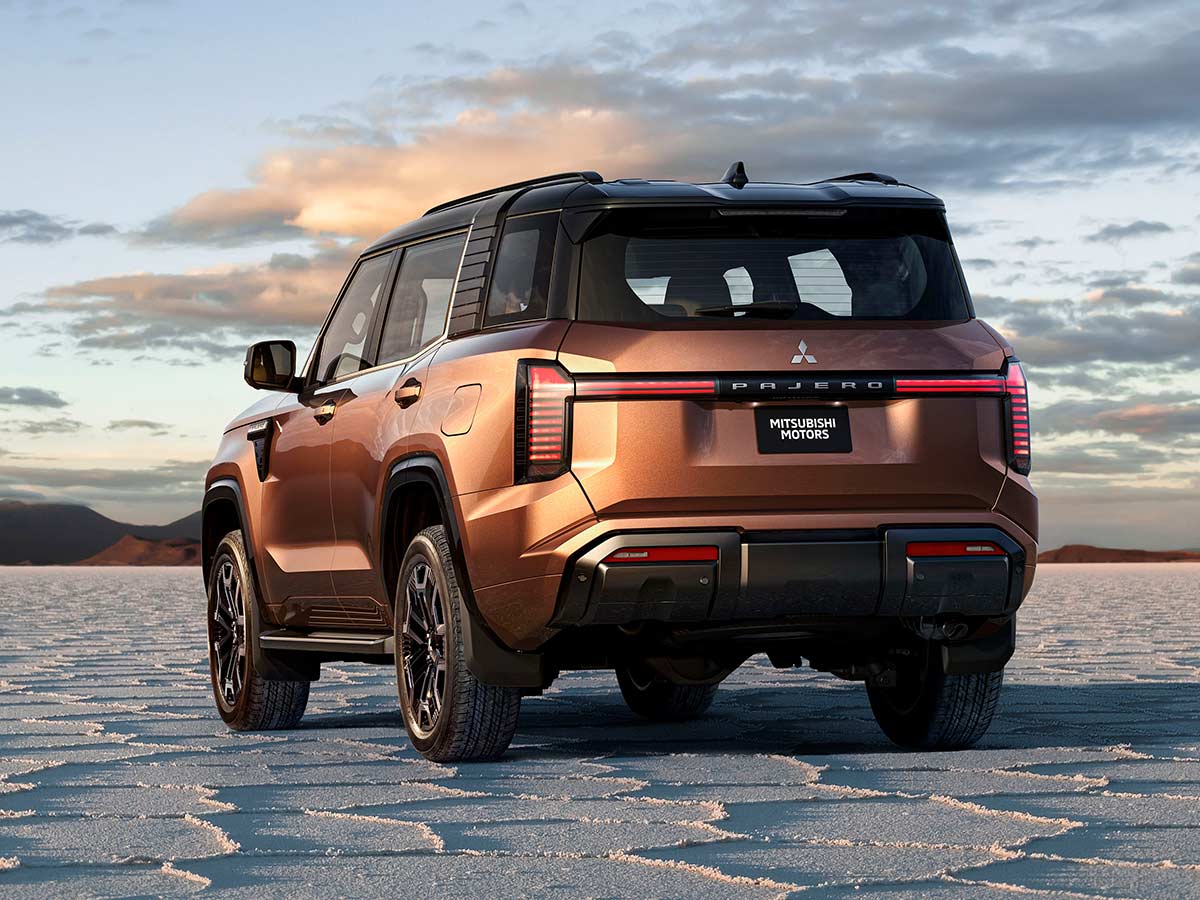
The new Pajero carries forward visual themes from the original first-generation model, particularly its upright proportions and strong horizontal character. But rather than reproducing the old shape, the designers have translated those cues into a much more contemporary form.
The stance is substantial. Powerful fenders give the body visual width, while sculpted surfaces prevent the large SUV from becoming visually blunt.
At the front, Mitsubishi describes the design language as inspired by Kendo, the Japanese martial art. The grille and lighting arrangement are deliberately assertive, with two grille designs available depending on specification and T-shaped headlights establishing the vehicle’s signature.
Look farther back and the C-pillar carries another deliberate reference to the original Pajero. Its form is inspired by the roll bar of the first generation.
Even the rear treatment has a historical connection. A hexagonal motif reinterprets the visual idea of the traditional externally mounted spare tire.
These details matter because the Pajero has always occupied an unusual position. It is not supposed to look delicate. Nor should it look like a military vehicle dressed up for the school run.
The new design appears to understand that distinction.
A Cabin Built Around Control, Not Clutter
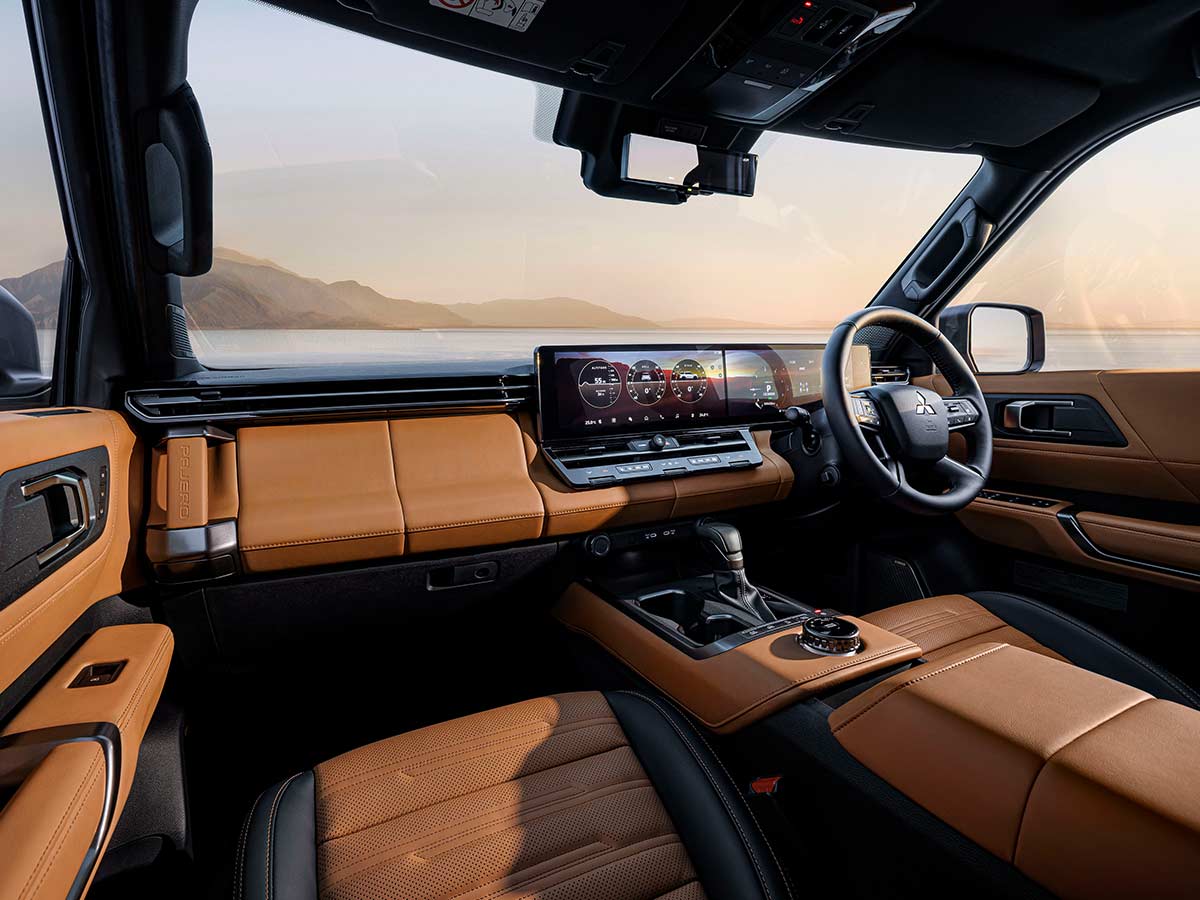
Inside, Mitsubishi has pursued a similarly horizontal and functional design.
The dashboard is deliberately broad, with a monolithic display arrangement incorporating two 14.3-inch screens on higher specifications. The effect is modern without abandoning the SUV’s functional character.
There is also an interesting Japanese design vocabulary running through the cabin.
The Multi Meter, for example, takes inspiration from the triple-meter clusters associated with earlier off-road vehicles. Rather than being decorative, it provides information such as altitude, compass heading, temperature, pitch and roll angles, and the status of the Active Yaw Control system.
It is the kind of detail that makes sense in a Pajero.
A luxury SUV can tell you how fast you are traveling. A serious off-road vehicle should also be able to tell you what the ground beneath it is doing.
Mitsubishi has also incorporated Kimekomi-inspired stitching into the soft-touch interior trim, adding a distinctly Japanese visual signature without turning the cabin into an exercise in ornamentation.
What Engine Does the 2026 Mitsubishi Pajero Use?
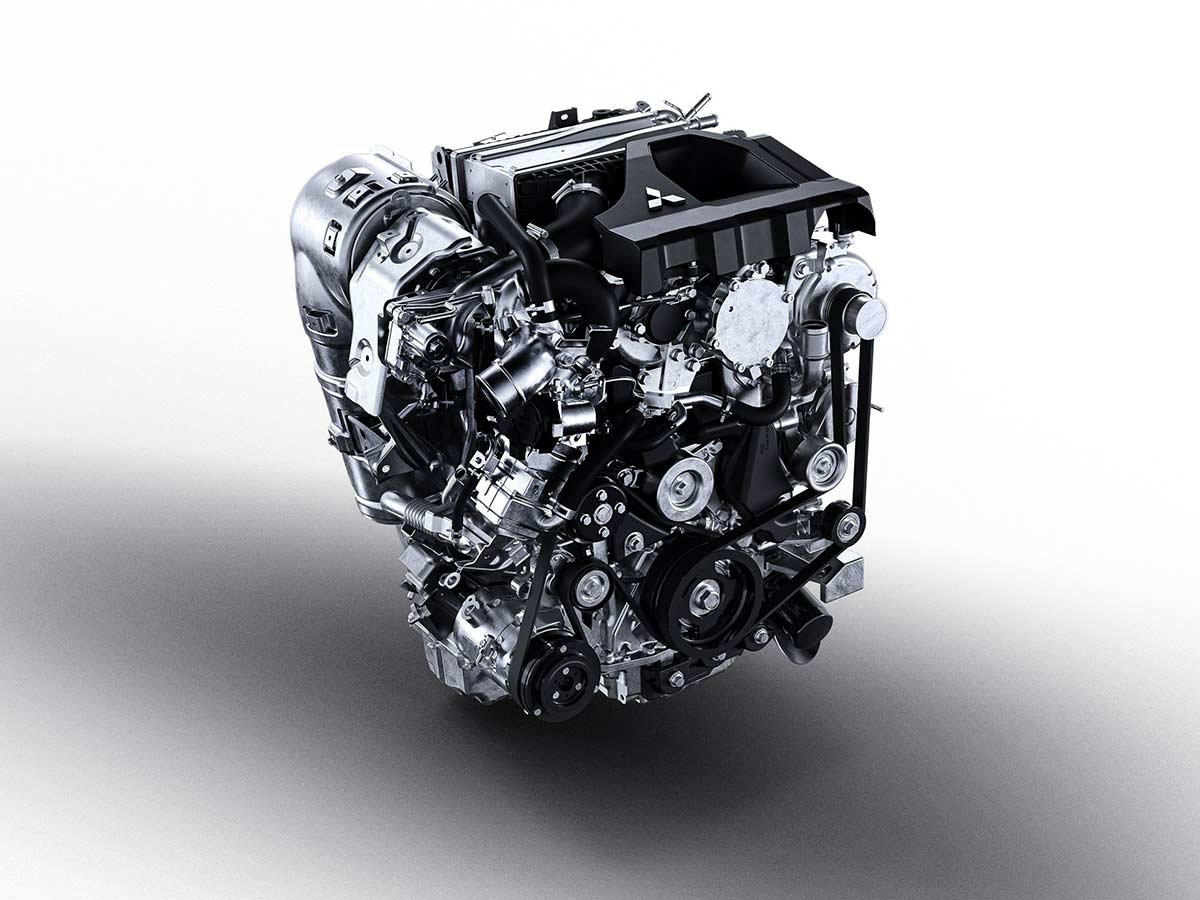
The new Pajero returns to one of the most appropriate powertrains for its mission: a 2.4-liter clean diesel engine.
The engine uses a single variable geometry turbocharger and develops maximum torque of up to 480 Nm, giving the Pajero the low- and mid-range pulling power expected of a large body-on-frame SUV.
Mitsubishi has paired it with a newly developed eight-speed automatic transmission.
The transmission is designed to provide smoother gear changes, responsive acceleration and improved quietness, while a Sport mode adds a more immediate character when the driver wants it.
There is an important distinction here.
The Pajero is not chasing outright acceleration figures. Its engineering priorities are different. Torque delivery, controllability and the ability to maintain momentum over difficult terrain are far more relevant to this vehicle’s identity than a headline sprint time.
That is exactly where a diesel engine and sophisticated four-wheel-drive system make sense.
Mitsubishi’s own specifications note that torque output can vary by specification, with 470 Nm listed for select versions, so buyers should check the specification for their individual market and trim.
The Ladder Frame Is the Real Story
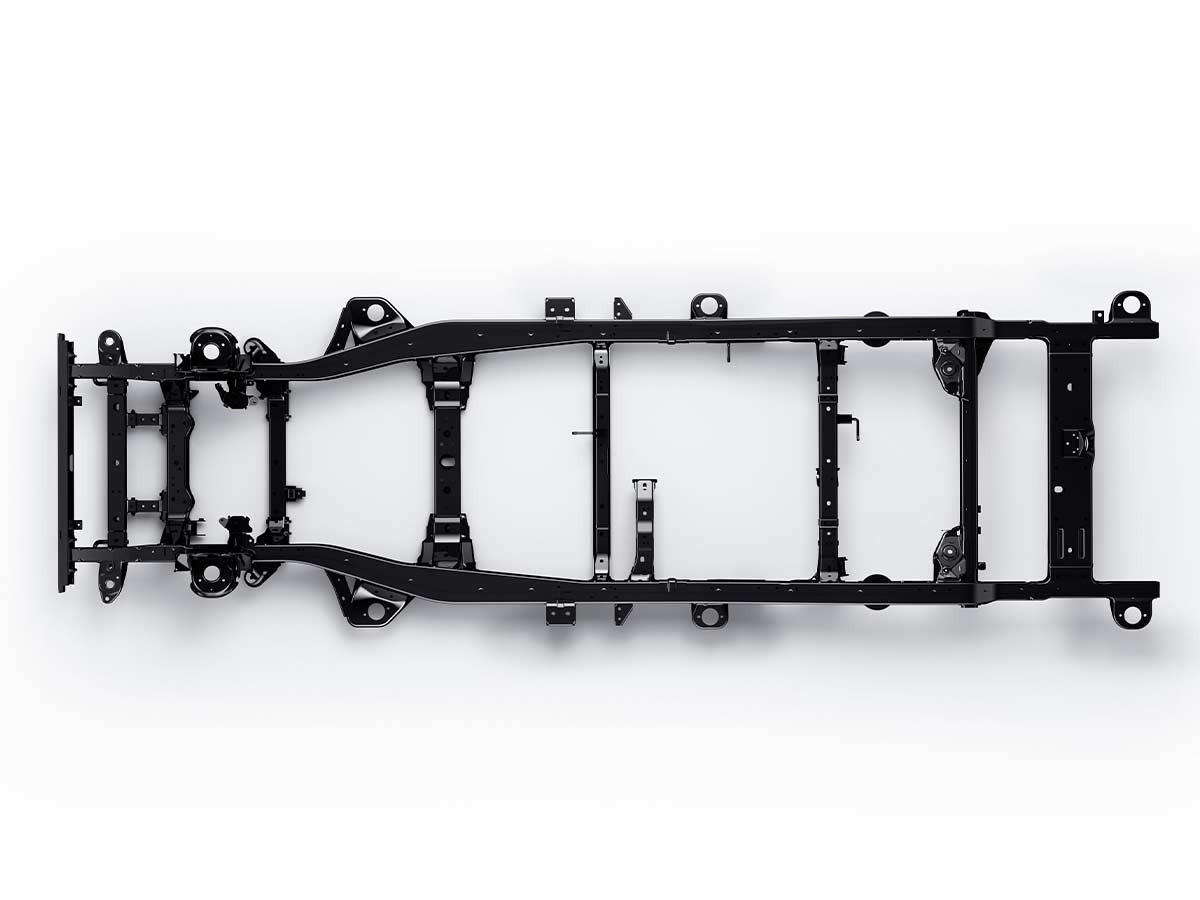
The most important part of the new Pajero may be something you cannot see.
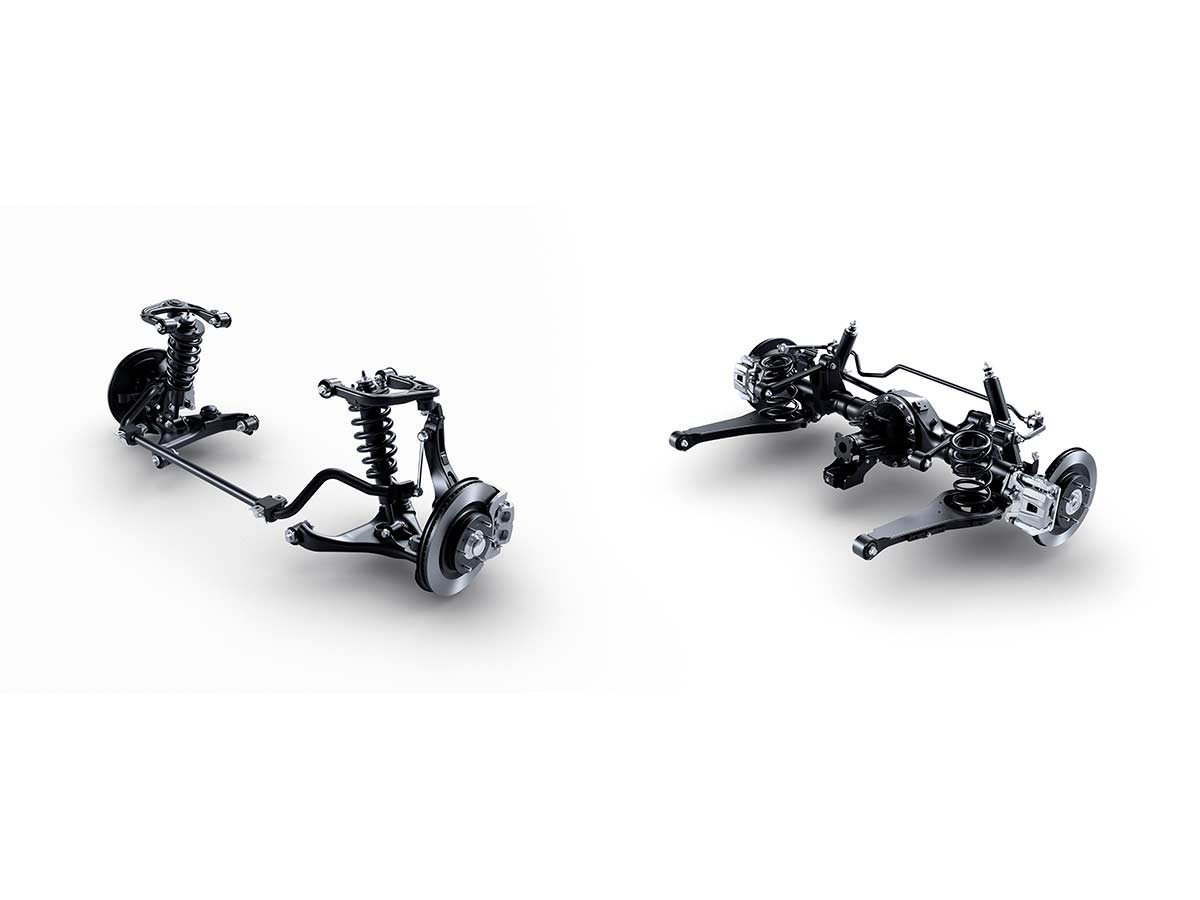
Underneath the body is a highly rigid ladder frame, reinforced with a greater use of high-tensile steel. Mitsubishi says the new structure improves both torsional and bending rigidity.
That matters because off-road capability begins with the platform.
A vehicle can have sophisticated electronics, aggressive tires and multiple drive modes, but if its underlying structure does not provide the required rigidity and suspension articulation, those systems eventually run out of answers.
The Pajero combines the ladder frame with an independent double-wishbone front suspension and a newly developed five-link rigid rear axle.
The suspension has been designed for long travel, allowing the wheels to maintain contact with uneven terrain for longer while also supporting Mitsubishi’s stated goal of improving what it calls “off-road comfort.”
Body mounts have also been strengthened to suppress vibration.
That combination tells you something about Mitsubishi’s priorities. The new Pajero is not being engineered solely as a weekend trail machine. It is intended to absorb rough terrain while keeping the occupants isolated from as much of the mechanical violence as possible.
That is a considerably harder engineering problem than simply building a tough SUV.
Mitsubishi Pajero S-AWC and Super Select 4WD-II Explained
This is where the new Pajero becomes particularly interesting.
Mitsubishi has combined its Super All-Wheel Control (S-AWC) system with Super Select 4WD-II, giving the SUV a drivetrain architecture designed to cover everything from normal road use to serious low-range off-roading.
The SS4-II system provides four principal drivetrain settings:
- 2H: rear-wheel drive
- 4H: full-time four-wheel drive
- 4HLc: four-wheel drive with the center differential locked
- 4LLc: locked center differential with low-range gearing
That last setting is the one you want when terrain becomes genuinely difficult.
Low range changes the equation by providing much greater control at low speeds and increasing the drivetrain’s ability to manage steep climbs, descents and technical obstacles.
But the Pajero does not stop at mechanical four-wheel-drive hardware.
S-AWC integrates systems including Active Yaw Control, Active Stability and Traction Control, and ABS to manage the vehicle’s behavior under acceleration, cornering and braking.
There are also seven drive modes:
Normal, Eco, Gravel, Snow, Mud, Sand and Rock.
That range is important because off-road driving is not one condition. Sand requires a different approach from mud. Loose gravel behaves differently again, while rock demands careful torque management and wheel control.
The Pajero’s electronics are designed to adapt the vehicle accordingly.
Seven Modes, But the Hardware Still Matters
Modern off-road SUVs sometimes create the impression that terrain modes have made mechanical capability almost irrelevant.
They have not.
The most impressive part of the Pajero’s specification is the way Mitsubishi has combined electronic control with mechanical fundamentals.
The rigid ladder frame, long-travel suspension, SS4-II drivetrain and substantial ground clearance establish the basic capability. S-AWC and the drive modes then refine how that capability is deployed.
The result should be a vehicle that does not merely rely on software to compensate for weaknesses elsewhere.
That distinction is increasingly important as luxury SUVs become more sophisticated.
The Pajero’s philosophy is closer to using electronics to enhance hardware than using electronics to disguise the absence of it.
2026 Mitsubishi Pajero Off-Road Dimensions
The numbers reinforce the point.
The new Pajero measures 4,920 mm long, 1,925 mm wide and 1,910 mm high, with a 2,870 mm wheelbase and 230 mm of ground clearance.
Its published off-road geometry includes:
- 30.4-degree approach angle
- 22.6-degree breakover angle
- 25.8-degree departure angle
The vehicle also has a 52:48 front-to-rear weight distribution.
None of those figures alone guarantees off-road excellence. Real terrain is far less cooperative than a specification sheet.
But taken together with long-travel suspension and the SS4-II system, they suggest Mitsubishi has paid attention to the fundamentals.
The Pajero is physically shaped to climb over obstacles rather than merely look as though it could.
The Three-Row Pajero Is Meant to Carry Seven
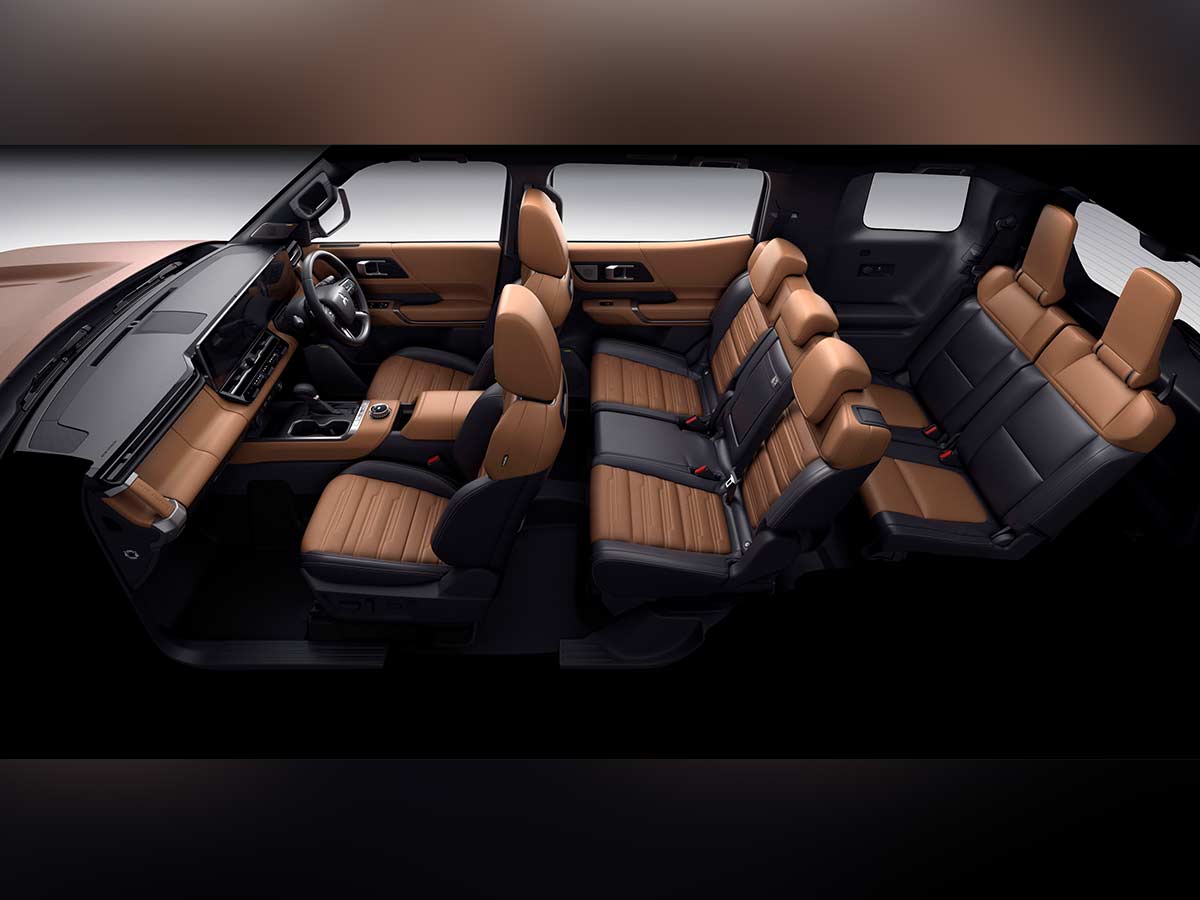
The new Pajero is not a stripped-down expedition vehicle.
It is a three-row, seven-seat SUV, and Mitsubishi has paid considerable attention to the space between those rows.
The second row can slide by 150 mm and tumble forward to improve access to the third row.
More importantly, Mitsubishi says the third row has been engineered to provide usable adult headroom and toe room beneath the second-row seats.
That is a meaningful detail.
Large SUVs frequently advertise seven seats while treating the final two as emergency accommodation. The Pajero’s packaging suggests Mitsubishi wants the third row to be genuinely usable rather than merely present on the specification sheet.
The front and second-row seats are designed to provide body support, while seat ventilation and three-zone automatic climate control move the vehicle further toward long-distance comfort.
This is where the Pajero’s dual personality becomes clearest.
It needs to be capable of crossing rough terrain, but it also needs to work as a family vehicle on a long highway journey.
Quietness Is Part of the New Pajero’s Luxury Brief
Mitsubishi has also concentrated on cabin refinement.
Acoustic glass is used for the windshield and front and rear door windows, while additional noise-reduction measures are intended to reduce the amount of road and mechanical noise entering the cabin.
That may sound like a small detail compared with four-wheel-drive hardware.
It is not.
The Pajero is being positioned as a flagship. That means refinement becomes part of the engineering challenge.
A vehicle that can crawl across a rocky trail but leaves its occupants exhausted after several hours on the highway has only solved half the problem.
The new Pajero is clearly attempting to solve both.
A 14.3-Inch Display Meets an Old-School Off-Road Mindset
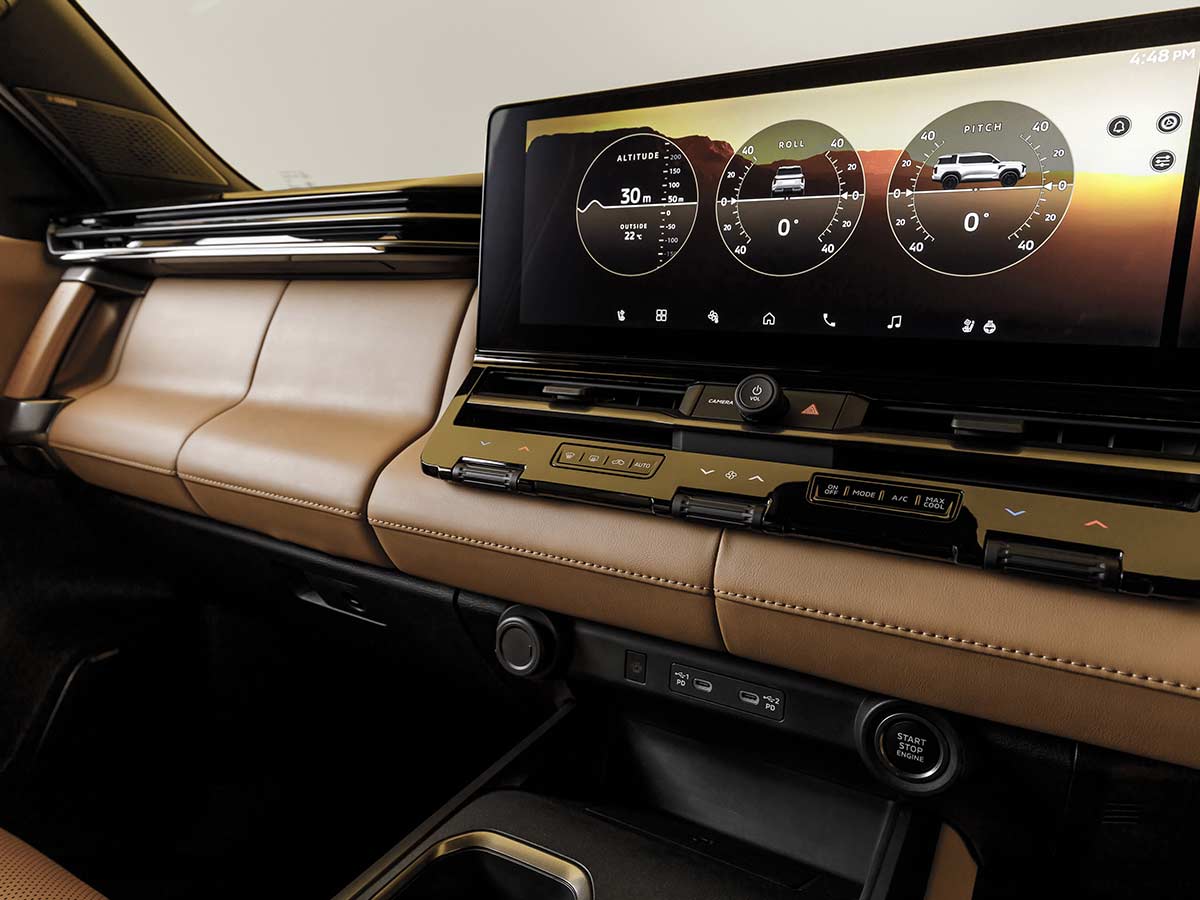
The centerpiece of the dashboard is Mitsubishi’s large horizontal monolithic display, measuring 14.3 inches on applicable specifications. The system supports wireless smartphone connectivity and can be configured with multiple background themes.
But the more interesting technology is arguably the Multi Meter.
Rather than filling the screen with conventional infotainment information, it can display:
- Altitude
- Compass heading
- Temperature
- Pitch and roll
- Active Yaw Control status
That is a subtle but clever way of connecting modern digital technology with the Pajero’s traditional identity.
The screen becomes an instrument rather than simply a television.
The New Pajero Gets Serious Driver Assistance
The safety specification is equally comprehensive.
Mitsubishi’s Forward Collision Mitigation system can detect pedestrians, cyclists and motorcyclists, with junction-assist functionality. Predictive Forward Collision Warning is also included, alongside Emergency Assist for Pedal Misapplication and Emergency Lane Assist.
The Pajero also offers Front Cross Traffic Alert and MI-PILOT, Mitsubishi’s highway assistance system combining adaptive cruise control and lane-keeping assistance for single-lane highway driving.
There are eight airbags, including Mitsubishi’s first application of an SRS center airbag.
The point is not to turn the Pajero into an autonomous vehicle.
It is to make a large, heavy and potentially demanding SUV easier to manage during everyday driving.
That distinction matters.
A vehicle designed for difficult terrain still spends most of its life on ordinary roads.
The 3D Multi Around Monitor Could Be a Genuine Off-Road Advantage
One of the most useful pieces of technology may be the 3D Multi Around Monitor.
The system uses four cameras and creates a three-dimensional representation of the vehicle, operating at approximately 30 frames per second. It can provide a view of the area beneath the front of the vehicle, helping the driver understand what is happening immediately ahead when visibility is compromised.
Mitsubishi says the under-floor view can automatically appear when 4HLc or 4LLc is selected.
That is exactly the kind of technology that has a practical purpose.
On steep or rocky terrain, the bonnet can conceal the ground immediately ahead. A camera system that effectively allows the driver to see through that visual blind spot can reduce guesswork.
It is not a substitute for skill.
But it is a very useful supplement to it.
Mitsubishi CONNECT Adds the Modern Layer
The new Pajero also receives MITSUBISHI CONNECT, providing connected functions such as remote climate control and vehicle status monitoring, along with SOS functionality.
Again, the significance is less about individual features than the broader transformation of the Pajero.
The old Pajero was defined by mechanical capability.
The new one combines that foundation with the connected, digitally integrated expectations of a modern flagship SUV.
And Then There Is Yamaha
Mitsubishi has partnered with Yamaha for the Pajero’s premium audio system.
The Dynamic Sound Yamaha Ultimate system uses 12 speakers, dual amplifiers and noise compensation technology.
This might seem almost contradictory in a vehicle whose engineering story revolves around low range, axle articulation and mud modes.
It actually fits the brief rather well.
The Pajero is designed to be both an off-road machine and a long-distance family SUV. Once the trail ends, the same cabin becomes the place where passengers spend hours traveling across the highway.
The ability to turn that cabin into a quiet, high-quality listening environment is therefore part of the vehicle’s broader luxury proposition.
2026 Mitsubishi Pajero vs Land Cruiser and Defender
The natural question is where the new Pajero sits in the modern off-road SUV hierarchy.
The Toyota Land Cruiser and Land Rover Defender are obvious reference points because both have successfully blended serious terrain capability with increasingly sophisticated interiors.
The Pajero’s approach is distinctive.
It retains the traditional ladder-frame architecture and a dedicated four-wheel-drive system while placing unusual emphasis on integrated vehicle dynamics through S-AWC.
Its combination of SS4-II, S-AWC, seven drive modes, long-travel suspension and a 230 mm ground clearance gives it a strong technical foundation.
But the more interesting comparison may not be about which SUV is “best.”
It is about philosophy.
The Defender leans heavily into its British expedition heritage while embracing modern luxury and technology.
The Land Cruiser has built its reputation on durability and global off-road credibility.
The Pajero returns with a distinctly Mitsubishi interpretation: Japanese design, sophisticated all-wheel control, mechanical toughness and a cabin designed to be comfortable enough for everyday family life.
That gives the new Montero/Pajero its own space in the conversation.
The Pajero Name Carries Serious Weight
It is easy to underestimate how much history Mitsubishi is putting back onto this vehicle.
The original Pajero was introduced in 1982 as a cross-country four-wheel-drive vehicle that sought to combine authentic off-road performance and reliability with passenger-car-like comfort. Across four generations, more than 3.29 million examples were produced.
The name also developed into Montero in some markets, meaning that buyers searching for the new Mitsubishi Montero are effectively looking at the same global vehicle under a different regional nameplate.
That makes “Pajero vs Montero” less a question of two different SUVs and more a question of market naming.
The engineering story is shared.
And that story now has a new chapter.
Is the 2026 Mitsubishi Pajero a True Flagship SUV?
On the evidence Mitsubishi has released, yes – but for a very specific reason.
The new Pajero does not appear to be chasing flagship status simply through leather, screens and a long equipment list.
Its flagship positioning begins underneath the cabin.
The ladder frame has been strengthened. The suspension has been redesigned. The four-wheel-drive system has been retained in a sophisticated form. S-AWC integrates multiple dynamic-control systems. Ground clearance and approach angles have been prioritized.
Only then does the luxury layer arrive.
Three rows. Seven seats. Acoustic glass. Ventilated seats. Three-zone climate control. Large digital displays. Advanced driver assistance. Connected services. Yamaha audio.
That order of priorities feels important.
The Pajero is not pretending to be an off-roader.
It is starting with the off-roader and building a flagship around it.
The New Pajero’s Biggest Challenge
There is, however, one question that specifications cannot answer.
How does all of this engineering come together on an actual trail and an actual road?
Mitsubishi’s unveiling provides extensive technical information, but it does not yet provide independent road-test evidence about ride quality, steering feel, suspension composure at speed, real-world fuel economy, transmission behavior under load or how the new S-AWC calibration feels from behind the wheel.
Those are questions that will have to wait for proper driving evaluations.
And they matter.
Because a great off-road SUV is not defined only by how much equipment it has. It is defined by how naturally that equipment works together.
The best systems disappear into the driver’s instincts.
You select the right mode, apply the throttle, turn the wheel and the vehicle simply gets on with the job.
Whether the new Pajero achieves that level of integration will be one of the most important things to discover when independent testing begins.
2026 Mitsubishi Pajero / Montero: Final Verdict
The Pajero name returns with an unusually coherent engineering philosophy.
The new 2026 Mitsubishi Pajero is larger, more sophisticated and considerably more digitally integrated than its predecessors, but Mitsubishi has resisted the easiest route to modernity.
It has not abandoned the mechanical foundations that made the Pajero famous.
There is still a ladder frame beneath it. There is still a serious four-wheel-drive system. There is still low range. There is still substantial ground clearance and long-travel suspension.
But now those fundamentals are surrounded by S-AWC, seven terrain modes, a sophisticated camera system, three-row seating, acoustic refinement, connected technology and a distinctly Japanese interior design language.
For markets that know the vehicle as the Mitsubishi Montero, the proposition is equally significant.
This is not simply the old Pajero revived.
It is a new interpretation of what the Pajero was always supposed to be: a vehicle capable of crossing difficult ground without making ordinary life difficult.
And perhaps that is the most convincing part of its return.
The new Pajero does not seem interested in proving that it can conquer the wilderness.
It is interested in making the wilderness feel like somewhere it belongs.
The road disappears first. The Pajero keeps going.
Source: Mitsubishi