

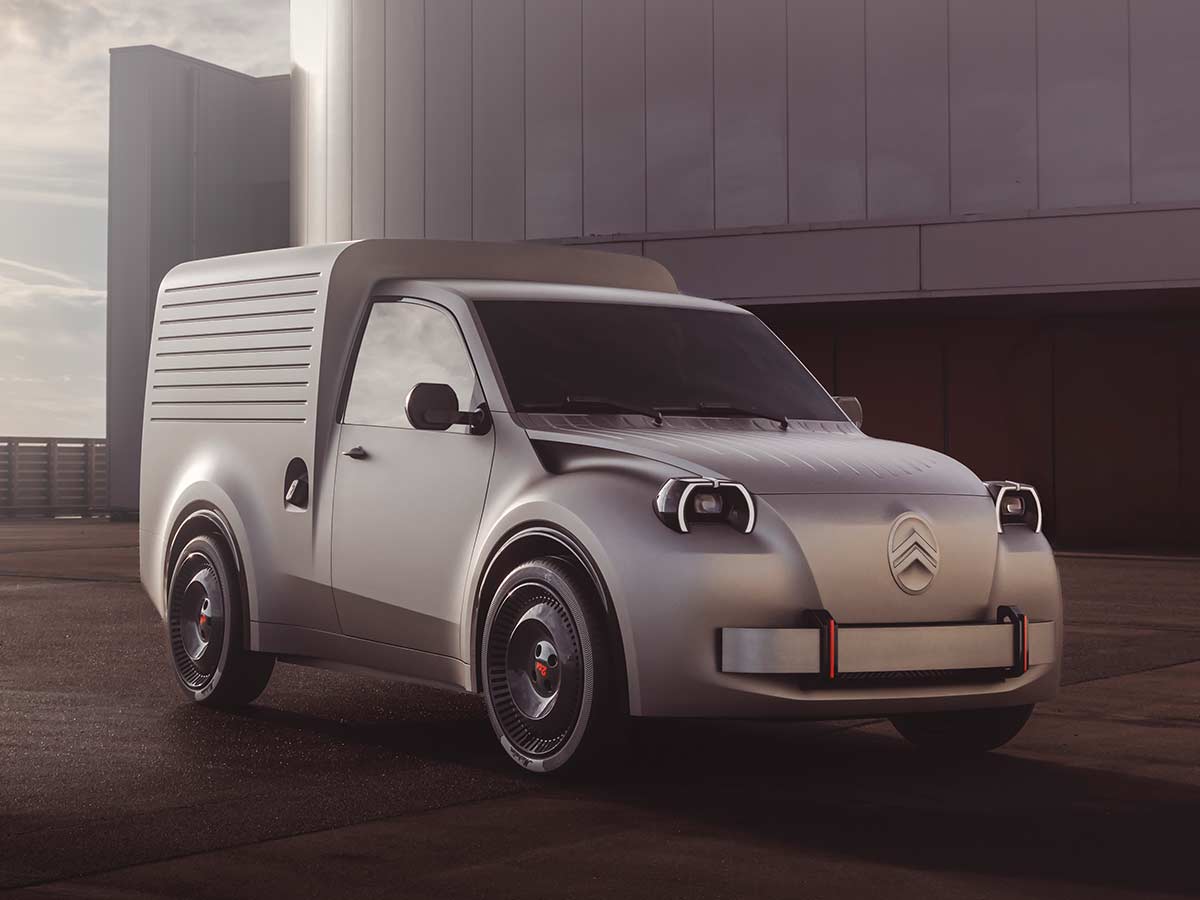














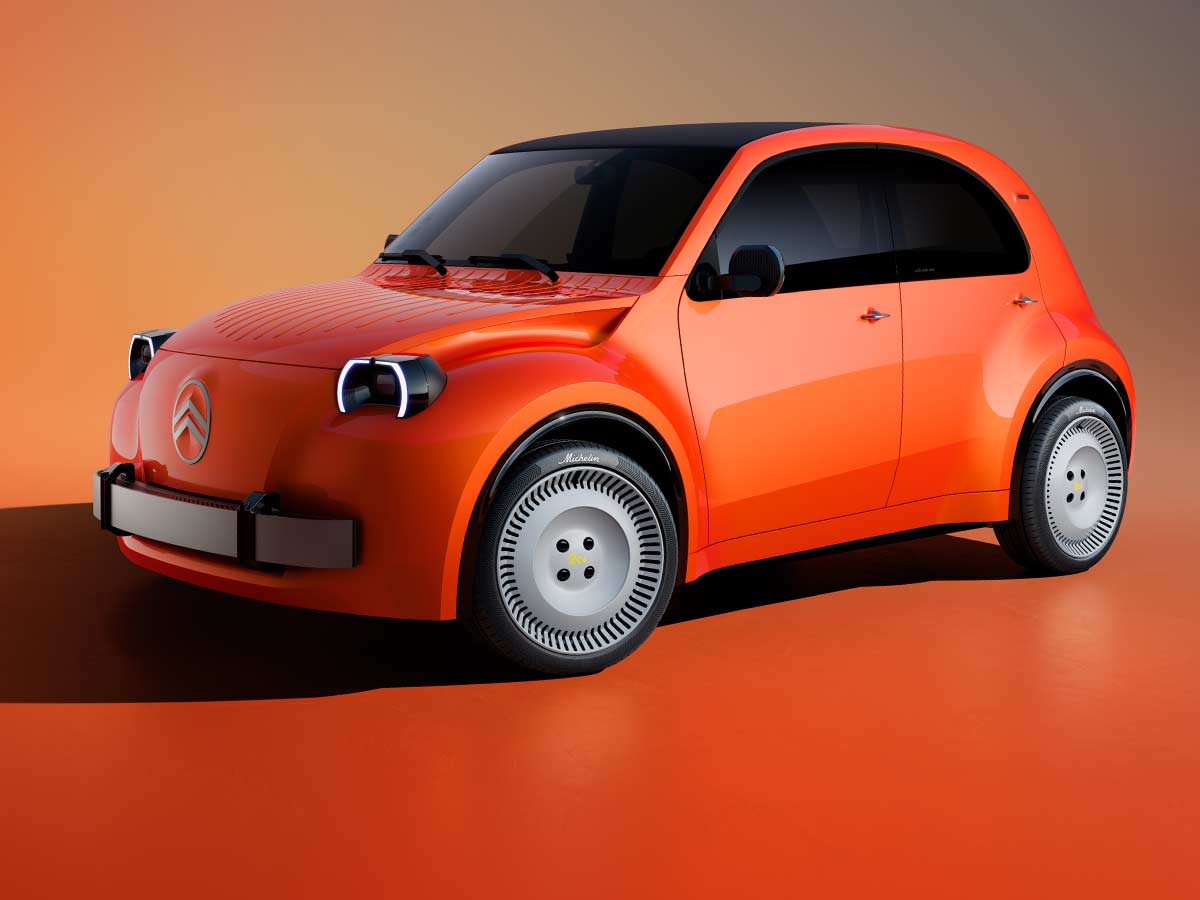
Citroën is bringing one of its most recognisable automotive names into the electric era with the 2 CV Concept, a compact electric car concept unveiled at the 2026 Paris Motor Show. With a length of just 3.76 metres, a target weight of around one tonne and a proposed starting price of approximately €15,000, the concept explores how affordable electric mobility could become simpler, lighter and more appealing.
The 2 CV Concept is not intended to be a modern replica of the original Citroën 2 CV. Instead, it revisits the principles that made the historic car successful: practical engineering, accessible transportation, clever packaging and a distinctive personality. Citroën says a production model inspired by the concept is planned within the next two years, with a target arrival by 2028, European manufacturing and compliance with future European E-Car regulations.
The proposal arrives at a time when Citroën sees an opportunity for small electric cars that prioritise everyday usefulness over size, complexity and unnecessary equipment. Its position between the compact Ami and the C3 in Citroën’s range is intended to create a different kind of electric mobility option, combining the practicality of a conventional car with the simplicity associated with lightweight urban vehicles.
The concept also demonstrates how historical design references can influence a modern vehicle without dictating its engineering. From its separated round headlamps and steel wheels to its removable radio, fabric roof and unusually simple cabin, the 2 CV Concept treats functionality as part of its character rather than something to be hidden behind technology.
>>> Great Discounts on Car & Bike Accessories <<<
Citroën 2 CV Concept: Key Specifications and Details
The figures below describe Citroën’s concept and its stated ambitions for a future production model. They should not be interpreted as confirmed specifications for a showroom-ready vehicle.
| Specification | Citroën 2 CV Concept |
|---|---|
| Vehicle type | Compact electric car concept |
| Public unveiling | 2026 Paris Motor Show |
| Exterior length | 3.76 metres |
| Target weight | Approximately one tonne |
| Target starting price | Around €15,000 |
| Intended manufacturing location | Europe |
| Target production-model timing | By 2028 |
| Wheel design | 18-inch steel wheels |
| Central touchscreen | 8-inch square display |
| Driver information system | Citroën Smart Vision |
| Roof | Manually operated fabric sunroof |
| Tyre technology | Michelin Universal Digital Twin for Tyres |
| Intended regulatory direction | Future European E-Car regulations |
Citroën has not provided a complete production specification in the supplied announcement. Battery capacity, motor output, driving range, charging performance, acceleration, final dimensions beyond length and confirmed retail pricing remain unestablished in the concept’s published details.
Why Citroën Is Bringing Back the Spirit of the 2 CV
The original Citroën 2 CV was conceived around a straightforward brief. Development began in 1937 under the name TPV, short for Toute Petite Voiture, or very small car. The objective was to create economical transportation that could carry four people and 50 kg of potatoes, reach 60 km/h, remain easy to drive and maintain, and cost relatively little to operate.
The 2 CV made its public debut at the Paris Motor Show in 1948. Rather than relying on luxury, performance or elaborate engineering, it addressed practical needs with an uncomplicated approach to transportation. Its success ultimately extended far beyond those original requirements, turning the car into an enduring symbol of mobility and everyday freedom.
Citroën is using that philosophy as the foundation for the new concept.
The company argues that the original car became an icon because of what it enabled people to do, not because it was designed to become a collector’s object. It helped people work, travel and move between urban and rural environments without demanding an expensive or complicated vehicle.
The modern challenge is different. Electric propulsion introduces new considerations, including battery cost, vehicle mass and energy consumption. Citroën’s approach is to revisit the idea of a car designed around essential needs, then apply it to contemporary electric mobility.
That is why the concept does not simply reproduce the original vehicle’s shape. Instead, it translates its simplicity into a modern package, combining electric propulsion, digital information displays, contemporary materials and a deliberately pared-back interior.
Citroën CEO Xavier Chardon described the approach as reinventing the qualities that made the original distinctive: simplicity, accessibility and freedom. The stated ambition is to make electric mobility more approachable without stripping away the emotional appeal that can make a small car desirable.
Why the original 2 CV remains relevant
The historic model provides three particularly relevant lessons for the concept.
- Practicality matters more than unnecessary complexity. The original was designed to perform everyday tasks. Its successor concept follows the same logic through compact dimensions, adaptable storage and a simplified cabin.
- Lightness can support affordability. Citroën wants to limit the weight of the electric car to reduce the burden on its battery and energy consumption.
- Character does not require excess. The original 2 CV developed a recognisable identity through its proportions and functional design. The concept seeks a similar result using contemporary lighting, materials and digital technology.
These principles distinguish the 2 CV Concept from a straightforward heritage-themed styling exercise. The aim is to apply the original’s functional thinking to a new vehicle category, rather than merely attach retro details to a conventional electric car.
A Small Electric Car Targeting a €15,000 Starting Price
One of the most significant elements of the Citroën 2 CV Concept is its proposed positioning in the electric-car market.
Citroën is targeting a starting price of around €15,000 for a future production model. The company also intends the vehicle to be manufactured in Europe and designed around future European E-Car regulations.
Neither the price nor the final regulatory classification is confirmed as a production specification. However, these ambitions establish the central commercial idea: an electric car that aims to be more accessible than many larger, more elaborate battery-powered vehicles.
Where the 2 CV Concept fits in the Citroën range
Citroën describes the concept as sitting between the Ami and the C3.
The Ami represents the brand’s approach to compact urban electric mobility, while the C3 occupies a different position within its passenger-car range. The 2 CV Concept is intended to explore the space between those products, offering greater freedom of movement in a compact format while retaining the character of a conventional car.
Its precise market positioning will depend on the final production specification. The concept announcement does not establish its passenger capacity, equipment grades or complete technical relationship with either model.
Nevertheless, the intended distinction is clear. Citroën wants to develop a small electric car that is useful for everyday journeys without becoming unnecessarily large, heavy or expensive.
Why the €15,000 target matters
The proposed price is central to the vehicle’s purpose. An affordable electric car must do more than use a battery instead of a combustion engine. It also needs a cost-conscious approach to vehicle architecture, equipment, materials and manufacturing.
Citroën’s concept addresses these considerations through several design choices:
- A compact exterior measuring 3.76 metres in length.
- A target weight of approximately one tonne.
- A cabin without a conventional dashboard and centre console.
- Simplified exterior surfaces and independently replaceable bumpers.
- A focus on essential driver information rather than an abundance of separate displays.
- Recycled and recyclable materials, where specified in the concept.
Each choice supports the broader objective of reducing complexity, although the company has not published a complete production cost breakdown.
A target price alone cannot establish whether the eventual vehicle will be competitive. Battery specifications, charging capability, standard equipment, taxes and the pricing of the finished model will all affect the final proposition.
The €15,000 figure should therefore be understood as Citroën’s starting-price ambition, not a confirmed price available to customers.
The 3.76-Metre Body Prioritises Urban Usability
The Citroën 2 CV Concept measures 3.76 metres long, making it shorter than the original 2 CV, which measured 3.85 metres according to the company’s design announcement.
That is an unusual direction for a modern revival. Instead of increasing the vehicle’s dimensions to accommodate a more elaborate design, Citroën has deliberately pursued a smaller footprint.
The intention is to make the car easier to manoeuvre in traffic, place in tight parking spaces and use on everyday journeys. A compact body can also help limit the amount of material required to construct the vehicle, although its actual mass will depend on the final engineering and equipment.
Citroën is targeting a weight of around one tonne. This remains an objective rather than a confirmed production figure, but it is central to the concept’s efficiency strategy.
Why vehicle weight matters in an electric car
An electric vehicle requires a battery to store the energy used by its motor. Battery packs contribute substantially to vehicle mass, so the relationship between the car’s overall weight and its battery requirements is important.
A lighter vehicle generally requires less energy to move under comparable conditions. If the vehicle’s intended journeys do not demand a large battery, reducing weight can also support a smaller, less expensive battery pack.
Citroën explicitly links its one-tonne target to this reasoning. Its stated approach is that lower mass can reduce battery size, capacity and cost while helping limit energy consumption and running expenses.
There is an important qualification, however. A lighter car does not automatically guarantee a particular driving range or energy-consumption figure. Those results also depend on the battery, electric motor, tyres, aerodynamics, driving conditions and other elements of the completed vehicle.
The concept’s announcement does not disclose enough information to quantify these effects.
A car designed around everyday journeys
Citroën describes the 2 CV Concept as suitable for both city and countryside use. The emphasis is on short everyday journeys rather than a particular performance benchmark.
Its compact footprint and straightforward layout are intended to make routine activities less demanding, from navigating narrow streets to parking near home or work.
The design also reflects a broader principle: a car intended for ordinary journeys does not necessarily need to grow with every new generation of technology. Citroën is proposing that carefully selected equipment and an efficient overall package may offer more practical value than simply adding features.
Whether the production model achieves that balance will depend on its eventual interior dimensions, driving range, charging performance and price. Those details have not been established by the concept announcement.
European E-Car Regulations and the Future of Small Electric Cars
Citroën says the future model inspired by the 2 CV Concept will comply with future European E-Car regulations.
This is an important part of the project’s intended positioning. The company is not describing the concept merely as a smaller version of an existing electric passenger car. It is exploring a vehicle developed around a regulatory direction associated with a new generation of compact electric mobility.
The announcement does not provide the final technical requirements of the regulations that the production vehicle will follow. It also does not establish a completed homologation category or confirm that the concept itself has been approved for sale.
The distinction between a concept and a production vehicle is especially important here. The displayed design can communicate intended dimensions, packaging and equipment, but a market-ready vehicle must satisfy the applicable technical and regulatory requirements.
Citroën’s stated goals include European manufacturing, a target starting price of approximately €15,000 and a production model expected by 2028. These elements form a coherent strategy: keep the car compact, manage weight and complexity, and target a price intended to broaden access to electric mobility.
The production vehicle’s final classification, specifications and market availability will determine how closely that strategy translates into a retail product.
Exterior Design: Familiar 2 CV Features With a Modern Interpretation
The 2 CV Concept’s styling is built around recognisable references to the original model, but Citroën has avoided attempting an exact reproduction.
The concept retains the characteristic proportions and rounded forms associated with the historic 2 CV while using tighter lines, more generous volumes and contemporary lighting. The result is intended to appear modern without losing the friendly personality that made the original distinctive.
The design approach is significant because a heritage-inspired vehicle can easily become a collection of retro details. Citroën instead treats the original model’s basic shapes as a starting point for a contemporary design.
Front end: Round headlamps and a sculpted bonnet
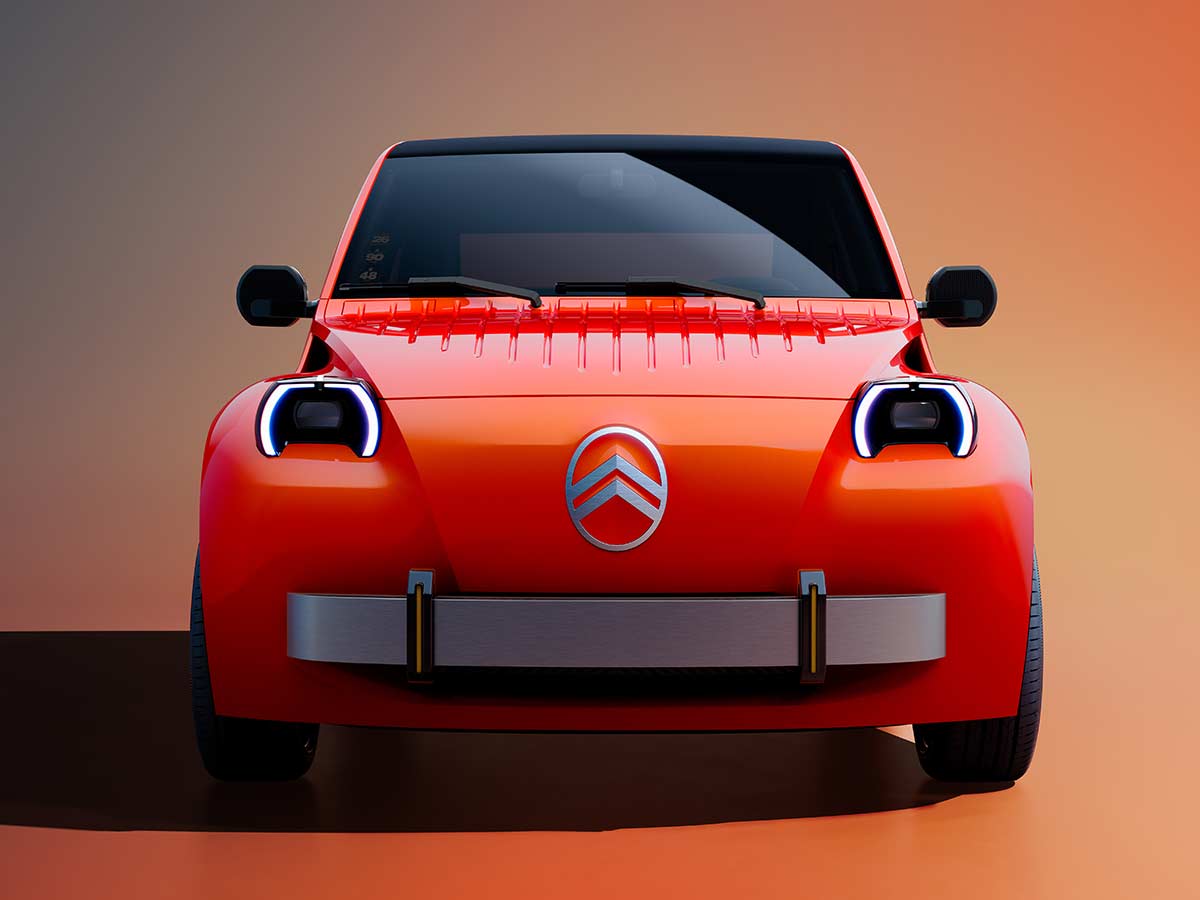
The front of the concept carries several of its strongest links to the original 2 CV.
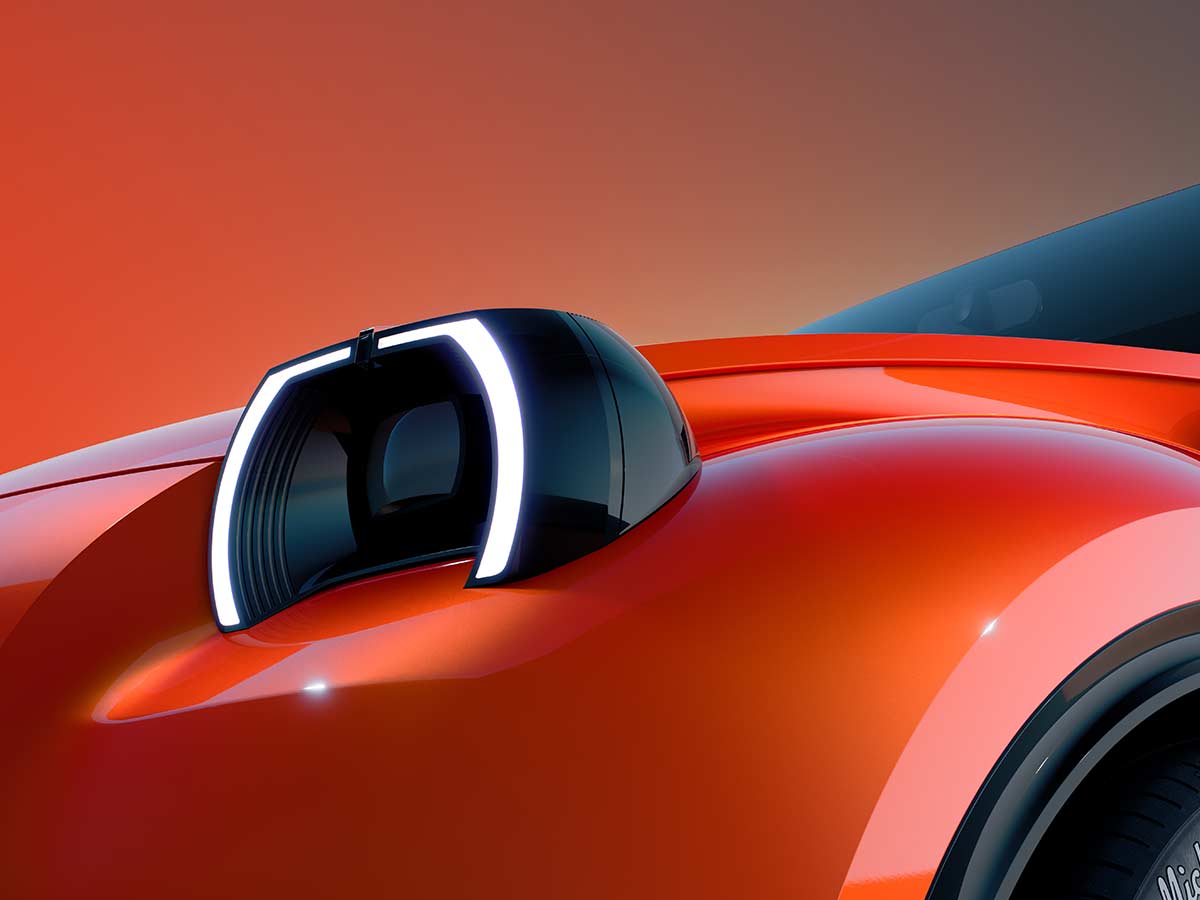
The round headlamps sit apart from the bodywork, creating the impression that they float beside the front end. Their lower edges are sculpted, while an expressive LED lighting signature gives them a more contemporary appearance.
The bonnet features ribs inspired by the TPV, the early development project that preceded the production 2 CV. These sculpted lines provide a visual reference to the original while contributing to the concept’s distinctive front-end treatment.
Air intakes are integrated into the design, including at the base of the windscreen. The windscreen wipers remain deliberately visible despite their integration into the windscreen area, reinforcing the emphasis on straightforward engineering.
Citroën Design Director Pierre Leclercq highlighted the challenge of making the front end appealing without allowing the smaller proportions to make the vehicle look like a toy.
That concern is important to the concept’s identity. The car needs to communicate approachability and simplicity while retaining the visual presence expected of a modern passenger vehicle.
Side profile: A vertical windscreen and flowing roof
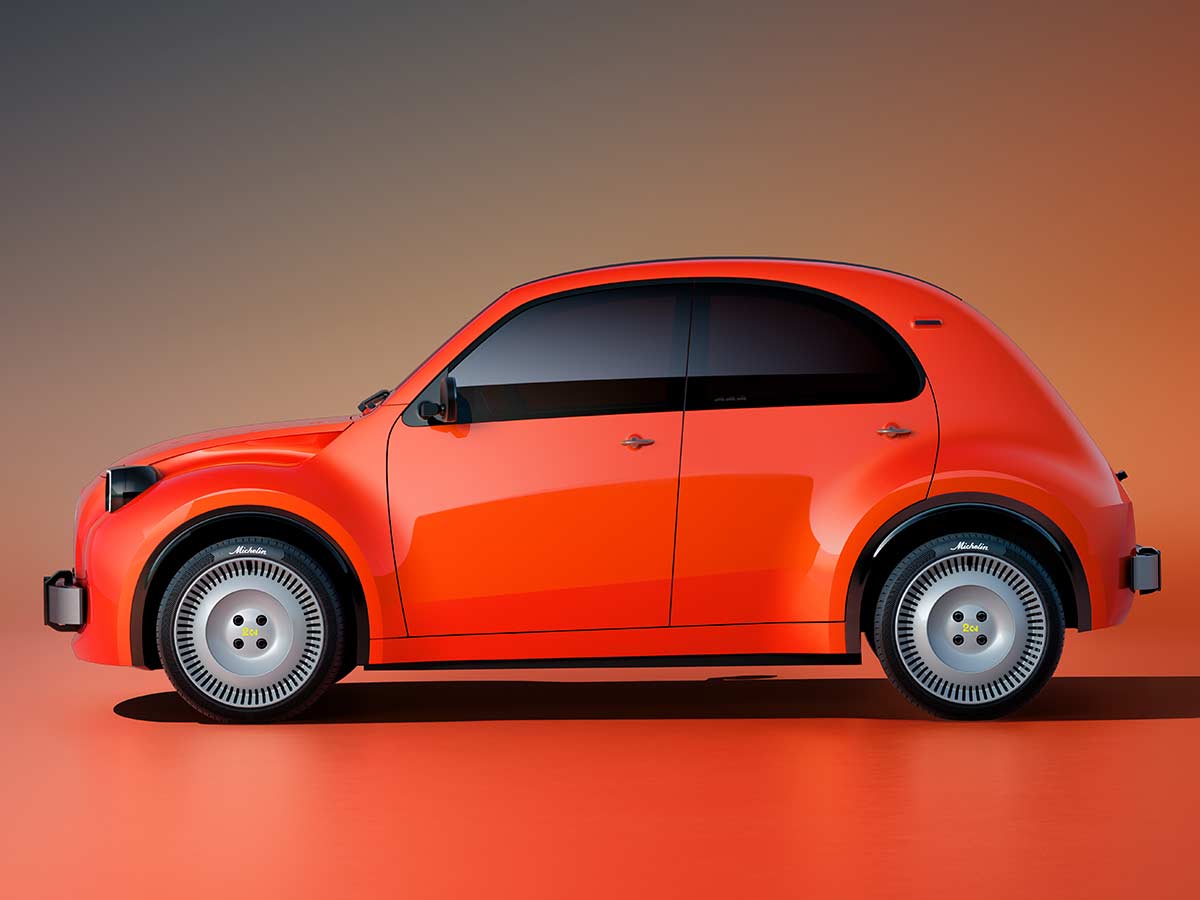
The side profile is defined by a relatively vertical windscreen, a curved roofline, rounded wheel arches and more tightly drawn body sides.
These elements preserve the original 2 CV’s distinctive silhouette while giving the concept a more purposeful stance. The combination of rounded wings and taut flanks creates contrast without relying on a complicated collection of creases.
The doors also retain contoured handles that reference the historic model. Indicators integrated into the C-pillars provide another connection to the original design.
Citroën has fitted the concept with 18-inch steel wheels, finished in light grey and accented with yellow clips carrying the 2 CV inscription. Their design reinterprets the original car’s wheel styling rather than reproducing it literally.
The Michelin tyres developed for the concept add another layer of visual continuity. Their exclusive chevron pattern incorporates the Michelin Heritage logo and Citroën’s double-chevron identity.
The tyres are therefore treated as part of the overall design rather than as an anonymous component hidden beneath the bodywork.
Rear end: A distinctive tailgate and three horizontal bands
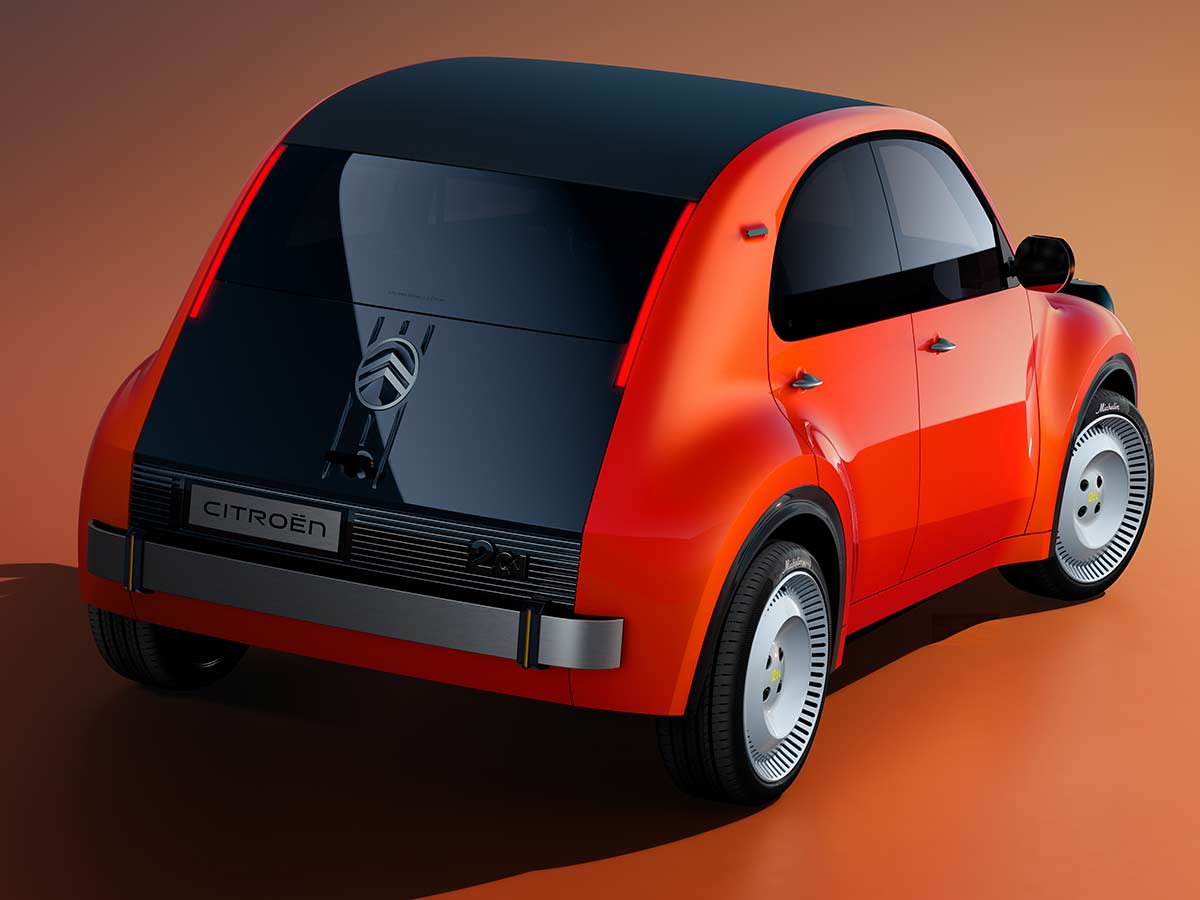
At the rear, the concept draws heavily on the original 2 CV’s characteristic tailgate treatment.
A black section extends down from the tailgate towards the bumper, creating a clear contrast with the body colour. LED rear lights sit on either side of the rear window, while three horizontal bands establish a strong visual structure.
The short rear overhang reinforces the compact proportions. An exposed tailgate handle provides a functional detail that deliberately contrasts with the increasingly concealed or electronic access solutions found on some modern vehicles.
Citroën has also proposed a digital number plate capable of displaying the different nicknames given to the 2 CV around the world. This is a concept-specific design feature, and the announcement does not establish whether it will be included on a production vehicle.
The combination of traditional proportions and modern lighting demonstrates the project’s main styling objective: preserve the original car’s identity without freezing its design in the past.
A Lightweight, Repair-Friendly Approach to Engineering
The 2 CV Concept’s simplicity extends beyond its appearance. Citroën has identified several construction and design decisions intended to make manufacturing and repair more straightforward.
These details are particularly relevant to an electric car targeting an accessible price. A vehicle may have an attractive purchase price, but unnecessary manufacturing complexity and expensive repairs can undermine its long-term affordability.
Independently replaceable bumpers
One of the clearest examples is the treatment of the bumpers.
Rather than blending them seamlessly into the bodywork, the concept uses bumpers that stand proud of the main body. Citroën says this arrangement can help protect the bodywork and allow the bumper to be replaced independently after an impact.
The practical principle is simple: if a relatively minor collision damages the bumper, the repair may not require replacement of larger body panels.
The actual cost and repair procedure would depend on the production vehicle’s construction, parts pricing and the extent of the damage. Nevertheless, the design establishes repairability as an explicit consideration rather than an afterthought.
Flat surfaces and integrated air intakes
The windscreen surround and selected exterior surfaces use flatter, simpler forms. Air intakes are integrated at the base of the windscreen, echoing the original 2 CV.
Citroën presents these choices as beneficial for manufacturing as well as design identity. Simpler surfaces and less complicated exterior components can reduce the number of elaborate shapes and interfaces required during production.
The company has also stated that the concept prioritises recycled and recyclable materials while seeking to maintain an appropriate perception of quality.
The announcement does not identify every material used in the body or provide a percentage for recycled content. It does, however, make clear that material selection is part of the project’s broader effort to balance affordability, practicality and resource responsibility.
Why repairability belongs in an affordable electric car
Repairability can influence the ownership experience in ways that are not immediately obvious from a vehicle’s specification sheet.
A straightforward component that can be replaced separately may be easier to service than a more integrated assembly requiring several parts to be removed together. In a vehicle intended for broad affordability, that distinction can matter to both owners and repair businesses.
The 2 CV Concept’s design therefore treats simplicity as a practical engineering consideration, not merely a visual theme.
Whether the same approach survives in the production vehicle will depend on final construction methods and the components required to meet regulatory standards.
Interior Design: Space Without a Conventional Dashboard
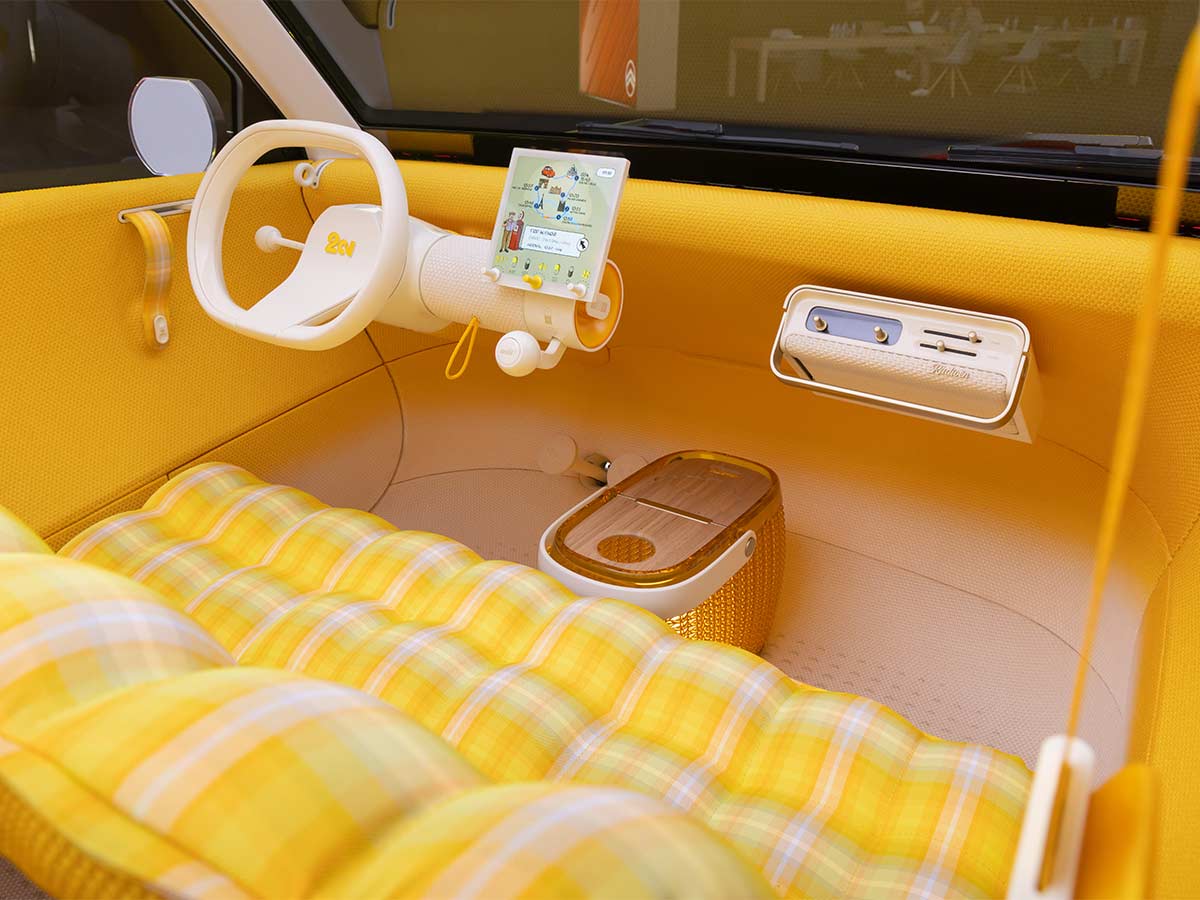
The cabin is one of the most distinctive parts of the Citroën 2 CV Concept. Instead of building the interior around a conventional dashboard, centre console and large collection of controls, Citroën has organised the main elements around a cylindrical structure.
This arrangement brings together the steering wheel, driver controls, gear selector and digital information systems while leaving more of the cabin visually open.
The design follows the original 2 CV’s emphasis on making the most of a straightforward interior. It also reflects the challenge of fitting modern digital technology into an affordable vehicle without allowing the equipment to dominate the experience.
A cylindrical control structure
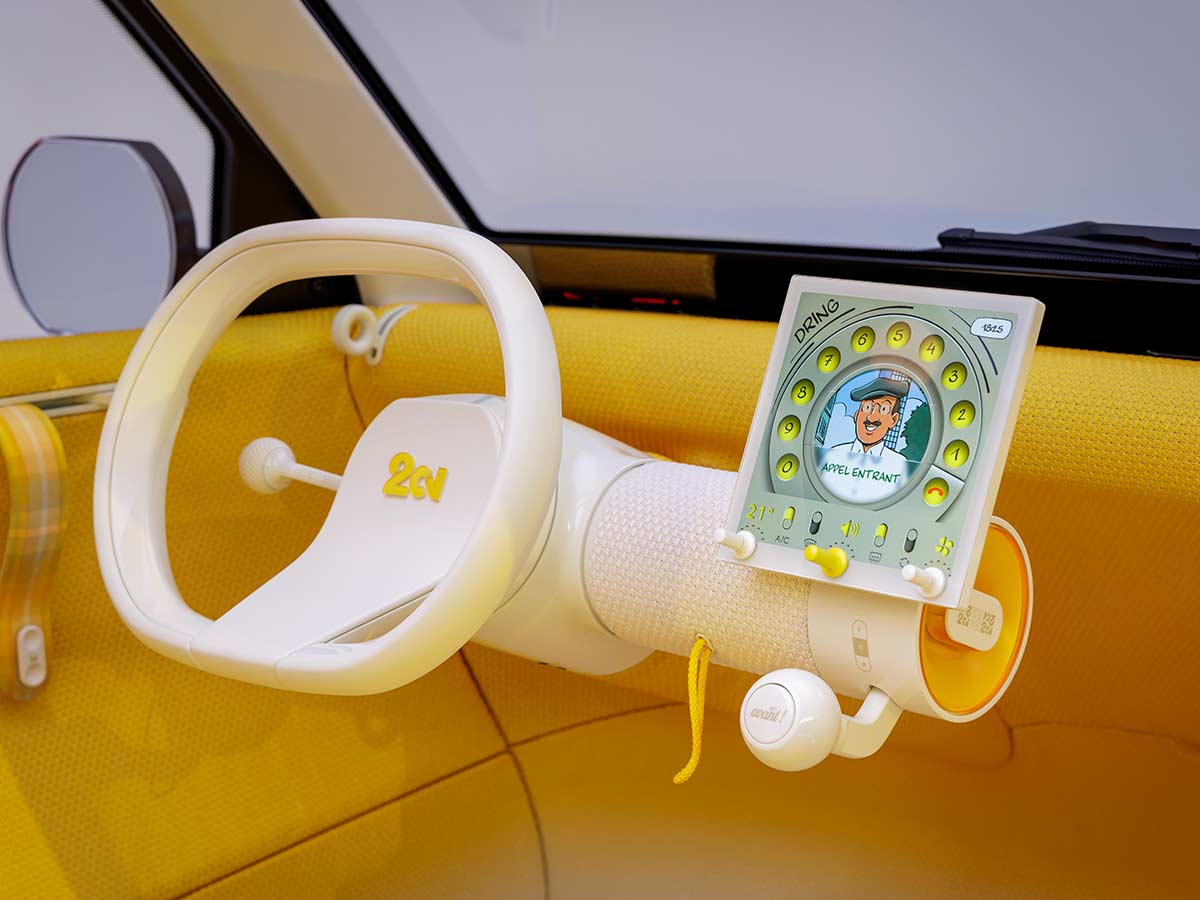
The central cylindrical element replaces the conventional dashboard layout. It supports a single-spoke steering wheel, a single control stalk, a push-action gear selector and the driver information display.
The arrangement is intended to simplify access to essential controls and reduce visual clutter. The gear selector is integrated into the cylinder and incorporates the Start/Stop button, helping consolidate functions into a compact area.
Citroën has also moved away from a traditional centre console. In its place sits a removable storage basket, providing an accessible place for everyday items without adding a bulky permanent structure between the front occupants.
This approach makes the interior architecture part of the vehicle’s lightweight philosophy. Fewer conventional assemblies and a more open layout are intended to support simplicity, although the final production design will determine how these ideas translate into real-world usability.
Citroën Smart Vision: Essential information in the driver’s field of view
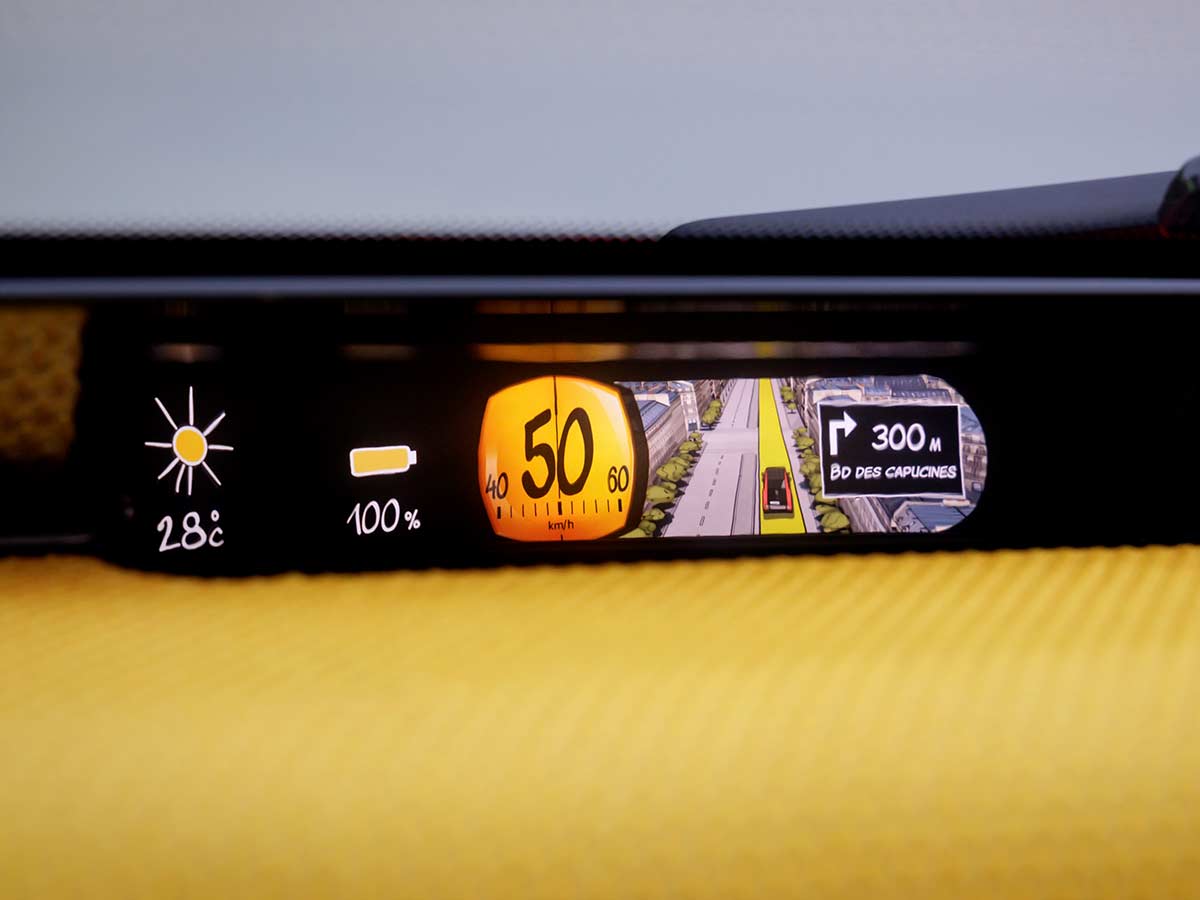
The concept uses Citroën Smart Vision to present essential driving information within the driver’s field of vision.
The system reinterprets the idea of a head-up display, prioritising information that can be read quickly rather than requiring the driver to navigate a crowded instrument panel.
Citroën says the displayed information includes:
- A digital reinterpretation of the rolling-drum speedometer used in the Citroën GS.
- Available battery percentage.
- Navigation prompts.
- Selected gear.
- Weather information.
The aim is to keep essential information readily accessible while limiting distraction and mental workload.
This design philosophy differs from an approach in which every available vehicle function is presented through a large digital interface. Instead, the 2 CV Concept separates essential driving information from functions that are more appropriately accessed through the central touchscreen.
The final production system’s display format and available functions have not been confirmed.
An 8-inch square touchscreen
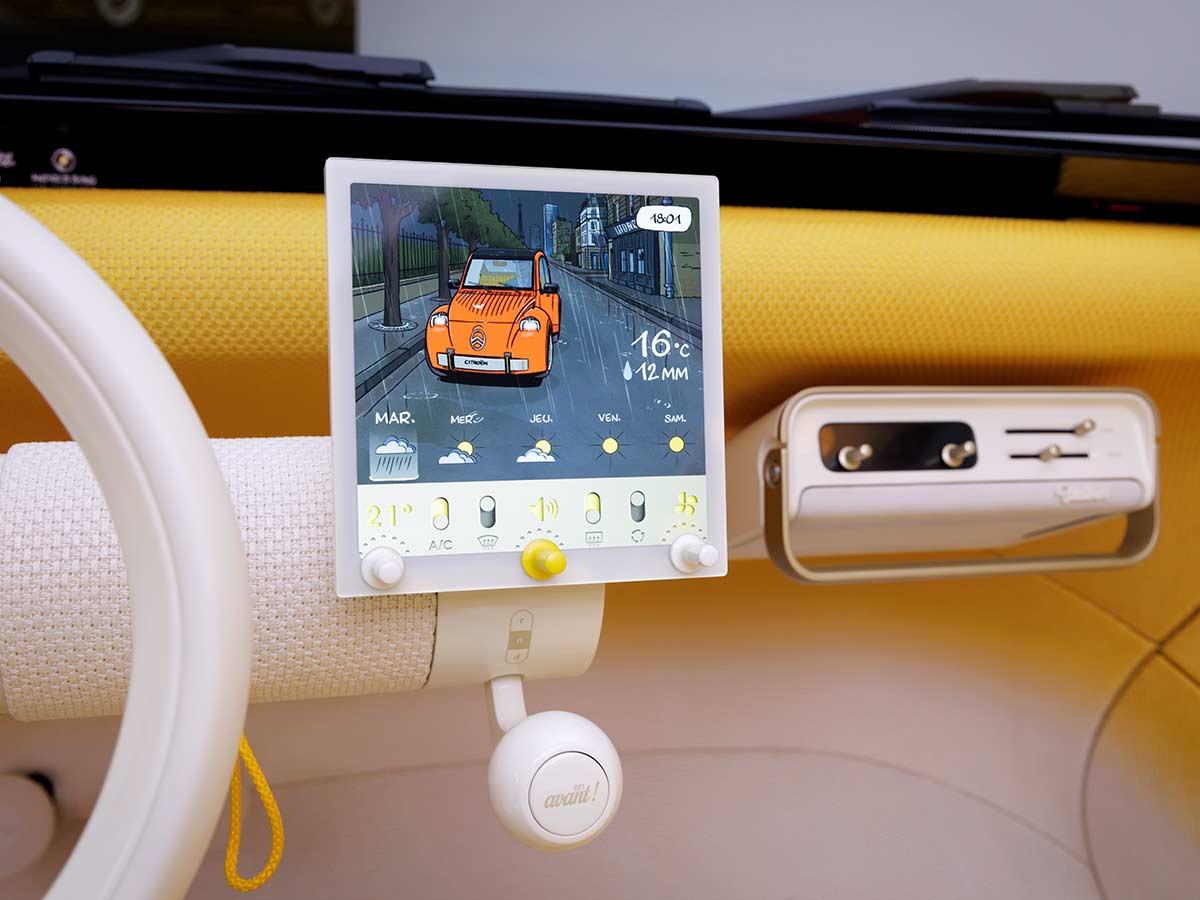
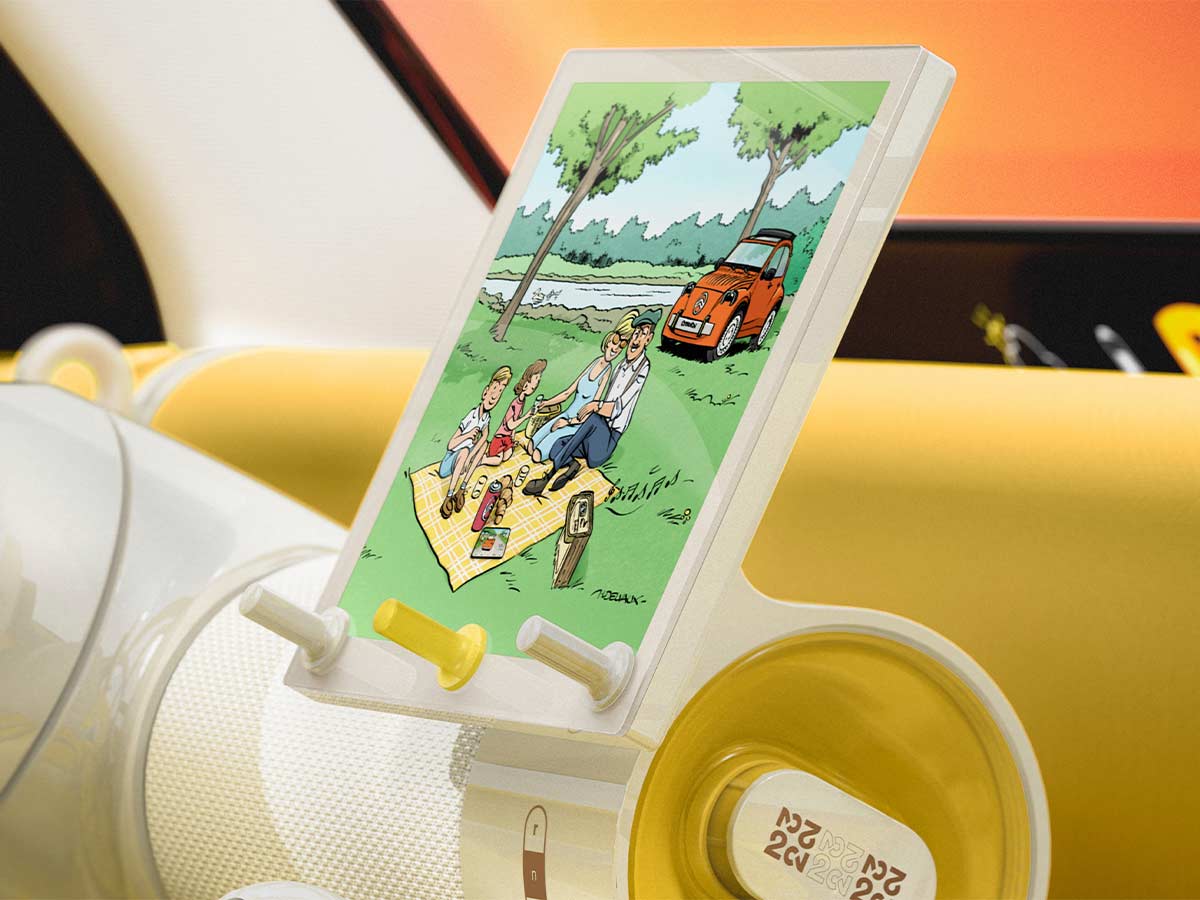
The central infotainment system uses an 8-inch square touchscreen with graphics inspired by comic books.
The display can show navigation, operate the infotainment system and provide access to vehicle settings. Three physical buttons are included for cabin temperature, audio volume and ventilation fan adjustment.
That mixture of touchscreen functionality and physical controls is notable. Temperature and ventilation are frequent-use functions, so dedicated controls can provide a more direct interaction than requiring drivers to open a digital menu.
The comic-book-inspired graphics were developed with references to the work of Belgian comic-book artist Jean-Luc Delvaux, who is also a 2 CV enthusiast.
The screen’s square format and illustrated visual language contribute to the concept’s character, but the design is not intended to replace essential driving information with decorative graphics. Citroën’s stated layout gives priority to the Smart Vision system for information in the driver’s field of view.
Radioën: A Removable Radio That Doubles as a Speaker
One of the concept’s most unusual features is Radioën, a detachable radio designed to function as a portable speaker.
The unit can accompany occupants outside the vehicle as well as operate within the cabin. Citroën describes it as an expression of human-centred technology, in which a device remains useful beyond its role as part of the car’s infotainment system.
The concept also gives the radio a wooden surround, connecting the contemporary device to the original model’s warm, functional aesthetic.
Its appeal lies in the simplicity of the idea. Rather than treating audio equipment as a permanently installed part of a vehicle’s dashboard, Radioën turns it into a portable object that can be used in different settings.
The supplied announcement does not specify the radio’s connectivity options, battery life, charging method, audio output or production availability. Those details should not be assumed from the concept’s appearance.
Even so, Radioën illustrates how Citroën intends to distinguish the 2 CV Concept from a typical technology-heavy electric car. The goal is not to eliminate technology, but to make it intuitive and relevant to everyday life.
Removable Bench Seats and a Cabin Built for Practicality
The concept’s seating arrangement follows the same philosophy as its dashboard.
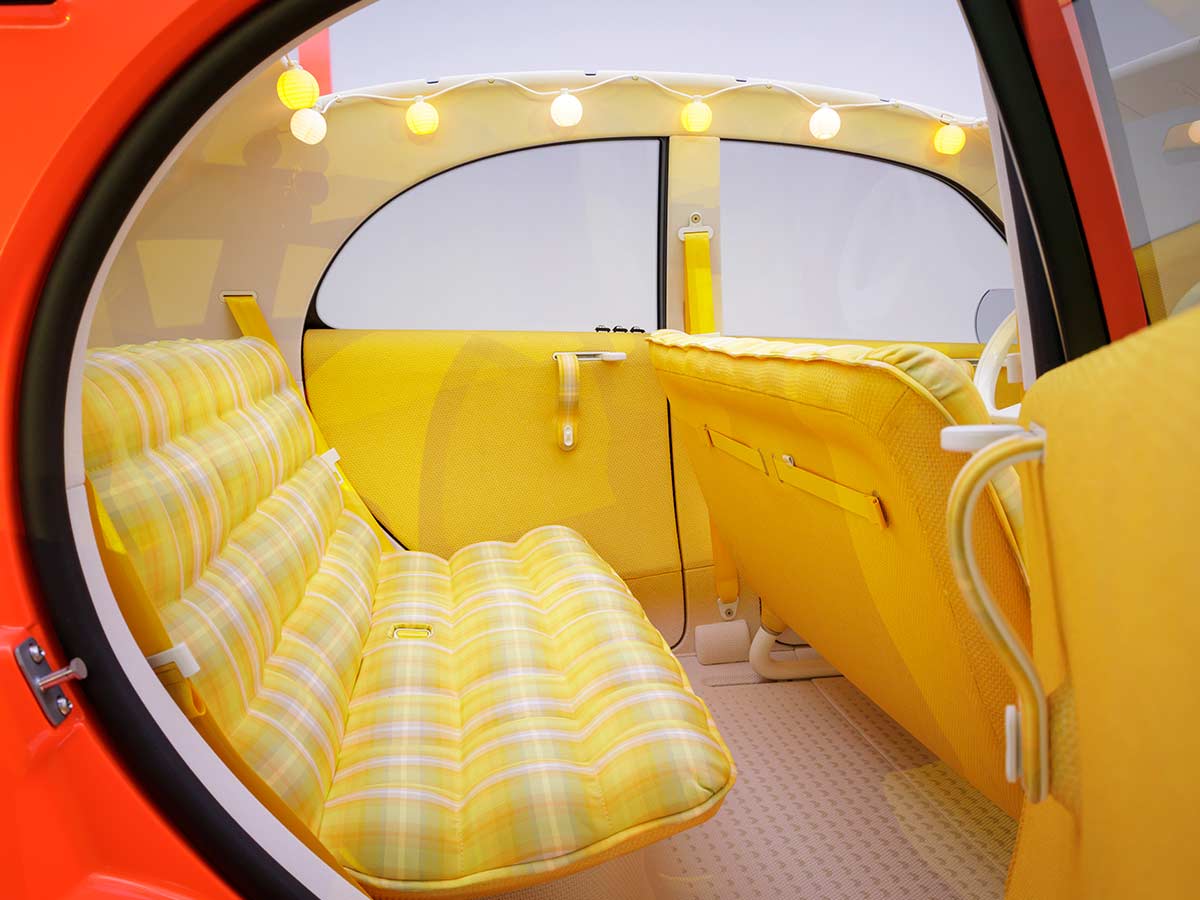
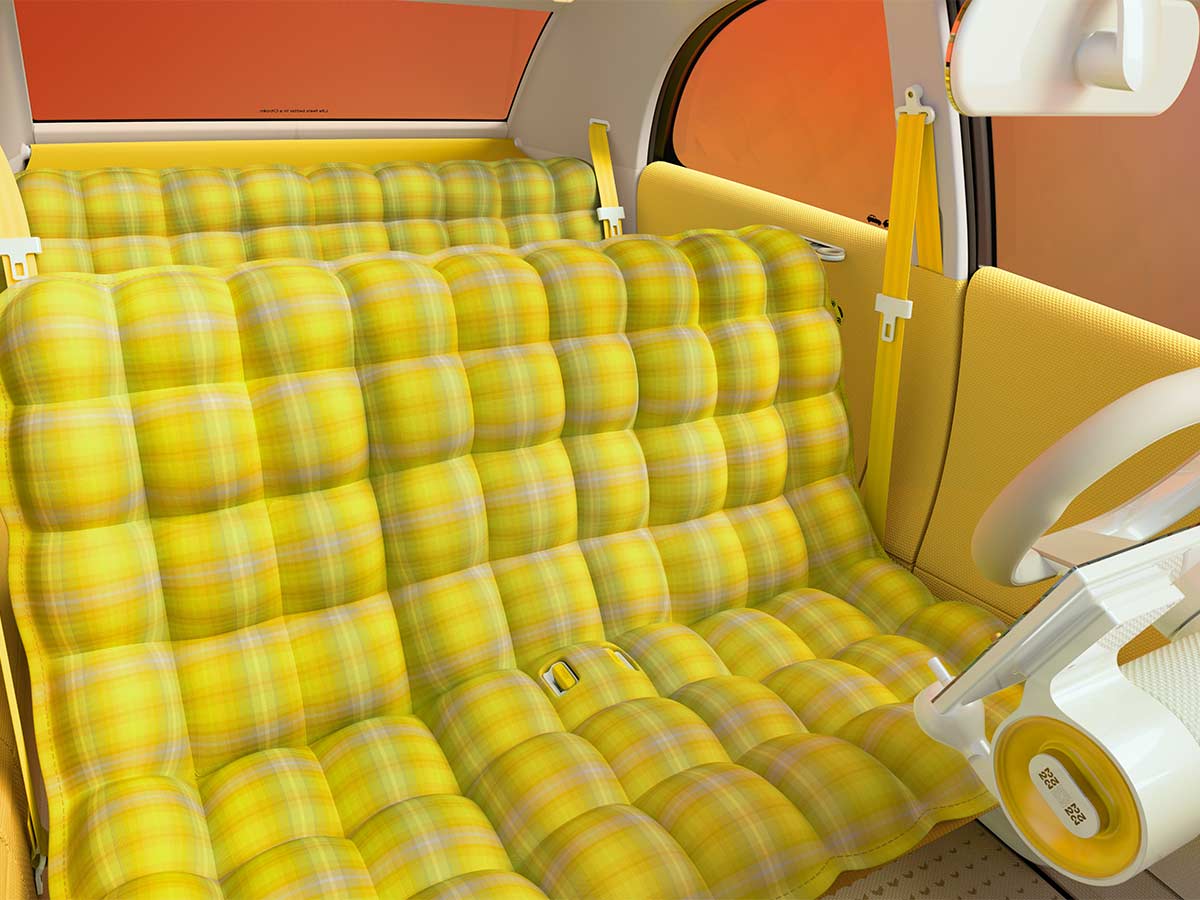
Citroën has specified wide front and rear bench seats equipped with its Advanced Comfort technology. The benches are designed to provide a welcoming environment while retaining a visual connection with the original 2 CV.
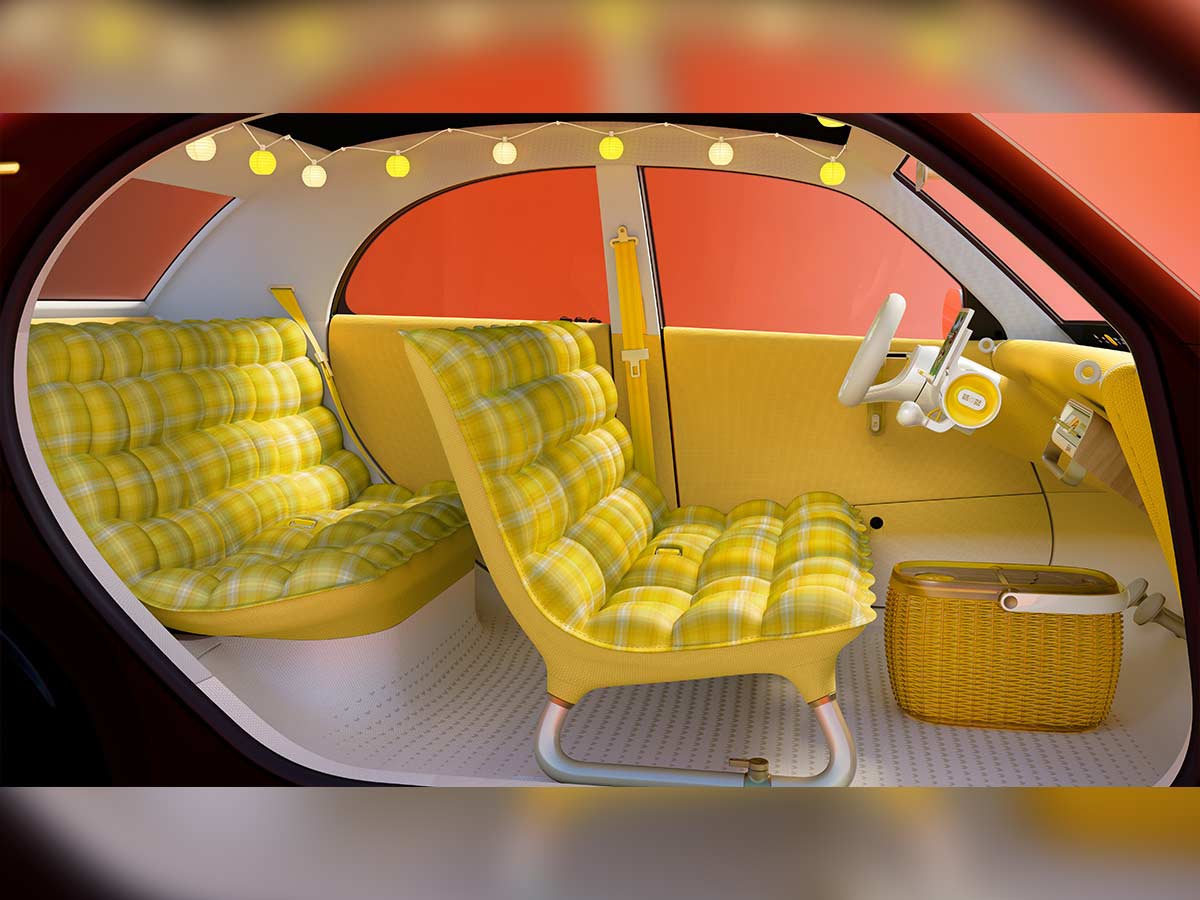
The front bench is removable, allowing it to be taken out and used during a break or picnic. This feature is presented as a reinterpretation of the original car’s adaptable, practical approach to transport.
The benches use tubular frames and a headrest-free design. Citroën says these elements simplify the structure and help reduce weight.
The layout also removes the usual sense of separation between occupants created by individual front seats and a substantial centre console. Two people can sit alongside one another on the bench, reinforcing the concept’s open and informal character.
These details raise practical questions that only a production specification can answer. The announcement does not provide seat-adjustment ranges, restraint configurations, boot capacity or complete passenger-capacity information.
Nevertheless, the design direction is clear. The interior is conceived around space, adaptability and a limited number of carefully considered components rather than an abundance of permanently installed features.
A removable basket instead of a centre console
The storage basket is another example of functional simplicity.
Positioned where a conventional centre console would normally sit, it is designed to be removable and to provide visible, flexible storage. Its construction combines wood and bio-based plastic, with the complete piece produced using 3D printing.
The basket’s woven-inspired appearance connects it to the textured surfaces used throughout the cabin. It also provides a more informal approach to storage than a fixed compartment concealed behind panels.
This is not simply a styling gesture. The basket reinforces the concept’s emphasis on components that are easy to understand and adapt to daily use.
Whether this particular component would be economical to manufacture at production scale remains unconfirmed. The concept presents it as a design solution rather than a guarantee of final production equipment.
A Manually Operated Fabric Roof Brings Back an Original 2 CV Idea
The Citroën 2 CV Concept features a manually operated fabric sunroof, one of its most direct references to the original car.
The black fabric roof uses a ribbed pattern that recalls the historic 2 CV and the TPV brief’s memorable description of four wheels beneath an umbrella.
Rather than treating the roof as a purely decorative heritage detail, Citroën presents it as a way to increase the cabin’s sense of openness. When rolled out, the translucent fabric helps bring light into the interior. When opened, it creates a stronger connection with the outside environment.
The roof also complements the concept’s slim windscreen pillars, which are intended to increase the amount of light entering the cabin and improve the driver’s field of vision.
These elements work together to make the interior feel less enclosed. The concept’s design relies on light, open surfaces and simple materials rather than visual bulk to establish comfort.
Citroën has also included a string of lights fixed to the headlining, intended to provide an atmospheric effect as daylight fades. The detail evokes open-air cafés and reinforces the concept’s lifestyle-oriented character.
The fabric roof’s final dimensions, operating mechanism and production availability have not been established. Its inclusion nevertheless shows how the concept uses an inexpensive-looking, manually operated mechanism as a defining part of its identity.
Colours and Materials: Yellow Tartan, Beige Controls and Woven Textures
The 2 CV Concept’s interior and exterior use colour and material choices to connect its modern design with the historic car.
The exterior colour is called Infra Red. Developed from an orange base, it incorporates effects that reveal yellow or red highlights depending on the light.
The vivid finish is intended to communicate energy and optimism while recalling the bright colours associated with the 2 CV throughout its history.
Inside, yellow tartan covers the front and rear bench seats. Citroën identifies tartan as a motif used on models produced from 1953 to 1990, making it one of the concept’s most direct material references to the original car.
The yellow treatment gives the cabin a strong visual identity without relying on complex surface detailing.
Beige accents inspired by Bakelite
The steering wheel, controls and cylindrical instrument area feature beige accents inspired by Bakelite, the material associated with the original 2 CV’s controls.
The same shade appears on the tubular structures of the bench seats, making their construction a visible part of the design.
This choice is important because the concept does not try to conceal every structural element beneath upholstery or trim. Instead, it uses contrasting colours to make the interior’s simple architecture more apparent.
Textures inspired by basketry
Textured fabric inspired by cane work and basketry covers the floor, dashboard and door panels.
The materials provide a woven visual quality that contrasts with the smooth surfaces of the controls and touchscreen. They also complement the removable basket and wooden surround of the Radioën unit.
Citroën says the concept prioritises recycled and recyclable materials, while the basket specifically combines wood and bio-based plastic. However, the announcement does not provide a complete material inventory or quantify the share of recycled content.
The overall approach is to create a warm interior using relatively straightforward shapes, expressive colours and familiar textures.
Michelin’s Universal Digital Twin for Tyres
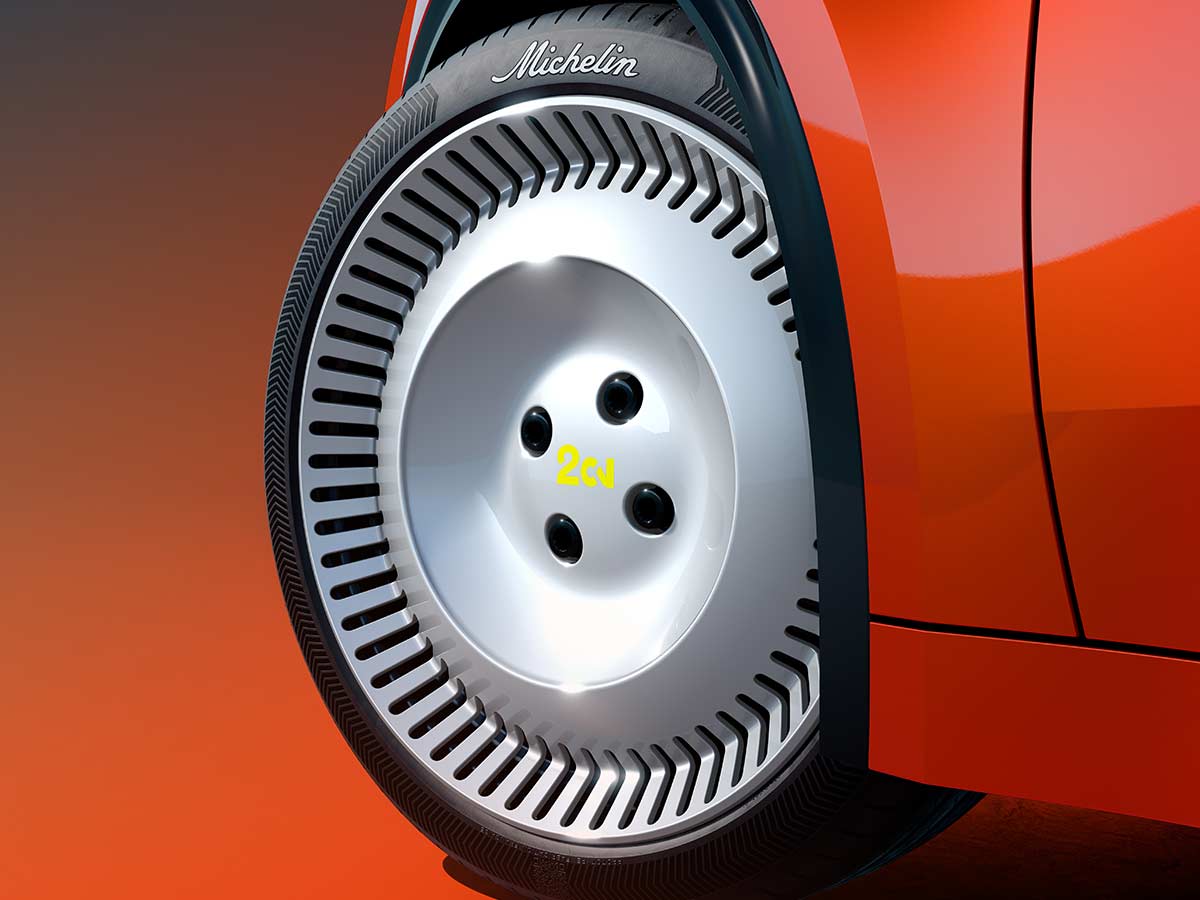
One of the concept’s more technically significant features is its collaboration with Michelin on the Universal Digital Twin for Tyres.
Unlike the design references to the original 2 CV, this technology focuses on how the vehicle can monitor its interaction with the road.
Citroën and Michelin describe a system that uses data already available onboard the vehicle to assess tyre-related information. According to the announcement, it does not require a sensor to be integrated directly into the tyre.
The system is intended to evaluate several important parameters in real time, including:
- Tyre grip.
- Tyre wear.
- Tyre pressure.
- Vehicle load.
- Driving conditions.
By using these inputs, the technology is designed to help the vehicle adapt its behaviour to the surrounding environment. Citroën says the system is intended to support safety, comfort and peace of mind while continuously monitoring tyre condition.
The announcement also states that the technology can help anticipate when replacement may be appropriate.
What a tyre digital twin means
A digital twin is a digital representation used to estimate or monitor the state of a physical object. In this case, the object is the tyre, and the system is intended to build an assessment of its condition using information collected by the vehicle.
Tyres play a central role in how a vehicle accelerates, brakes and changes direction because they provide the contact between the car and the road. Their condition and available grip can influence the vehicle’s behaviour under different loads and driving conditions.
A system capable of estimating tyre condition from existing vehicle data could therefore provide information beyond a simple warning that tyre pressure has fallen below a threshold.
However, the concept announcement does not explain the system’s complete sensing architecture, estimation accuracy, operating limits or the specific control adjustments it would make. It also does not provide independent validation data demonstrating its performance.
The technology should consequently be understood as a stated development direction, not as proof of a particular improvement in braking distances or accident prevention.
Its inclusion is still noteworthy because it shows that Citroën’s pursuit of simplicity does not mean abandoning technical innovation. The concept seeks to reduce visible complexity in the cabin while using onboard data to support vehicle operation in the background.
The Small Details That Connect the Concept to the Original 2 CV
Citroën has included a collection of smaller references intended to reward people familiar with the original car.
These details are not necessary to explain the vehicle’s basic function, but they help establish its personality and make the heritage connection more specific than a familiar silhouette alone.
The 48/90/26 windscreen markings
The windscreen carries the numbers 48, 90 and 26.
Each number refers to an important date in the 2 CV’s history:
- 1948: The original model’s public unveiling at the Paris Motor Show.
- 1990: The end of production, when the final 2 CV left the production line at the Mangualde plant.
- 2026: The unveiling of the 2 CV Concept at the Paris Motor Show.
Citroën states that more than five million examples of the original 2 CV were produced. The windscreen markings condense that long history into a small visual reference.
A horn and startup sound inspired by the original
The concept’s horn sound and electric motor sound at startup echo those of the historic 2 CV.
This is an especially interesting use of heritage because the electric concept cannot reproduce the original car’s mechanical character simply by copying its exterior. Instead, Citroën uses sound as another way to create continuity between generations.
The announcement does not describe the exact sound-generation system or establish whether these audio features will appear on a production model.
Heart-shaped stickers and international nicknames
Heart-shaped stickers reference the affection associated with the original 2 CV.
The concept also uses its digital number plate to display nicknames that the car acquired in different countries. Both features treat the 2 CV as more than a means of transportation, acknowledging its cultural identity and emotional associations.
Citroën has also placed the phrase “Life feels better in a Citroën” at the rear, connecting the concept with the brand’s broader identity.
Tortoise and hare pedals
The pedals carry a tortoise symbol for the brake and a hare for the accelerator.
The contrast provides a playful interpretation of the relationship between slowing down and accelerating. It also suits the concept’s broader design language, which uses small, understandable visual references instead of relying exclusively on digital animations or complex interfaces.
Door compartments designed for eggs
The door storage compartments are designed to hold eggs, directly recalling the original 2 CV’s practical brief.
This is one of the most revealing references because it links the modern concept to a specific functional idea rather than a styling cue.
The compartments symbolise the original model’s approach to everyday transport: identify a real need, then develop a straightforward solution. Citroën’s modern interpretation applies the same philosophy to a contemporary electric vehicle, even as its technology and materials differ from those of its predecessor.
What the Citroën 2 CV Concept Tells Us About the Future Production Car
The concept outlines a consistent set of priorities for the model Citroën wants to bring to market.
First, the company is pursuing compact dimensions and a target weight of approximately one tonne. Second, it aims for a starting price around €15,000. Third, it is targeting European manufacturing and compliance with future European E-Car regulations.
These objectives are closely related. A smaller, lighter vehicle can help reduce the material and battery requirements associated with its construction, while simpler components and a repair-conscious design can support the goal of affordability.
The concept’s interior follows the same direction. Its removable storage basket, portable radio, simple control structure and manually operated roof are intended to offer practical benefits without adding unnecessary complexity.
The Michelin tyre technology provides a complementary example of innovation that is not necessarily visible to occupants. The system is intended to use existing vehicle data to monitor tyre condition and inform vehicle behaviour, while the interior concentrates on a small number of clearly presented functions.
Taken together, the features show that Citroën is not proposing an electric car stripped of every modern convenience. Instead, it is trying to distinguish between equipment that contributes directly to the driving and ownership experience and complexity that may add cost without delivering equivalent value.
What remains to be established
The concept’s ambitions are clear, but several major factors will determine the eventual production car’s appeal.
The supplied announcement does not confirm:
- Battery capacity or chemistry.
- Electric motor output or torque.
- Driving range.
- Charging speed or charging times.
- Acceleration or maximum speed.
- Final production weight.
- Final retail pricing or equipment grades.
- Complete passenger and luggage capacity.
- Production-market availability.
- The full technical specification of the tyre-monitoring system.
These are not minor omissions for someone evaluating an electric car. They are essential details for understanding daily usability, longer journeys, charging convenience and total ownership costs.
For now, the 2 CV Concept should be viewed as a credible outline of Citroën’s design and product ambitions rather than a finished technical proposition.
Conclusion: Can the Original 2 CV Philosophy Work in an Electric Car?
The Citroën 2 CV Concept takes a distinctive approach to the challenge of affordable electric mobility. Instead of treating electrification as an opportunity to make a small car increasingly sophisticated, it uses the original 2 CV’s emphasis on simplicity, practicality and personality as the basis for a contemporary design.
Its 3.76-metre length, approximately one-tonne weight target and proposed €15,000 starting price establish the core ambition. The removable bench seat, portable Radioën unit, fabric roof, repair-friendly bumpers and simplified control layout show how that ambition influences the details.
Citroën is targeting a production model by 2028, with European manufacturing and compliance with future E-Car regulations. Whether the finished car can deliver on the concept’s affordability and efficiency goals will depend on its eventual battery, range, charging capability, equipment and confirmed price.
The original 2 CV became important because it made useful transportation accessible without sacrificing its personality. The new concept attempts to carry that principle into electric mobility, pairing a recognisable heritage with a more restrained approach to vehicle design.
Frequently Asked Questions About the Citroën 2 CV Concept
Q: What is the Citroën 2 CV Concept?
A: The Citroën 2 CV Concept is a compact electric car concept unveiled at the 2026 Paris Motor Show. It reinterprets the original 2 CV’s emphasis on affordability, simplicity, practicality and distinctive design for modern electric mobility.
Q: When was the Citroën 2 CV Concept unveiled?
A: The Citroën 2 CV Concept was unveiled at the 2026 Paris Motor Show. Citroën announced its intention to introduce a production model inspired by the concept by 2028.
Q: When will the new Citroën 2 CV go on sale?
A: Citroën is targeting a production model by 2028, but the supplied announcement does not confirm an exact sales date or customer-delivery schedule.
Q: How much will the new Citroën 2 CV cost?
A: Citroën is targeting a starting price of around €15,000 for the future production model. This is an announced target, not a confirmed retail price.
Q: Is the Citroën 2 CV Concept fully electric?
A: Yes. The 2 CV Concept is presented as a battery-electric vehicle concept. However, Citroën has not disclosed its battery capacity, motor output, charging specifications or driving range in the supplied announcement.
Q: What is the length of the Citroën 2 CV Concept?
A: The Citroën 2 CV Concept measures 3.76 metres long. Citroën says this makes it shorter than the original 2 CV, which measured 3.85 metres.
Q: How much does the Citroën 2 CV Concept weigh?
A: Citroën is targeting a weight of approximately one tonne. This is a design objective, not a confirmed production weight.
Q: What is the driving range of the new Citroën 2 CV?
A: Citroën has not announced a specific driving-range figure for the 2 CV Concept. The company says its lightweight approach is intended to support a smaller, more cost-effective battery with a range suited to everyday journeys.
Q: How fast can the Citroën 2 CV Concept charge?
A: The concept announcement does not specify charging power, charging times or supported charging standards. These details will be necessary to assess the production model’s charging convenience.
Q: What are the main design features of the Citroën 2 CV Concept?
A: The main features include separated round headlamps, a sculpted bonnet, a curved roofline, rounded wheel arches, 18-inch steel wheels, a distinctive black rear tailgate section and LED lighting. The design combines references to the original 2 CV with contemporary styling.
Q: Does the Citroën 2 CV Concept have a fabric roof?
A: Yes. The concept features a manually operated fabric sunroof inspired by the original 2 CV. Its translucent material is designed to bring light into the cabin, while opening the roof creates a greater sense of connection with the outside.
Q: What is Radioën in the Citroën 2 CV Concept?
A: Radioën is a detachable radio that also functions as a portable speaker. It can be used inside or outside the vehicle and reflects Citroën’s approach to making technology practical and easy to use.
Q: What is the Michelin Universal Digital Twin for Tyres?
A: The Michelin Universal Digital Twin for Tyres is a technology developed with Citroën that uses onboard vehicle data to assess tyre-related information, including grip, wear, pressure, load and driving conditions. Citroën says it does not require a sensor integrated into the tyre and is intended to support vehicle behaviour and monitor tyre condition.
Q: Will the new Citroën 2 CV be manufactured in Europe?
A: Yes. Citroën has stated that the future production model inspired by the concept is intended to be manufactured in Europe. The announcement does not identify the production plant.
Q: Will the new Citroën 2 CV comply with European E-Car regulations?
A: Citroën says the planned production model will comply with future European E-Car regulations. The announcement does not provide a complete regulatory specification or establish the concept’s final production classification.
Q: How is the new Citroën 2 CV different from the original?
A: The new concept is designed around electric propulsion, contemporary digital displays, modern lighting and updated materials. It retains the original’s emphasis on simplicity and practicality through features such as a removable front bench, fabric roof and straightforward storage solutions.
Q: Does the Citroën 2 CV Concept have a touchscreen?
A: Yes. The concept features an 8-inch square touchscreen for navigation, infotainment and vehicle settings. It also includes three physical buttons for temperature, audio volume and ventilation fan adjustment.
Q: What makes the Citroën 2 CV Concept different from other electric cars?
A: Its defining approach is to combine a compact footprint and a target weight of approximately one tonne with a proposed starting price around €15,000. Its removable interior components, repair-conscious exterior design and restrained technology layout also reflect a deliberate emphasis on simplicity and affordability.
Source: Citroen




[…] Citroën 2 CV Concept Revealed: A €15,000 Electric Car Inspired by… […]