







2027 Audi Q9: Everything You Need to Know About Audi’s New Flagship Luxury SUV
After years of speculation, prototype sightings and countless rumours, Audi has finally revealed the all-new Q9 – its largest and most luxurious SUV to date. Sitting above the Q7 and SQ7, the new Q9 marks Audi’s formal entry into the full-size luxury SUV segment, where it will compete against the BMW X7, Mercedes-Benz GLS and Range Rover.
Developed primarily with North American customers in mind, the Q9 is considerably larger than any SUV currently sold by Audi. It introduces genuine three-row seating, a new rear-biased quattro all-wheel-drive architecture, advanced Digital Matrix LED headlights for the US market, and an entirely redesigned cabin packed with Audi’s latest technology. Alongside the standard Q9, Audi has also introduced the performance-focused SQ9, powered by a 591hp twin-turbocharged V8 capable of sprinting from 0-60mph in just 3.8 seconds.
More importantly, the Q9 is not simply a stretched Q7. It represents an entirely new flagship for Audi’s SUV range, introducing new technologies, a larger platform, improved practicality and a more premium ownership experience than any previous Audi SUV.
>>> Great Discounts on Car & Bike Accessories <<<
Audi Finally Gets a True BMW X7 and Mercedes GLS Rival
For years, Audi relied on the Q7 to represent the brand in the premium three-row SUV segment. While the Q7 remains a capable luxury SUV, rivals have steadily moved further upmarket with larger, more luxurious offerings.
The BMW X7 has established itself as one of the benchmark full-size luxury SUVs, while Mercedes-Benz continues to dominate the segment with the GLS. Range Rover, meanwhile, remains the aspirational choice for buyers prioritising luxury and off-road capability.
The Q9 is Audi’s answer.
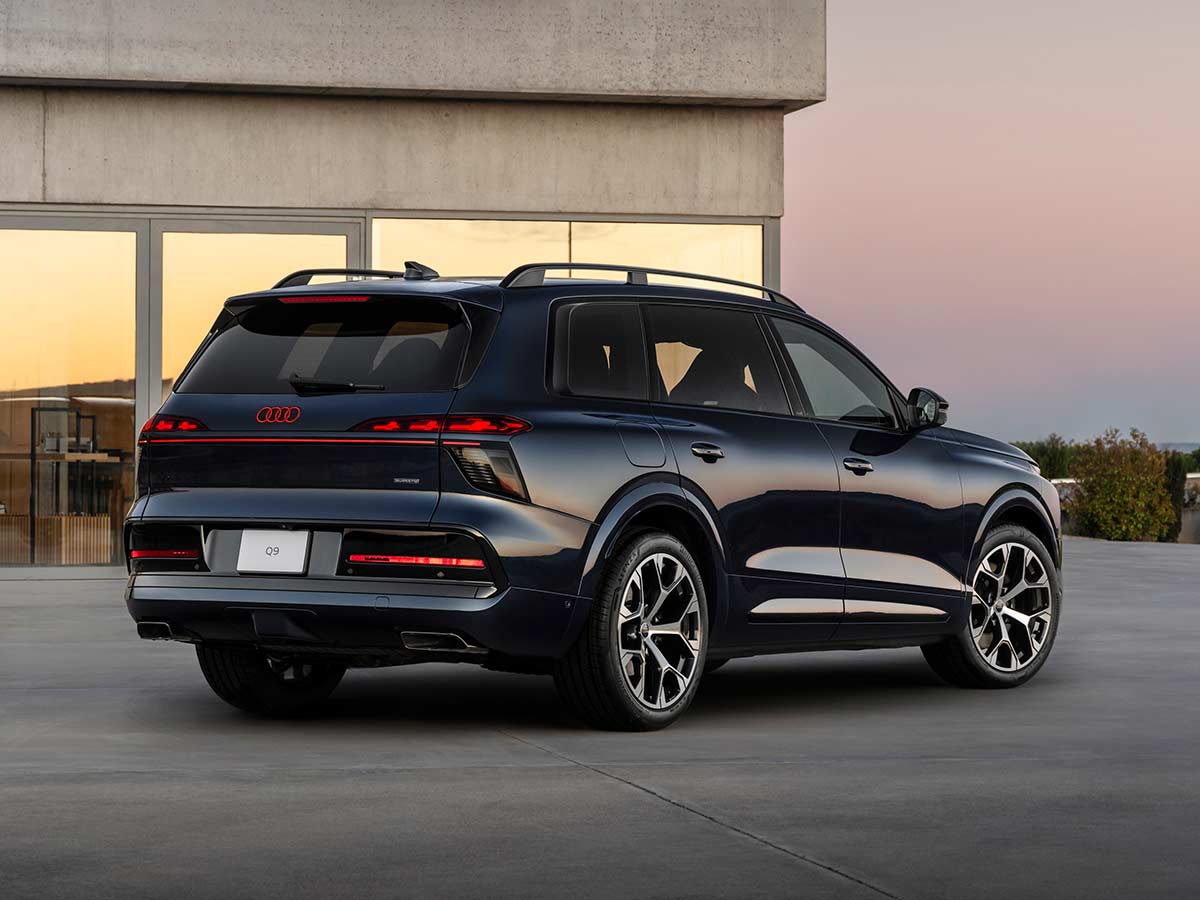
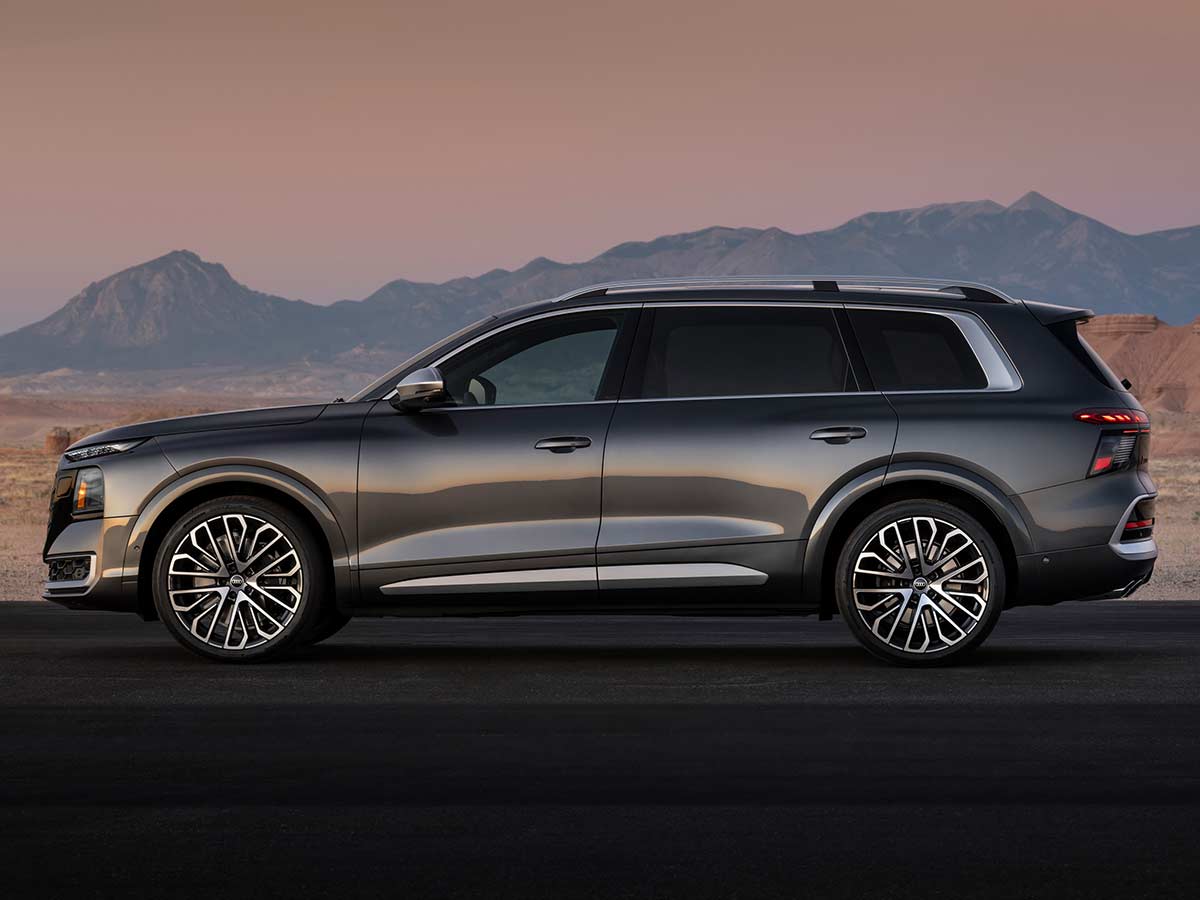
Measuring almost 209 inches (5.31 metres) in length with an expansive 123.5-inch wheelbase, the Q9 is significantly larger than the Q7. Those dimensions allow Audi to offer genuine accommodation for six or seven occupants, with noticeably improved second- and third-row space, while also creating substantially more luggage capacity.
Unlike many seven-seat SUVs where the third row is suitable only for occasional use, Audi says the Q9 has been engineered from the outset as a genuine family vehicle capable of transporting adults across all three rows. The longer rear doors, repositioned second-row seats and extended rear overhang all contribute towards improved accessibility and passenger comfort.
Exterior Design: Bigger, Bolder and More Sophisticated
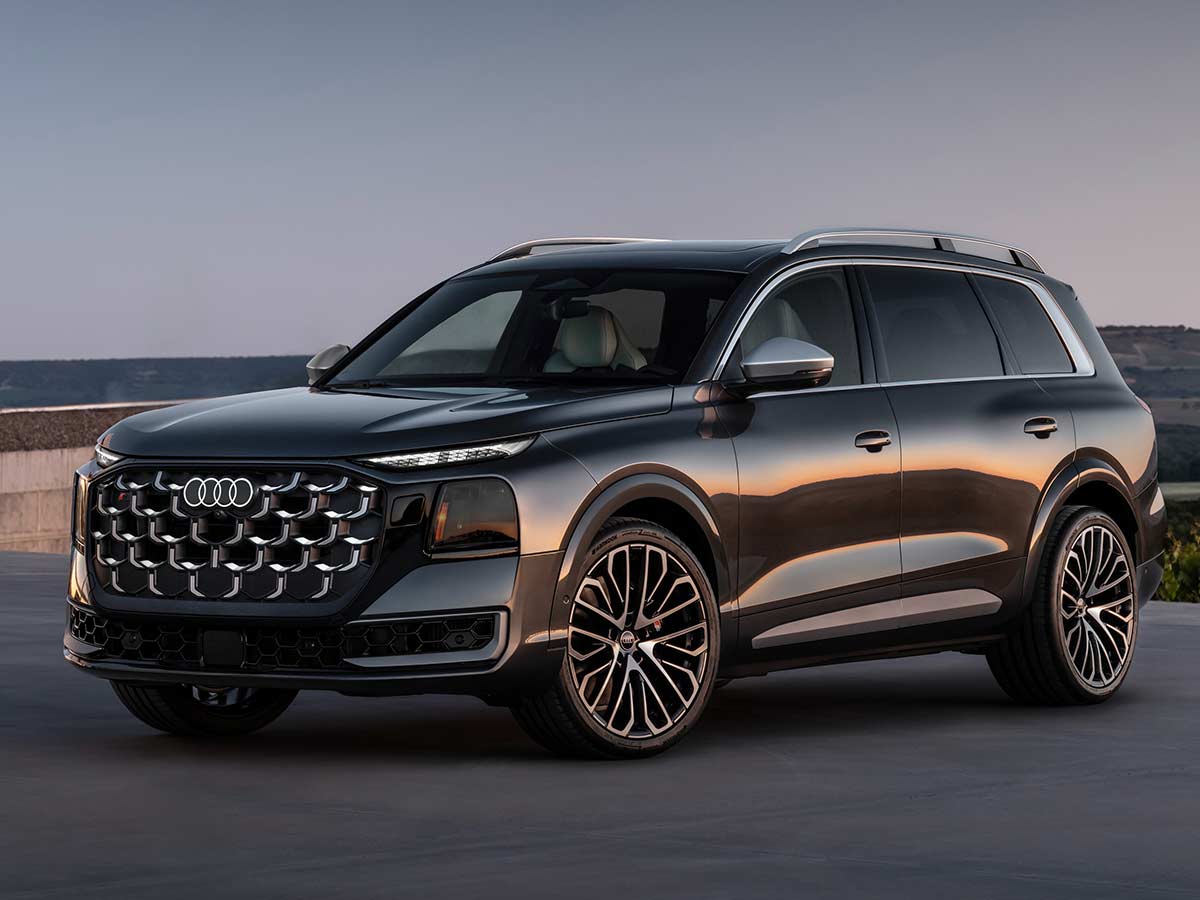
One glance at the Q9 immediately confirms its flagship status.
Rather than chasing aggressive styling cues or exaggerated bodywork, Audi has adopted a cleaner and more mature design language. The emphasis is on proportion, presence and simplicity.
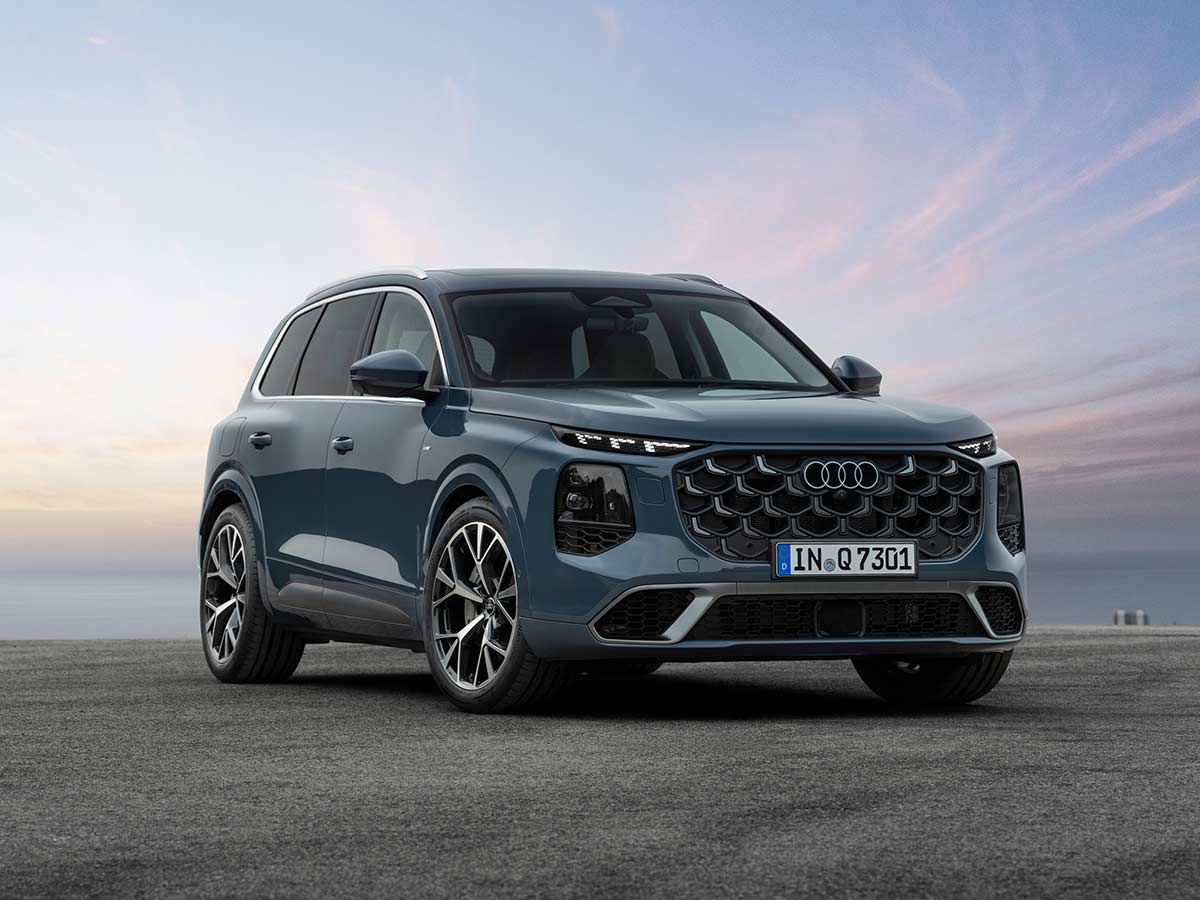
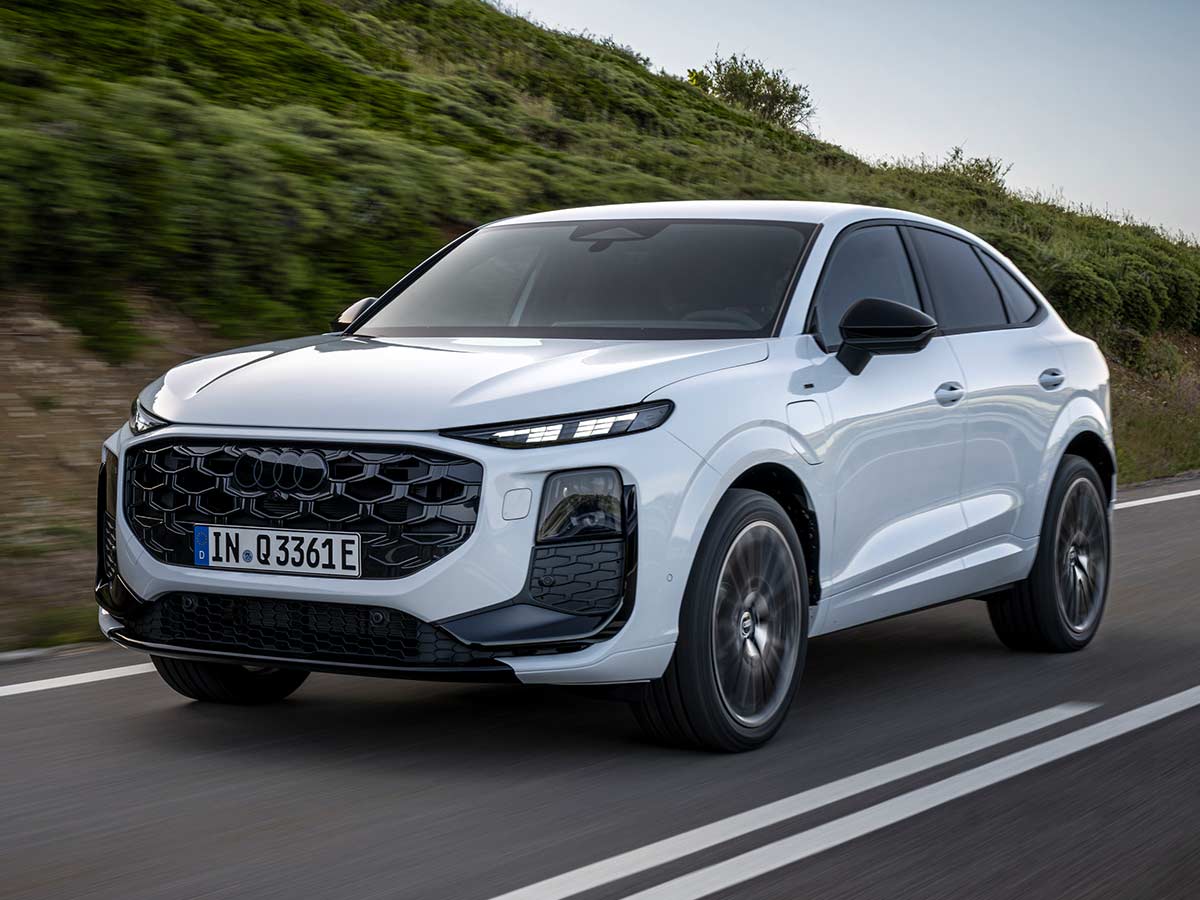
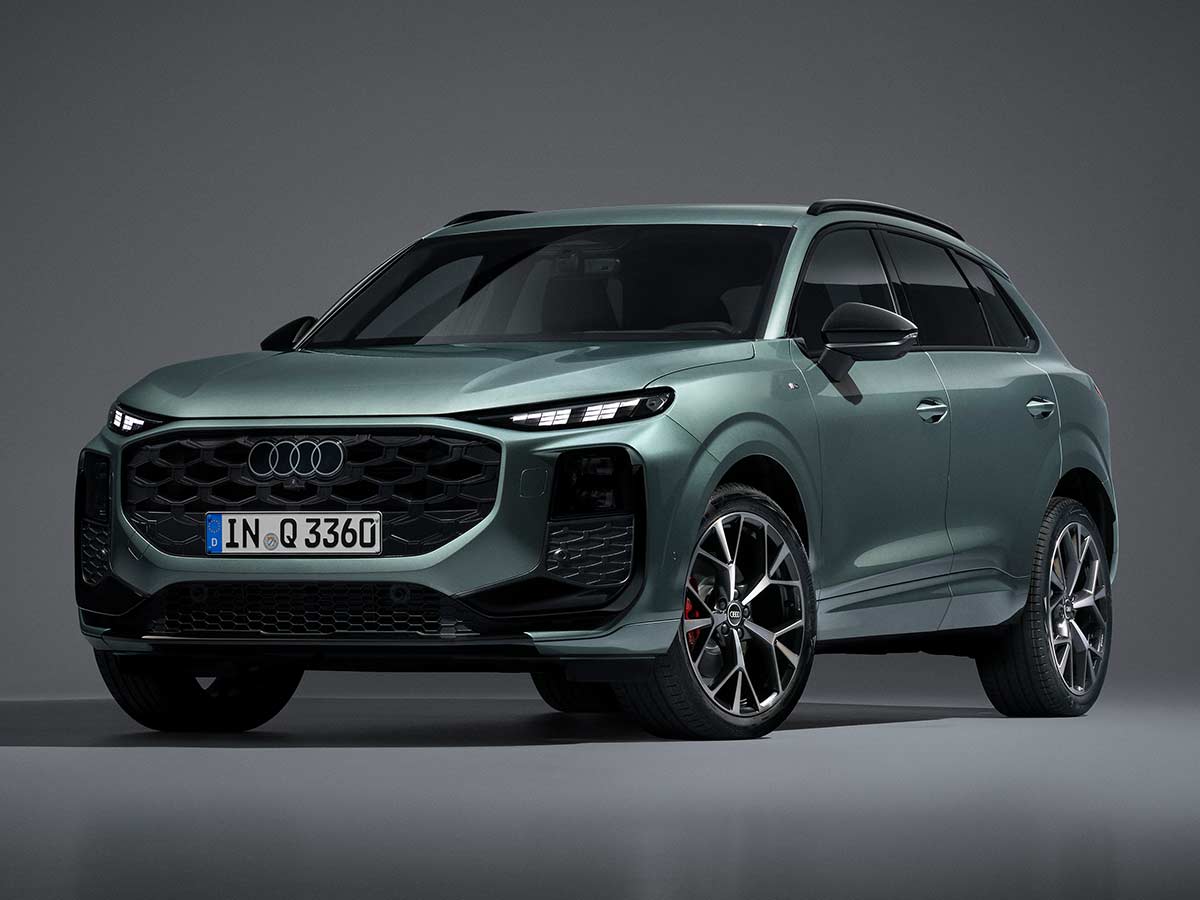
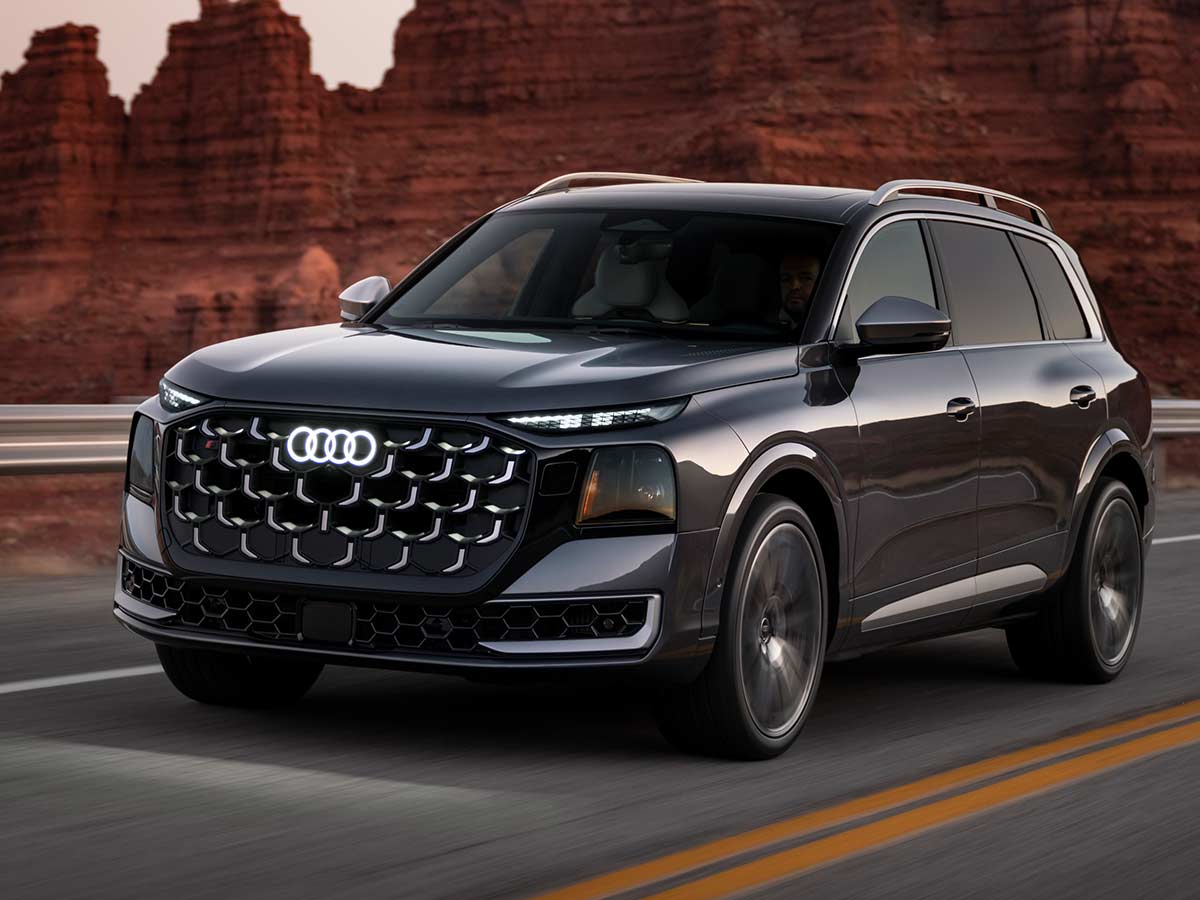
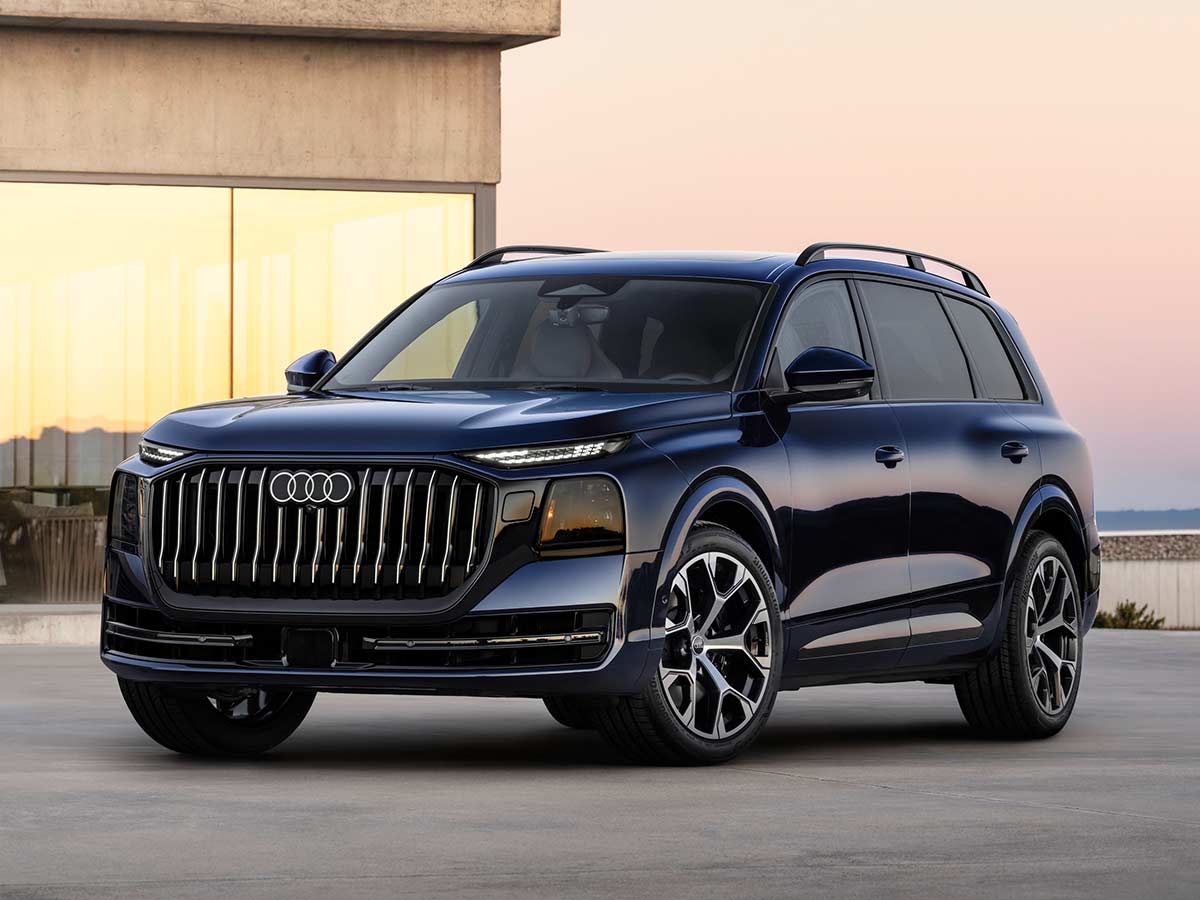
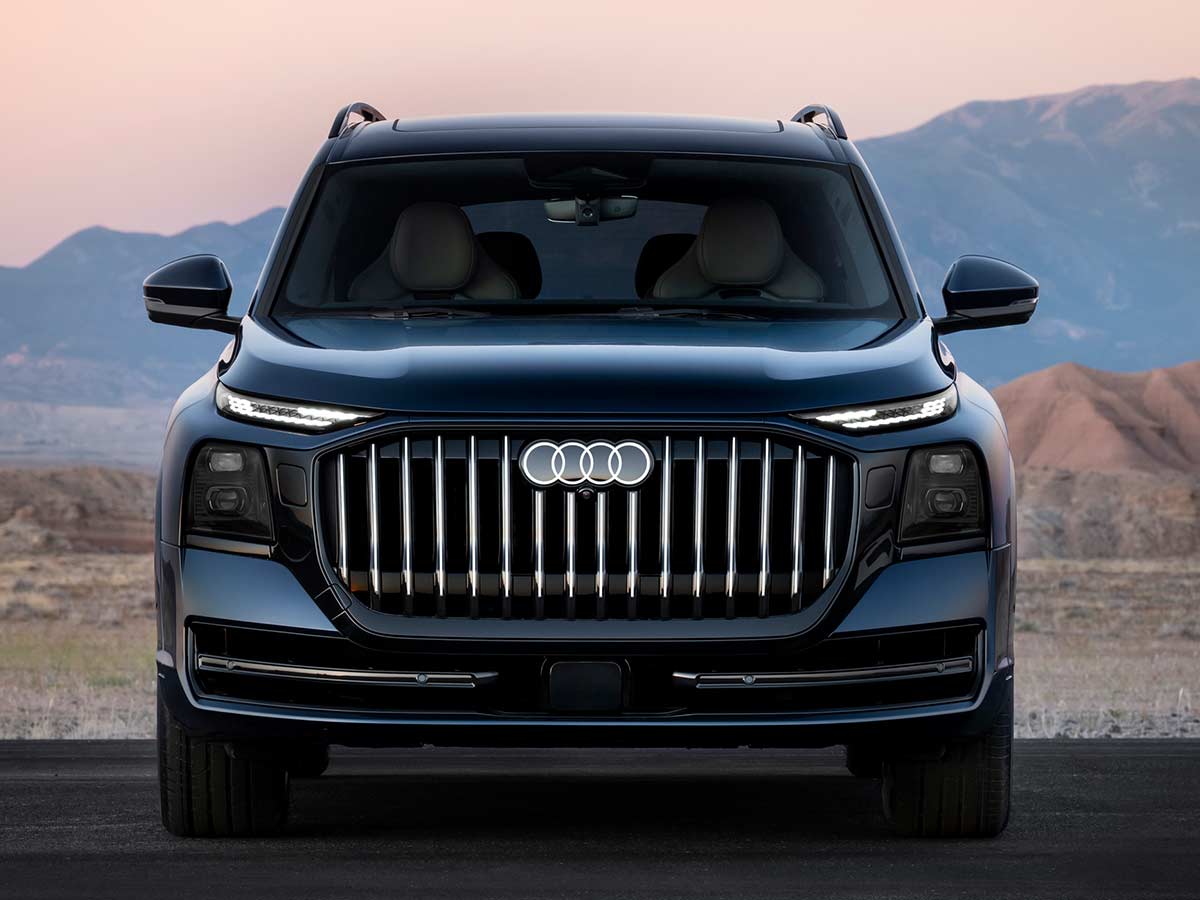
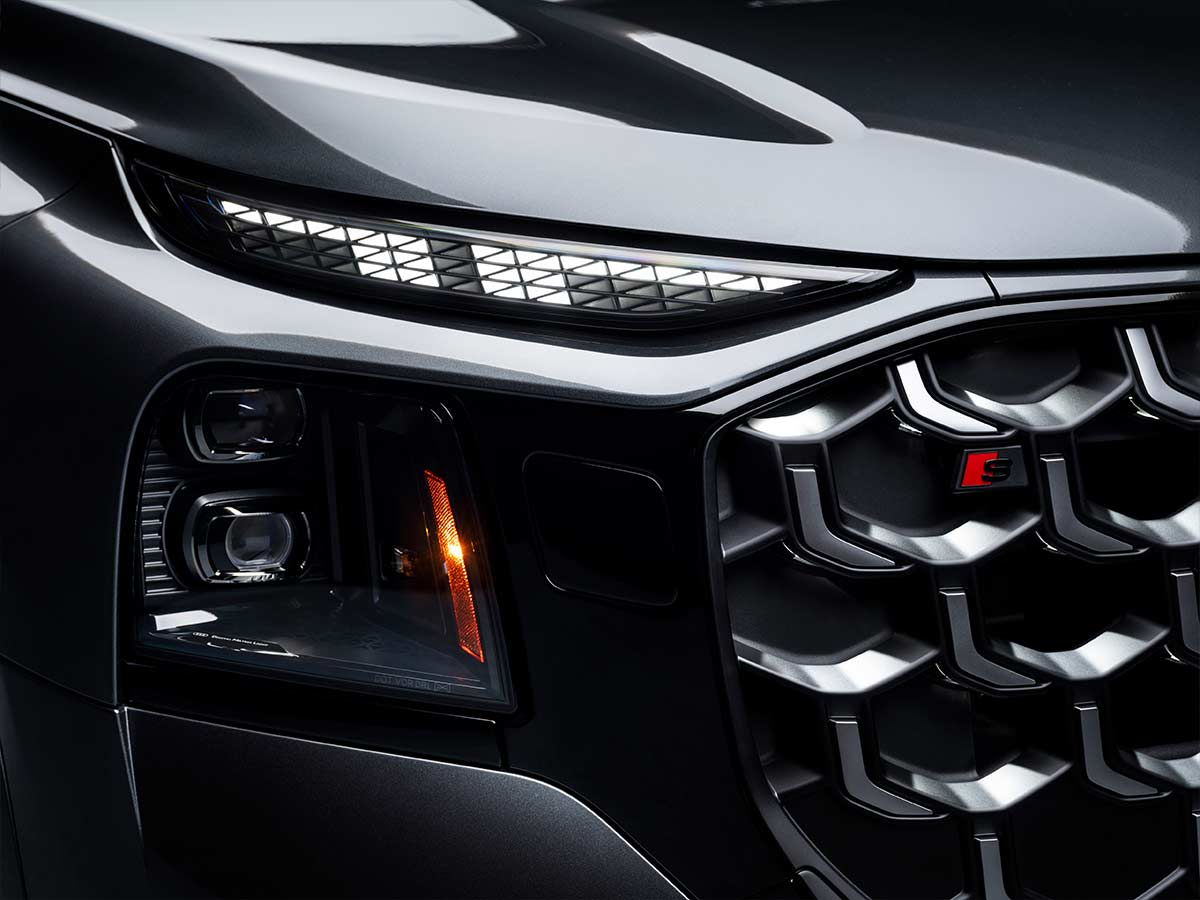
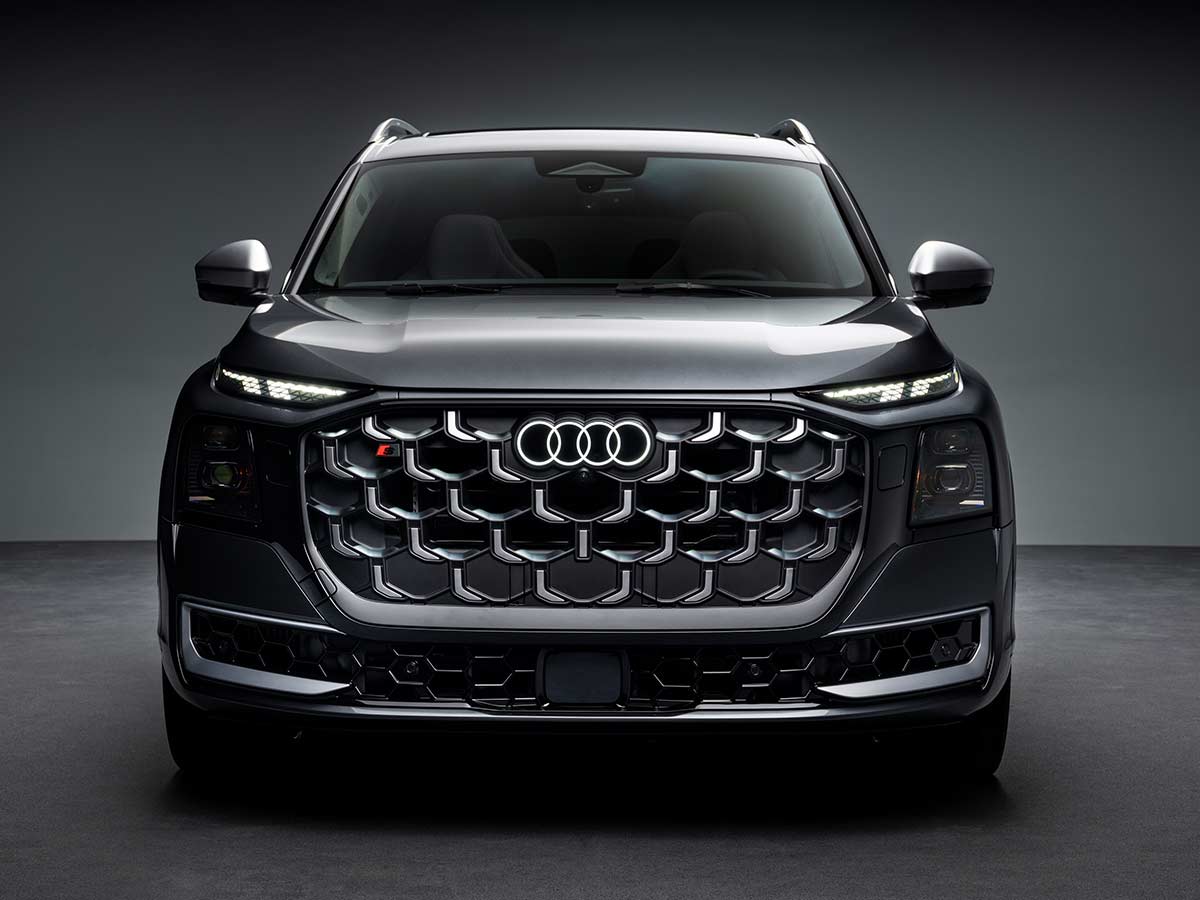
The upright front end is dominated by Audi’s largest-ever Singleframe grille, which is visually integrated with the slim Digital Matrix LED headlights to create a bold, almost monolithic face. The tall bonnet, upright stance and raised shoulder line give the Q9 considerable road presence without appearing unnecessarily bulky.
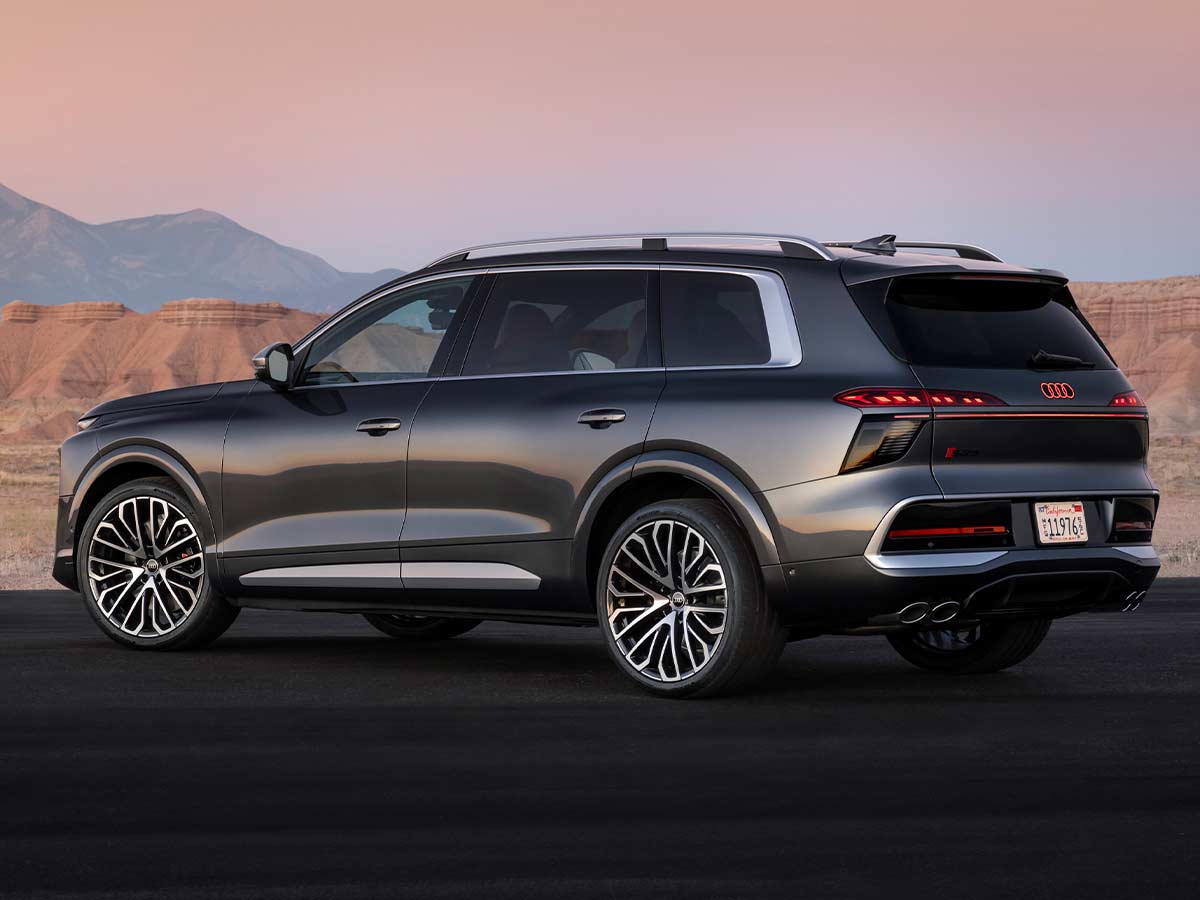
Viewed from the side, the Q9’s long wheelbase immediately stands out. A straight window line, subtle roof taper and extended rear doors reinforce the SUV’s generous proportions while visually communicating its spacious interior.
Unlike many rivals that rely on sharp creases and heavily sculpted panels, Audi has deliberately kept the body surfaces smooth and uncluttered. This minimalist approach allows reflections and light to define the bodywork, giving the SUV a more elegant appearance.
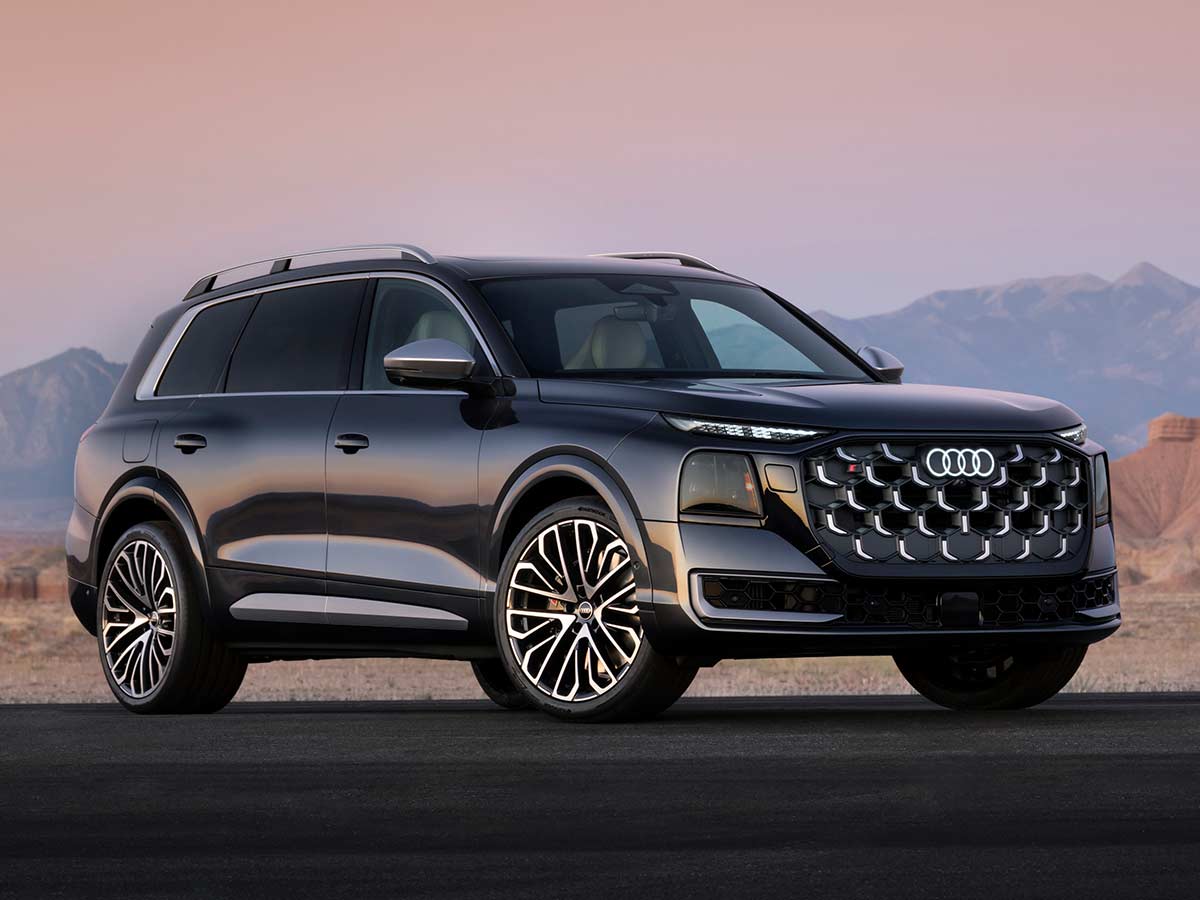
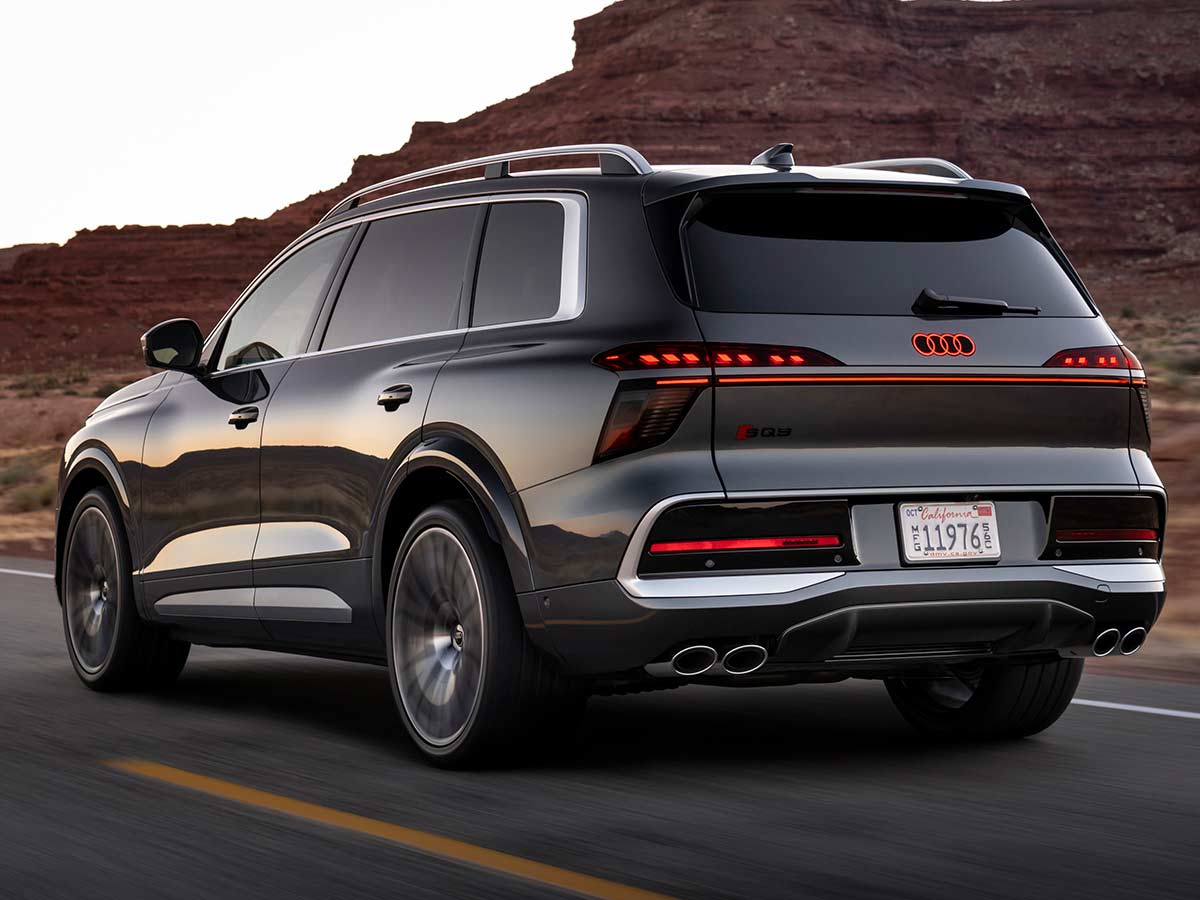
SQ9 Adds Genuine Performance Character
While the standard Q9 focuses on refinement and luxury, the SQ9 introduces a noticeably sportier personality.
It receives:
- Aluminium exterior detailing
- Exclusive honeycomb grille pattern
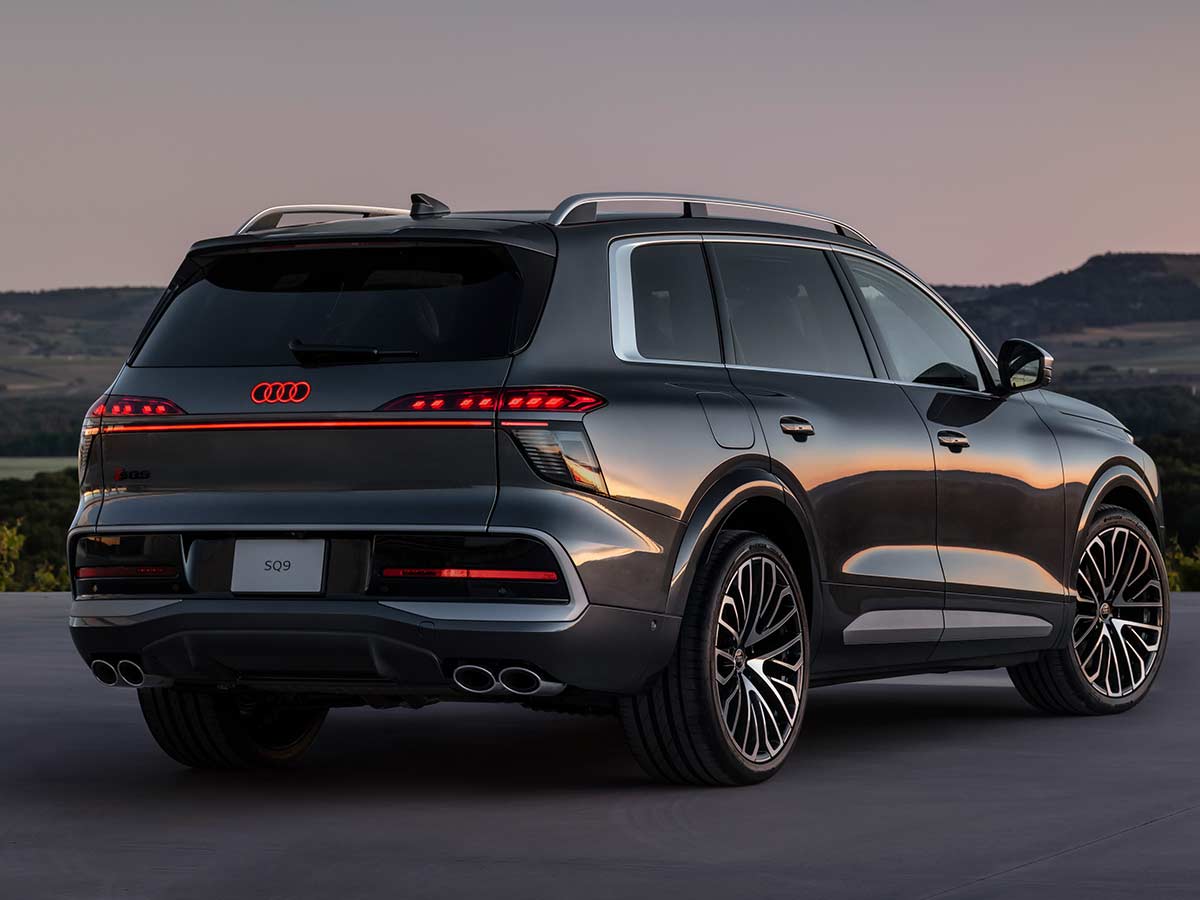
- Flared rear wheel arches
- Wider rear track
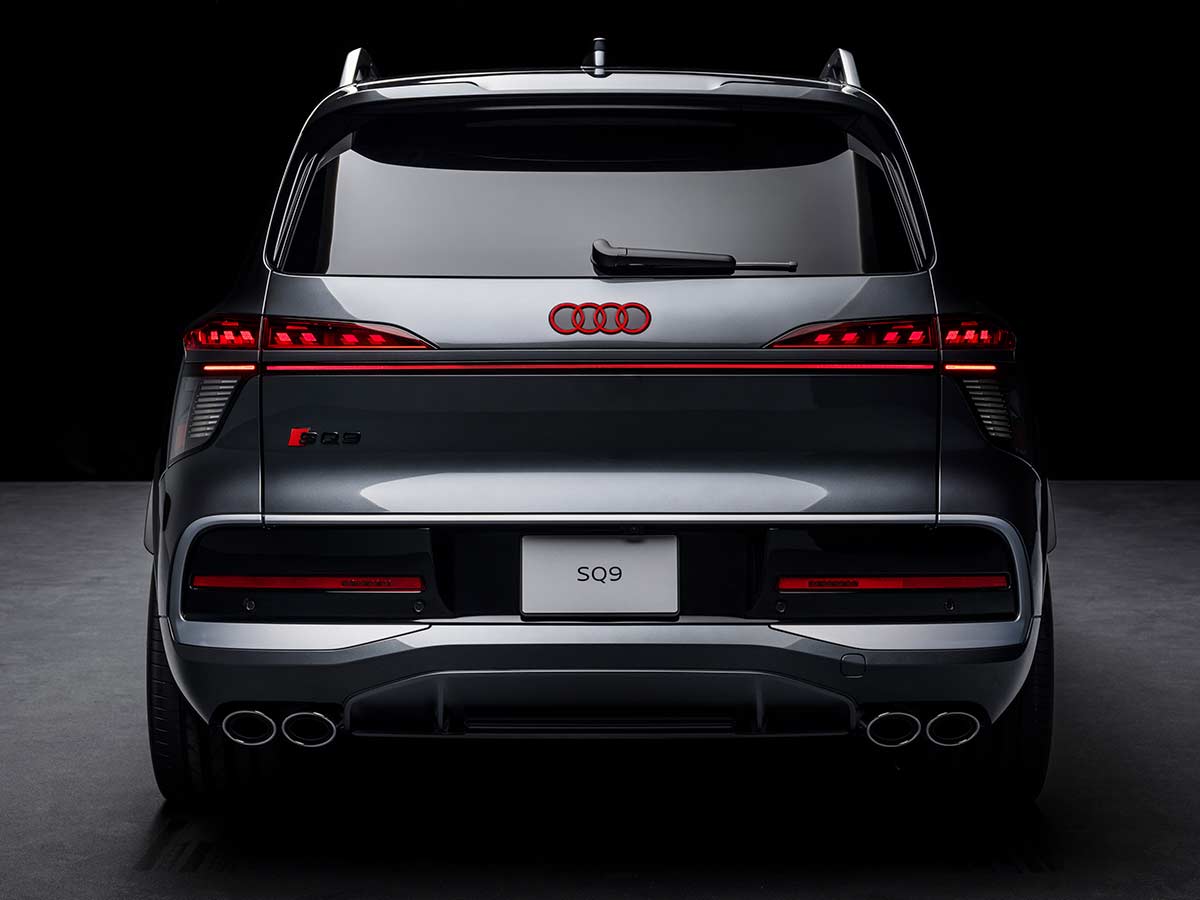
- Quad exhaust outlets
- Larger rear spoiler
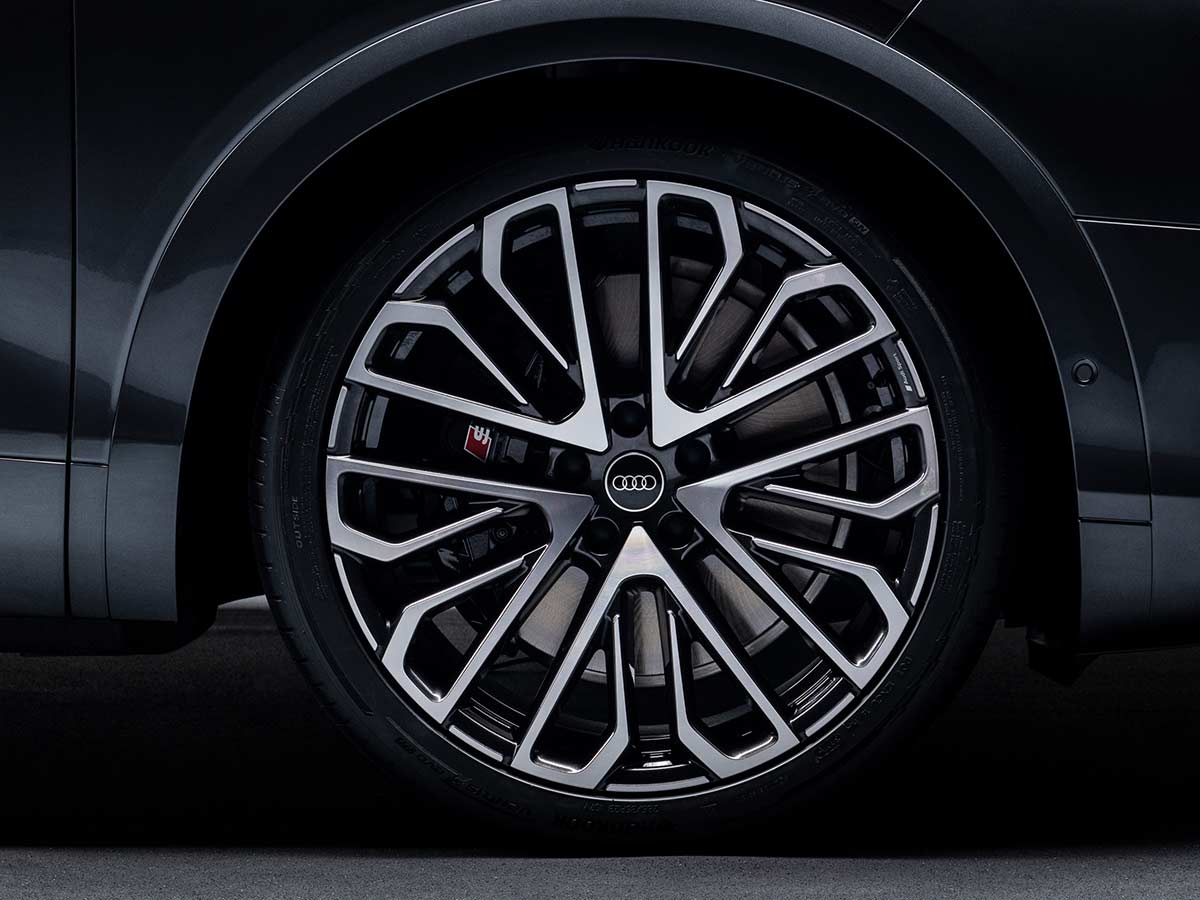
- Exclusive 22-inch and optional 23-inch alloy wheels
- Wider staggered tyres
These changes are functional rather than purely cosmetic. The wider rear axle accommodates larger rear tyres that work with Audi’s new rear-biased quattro system to maximise traction under hard acceleration while improving cornering stability.
Largest SUV Means Audi’s Largest Cabin Yet
The increase in size has tangible benefits inside.
The Q9 offers:
- Standard seven-seat layout
- Optional six-seat configuration with captain’s chairs
- Power-adjustable second-row seats
- Easy-access third-row mechanism
- Heated third-row seats (SQ9)
- Eight USB charging ports
- Five-zone climate control
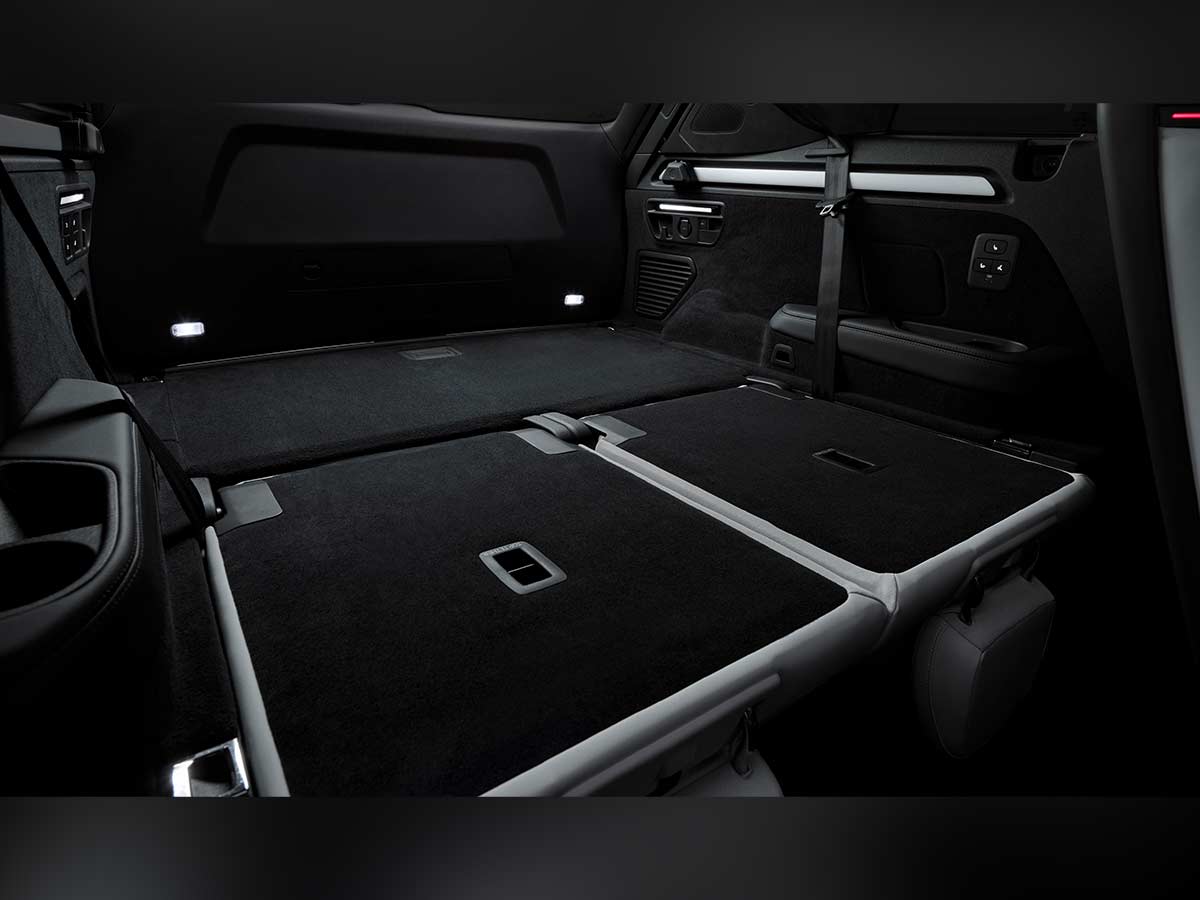
- Up to 87.7 cubic feet of luggage capacity
- 19.3 cubic feet of boot space even with all three rows in use
Audi has also engineered the second-row seats to tilt forward even when child seats remain installed, significantly improving access to the third row. This is a thoughtful feature aimed squarely at family buyers.
Cargo flexibility has also been improved with remote folding controls, flat-folding seats and a new aluminium cargo rail system featuring sliding tie-down hooks.
First Impressions
On paper, the Audi Q9 appears to be much more than simply a larger Q7.
Instead, Audi has developed an entirely new flagship that combines genuine family practicality with the premium craftsmanship expected from the brand. The increase in dimensions, more luxurious cabin, sophisticated chassis technology and completely new drivetrain architecture suggest that the Q9 has been engineered to compete directly with the segment’s established leaders rather than occupy a niche below them.
And while the standard Q9 focuses on comfort, the SQ9 demonstrates that Audi has no intention of sacrificing performance, with outputs and acceleration figures that place it among the quickest three-row luxury SUVs currently available.
2027 Audi Q9 Interior, Technology, Engines and Performance: Audi’s Most Advanced SUV Yet
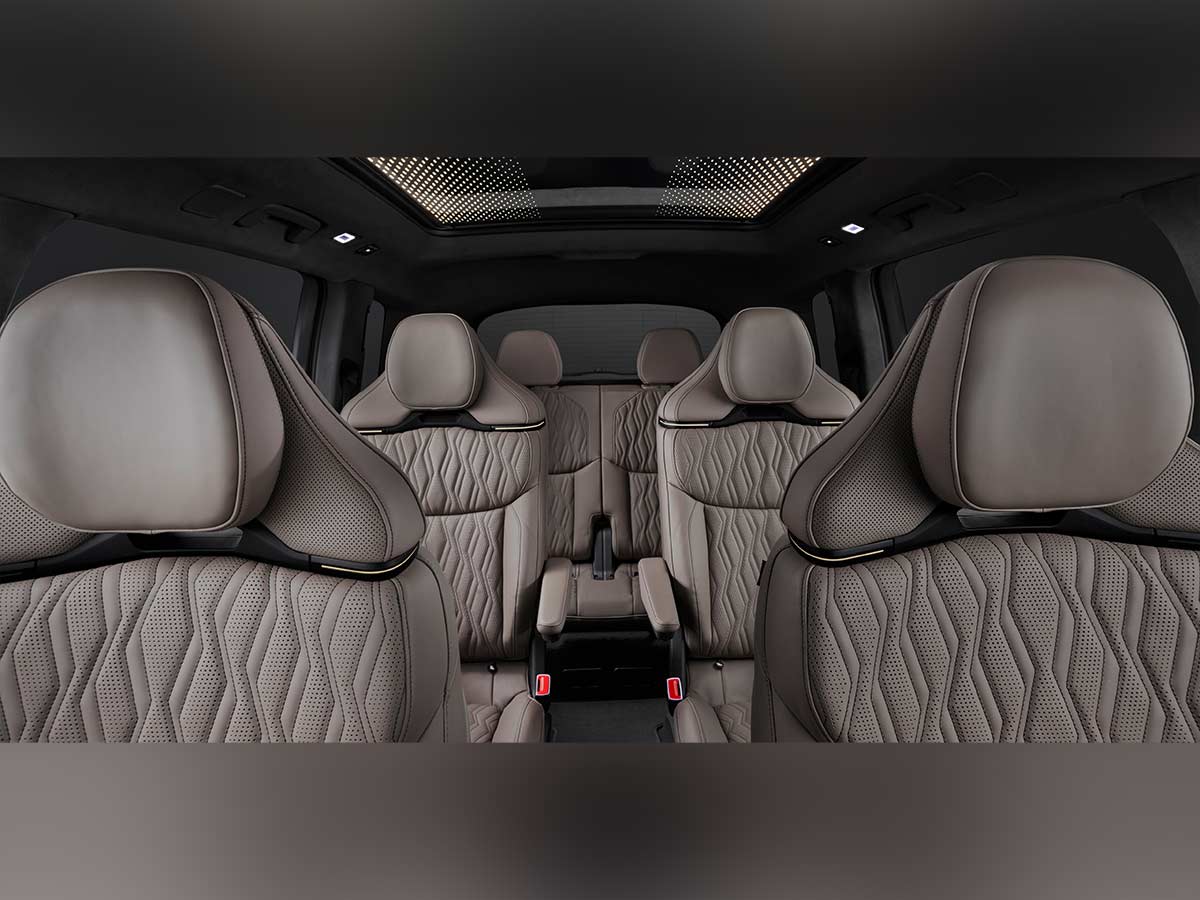
If the exterior establishes the Q9 as Audi’s new flagship, it’s the interior where the SUV makes its biggest statement. Rather than simply enlarging the Q7’s cabin, Audi has developed an entirely new passenger experience centred around space, digital technology and long-distance comfort.
From a panoramic digital cockpit and executive-style second-row seating to one of the largest panoramic roofs ever fitted to an Audi, the Q9 has clearly been designed to appeal to buyers who expect limousine levels of luxury from a three-row SUV.
A Cabin Built Around Space and Comfort
Unlike many luxury SUVs where the third row is an occasional convenience, Audi says the Q9 has been engineered from the outset as a genuine three-row family vehicle.
The SUV is offered with either:
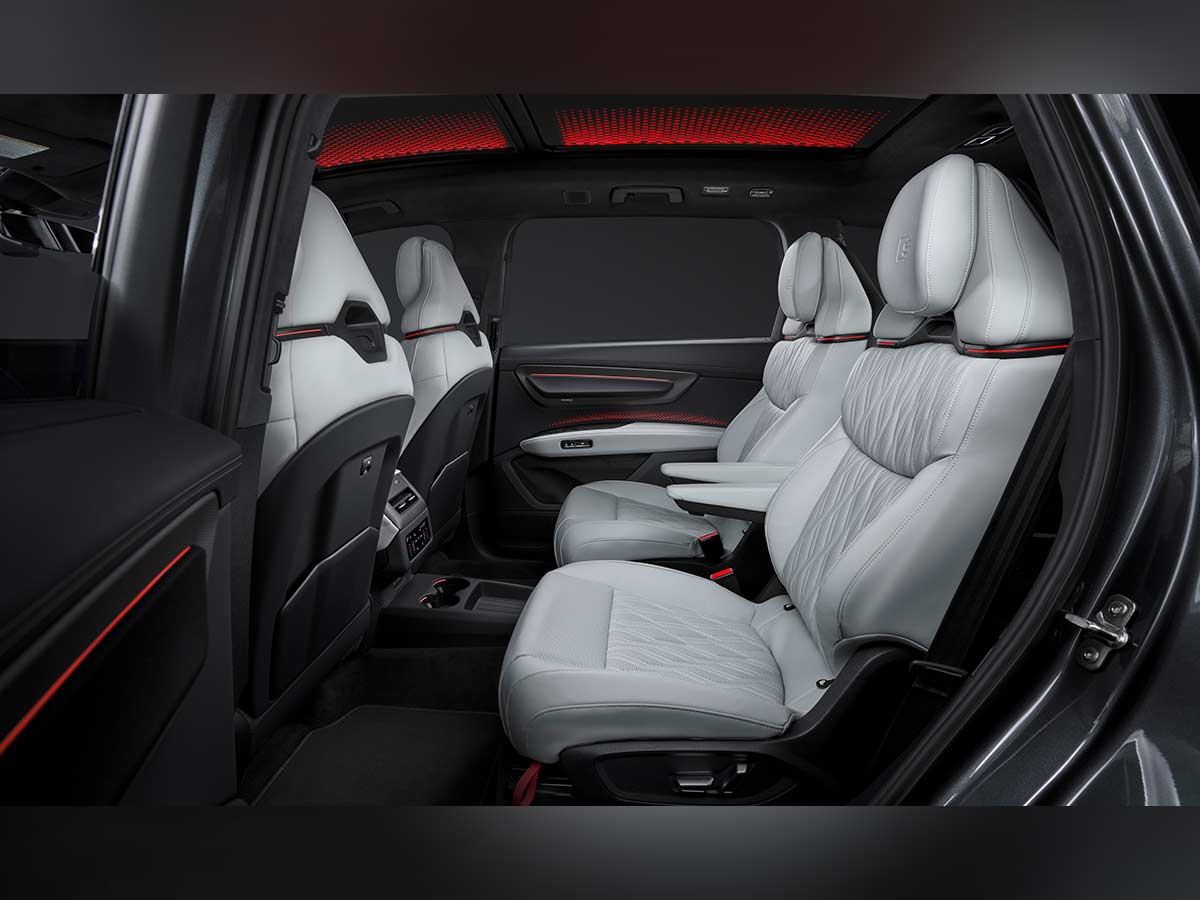
- Seven seats as standard
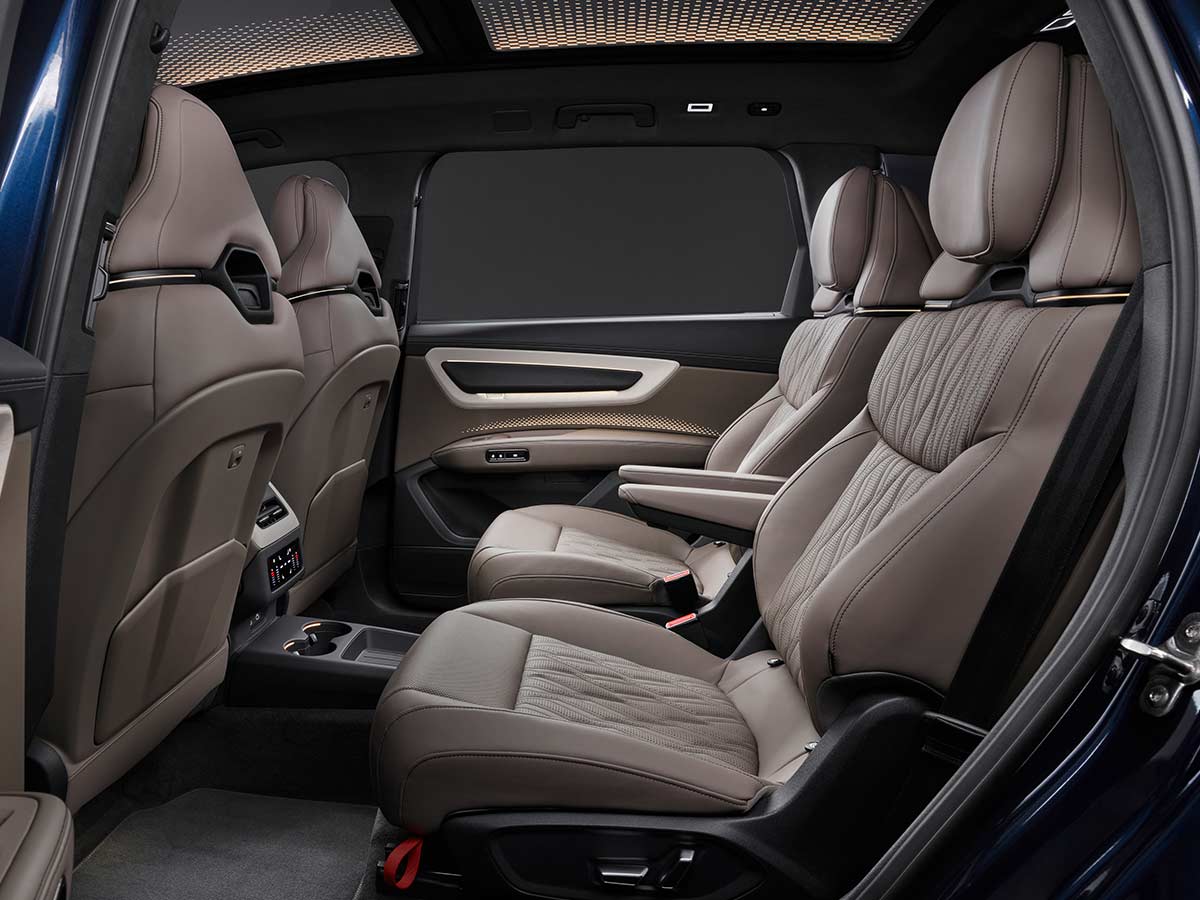
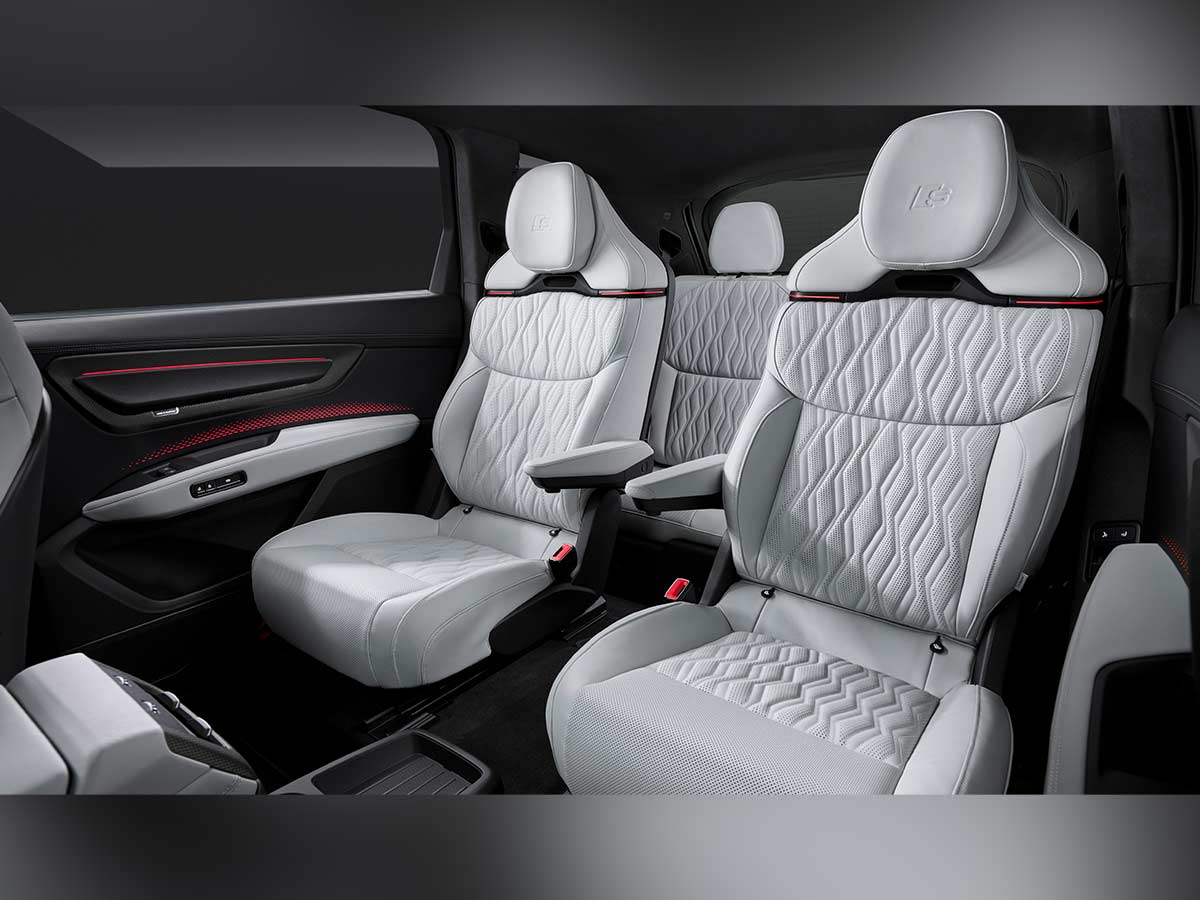
- Six seats with individual second-row captain’s chairs
The optional captain’s chairs transform the rear compartment into something closer to an executive lounge, offering limousine-like comfort while also making access to the third row considerably easier.
Even in the standard seven-seat configuration, Audi has paid considerable attention to usability.
The second-row seats are electrically adjustable and can tilt forward electronically even when forward-facing child seats remain installed – a clever engineering solution that allows passengers to access the third row without removing child seats. The rear bench also accommodates three LATCH child-seat mounting positions, making the Q9 particularly attractive for larger families.
Massive Panoramic Roof Becomes a Highlight
One of the most striking interior features is the enormous panoramic glass roof.
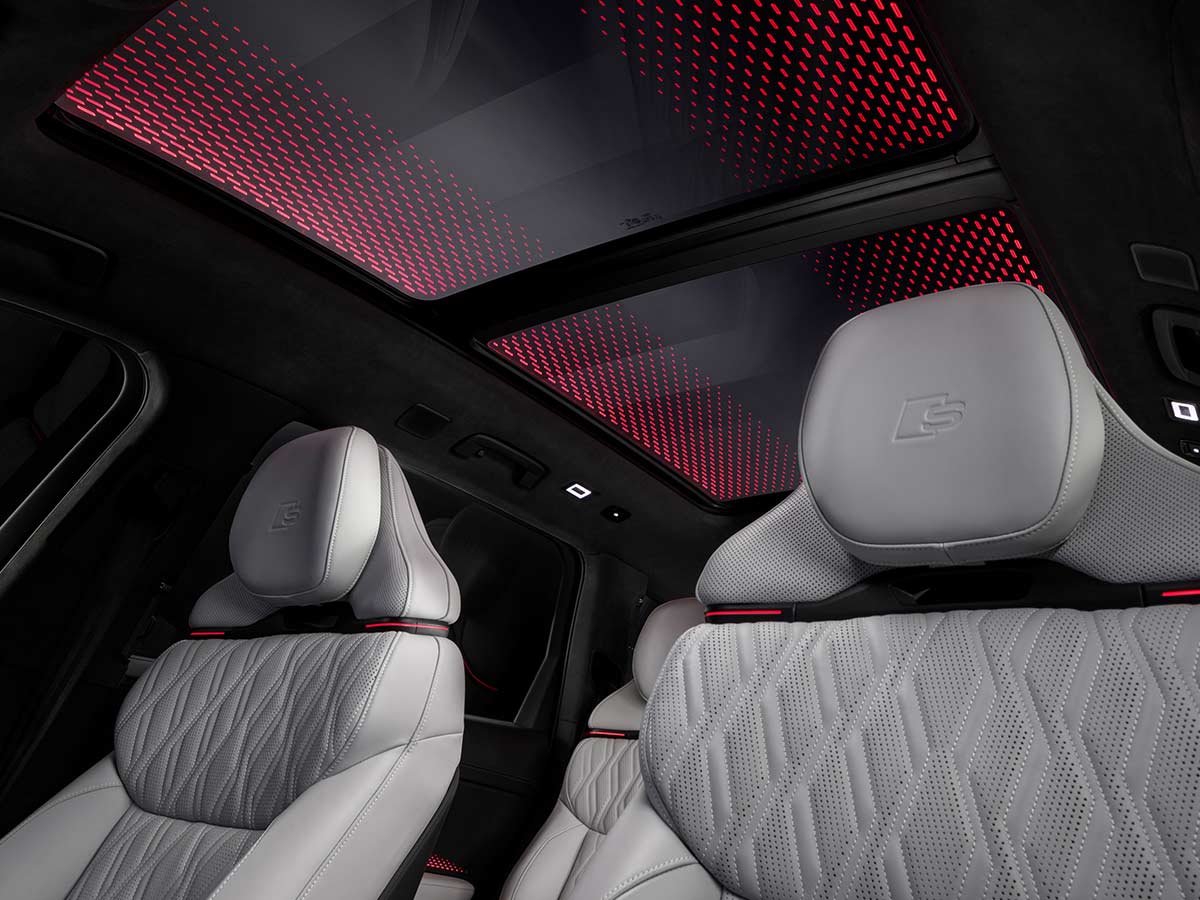
Audi says this is the largest panoramic sunroof ever installed on one of its production vehicles, spanning more than 16 square feet.
Rather than relying on a traditional sunshade, the roof features electronically switchable transparency divided into nine individually controllable segments. Occupants can adjust the opacity of different sections independently, allowing more precise control over sunlight entering the cabin.
Audi also plans to introduce an illuminated version of this panoramic roof shortly after launch, further enhancing the premium ambience during night driving.
Digital Stage: Audi’s New Cockpit Takes Centre Stage
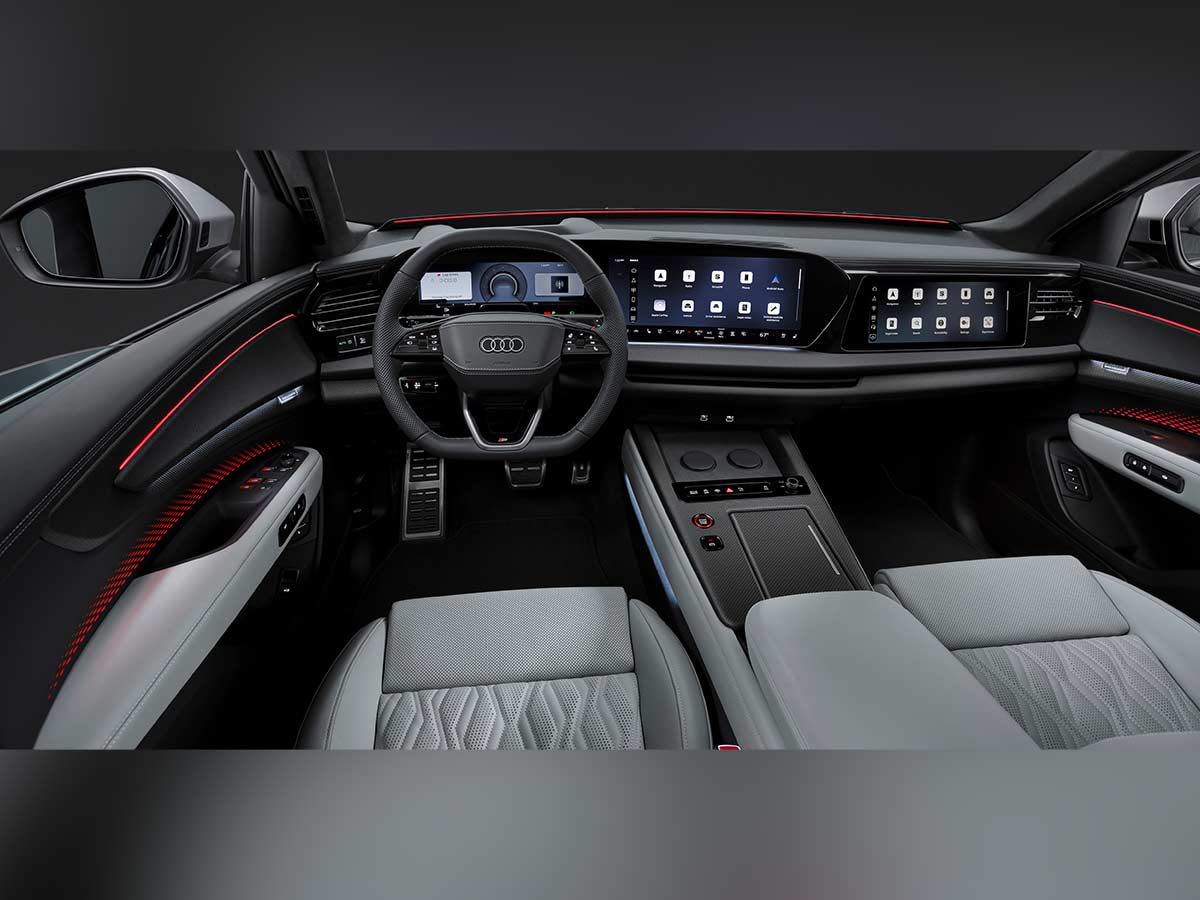
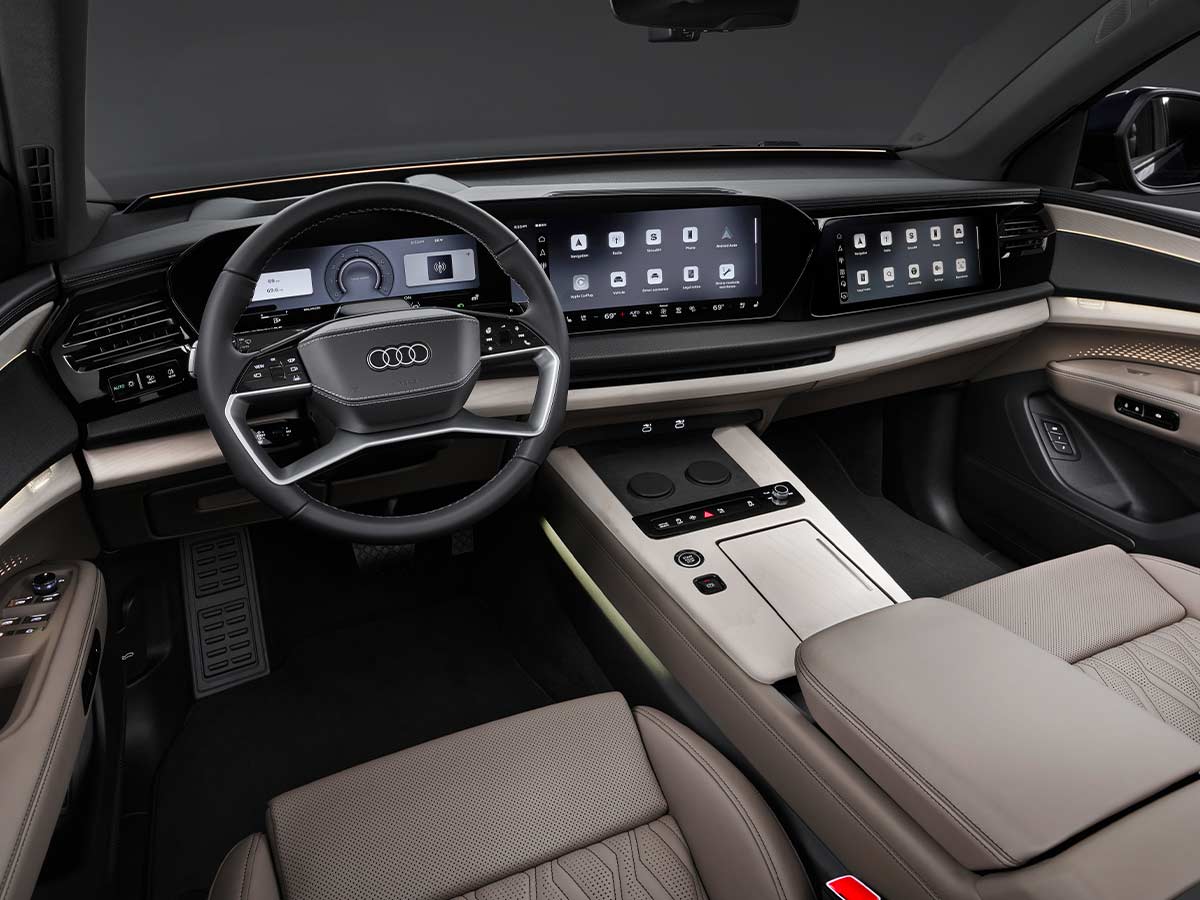
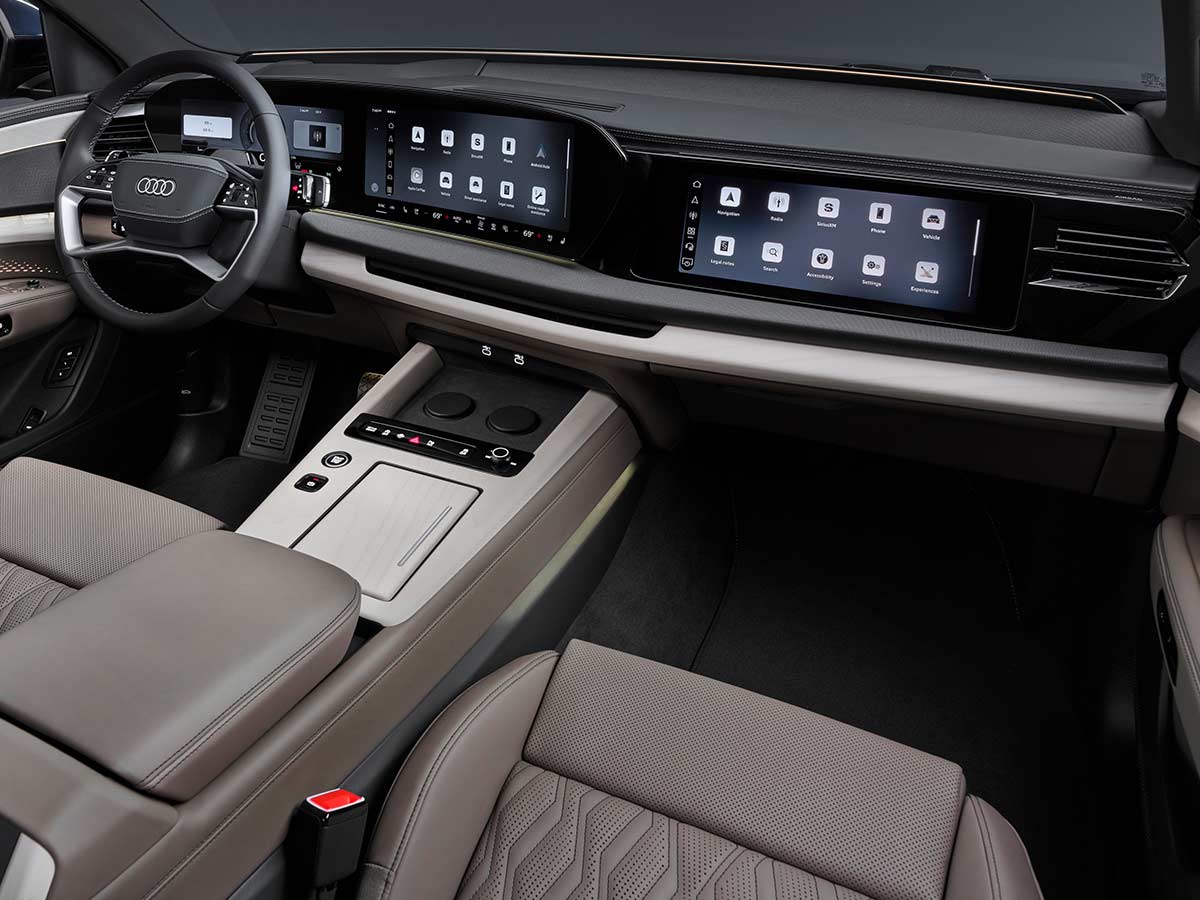
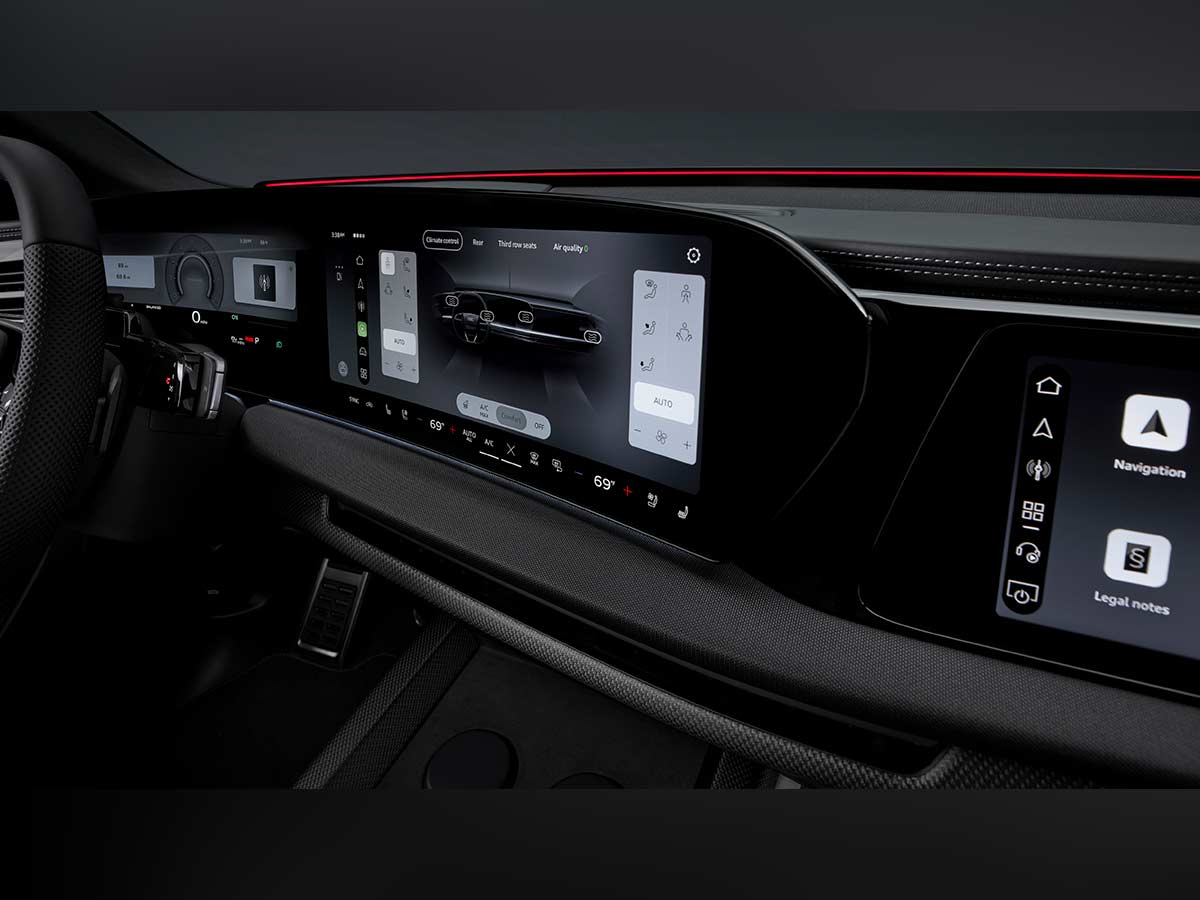
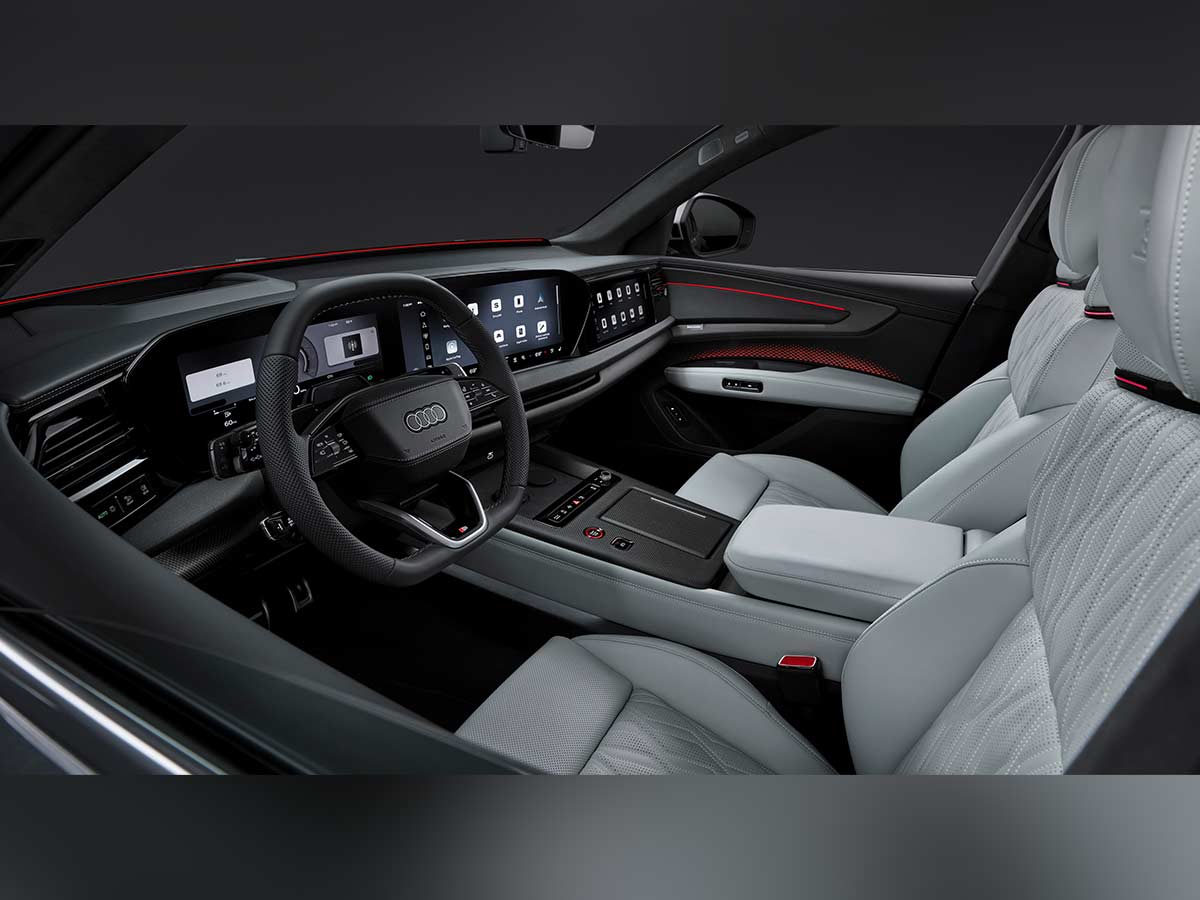
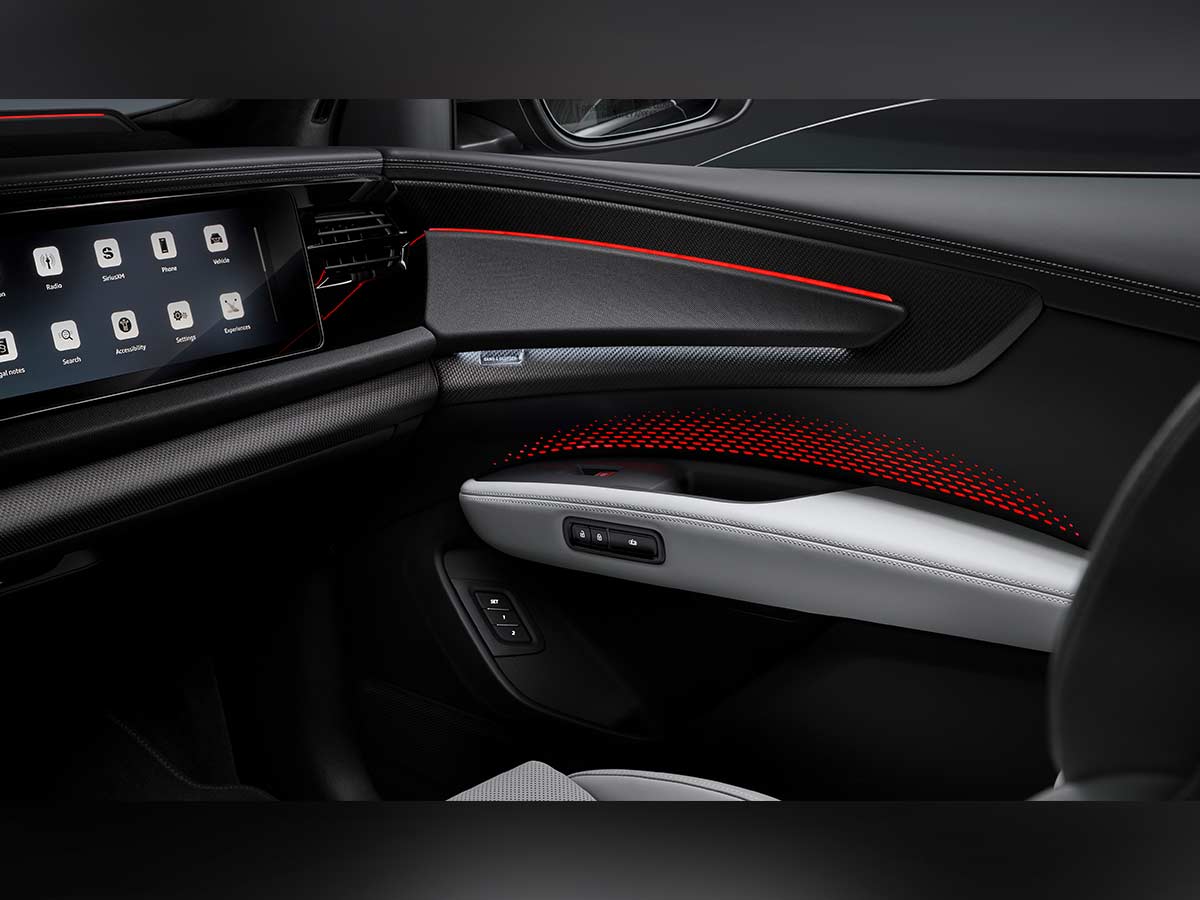
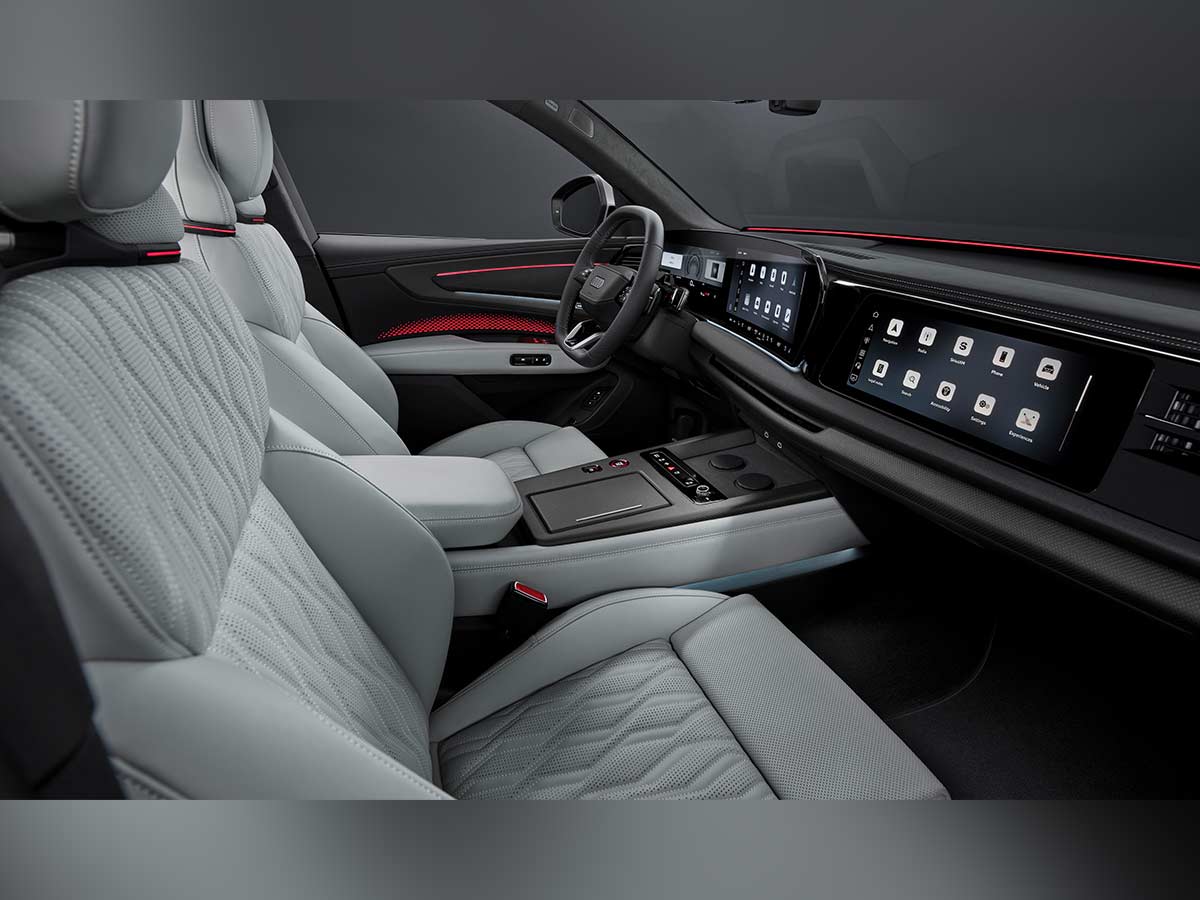
The dashboard is dominated by Audi’s latest “Digital Stage” architecture, replacing the conventional instrument panel with an expansive display layout that stretches across much of the dashboard.
The system includes:
- Audi Virtual Cockpit Plus digital instrument cluster
- 14.5-inch central MMI touchscreen
- 12.3-inch passenger display
- Head-up display as standard on the SQ9
Unlike many passenger displays that simply mirror the central screen, Audi’s system incorporates an active privacy mode that prevents the driver from being distracted while allowing the front passenger to watch media, view navigation or interact with vehicle functions independently.
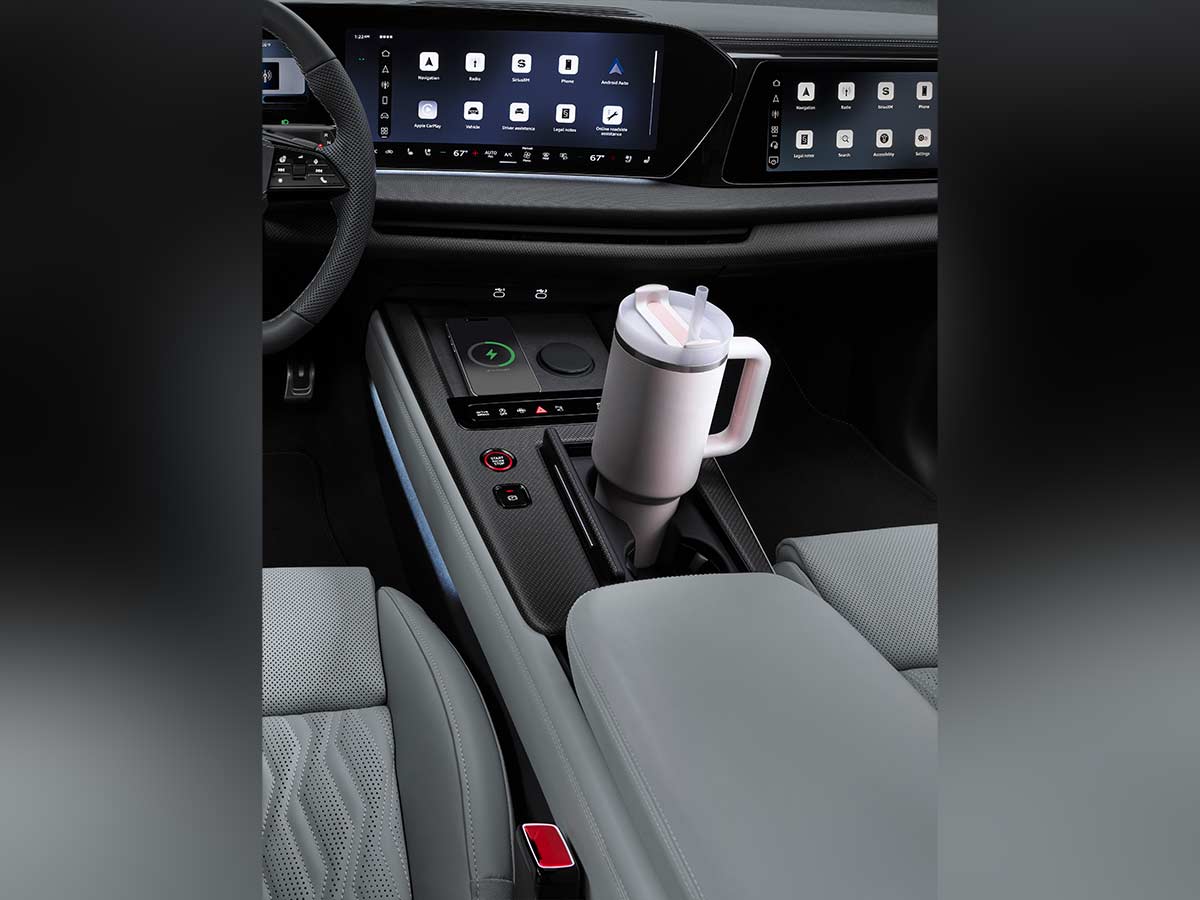
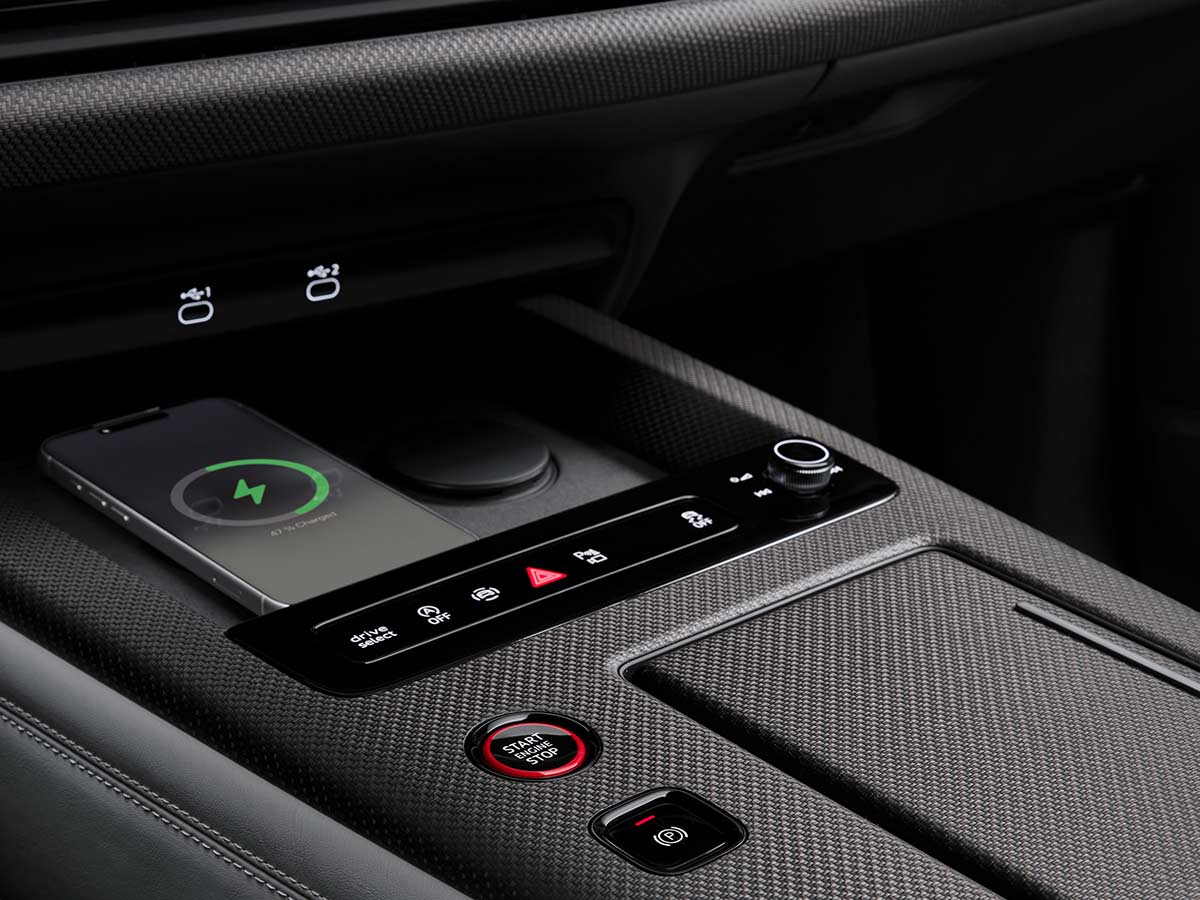
The infotainment system also integrates Amazon Alexa voice assistance, while the redesigned centre console introduces magnetic Qi2.2 wireless charging for two smartphones, oversized cupholders and a cleaner material finish with reduced piano-black surfaces.
Premium Materials Throughout
Material quality has always been one of Audi’s strengths, and the Q9 continues that tradition.
The SQ9 receives:
- Fine Nappa leather upholstery
- Heated front and second-row outboard seats
- Heated third-row seats
- Front-seat ventilation
- Massage functions
- Heated armrests
- Carbon Basalt trim
- Integrated dashcam
- Sports seats with illuminated welcome lighting
Optional interior colour combinations include Arras Red, Pastel Silver and an Audi Exclusive Baikal Blue leather package. Carbon fibre trim and distinctive S branding further differentiate the SQ9 from the more luxury-oriented Q9.
Ambient lighting is also highly configurable, with colour-customisable contour and surface lighting extending throughout the cabin.
Bang & Olufsen Introduces 4D Audio
Audi’s partnership with Bang & Olufsen continues in the Q9, but the flagship SUV introduces one of the brand’s most advanced sound systems yet.
The optional Premium Sound System includes:
- 1,360-watt amplifier
- 24-channel output
- 22 speakers
- Headrest speakers
- Fraunhofer Symphoria sound processing
- Seat-mounted bass actuators
Rather than simply increasing speaker count, Audi has integrated actuators within the front seats that physically reproduce low-frequency vibrations, allowing occupants to feel bass as well as hear it. Individual sound modes include dedicated settings for music, podcasts and concert-style listening.
Two Powerful Petrol Engines
The new Q9 range launches with two turbocharged petrol engines.
Audi Q9
The standard Q9 is powered by a 2.9-litre twin-turbocharged TFSI V6 producing:
- 429 hp
- 442 lb-ft (599 Nm)
- 0-60 mph in 4.9 seconds (estimated)
Power is delivered through an eight-speed Tiptronic automatic transmission and quattro all-wheel drive.
Audi SQ9
The performance flagship receives a revised 4.0-litre twin-turbocharged V8 generating:
- 591 hp
- 590 lb-ft (800 Nm)
- 0-60 mph in 3.8 seconds
- Top speed of 155 mph with performance tyres
That makes the SQ9 one of the quickest full-size luxury SUVs currently available and, according to Audi, the fastest-accelerating three-row SUV in its competitive set.
New Rear-Biased Quattro System
Perhaps the most significant engineering change underneath the Q9 is Audi’s latest generation of quattro all-wheel drive.
Unlike previous systems that primarily prioritised front-to-rear traction, the new architecture actively varies torque distribution using an electromechanical clutch.
During spirited driving, nearly all available engine torque can be directed to the rear axle, giving the SQ9 a noticeably more rear-driven character while preserving the all-weather capability expected from an Audi SUV.
The system also incorporates:
- Electronically controlled rear differential lock
- Brake torque vectoring
- Rear-biased torque distribution
- Millisecond torque management
Together, these technologies improve agility, cornering precision and traction under acceleration without compromising stability on slippery surfaces.
Adaptive Air Suspension and Rear-Wheel Steering
Every SQ9 comes equipped with adaptive air suspension capable of altering ride height by approximately 3.5 inches.
In its highest setting, ground clearance increases to approximately 10 inches, improving capability over rough roads and light off-road trails. At motorway speeds, the suspension lowers automatically to improve aerodynamic efficiency and high-speed stability.
Audi also fits the SQ9 with standard rear-wheel steering.
At low speeds, the rear wheels turn opposite to the fronts, significantly reducing the turning circle despite the SUV’s substantial size. At higher speeds, they steer in the same direction as the front wheels, enhancing stability during lane changes and high-speed cornering.
Combined with progressive steering and Audi Drive Select modes covering Comfort, Dynamic, Offroad, Balanced, Individual and Assistant, the chassis promises an unusually broad range of abilities for such a large luxury SUV.
First Driving Impression
On paper, Audi appears to have focused on delivering a luxury SUV that doesn’t sacrifice driver engagement.
The combination of a rear-biased quattro system, adaptive air suspension, rear-wheel steering and a staggered tyre setup suggests the SQ9 has been engineered to feel considerably more agile than its dimensions might suggest. Meanwhile, the standard Q9’s twin-turbo V6 should offer ample performance for buyers prioritising refinement, comfort and effortless long-distance touring over outright speed.
If the production model delivers on these engineering promises, the Q9 could become one of the most well-rounded luxury SUVs Audi has ever built.
2027 Audi Q9 Safety, Technology, Specifications, Price and Rivals
Luxury SUV buyers today expect far more than a powerful engine and premium materials. Advanced driver assistance systems, connected technology, intelligent lighting and effortless long-distance usability have become just as important as outright performance. Audi appears to have recognised this shift, equipping the Q9 with one of the most comprehensive technology packages the brand has offered on any production SUV.
Beyond its luxurious cabin and powerful drivetrains, the Q9 introduces several firsts for Audi in the North American market, particularly in lighting and partially automated driving.
Digital Matrix LED Headlights Debut in the US
One of the Q9’s biggest technological highlights is its new Digital Matrix LED headlight system, marking the first time Audi has introduced this technology for the US market.
Unlike conventional adaptive LED headlights, the Digital Matrix system uses a micro-LED chip containing 25,600 individual LEDs, each capable of being controlled independently. This allows the headlights to illuminate specific sections of the road while selectively dimming areas where oncoming traffic or vehicles ahead are detected, reducing glare without sacrificing visibility.
Audi says the system has been specifically engineered to comply with US Department of Transportation regulations while retaining the sophisticated adaptive functionality already available in Europe. Additional features include:
- Adaptive driving beam
- Curve lighting based on steering angle
- Junction illumination
- All-weather lighting mode
- Eight selectable daytime running light signatures
- Customisable Coming Home and Leaving Home animations
This combination of functionality and personalisation further reinforces the Q9’s flagship positioning.
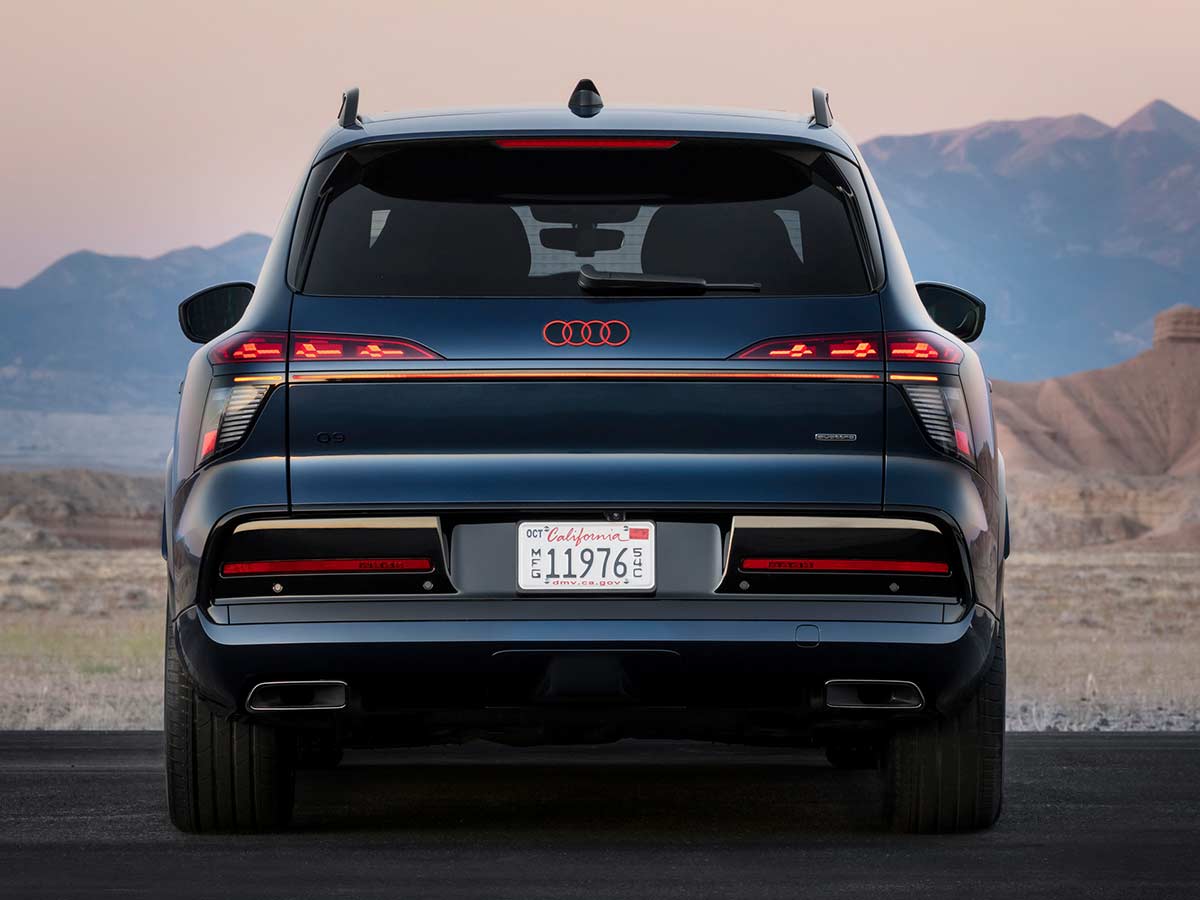
World-First Curved OLED Tail Lights
Audi has also introduced what it describes as the world’s first production application of curved third-generation OLED tail lights.
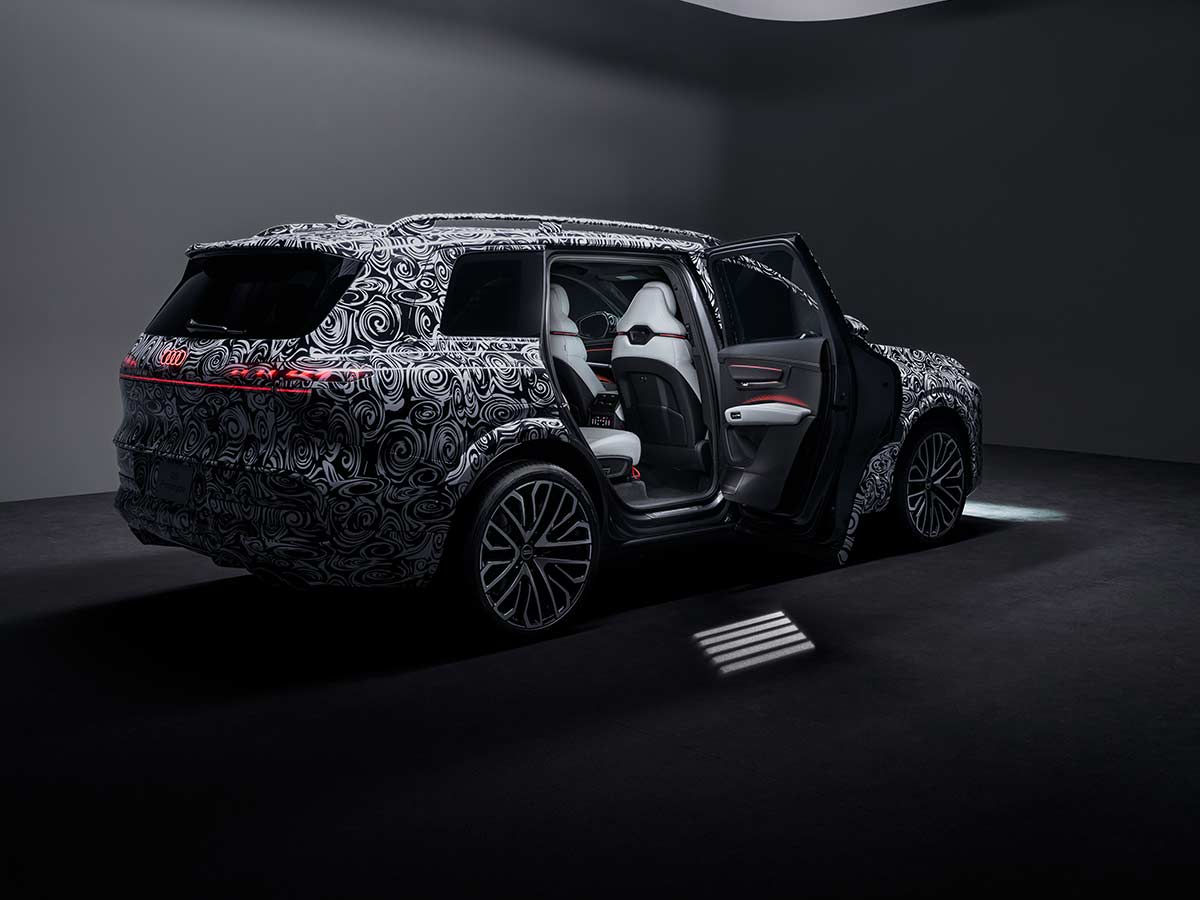
Unlike conventional flat lighting elements, these OLED panels follow the contours of the rear bodywork, creating a three-dimensional appearance while improving visibility from different angles. Each side consists of multiple individually controllable segments, allowing the vehicle to display up to eight different digital lighting signatures.
The system goes beyond aesthetics by incorporating communication functions that can display:
- Hazard warning graphics
- Proximity alerts
- Automated parking indicators
- Additional warning symbols for surrounding traffic
The SQ9 also projects an additional brake light onto the rear window under heavy braking to improve visibility for following vehicles.
Advanced Turn Signals Improve Night-Time Safety
Another innovation is Audi’s new ground projection turn signal.
When the indicators are activated at night, the Digital Matrix headlights and OLED tail lights work together to project an animated directional arrow onto the road surface alongside the vehicle. The idea is to make the driver’s intentions more obvious to pedestrians, cyclists and motorcyclists who may not have a clear view of the conventional indicators.
While this feature may initially appear to be a styling gimmick, it reflects a broader industry trend towards using vehicle lighting as an active communication tool rather than purely illumination.
Comprehensive Driver Assistance Package
The Audi Q9 arrives with an extensive suite of active safety systems, many fitted as standard.
These include:
- Automatic emergency braking
- Forward collision warning
- Reverse collision mitigation
- Pedestrian detection
- Cyclist detection
- Blind-spot monitoring
- Rear cross-traffic alert
- 360-degree camera
- Automated parking assist
- Trailer stability assist
- Exit warning system
One particularly interesting feature works with the Q9’s power-assisted doors. If radar sensors detect an approaching cyclist or vehicle while someone is about to open a door, the system can delay the door opening while simultaneously projecting warning lights both inside and outside the vehicle.
Hands-Free Highway Driving
The flagship SUV also introduces Audi’s latest Level 2+ partial automated driving system.
Known as Adaptive Cruise Assist Plus, it enables hands-free driving on approved highways at speeds of up to 85 mph (137 km/h).
Using long-range radar, multiple cameras, navigation mapping and driver monitoring systems, the Q9 can:
- Accelerate
- Brake
- Steer
- Maintain lane position
- Assist with lane changes
Importantly, Audi emphasises that the driver remains responsible at all times. A driver-monitoring camera continuously tracks head position and eye movement, issuing escalating warnings if attention drifts away from the road before safely bringing the vehicle to a controlled stop if necessary.
2027 Audi Q9 Specifications
| Specification | Audi Q9 | Audi SQ9 |
|---|---|---|
| Engine | 2.9-litre twin-turbo V6 | 4.0-litre twin-turbo V8 |
| Power | 429 hp | 591 hp |
| Torque | 442 lb-ft | 590 lb-ft |
| Transmission | 8-speed Tiptronic | 8-speed Tiptronic |
| Drivetrain | quattro AWD | Rear-biased quattro AWD |
| 0-60 mph | 4.9 sec (est.) | 3.8 sec |
| Top Speed | 130 mph | 155 mph |
| Length | 209.0 in | 208.9 in |
| Wheelbase | 123.5 in | 123.5 in |
| Seating | 6 or 7 | 6 or 7 |
| Cargo Capacity | Up to 87.7 cu ft | Up to 87.7 cu ft |
| Towing Capacity | 7,700 lbs | 7,700 lbs |
Specifications are based on Audi’s preliminary technical data and remain subject to change before production.
Audi Q9 Price
Audi has confirmed US pricing as follows:
- Audi Q9: From US$87,700
- Audi SQ9: From US$118,000
Deliveries are scheduled to begin during the fourth quarter of 2026.
Audi Q9 vs BMW X7 vs Mercedes-Benz GLS vs Range Rover
With the Q9, Audi is targeting the most competitive end of the luxury SUV market.
Compared with the BMW X7, the Audi adopts a more understated design philosophy while introducing a fresh rear-biased quattro architecture and a heavily digital interior. The SQ9’s 591hp V8 also places it among the segment’s strongest performers.
Against the Mercedes-Benz GLS, the Q9 places greater emphasis on lighting innovation, digital interfaces and cabin technology, while retaining the practical three-row versatility expected in this class.
The Range Rover continues to stand apart for its off-road pedigree and ultra-luxury positioning. However, the Audi counters with more contemporary in-car technology, sophisticated lighting systems and a driver-focused chassis that appears to strike a balance between refinement and performance.
Although each model approaches the segment differently, the Q9 gives Audi a genuine flagship capable of competing with established rivals on dimensions, performance, technology and luxury.
Final Verdict: Has Audi Built the Ultimate Flagship SUV?
The arrival of the Q9 marks one of Audi’s most significant product launches in recent years. Rather than extending the life of the Q7 or creating a simple long-wheelbase derivative, Audi has developed an entirely new flagship SUV that addresses a clear gap in its global portfolio.
On paper, the Q9 brings together everything buyers expect from a modern luxury SUV. It offers genuine three-row practicality, a spacious and thoughtfully designed cabin, advanced infotainment, cutting-edge lighting technology and a new rear-biased quattro system that promises a more engaging driving experience than previous full-size Audi SUVs.
The SQ9 takes that formula a step further. With its 591hp twin-turbocharged V8, 3.8-second 0-60mph time, adaptive air suspension, rear-wheel steering and electronically controlled rear differential, it aims to deliver sports-car-like performance in a family-friendly package without compromising comfort or refinement.
Equally impressive is the level of innovation packed into the Q9. Features such as Digital Matrix LED headlights, curved OLED taillights, projected turn signals, Level 2+ hands-free highway driving, a panoramic Digital Stage cockpit and one of Audi’s largest panoramic glass roofs demonstrate that the company has treated the Q9 as a technology showcase rather than simply another premium SUV.
Whether the Q9 ultimately becomes a benchmark in the segment will depend on how it performs in independent road tests against established rivals such as the BMW X7, Mercedes-Benz GLS and Range Rover. However, based on Audi’s official specifications and engineering details, the ingredients are certainly in place.
For buyers seeking a full-size luxury SUV that combines premium craftsmanship, advanced technology, impressive performance and everyday practicality, the 2027 Audi Q9 appears ready to establish itself as one of the most compelling new entrants in the segment.
Frequently Asked Questions (FAQ) about the Audi Q9
Q: What is the Audi Q9?
A: The Audi Q9 is Audi’s new flagship full-size luxury SUV. Positioned above the Q7, it features three-row seating, six- or seven-seat configurations, advanced technology and a choice of V6 or V8 petrol engines.
Q: Is the Audi Q9 bigger than the Audi Q7?
A: Yes. At nearly 209 inches (5.31 metres) long with a 123.5-inch wheelbase, the Q9 is significantly larger than the Q7 and has been designed as Audi’s largest SUV to date.
Q: What engine does the Audi Q9 use?
A: The standard Q9 is powered by a 2.9-litre twin-turbocharged TFSI V6 producing 429hp and 442 lb-ft of torque.
Q: How powerful is the Audi SQ9?
A: The SQ9 uses a 4.0-litre twin-turbocharged V8 producing 591hp and 590 lb-ft of torque, enabling a 0-60mph sprint in just 3.8 seconds.
Q: Does the Audi Q9 have three rows of seats?
A: Yes. The Q9 comes standard with three rows and seven seats, while a six-seat layout with second-row captain’s chairs is available as an option.
Q: How much cargo space does the Audi Q9 offer?
A: The Q9 provides 19.3 cubic feet of cargo space behind the third row and up to 87.7 cubic feet with the rear seats folded.
Q: Does the Audi Q9 feature rear-wheel steering?
A: Yes. The SQ9 comes standard with rear-wheel steering to improve low-speed manoeuvrability and high-speed stability.
Q: What is Audi’s new Digital Matrix LED technology?
A: Digital Matrix LED headlights use thousands of individually controlled micro-LEDs to maximise road illumination while reducing glare for other road users.
Q: Does the Audi Q9 have adaptive air suspension?
A: Yes. Adaptive air suspension is standard on the SQ9, offering approximately 3.5 inches of ride-height adjustment and up to 10 inches of ground clearance in Lift mode.
Q: What is the towing capacity of the Audi Q9?
A: Both the Q9 and SQ9 can tow up to 7,700 pounds when equipped with the available tow hitch.
Q: What are the main competitors to the Audi Q9?
A: The Q9 competes in the full-size luxury SUV segment alongside the BMW X7, Mercedes-Benz GLS and Range Rover.
Q: When will the Audi Q9 go on sale?
A: Audi says customer deliveries are scheduled to begin in the fourth quarter of 2026.
Q: How much does the Audi Q9 cost?
A: The Q9 starts at US$87,700, while the performance-focused SQ9 starts at US$118,000 before destination charges.
Source: Audi