







The compact electric car segment just got a serious contender. The all-new Hyundai IONIQ 3 is a fully electric hatchback that doesn’t simply slot into the crowded EV market; it tries to reshape it. With a projected class-leading range of up to 496 km, a drag coefficient of 0.263, and a genuinely spacious cabin that defies its compact footprint, the IONIQ 3 is engineered for real people living real European lives.
If you’re weighing up the IONIQ 3 as your next electric vehicle, or just trying to understand what the fuss is about, this guide covers every angle – from design philosophy and battery specs, to the tech inside the cabin and what makes this car worth your attention.
>>> Great Discounts on Car & Bike Accessories <<<
What Is the Hyundai IONIQ 3, and Where Does It Fit?
The IONIQ 3 is the newest member of Hyundai’s dedicated all-electric IONIQ lineup, sitting between the entry-level INSTER and the flagship IONIQ 6 saloon. It fills a gap that many buyers have been waiting for: a compact hatchback that takes electric mobility seriously without the premium price tag of the larger models.
It is built on Hyundai Motor Group’s Electric-Global Modular Platform (E-GMP), the same architecture underpinning the IONIQ 5 and IONIQ 6; with a 400-volt electrical architecture. That pedigree matters. E-GMP is purpose-built for EVs, not adapted from a petrol platform, which is why the IONIQ 3 can offer a flat floor, a long wheelbase relative to its body length, and efficient fast charging without compromise.
Produced at Hyundai Motor Türkiye’s İzmit plant and designed in Europe specifically for European needs, the IONIQ 3 is a car conceived from the ground up with the everyday driver in mind.
A New Kind of Shape: The “Aero Hatch” Typology
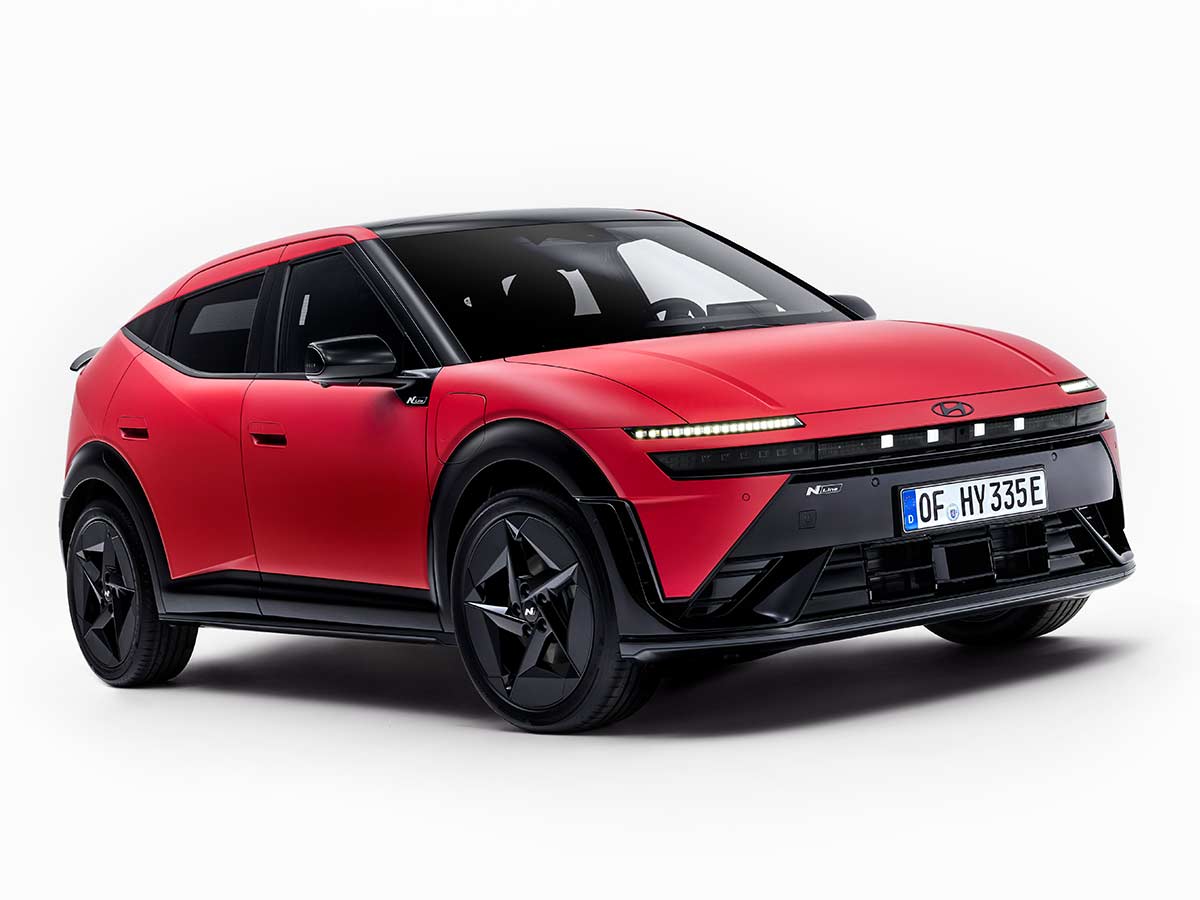
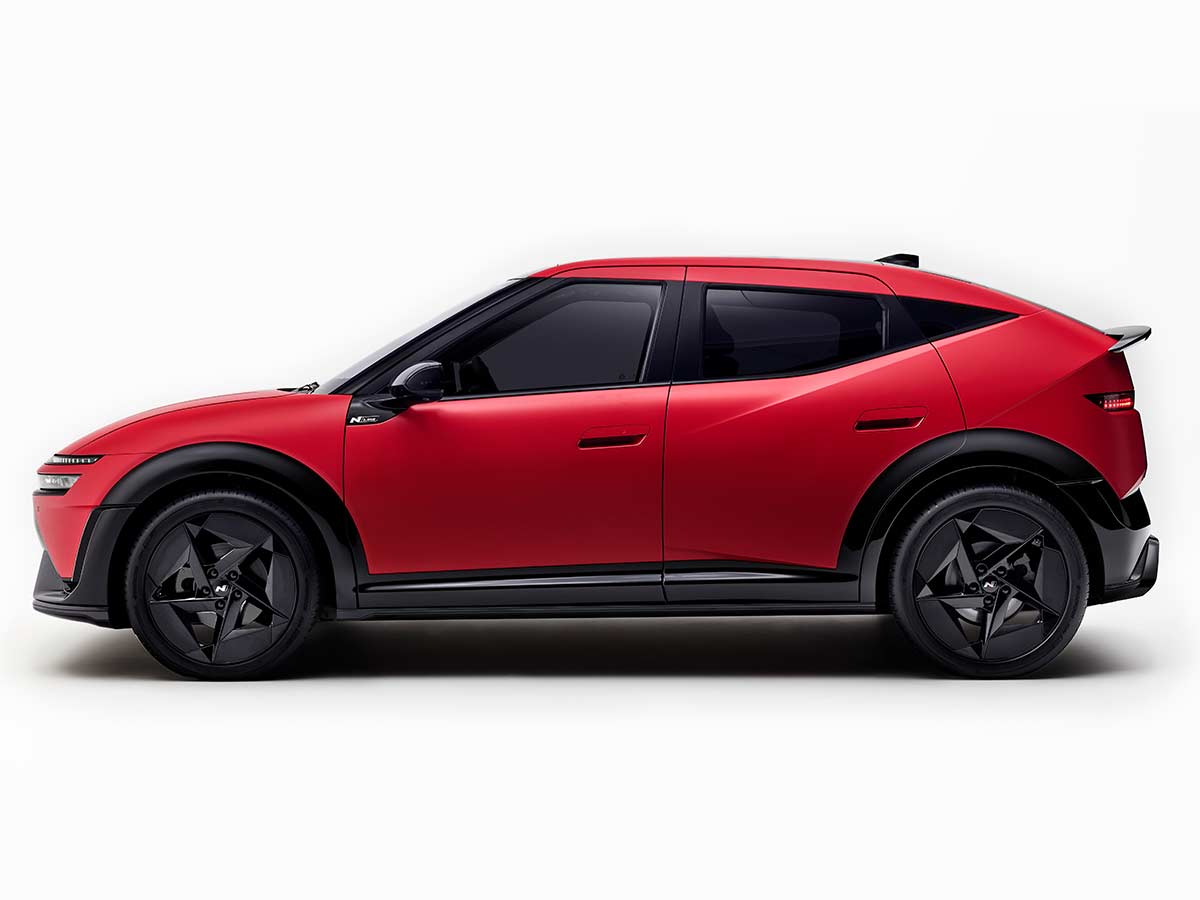
Perhaps the most significant thing about the IONIQ 3 isn’t its range or its tech – it’s the silhouette. Hyundai has introduced an entirely new body typology called the Aero Hatch, and it’s clever in a way that isn’t obvious until you understand the engineering behind it.
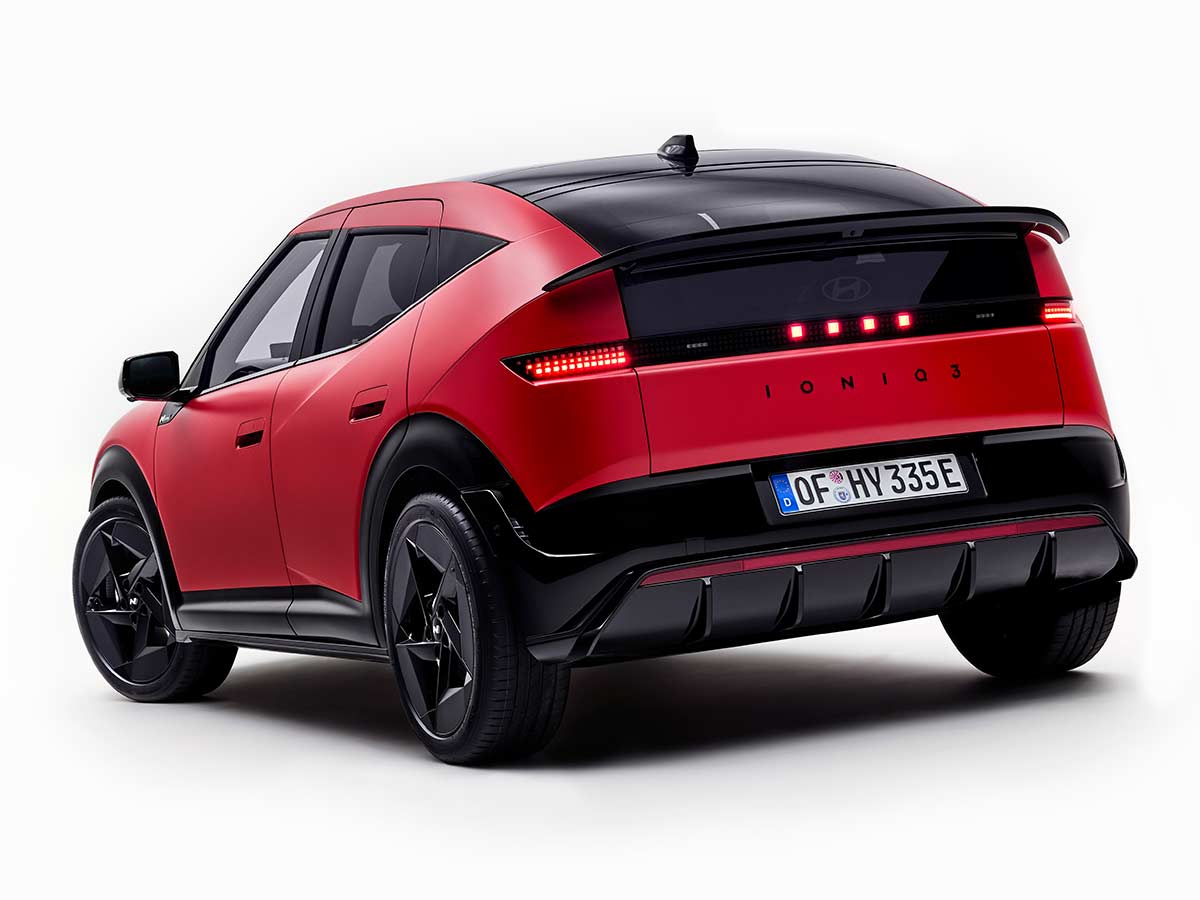
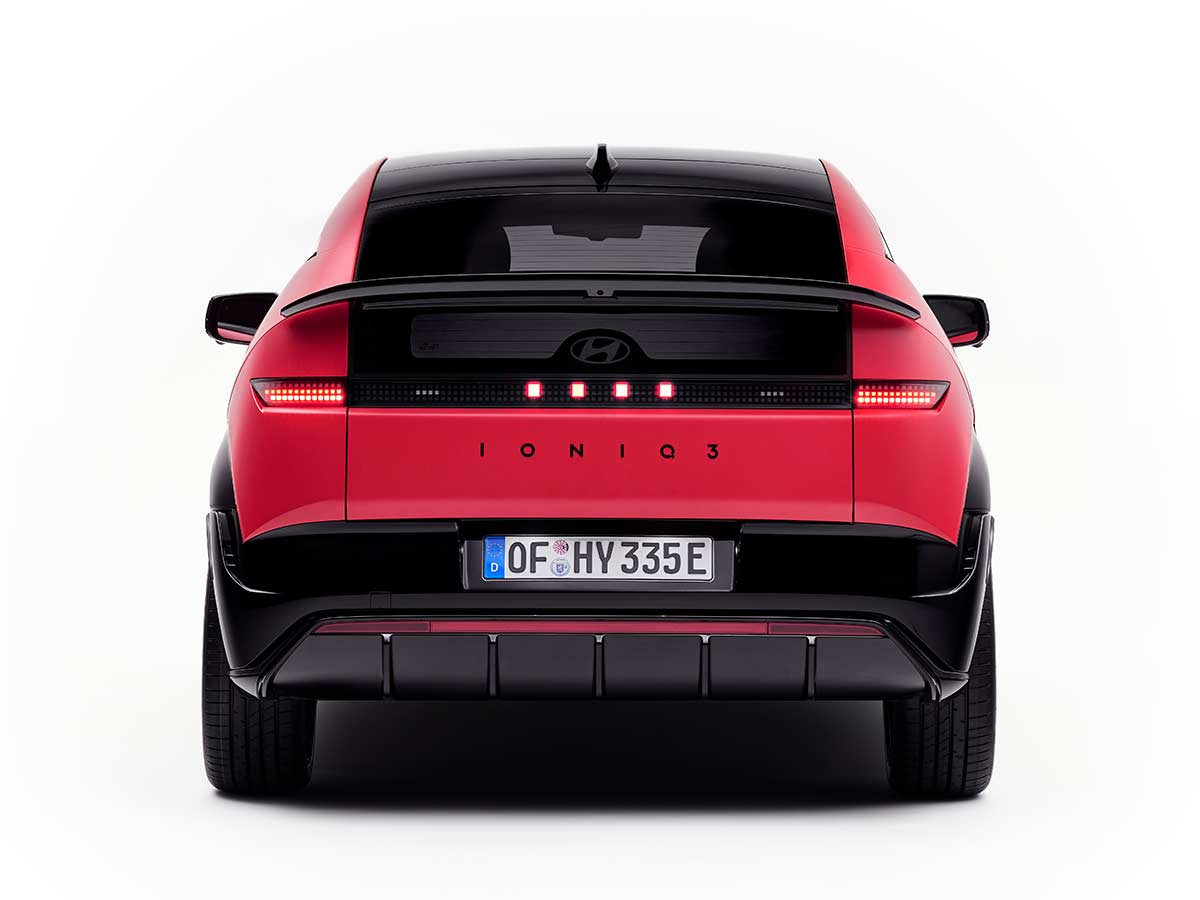
The roofline begins low and sleek at the front, then runs almost straight across both front and rear occupants – maintaining full headroom for everyone – before dropping sharply to merge with the rear spoiler. Most compact hatchbacks sacrifice either aerodynamics or rear headroom. The Aero Hatch tries to deliver both.
The result is a projected drag coefficient of 0.263 Cd, which Hyundai claims is class-leading. In the world of EV efficiency, aerodynamics translate directly into real-world range. Every gram of drag you eliminate is kilometres you keep on the battery estimate.
This design language is also the first application of Hyundai’s ‘Art of Steel’ philosophy in a compact electric car. Inspired by the raw purity of sheet metal in production, surfaces are reduced to deliberate, high-tension volumes rather than fussy creases. The effect is understated and precise – modern without being anonymous.
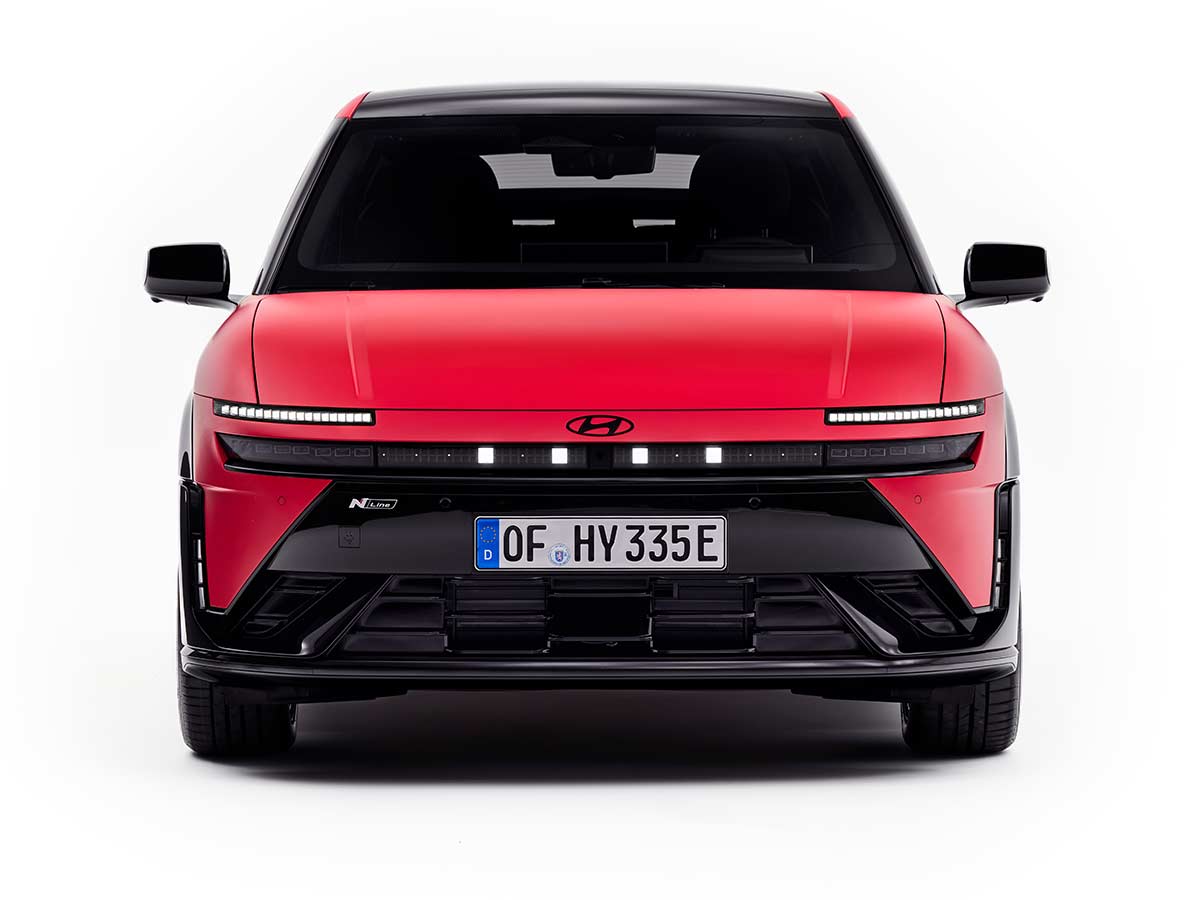
The signature pixel lighting elements carried over from the IONIQ 5 and 6 appear here too, including the four central dots that discreetly reference the letter “H” in Morse code. It’s a detail that rewards close attention, and that sense of thoughtfulness runs through the whole exterior.
For buyers who want something more assertive, there’s the IONIQ 3 N Line, which adds sporty styling elements and exclusive design touches without changing the powertrain. Eleven exterior colours are available at launch, from Atlas White Solid and Phantom Black Pearl through to Fierce Red Matte – a genuinely wide palette for the segment.
Range, Battery, and Charging: The Numbers That Actually Matter
Two battery configurations are available, and the split is significant enough to make the choice meaningful rather than cosmetic.
The Standard Range variant uses a 42.2 kWh high-voltage battery and delivers a projected WLTP range of 344 km. The motor produces 107.8 kW (147 PS) and 250 Nm of torque, and the 0–100 km/h sprint takes 9.0 seconds. For most urban and suburban drivers, 344 km of real-world range eliminates range anxiety entirely.
The Long Range variant steps up to a 61 kWh battery with a projected WLTP range of 496 km – which, if confirmed, would put it at the top of the compact EV class. This version uses a slightly lower-output motor at 99.5 kW (135 PS), resulting in a 0–100 km/h time of 9.6 seconds. The tradeoff is entirely reasonable for buyers who prioritise range.
Both variants share a top speed of 170 km/h and front-wheel drive.
On charging, Hyundai has done the important things right. DC fast charging takes the battery from 10 to 80 per cent in approximately 29 minutes on the Standard Range (30 minutes on the Long Range) under optimal conditions. AC charging supports up to 11 kW as standard, with 22 kW available as an option — a meaningful upgrade for home chargers and public AC points.
Vehicle-to-Load (V2L) functionality is available both internally and externally, allowing the IONIQ 3 to power devices and appliances directly from its battery. Combined with the integrated EV route planner and Plug & Charge capability (which identifies the car to a compatible charger automatically), the charging experience is designed to be friction-free rather than something to plan around.
Interior: Surprisingly Generous for a Compact Car
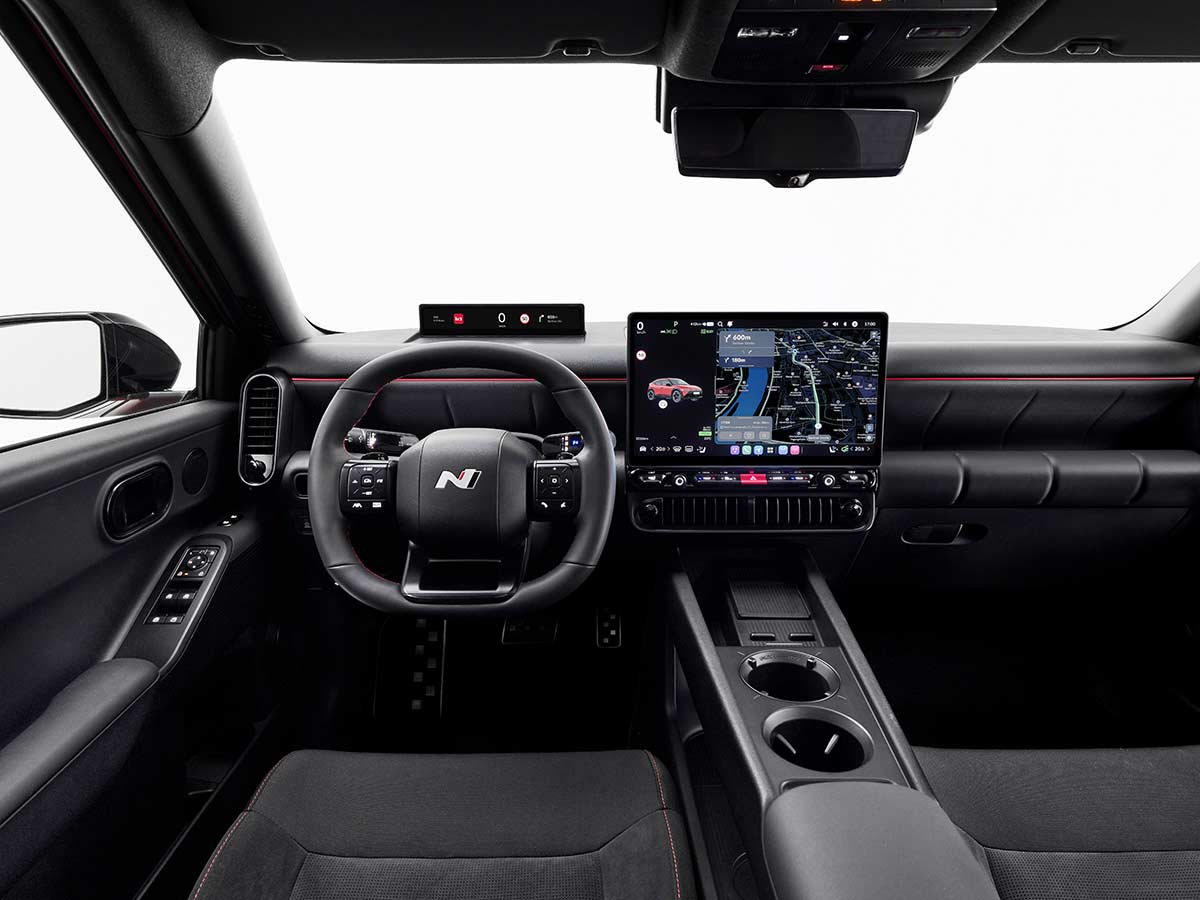
The IONIQ 3 measures 4,155 mm in length (4,170 mm in N Line trim), 1,800 mm wide, and 1,505 mm tall, with a wheelbase of 2,680 mm. Those numbers place it firmly in the compact segment, but the interior tells a different story.
Hyundai calls the interior approach a “Furnished Space” philosophy — the idea that cabin elements should be arranged like furniture in a room, creating warmth and intuitive organisation rather than a control-surface feel. The flat floor layout, enabled by the E-GMP platform, is the foundation of this: without a transmission tunnel intruding into the footwell, all five passengers have proper space.
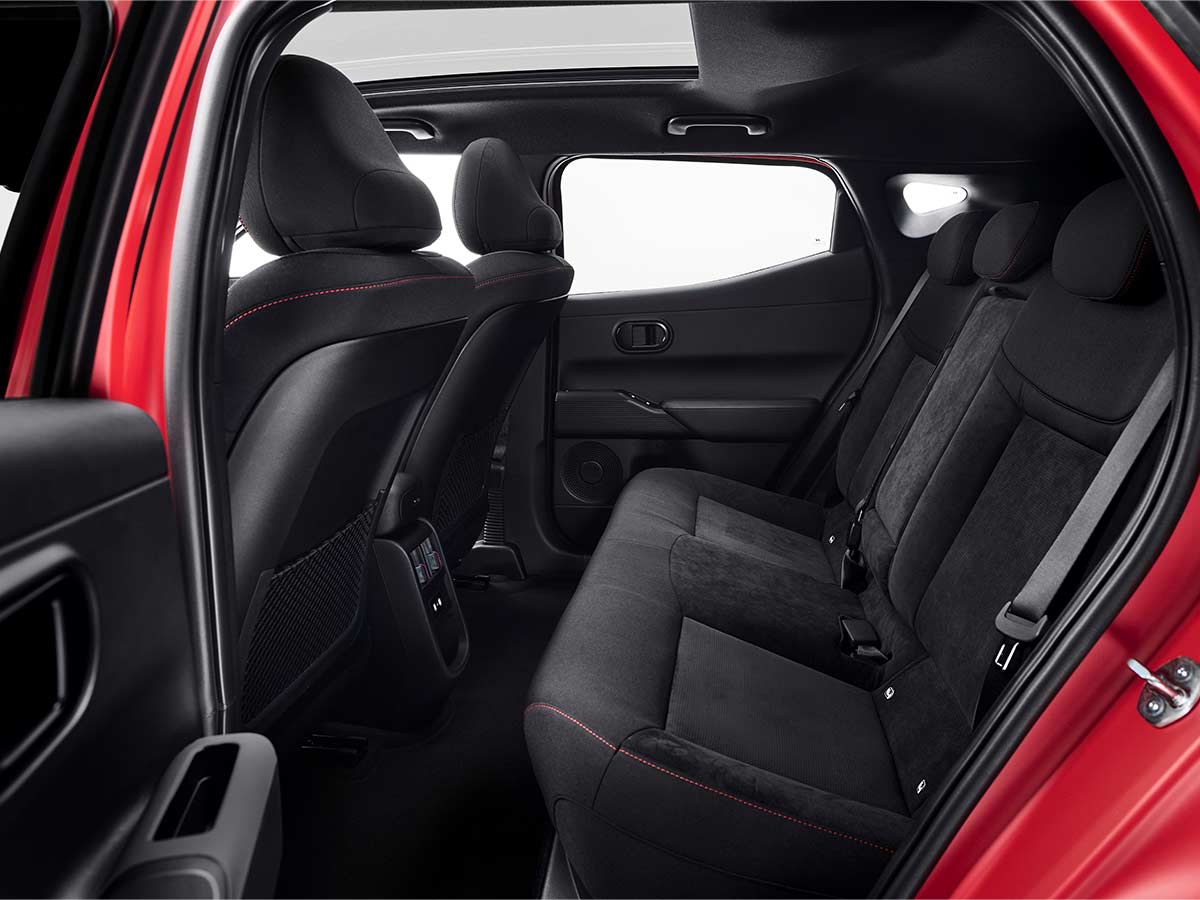
Rear headroom benefits directly from the Aero Hatch roofline. Three adults can genuinely sit in the back without bumping against the ceiling – an achievement in a car of this length. Legroom follows suit, and the long wheelbase relative to body length makes this possible.
The luggage compartment offers 441 litres of total capacity, split between a 322-litre main boot and 119 litres in the integrated Megabox – a cleverly concealed storage compartment beneath the boot floor. That figure is expected to benchmark the segment.
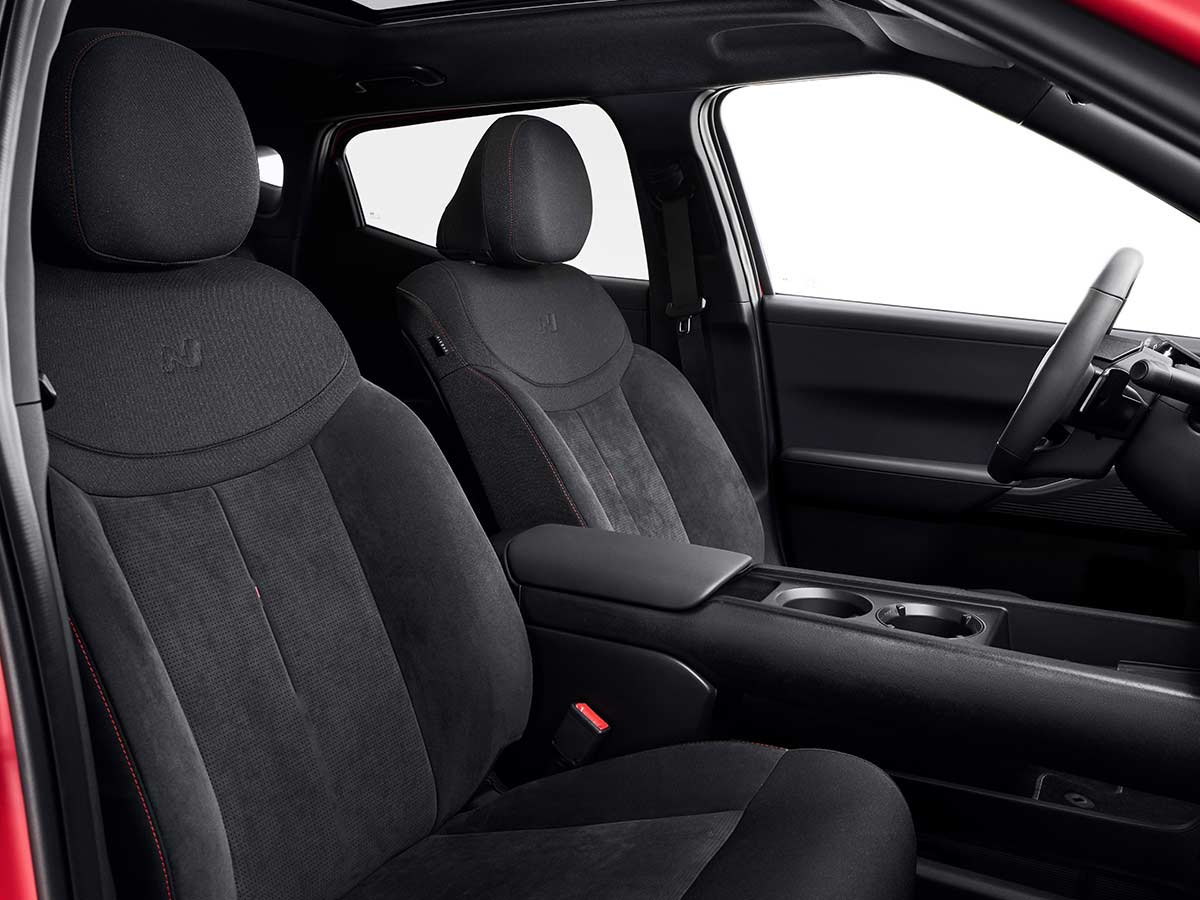
Interior options include Relaxation Seats, heated and ventilated front seating, dual-zone automatic climate control, ambient LED lighting, and a BOSE Premium Sound System. Trim materials were inspired by natural landscapes and 1970s Italian furniture design – an unusual reference point that manifests in carefully considered textiles, including recycled and bio-based options. Throughout the cabin, small “Easter egg” details reward closer inspection.
Colour choices run across four interior schemes: Black, Beige/Gray, Blue/Gray, and the Black with Red accents reserved for the N Line.
Technology: Pleos Connect and a Cleaner Approach to Infotainment
The IONIQ 3 debuts the Pleos Connect infotainment system in a European Hyundai model – a significant step for the brand’s digital ecosystem. Built on Android Automotive OS (AAOS), the system brings Google’s automotive platform to Hyundai’s compact EV, enabling native access to Google Maps, Google Assistant, and the Play Store directly through the car’s interface.
Display options are 12.9 inches or 14.6 inches depending on specification, with sharp graphics and a user experience designed to feel closer to a smartphone than a traditional car head unit. The integration with smartphone connectivity, over-the-air updates, and third-party app support is considerably more future-proof than proprietary infotainment systems.
Hyundai Digital Key 2 enables keyless access via compatible smartphones or wearable devices, making the physical key optional for most use cases. The technology supports both NFC and UWB (Ultra-Wideband) positioning for precision access.
Safety and Driver Assistance: SmartSense in Full
Hyundai’s SmartSense ADAS suite comes well-equipped on the IONIQ 3. Key systems include:
Highway Driving Assist 2 (HDA2): hands-on lane centring and adaptive cruise control capable of managing lane changes on motorways with driver confirmation.
Remote Smart Parking Assist (RSPA): the car can manoeuvre itself in and out of tight parking spaces via a smartphone app, without the driver inside.
Memory Reverse Assist (MRA): the car remembers the last 30 metres of low-speed reversing and can replay that path automatically, useful for pulling out of driveways or tight spots.
Surround View Monitor (SVM) and Blind-Spot View Monitor (BVM) provide additional spatial awareness, complemented by Projection LED headlamps with an Intelligent Front-Lighting System (IFS) that adapts the beam pattern to road conditions and oncoming traffic. Seven standard airbags complete the passive safety package.
What Buyers Should Know: Warranty, Production, and Market Position
The IONIQ 3 comes backed by Hyundai’s Five-Year Unlimited Mileage Warranty, which covers the vehicle with no kilometre cap for five years. The package also includes five years of roadside assistance and five years of vehicle health checks; a strong ownership proposition that reduces long-term uncertainty.
Production takes place at Hyundai Motor Türkiye’s İzmit facility, which Hyundai Motor Europe cites as part of its commitment to European development and local manufacturing. Design and engineering were conducted in Hyundai’s R&D centres in Germany.
The IONIQ 3 enters a segment that includes rivals like the Volkswagen ID.3, Renault Mégane E-Tech, and BYD Dolphin. Against that field, the 496 km Long Range projection is its most compelling differentiator on paper, alongside a boot capacity that appears to exceed the ID.3’s 385 litres meaningfully. The Pleos Connect system also raises the software standard in the segment, particularly given the fragmentation of proprietary infotainment systems among competitors.
Full Technical Specifications
| Specification | Standard Range | Long Range |
|---|---|---|
| Battery capacity | 42.2 kWh | 61 kWh |
| WLTP range (projected) | 344 km | 496 km |
| Motor output | 107.8 kW (147 PS) | 99.5 kW (135 PS) |
| Max torque | 250 Nm | 250 Nm |
| 0–100 km/h | 9.0 s | 9.6 s |
| Top speed | 170 km/h | 170 km/h |
| DC fast charge (10–80%) | ~29 min | ~30 min |
| AC charging | 11 kW (22 kW optional) | 22 kW |
| Drag coefficient | 0.263 | 0.263 |
| Length | 4,155 mm (Base) / 4,170 mm (N Line) | — |
| Width | 1,800 mm | — |
| Height | 1,505 mm | — |
| Wheelbase | 2,680 mm | — |
| Boot capacity | 441 L (322 L + 119 L Megabox) | — |
| Kerb weight | 1,550–1,580 kg | — |
| Tyre sizes | 205/65 R16 to 225/45 R19 | — |
Note: Energy consumption and performance figures are projected and subject to final homologation. Specifications may vary by market.
Frequently Asked Questions About the IONIQ 3
What is the Hyundai IONIQ 3?
The IONIQ 3 is a fully electric compact hatchback from Hyundai, built on the E-GMP platform. It was unveiled in April 2026 and is designed primarily for European buyers seeking an intuitive, spacious, and efficient electric car in the compact segment.
How far can the IONIQ 3 go on a single charge?
The IONIQ 3 offers two battery options. The Standard Range version has a projected WLTP range of 344 km, while the Long Range version targets 496 km — a figure Hyundai expects to be class-leading in the compact EV segment.
How fast does the IONIQ 3 charge?
Using DC fast charging, the IONIQ 3 Standard Range can charge from 10 to 80 per cent in approximately 29 minutes. The Long Range takes about 30 minutes. AC charging is supported at 11 kW as standard, with an optional upgrade to 22 kW.
What is the “Aero Hatch” body style?
Aero Hatch is a new body typology introduced with the IONIQ 3. The roofline runs straight over all passengers before dropping sharply to the rear, simultaneously maximising interior headroom and aerodynamic efficiency. The IONIQ 3 achieves a drag coefficient of 0.263.
What infotainment system does the IONIQ 3 use?
The IONIQ 3 is the first European Hyundai model to feature the Pleos Connect system, based on Android Automotive OS (AAOS). Screens are available in 12.9-inch and 14.6-inch options, with native Google integration including Maps and Assistant.
Does the IONIQ 3 have Vehicle-to-Load (V2L)?
Yes. The IONIQ 3 supports V2L both internally and externally, enabling users to power appliances and devices directly from the car’s battery.
What is the boot capacity of the IONIQ 3?
The IONIQ 3 offers 441 litres of total cargo capacity: 322 litres in the main boot, plus 119 litres in the Megabox concealed beneath the boot floor.
Where is the IONIQ 3 manufactured?
The IONIQ 3 is produced at Hyundai Motor Türkiye’s İzmit plant, designed and engineered in Hyundai’s R&D facilities in Germany.
What warranty does the IONIQ 3 come with?
In Europe, the IONIQ 3 is covered by Hyundai’s Five-Year Unlimited Mileage Warranty, which includes five years of roadside assistance and vehicle health checks with no kilometre cap.
Is there an N Line version of the IONIQ 3?
Yes. The IONIQ 3 N Line adds sporty exterior styling, unique interior accents (Black with Red), and exclusive design elements. It is 15 mm longer than the base model at 4,170 mm.
The Bottom Line
The IONIQ 3 is a genuinely considered electric car – not a petrol hatchback wearing an EV badge, but a vehicle built from its bones for battery-electric life. The 496 km Long Range target, 0.263 Cd aerodynamics, Plug & Charge, Pleos Connect on Android Automotive OS, and a 441-litre boot in a compact body are a strong combination.
It isn’t the cheapest car in its class, and it isn’t the flashiest. What it is, is honest: a car designed for the daily realities of European driving, with a coherent design identity and technology that works with you rather than against you.
For the buyer who wants an EV that holds its own on range, doesn’t compromise on practicality, and looks like it belongs in this decade — the IONIQ 3 deserves serious consideration.
Source: Hyundai