



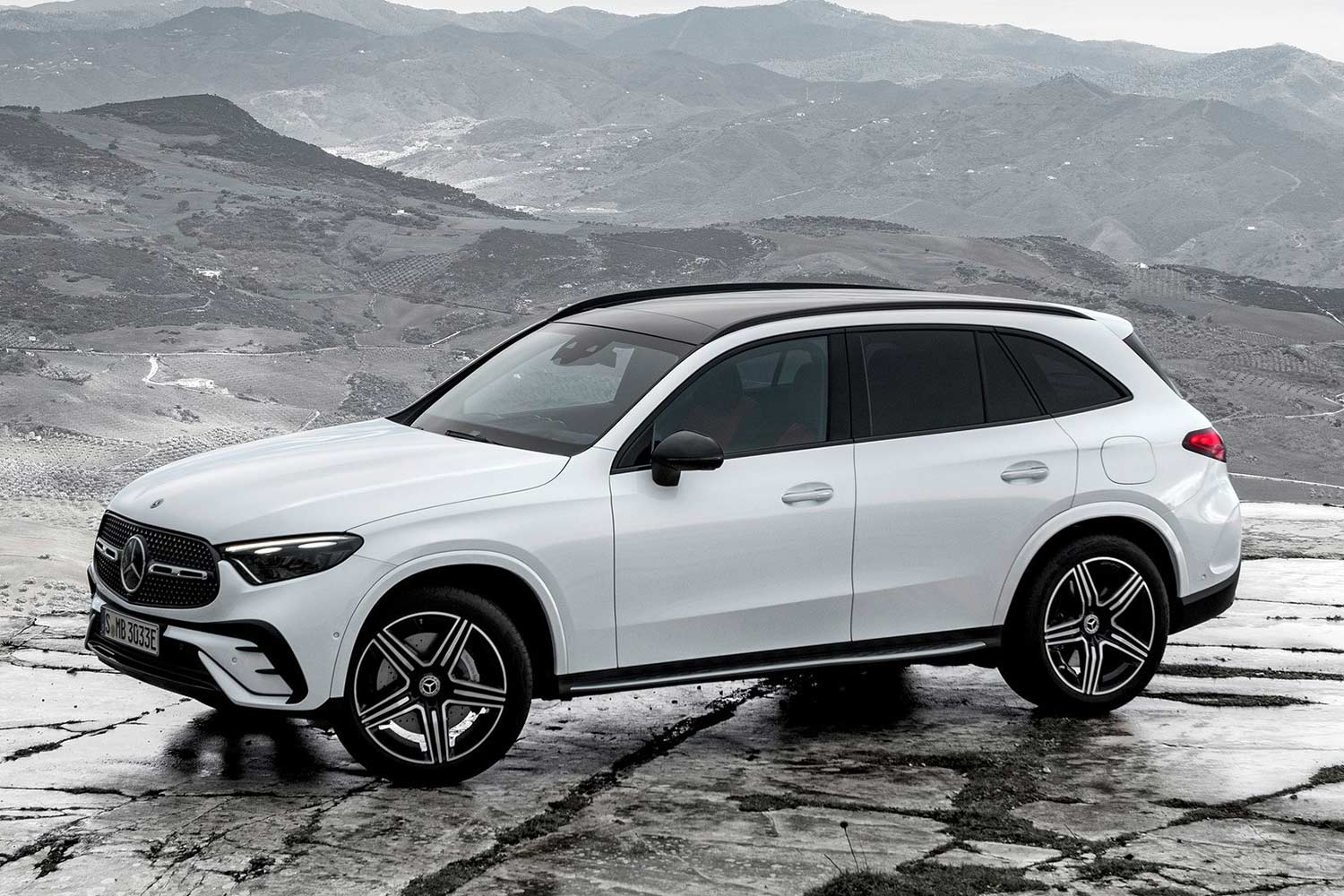








There is a particular challenge in building an electric performance SUV: producing extraordinary acceleration is relatively straightforward compared with making that performance feel composed, repeatable and emotionally engaging. The new Mercedes-AMG GT SUV, unveiled in October 2026, approaches that challenge with an unusual combination of three axial-flux electric motors, a directly cooled high-performance battery and suspension technology designed to control the movements of a large, powerful vehicle.
Developed entirely in-house by Mercedes-AMG, the GT SUV marks a significant step for the Affalterbach performance division. It is the company’s first full-size SUV developed from the ground up in-house and the second model built around its AMG.EA high-performance electric architecture. Its ambition extends beyond headline acceleration figures: this is an attempt to translate the character of an AMG grand tourer into a vehicle with the proportions, accommodation and versatility of a luxury SUV.
The flagship Mercedes-AMG GT 63 SUV produces up to 860 kW (1,169 hp), while its claimed 0-100 km/h acceleration time is just 2.5 seconds using a one-foot rollout measurement. Yet the more revealing details lie beneath those numbers. A battery designed for sustained power delivery, an unusual three-motor arrangement, active hydraulic body control and software that manages energy according to driving conditions all point towards a broader definition of electric performance.
The result is a machine conceived around two contrasting ideas: the commanding physical presence of a full-size SUV and the precision expected of a high-performance GT. Rather than treating those characteristics as competing priorities, Mercedes-AMG has engineered the GT SUV to make them work together.
>>> Great Discounts on Car & Bike Accessories <<<
A New Chapter for Mercedes-AMG’s Electric Performance Strategy
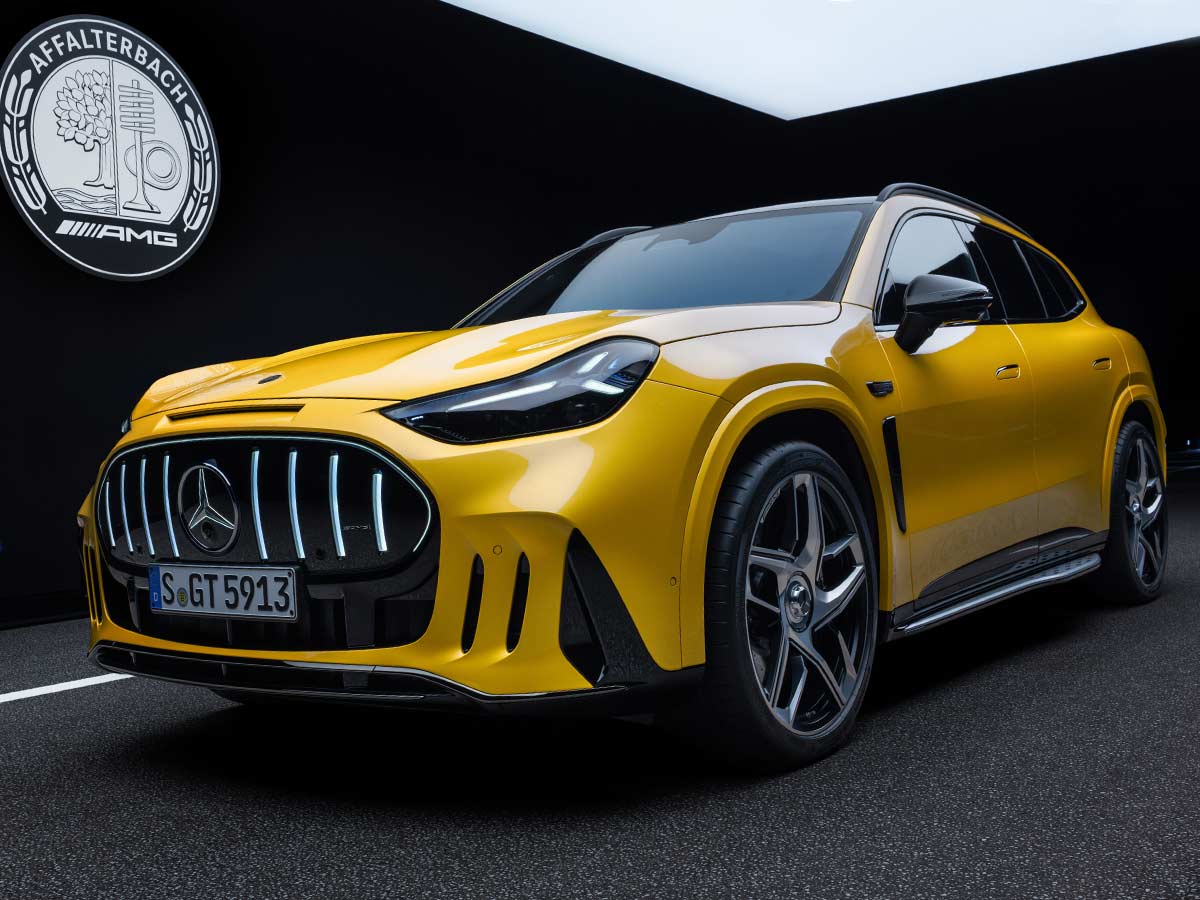
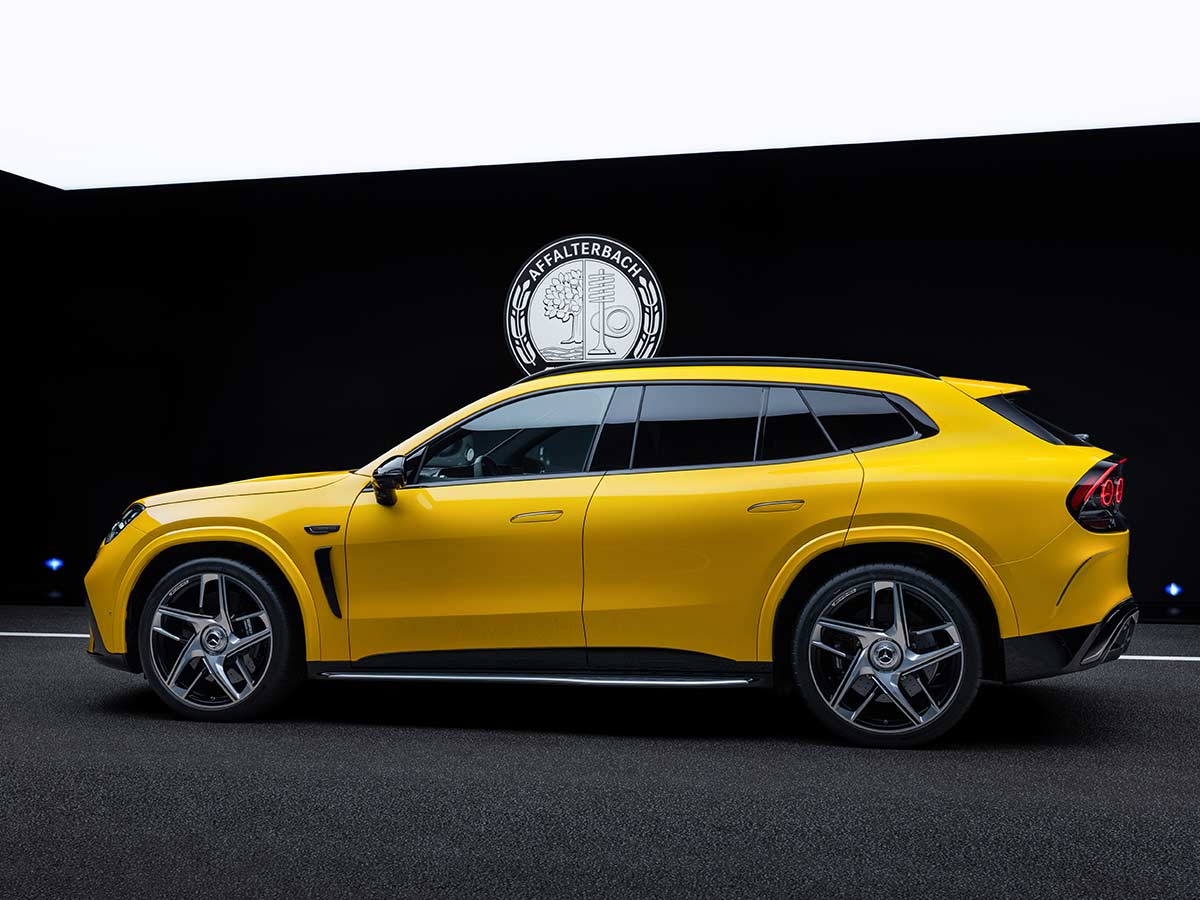
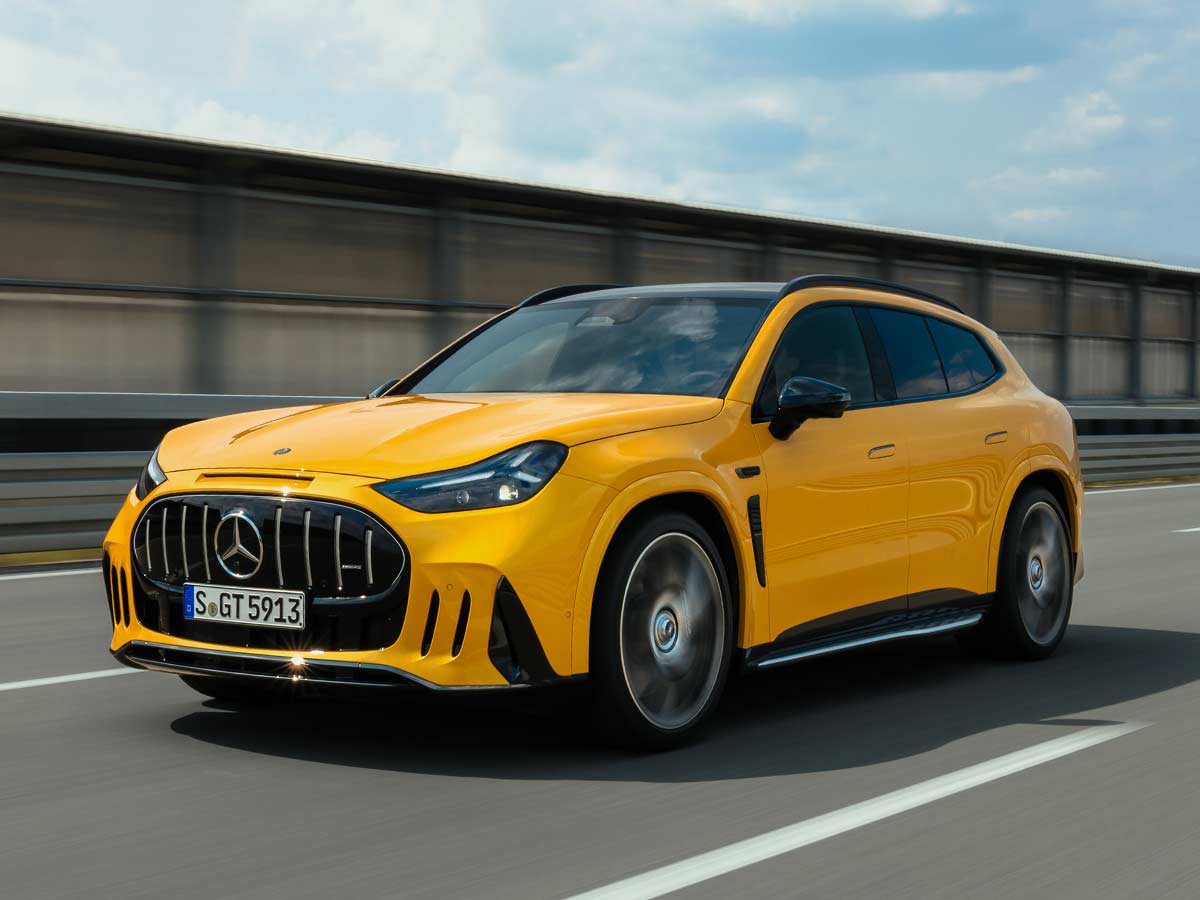
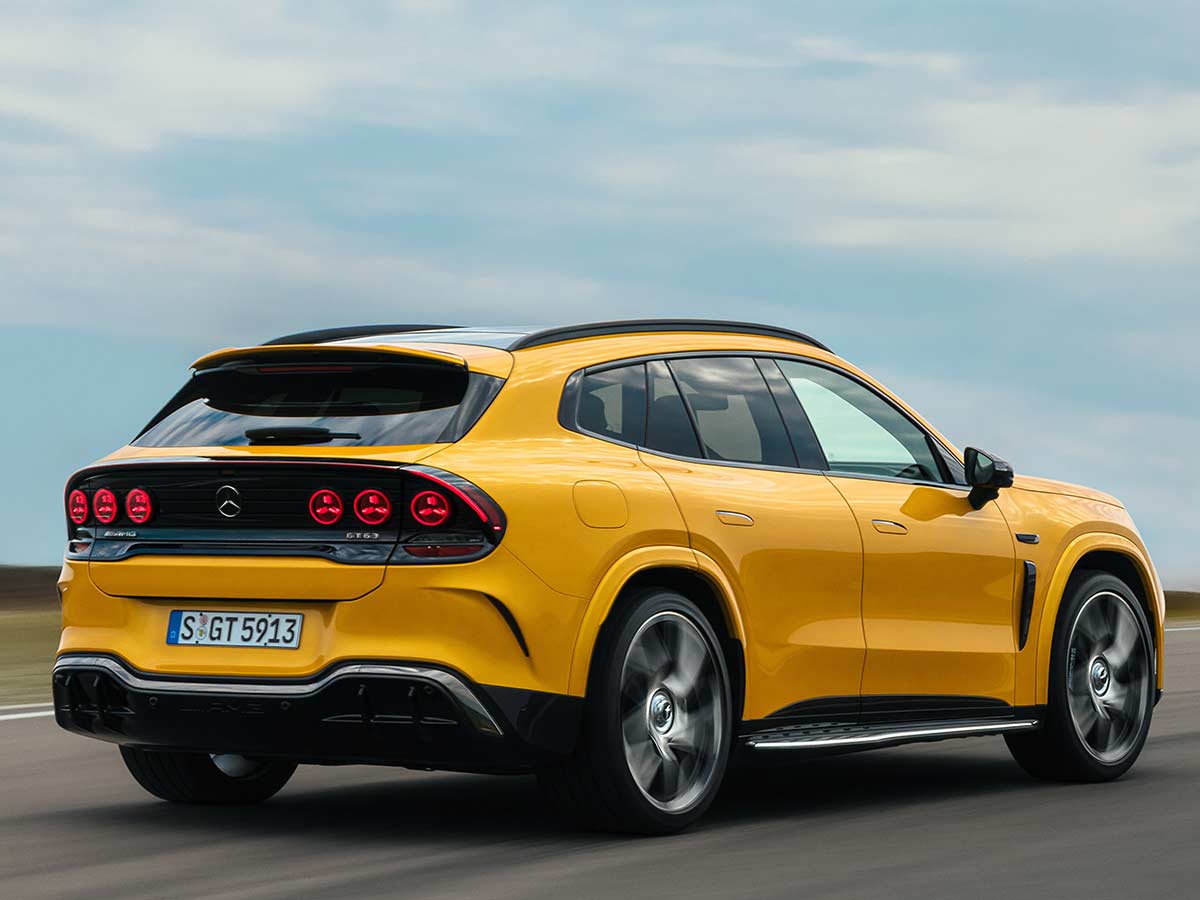
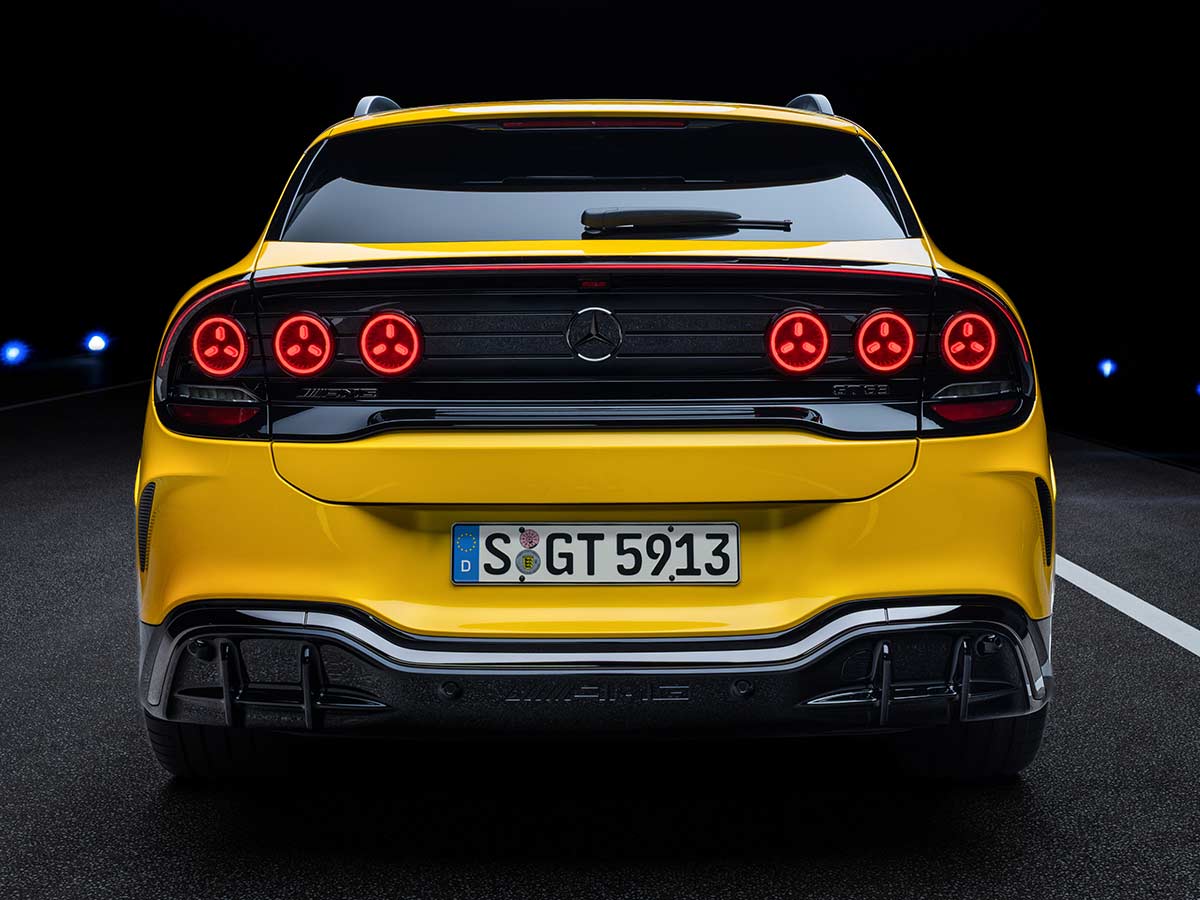
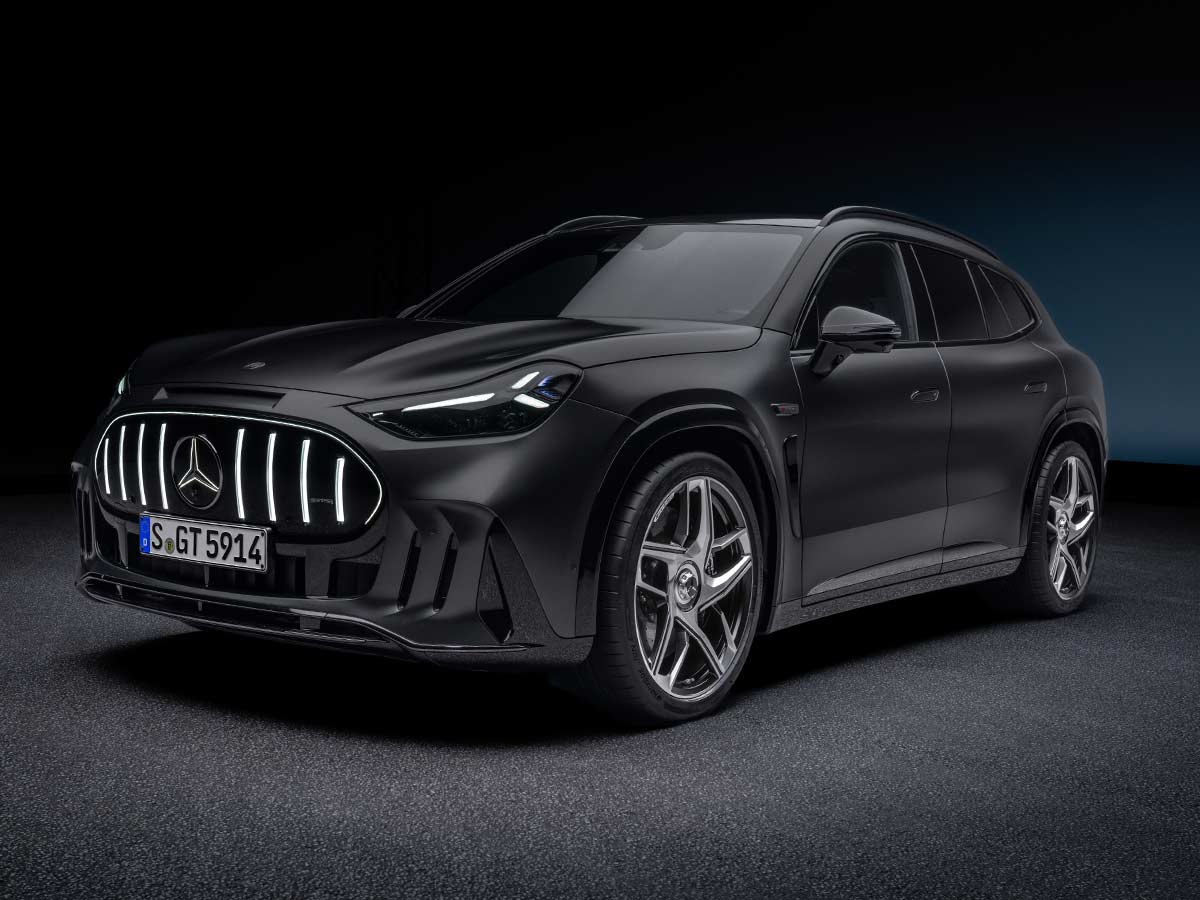
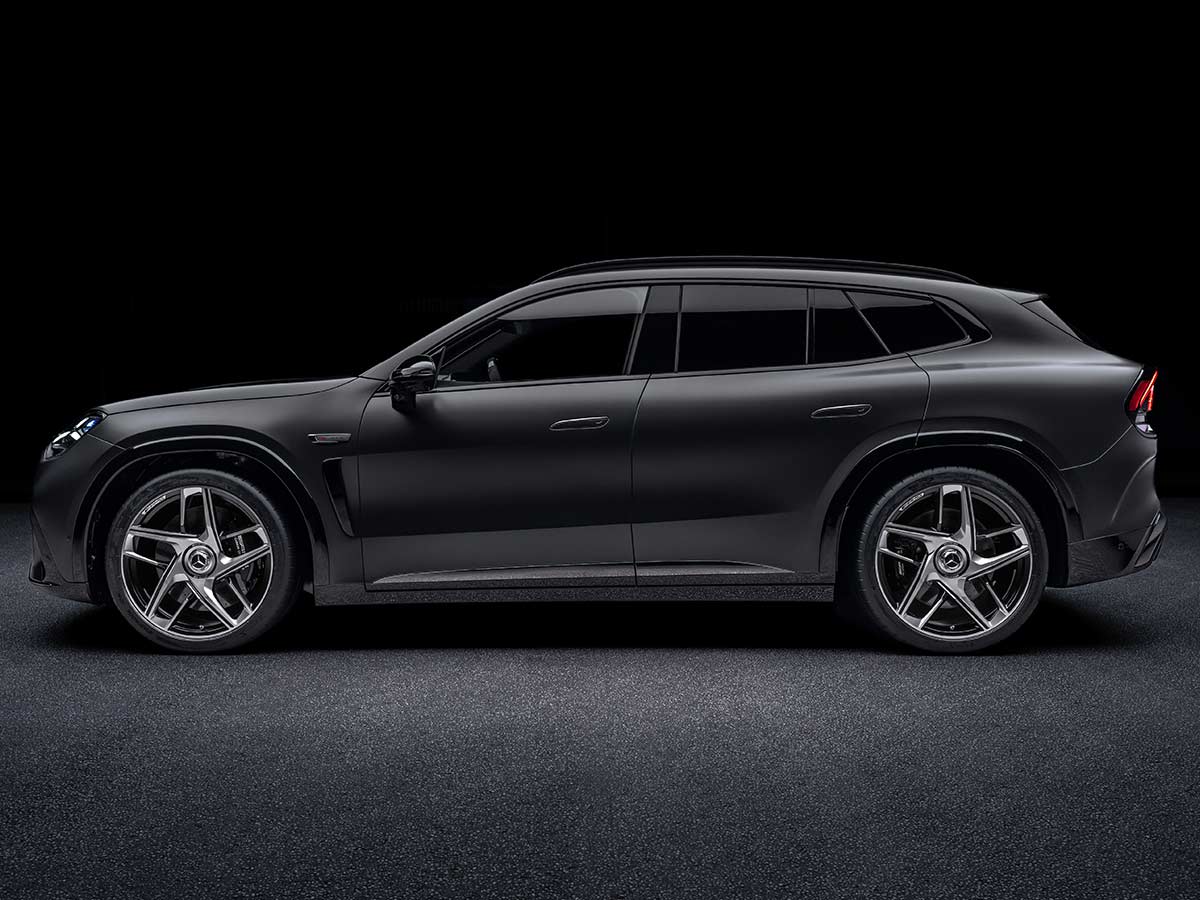
The GT SUV represents a deliberate expansion of AMG’s identity into a different kind of vehicle. Its full-size proportions promise the space and comfort associated with an SUV, while its low-slung roofline, sporty seating position and performance-focused architecture draw from the grand touring tradition.
That distinction matters because a performance vehicle is defined by more than its maximum power. The way it manages weight, controls body movement, distributes torque and maintains output under sustained demand can be just as important as the first burst of acceleration.
AMG’s approach begins with a dedicated electric architecture rather than an existing conventional SUV adapted to accommodate a battery and motors. The AMG.EA platform provides the foundation for the drivetrain, battery packaging and vehicle dynamics systems, allowing these elements to be developed as parts of a coordinated whole.
Mercedes-AMG also places considerable emphasis on lightweight construction and aerodynamic efficiency. The SUV’s deliberately low silhouette reduces its frontal area, while a flat-integrated battery helps preserve cabin space and contributes to the vehicle’s low centre of gravity. The company says its structural and packaging concepts provide weight advantages, although the finished vehicle remains a substantial machine.
The engineering ambition is therefore not to disguise the GT SUV as a sports car. It is to use electric packaging and advanced chassis technology to bring some of the qualities of a sports car into a larger, more versatile format.
Three Models, Two Electric Drivetrains and One Engineering Philosophy
The Mercedes-AMG GT SUV range comprises three variants: the GT 53, GT 55 and GT 63. Although they share the same broad design concept and 800-volt electrical architecture, their propulsion systems differ significantly.
Mercedes-AMG GT 63 SUV
- The flagship
- 860 kW (1,169 hp)
- Three axial-flux motors, up to 2,000 Nm of maximum drive torque and a claimed 0-100 km/h time of 2.5 seconds with a one-foot rollout.
Mercedes-AMG GT 55 SUV
- Three-motor performance
- 600 kW (816 hp)
- Three axial-flux motors and up to 1,860 Nm of maximum drive torque, with the same basic high-performance drivetrain concept as the flagship.
Mercedes-AMG GT 53 SUV
- The entry point
- 400 kW (544 hp)
- Two synchronous electric motors, one at each axle, with a two-speed rear transmission designed to balance immediate acceleration and efficient high-speed cruising.
The distinction between peak and continuous output is especially important in the GT 63 and GT 55. Both are rated at 530 kW (721 hp) of continuous output, despite having different maximum power figures. That specification highlights the emphasis on maintaining substantial performance beyond a brief acceleration event.
For an electric vehicle, peak output describes the maximum power available under the appropriate operating conditions. Continuous output concerns the power the system is designed to sustain. Battery temperature, motor cooling and power electronics all influence how effectively a vehicle can maintain high output over time.
The GT 53 takes a different route. Its two-motor system produces 400 kW, with a rated continuous output of 270 kW (367 hp). It is still a powerful performance SUV, but its mechanical arrangement prioritises a simpler two-motor configuration and a rear transmission with two distinct ratios.
The range therefore offers more than three power levels. It presents two approaches to electric propulsion within a common performance-oriented vehicle concept.
The Axial-Flux Motor: Compact Engineering With Serious Consequences
The most distinctive mechanical feature of the GT 63 and GT 55 is the use of three axial-flux electric motors. Unlike the more familiar radial-flux motor, in which magnetic flux travels radially across the air gap, an axial-flux motor arranges its magnetic interaction along the axis of rotation.
This different geometry can enable a motor to deliver high torque and power density in a compact package. That makes it particularly interesting for a performance SUV, where engineers must accommodate substantial electrical hardware without surrendering passenger space or compromising the vehicle’s proportions.
In the GT SUV, the motors are integrated into high-performance electric drive units, or HP.EDUs, positioned at the front and rear axles. The rear unit houses two axial-flux motors, each paired with a compact input planetary gearbox. The front unit contains a single axial-flux motor, a spur gearbox with an integrated parking lock and a liquid-cooled silicon-carbide inverter.
The rear motors and their gearboxes are oil-cooled. At the front, the motor is designed primarily to provide additional power or traction when the driving situation demands it. A disconnect unit can decouple it under light loads, reducing the mechanical drag associated with keeping the motor connected to the wheels.
This is a useful distinction in an electric performance vehicle. All-wheel drive provides traction and acceleration benefits, but operating every component continuously is not always the most efficient solution. Disconnecting the front motor when it is unnecessary allows the drivetrain to reduce losses, then reconnect it when acceleration or regenerative braking calls for additional capability.
The drive units also employ silicon-carbide inverters. These devices convert the battery’s direct-current electricity into the alternating current needed by the motors, while controlling the delivery of electrical power. Their ability to operate under demanding voltage, current and temperature conditions is central to the performance of the system.
The three-motor arrangement allows the GT 63 and GT 55 to combine propulsion across both axles with torque distribution between the rear wheels. The GT 63’s maximum drive torque reaches 2,000 Nm, while the GT 55 delivers 1,860 Nm.
These figures should be understood as drivetrain specifications rather than a direct prediction of how the vehicle will behave in every situation. Traction, road conditions, temperature and the vehicle’s control systems all influence how effectively that output reaches the road.
Why the GT 53 uses two synchronous motors
The GT 53 dispenses with the three axial-flux motors in favour of two synchronous electric motors, one at the front and one at the rear. Its combined maximum output is 400 kW, with 800 Nm of maximum drive torque.
Its rear axle receives a two-speed transmission, an important difference from the flagship’s compact planetary-gear arrangement. First gear uses a short ratio to support acceleration from a standstill and operation in urban traffic. Second gear is intended to deliver power more efficiently at higher road speeds, allowing the motor to operate at lower rotational speeds during motorway cruising.
Electric motors can deliver useful torque across a broad operating range, but a multi-speed transmission can still offer advantages when the design seeks to balance low-speed response with sustained high-speed efficiency.
The front motor in the GT 53 also functions as a booster. It supplies extra thrust and traction when needed, then disconnects under light loads to reduce drag losses.
This makes the entry-level model an interesting engineering proposition in its own right. Its drivetrain differs from the flagship in hardware and operating strategy, rather than simply offering a reduced software power limit.
The 800-Volt Battery: Built for More Than a Short Burst of Speed
High-performance electric vehicles face a problem that becomes increasingly important as power rises: producing extraordinary output for a few seconds is one challenge, but controlling heat while sustaining that output is another.
The Mercedes-AMG GT SUV addresses this through its AMG High Performance Electric Battery. The system uses an 800-volt electrical architecture and directly cooled cylindrical cells, with usable battery capacities of 106 kWh and 128 kWh depending on the configuration.
The larger battery comprises 22 modules, while the smaller version uses 18. Mercedes-AMG cites a WLTP range of up to 700 kilometres for the 128 kWh configuration, although the actual result depends on the selected model and operating conditions.
The cells are unusually tall and narrow, measuring 105 mm in height and 26 mm in diameter. Their geometry reduces the distance heat must travel from the cell core to its surface, helping the cooling system manage temperatures more effectively.
Each cylindrical cell sits within a plastic module, and an electrically non-conductive oil flows directly around the individual cells. This approach allows heat to be removed at the cell level rather than relying solely on cooling the outside of a battery pack.
The cell housing is made from laser-welded aluminium, which Mercedes-AMG identifies as lighter than steel and effective at conducting heat and electricity. A full-tab cell design reduces internal resistance, supporting high rates of charging and discharging.
The battery chemistry also plays a role. Its cathode uses nickel, cobalt, manganese and aluminium, commonly abbreviated as NCMA, while the anode contains silicon. Mercedes-AMG specifies energy density of more than 298 Wh/kg for the cells, alongside high charging capability and long service life as design objectives.
The relevance of these details becomes clearer under sustained load. When a vehicle repeatedly accelerates hard, drives quickly for extended periods or accepts very high charging power, electrical resistance generates heat. If temperatures move outside the system’s preferred operating range, power delivery or charging performance may need to be restricted.
Direct cell cooling, low internal resistance and coordinated thermal management are intended to help the GT SUV maintain its performance more consistently. They also help prepare the battery for fast charging without treating charging speed as a separate engineering problem.
One battery architecture, two capacity options
The 106 kWh battery is rated for maximum DC charging power of up to 600 kW. The 128 kWh version raises that figure to 710 kW under the specified conditions.
Mercedes-AMG states that the larger battery can add up to 450 kilometres of WLTP range in ten minutes, while the smaller configuration is quoted at up to 380 kilometres in the general technical summary. The detailed specification tables provide variant-specific figures, including up to 454 kilometres for the larger battery and up to 386 kilometres for the smaller one in the GT 63 and GT 55.
These are manufacturer figures, not a guarantee that every charging stop will produce the same result. Charging power varies with the station, battery temperature, state of charge and other operating conditions. Maximum charging power is also a peak capability, not the rate maintained throughout an entire session.
For the GT 63 and GT 55, the stated time to charge from 10 to 80 per cent is 11 minutes with the 106 kWh battery and 12 minutes with the 128 kWh battery. At a 400 kW charging station, the corresponding quoted times are 14 and 16 minutes.
The apparent distinction between the battery’s capacity and the time required to charge it is important. A larger battery contains more energy, but its charging performance also depends on how much electrical power the pack can accept and how efficiently heat is managed. The GT SUV’s battery is designed to address both factors.
The system can also charge at 400-volt stations. It automatically switches from 800-volt to 400-volt operation, broadening compatibility with charging infrastructure that does not support the higher voltage.
Mercedes-AMG lists support for five charging standards: CCS2 in Europe, GB/T in China, CHAdeMO in Japan, CCS1 in South Korea and NACS in the United States. The practical benefit of that multi-standard approach depends on the market and the charging equipment available there.
Managing temperature across the entire vehicle
The battery is only one part of the thermal equation. Motors, inverters and other electrical systems also generate heat, and their requirements change depending on how the car is being driven.
The GT SUV uses a Central Coolant Hub, or CCH, to coordinate cooling through a compact assembly of pumps, sensors and valves. Rather than distributing cooling capacity indiscriminately, the system can direct it towards the components that need it most.
For example, if the battery is already within its preferred temperature range but the electric drive units require additional cooling, the system can prioritise the motors and the Onebox braking system. A chiller, main and auxiliary radiators, and intelligently controlled valves work together within the broader cooling circuit.
The aim is to make thermal management responsive to the vehicle’s immediate needs, whether it is operating at high load in hot weather or preparing for another fast-charging stop.
That integration is central to the GT SUV’s performance philosophy. The battery, drive units and cooling system are not independent pieces of equipment. Their combined behaviour determines how much power can be delivered, how quickly energy can be replenished and how consistently the vehicle can repeat demanding tasks.
Acceleration Is Only the Beginning: The Importance of Continuous Power
The flagship GT 63 SUV’s headline figures are striking. Mercedes-AMG quotes a 0-100 km/h time of 2.5 seconds using a one-foot rollout measurement, and 2.7 seconds without rollout. The corresponding 0-200 km/h times are 6.8 and 7.2 seconds.
The top speed is rated at 270 km/h when equipped with the Driver’s Package. The model’s maximum output reaches 860 kW, but its continuous output is 530 kW.
That last figure deserves attention. Electric performance discussions often focus on the largest possible power number, even though the conditions under which a vehicle can sustain its output may be more relevant to repeated acceleration or prolonged high-speed driving.
The GT 63’s boost duration is listed at 63 seconds. The GT 55 has a stated boost duration of 55 seconds, while the GT 53 is listed at 53 seconds. These figures describe the manufacturer’s specified boost capability and should not be confused with the time required to accelerate between two speeds.
For the GT 55, maximum output is 600 kW (816 hp), with 530 kW of continuous output. It reaches 100 km/h in 2.8 seconds with rollout or 3.1 seconds without, and 200 km/h in 9.4 or 9.9 seconds, respectively.
The GT 53 is rated at 400 kW (544 hp), with 270 kW of continuous output. Its quoted 0-100 km/h time is 3.8 seconds with rollout and 4.2 seconds without, while 0-200 km/h takes 13.8 or 14.6 seconds.
The one-foot rollout distinction matters when interpreting acceleration claims. In this measurement, the initial 30.48 centimetres of movement are excluded from the timed distance. Figures measured with rollout therefore should not be compared directly with figures that include the full distance from rest.
There is another useful distinction between acceleration and sustained performance. A vehicle can deliver a spectacular launch yet require its output to be reduced if battery or motor temperatures rise. By specifying substantial continuous output and investing in direct cell cooling, AMG is signalling that repeatability forms part of the GT SUV’s engineering brief.
The manufacturer has also developed an energy-management strategy for racetrack use, reinforcing the idea that maximum power is not always the best way to achieve the best overall performance.
AMG ACTIVE RIDE CONTROL+: Teaching a Large SUV to Stay Composed
Power alone cannot make a vehicle feel agile. The chassis must manage weight transfer, maintain tyre contact and control the movements that occur when a heavy vehicle accelerates, brakes or changes direction.
The GT SUV’s answer is AMG ACTIVE RIDE CONTROL+, a newly developed suspension system that combines adjustable air springs with active hydraulic control. It is standard on the GT 63 and optional on the GT 55.
Its defining feature is active pitch and roll stabilisation. Conventional anti-roll bars mechanically resist differences in suspension movement between the two sides of an axle. In the AMG system, active hydraulic elements perform that task, with a central pump and controlled valves adjusting the pressure needed to support the body.
The system can regulate roll support and roll stiffness according to the selected driving programme. Through a corner, it is designed to resist excessive body lean and maintain precise lateral control. During braking, it can reduce the tendency for the front of the vehicle to dive, while under acceleration it works to limit the rise of the front end.
These movements are commonly described as roll and pitch. Roll occurs when the body leans from side to side during cornering, while pitch describes its forward or rearward rotation during braking and acceleration. Controlling both is particularly relevant in a full-size SUV, where the height and mass of the body can make weight transfer more pronounced.
The objective is not simply to make the suspension stiff. Excessively firm suspension can reduce comfort over uneven surfaces, while a softer arrangement may permit more body movement during aggressive driving. AMG’s active system is intended to reconcile those competing demands by adapting the vehicle’s support to the situation.
The suspension also incorporates triple-stage adjustable air springs, an 8.2-litre pressure reservoir and hydraulically interconnected dampers. These components enable near-real-time ride-height adjustments, including lowering the vehicle at speed to reduce aerodynamic drag.
A multi-link suspension layout is used at both the front and rear. Mercedes-AMG says its geometry is designed to maintain precise wheel contact under high lateral loads and to limit the influence of drivetrain forces on the handling response. Forged aluminium suspension links, steering knuckles and wheel carriers at the front axle help reduce unsprung mass.
Unsprung mass refers to the components that move directly with the wheels rather than being supported by the springs. Reducing it can help a suspension respond more effectively to changes in the road surface, because the wheel assembly has less mass to control.
For a vehicle designed to combine long-distance comfort with high-speed capability, these details are not incidental. They form the mechanical basis for controlling a large body without abandoning the compliance expected of a luxury vehicle.
Rear-wheel steering and a changing wheelbase
Active rear-axle steering is standard across the GT SUV range. The rear wheels can adjust their steering angle by up to six degrees, changing how the vehicle responds at different speeds.
Below 80 km/h, the rear wheels turn in the opposite direction to the front wheels. This creates the effect of a shorter wheelbase, helping the SUV change direction more readily and manoeuvre in tighter spaces.
Above 80 km/h, the rear wheels turn in the same direction as the front wheels, with the rear steering angle reaching up to one degree. This creates the effect of a longer wheelbase, helping the vehicle remain stable during faster lane changes and directional transitions.
The wheelbase itself does not physically change. Instead, the relationship between the front and rear steering angles alters the vehicle’s response, making the car behave as though its effective wheelbase were shorter or longer.
This is particularly useful in a performance SUV because the demands of low-speed manoeuvring and high-speed stability are very different. Rear-wheel steering allows the chassis to address both without relying solely on the front wheels.
Brakes matched to the drivetrain
The braking hardware also varies by model.
- GT 53 SUV: Steel brakes on the front and rear axles.
- GT 55 SUV: Steel brakes as standard, with carbon-ceramic brakes available as an option.
- GT 63 SUV: Carbon-ceramic brakes fitted as standard on both axles.
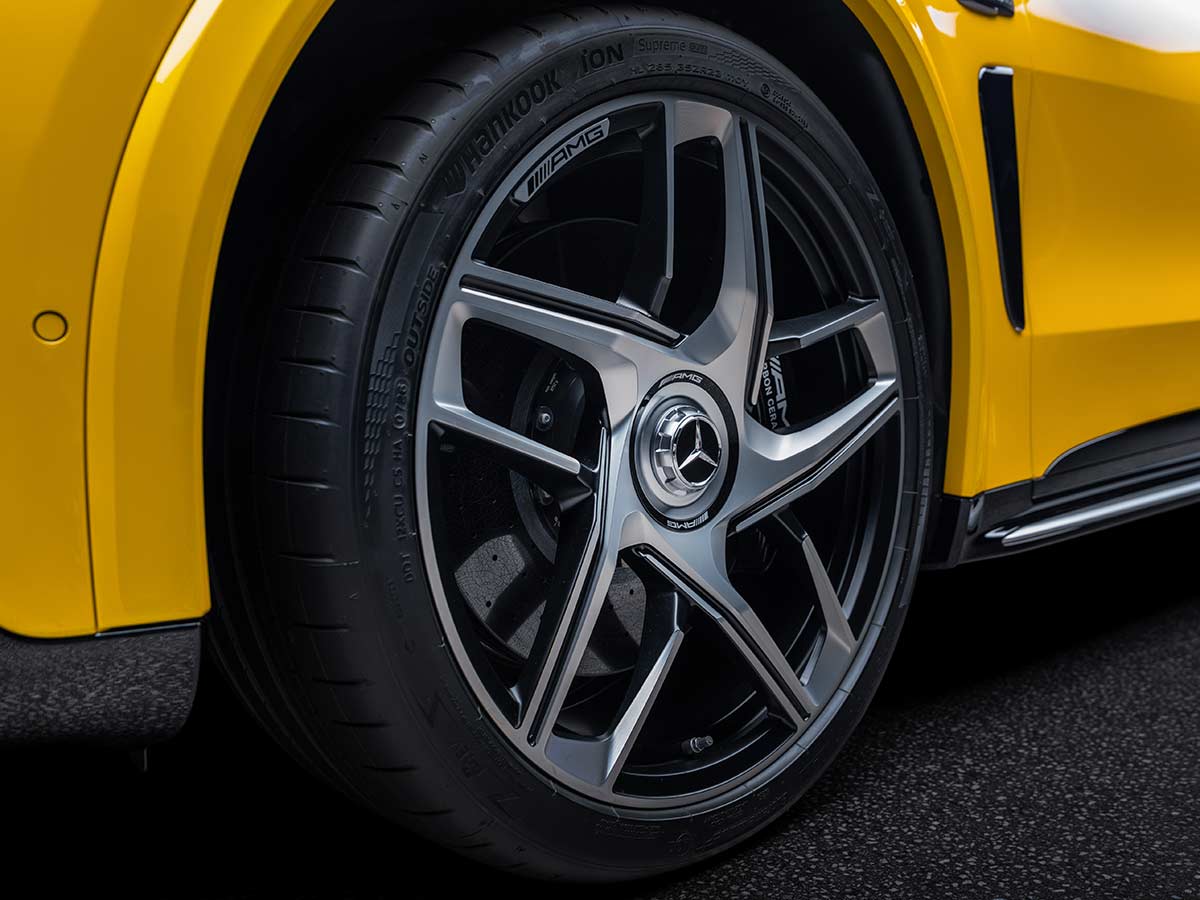
Carbon-ceramic systems are associated with high-performance applications where heat management under demanding braking is important. Their presence as standard equipment on the flagship reflects the level of performance the chassis is intended to support.
The complete dynamic package includes AMG Performance 4MATIC+ all-wheel drive, active rear steering and the electronically managed suspension. Together, these systems allow the vehicle to adjust its behaviour according to speed, available traction and the driver’s selected programme.
AMG Performance 4MATIC+: All-Wheel Drive With More Than One Personality
The GT SUV’s all-wheel-drive system is designed to vary how power reaches the road rather than maintain a fixed front-to-rear distribution.
In the GT 63 and GT 55, three independent axial-flux motors provide the hardware for this arrangement. The two rear motors also allow targeted torque vectoring, which varies the drive torque delivered to each rear wheel.
Torque vectoring can influence how a vehicle rotates through a corner by changing the distribution of driving force across the axle. It complements the suspension and steering systems, helping the car respond more precisely to the driver’s inputs.
The system continuously evaluates the driving situation and can transition between rear-wheel drive and all-wheel drive. According to Mercedes-AMG, the transition is imperceptible to the driver. When sensors detect wheelspin on slippery surfaces, the control system can adjust torque distribution rapidly to help maintain traction and stability.
The GT 53 follows the same broad principle with its two synchronous motors. Its front motor engages automatically when additional traction is required and can disconnect when the front axle does not need to contribute propulsion.
This arrangement gives the GT SUV a different relationship with all-wheel drive from a conventional mechanically linked system. The distribution of power can be managed through the electric motors and their control software, with the response shaped around the conditions rather than a single fixed mechanical relationship.
The practical objective is straightforward: deliver the traction needed for acceleration and low-grip surfaces without requiring every component to operate at full engagement in every situation.
AMGFORCE Sport+: Bringing Engine Character Into an Electric SUV
An electric drivetrain can provide immediate acceleration without reproducing the familiar sounds and sensations of a combustion engine. For some performance-car enthusiasts, that changes the emotional experience as much as it changes the mechanical one.
Mercedes-AMG addresses this with AMGFORCE Sport+, a driving programme that recreates the sound and selected sensations of an AMG combustion engine. The GT 63 and GT 55 reproduce the character of AMG V8 engines, while the GT 53 simulates an AMG six-cylinder.
The sounds are based on recordings of reference vehicles rather than being generated as arbitrary synthetic effects. Mercedes-AMG says the development process used more than 100 measurements with 16 microphones, including reference vehicles such as the Mercedes-AMG GT R.
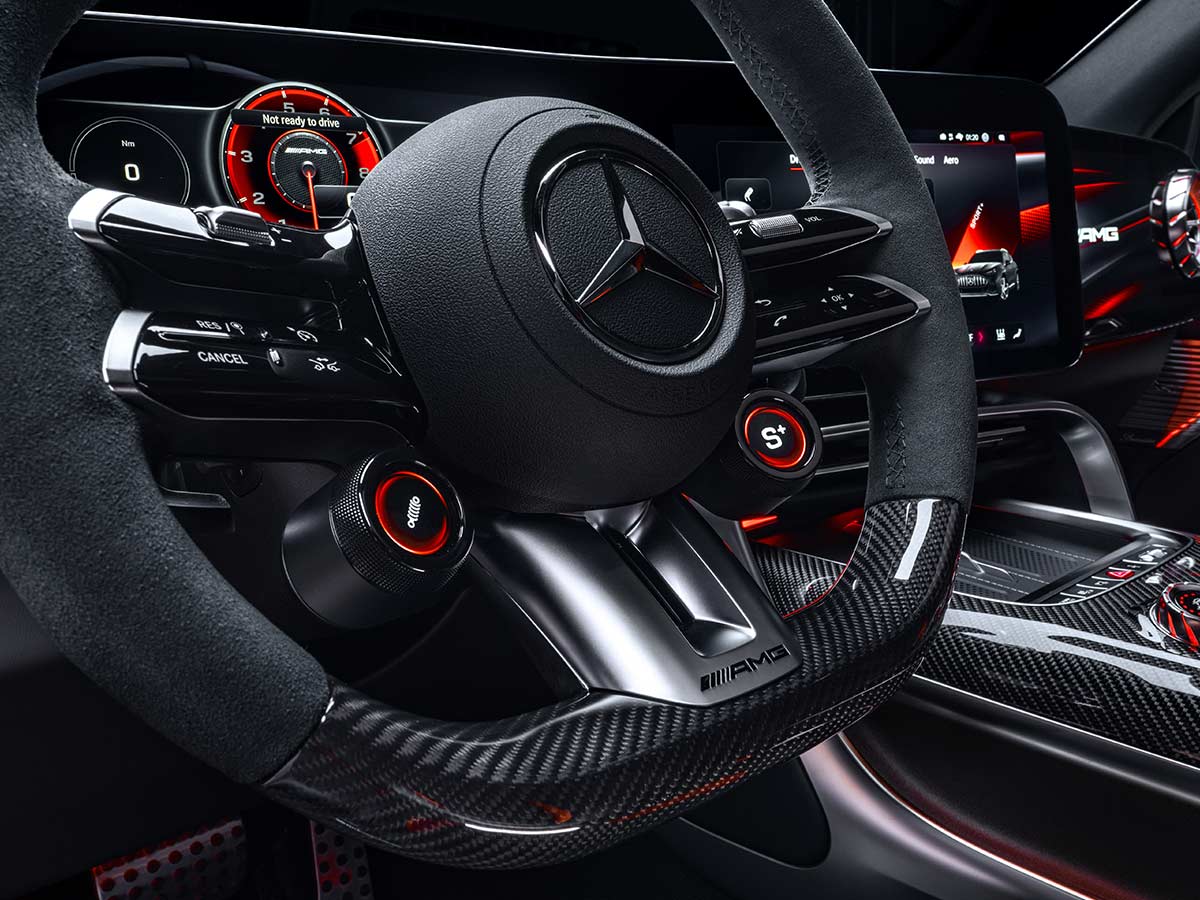
The sound changes in real time according to driving inputs, including acceleration and simulated gear changes. Steering-wheel paddles allow the driver to request virtual shifts, while integrated seat shakers add physical feedback to the experience.
The result is a deliberately layered driving experience. Sound, visual displays and physical feedback work together to make the vehicle’s acceleration feel more closely connected to the driver’s actions.
That approach is not a substitute for a combustion engine. It is a different way of creating feedback in a car whose propulsion comes from electric motors. Whether a driver prefers a quiet, smooth electric experience or a more theatrical performance mode is a matter of taste, and the GT SUV’s configurable sound settings acknowledge that distinction.
Drivers can adjust sound profiles using settings such as Powerful, Balanced and Silent, as well as a scale ranging from Classic to Futuristic. The vehicle also provides specific sounds for functions such as approaching, unlocking, locking and charging.
Mercedes-AMG has outlined additional acoustic modes, including Launch Control, Boost and Showtime, as part of its planned sound experience.
AMG RACE ENGINEER: Adjusting the car’s responses
In the GT 63 and GT 55, AMG RACE ENGINEER gives drivers more direct control over the relationship between drivetrain response and vehicle dynamics.
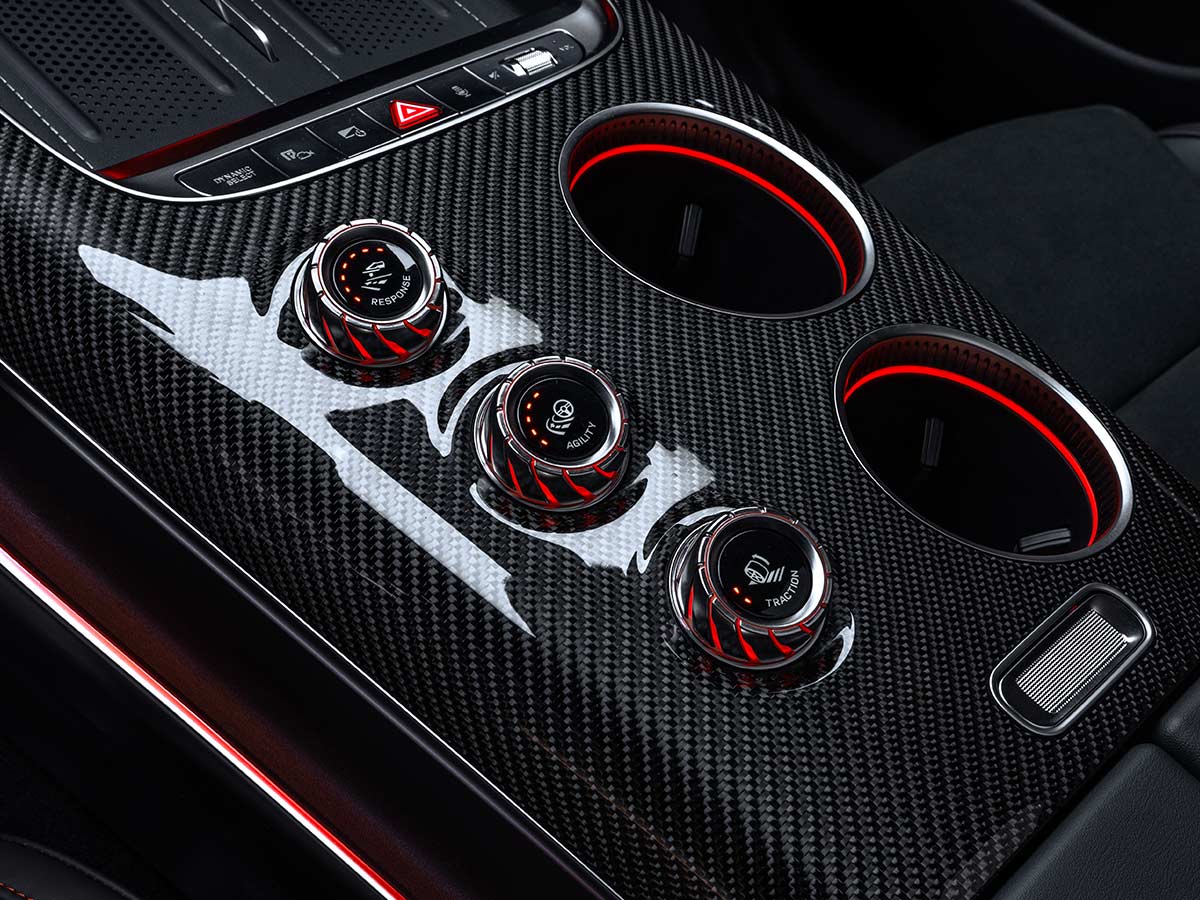
Its system combines a high-performance control chip with three rotary controls positioned in the centre console. These allow adjustment of response, cornering behaviour and traction control.
Response Control changes how directly the electric motors react to accelerator-pedal inputs. The adjustment ranges from a more comfortable response to a sharper delivery of power.
Agility Control influences cornering behaviour through variable torque distribution. In the specified RACE, AMGFORCE Sport+ and Sport conditions with ESP switched off, it allows the driver to explore a range of responses from understeer towards controlled oversteer.
Traction Control offers nine intervention levels in the specified performance programmes when ESP is switched off. This lets the driver adjust how much wheel slip the control system permits.
These are advanced settings intended for drivers who want to shape the car’s behaviour more precisely. They do not replace the underlying chassis engineering; they provide a way to adjust how the available hardware and software respond to different driving preferences.
AEROKINETICS: When the Bodywork Becomes Part of the Chassis
The GT SUV’s aerodynamics are designed to balance three objectives: reducing drag, maintaining stability and managing cooling airflow.
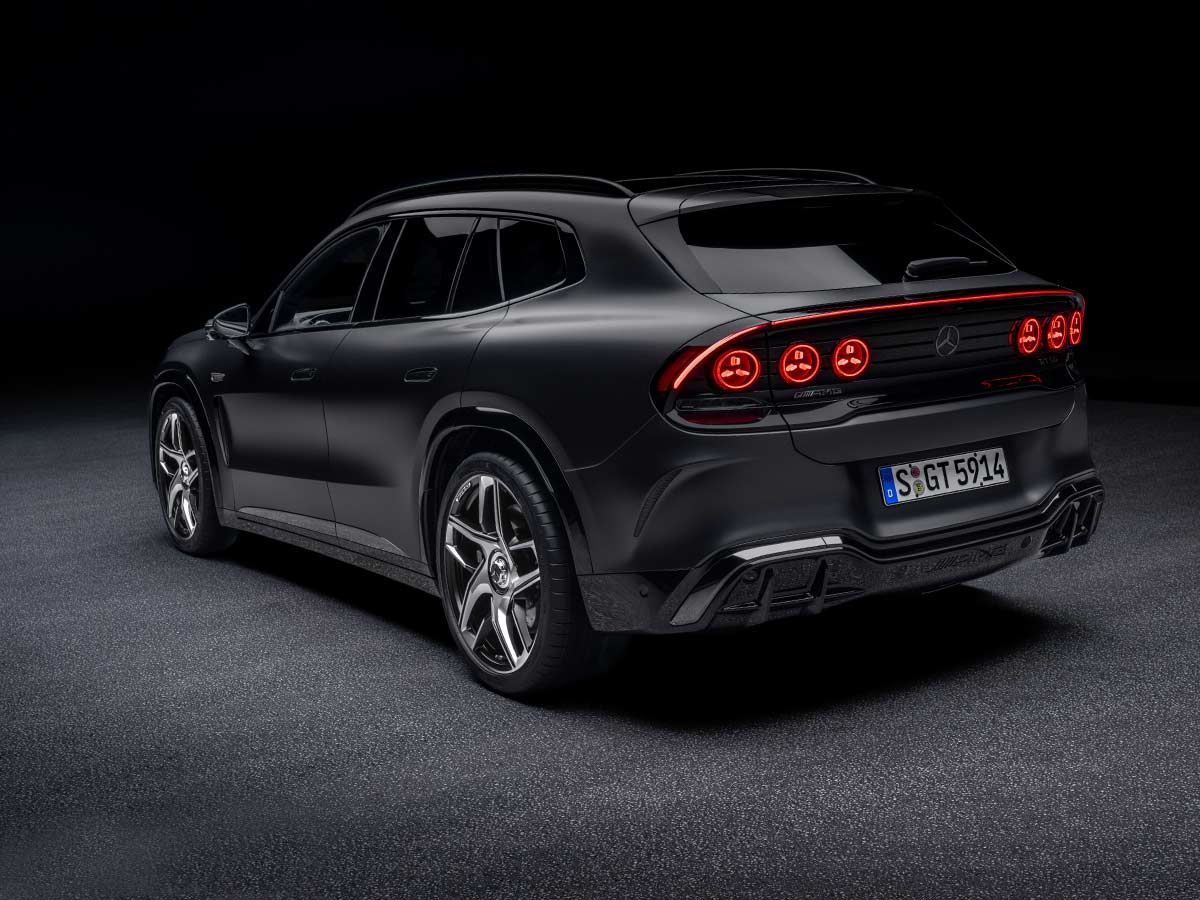
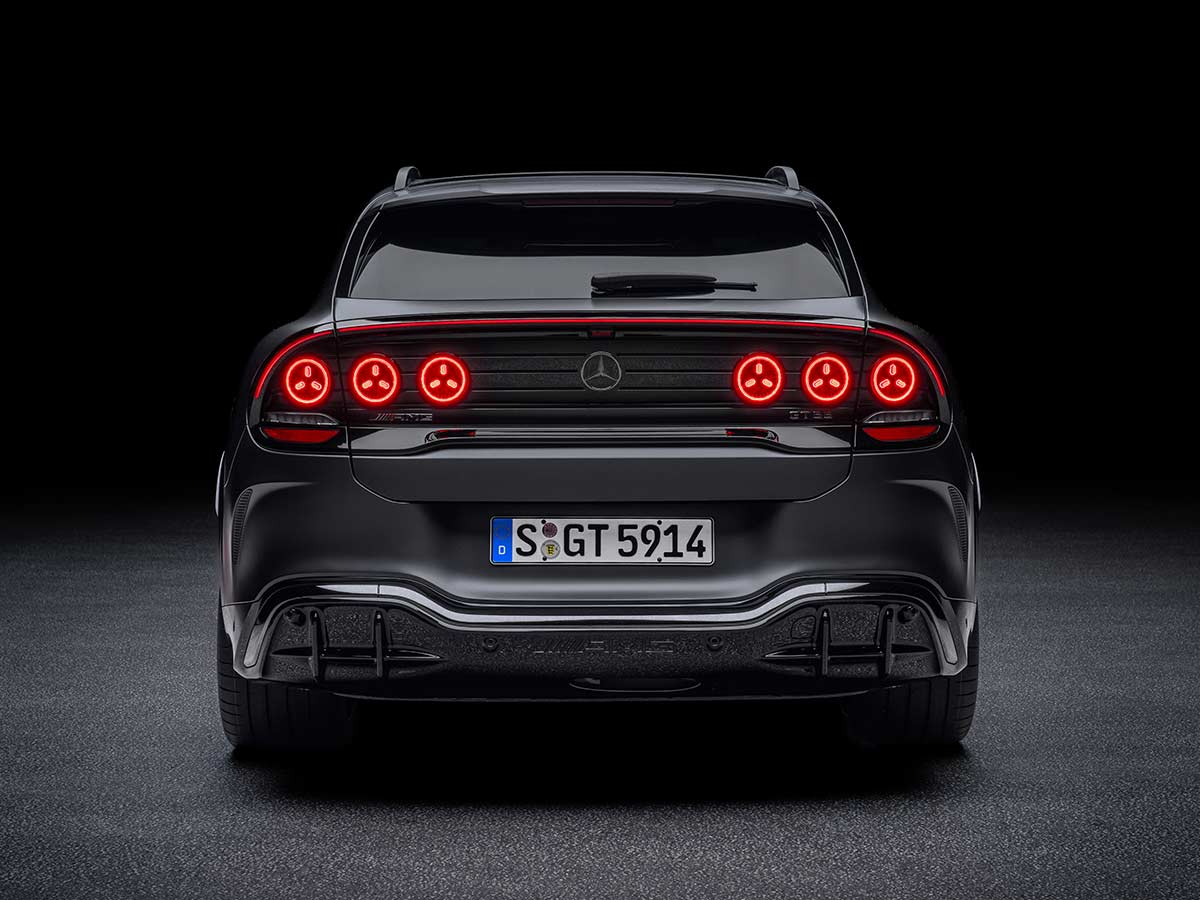
At low speeds, the active roof spoiler on the GT 63 and GT 55 remains integrated into the rear silhouette. From 150 km/h, it can adjust its position according to speed, acceleration and the vehicle’s dynamic state.
During more demanding driving, the spoiler can adopt a steeper angle to generate aerodynamic effects intended to improve stability, traction and balance. Its operation is coordinated with the position of the front Airpanel.
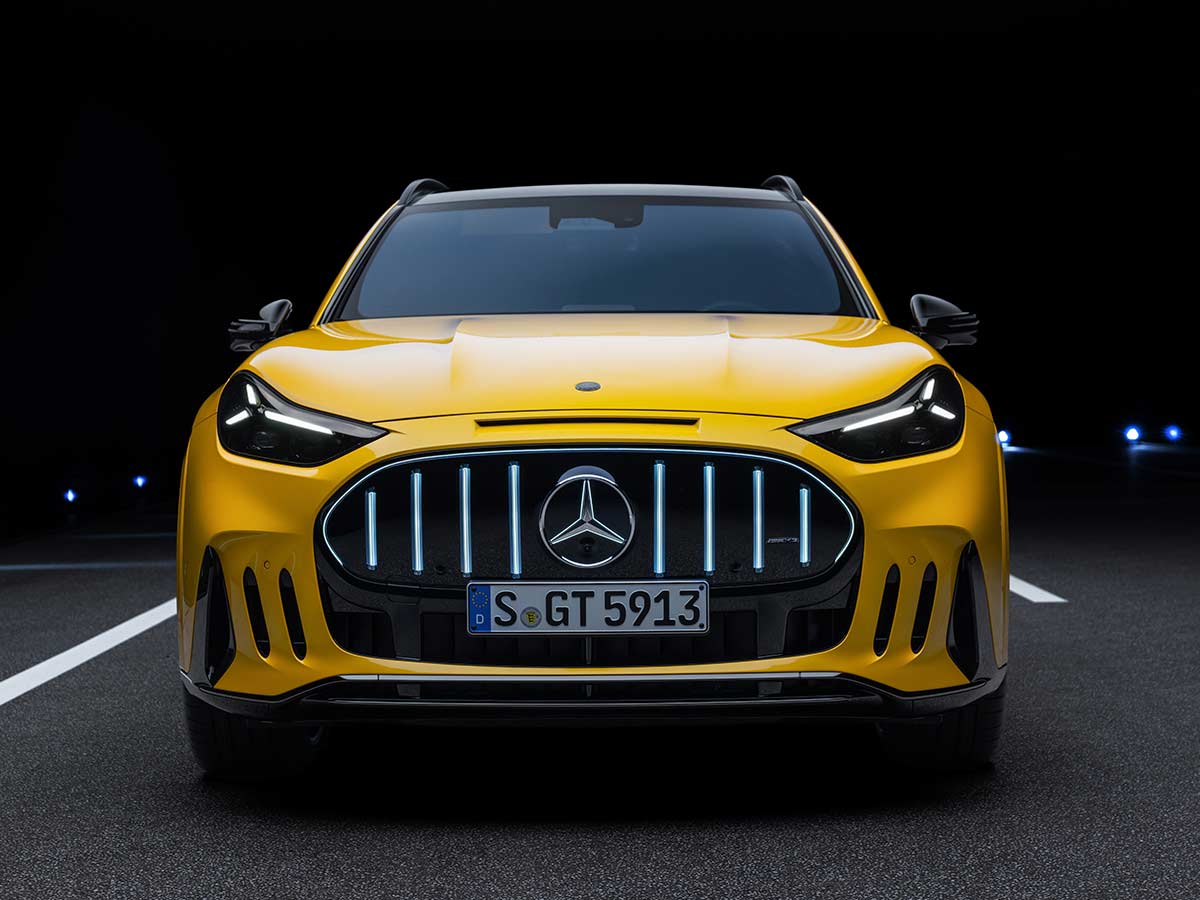
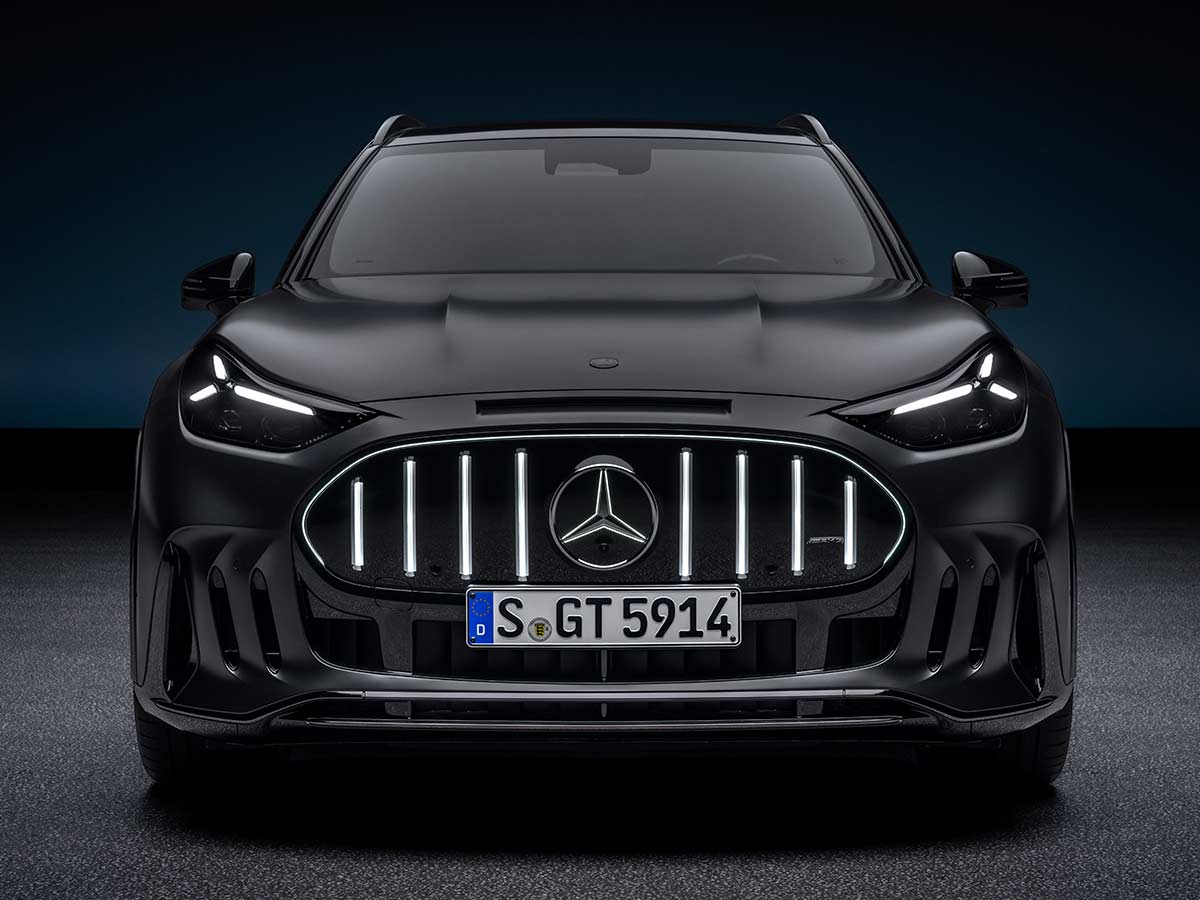
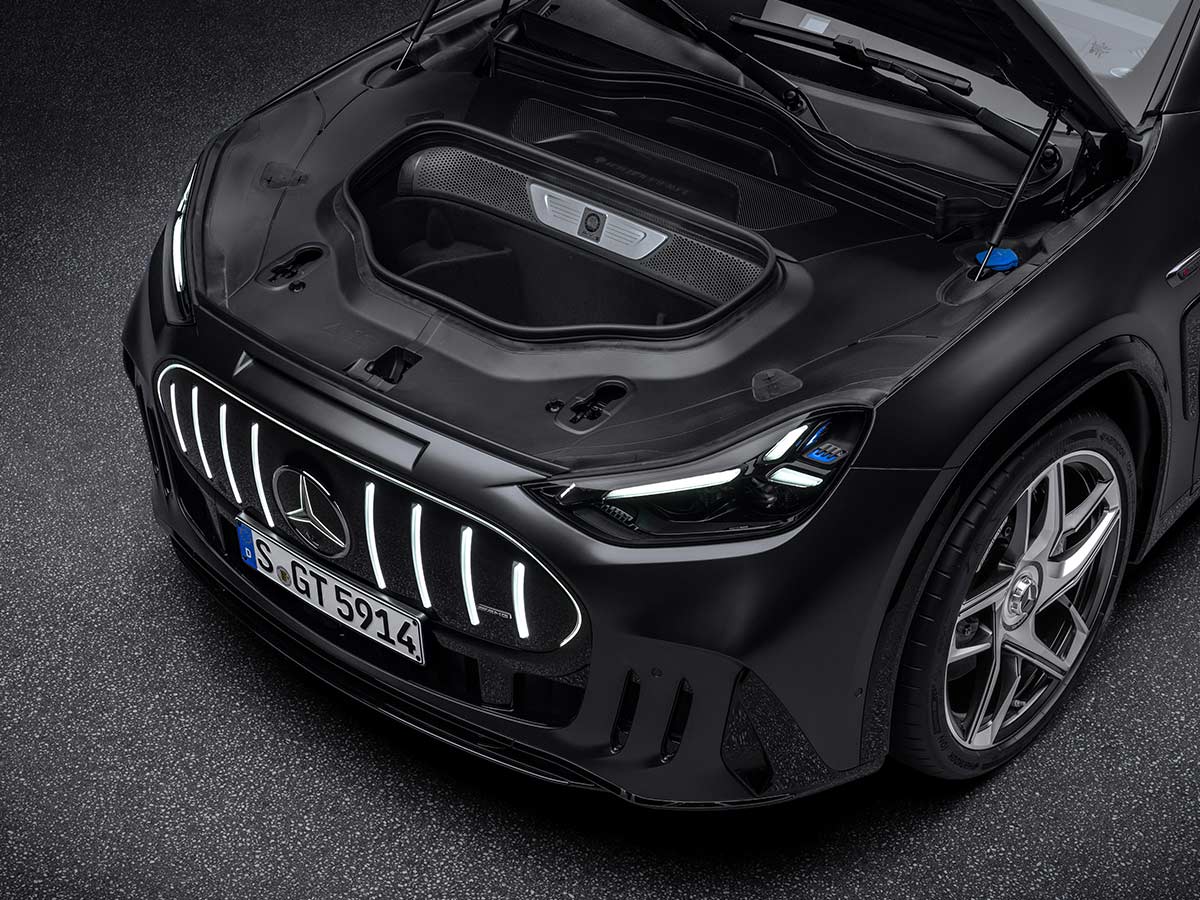
The Airpanel uses vertical slats in the front bumper to regulate cooling airflow. Under normal conditions, the slats remain closed to minimise drag. When the vehicle’s thermal requirements increase and cooling airflow becomes necessary, they open.
This is an example of active aerodynamics working alongside the thermal-management system. Opening the front airflow passages can help remove heat, while closing them when cooling demand is lower reduces the amount of air passing through the vehicle.
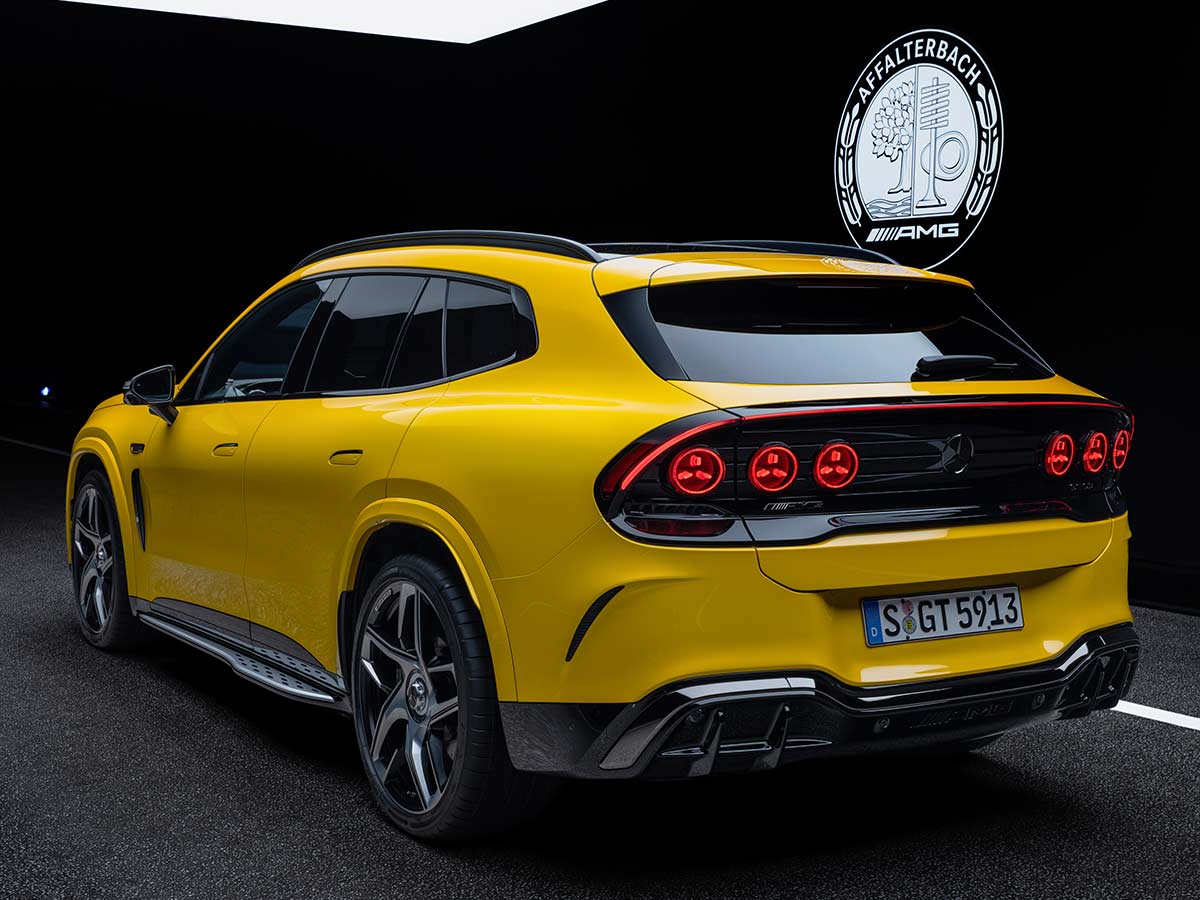
The wider body shape contributes to the same effort. The GT SUV has a steep nose, a long wheelbase, broad shoulders and a roofline that slopes towards the rear. Mercedes-AMG specifies a drag coefficient of 0.27 for the GT 63 and GT 55, compared with 0.28 for the GT 53.
The flagship models have a listed frontal area of 2.80 m². Frontal area matters because aerodynamic drag depends not only on how efficiently air flows around a vehicle but also on the area presented to the oncoming air.
At motorway speeds, reducing drag can help limit the energy required to maintain speed. It is one reason the vehicle’s lower roofline and active aerodynamic components have practical significance beyond their visual effect.
The design must still accommodate the attributes expected of a full-size SUV. Mercedes-AMG describes the packaging as balancing a flat-integrated battery, generous headroom, interior space and commanding ground clearance.
That combination is central to the vehicle’s identity. The GT SUV is not simply a tall performance car, nor is it shaped like a traditional upright utility vehicle. Its proportions are designed to express a sporting character while retaining the essential usability of a large SUV.
Inside the GT SUV: A Grand Touring Cockpit With Space to Spare
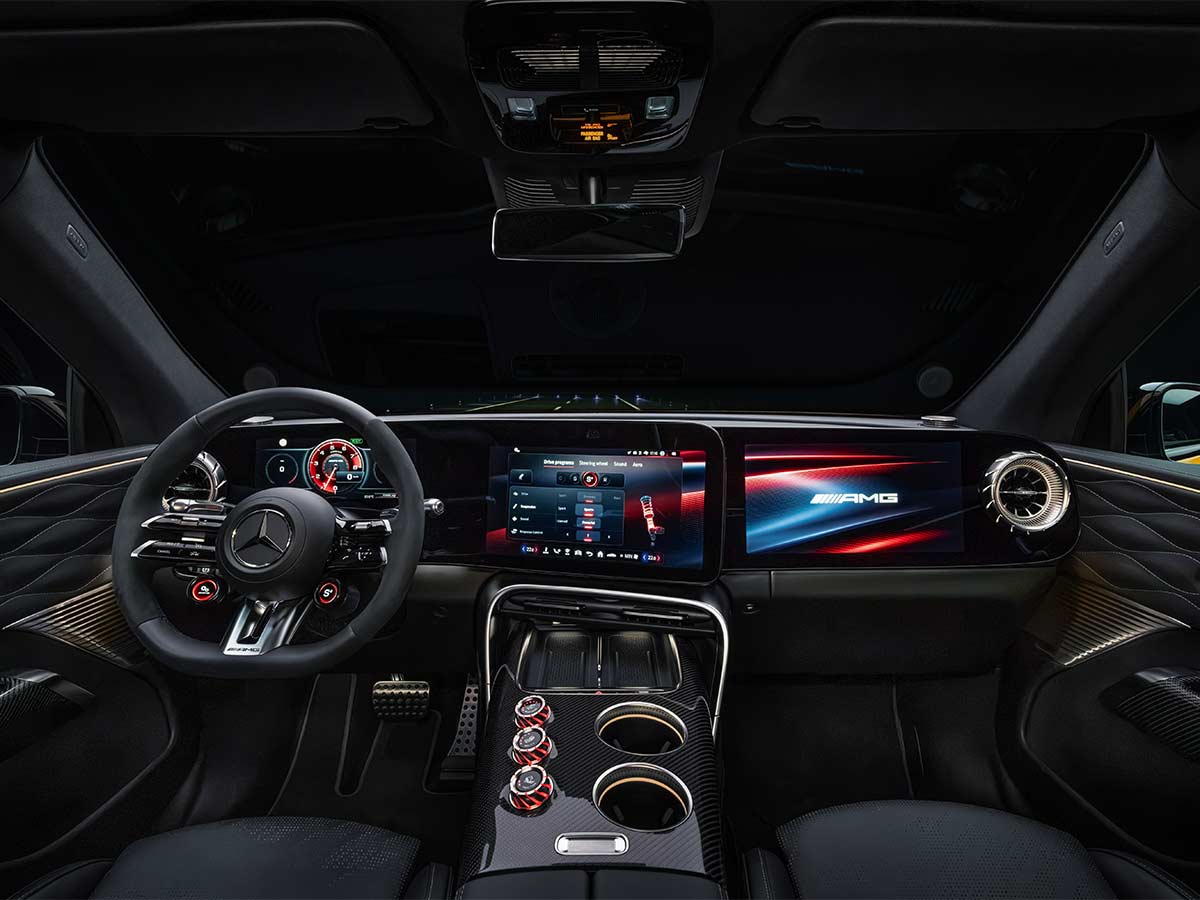
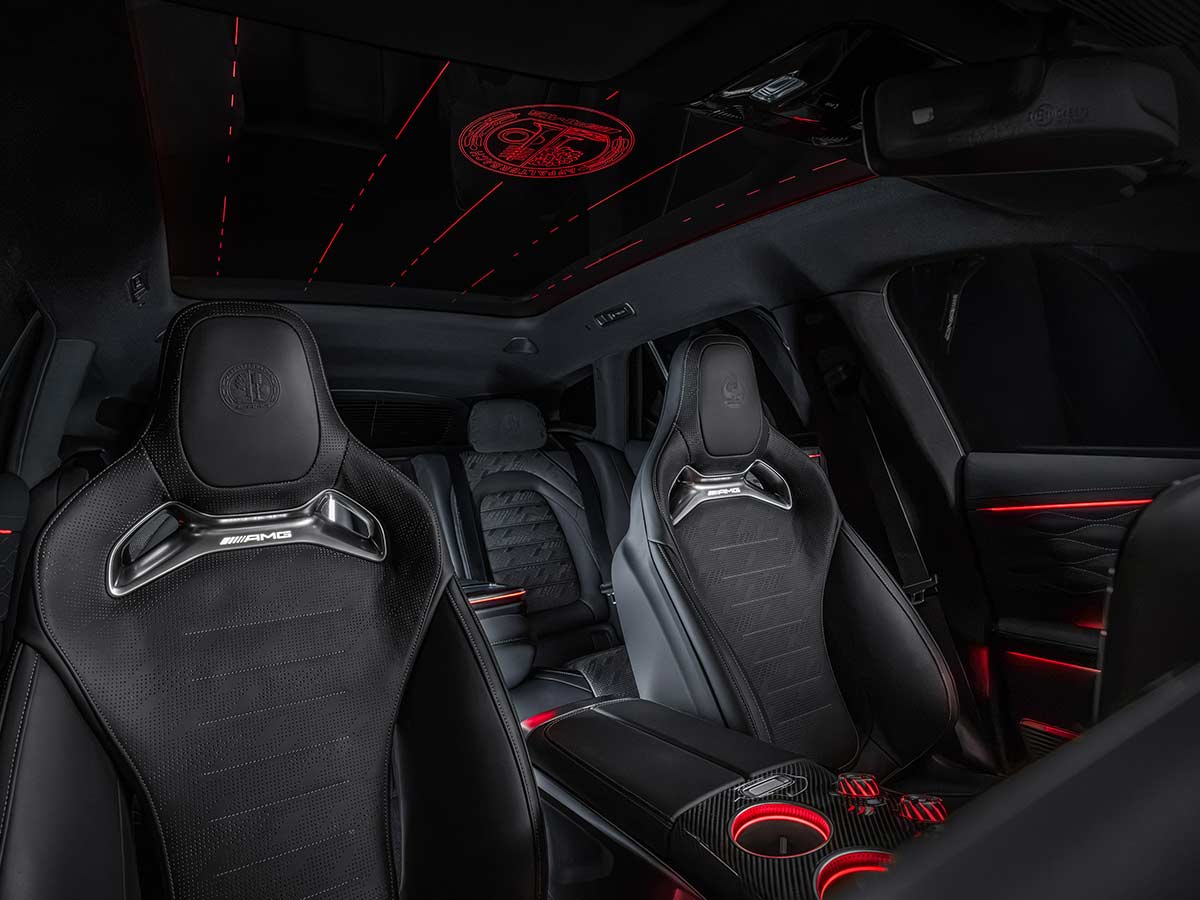
The cabin translates the driver-focused layout of an AMG GT into a larger vehicle. Rather than adopting the conventional high seating position associated with many SUVs, the GT SUV places the driver low and integrated into the cockpit.
The dashboard centres on a 14.0-inch multimedia display angled towards the driver and a 10.2-inch instrument cluster. A separate 14-inch display is available for the front passenger, creating a layout that balances driving information with the broader digital experience expected in a luxury vehicle.
The centre console houses the AMG RACE ENGINEER controls in the GT 63 and GT 55. The AMG Performance steering wheel provides access to driving functions, with paddles that also allow precise control of energy recovery.
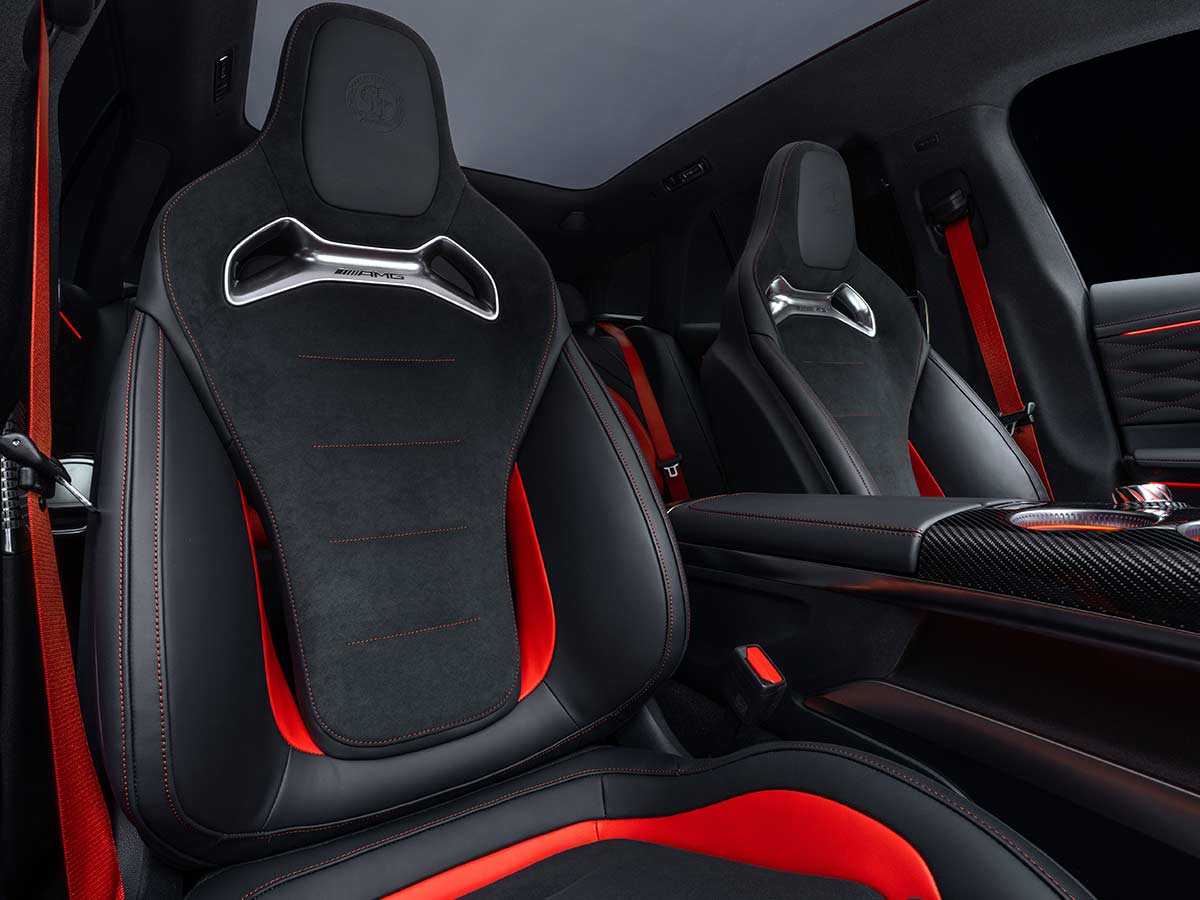
The seats are designed to provide lateral support during cornering while remaining suitable for long-distance travel. AMG Performance seats with integrated headrests are available as an option. Upholstery, trim and other interior materials can be configured to suit individual preferences.
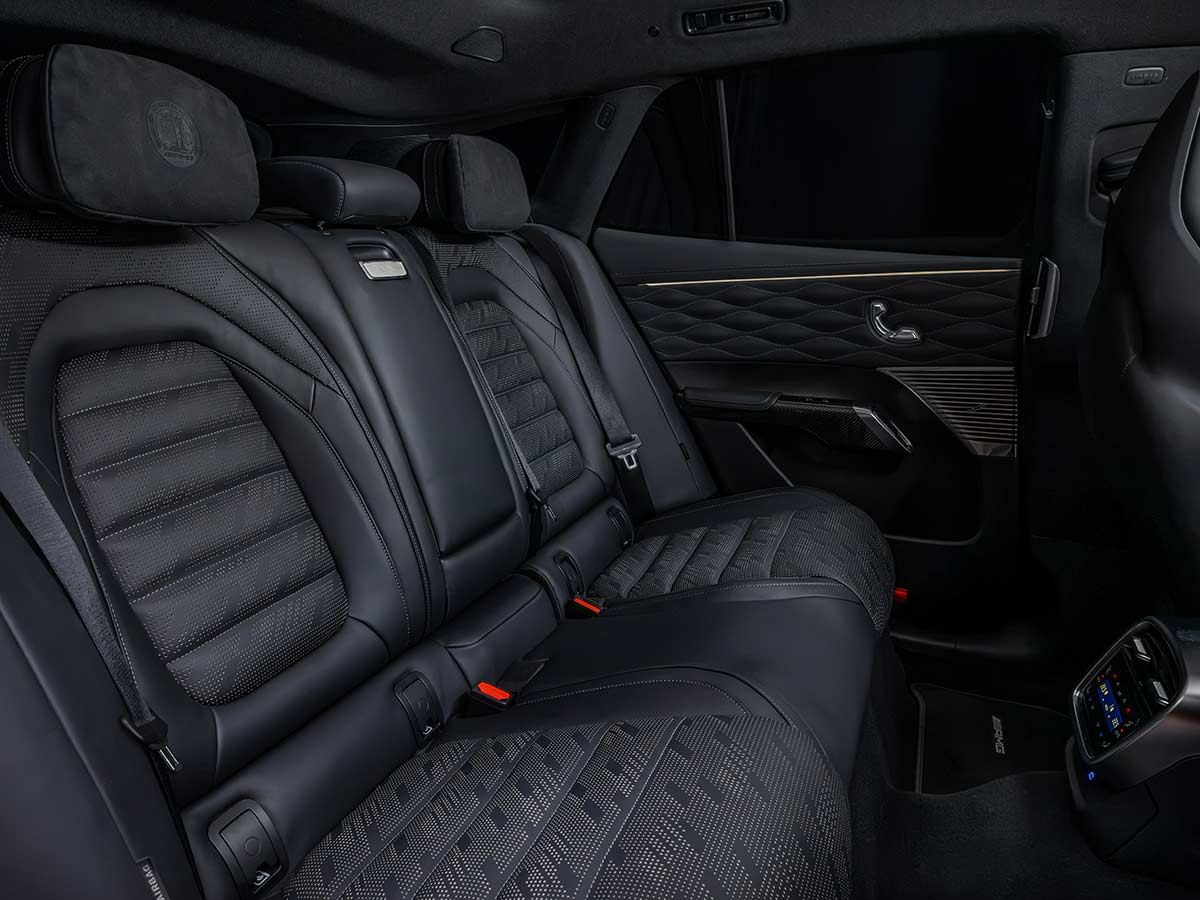
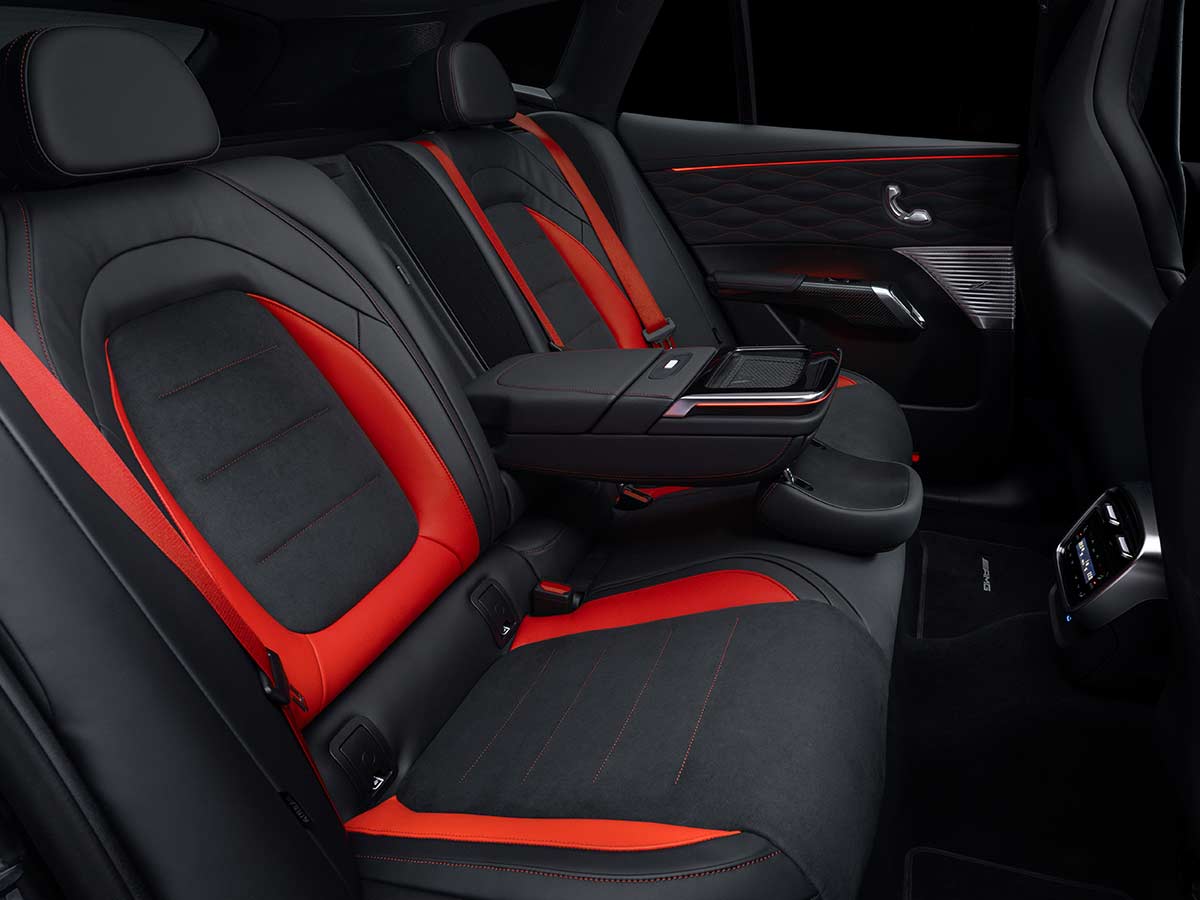
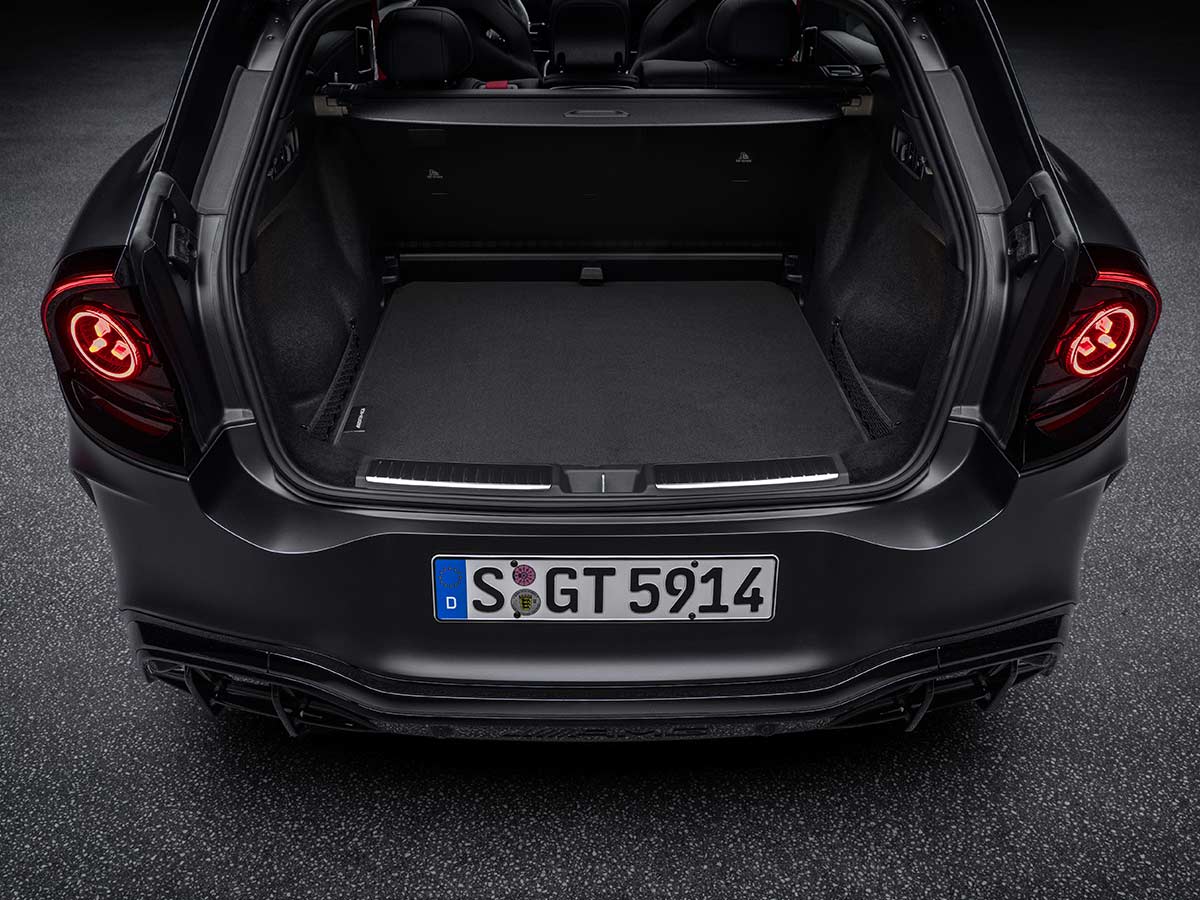
The rear compartment is equally important to the GT SUV’s grand touring brief. Despite the sloping roofline, Mercedes-AMG describes the rear seating position as offering generous headroom and legroom. A three-seat rear bench is standard, while the seatbacks fold down and the headrests can be folded back electrically.
This flexibility allows the cabin to accommodate passengers on longer journeys or provide additional luggage space when required.
A panoramic roof that changes character
The optional SKY CONTROL panoramic glass roof extends across the cabin and can switch between transparent and opaque modes. An optional lighting function adds AMG-specific illumination effects at night.
Ambient lighting integrates with the cabin’s wider digital presentation, allowing occupants to adjust the interior atmosphere through coordinated lighting and display settings.
Material choices extend to the door panels, where floating armrests, integrated controls and diamond-pattern stitching reinforce the performance-luxury theme. An optional Burmester 4D sound system adds stainless-steel speaker grilles and a more elaborate audio installation.
Personalisation extends outside the cabin, too. The MANUFAKTUR programme offers more than 60 exclusive paint finishes, while AMG forged wheels can be specified with colour accents. Available combinations include matt black wheels with accent colours such as Angel Blue, Sunny Lime and Orange Flame. Matching interior details include MANUFAKTUR seat belts in Fjord Blue, Green Hell and Orange Flame.
These details place the GT SUV within the tradition of individually specified luxury performance vehicles. The underlying engineering may be shared across the range, but the visual identity can be tailored to a particular owner’s preferences.
MBUX and MB.OS: The Digital Layer Behind the Performance
The new generation of Mercedes-Benz User Experience, or MBUX, runs on the Mercedes-Benz Operating System, known as MB.OS. The software architecture brings vehicle functions, displays, connectivity and driving-related applications into a coordinated interface.
Different instrument display styles allow the driver to prioritise particular information. Classic and AMG Special layouts use performance-oriented graphics, while Pure emphasises speed. Vehicle Data presents information such as temperatures and tyre data, and Trip focuses on navigation and journey information.
The Zero Layer interface places key information, recent applications and context-sensitive suggestions within easy reach. Its layout can be customised in a way intended to feel familiar to users of smartphones.
Mercedes-Benz also integrates three AI agents into MBUX: ChatGPT, Microsoft Bing and Google Gemini. The MBUX Virtual Assistant is designed to handle complex, multi-step dialogues, extending the role of voice interaction beyond basic commands.
For a performance-focused vehicle, however, the more specialised applications are particularly relevant.
AMG PERFORMANCE MENU
The AMG PERFORMANCE MENU provides real-time information about the vehicle’s operating state. Its Energy Flow display visualises power delivery between the front and rear axles, while Aero Flow shows the status of the active aerodynamic components.
Other displays provide operating and tyre temperatures, drivetrain status, available electrical power, tyre pressure, suspension information and physical forces such as lateral acceleration. An IWC Watch function serves as a lap-time stopwatch.
These functions make aspects of the vehicle’s engineering more visible to the driver. Instead of treating power delivery, aerodynamic changes and suspension behaviour as hidden processes, the system presents selected information through dedicated displays.
AMG SET-UP
AMG SET-UP allows drivers to configure vehicle functions and customise the operation of steering-wheel controls. Its Aero Set-up menu provides additional control over the aerodynamic settings.
The aim is to make the cockpit adaptable to different priorities, whether the driver is preparing for a relaxed journey or choosing a more performance-oriented configuration.
AMG TRACK PACE
AMG TRACK PACE is designed for circuit use. The system records more than 80 vehicle-specific data points ten times per second, presenting telemetry, acceleration figures and racing data through the instrument display and multimedia interface.
Lap and sector times can appear on the multimedia display, instrument cluster and head-up display. Numerous circuits are pre-installed, and drivers can record their own tracks.
The augmented-reality function can overlay a racing line from a saved recording, while the head-up display can provide information about corner angles and braking points. Acceleration and deceleration measurements can also be recorded and saved.
An optional dashcam can record high-definition video to USB storage, with overlays showing information such as lap times, speed, acceleration, steering angle and brake application. Availability varies by market.
The emphasis is on making the GT SUV’s performance measurable and repeatable, not merely entertaining. The driver can review data from a session, identify differences between laps and examine how the vehicle behaved through specific sections of a circuit.
The Predictive Performance Manager: Saving Power for the Right Moment
One of the more unusual elements of the GT SUV’s performance technology is the Predictive Performance Manager, or PPM. First used in the CONCEPT AMG GT XX, the system is designed to optimise energy delivery according to the section of a racetrack and the demands of the driving situation.
The principle is that maximum power is not always the fastest strategy over an entire lap. A circuit combines straights, climbing sections, downhill stretches and corners, each placing different demands on the drivetrain.
On a downhill section or through tight alternating bends, additional power may have little effect on the time required to complete that portion of the track. Conserving electrical and thermal headroom at those moments can leave more capacity available for an uphill section or a long straight, where power may make a greater difference.
The PPM adjusts power output according to the section of track, operating within the selected RACE or SPRINT mode. Its purpose is to optimise the use of available energy over a complete lap rather than pursue maximum output at every opportunity.
That approach reflects a broader principle of electric performance engineering. Battery power, motor temperatures and energy consumption are interconnected, and the fastest overall result may depend on how intelligently the vehicle distributes its capabilities over time.
Seven driving programmes for different conditions
The AMG DYNAMIC SELECT system offers seven programmes, each changing aspects of the vehicle’s response.
| Driving programme | Primary character |
|---|---|
| Comfort | Balanced responses, efficient operation and a comfort-oriented suspension setting |
| Sport | Sharper response, permanent all-wheel drive and firmer suspension |
| AMGFORCE Sport+ | Performance-focused driving with simulated combustion-engine sound and feedback |
| RACE | Track-oriented settings, reduced driver assistance and access to specialised performance functions |
| Slippery | A traction-focused configuration for rain, snow and ice |
| Eco | Efficiency-oriented power delivery, aerodynamic optimisation and on-demand front-axle disengagement |
| Individual | Personal configuration of vehicle parameters |
The RACE programme includes functions such as Drift Mode, Drag Race, Track Race and Launch Control. Their inclusion underlines the range of behaviours the vehicle’s control systems are designed to support.
The Slippery setting takes a different approach, prioritising traction through permanent all-wheel drive, early electronic stability control intervention and a softer suspension configuration.
In the C, S and S+ modes, pulling both steering-wheel paddles together can activate an additional boost function. This increases available torque and power, sharpens accelerator response and produces a noticeable acceleration effect. Mercedes-AMG also describes a tightening of the seatbelts and specific sounds accompanying the activation.
The range of programmes gives the GT SUV several distinct operating personalities, from efficiency-focused travel to more intensive performance use. Their value lies in how the powertrain, suspension, steering, traction and sound systems work together rather than in the number of modes alone.
Safety, Structure and the Challenge of High-Performance Electric Packaging
Beneath the styling and digital systems, the GT SUV uses a newly designed body structure made from aluminium, steel and fibre-reinforced composites. The objective is to combine structural rigidity with reduced weight and provide suitable integration for the vehicle’s high-voltage technology.
The battery sits centrally within the vehicle structure and is secured in a protective housing, described by Mercedes-AMG as a safety box. The housing forms part of the crash concept and is designed to absorb forces during an impact.
Battery placement also influences the vehicle’s packaging and dynamic behaviour. Integrating the pack low in the structure helps establish a low centre of gravity, while its central position supports the effort to balance passenger space with the requirements of the electric drivetrain.
The body structure, battery housing and thermal-management system therefore serve multiple purposes. They must accommodate high electrical power, protect the battery and its occupants, and preserve the stiffness needed for precise suspension control.
These requirements become particularly demanding in a large performance SUV, where high output, passenger accommodation and everyday usability must coexist within a single vehicle.
Dimensions, Luggage Space and Everyday Usability
The GT SUV’s proportions are substantial, even by luxury performance standards. The GT 63 and GT 55 measure 5,084 mm in length, 2,001 mm in width and 1,656 mm in height, with a wheelbase of 3,040 mm.
The GT 53 is slightly shorter and taller, measuring 5,080 mm long, 2,001 mm wide and 1,653 mm high. Its wheelbase is also 3,040 mm.
Key dimensions and storage:
| Wheelbase, all variants | 3,040 mm |
| Main luggage compartment | 607 litres |
| Maximum luggage volume with rear seats folded | 1,740 litres |
| Front storage compartment | 78 litres |
| Additional front liquid-storage capacity | 111 litres |
The published luggage figures distinguish the standard boot volume from the maximum capacity with the rear seats folded. The front storage compartment, or frunk, provides an additional space separate from the main luggage area.
The technical data also lists a further 111 litres of front liquid-storage capacity. This is a separate specification and should not be confused with the 78-litre frunk figure.
The GT 63 and GT 55 have a listed kerb weight of 2,585/2,695 kg and 2,605/2,715 kg, respectively, depending on the battery configuration. The GT 53 is listed at 2,525/2,635 kg.
Those figures illustrate the engineering challenge behind the GT SUV. It combines a large battery and powerful electric motors with the dimensions and accommodation expected of a full-size luxury vehicle. The suspension, steering and torque-management systems must work around that mass while preserving the desired balance between comfort and dynamic response.
The resulting vehicle is not defined by performance figures alone. Its usefulness depends just as much on passenger comfort, luggage flexibility, manageable charging stops and the ability to change character between ordinary journeys and more demanding driving.

Production in Sindelfingen, Engineering in Affalterbach
The GT SUV brings together two important parts of Mercedes-Benz’s manufacturing and engineering network. Mercedes-AMG developed the vehicle around its own performance requirements in Affalterbach, while production takes place at the company’s historic Sindelfingen complex in Germany.
Assembly is assigned to Hall 32, which has been specifically retrofitted for AMG.EA technology. The site also produces key body components, including pressed parts and the body-in-white, and carries out paintwork.
Sindelfingen’s history stretches back to 1915, making it one of Mercedes-Benz Group’s longest-established vehicle manufacturing sites. Its role in the GT SUV programme connects the company’s established manufacturing infrastructure with a vehicle built around a new generation of electric performance hardware.
The arrangement also illustrates the scale of the task involved in bringing a dedicated electric performance vehicle to production. Specialised drivetrain components and high-voltage systems must be integrated into a complete vehicle manufacturing process, from body construction through final assembly.
Mercedes-AMG GT SUV Price and Availability
Mercedes-AMG has announced three versions of the GT SUV, with the entry-level GT 53 scheduled to become available to order from 20 October 2026.
The German starting price for the GT 53 SUV is €113,050, including Germany’s 19 per cent VAT. This is the manufacturer’s non-binding recommended retail price for the German market, not a universal international price.
The GT 55 and GT 63 SUV models are scheduled to follow in spring 2027.
The three-model structure gives the range a broad technical spread, from the 400 kW GT 53 with two synchronous motors to the 860 kW GT 63 with three axial-flux motors. The difference is not confined to output: the models also vary in their battery configurations, braking equipment, suspension availability and performance-oriented systems.
For prospective buyers, the choice is therefore about more than selecting the highest power figure. The GT 53 combines substantial output with a different drivetrain and a standard steel braking system. The GT 55 offers three-motor propulsion and optional carbon-ceramic brakes, while the GT 63 brings the highest maximum output, standard carbon-ceramic brakes and standard AMG ACTIVE RIDE CONTROL+ suspension.
The published WLTP range for the GT 53 is 597-668 km. The GT 63 and GT 55 are listed at 525-585 km with the 106 kWh battery and 620-700 km with the 128 kWh battery. Actual range will vary with driving style, ambient conditions, tyre choice, payload, auxiliary electrical consumption and route profile.
The Bigger Picture: An Electric GT Rather Than an SUV With a Large Motor
The Mercedes-AMG GT SUV is an attempt to extend the traditional performance-car brief into a larger, more versatile vehicle. Its most conspicuous achievement is the flagship’s 860 kW output, but its engineering story is broader.
Three axial-flux motors provide the basis for the two upper models. Directly cooled cylindrical battery cells are designed to sustain high electrical loads, while an 800-volt architecture supports very high DC charging power. Active hydraulic suspension, rear-wheel steering and variable all-wheel drive address the challenge of controlling a large vehicle with substantial performance capability.
The digital systems add another dimension, allowing drivers to examine energy flow, aerodynamic status and circuit telemetry, while the Predictive Performance Manager adjusts energy delivery according to the demands of a racetrack.
Even the simulated engine sound reflects the same underlying philosophy: electric performance need not be limited to acceleration figures, and the sensory experience can be configured to suit different preferences.
The GT SUV’s significance lies in how these systems are intended to function together. It is conceived not merely as an electric SUV with extraordinary peak power, but as a performance grand tourer in which sustained output, charging capability, chassis control, comfort and software form part of the same engineering brief.
Whether that combination becomes the preferred direction for future electric performance vehicles will depend on how drivers value its competing priorities. What is clear from the specification is that AMG has treated the challenge as a complete vehicle-development exercise, from the battery cell to the bodywork and the driver’s interface.
For a brand whose identity has long been tied to the character of its engines, the GT SUV also raises an interesting question about the future of AMG itself: when electric motors, active chassis systems and carefully designed digital feedback take over the traditional mechanical roles, which aspects of the AMG experience matter most?






Frequently Asked Questions About the Mercedes-AMG GT SUV
Q: What is the Mercedes-AMG GT SUV?
A: The Mercedes-AMG GT SUV is a full-size electric performance SUV developed entirely in-house by Mercedes-AMG. It is the second model based on the AMG.EA high-performance architecture and combines a sports-car-inspired design with SUV practicality.
Q: How much power does the Mercedes-AMG GT SUV produce?
A: The range spans three output levels. The GT 53 produces up to 400 kW (544 hp), the GT 55 produces up to 600 kW (816 hp), and the flagship GT 63 produces up to 860 kW (1,169 hp).
Q: How many electric motors does the Mercedes-AMG GT SUV have?
A: The GT 63 and GT 55 use three axial-flux electric motors, with two at the rear and one at the front. The GT 53 uses two synchronous electric motors, one on each axle.
Q: How fast is the Mercedes-AMG GT 63 SUV?
A: The GT 63 has a manufacturer-quoted 0-100 km/h acceleration time of 2.5 seconds using a one-foot rollout measurement, or 2.7 seconds without rollout. Its stated top speed is 270 km/h with the Driver’s Package.
Q: What is the battery capacity of the Mercedes-AMG GT SUV?
A: The GT 63 and GT 55 offer usable battery capacities of 106 kWh and 128 kWh. The GT 53 uses a 106 kWh battery. All three variants employ an 800-volt electrical architecture.
Q: How far can the Mercedes-AMG GT SUV travel on a charge?
A: The GT 53 has a published WLTP range of 597-668 km. The GT 63 and GT 55 are rated at 525-585 km with the 106 kWh battery and 620-700 km with the 128 kWh battery. Actual range varies according to driving conditions, equipment and vehicle use.
Q: How quickly can the Mercedes-AMG GT SUV charge?
A: The 106 kWh battery supports up to 600 kW of DC charging power, while the 128 kWh battery supports up to 710 kW. For the GT 63 and GT 55, Mercedes-AMG quotes 10-80 per cent charging times of 11 minutes and 12 minutes, respectively, depending on battery configuration and the specified charging conditions.
Q: What is AMG ACTIVE RIDE CONTROL+?
A: AMG ACTIVE RIDE CONTROL+ is an advanced suspension system combining adjustable air springs with active hydraulic pitch and roll stabilisation. It is standard on the GT 63 and optional on the GT 55, and is designed to combine body control during dynamic driving with comfort over uneven roads.
Q: Does the Mercedes-AMG GT SUV have rear-wheel steering?
A: Yes. Active rear-axle steering is standard across the range. Below 80 km/h, the rear wheels steer opposite to the front wheels to improve manoeuvrability. Above 80 km/h, they steer in the same direction to enhance stability.
Q: Does the Mercedes-AMG GT SUV simulate a combustion engine sound?
A: Yes. The AMGFORCE Sport+ driving programme recreates the sound of AMG V8 engines in the GT 63 and GT 55, and an AMG six-cylinder engine in the GT 53. The experience includes simulated gear changes, steering-wheel paddle operation, dedicated displays and integrated seat shakers.
Q: How much luggage can the Mercedes-AMG GT SUV carry?
A: The published luggage capacity is 607 litres, increasing to 1,740 litres with the rear seats folded. A separate 78-litre front storage compartment provides additional space.
Q: What is the starting price of the Mercedes-AMG GT SUV?
A: The Mercedes-AMG GT 53 SUV starts at €113,050 in Germany, including 19 per cent VAT. The GT 53 is scheduled to become available to order from 20 October 2026, while the GT 55 and GT 63 are scheduled to follow in spring 2027.
Q: Where is the Mercedes-AMG GT SUV manufactured?
A: The Mercedes-AMG GT SUV is being assembled in Hall 32 at the Sindelfingen manufacturing complex in Germany. The facility has been adapted for AMG.EA technology and also produces key body components and paintwork.
Q: What makes the Mercedes-AMG GT SUV different from a conventional electric SUV?
A: Its defining differences include the three-motor axial-flux drivetrain in the GT 63 and GT 55, directly cooled cylindrical battery cells, active hydraulic pitch and roll stabilisation, rear-wheel steering, variable all-wheel drive and performance-specific software. Together, these systems are designed to support sustained output and precise vehicle control alongside the space and comfort of a full-size SUV.
Source: Mercedes-Benz