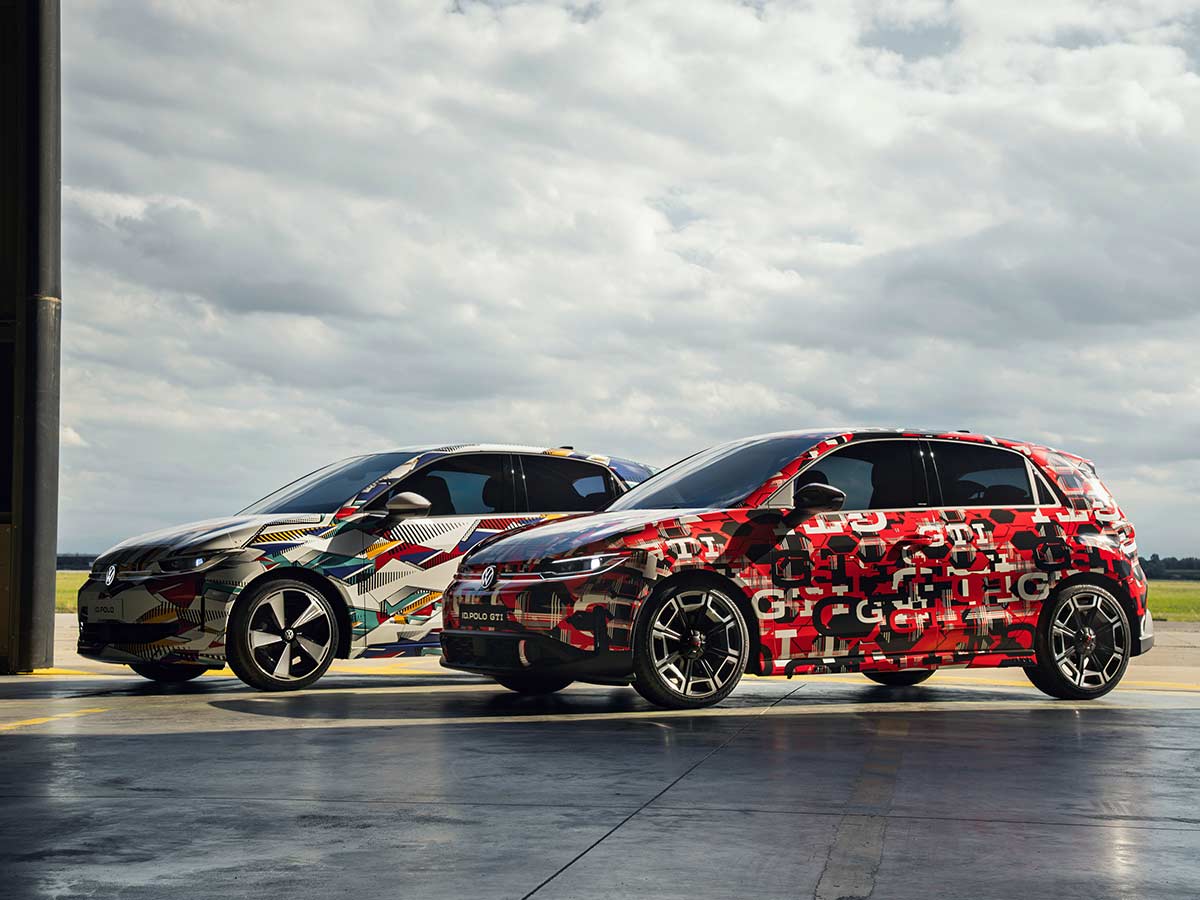








Volkswagen has taken the GTI badge into a new technical era with the all-new ID.3 GTI, an electric performance hatchback that combines 240 kW (326 PS), 545 Nm of torque and rear-wheel drive with the chassis technology and visual cues associated with five decades of GTI history.
The ID.3 GTI is presented as the most powerful production GTI Volkswagen has ever developed. It is also the first Volkswagen GTI with rear-wheel drive. Volkswagen says the car is capable of accelerating from 0 to 100 km/h in a forecast 5.6 seconds, while its top speed is electronically limited to 200 km/h.
The numbers tell only part of the story. The more significant change is the way Volkswagen has adapted the GTI formula to an electric powertrain. Instead of a turbocharged petrol engine, manual or dual-clutch transmission and front-wheel drive, the ID.3 GTI uses a single electric motor driving the rear axle through a one-speed gearbox. Its dynamic character is further defined by adaptive DCC sports suspension, progressive steering, Launch Control and a dedicated GTI driving mode.
The model is not yet on sale. Volkswagen currently describes it as a near-production concept vehicle, with pre-sales scheduled to begin at the start of 2027.
>>> Great Discounts on Car & Bike Accessories <<<
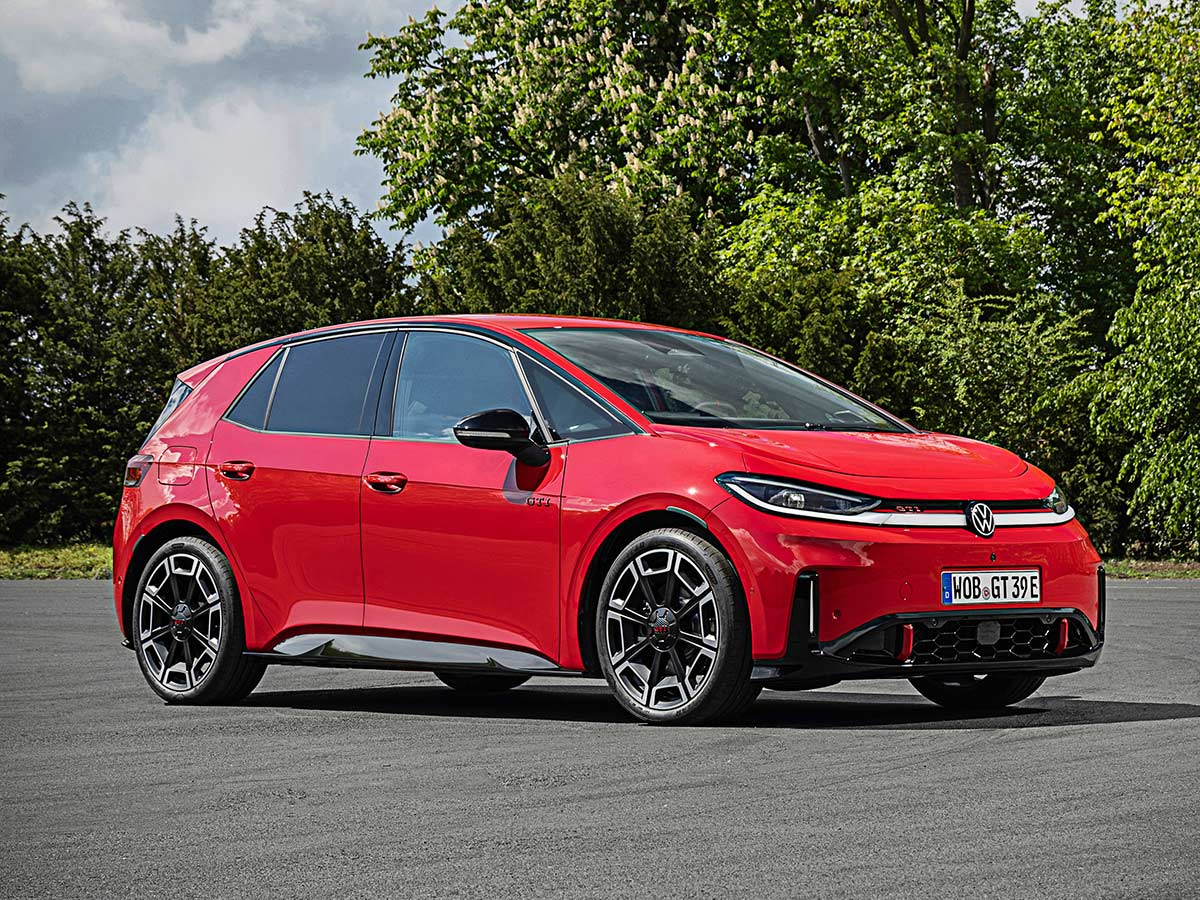
Volkswagen ID.3 GTI specifications at a glance
| Specification | Volkswagen ID.3 GTI |
|---|---|
| Power | 240 kW / 326 PS |
| Maximum torque | 545 Nm |
| Drive layout | Rear-wheel drive |
| Transmission | Single-speed gearbox |
| 0-100 km/h | 5.6 seconds, forecast |
| Top speed | 200 km/h, electronically limited |
| Battery | 79 kWh net |
| DC charging | Up to 183 kW |
| 10-80% charging | Around 29 minutes, forecast |
| WLTP range | Up to 601 km, forecast |
| Standard chassis technology | Adaptive DCC sports chassis |
| Standard performance features | Launch Control, GTI mode, progressive steering |
| Standard wheels | 20-inch Wörthersee alloy wheels |
| Planned pre-sales | Beginning of 2027 |
Figures marked as forecasts are Volkswagen’s preliminary values for the near-production vehicle.
The first rear-wheel-drive Volkswagen GTI
The drivetrain layout is arguably the most technically significant aspect of the ID.3 GTI.
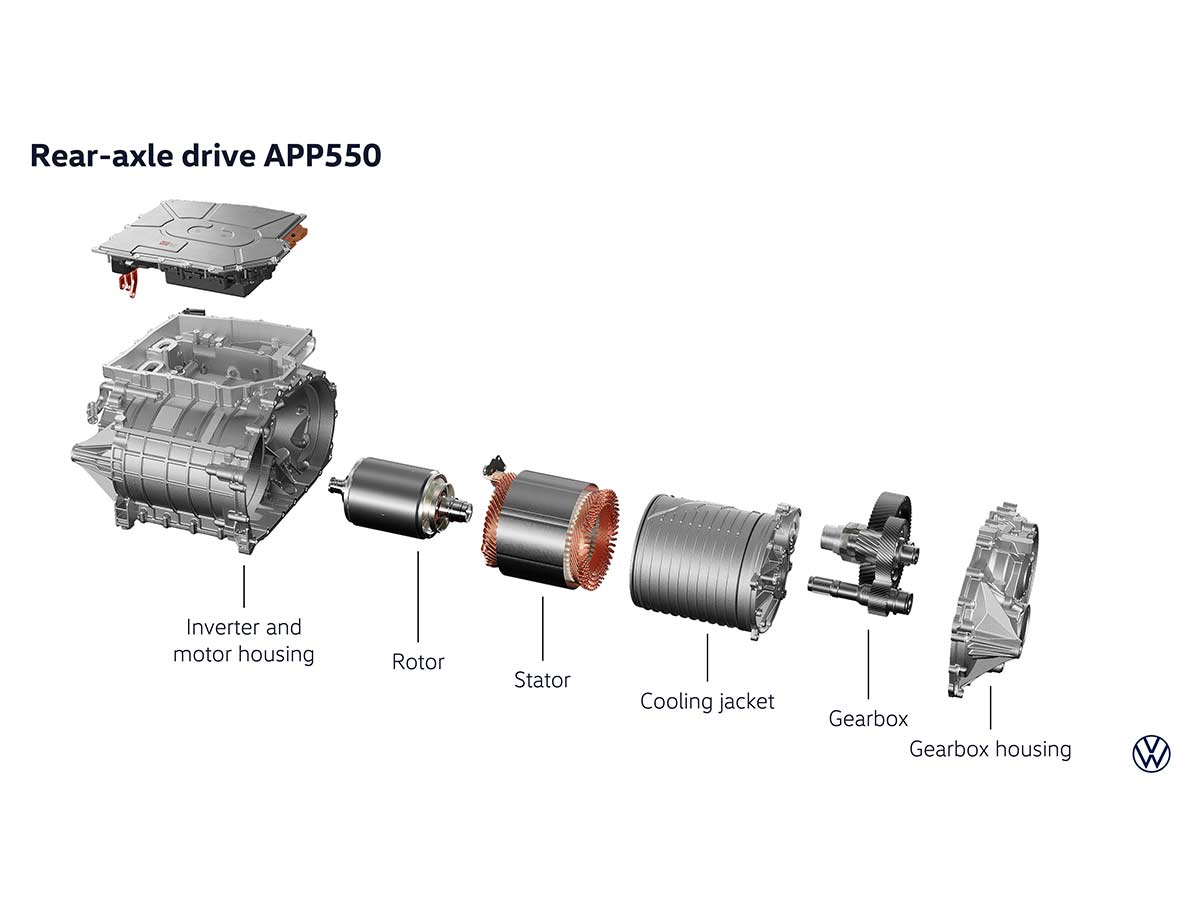
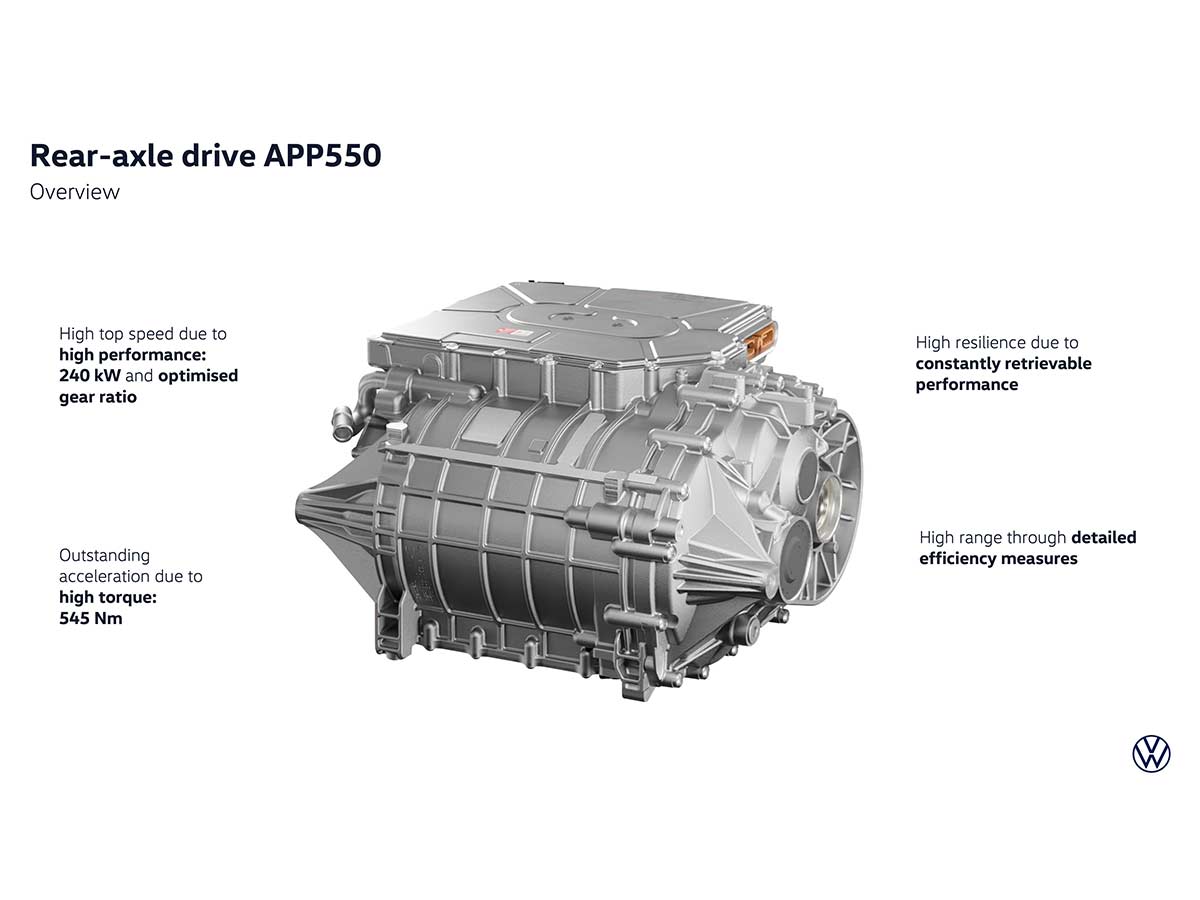
Volkswagen’s electric GTI sends its 240 kW motor’s output exclusively to the rear axle. The motor is paired with a single-speed gearbox, a configuration that is common in battery-electric vehicles because an electric motor can deliver useful torque across a much wider operating range than a conventional combustion engine.
For the GTI, rear-wheel drive also changes the character of the car’s power delivery. There is no need for a front axle to simultaneously steer the car and transmit the motor’s drive torque. The front wheels can concentrate on steering, while the rear axle handles propulsion.
The ID.3 GTI produces 545 Nm of maximum torque from standstill. That immediate torque delivery is one reason electric performance cars can produce strong acceleration without the gear changes required by a combustion-powered performance hatchback.
Volkswagen says the drivetrain has been further optimized compared with the ID.3 GTX. The company identifies the resulting 240 kW output as the highest ever offered in a series-production GTI.
The significance of the number should be kept in perspective, however. Maximum power does not by itself determine how a performance car behaves. Traction, suspension calibration, steering response, tyre characteristics, weight distribution and electronic control systems all influence how effectively that power reaches the road.
That is why Volkswagen has given the ID.3 GTI a much more extensive performance chassis package than simply installing a more powerful motor.
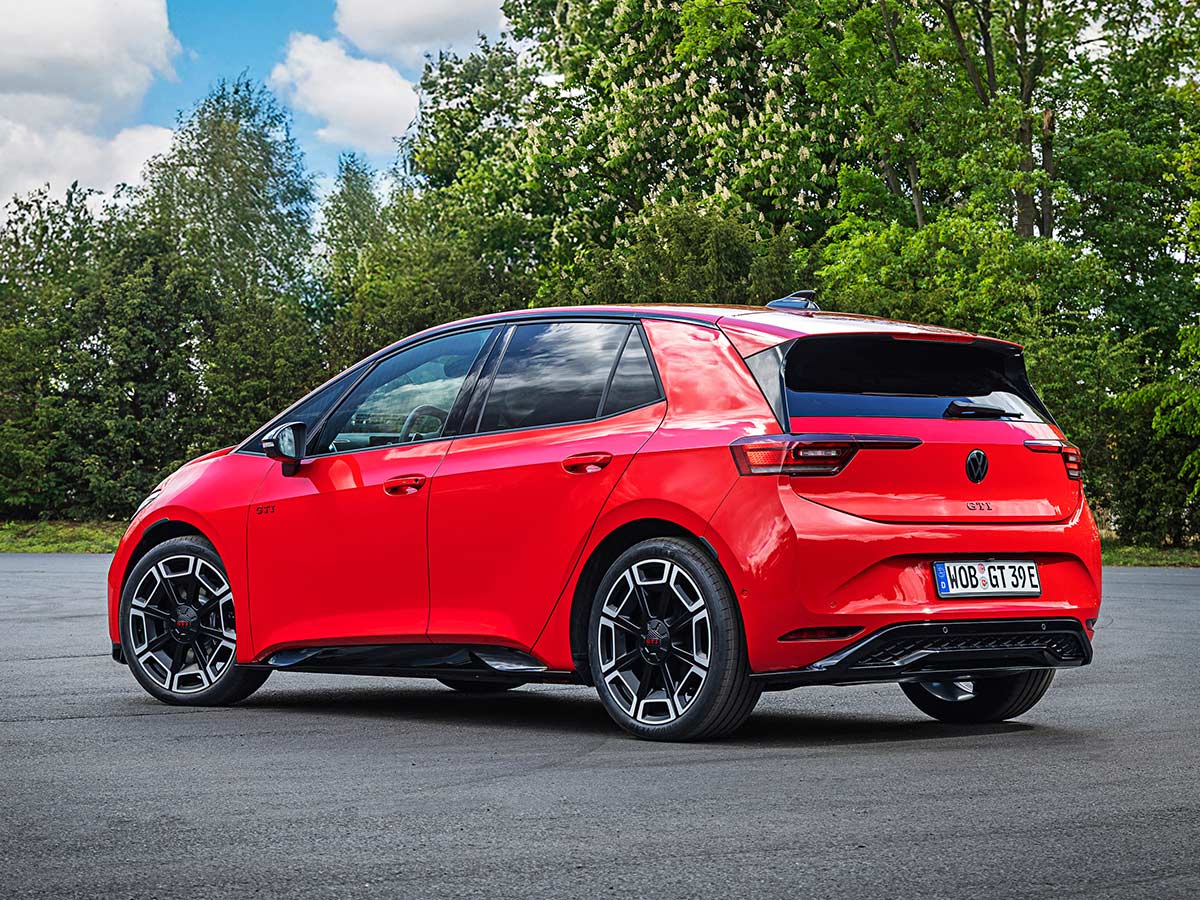
5.6 seconds to 100 km/h, with Launch Control
Volkswagen forecasts a 0-100 km/h time of 5.6 seconds for the ID.3 GTI.
Launch Control is standard equipment and is integrated into the new GTI driving mode. The system is designed to manage the initial acceleration phase and optimize the delivery of the electric motor’s available torque, rather than simply allowing the motor to deliver maximum torque without regard to available tyre grip.
The top speed is electronically limited to 200 km/h.
That limit also illustrates an important difference between outright acceleration and sustained high-speed performance. Electric vehicles can deliver substantial low-speed acceleration because maximum motor torque is available almost immediately, while sustained high-speed operation places different demands on power, aerodynamics, thermal management and energy consumption.
For the ID.3 GTI, Volkswagen has chosen to emphasize the combination of rapid acceleration and chassis response rather than pursuing an exceptionally high top speed.
DCC suspension is central to the GTI formula
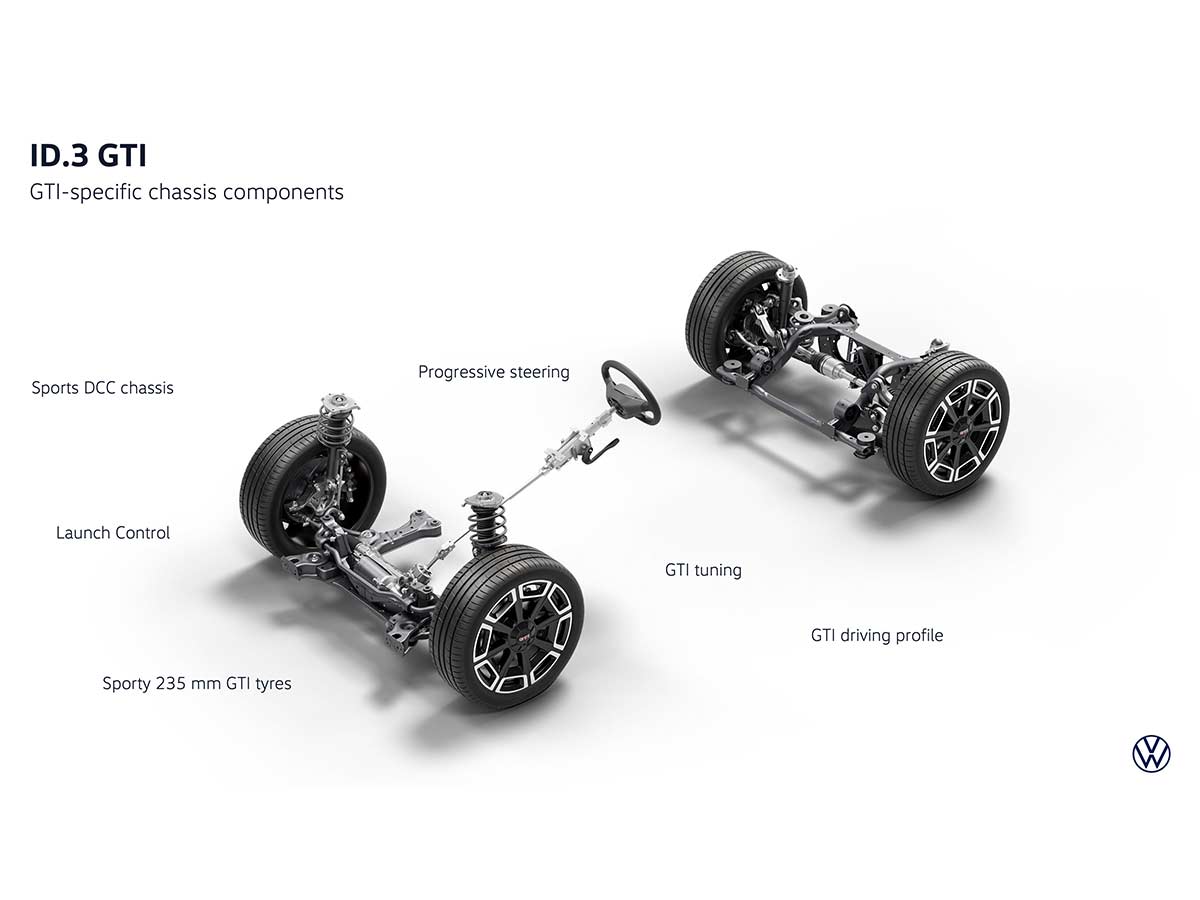
The ID.3 GTI comes standard with adaptive DCC sports suspension.
DCC, or Dynamic Chassis Control, allows the electronically controlled dampers to vary their characteristics according to the selected driving profile. That gives Volkswagen more scope to balance everyday ride comfort with the body-control requirements of a performance hatchback.
The ID.3 GTI retains several driving profiles, including Eco, Comfort, Sport and Individual. A dedicated GTI mode has been added specifically for the performance model.
In GTI mode, the vehicle’s drive and chassis systems are configured for maximum sportiness. Volkswagen says the mode changes the electric motor’s power delivery, progressive steering and adaptive DCC sports chassis simultaneously.
That approach is significant because a performance mode is most useful when the different systems are calibrated to work together. Increasing power without addressing steering, damping and traction would not necessarily produce a more coherent performance car.
Volkswagen’s technical information also identifies a MacPherson front axle and a five-link rear suspension layout for the ID.3 GTI. Progressive steering is standard.
The progressive steering system uses a variable steering ratio so that the steering response changes according to how far the steering wheel is turned. Volkswagen says this is intended to provide greater steering precision and agility while also making low-speed manoeuvring easier.
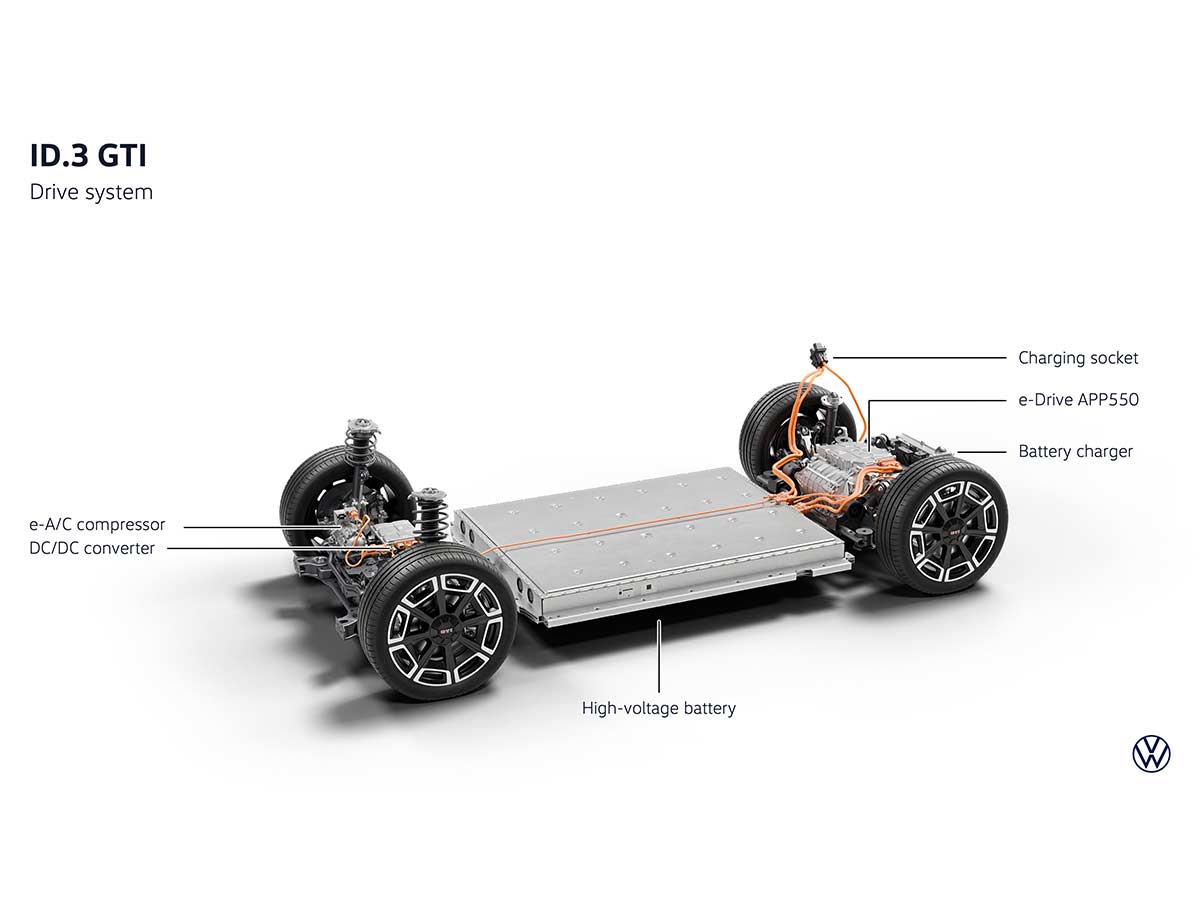
A 79-kWh battery with up to 601 km of range
Performance is only one part of the ID.3 GTI’s brief.
The electric motor draws energy from a 79-kWh lithium-ion battery, with Volkswagen quoting the figure as net energy content. The company forecasts a maximum WLTP range of 601 km.
The published preliminary combined consumption figure is 14.5 kWh/100 km.
Both the range and consumption figure should be treated as preliminary because Volkswagen explicitly labels them forecast values for the near-production vehicle. Actual range will depend on production specifications, equipment, temperature, driving conditions, speed and other factors.
The battery can accept DC charging at up to 183 kW. Volkswagen forecasts a 10-80 percent charging time of approximately 29 minutes.
That charging capability is particularly relevant to the GTI’s positioning as an everyday performance car. A vehicle intended to combine short bursts of performance with long-distance usability needs more than a powerful motor. Charging speed becomes part of the ownership experience because it determines how quickly energy can be added during longer journeys.
The GTI mode is more than an extra drive setting
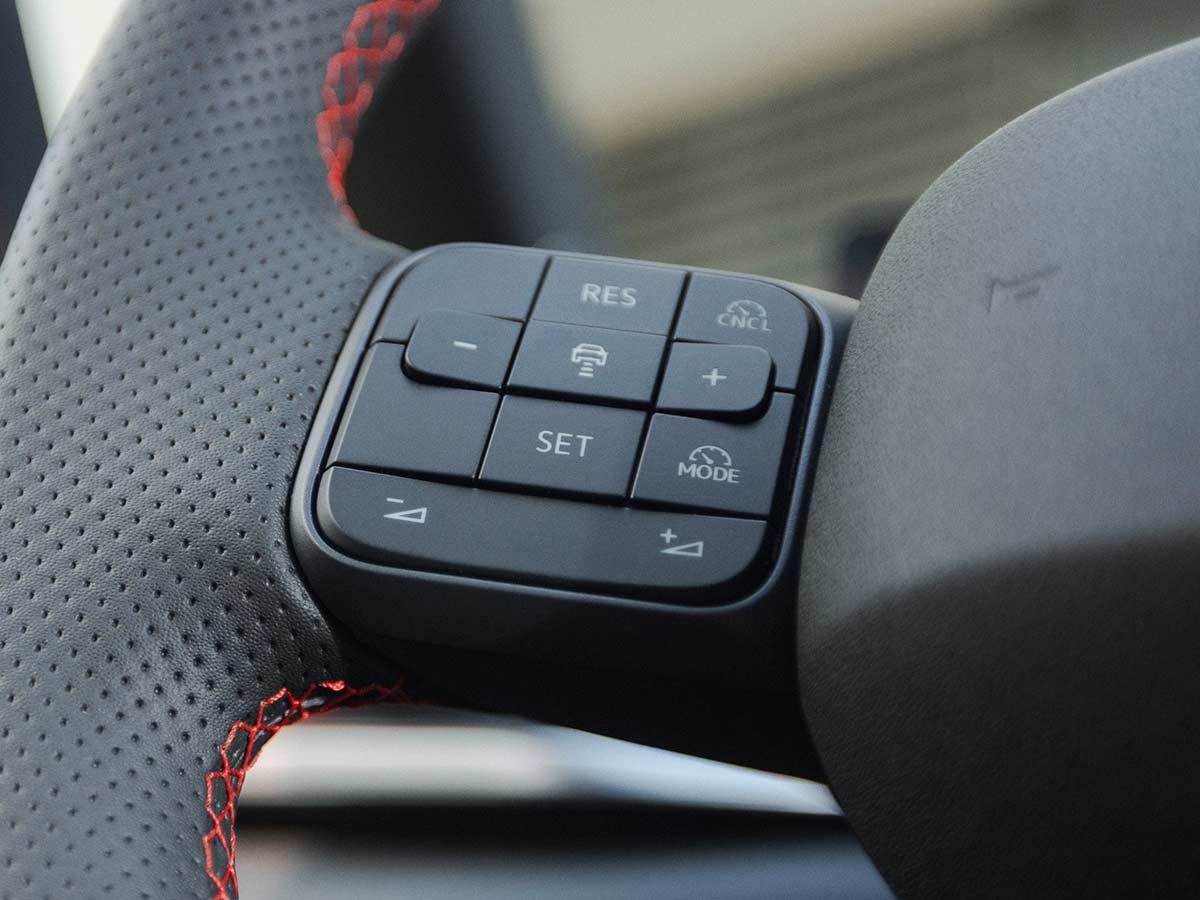
Volkswagen has given the ID.3 GTI a dedicated illuminated GTI button at the bottom of its multifunction sports steering wheel.
Pressing it activates the GTI driving profile. The mode changes the powertrain and chassis settings while also altering elements of the vehicle’s digital interface and interior lighting.
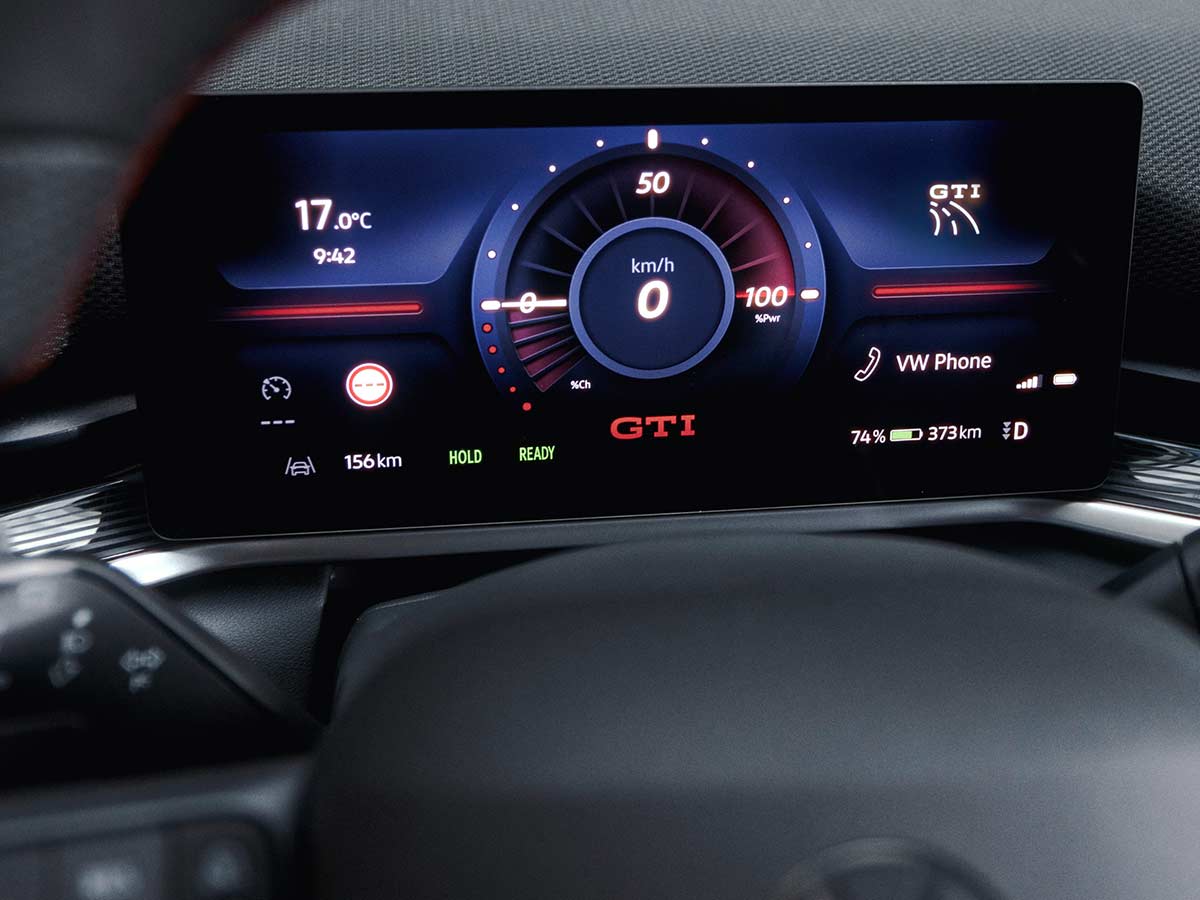
The Digital Cockpit receives a GTI-specific display, while the ambient lighting and ID. Light switch to a red-themed presentation. A simulated combustion-engine sound is also used as part of the GTI mode experience.
That sound is not a mechanical by-product of the drivetrain. It is an electronic interpretation intended to provide an auditory link to the combustion-powered GTI models that preceded the electric version.
The system also incorporates Launch Control.
Volkswagen says GTI-specific information, including the ability to access lap-time data, is available through the infotainment system. A retro-inspired display influenced by the later Golf I is also available for the Digital Cockpit.
These details show how Volkswagen is attempting to carry the identity of the GTI into an electric vehicle without reproducing the mechanical architecture of the original cars.
The design keeps the GTI visual language intact
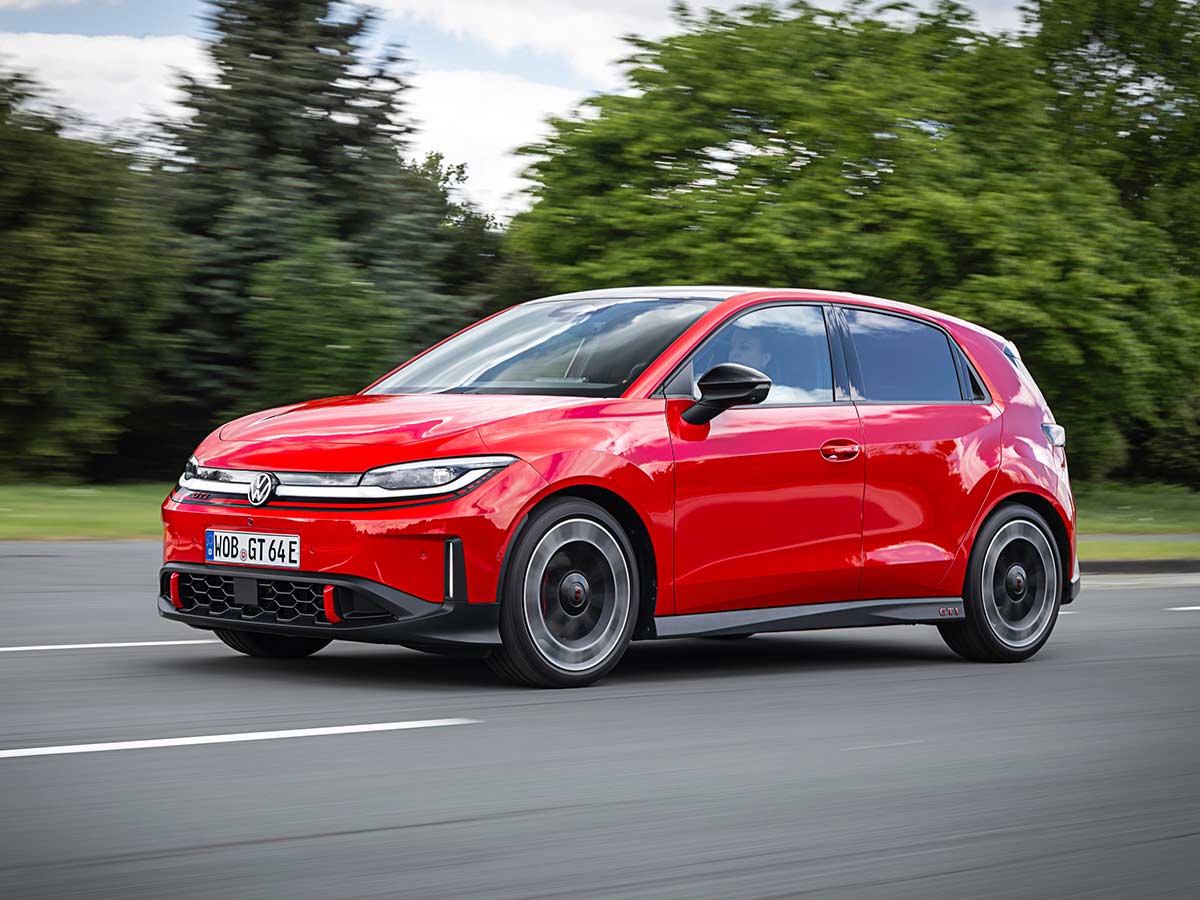
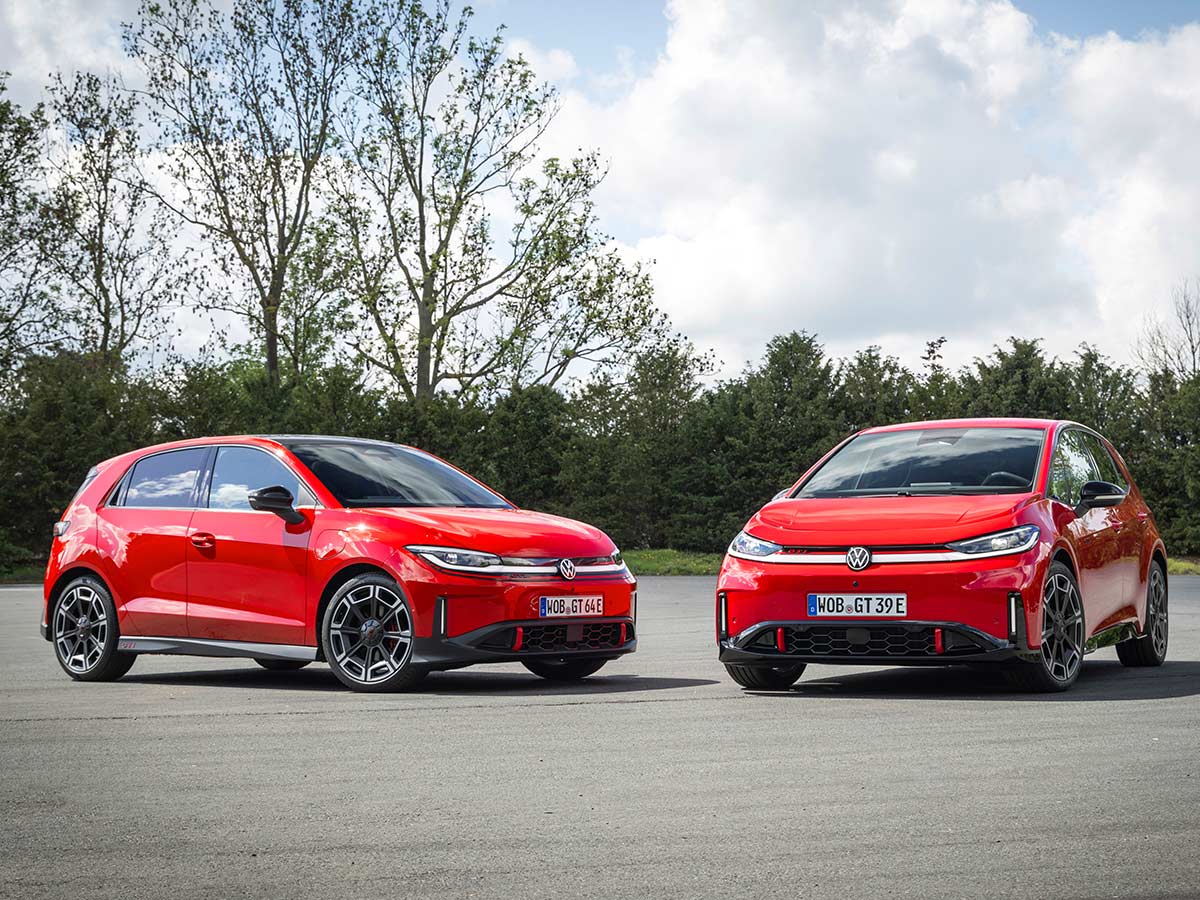
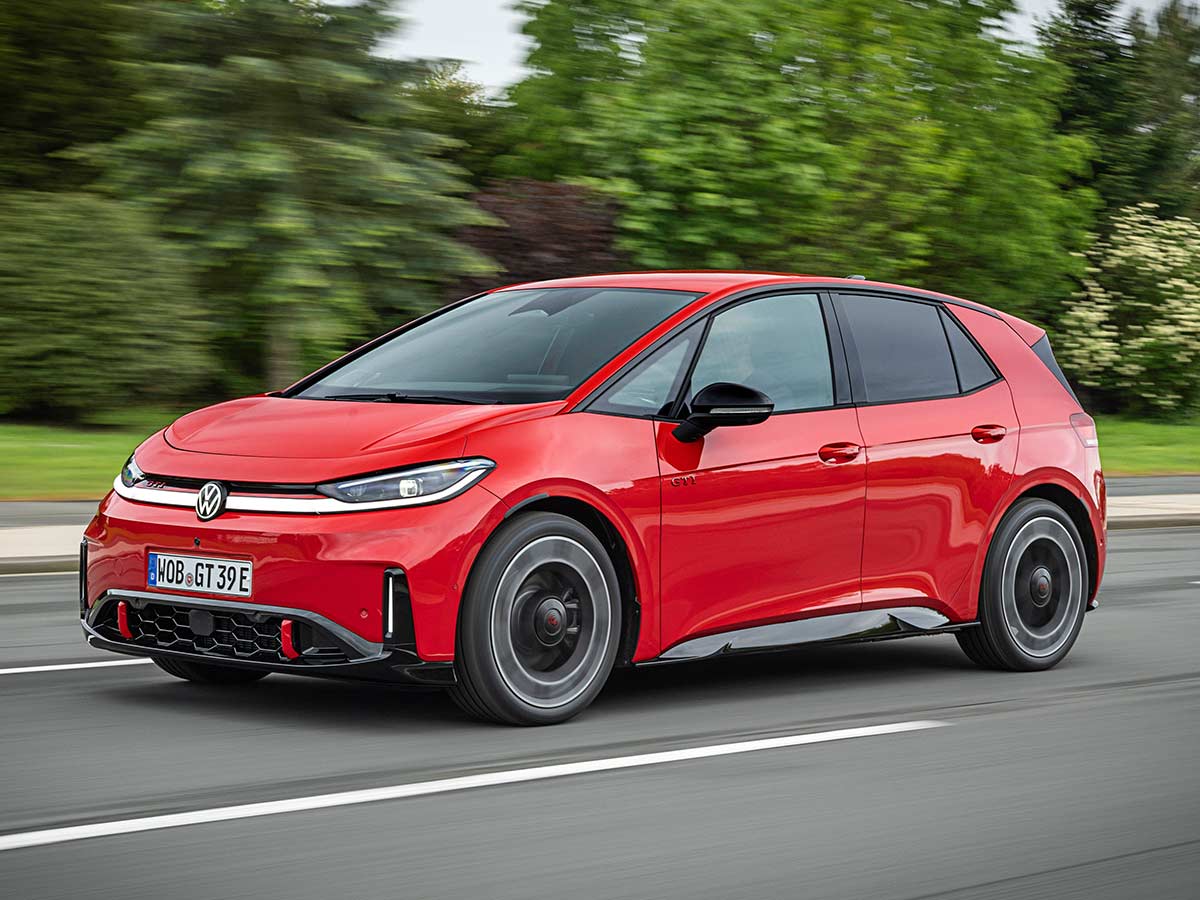
The ID.3 GTI is immediately identifiable as a GTI through a series of deliberate design references.
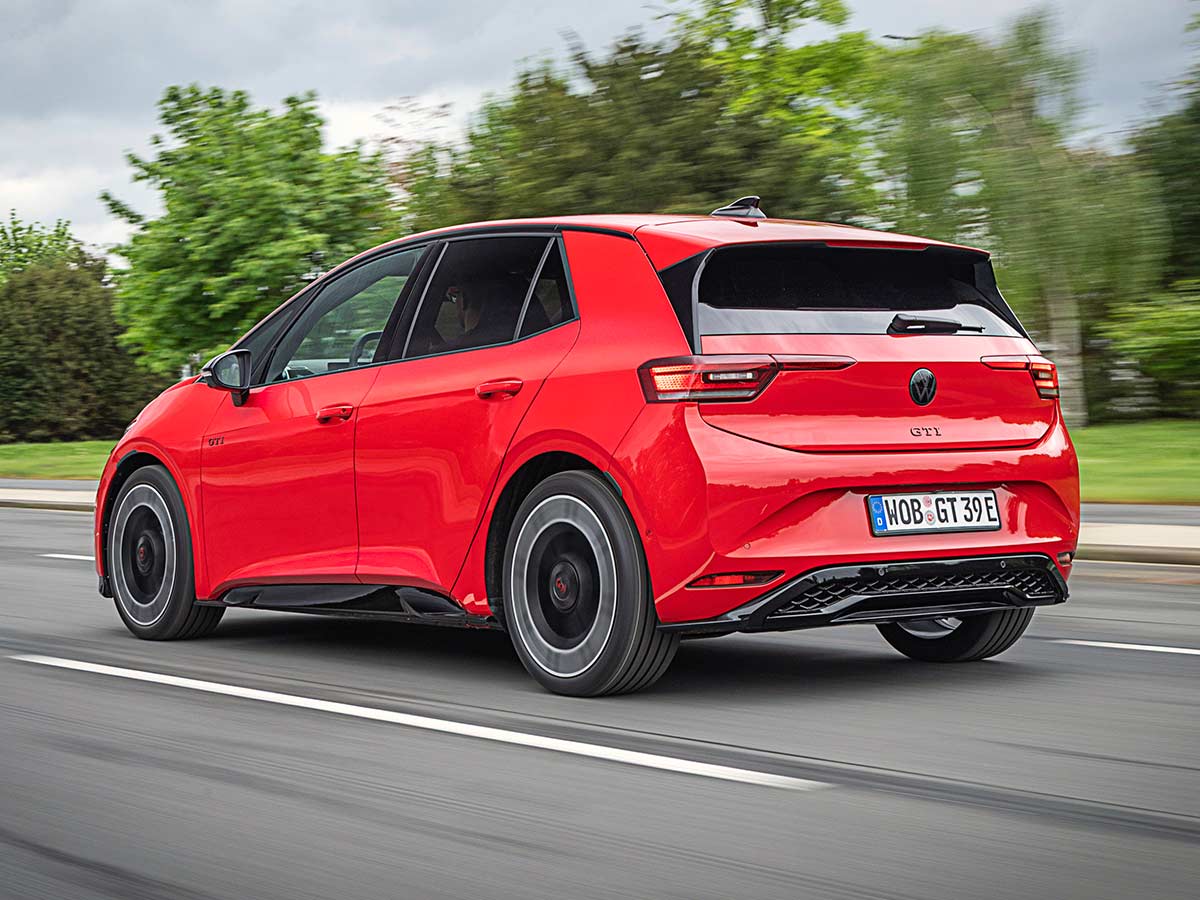
At the front is a red horizontal stripe positioned between the headlights. The detail traces its origins to the red grille surround used by the original Golf GTI introduced in 1976.
The front end also features IQ.LIGHT LED matrix headlights, a transparent illuminated strip incorporating the Volkswagen logo and vertically positioned LED elements.
Below them sits a high-gloss black honeycomb grille. Unlike a conventional combustion-engine radiator grille, the opening on the ID.3 GTI is associated with thermal management for the vehicle’s interior and battery system.
Red vertical elements are incorporated into the outer sections of the lower grille, while a splitter-style front spoiler adds another motorsport-inspired visual reference.
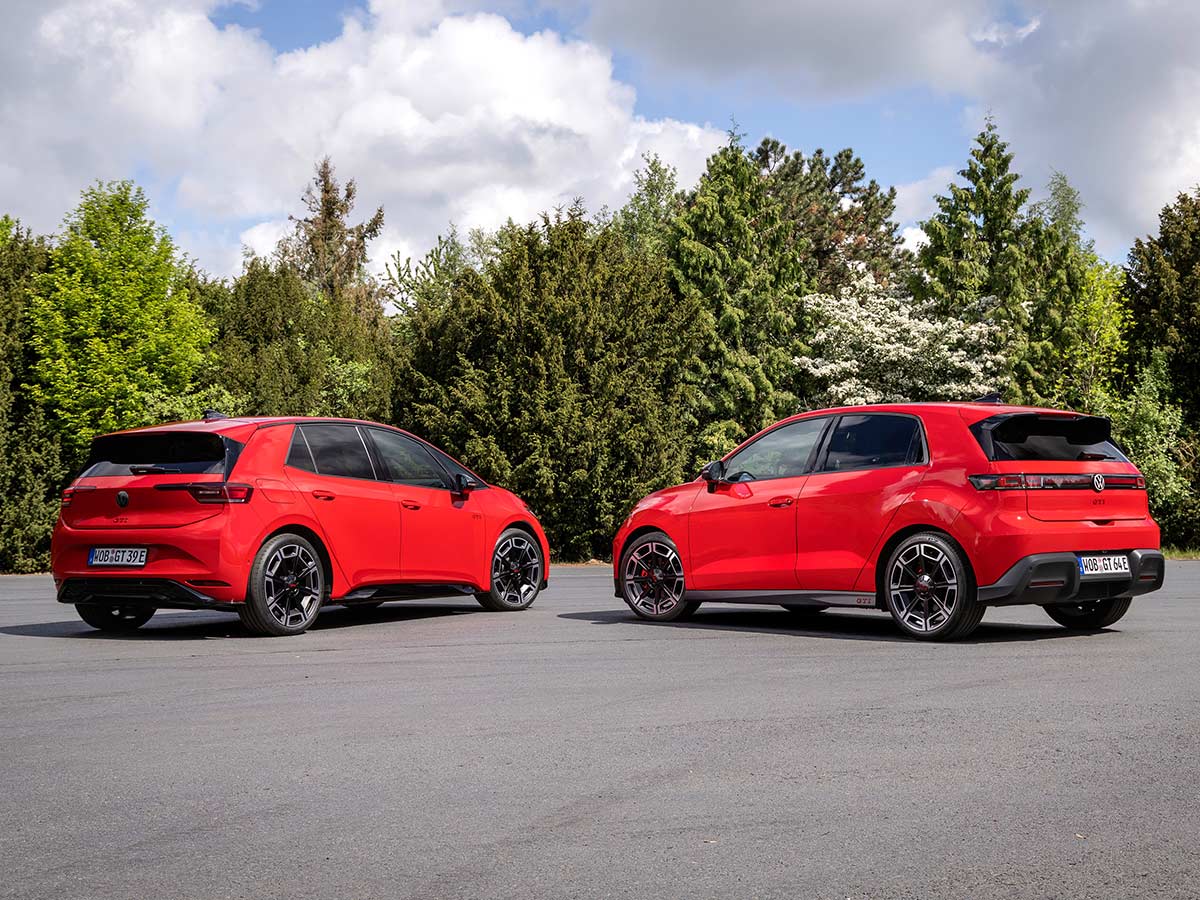
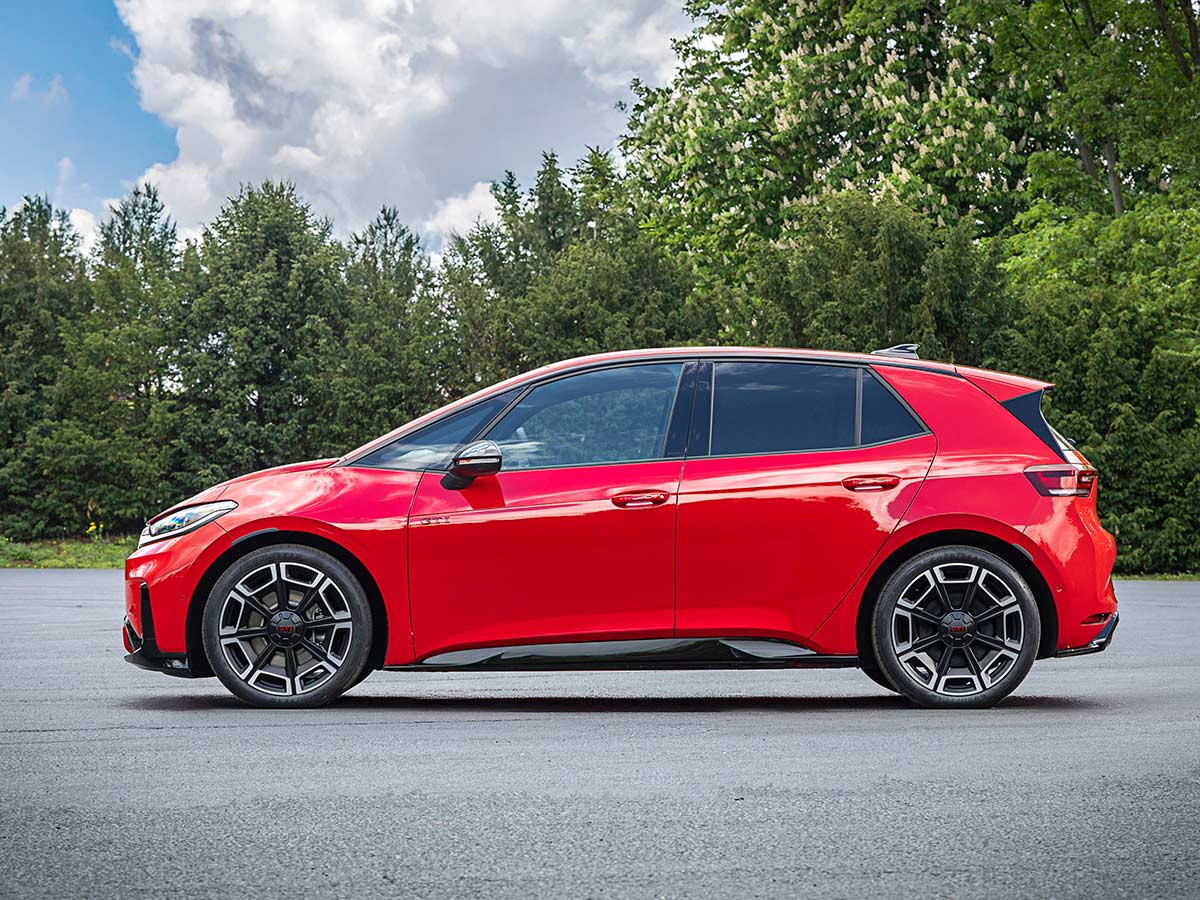
At the sides, standard 20-inch Wörthersee alloy wheels give the GTI a distinct appearance. The name is a reference to the long association between the GTI community and the Wörthersee meeting in Austria.
High-gloss black exterior mirror caps and side members add further contrast.
The ID.3 GTI is also available in Tornado Red, a colour with a long association with the GTI name. Other listed colours are Moonstone Grey, Scale Silver metallic, Grenadilla Black metallic and Glacier White metallic.
The interior combines modern EV technology with classic GTI cues
Inside, Volkswagen has used the ID.3 Neo’s redesigned cockpit as the foundation for the GTI.
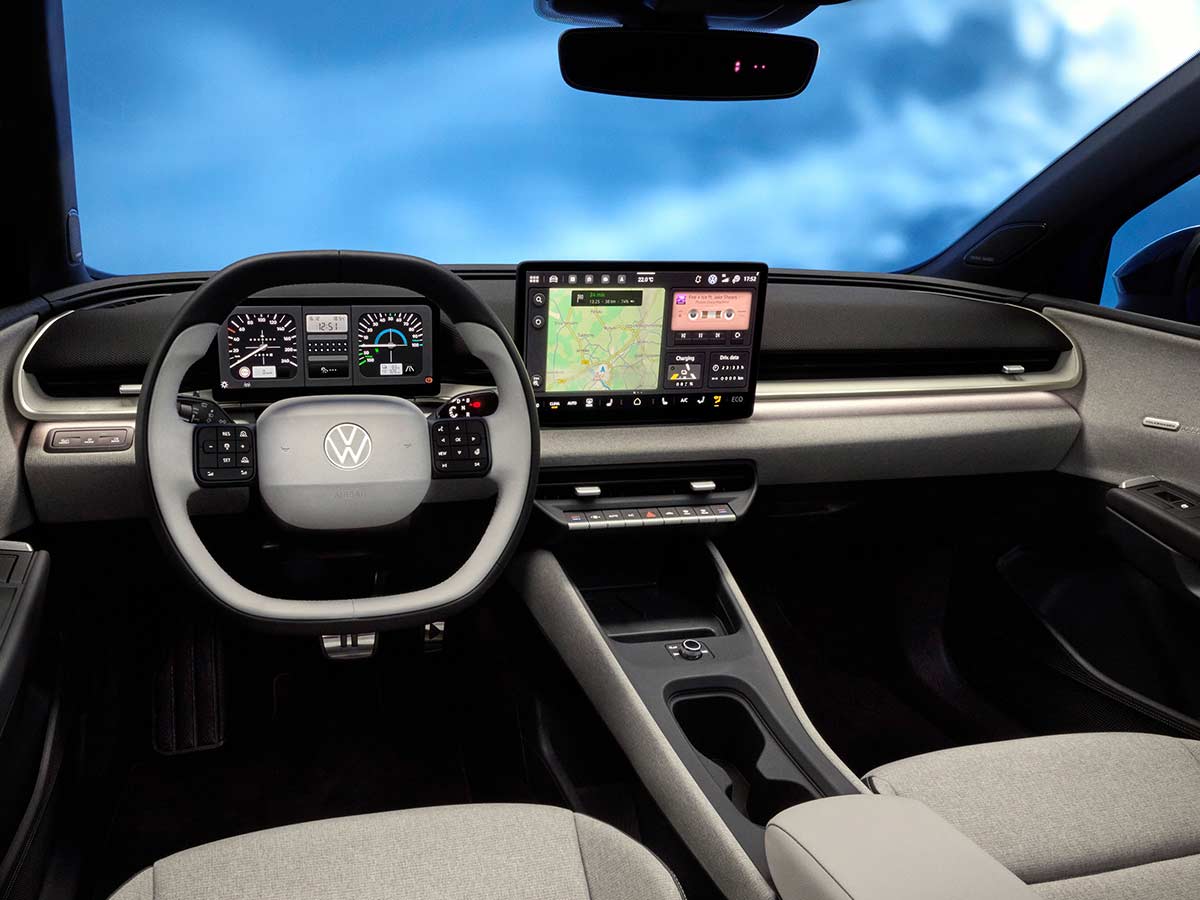
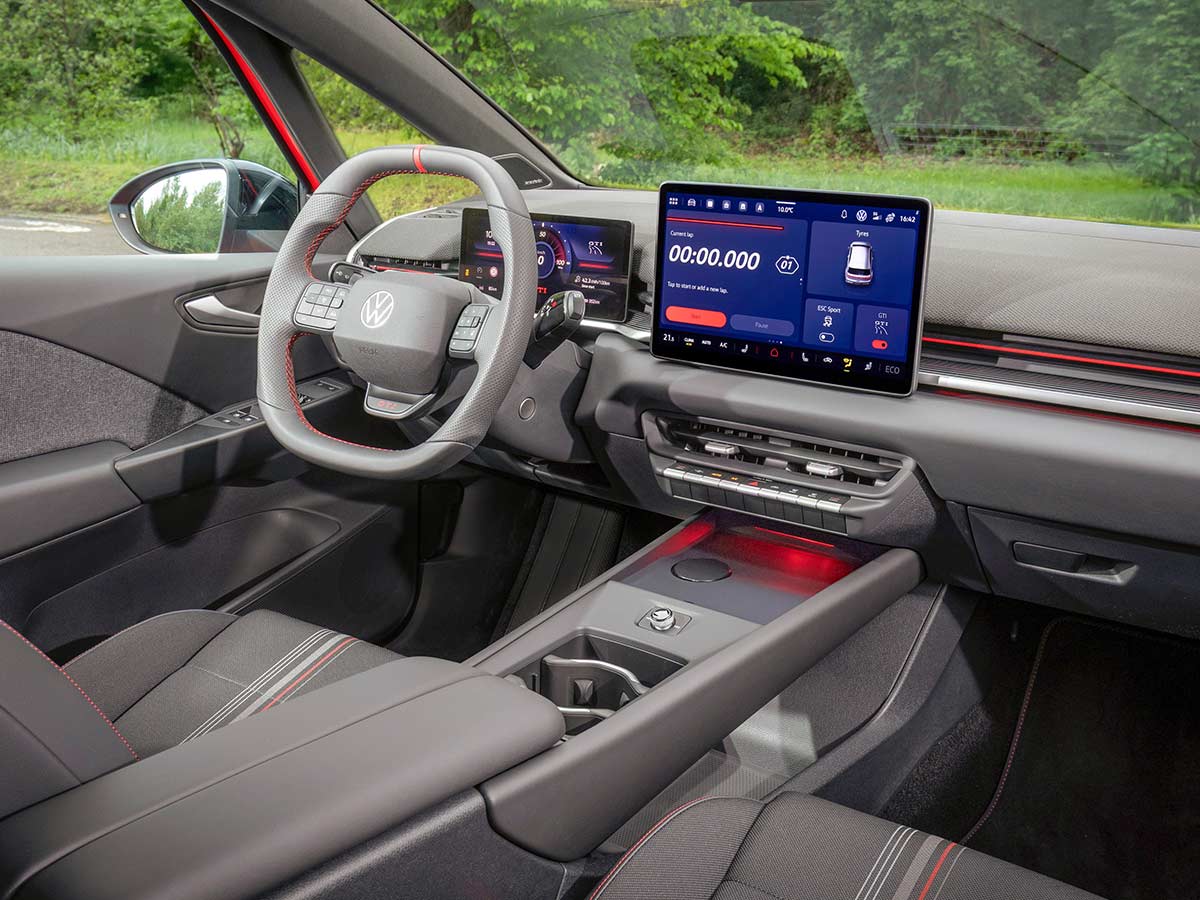
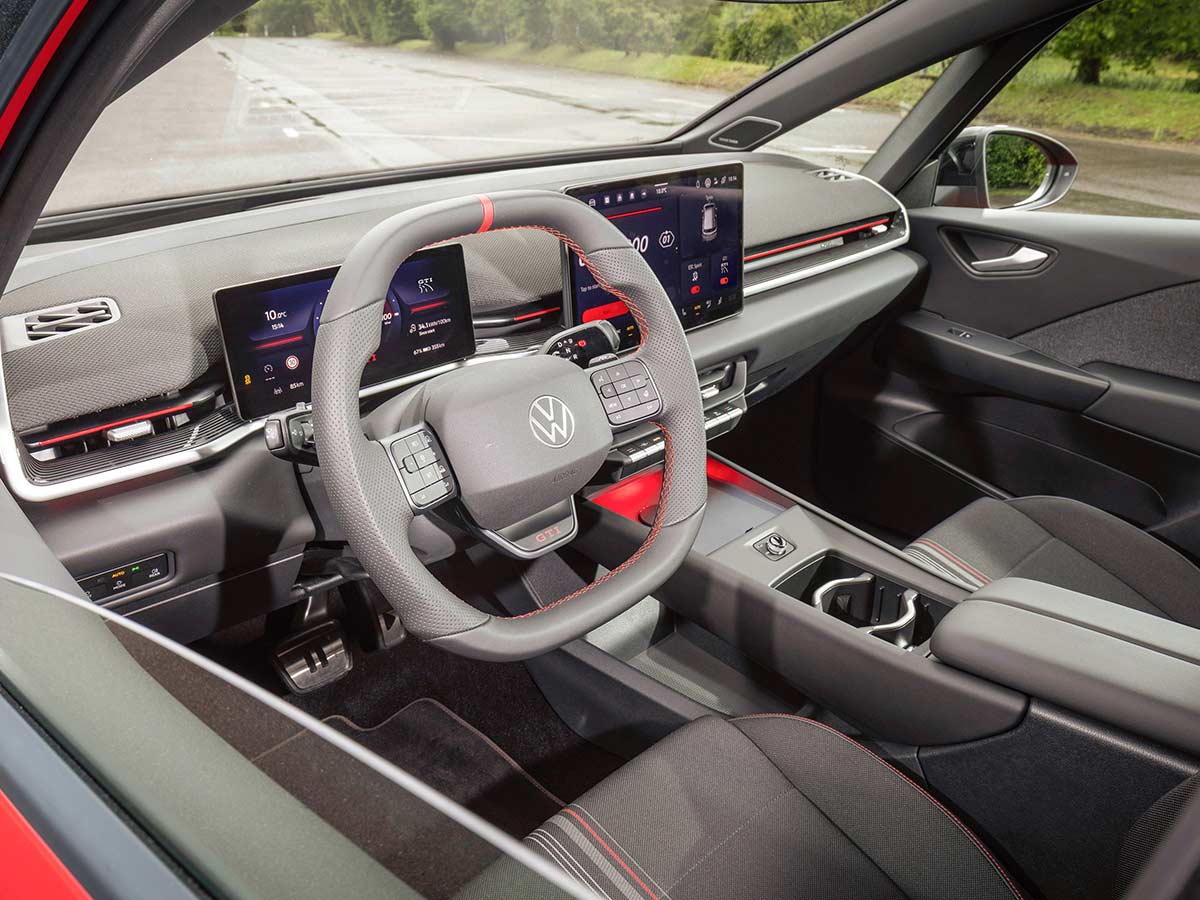
A larger Digital Cockpit sits on the same visual axis as the 12.9-inch Innovision infotainment display. The centre console includes a physical rotary control for functions such as volume and track selection, while the climate-control controls and hazard-light switch are positioned below the infotainment screen.
GTI-specific details provide a visual connection with earlier generations.
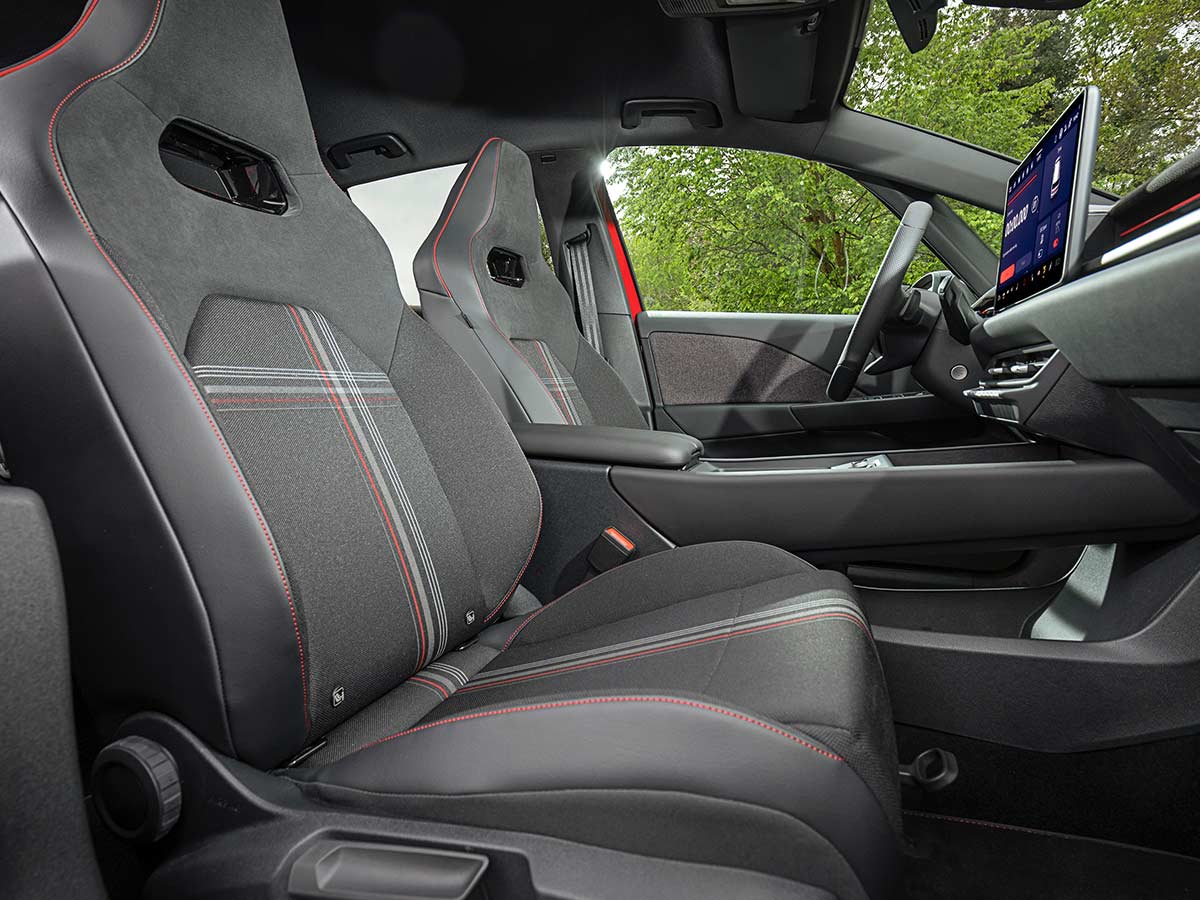
The seats use a modern interpretation of the tartan check pattern associated with the original Golf GTI. Red stitching and a red horizontal dashboard accent continue the familiar GTI colour scheme.
The multifunction sports steering wheel has a red 12 o’clock marker, while the GTI button is integrated at the six o’clock position.
The result is deliberately different from the minimalist interior approach found in some electric vehicles. Volkswagen is using physical controls, dedicated displays and traditional GTI visual references to create a distinct performance identity within the ID.3 family.
Practicality remains part of the brief
The ID.3 GTI is not being positioned as a stripped-out track-focused special.
Volkswagen describes it as an everyday sports car, emphasizing travel comfort, interior space and versatility alongside its performance credentials.
Several optional features reinforce that approach. Available equipment includes a panoramic sunroof, electrically adjustable premium sports seats with memory and massage functions, a 480-watt Harman Kardon audio system and an augmented-reality head-up display.
A removable bracket for a bicycle carrier is also available, with Volkswagen specifying a 75-kg drawbar load for the trailer-coupling system.
There is also a vehicle-to-load function called PowerSocket. Using an adapter connected to the charging interface, the system can supply power to external devices.
Volkswagen specifically highlights the possibility of carrying two e-bikes and recharging them between rides. That is a useful example of how the car’s battery can serve a purpose beyond simply powering the vehicle.
Driver assistance technology gains a new capability
The ID.3 GTI can also be equipped with the latest generation of Volkswagen’s Travel Assist and a memory function for Park Assist Pro.
One notable addition is Travel Assist’s ability, within its system limits, to respond to traffic lights. Volkswagen says that if the system detects a red traffic light, it can automatically brake the vehicle to a standstill.
This does not turn the vehicle into an autonomous car. Volkswagen explicitly states that the driver remains responsible and that the system operates within its defined limits.
That distinction matters with advanced driver assistance systems. A feature that can respond to traffic infrastructure is still an assistance function rather than a substitute for driver attention and responsibility.
How the electric GTI changes the meaning of the badge
The ID.3 GTI represents a fundamental change in GTI hardware while retaining many of the badge’s familiar characteristics.
The original Golf GTI established a formula based on relatively compact dimensions, modest weight compared with larger performance cars, responsive handling and enough everyday usability to make the car practical beyond weekend driving.
The ID.3 GTI applies that philosophy to an electric architecture.
Its performance comes from a rear-mounted electric drive system rather than a turbocharged petrol engine. Its transmission is a single-speed unit rather than a manual or multi-speed automatic. Its energy source is a 79-kWh battery rather than a fuel tank.
Yet the engineering priorities remain recognizable: strong acceleration, responsive steering, controlled body movements, distinctive styling and enough practicality for everyday use.
That makes the ID.3 GTI more than an ID.3 with a larger motor. Volkswagen has developed specific chassis calibration, steering, wheel and tyre specifications, software functions and interior features around the GTI identity.
What remains unconfirmed
The ID.3 GTI is not yet a fully finalized retail vehicle.
Volkswagen’s September 2026 material identifies it as a near-production concept vehicle and states that the model is not yet available for sale. The 5.6-second acceleration time, approximately 29-minute charging time, 601-km range and 14.5 kWh/100 km consumption figure are identified as forecast or preliminary values.
Equipment specifications in the supplied release also refer specifically to the German market, meaning availability and specifications may differ elsewhere.
Pricing has not been provided in the material used for this article.
That distinction is worth keeping in mind as the vehicle approaches production. Final homologation figures, equipment packages, market-specific specifications and pricing may change before customer deliveries begin.
Volkswagen ID.3 GTI: what matters most
The ID.3 GTI’s headline figure is its 326 PS output, but its more interesting story is the combination of technologies behind that number.
It is the first rear-wheel-drive Volkswagen GTI, uses a single-speed electric drivetrain, produces 545 Nm, and combines that power with adaptive DCC suspension, progressive steering and a dedicated GTI mode.
The 79-kWh battery and forecast 601-km WLTP range also give the car a role beyond outright performance. Volkswagen is attempting to preserve the GTI’s traditional combination of speed and everyday usability while replacing the combustion powertrain with electric propulsion.
The result is a GTI that looks back to 1976 through details such as the red stripe, tartan upholstery and Tornado Red paint, while its underlying engineering points firmly toward the next generation of Volkswagen performance cars.
With pre-sales scheduled for the beginning of 2027, the production-specification ID.3 GTI will determine how closely this near-production concept translates its headline figures into the final customer car.
Frequently Asked Questions (FAQs) about the Volkswagen ID.3 GTI
Q: What is the Volkswagen ID.3 GTI?
A: The Volkswagen ID.3 GTI is an all-electric performance hatchback and the first electric model to carry Volkswagen’s GTI badge. It is based on the ID.3 Neo and is being presented as the most powerful series-production GTI in Volkswagen’s five-decade GTI history. The car uses a rear-mounted electric motor driving the rear axle.
Q: How powerful is the Volkswagen ID.3 GTI?
A: The ID.3 GTI produces 240 kW, equivalent to 326 PS, and has a maximum torque output of 545 Nm. Volkswagen describes these figures as the highest power and torque levels offered by a series-production GTI to date.
Q: How fast is the ID.3 GTI from 0 to 100 km/h?
A: Volkswagen forecasts a 0-100 km/h acceleration time of 5.6 seconds. Launch Control is standard and is designed to help transfer the available electric motor torque to the road during hard acceleration. The top speed is electronically limited to 200 km/h.
Q: Is the Volkswagen ID.3 GTI rear-wheel drive?
A: Yes. The ID.3 GTI uses an electric drive motor integrated into the rear axle, making it a rear-wheel-drive GTI. The motor sends its output to the rear wheels through an electric drivetrain.
Q: What battery does the ID.3 GTI use?
A: The ID.3 GTI uses a lithium-ion battery with a net energy capacity of 79 kWh. Volkswagen says the battery supports DC fast charging at up to 183 kW.
Q: What is the range of the Volkswagen ID.3 GTI?
A: Volkswagen forecasts a range of up to 601 km. The company’s preliminary combined energy-consumption figure is 14.5 kWh/100 km. These are forecast values rather than final certified production figures.
Q: How long does the ID.3 GTI take to charge?
A: Volkswagen forecasts that the 79-kWh battery can charge from 10 to 80 percent in around 29 minutes using a compatible DC fast charger operating at up to 183 kW.
Q: Does the ID.3 GTI have a dedicated GTI driving mode?
A: Yes. GTI mode is standard equipment alongside Eco, Comfort, Sport and Individual driving profiles. Activating GTI mode changes the power delivery, progressive steering and adaptive DCC sports chassis settings to their sportiest configuration. Launch Control can also be activated in this mode.
Q: What suspension does the Volkswagen ID.3 GTI have?
A: The ID.3 GTI is equipped as standard with an adaptive DCC sports chassis. The system allows the vehicle’s damping characteristics to be adjusted according to the selected driving profile, giving the car a broader range between everyday comfort and sportier chassis settings.
Q: What makes the ID.3 GTI look different from the regular ID.3?
A: The GTI receives several traditional GTI design cues, including a red horizontal stripe between the headlights, a black honeycomb grille, red exterior details and a motorsport-inspired front splitter. It also gets standard 20-inch Wörthersee alloy wheels, black exterior mirror caps and GTI-specific styling elements.
Q: Does the ID.3 GTI have a GTI-style interior?
A: Yes. The cabin features premium sports seats with a modern interpretation of the classic GTI tartan-check pattern, red stitching, GTI-specific instruments and a sports steering wheel with a red 12 o’clock marking. A red GTI button is integrated into the steering wheel to activate GTI mode.
Q: What infotainment system does the ID.3 GTI use?
A: The ID.3 GTI has a larger Digital Cockpit and a 12.9-inch, or 32.77-cm, Innovision infotainment display. Volkswagen has also added a physical button strip for climate functions and a rotary control on the centre console for volume and media functions.
Q: Is the Volkswagen ID.3 GTI practical for everyday use?
A: Volkswagen positions the ID.3 GTI as an everyday performance car, combining its performance hardware with travel comfort and flexible interior space. Optional equipment includes a panoramic sunroof, massage and memory functions for the sports seats, a 480-watt Harman Kardon sound system and an augmented-reality head-up display.
Q: Can the ID.3 GTI power external devices?
A: Yes. The car can be equipped with a vehicle-to-load function called PowerSocket. An adapter connected to the charging interface can supply power to external devices. Volkswagen highlights the ability to use the system to recharge e-bikes carried on the vehicle.
Q: Does the ID.3 GTI have advanced driver-assistance systems?
A: Optional systems include Park Assist Pro with a new memory function and the latest generation of Travel Assist. Volkswagen says the updated Travel Assist can respond to traffic lights within its system limits, including automatically braking the vehicle to a standstill when a red traffic light is detected. The driver remains responsible for the vehicle.
Q: When will the Volkswagen ID.3 GTI go on sale?
A: Volkswagen says pre-sales of the ID.3 GTI are scheduled to begin at the start of 2027. The September 2026 announcement describes the vehicle as a near-production concept, so it is not yet available for sale.
Q: How much will the Volkswagen ID.3 GTI cost?
A: Volkswagen has not provided a confirmed price in the supplied media information. Pricing should therefore not be assumed until Volkswagen announces market-specific pricing.
Q: Is the ID.3 GTI’s range figure final?
A: No. Volkswagen identifies the 601-km maximum range, 14.5 kWh/100 km combined consumption, 5.6-second 0-100 km/h time and approximately 29-minute 10-80 percent charging time as forecast or preliminary figures. Final certified figures may differ.
Source: Volkswagen