







Volkswagen’s second-generation Atlas Cross Sport arrives with a more dramatic silhouette, a thoroughly reworked cabin, more power, richer technology and a broader suite of driver assistance systems.
Volkswagen has taken the wraps off the all-new 2027 Atlas Cross Sport, and the changes go considerably deeper than a fresh set of styling cues.
The second-generation five-seat SUV is being repositioned as the more emotional member of Volkswagen’s Atlas family, trading some of the upright practicality of its three-row sibling for a lower roofline, tighter proportions and a distinctly more athletic appearance. Beneath the new bodywork is an extensively reworked interior, a more powerful version of Volkswagen’s turbocharged four-cylinder engine, upgraded connectivity and a significantly expanded technology package.
It is a formula that reflects where the midsize SUV market has moved. Buyers still want space, towing ability and everyday usability, but increasingly expect those fundamentals to arrive with an interior that feels sophisticated and technology that does more than simply mirror a smartphone.
The new Atlas Cross Sport is Volkswagen’s answer.
>>> Great Discounts on Car & Bike Accessories <<<
A More Deliberate Shape
The first Atlas Cross Sport went on sale for the 2020 model year as Volkswagen’s design-led alternative to the conventional three-row Atlas. More than 220,000 have been sold in the United States since its introduction.
For 2027, Volkswagen has leaned harder into that distinction.
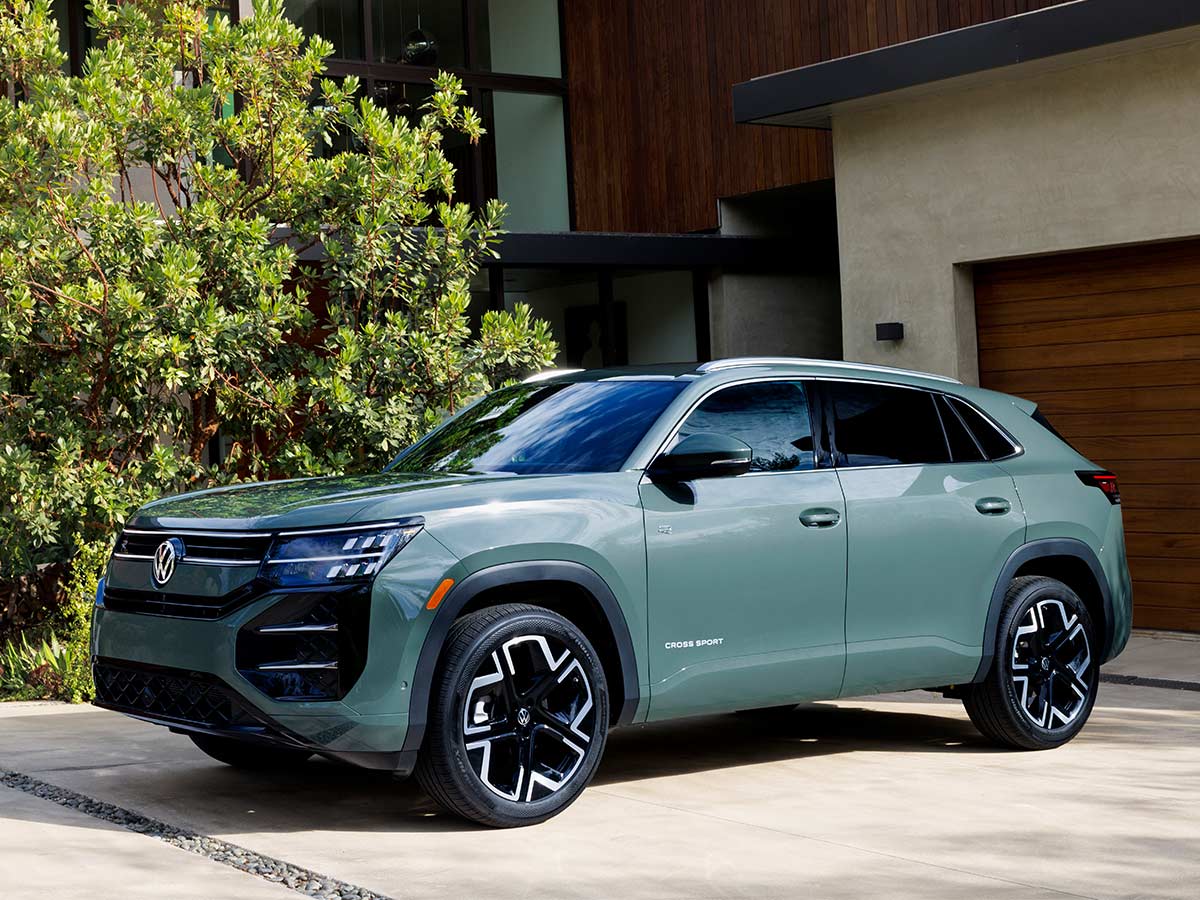
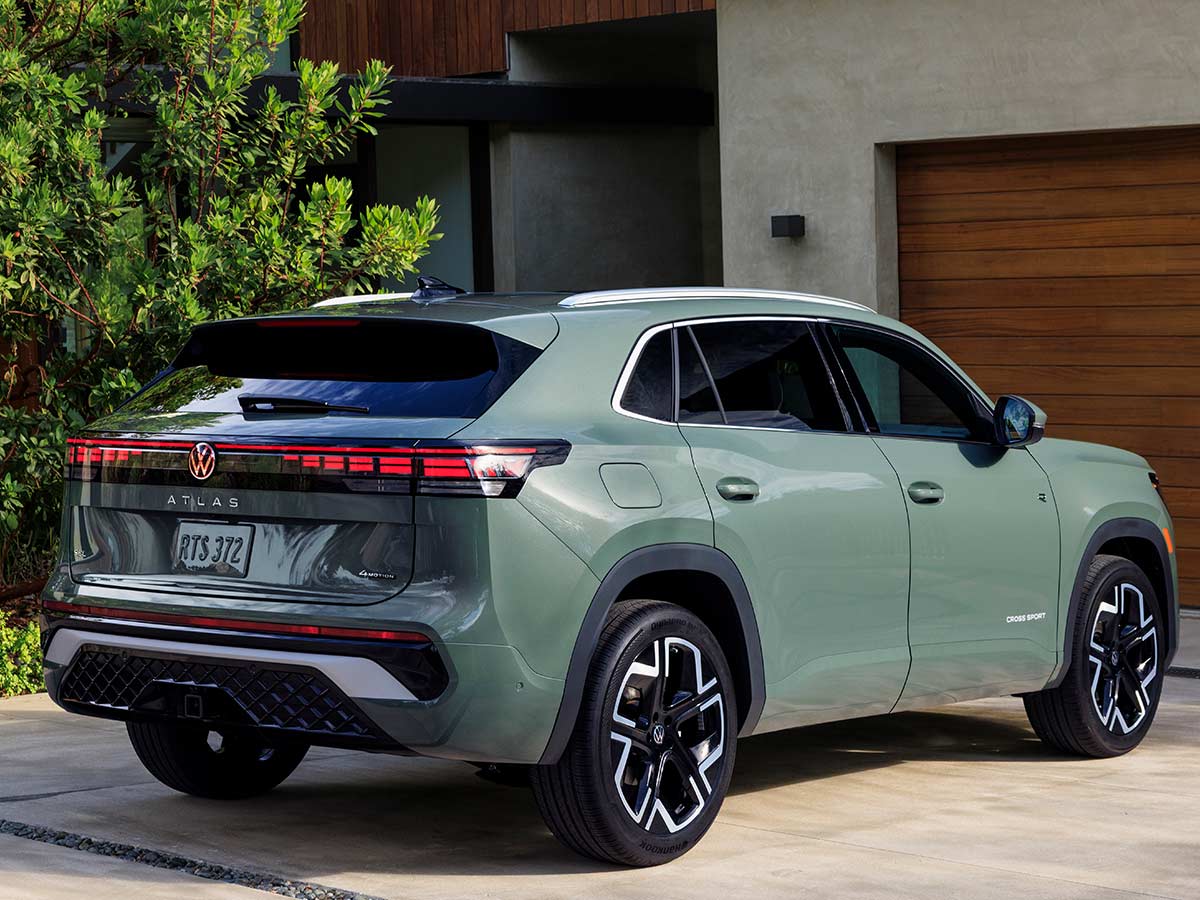
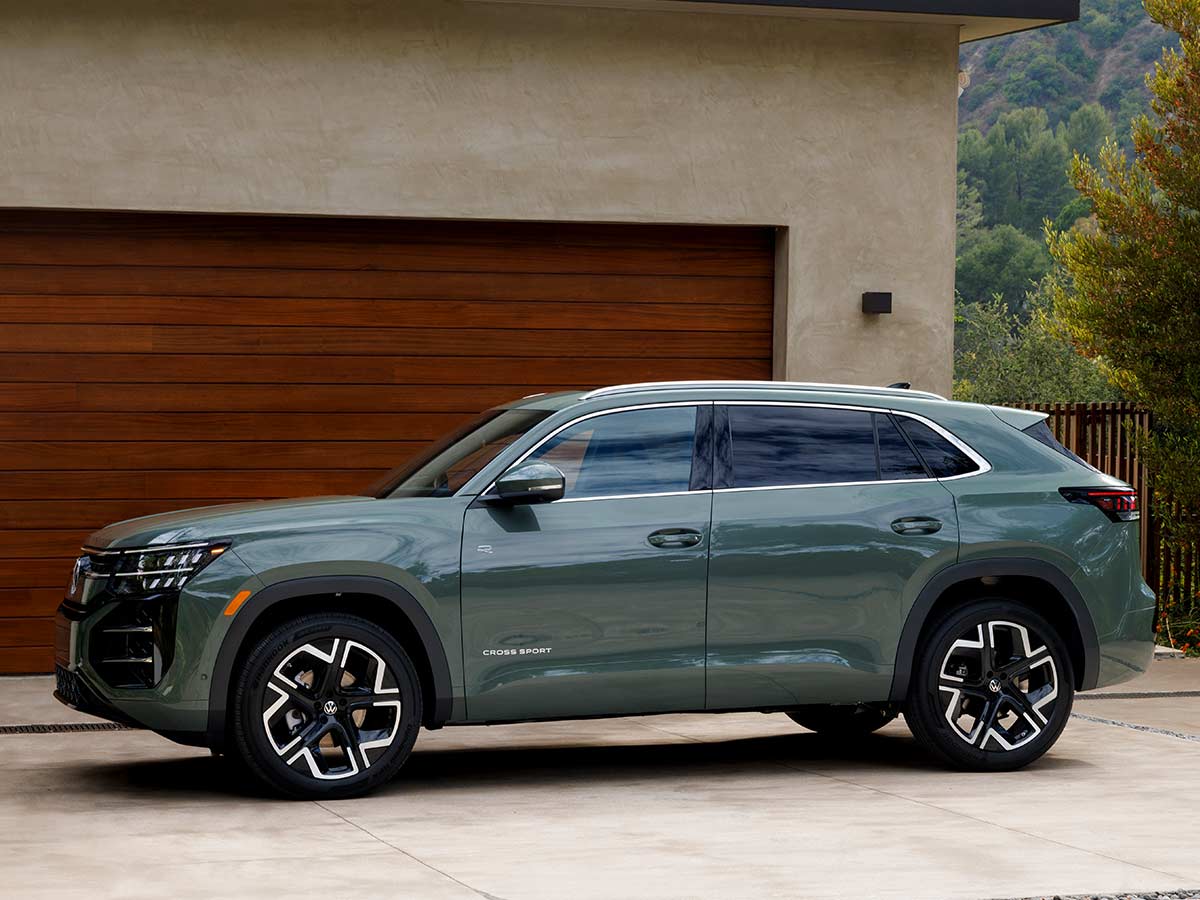
At 195.6 inches long, the new Cross Sport is 5.4 inches shorter than the seven-seat Atlas. It is also 2.1 inches lower. Much of the visual difference comes from the dramatically sloping rear pillars and shorter rear overhang, which give the five-seater a noticeably sportier stance.
That proportion is important. Rather than attempting to disguise the Cross Sport’s relationship with the Atlas, Volkswagen has made the difference the point. The roofline drops away toward the rear, the body sits heavily over its wheels and the surfacing is cleaner and more defined.
Exterior designer William Lee describes the effect as a combination of low cabin height and short overhangs that gives the SUV a planted appearance. The design also makes greater use of body-color elements, moving the Cross Sport toward a more upscale visual character without abandoning its SUV proportions.
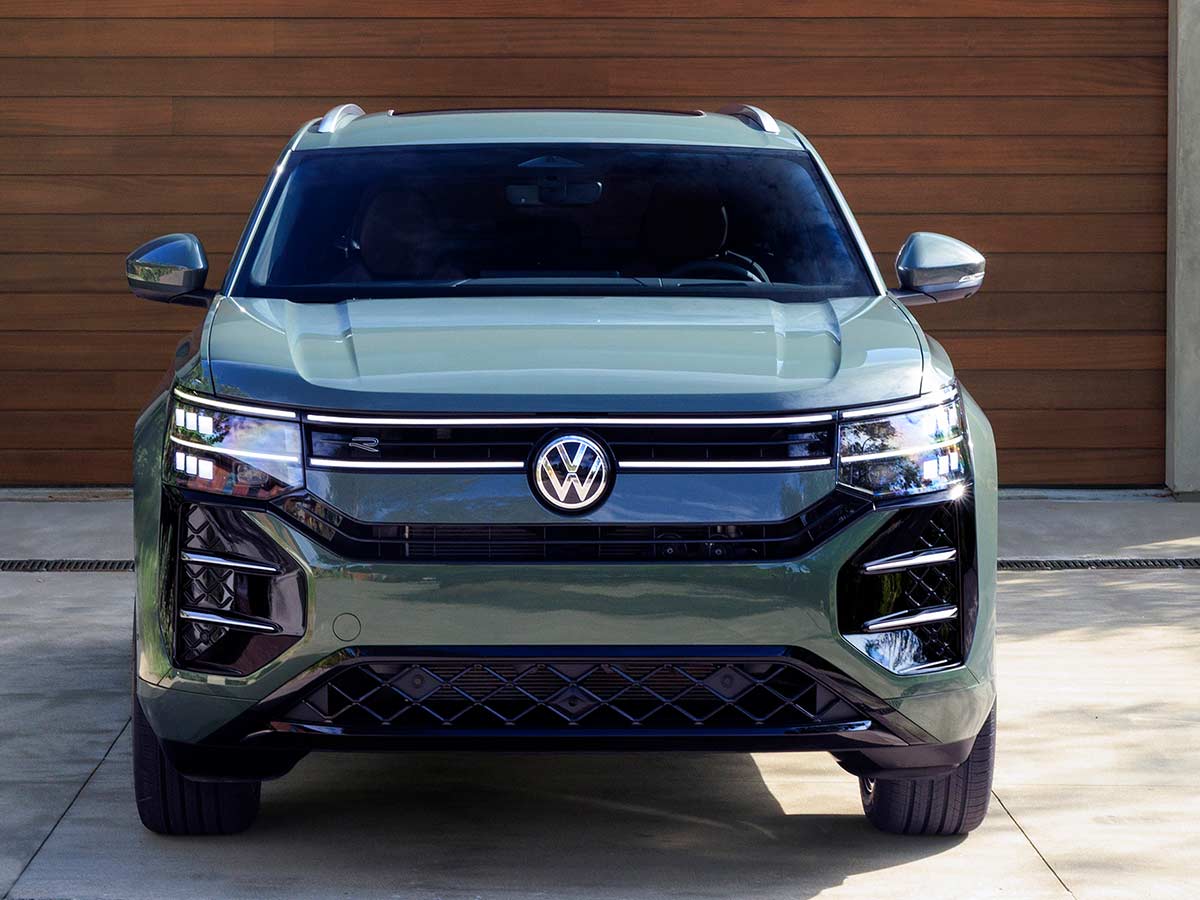
At the front, the transformation is especially obvious.
The new face combines a broad, powerful hood with double-stacked LED headlights and a masked upper grille. On all but the base trim, Volkswagen adds illuminated lightlines and an illuminated VW badge, creating a distinctive signature after dark.
The lighting treatment continues around the vehicle. Dynamic rear lighting mirrors the front’s visual theme, while standard dynamic turn signals incorporate coming-home and leaving-home animations.
It is a small detail, but one that illustrates Volkswagen’s broader approach to this generation: the company is paying attention not only to how the Atlas Cross Sport looks in a showroom, but also to how it presents itself in everyday use.
The rear is perhaps the clearest expression of the new design. The coupe-like pillar meets a short overhang, while the tailgate sits flush with the rear bumper for a cleaner transition between the body and lower rear fascia.
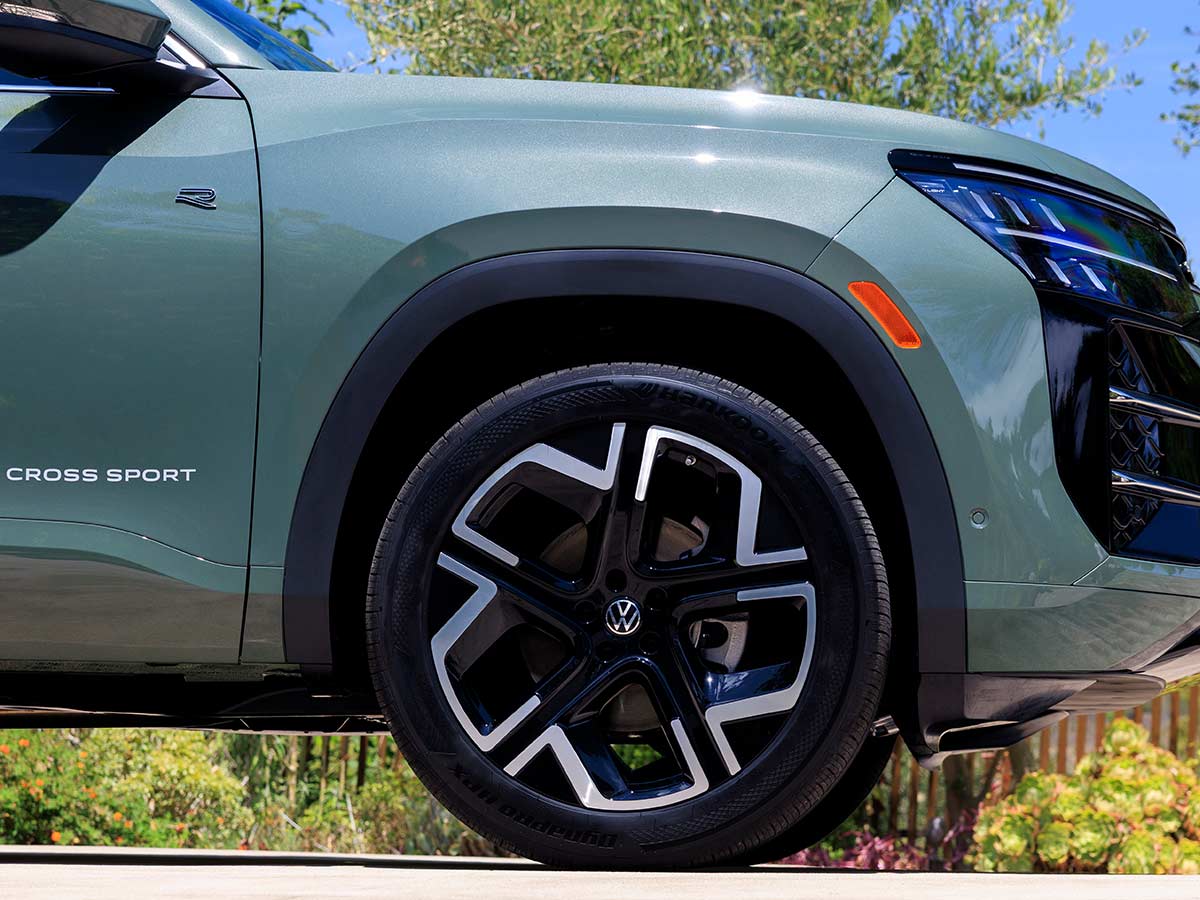
Wheel designs have also been revised. Entry models ride on 18-inch wheels, while higher trims receive new 20- and 21-inch aluminum-alloy designs. Machined and black finishes are available.
Three exterior colors join the palette: Dark Sage Metallic, Blackberry Metallic and Sandstone.
The Cabin Gets a Much Bigger Makeover
If the exterior establishes a more sophisticated personality, the interior is where Volkswagen has made the more consequential transformation.
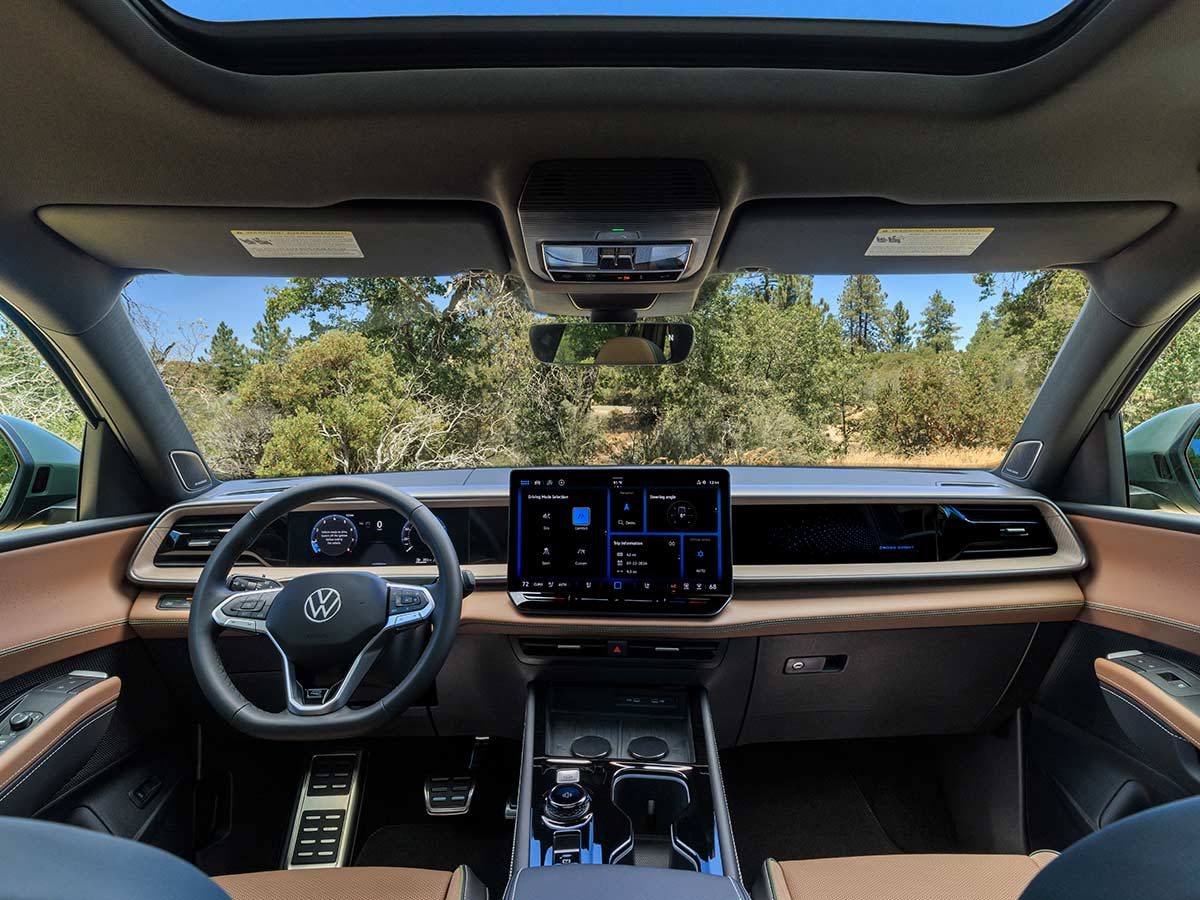
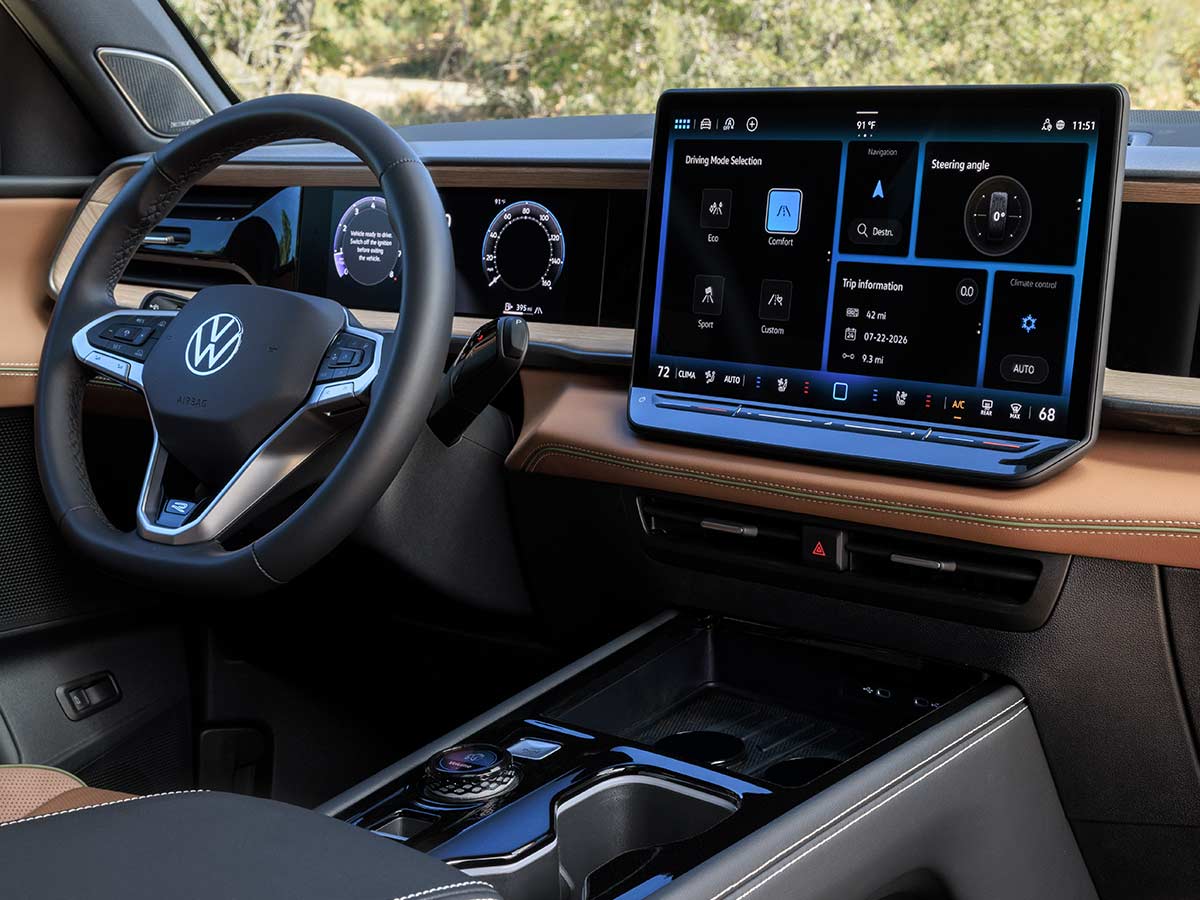
The cabin has been completely reimagined around what Volkswagen describes as a bold architectural loop running through the cockpit. Rather than relying on an abundance of decorative elements, the design uses broad surfaces, contrasting materials and carefully integrated lighting to create a more cohesive environment.
Soft-touch materials are used extensively, while gray wood trim is standard. The revised door-handle position also contributes to a cleaner door-panel design.
Three primary interior color themes are offered: Pebble Grey, Black and a medium brown. Depending on specification, buyers can also get contrasting stitching, including an available olive-green treatment that adds a sportier accent.
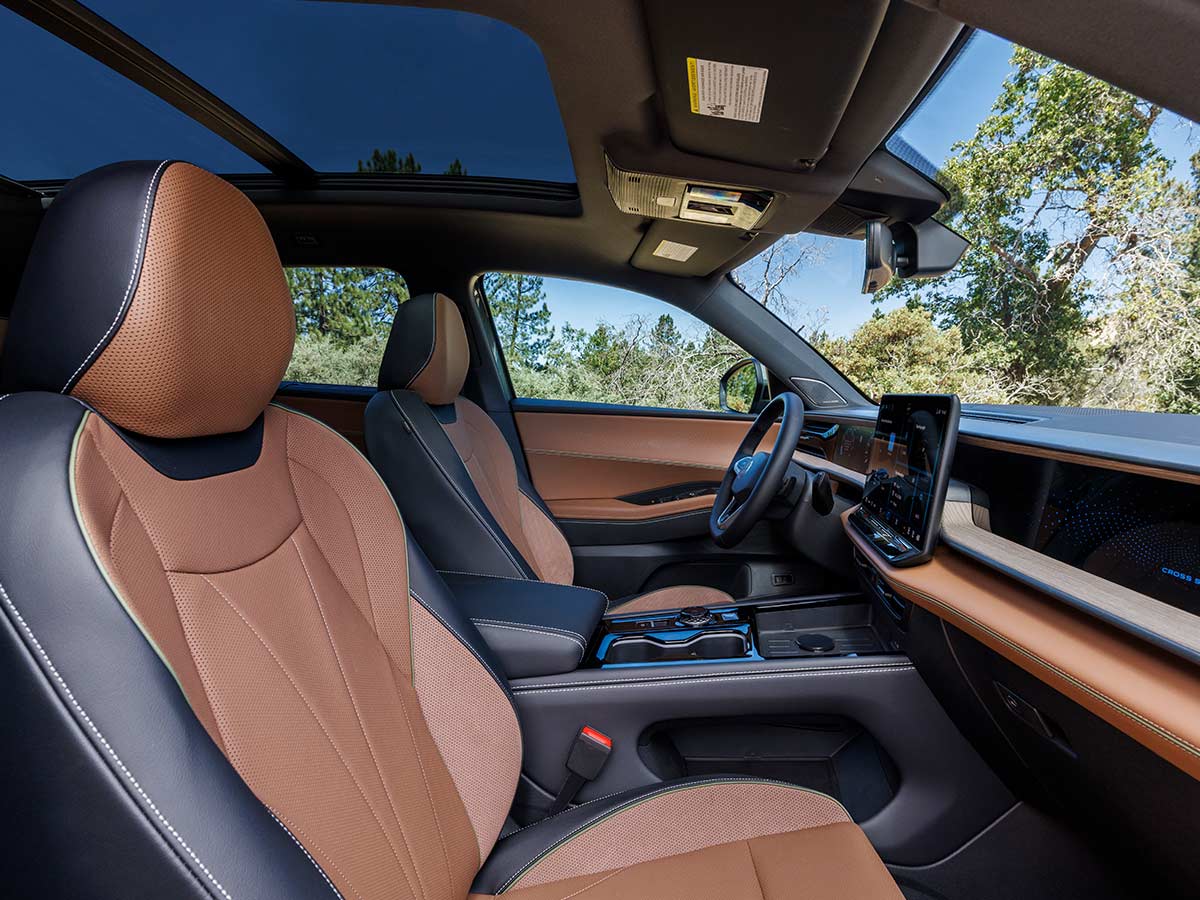
Material choices vary by trim. Leatherette is standard on entry versions, while upper trims move into Varenna leather and, at the top of the range, Nappa leather.
The ambient lighting system is similarly ambitious.
Ten-color ambient lighting is standard, with 30 colors available on the two highest trims. Volkswagen’s new “Atmospheres” function links the lighting environment with audio settings, allowing the cabin to shift between different moods rather than functioning simply as decorative illumination.
On higher-spec models, the lighting extends into a distinctive perforated pattern in the doors. The result is intended to make the interior feel less like a collection of individual components and more like a single designed environment.
Comfort Becomes Part of the Formula
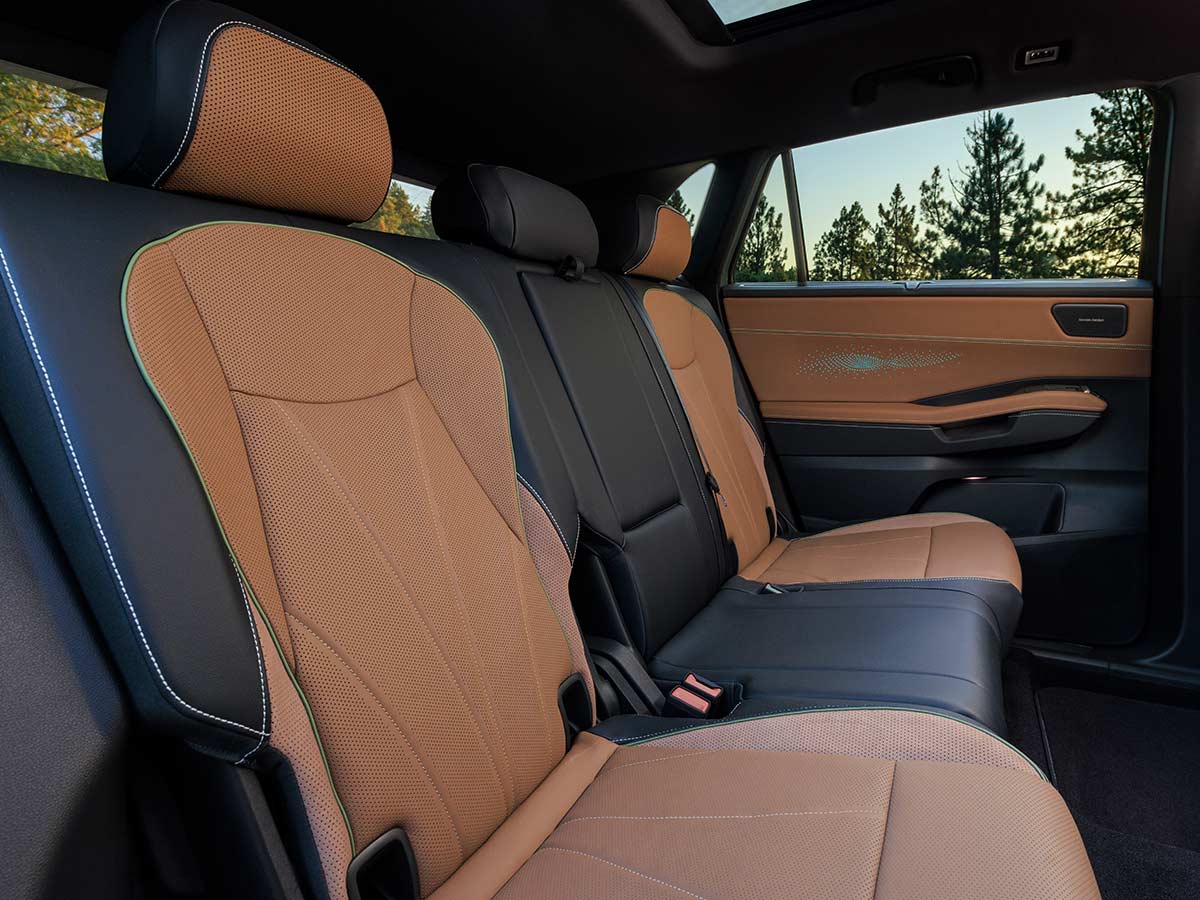
The Atlas Cross Sport has never been intended as a cramped alternative to a conventional SUV, and Volkswagen says the new generation retains its generous rear-seat legroom and substantial cargo area despite its more dramatically sloped roofline.
The seating itself receives substantial attention.
Every model gets a revised 12-way driver’s seat with improved four-way lumbar adjustment. Higher trims add additional thigh support and an enhanced full-back massage function for both the driver and front passenger.
That last detail is notable because massaging seats are no longer confined to luxury-brand territory. Volkswagen is bringing the feature into a mainstream midsize SUV while also adding passenger-seat memory on higher versions.
A panoramic sunroof remains available on most trims.
Volkswagen has also expanded the equipment that affects everyday convenience. A power liftgate with Easy Open is now standard, along with rear sunshades, an auto-dimming driver’s-side mirror, dual hatch lights and front and rear Park Distance Control.
These are not headline-grabbing features individually. Together, however, they show where the new Atlas Cross Sport is trying to compete: not simply on size or horsepower, but on how effortless the vehicle is to live with.
Technology Without the Gadget Overload
The dashboard is dominated by a new free-standing infotainment display.
The base model receives a 12.9-inch screen, while 15 inches becomes available on most of the lineup. Every Atlas Cross Sport also gets Volkswagen’s 10.25-inch Digital Cockpit Pro configurable instrument display.
One of the more interesting additions is the Driver Experience Dial mounted in the center console. It controls audio volume, drive modes and the Atmospheres feature, giving the driver a physical control for functions that might otherwise be buried inside a touchscreen.
Wireless charging has also been updated to Qi2, with enough space for two phones to charge side by side. Five USB-C ports are distributed throughout the cabin.
Audio equipment ranges from a new standard nine-speaker system on the base Atlas Cross Sport to a 14-speaker Harman Kardon system on the top trim.
Volkswagen is also changing how its connected services are packaged for 2027. Premium connected-vehicle functions enabled by myVW+ are being bundled into a single in-vehicle Premium subscription.
Depending on the vehicle and subscription, that package can include navigation with real-time traffic and online points of interest, generative-AI-enabled speech functionality, access to more than 30,000 radio stations and more than one million podcasts, a Wi-Fi hotspot for up to four devices, AirConsole gaming while parked and myQ Connected Garage functionality.
The important shift here is that the infotainment system is becoming more of a platform than a single screen. Navigation, voice interaction, entertainment, garage access and other connected services increasingly converge in the vehicle itself.
Driver Assistance Moves Forward
The 2027 Atlas Cross Sport also introduces several meaningful changes to Volkswagen’s IQ.DRIVE driver-assistance suite.
A new front-center airbag increases the total airbag count to seven.
Travel Assist, Volkswagen’s hands-on semi-automated driving system, gains driver-initiated lane-change capability. Emergency Assist Plus has also been upgraded so that, if the system detects a medical emergency, it can guide the vehicle toward the roadside.
Higher trims add the latest Park Assist Plus system, while Predictive Adaptive Cruise Control becomes available on the upper two trims.
Predictive Adaptive Cruise Control is particularly interesting because it uses route information from the vehicle’s navigation system to influence speed when adaptive cruise control is active. The system can account for situations such as curves, roundabouts, exit ramps and speed bumps, primarily on urban and rural roads.
None of these technologies removes the driver from the equation. Instead, Volkswagen is attempting to reduce the workload associated with repetitive driving situations while keeping the driver responsible for supervising the vehicle.
That distinction matters as driver assistance becomes increasingly sophisticated across the industry.
More Power From a Familiar Formula
Under the hood, Volkswagen has retained the 2.0-liter turbocharged and direct-injection four-cylinder TSI engine, but the hardware underneath is substantially revised.
The latest evo5 version of the EA888 engine introduces a variable-geometry turbocharger and produces 282 horsepower and 258 pound-feet of torque.
That represents a 13-horsepower increase over the outgoing engine, making it the most powerful engine ever offered in the Atlas Cross Sport.
Volkswagen also anticipates improved fuel economy despite the increase in output, although final EPA ratings have not yet been announced.
The engine is paired with an eight-speed automatic transmission featuring Tiptronic manual shifting. Front-wheel drive remains standard, while Volkswagen’s 4Motion all-wheel-drive system is available across the range.
Towing capacity remains a substantial 5,000 pounds on models equipped with the factory-installed trailer hitch.
That figure helps preserve an important part of the Atlas Cross Sport’s identity. Despite its more expressive styling and increasingly premium cabin, this is still intended to be a useful midsize SUV rather than a fashion-first crossover.
The Architecture Beneath It
The new Atlas Cross Sport moves to Volkswagen’s upgraded MQB Evo architecture.
That matters less as a marketing headline than it does as an indication of how Volkswagen is evolving the underlying vehicle. The platform provides the foundation for the new powertrain, electrical and driver-assistance technologies while allowing the Cross Sport to maintain the interior space that has been central to the Atlas formula.
Volkswagen is also retaining production in Chattanooga, Tennessee, where the Atlas and Atlas Cross Sport are built alongside one another.
The Atlas family has become a major part of Volkswagen’s U.S. business, accounting for roughly one-third of the brand’s sales in the country.
That makes the second-generation Cross Sport more than a styling exercise. It is a significant product for Volkswagen’s American strategy.
What Comes Next
There is one notable piece of the 2027 Atlas Cross Sport story that Volkswagen is not launching immediately: electrification.
A hybrid version is planned for the model’s midcycle refresh rather than initial launch. That means the 2027 model arrives with a conventional turbocharged gasoline powertrain while the broader Atlas family prepares for a future in which hybrid technology plays a larger role.
For now, Volkswagen is concentrating on refining the fundamentals.
The new Atlas Cross Sport is more visually distinctive than its predecessor, more carefully finished inside, more powerful under the hood and substantially more sophisticated in its use of technology. Crucially, those changes do not come at the expense of the characteristics that made the original successful: five-seat usability, generous passenger space, available all-wheel drive and a 5,000-pound towing rating.
Pricing, final specifications and EPA fuel-economy figures will be announced closer to the vehicle’s early-2027 launch.
Until then, the new Atlas Cross Sport makes a clear statement about Volkswagen’s direction in the midsize SUV segment. The company is not trying to turn its five-seat Atlas into a sports car or a luxury SUV. Instead, it is sharpening the vehicle’s personality while adding the kind of comfort, connectivity and assistance technology that modern SUV buyers increasingly expect.
And that may be the most important change of all. The 2027 Atlas Cross Sport is designed to feel less like a smaller Atlas and more like a vehicle with a distinct reason to exist.
Source: Volkswagen