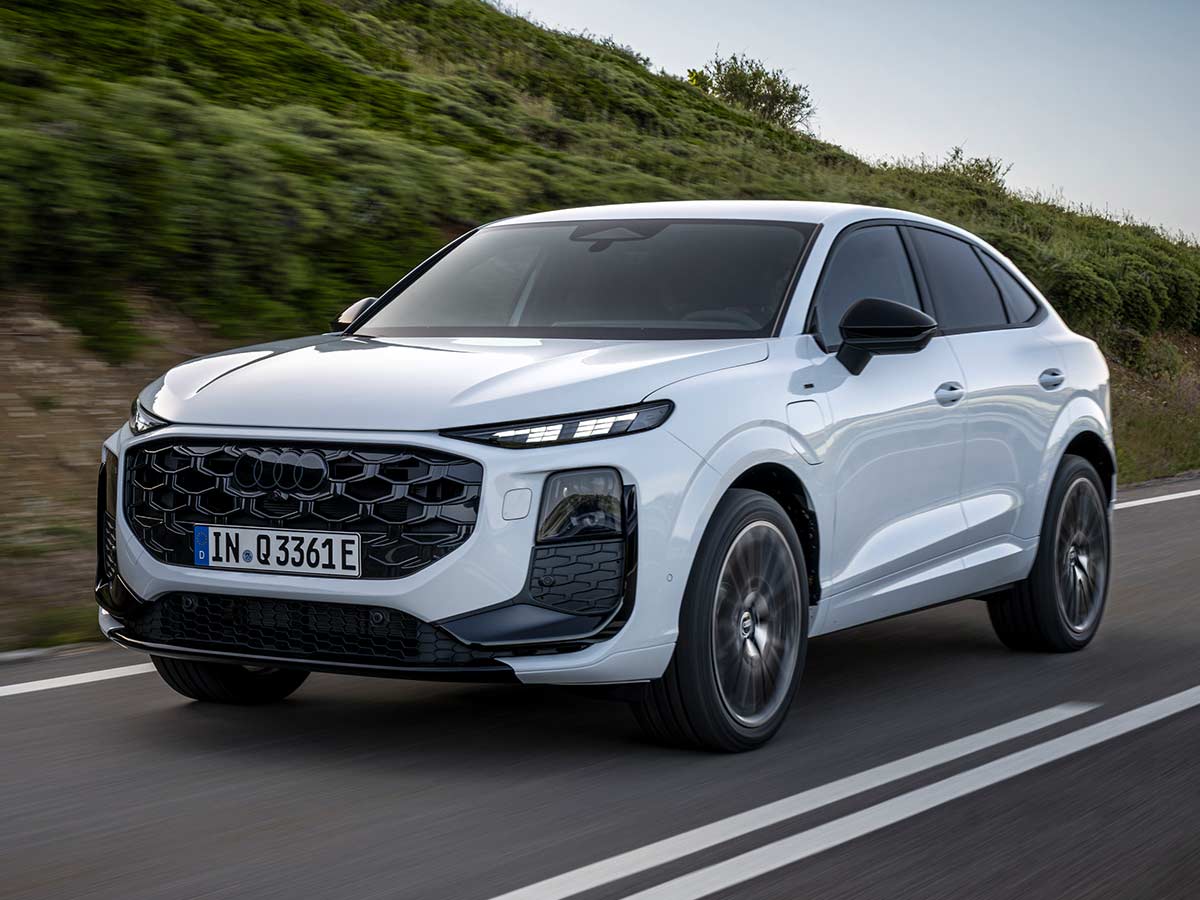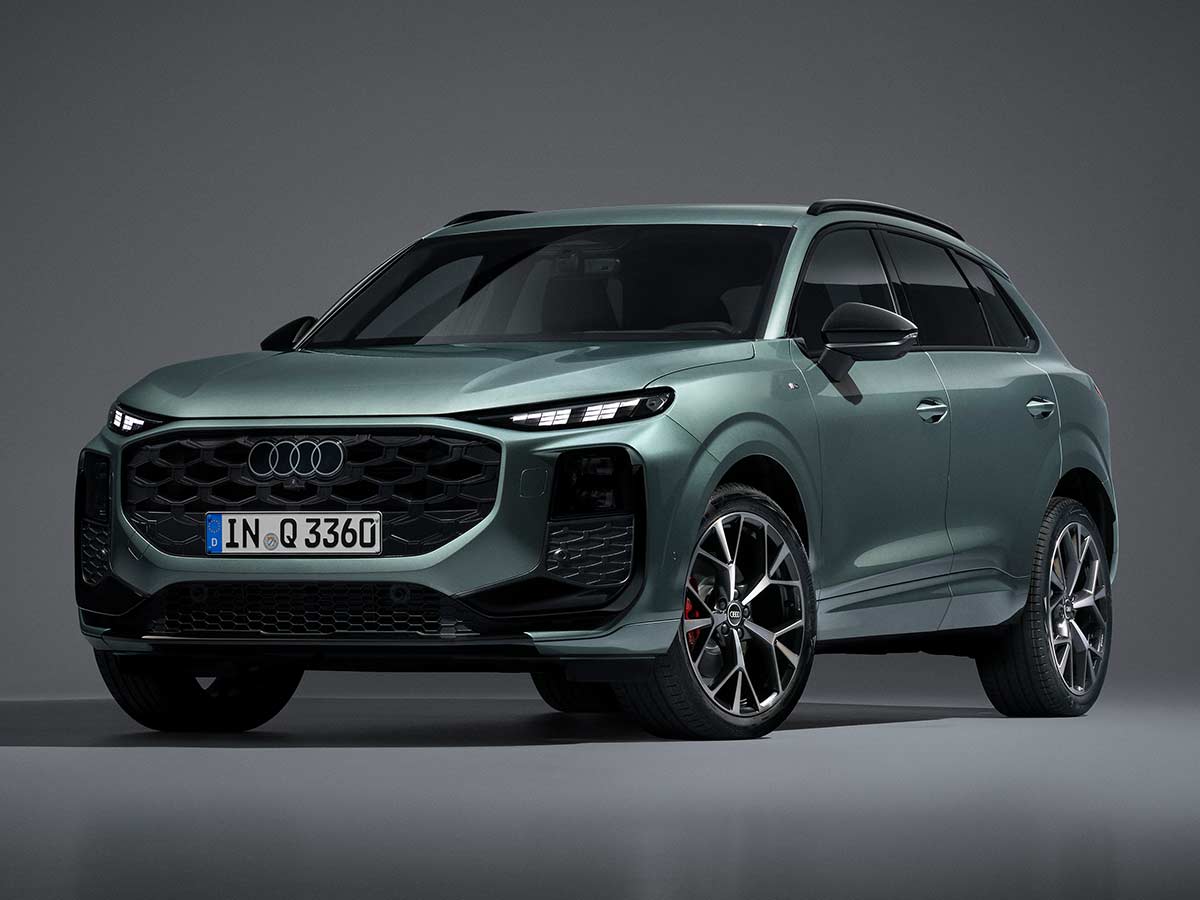







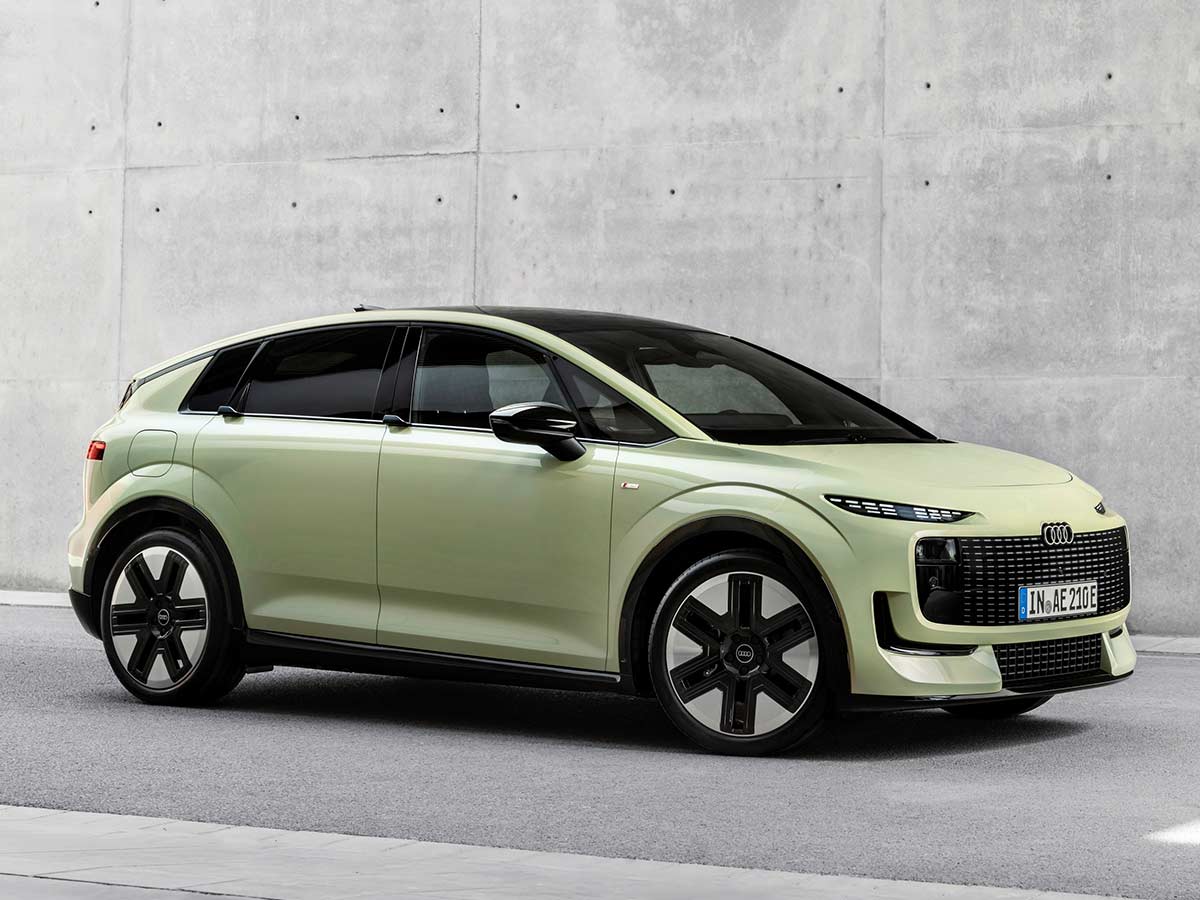
There is a particular kind of silence that belongs to an electric car at speed. No combustion pulse, no rising mechanical crescendo, just the muted rush of air and tires against asphalt. In the Audi A2 e-tron, that silence is not merely an EV characteristic. It is the starting point for the car’s entire philosophy.
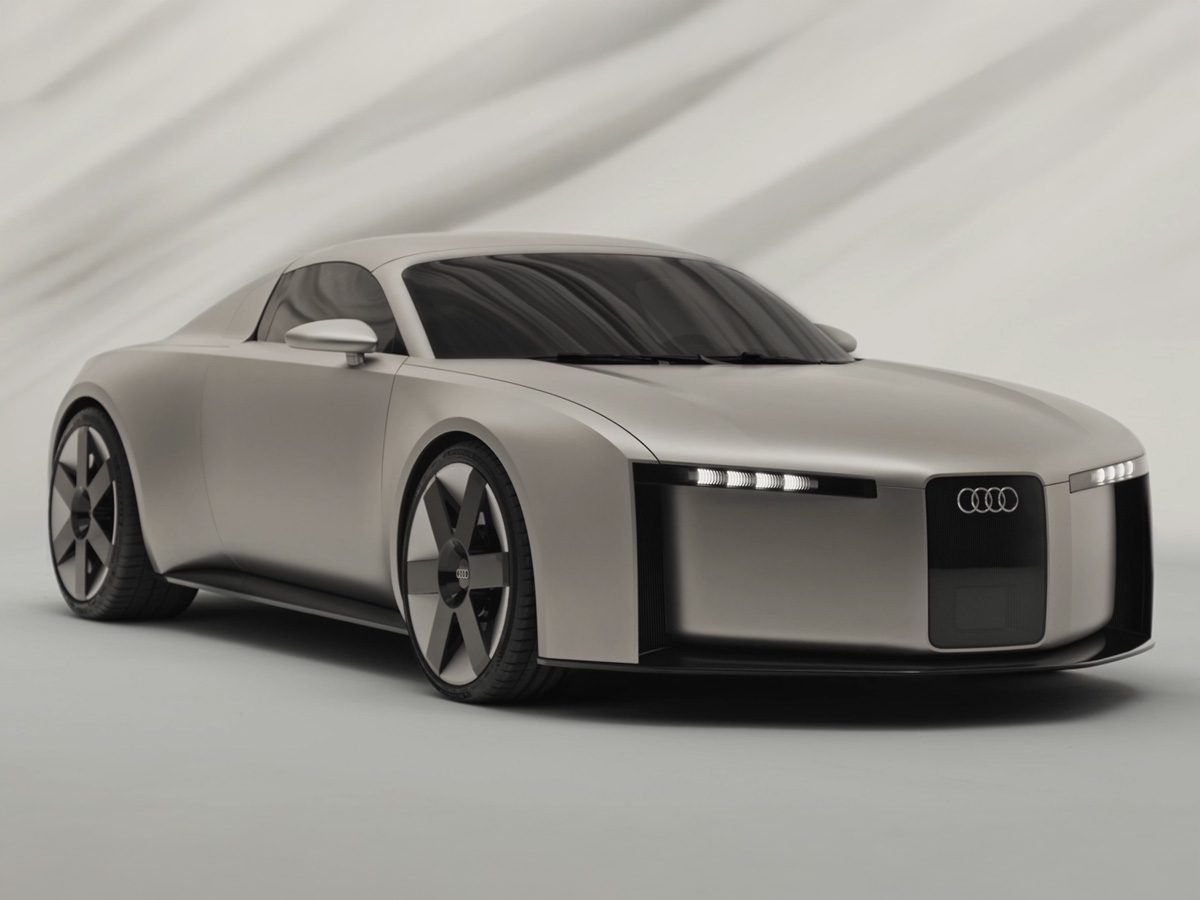
The new Audi A2 e-tron is a compact electric model developed in Germany and built at Audi’s Ingolstadt plant. Its defining achievement is efficiency: with an optional efficiency package, the 140 kW version consumes as little as 12.8 kWh/100 km under WLTP, making the A2 e-tron the most efficient Audi production model in the company’s history. Depending on configuration, it can travel up to 646 kilometers on a single charge. Those numbers matter because they point to a different idea of premium electric mobility, one built less around brute-force performance or ever-larger batteries and more around doing more with less.
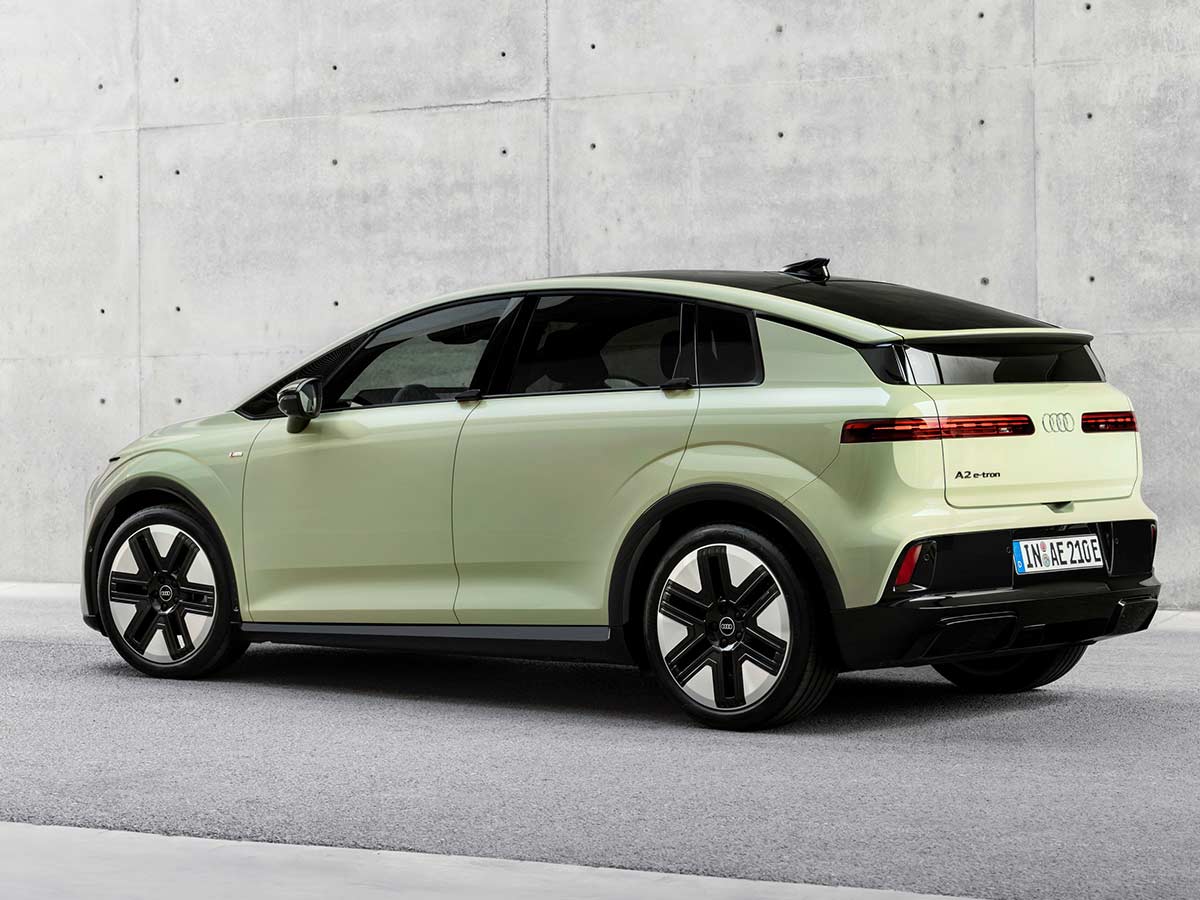
That philosophy is visible everywhere. The Audi A2 e-tron has a drag coefficient of 0.24, a 2.77-meter wheelbase, three battery capacities, four power outputs, rear-wheel drive and permanent-magnet synchronous motors. It can be specified with as much as 240 kW and 545 Nm, while the range-topping version reaches 100 km/h from rest in 5.7 seconds. Yet even that performance flagship remains fundamentally an efficiency exercise.
>>> Great Discounts on Car & Bike Accessories <<<
Audi A2 e-tron: Specs at a glance
- Model: Audi A2 e-tron, 2026 model year
- Power outputs: 125, 140, 170 and 240 kW
- Maximum torque: 350 Nm, rising to 545 Nm in the 240 kW model
- Drive: Rear-wheel drive
- Motor: Permanent-magnet synchronous electric motor
- Battery sizes: 52, 61 and 84 kWh gross
- Maximum WLTP range: Up to 646 km
- Best WLTP consumption: 12.8 kWh/100 km
- Drag coefficient: 0.24
- 0-100 km/h: 5.7 seconds in the 240 kW version
- Maximum DC charging: Up to 183 kW
- 10-80% DC charging: As little as 24 minutes, depending on battery
- Cargo capacity: 396 to 1,336 liters
- German starting price: €38,200
- German orders: From September 10, 2026
- First deliveries: December 2026
The Audi A2 e-tron is engineered around efficiency
Efficiency is easy to claim and considerably harder to engineer. In the A2 e-tron, Audi has attacked the problem from several directions simultaneously.
The 0.24 drag coefficient is the headline figure, but the more interesting story lies in how the body achieves it. The underbody is largely enclosed, the front cooling-air intake opens only when necessary, and aerodynamic treatment extends into the wheel arches. Gap reducers narrow the space between tire and wheel housing, while gap breathers and front air curtains help control turbulence. Even the aero wheels are designed around the transition between tire and rim.
The result is a car that treats the air itself as an engineering component.
At highway speeds, where aerodynamic drag becomes increasingly important, details that would otherwise disappear into the design language begin to matter. The sweeping roofline, tight surfaces and short overhangs are not simply aesthetic decisions. They are part of the A2 e-tron’s energy strategy.
Audi has also worked on the acoustic side of that equation. Dual door seals, optimized mirror housings, a carefully shaped water-deflector channel and an acoustic windshield are intended to suppress wind and road noise. The optional acoustic glazing for the front doors goes further. In an electric vehicle, where the absence of engine noise exposes every other sound, that attention to aeroacoustics is particularly significant.
Four powertrains, three batteries, one rear-drive philosophy
The A2 e-tron range is unusually broad for a compact EV.
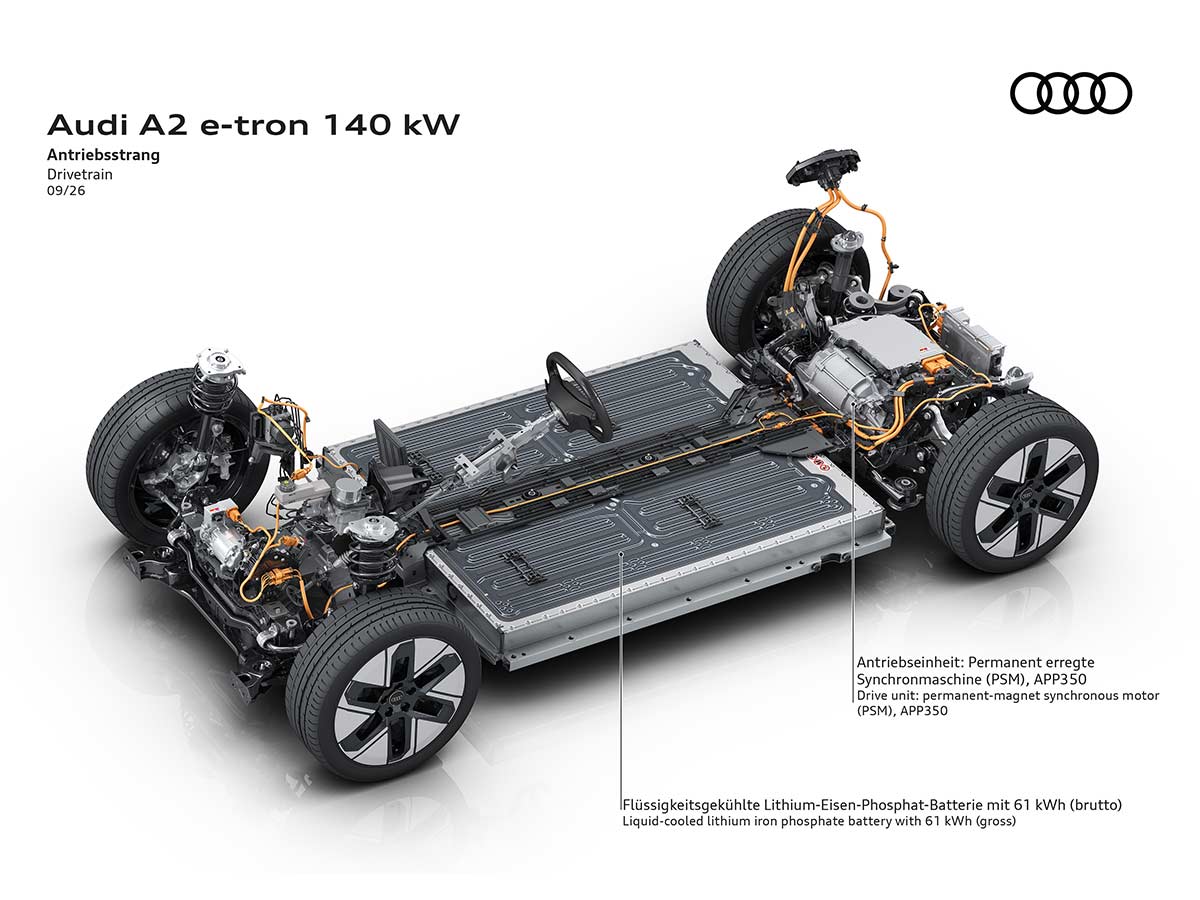
The entry-level model produces 125 kW and 350 Nm, with a 52 kWh battery and a WLTP range of up to 423 km. The 140 kW model uses a 61 kWh battery and can travel up to 515 km, while its optional efficiency package delivers the headline 12.8 kWh/100 km consumption figure.
Then the character changes.
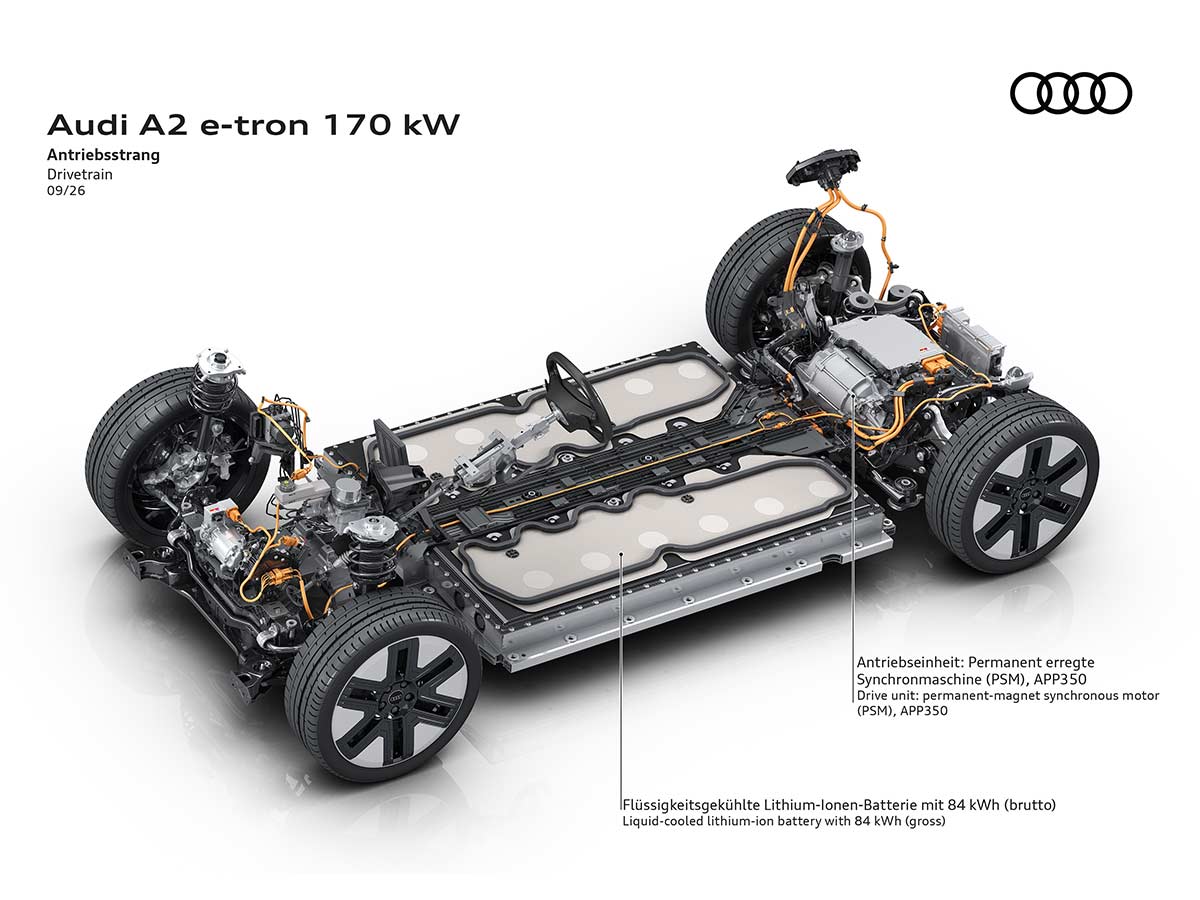
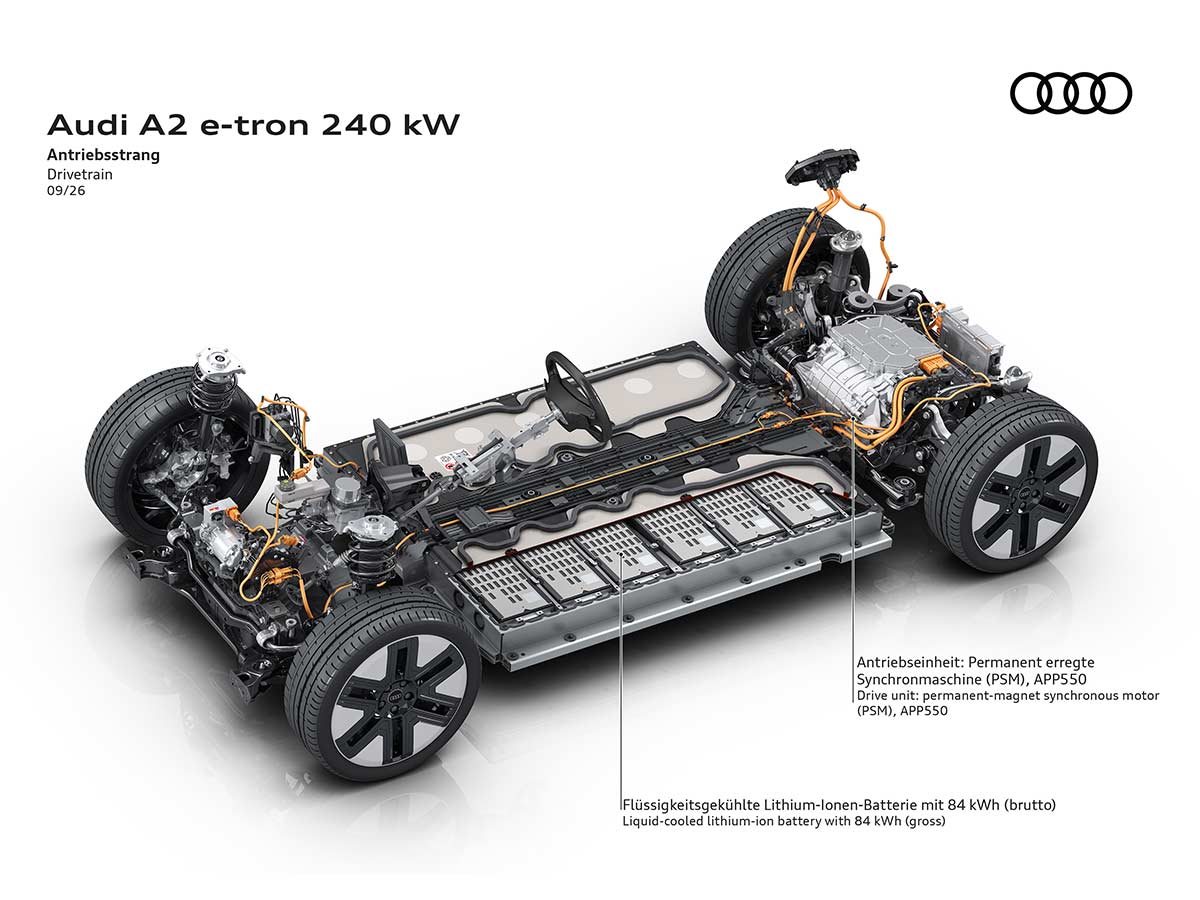
The 170 kW A2 e-tron pairs its output with an 84 kWh NMC battery and offers up to 646 km of WLTP range. At the top sits the 240 kW version, delivering 545 Nm and a 0-100 km/h time of 5.7 seconds, with a claimed range of up to 630 km. Its maximum speed is 200 km/h, compared with 160 km/h for the other three versions.
Every version uses rear-wheel drive. That choice is technically consequential. Audi says the drivetrain’s axle-load distribution and load transfer under acceleration help traction, while the steering remains unaffected by the drive system. In other words, the A2 e-tron separates propulsion from steering rather than asking the front axle to do both jobs.
The motor technology is equally purposeful. Depending on output, the car uses APP350 or APP550 permanent-magnet synchronous motors, while silicon-carbide power electronics reduce conversion losses. The transmission receives friction-reduction measures including polished gear teeth, optimized bearings and low-viscosity oil.
This is not engineering theatre. Each reduction in loss contributes to the same objective: putting more of the battery’s stored energy onto the road.
Battery chemistry is part of the A2 e-tron’s efficiency story
Audi offers two different battery chemistries.
The 52 and 61 kWh packs use lithium-iron-phosphate, or LFP, cells arranged in a cell-to-pack architecture. The larger 84 kWh battery uses nickel-manganese-cobalt, or NMC, chemistry and is available with the 170 kW and 240 kW versions. Audi says the LFP batteries are designed to maintain performance at low states of charge and in cold conditions.
Charging performance scales accordingly.
The 52 kWh battery accepts up to 100 kW and can charge from 10 to 80 percent in 24 minutes. The 61 kWh pack reaches 105 kW and takes 26 minutes according to the detailed technical table, while the 84 kWh battery can accept up to 183 kW and reaches 80 percent from 10 percent in 29 minutes.
There is also a more intriguing capability: bidirectional charging.
The A2 e-tron can become part of the energy system
With Vehicle-to-Load capability, the Audi A2 e-tron can supply electricity to external equipment, from e-bikes and laptops to outdoor equipment. In Germany, Austria and Switzerland, compatible DC wall boxes also enable Vehicle-to-Home functionality, allowing the car’s battery to act as an energy store for a household.
The detail here is important. V2H operation is not presented as unrestricted battery discharge. Audi specifies an optimal operating window between 20 and 80 percent state of charge. Below 20 percent, the vehicle charges rather than discharges; above 80 percent, it can discharge but not charge.
That makes the A2 e-tron something more interesting than a car with a plug. Its battery can become a temporary energy reservoir, particularly for households with photovoltaic generation.
It is an unusually tangible expression of the efficiency argument: the battery is not useful only when the car is moving.
Compact outside, surprisingly expansive inside
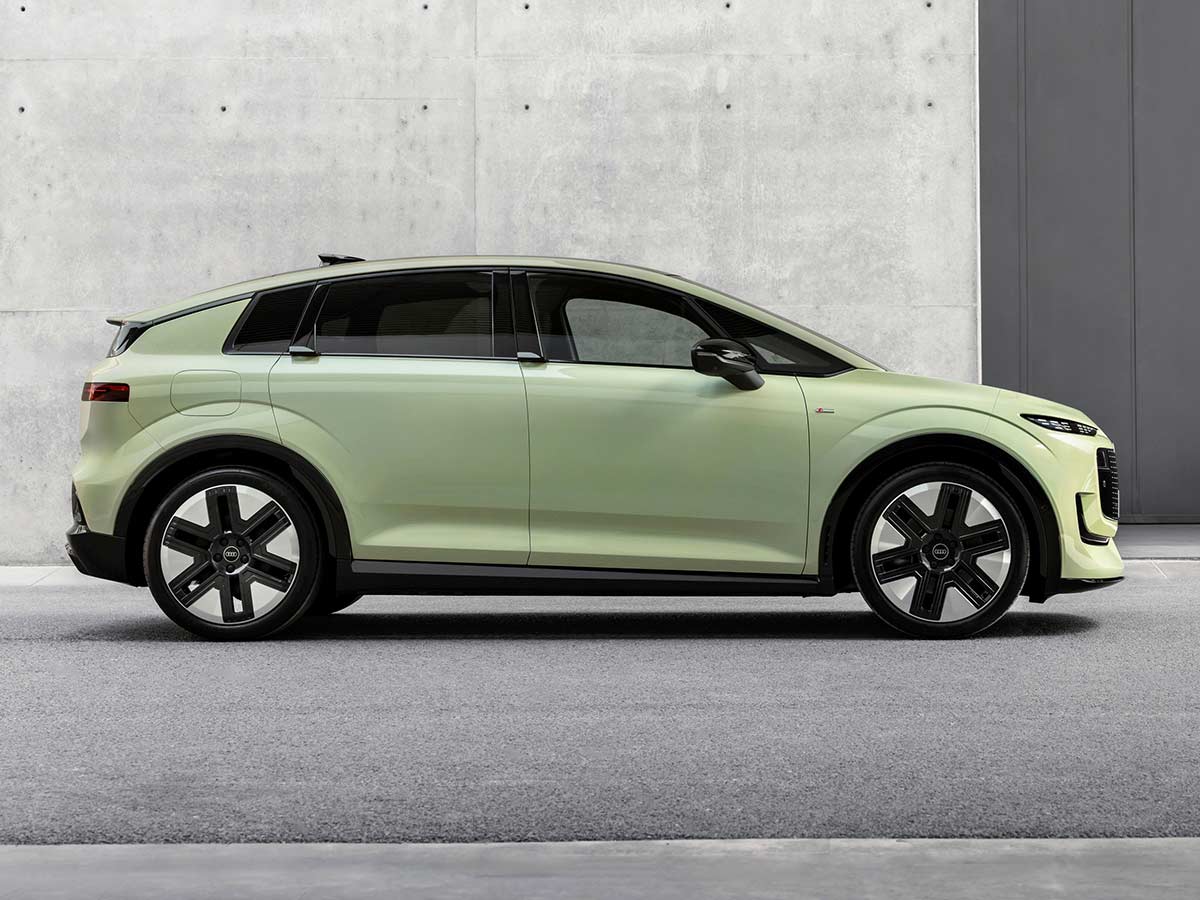
The A2 e-tron’s proportions are another expression of the same principle.
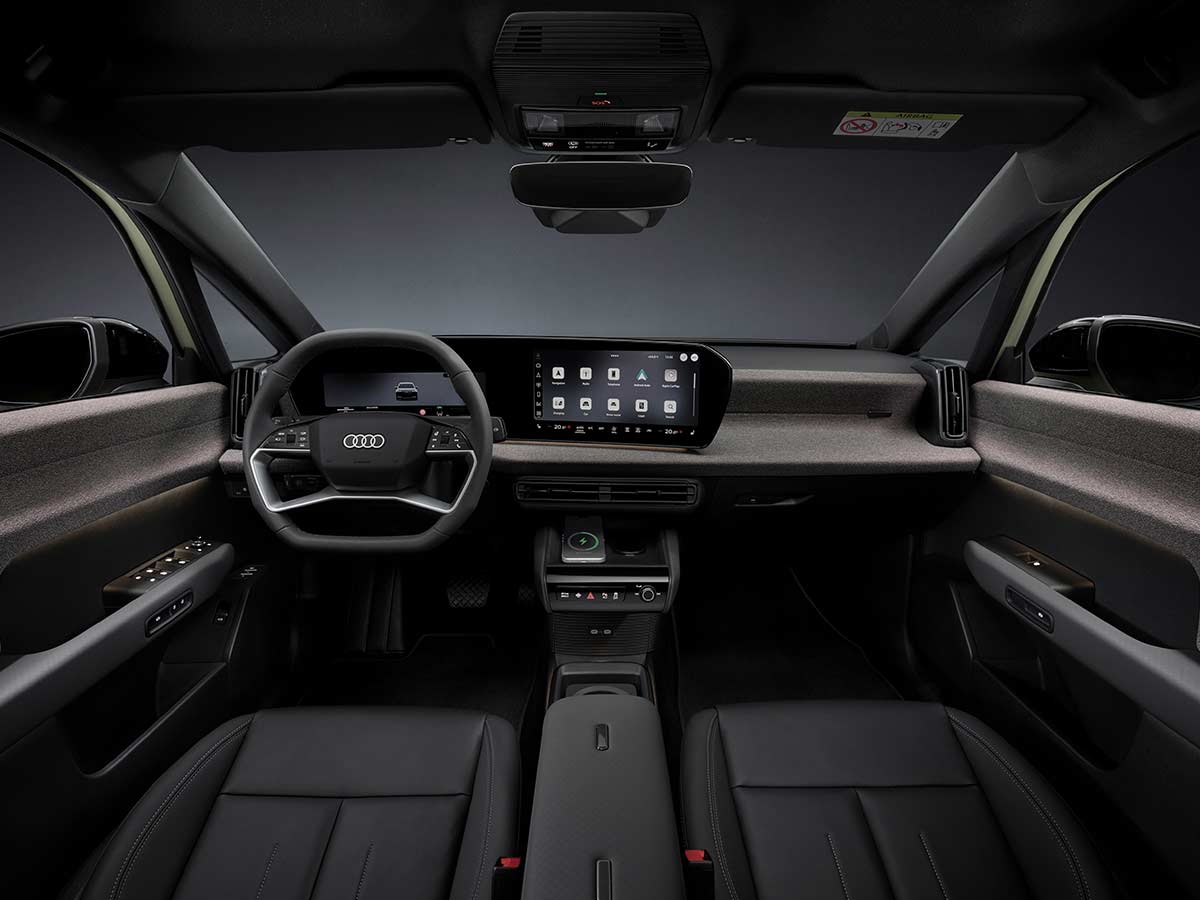
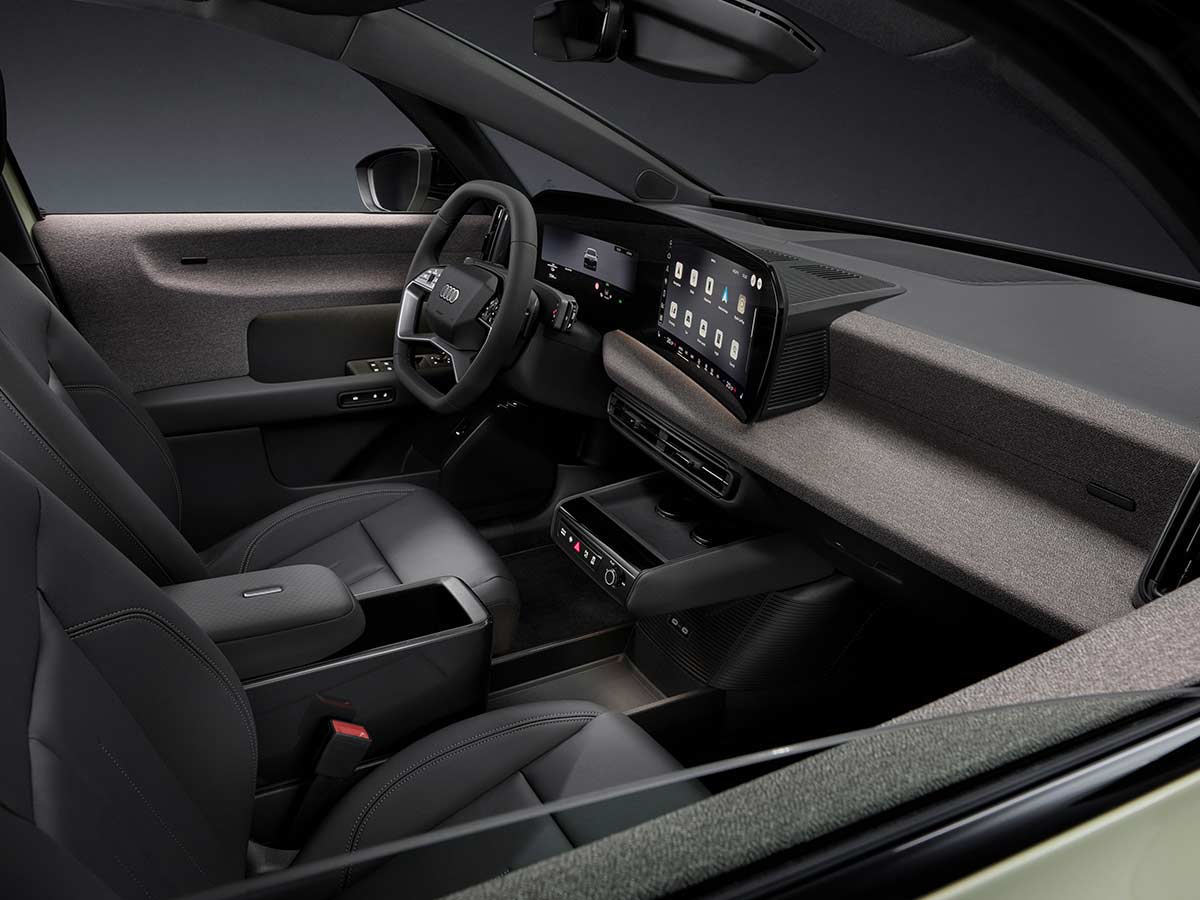
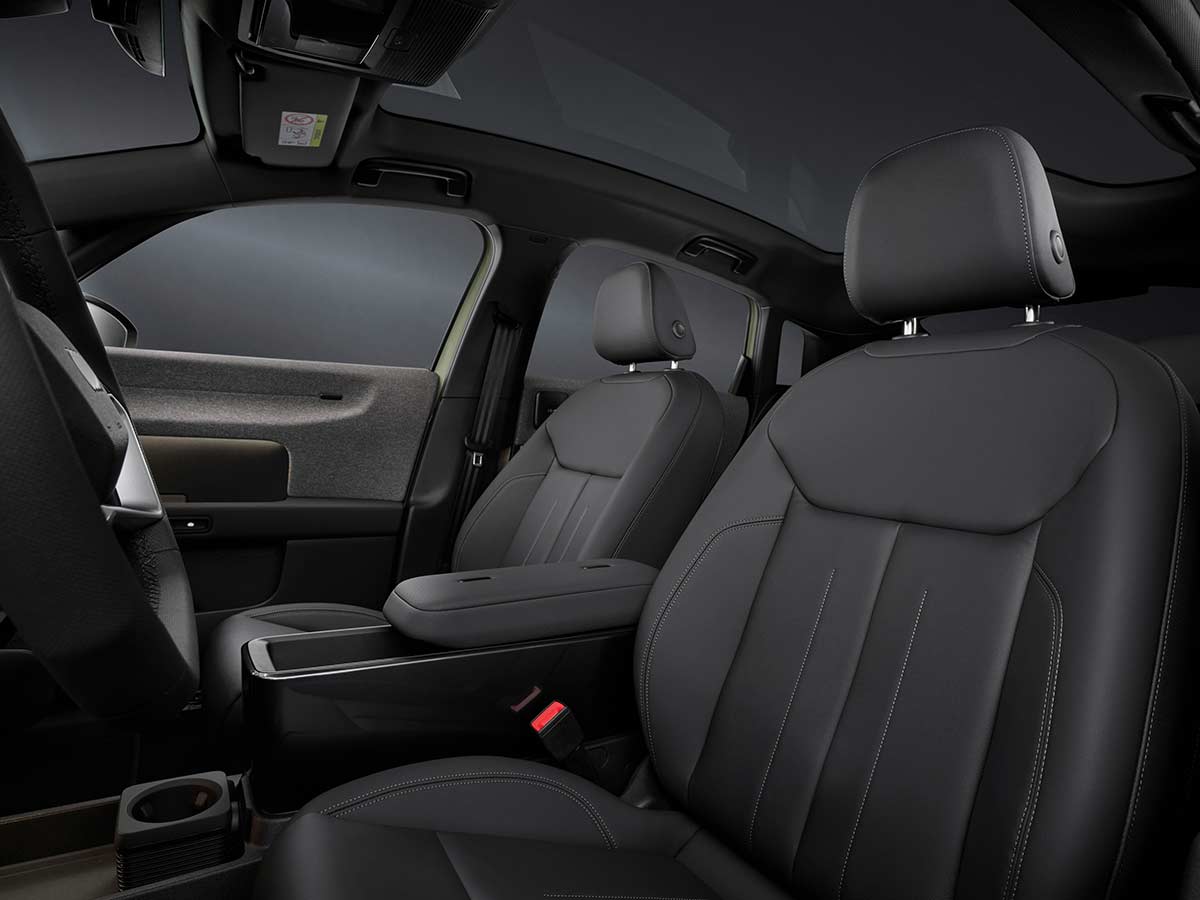
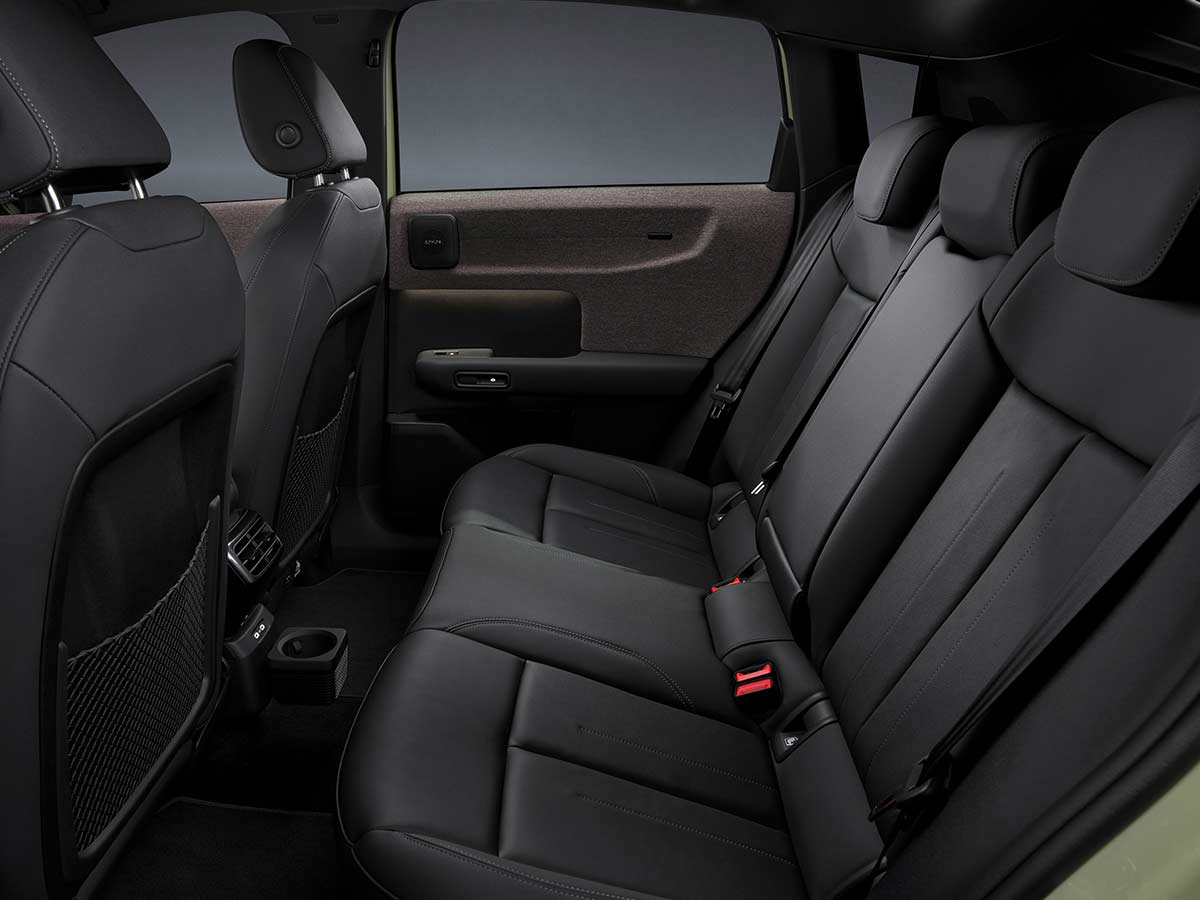
A 2.77-meter wheelbase, short overhangs and a distinctive roofline create a compact exterior footprint while preserving interior space. The cabin’s central visual feature is Audi’s Softwrap treatment, a fabric-covered surface that flows from the dashboard across the doors and toward the rear. An optional panoramic roof adds approximately 1.6 square meters of glass, opening the cabin to daylight while incorporating a coating intended to control ultraviolet radiation and heat.
Practicality is similarly deliberate. The trunk holds 396 liters, expanding to 1,336 liters with the rear seats folded. Selected versions add a 13-liter frunk. The center console is freed from some conventional controls by moving the gear selector to the steering column, while the cabin gains storage and modular attachment points.
Then there is Fidlock.
Audi says the A2 e-tron is the first premium car to integrate the patented magnetic fastening system as standard. Its combination of magnets and mechanical locking lets owners attach accessories such as cupholders, cable bags and tie-down straps with one hand. It is an unusually small feature, but an illuminating one. Instead of treating storage as an afterthought, Audi has turned it into part of the vehicle’s architecture.
The cabin puts digital technology within reach
The A2 e-tron also carries a substantial digital arsenal.
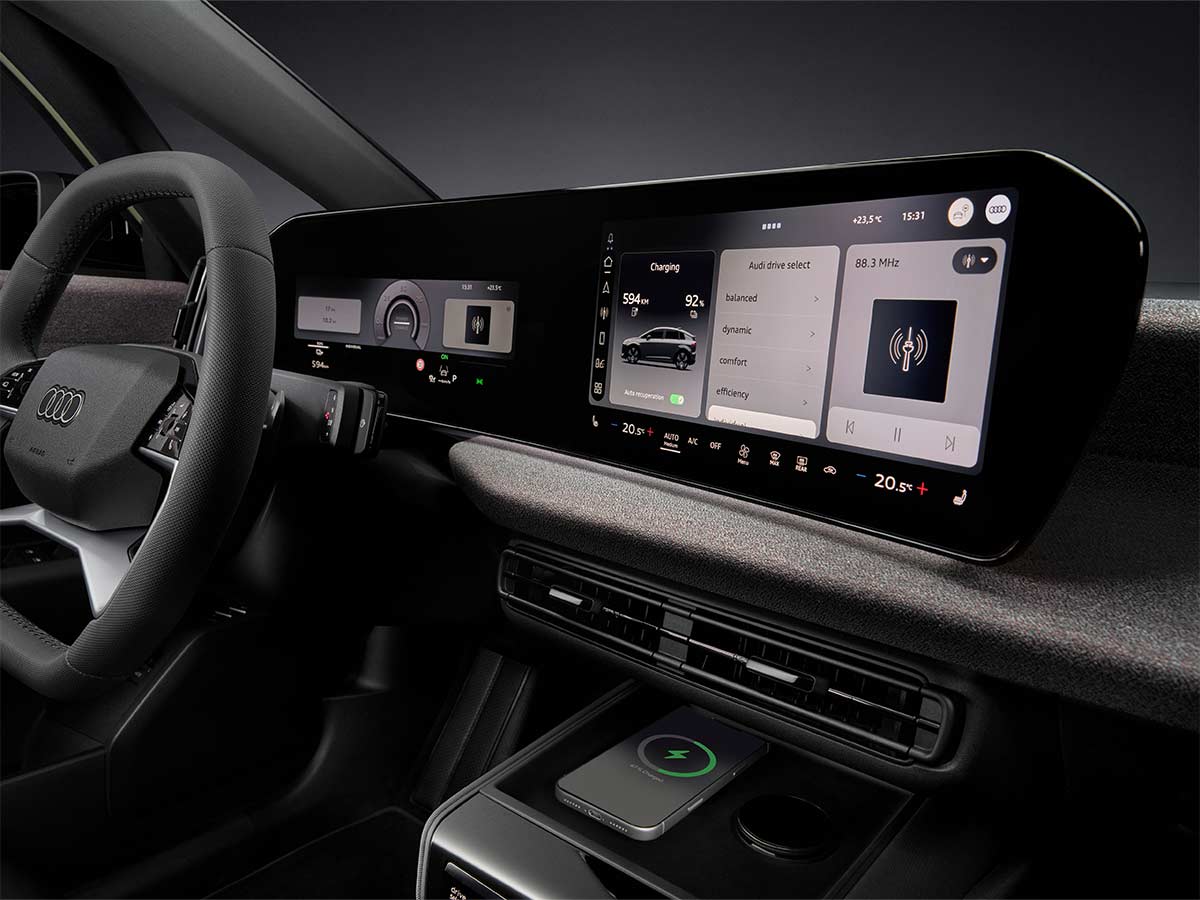
Every car receives Audi’s panoramic display, combining an 11.9-inch Virtual Cockpit Plus with a 12.8-inch curved MMI touch display. An optional augmented-reality head-up display can project speed and navigation information into the driver’s field of view.
The e-tron route planner is perhaps the more consequential technology. It considers traffic, topography and charging-station availability, preconditions the battery and plans charging stops. Its range-management function can also recommend a slower route strategy if doing so reduces the number of charging stops.
Audi’s AI assistant extends that digital layer into everyday tasks. It can answer vehicle-related questions using the owner’s manual, handle navigation and music requests, and support connected-work functions involving Microsoft Outlook and Microsoft Teams.
For those who prefer their technology to sound rather than speak, the optional Sonos system uses 14 speakers, 15 amplifier channels and up to 660 watts of amplifier power.
Does the Audi A2 e-tron drive like an Audi?
According to Audi’s engineering brief, the answer is deliberately yes.
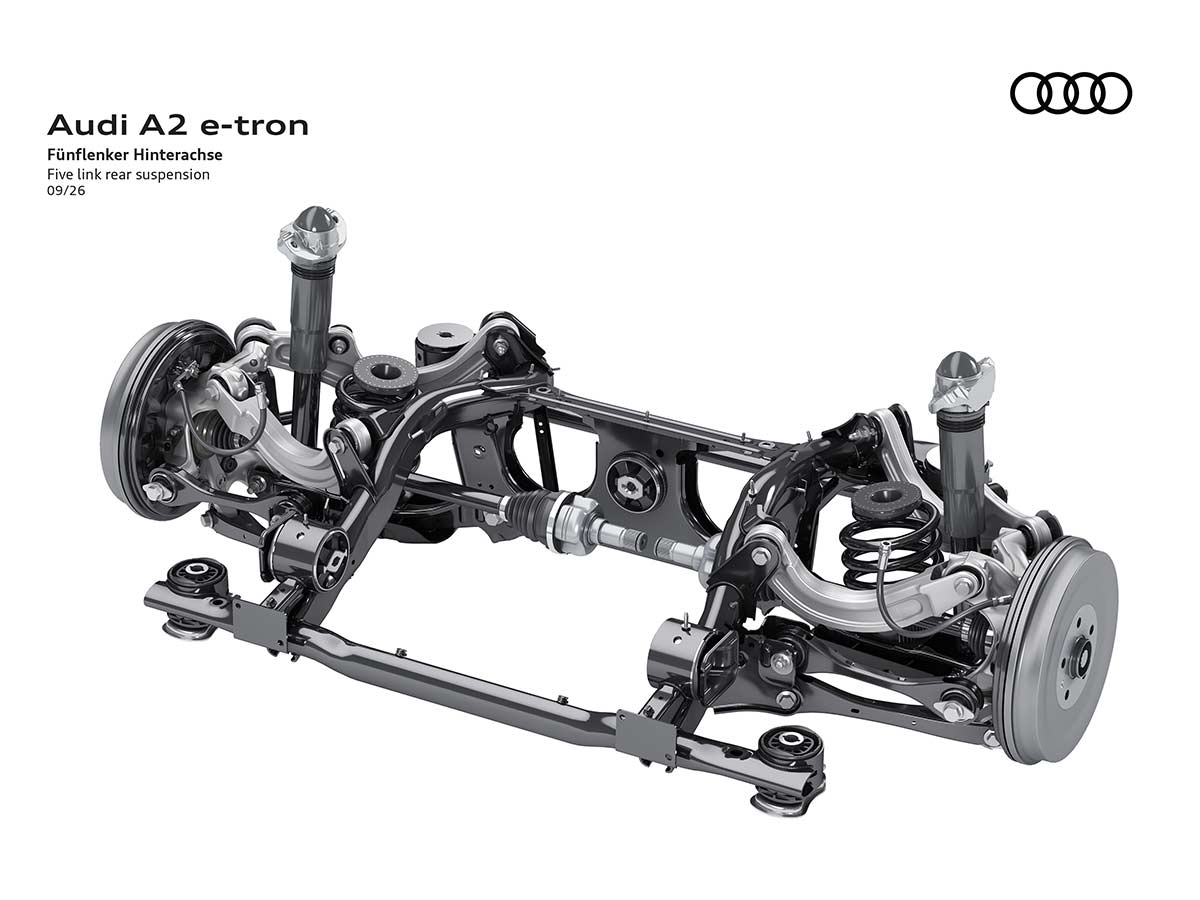
The A2 e-tron offers comfort, balanced, efficiency and dynamic drive modes. Optional adaptive damping adjusts each shock absorber according to road conditions and driving style, while the sportier settings progressively reduce body pitch and roll. The 240 kW model receives adaptive damping as standard.
Regeneration is similarly configurable. Steering-wheel paddles provide three levels, from mild deceleration through progressively stronger energy recovery, while selecting B enables one-pedal driving to a standstill. Audi also says the transition between regenerative and friction braking has been engineered for easy control.
Progressive steering is optional through the Tech plus package and standard on the 240 kW model. Wheel sizes run from 18 to 20 inches, with the 19-inch aerodynamic setup identified by Audi as the most efficient configuration and the 20-inch combination positioned as the sportier choice.
The numbers suggest an interesting duality. The A2 e-tron is capable of genuine pace in its most powerful form, but Audi’s engineering emphasis remains on composure, efficiency and controllability rather than outright acceleration.
Full-size-class assistance in a compact Audi
The A2 e-tron’s technology does not stop at propulsion.
Adaptive cruise control, reversing camera, parking system plus, side assist, exit warning and rear cross-traffic assist are among the standard systems. Emergency brake assist, intersection assist and swerve assist are also included. Audi says emergency braking can intervene in response to an imminent frontal collision at speeds of approximately 85 km/h, while swerve assist supports obstacle avoidance between 30 and 150 km/h.
Optional adaptive cruise assist plus adds active lane guidance up to 210 km/h, with a planned post-launch enhancement allowing automated lane changes when the turn signal is activated. The system can also respond to traffic lights and use online road data to help maintain lane position even where visible markings are absent.
Parking technology goes even further. Optional park assist plus can maneuver into tight spaces, while trained parking can memorize and reproduce up to five parking maneuvers. Reverse assist can memorize a route of approximately 50 meters and independently retrace it at around 10 km/h.
Premium, with a different definition of excess
Perhaps the most consequential aspect of the A2 e-tron is not its range, acceleration or screen count. It is the philosophy behind its construction.
Audi says the vehicle incorporates more than 300 components made with recycled materials, including steel, aluminum and plastics. More than 100 contain post-consumer recycled content. The company is also reducing material complexity in individual components to make future recycling easier.
The manufacturing story follows the same logic.
The A2 e-tron is built in Ingolstadt alongside the Audi A3, using more than 1,200 existing production assets and approximately 250 robots already deployed for other Audi models. Audi says the approach helped bring the car to market 21 months faster than comparable previous models.
That makes the A2 e-tron a rather revealing product for Audi. Its efficiency is not confined to the number printed on a WLTP sticker. It extends from airflow and battery chemistry to materials, manufacturing equipment and the way energy can be used after the car is parked.
Audi A2 e-tron price and launch date
The Audi A2 e-tron opens for orders in Germany on September 10, 2026, with first deliveries scheduled for December 2026. The 125 kW version with its 52 kWh battery starts at €38,200. The 61 kWh version starts at €41,900, while the 170 kW/84 kWh model is priced from €48,900. The 240 kW flagship starts at €51,200.
The positioning is clear. This is Audi’s new entry point into electric mobility, but it does not pursue entry-level status through stripped-back engineering. Instead, it attempts to make efficiency itself a premium attribute.
The verdict: efficiency becomes the luxury
The Audi A2 e-tron arrives at an interesting moment for electric cars. The industry’s instinct has often been straightforward: if range is a problem, add battery capacity; if performance is lacking, add motors and power. The A2 e-tron takes the opposite route.
Its most important specification is therefore not the 240 kW headline or even the 646-kilometer maximum range. It is the 12.8 kWh/100 km consumption figure achieved by the 140 kW version with the efficiency package.
That number captures the car’s entire character before the first kilometer has been covered. Aerodynamics matter. Rolling resistance matters. Motor efficiency matters. Software matters. Battery chemistry matters. Packaging matters. Even manufacturing matters.
The result is a compact Audi that treats restraint not as a compromise, but as an engineering achievement.
And perhaps that is the A2 e-tron’s most interesting proposition. In an era when luxury is so often measured by how much a machine can consume, carry or produce, Audi has built a car around a more difficult question:
How little can you use while still giving the driver everything that matters?
The A2 e-tron is Audi’s answer – and, on paper at least, it is a remarkably disciplined one.
Source: Audi