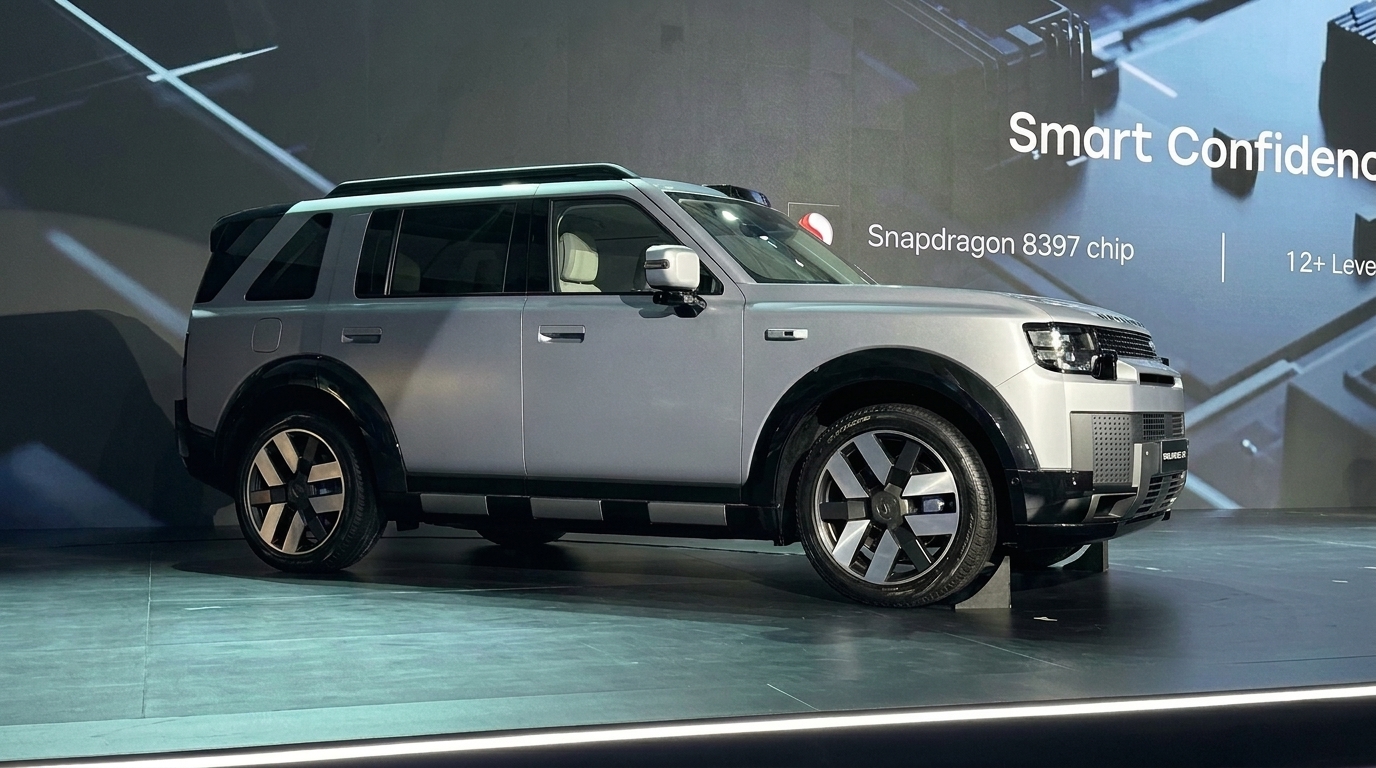







The Freelander 8 marks the return of the Land Rover Freelander name as a standalone electric SUV brand, born from the Chery–Jaguar Land Rover (JLR) partnership. Unveiled at the 2026 Beijing Auto Show, this three-row, boxy SUV revives the classic Freelander design language while adopting a modern 800-volt electrical architecture. Built on a dedicated Chery-built platform (called iMAX or E0X), the Freelander 8 can be configured as a battery-electric vehicle (BEV), plug-in hybrid (PHEV), or extended-range electric vehicle (EREV). Notable features include a 5.1 m (200.7 in) length (longer than a Defender 110 and Toyota Prado), seating for six across three rows, ultra-fast DC charging (up to 350 kW), and advanced off-road and driver-assist systems (twin air-spring suspension, electronic locking diffs, roof-mounted LiDAR, and AI-powered ADAS). The Freelander 8 is slated for China sales in late 2026, with global right-hand-drive and left-hand-drive models to follow (including Australia and the Middle East, but apparently not the U.S.). Pricing and full specs have yet to be announced.
>>> Great Discounts on Car & Bike Accessories <<<
Freelander Brand and Collaboration
The Freelander nameplate has been revived after a 25-year hiatus. In 2024, Jaguar Land Rover and Chinese automaker Chery formed a 50:50 joint venture to create an all-new Freelander brand focused on New Energy Vehicles (NEVs) – i.e. plug-in hybrids and fully electric models. The first product, dubbed Freelander 8, serves as a global model engineered in the UK but built at Chery’s Changshu plant in China. By keeping the Freelander name (a legacy Land Rover badge from the late 1990s and 2000s), the company hopes to leverage heritage recognition; chief designer Phil Simmons (who styled the original Freelander, Range Rover Velar and Defender) aimed to honor that lineage while delivering a “clean, confident design paired with genuinely useful technology”.
In practical terms, Freelander operates as a separate marque outside of traditional Land Rover dealerships. Sales will go through a new network of Freelander showrooms, and the overseas versions are promised to be fully compliant with regional standards (e.g. a “world car” for Europe rather than an export Chinese model). The brand plans six SUVs over five years, all built on the same scalable platform (variously called iMAX or E0X) that supports BEV, PHEV, and EREV configurations
Exterior Design and Features
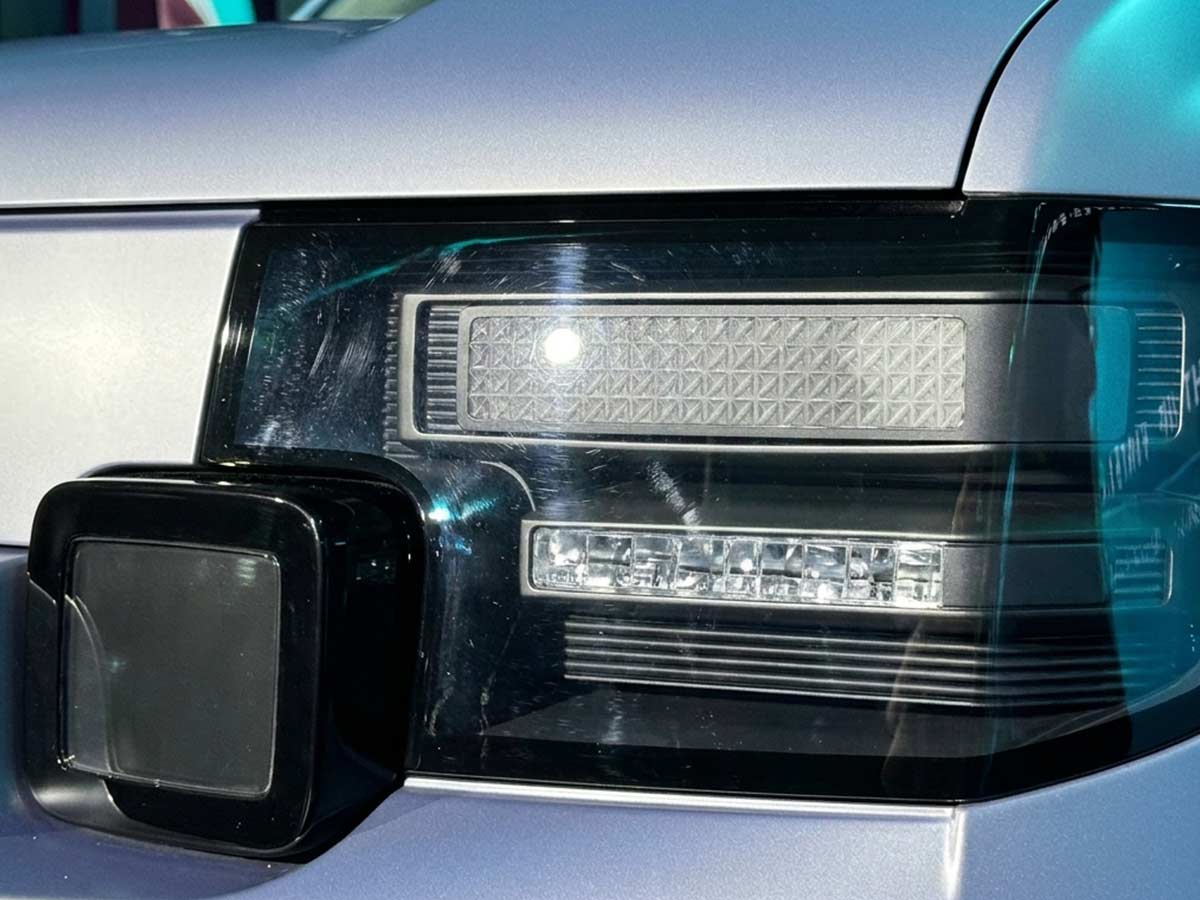
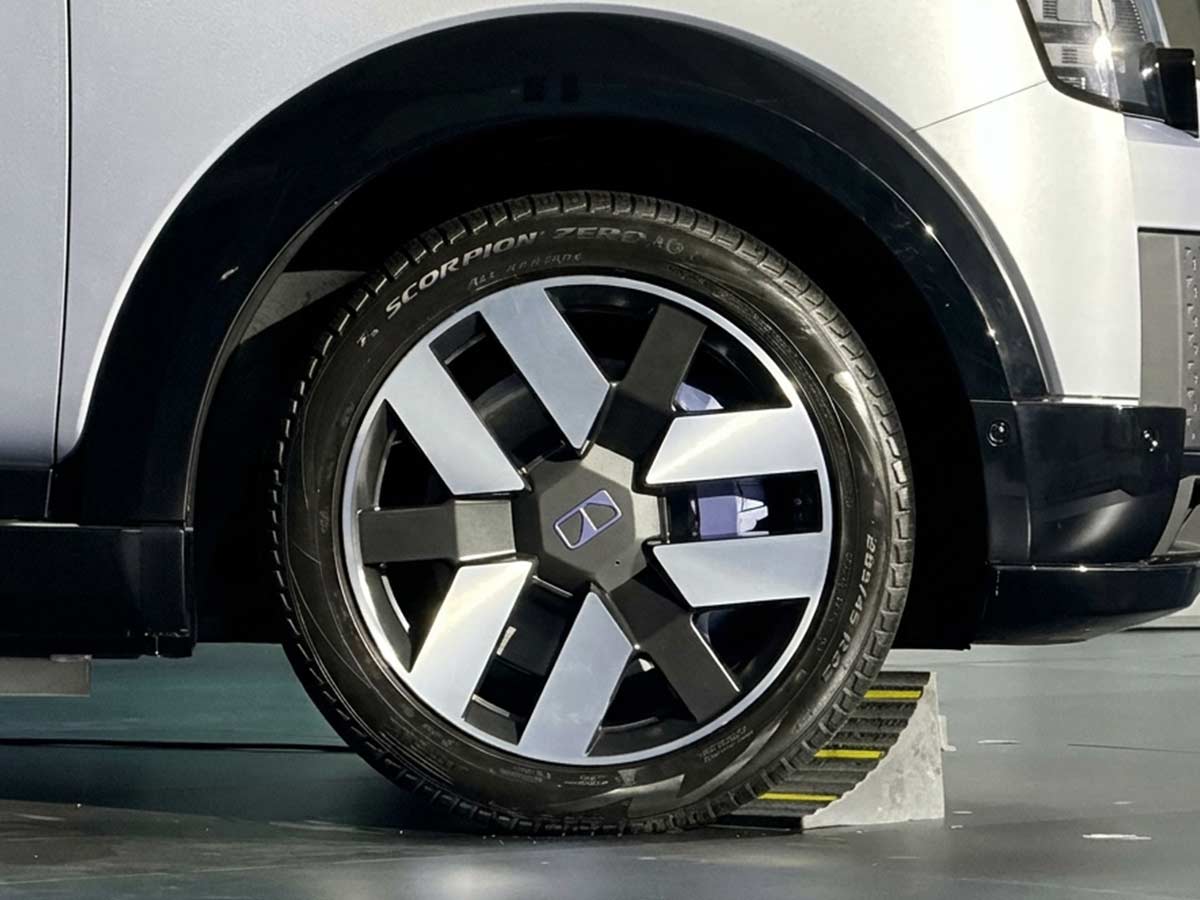
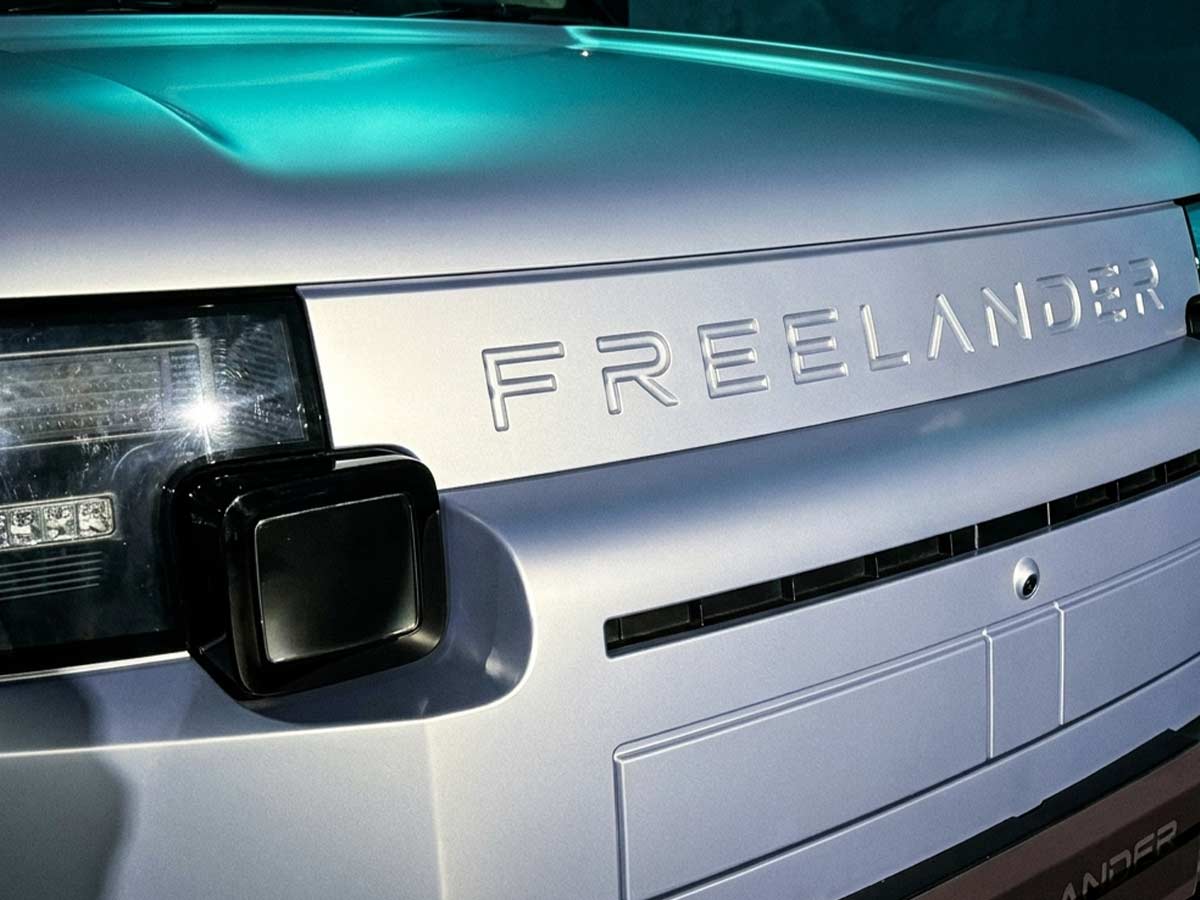
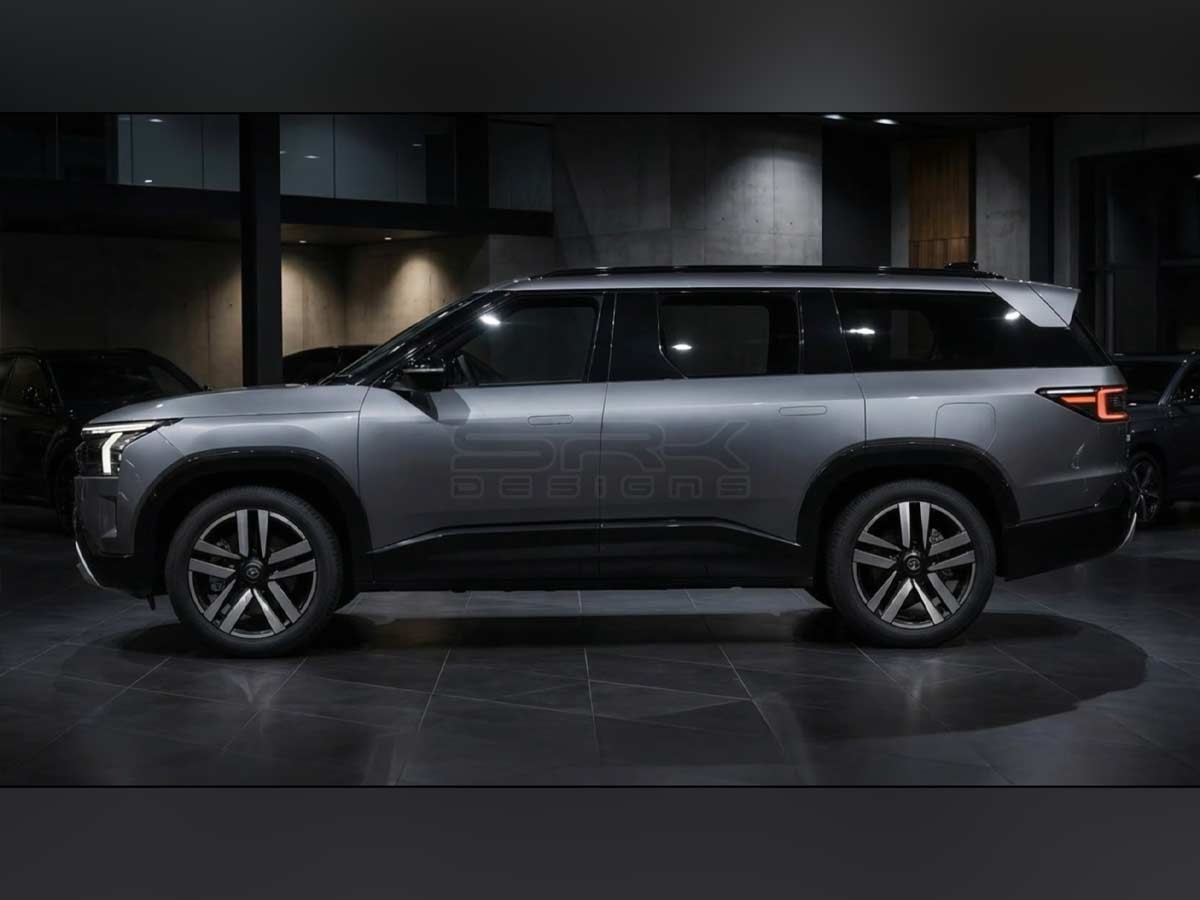
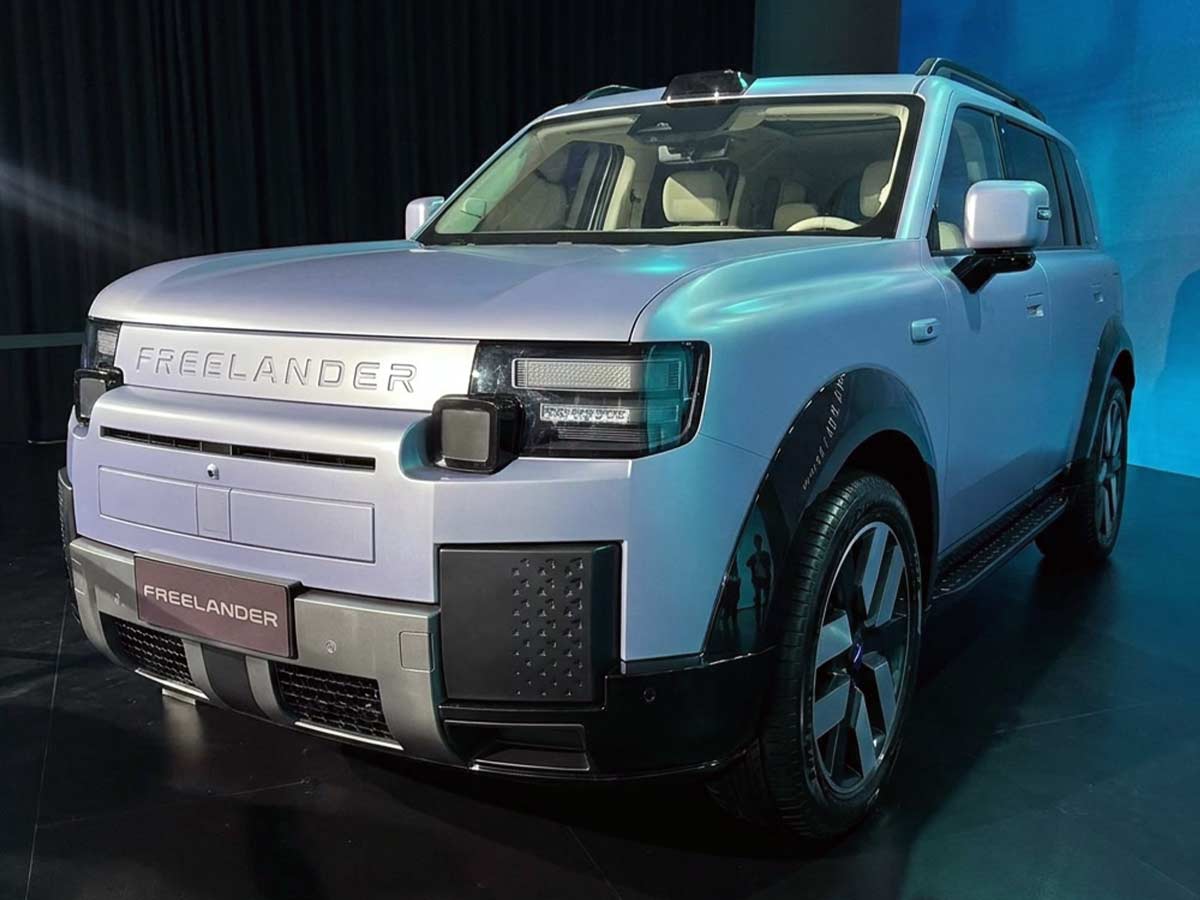
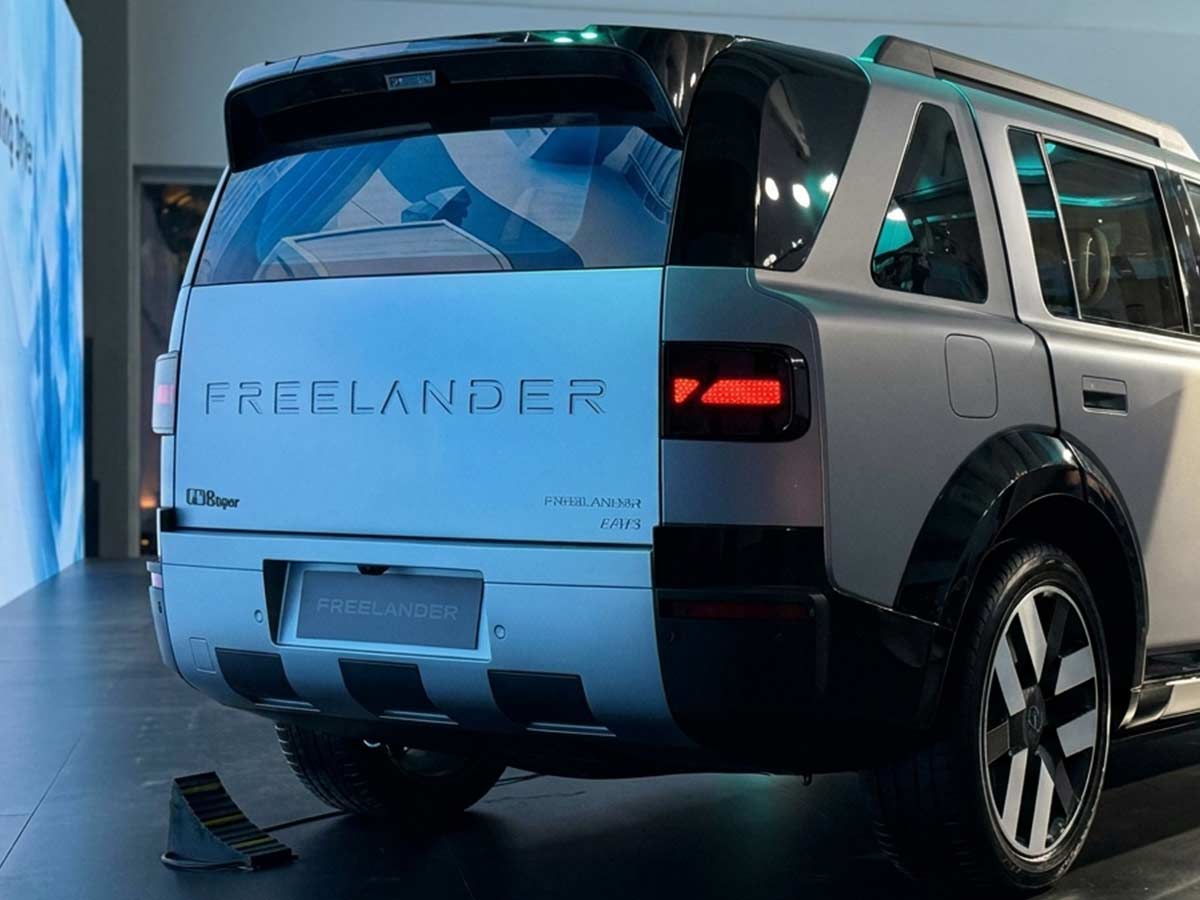
The Freelander 8’s styling strongly echoes its Concept 97 preview. Its silhouette is a tall, boxy SUV roughly 5.1 m long. The design nods to the first-generation Freelander with a distinctive rear-quarter triangular glass “castle window” and square LED headlights. The front end replaces a classic grille with a closed-off panel featuring rectangular cutouts (likely sensor housing) and prominent “FREELANDER” script. Rugged design elements include blacked-out wheel arches and side skirts, roof rails, and large alloy wheels (the concept’s dual-tone wheel patterns carry over). The rear has a minimalist look with a roof spoiler, slim LED taillights, and a black bumper insert. Unlike the concept’s rear-hinged “suicide” doors, the production Freelander 8 uses conventional doors with B-pillars for safety compliance.
Lifted-truck cues are subtle: for example, the Freelander 8 could have offered a rear-mounted spare wheel to emphasize its off-road heritage (as on the original “L134” Freelander), but this was omitted. Instead, the SUV features modern touches like an optional roof LiDAR unit (common on Chinese EVs for advanced driver aids). Notably, Chinese regulations now ban fully flush door handles, so the Freelander 8 uses semi-enclosed handles rather than the concept’s concealed style. In all, the exterior balances homage (triangular C-pillar, boxy proportions) with current EV design trends (closed grille, geometric lighting) to appeal to global tastes.
Interior and Technology
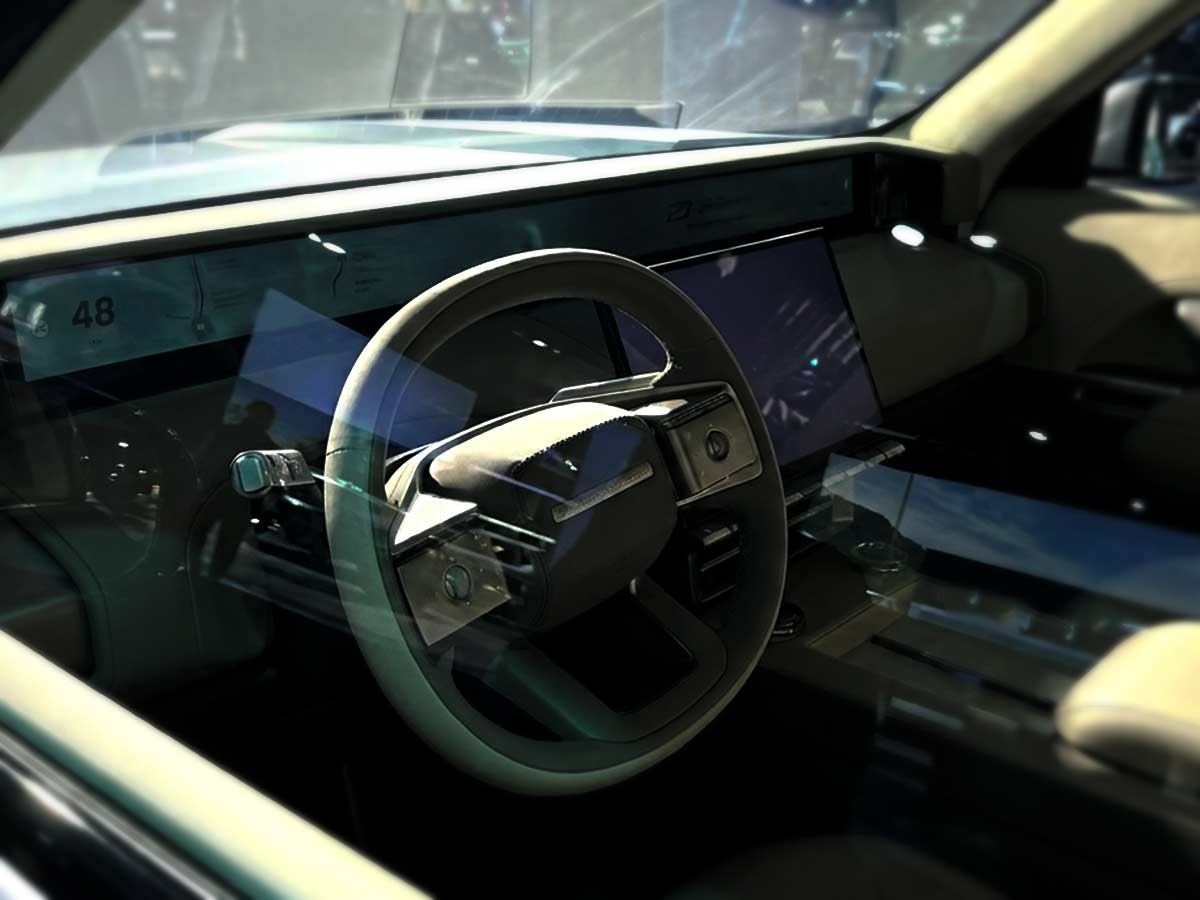
Official photos of the Freelander 8’s cabin have not been released, but the concept hints at a high-tech, minimalist layout. The dash is expected to feature a wide pillar-to-pillar Mini-LED display (called a “Surround View Gallery”) that blends into the lower windshield, paired with a central touchscreen and some physical controls. This advanced infotainment promises real-time data (vehicle status, navigation, weather, etc.) across a panoramic panel. Seats appear to be low-backed and sculpted (a design homage to iconic Eames Lounge chairs), with the front row offering a “commanding” view and supportive bolstering. The second row is configured as two individual “zero-gravity” chairs, allowing for greater recline and comfort on long trips. Overall seating is 2+2+2 (six passengers), rather than seven, reflecting a focus on luxury space. A third row is present, but it is likely best suited for occasional use (like most 6–7-seat SUVs). Premium touches are indicated by partnerships with companies like Harman Kardon (audio).
Driver aids and connectivity are state-of-the-art. A Huawei-developed ADAS suite with roof LiDAR (896-line), high-speed Snapdragon processing, and multiple cameras is included. This supports Level 2+ autonomous features (lane-centering, adaptive cruise, automated parking) and a novel “All-Terrain System” with nine selectable drive modes. Physical controls are minimal; climate and other essentials likely use touch or haptic interfaces integrated into the dash (we know climate controls remain physical knobs below the main screen). In summary, the Freelander 8 cabin is designed as a tech-forward, premium family environment, blending British SUV lineage with Chinese EV innovation
Powertrain and Performance
Under the skin, Freelander 8 uses an 800-volt high-voltage architecture (similar to high-end EVs) that supports multiple electrified powertrains. The launch model will be an EREV (extended-range electric vehicle) – meaning it has a full-size battery pack plus a small gasoline “range extender” engine, the first 800V EREV in the world. PHEV and pure BEV variants will follow. All versions use CATL batteries (including the new high-rate FreeVoy chemistry) and can fast-charge up to 350 kW (equivalent to 6C charging rate). For example, the REEV’s CATL pack allows peak DC charging speeds near 360 kW. Exact battery capacities haven’t been announced, but we expect 100+ kWh for the BEV and a slightly smaller pack plus a 1.5–2.0 L engine for the REEV.
Motors and output are still to be announced. Likely each motor is a permanent-magnet synchronous type, driving either rear wheels (base PHEV) or both axles (AWD EREV). The joint venture advertises strong performance: dual-motor setups with combined power in the 400–600 hp range (Tesla Model X Long Range is 670 hp for comparison). A rear electronic limited-slip differential (eLSD) and AWD are standard. Air suspension with adaptive dampers provides smooth highway ride and adjustable ground clearance (raised for off-road mode, lowered for efficiency). Early indications are that acceleration will be brisk (sub-5-second 0-100 km/h for top models) and towing capacity robust (likely 2.5–3.5 tons, similar to large EV/SUV rivals).
Off-road, the Freelander 8 is equipped for adventure. Its “Intelligent All-Terrain System” (i-ATS) links wheel slips, suspension, and throttle to tackle different surfaces automatically. It features pre-emptive hydraulic shock absorbers and three locking differentials (front, center, rear) in the platform design. In other words, it can behave like a true off-roader despite its unibody construction. We expect respectable approach/departure angles (likely in the 30–35° range per CarsGuide) and an off-road terrain mode using the LiDAR and cameras for “millimeter-level” terrain sensing
Safety and Driver Assistance
Freelander 8 promises to meet global safety standards. The company claims the prototype has already passed all major NCAP crash tests, including Euro NCAP and ASEAN NCAP, with five-star ratings in each category. In short, it should offer occupant protection on par with mainstream SUVs. In practice, this means a rigid steel body structure, multiple airbags (front, side, curtain), and a robust suite of crash-avoidance tech: automated emergency braking, adaptive cruise, lane-keeping, blind-spot monitoring, etc. Using Snapdragon AI chips, the ADAS can handle Level 2+ driving tasks and an advanced “valet parking” function in some markets.
Active safety features include sophisticated camera+LiDAR sensor fusion. Huawei’s Qiankun ADAS system (with a 896-line roof LiDAR) maps the environment in high resolution. This enables quick reaction to obstacles, pedestrian detection, and even semi-autonomous off-road maneuvers. The Freelander 8 will also have a multi-terrain control program (sensing and adjusting to gravel, snow, sand, etc.). Physical brakes are ventilated discs on all wheels, with ABS, traction control, and optional electronic stability programs standard (Toyota Highlander, by comparison, has similar 4-channel ABS and stability systems). Rear parking sensors and 360° camera views are likely included, though final features will be confirmed closer to launch.
Given its emphasis on family/utility use, customer assistance systems like adaptive cruise and fatigue warnings will likely be offered. The “Advanced Valet Parking Driver” suggests a future OTA-enabled feature for automated parking and summoning. Overall, the Freelander 8 appears to combine off-road capability with modern EV safety/ADAS technology, aiming for 5-star insurance ratings in key markets.
Pricing, Release, and Markets
Official pricing for Freelander 8 is to be announced. Industry reports and teardowns suggest a launch price in China perhaps similar to a mid-range Land Rover or Toyota Prado – likely in the equivalent of US$40–60k (before subsidies) for the REEV version. Given the high-tech features (800V, LiDAR, seating, etc.), we expect a new model premium over basic EVs like BYD Song. For context, the six-seat BYD Tang EV (a comparable Chinese premium SUV) starts around US$40k, while imported Rivian R1S (7-seat EV) runs ~$80k.
Launch timing is clearer: production of Freelander 8 is underway and deliveries in China are set for late 2026. The joint venture says H2 2026 China launch is “likely”. Exports will follow. Australia is slated for 2027 (local testing is underway). Right-hand drive models for UK/Australia will arrive after the China debut. The company explicitly mentions Middle East, Europe (EU) and other RHD markets as targets. Interestingly, multiple sources confirm no plans for the US market, likely due to Chery’s unclear status in the US and the joint venture’s strategic focus on other regions.
In China and abroad (outside the US), Freelander 8 will not sell through Land Rover showrooms. A distinct retailer network of Freelander-specific showrooms is being built. This is similar to how other EV startups operate. Customers should expect typical EV launch deals and/or subsidies in China, but global pricing (especially in Europe) will depend on local taxes/regulations (for example, Europe may favor the PHEV version due to EREV emission rules).