






Overview – Can a Legend Be Reinvented Without Losing Its Identity?
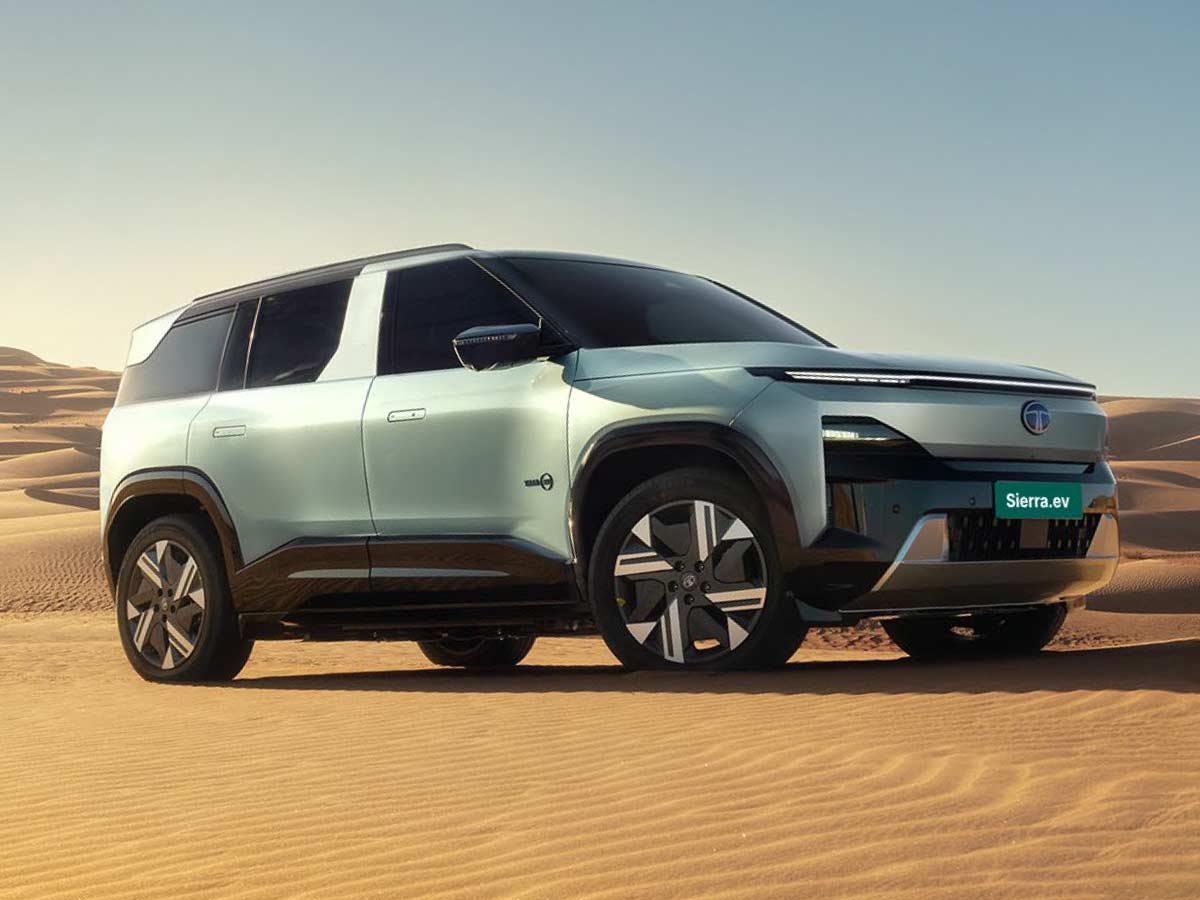
Few automotive nameplates in India evoke the same sense of nostalgia as the Tata Sierra. Introduced in the early 1990s, the original Sierra occupied a unique position in the domestic market, blending SUV capability with an unconventional three-door body style and the now-iconic wraparound Alpine-style rear quarter glass. It was never a volume seller, yet its distinctive design and ahead-of-its-time character earned it cult status among enthusiasts. More than three decades later, Tata Motors has revived the Sierra nameplate with a fundamentally different proposition. The 2026 Sierra.ev is not intended as a retro recreation but as a thoroughly modern electric SUV that borrows selectively from its predecessor while embracing contemporary engineering, technology, and premium positioning.
Rather than treating heritage as a styling exercise, Tata has used the Sierra’s legacy as a design philosophy. The production model preserves the unmistakable silhouette and signature rear quarter glass that defined the original, yet beneath the familiar profile lies an entirely new electric architecture developed specifically for next-generation battery-electric vehicles. The Sierra.ev is underpinned by Tata’s acti.ev+ architecture, a dedicated EV platform engineered to accommodate multiple battery configurations, rear-wheel-drive and quad-wheel-drive powertrains, bidirectional charging capabilities, and advanced software-defined vehicle technologies. The platform also integrates a liquid-cooled battery management system, IP67-rated protection for both the battery pack and motors, and a structural layout designed to optimise cabin space while maintaining a low centre of gravity.
The Sierra.ev enters one of the fastest-growing segments in the Indian automotive market. Positioned with an introductory ex-showroom price starting at ₹18.79 lakh, it sits above mainstream compact electric SUVs while targeting buyers seeking a more premium ownership experience without stepping into significantly more expensive imported alternatives. Its closest rivals span multiple approaches to electric mobility, including the Mahindra BE 6, Hyundai Creta Electric, MG Windsor EV, BYD Atto 3 and other emerging midsize electric SUVs. Instead of competing solely on range or performance, Tata has developed the Sierra.ev around a broader value proposition that combines design heritage, long-distance usability, connected technology, premium cabin appointments and an unusually extensive ownership package.
Central to that strategy is the availability of two battery options. Buyers can choose between 63 kWh and 75 kWh battery packs, while the flagship Empowered A QWD introduces a dual-motor configuration delivering intelligent all-wheel traction under Tata’s Quad Wheel Drive (QWD) system. Depending on the selected variant, the Sierra.ev offers a certified MIDC driving range of up to 665 km, with Tata also publishing estimated real-world range figures of 510-530 km for the long-range rear-wheel-drive model – an uncommon level of transparency at launch.
However, the Sierra.ev’s ambitions extend beyond outright range. The vehicle has been engineered to function as a technology flagship for Tata.ev, introducing features that are gradually becoming benchmarks within the premium EV space. The dedicated EV platform supports Vehicle-to-Load (V2L) functionality for powering external electrical equipment, Vehicle-to-Vehicle (V2V) charging for sharing energy with compatible electric vehicles, rapid DC charging capable of adding up to 263 km of certified range in just 15 minutes under ideal conditions, and over-the-air software updates through the connected iRA.ev ecosystem.
Equally significant is Tata’s attempt to elevate perceived quality and ownership confidence. The Sierra.ev introduces a lifetime high-voltage battery warranty for the first registered private owner, defined as fifteen years from the date of first registration, alongside an eight-year or 1,60,000 km motor warranty. At a time when battery longevity remains one of the primary concerns for prospective EV buyers, this policy represents one of the most comprehensive warranty programmes currently offered by any mainstream manufacturer in India.
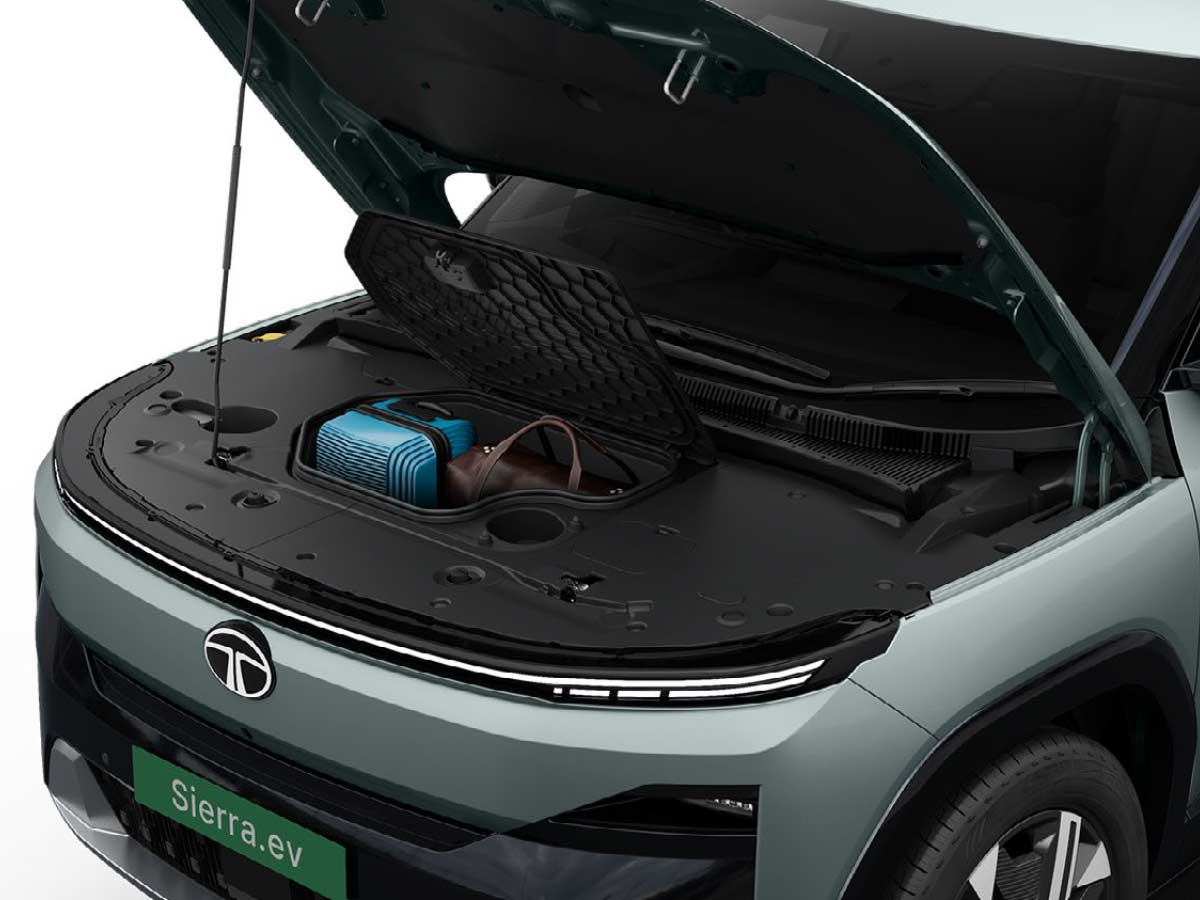
Dimensionally, the Sierra.ev reflects its premium aspirations. Measuring 4,340 mm in length with a 2,730 mm wheelbase, 205 mm of unladen ground clearance and a luggage compartment offering 622 litres of boot capacity before expanding to 1,257 litres, the SUV prioritises interior packaging as much as exterior presence. The dedicated electric platform also enables the inclusion of a 55-litre front storage compartment on rear-wheel-drive variants, further enhancing practicality without compromising passenger accommodation.
Viewed in its entirety, the Sierra.ev represents considerably more than the revival of a familiar badge. It marks Tata Motors’ most comprehensive attempt yet to integrate design heritage, dedicated EV engineering, software-defined functionality and premium equipment into a single product. While nostalgia may draw attention to the nameplate, the production vehicle has been developed to compete on objective engineering and technological merit rather than emotional appeal alone. Whether that strategy ultimately translates into class leadership depends on how successfully its design, performance, technology and ownership proposition perform in the real world – aspects explored in the sections that follow.
>>> Great Discounts on Car & Bike Accessories <<<
Exterior Design Language: A Familiar Silhouette Reimagined for the Electric Era
Reviving an automotive icon presents a unique design challenge. Lean too heavily on nostalgia, and the result risks becoming a retrospective exercise with limited contemporary relevance. Abandon the original identity entirely, and the nameplate loses the visual cues that established its legacy in the first place. With the Sierra.ev, Tata Motors has attempted to strike a measured balance between those two extremes, retaining the defining characteristics of the original Sierra while reshaping them around the aerodynamic, packaging and technological requirements of a modern battery-electric SUV.
The result is a design language that feels evolutionary rather than retro. At first glance, the Sierra.ev is immediately recognisable, yet almost every exterior panel has been redesigned to serve both aesthetic and functional objectives. Instead of recreating the 1990s model verbatim, Tata has preserved its visual DNA while introducing cleaner proportions, flush surfacing and lighting technologies expected of a premium electric vehicle.
An Iconic Profile That Still Stands Apart
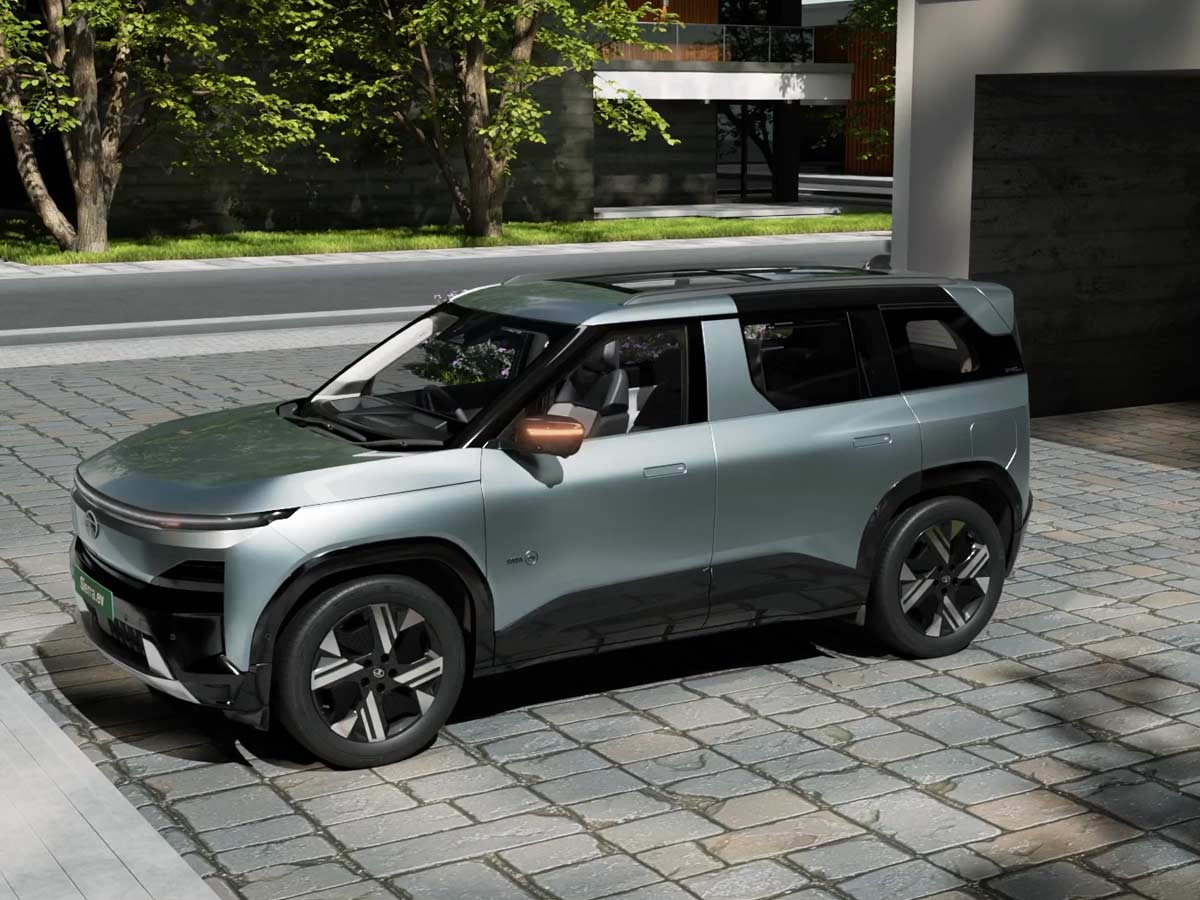
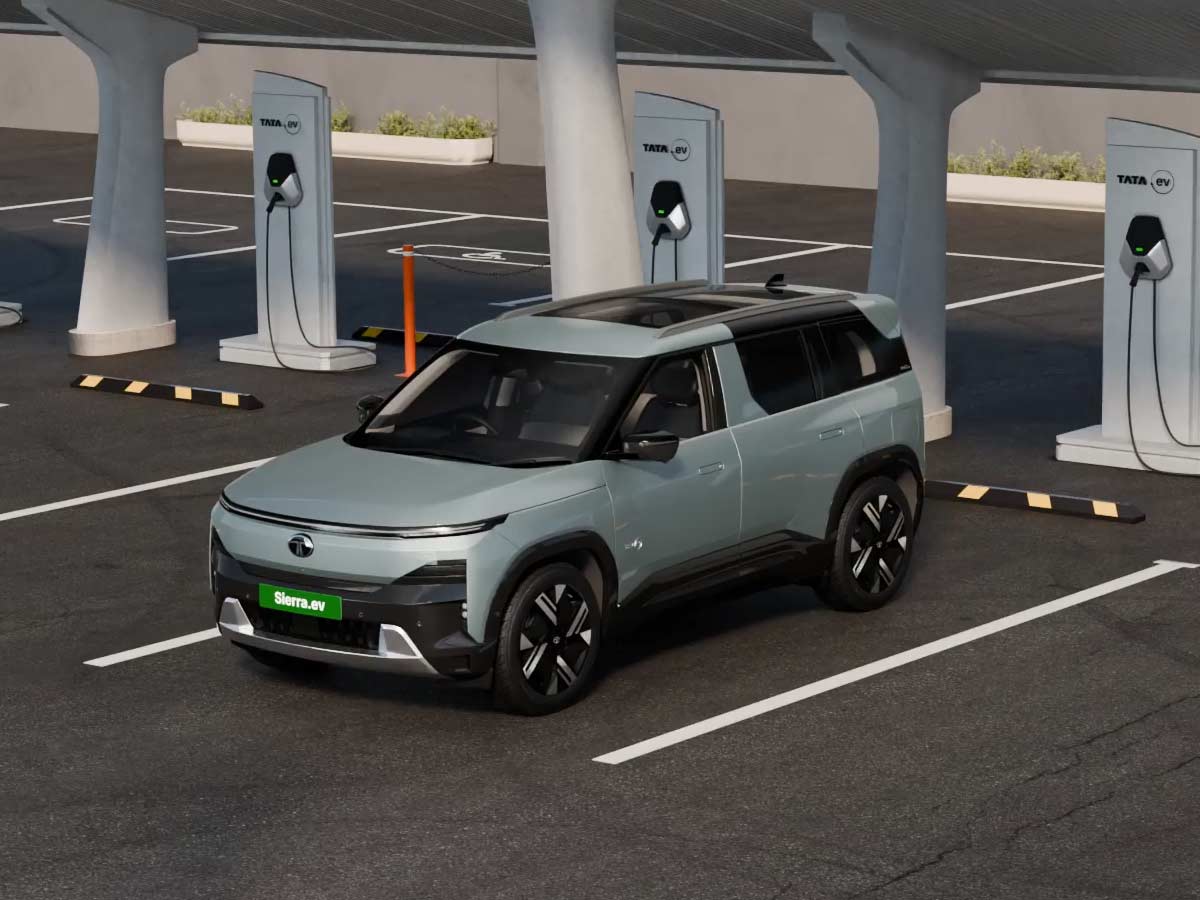
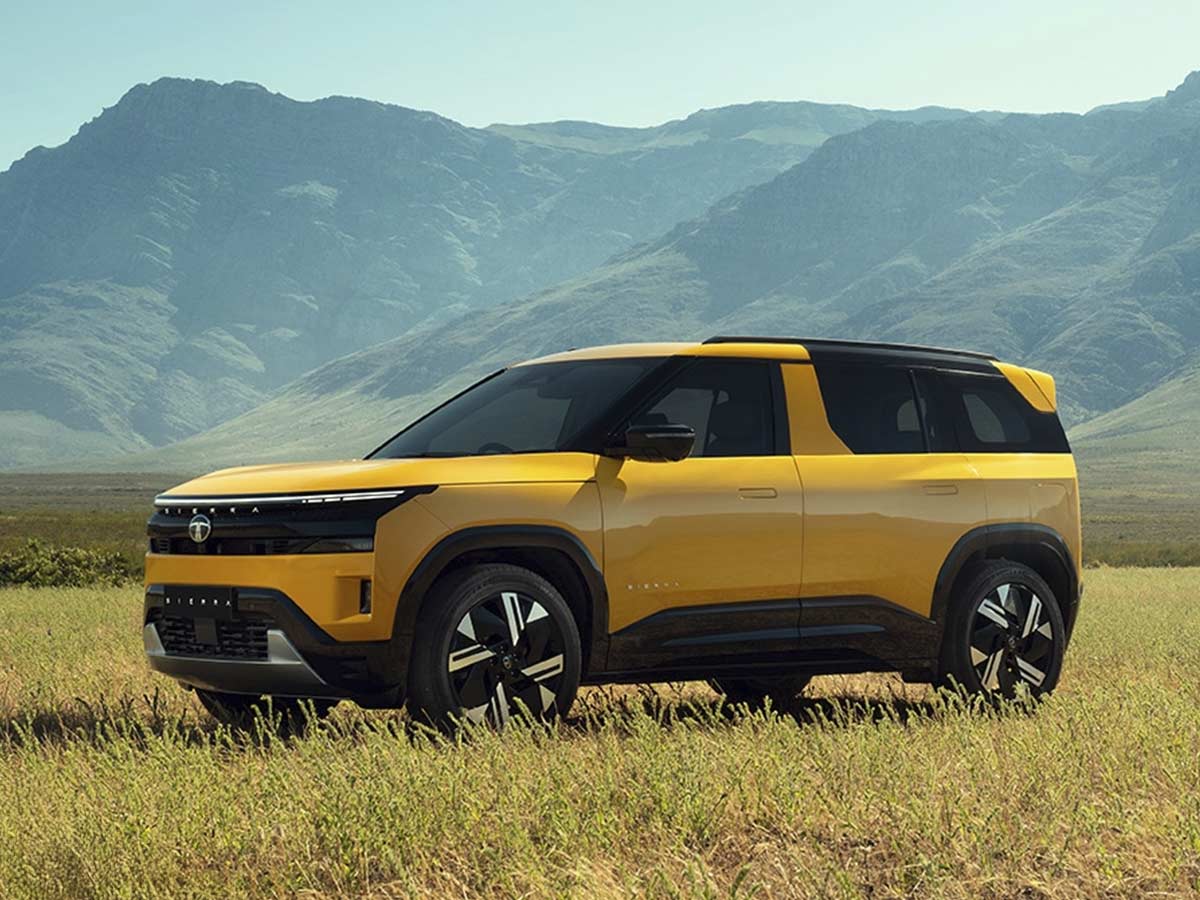
The Sierra has always been defined by its side profile, and that remains the centrepiece of the new model. The gently tapering roofline, upright greenhouse and broad shoulders deliberately echo the proportions of the original SUV, ensuring the vehicle remains instantly identifiable despite its transition to a five-door body style.
Most significant is the return of the signature Alpine-style rear quarter glass. Few design elements are as closely associated with the Sierra nameplate, and Tata has wisely resisted the temptation to modernise it beyond recognition. Instead, the expansive wraparound glazing has been carefully integrated into a more contemporary body structure, creating a visual bridge between past and present while improving outward visibility and contributing to a brighter cabin environment.
Unlike many electric SUVs that prioritise aggressively coupe-like rooflines in pursuit of aerodynamic efficiency, the Sierra.ev maintains a comparatively upright stance. This approach not only reinforces its SUV character but also allows the generous 2,730 mm wheelbase to translate into meaningful passenger space without compromising headroom for rear occupants.
Lighting as a Design Signature
Lighting has become one of the defining characteristics of modern electric vehicles, and the Sierra.ev adopts this philosophy through a sophisticated full-width illumination strategy.
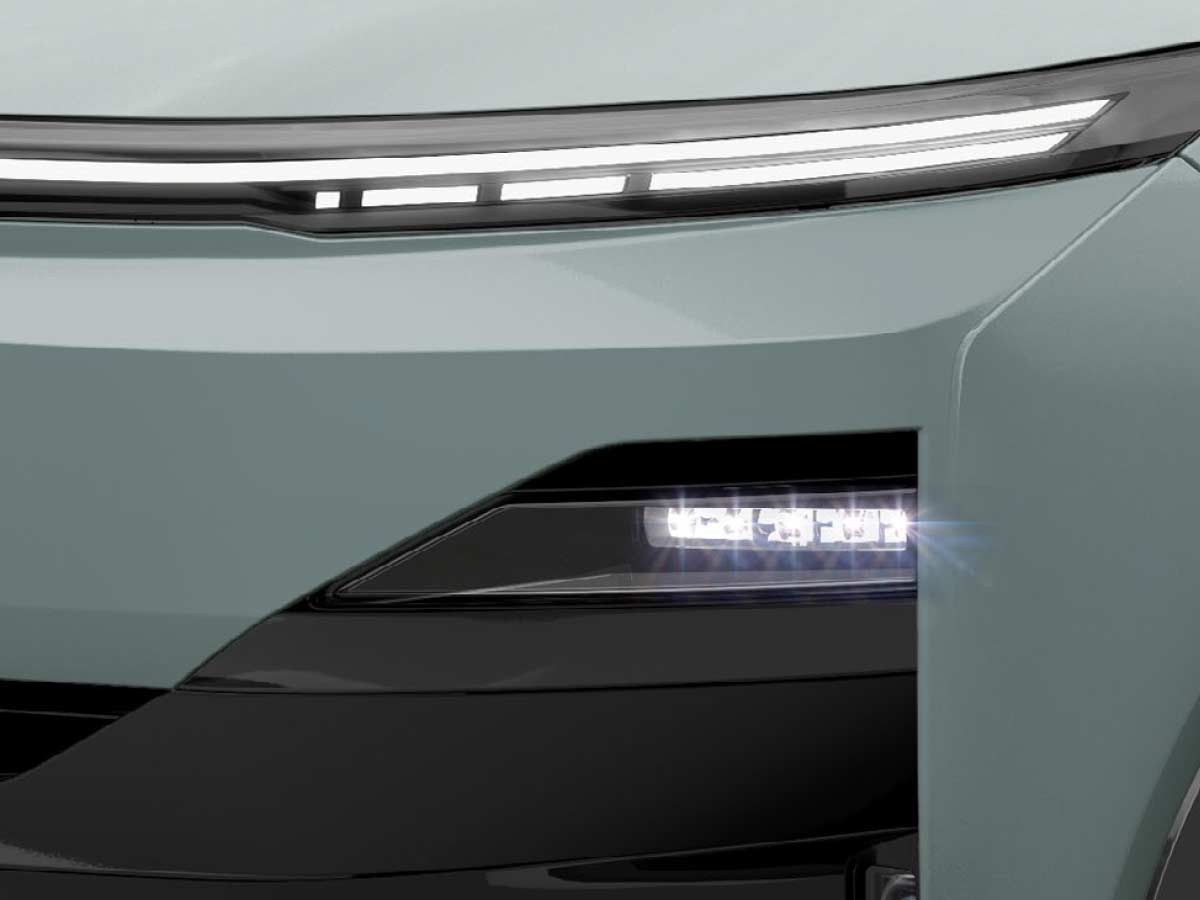
Slim Light Saber LED daytime running lamps extend across the front fascia, visually increasing the vehicle’s width while establishing a distinctive lighting signature during both day and night. Below them sit Tata’s Night Saber Bi-LED Booster Headlamps, positioned lower within the bumper to create a layered lighting arrangement that separates functional illumination from the vehicle’s visual identity.
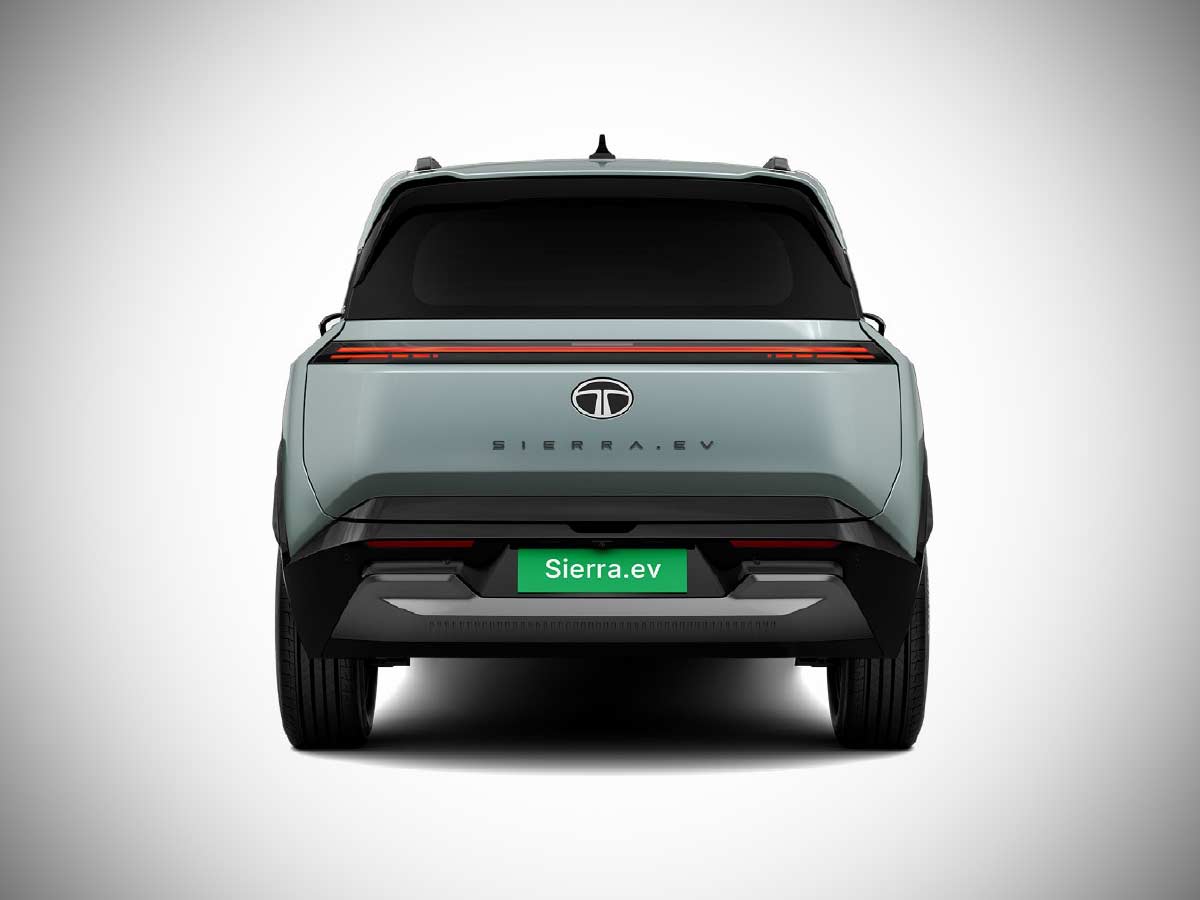
At the rear, the connected LED tail lamp mirrors the front’s horizontal emphasis, producing a clean, uninterrupted light signature across the tailgate. This wide visual stance complements the SUV’s planted proportions while reinforcing the minimalist design language increasingly associated with premium electric vehicles.
Beyond aesthetics, the lighting package incorporates progressive side indicators, welcome and goodbye animations, auxiliary lighting integrated into the tailgate and adaptive front fog lamps with cornering functionality on higher variants, demonstrating how illumination now performs both functional and experiential roles within the overall design.
Clean Surfaces Reflect an EV-First Philosophy
One of the most noticeable differences between the Sierra.ev and Tata’s earlier SUVs is the dramatic reduction in visual clutter.
Conventional protruding door handles have been replaced by flush-fitting handles with integrated welcome lighting, reducing aerodynamic disturbance while giving the side profile a cleaner appearance. Beyond improving airflow, the flush design contributes to a more premium first impression, with illumination guiding occupants towards the vehicle after unlocking.
Similarly, the hidden rear wiper has been concealed beneath the roof spoiler instead of sitting prominently across the rear glass, allowing the tailgate to maintain uninterrupted surfacing without sacrificing functionality.
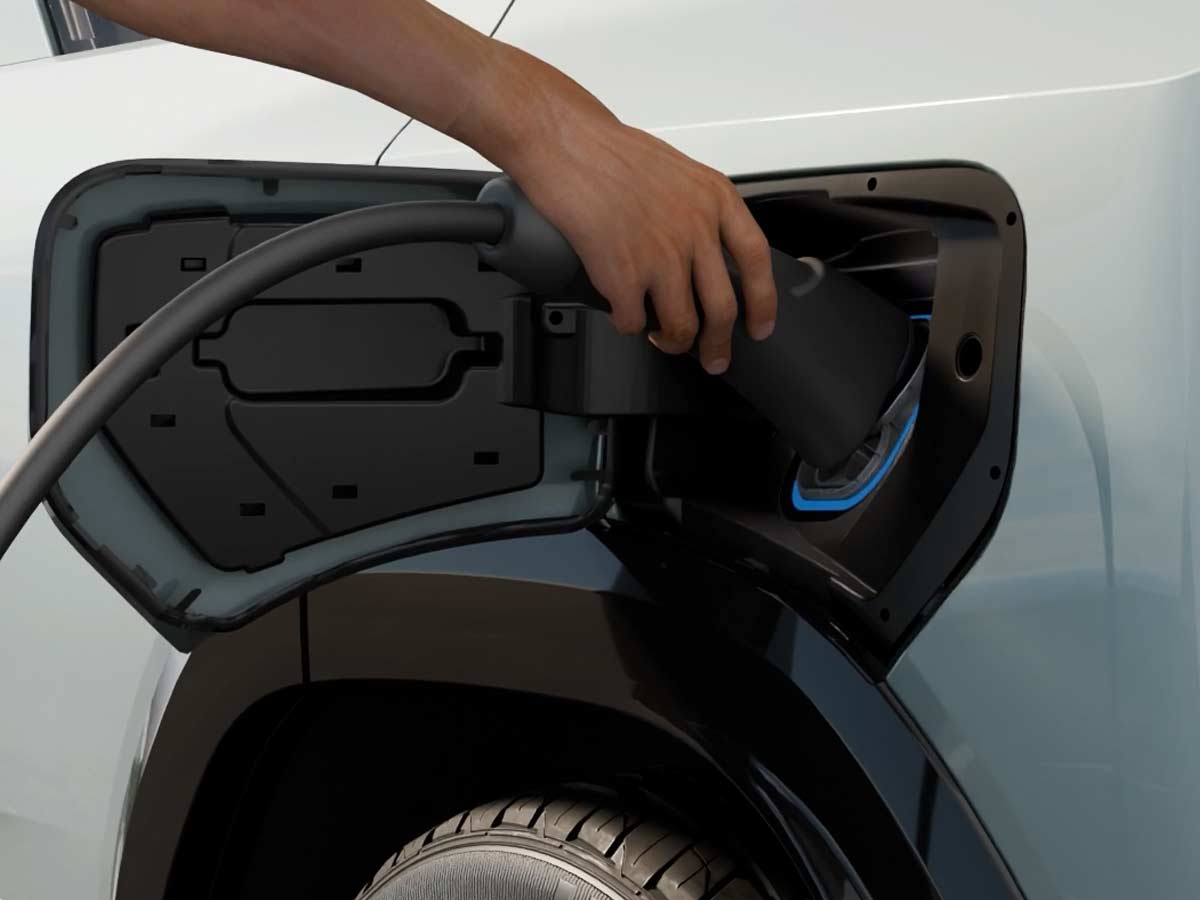
The charging port also receives thoughtful treatment through an illuminated charging bowl, enabling charging status to be identified at a glance without relying solely on the infotainment system or mobile application.
Sophisticated Details Reinforce Premium Positioning
While the Sierra.ev’s overall silhouette pays homage to its predecessor, several modern design elements establish its premium aspirations.
The SUV introduces a clamshell tailgate with gesture control on higher variants, replacing a conventional liftgate with a cleaner, more integrated rear design. Beyond visual appeal, the arrangement improves loading convenience while creating a distinctive rear-end identity that differentiates the Sierra from Tata’s existing SUV portfolio.
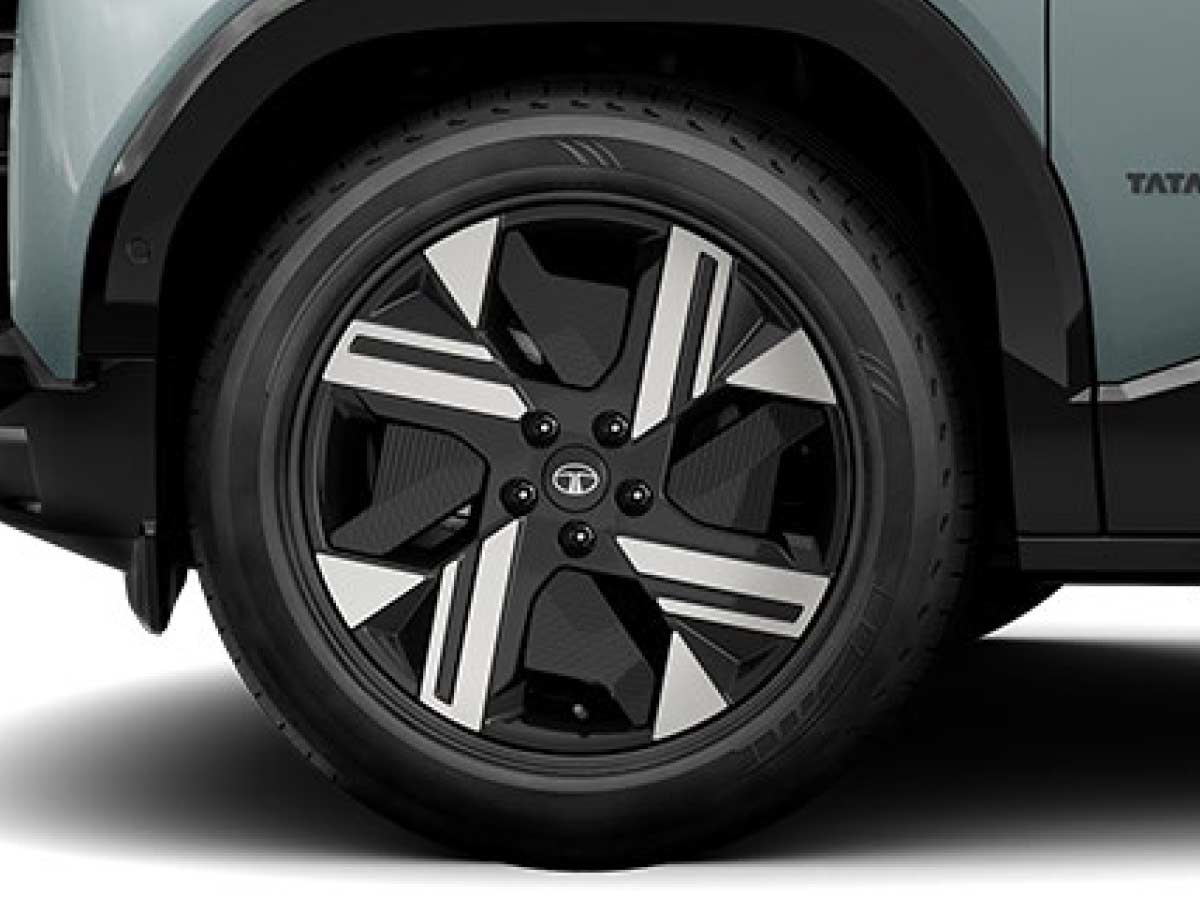
Wheel designs also vary according to trim. Entry-level variants ride on 18-inch alloy wheels, while the flagship Empowered A and Empowered A QWD receive larger 19-inch alloy wheels that fill the wheel arches more convincingly and enhance the SUV’s road presence.
Roof rails, floating door armrests, sculpted body surfaces and restrained use of chrome further reinforce a cleaner aesthetic that relies on proportion rather than ornamentation. Instead of introducing unnecessary visual complexity, Tata has adopted a more mature design philosophy, allowing individual elements such as the Alpine glass and full-width lighting signatures to become the focal points.
Design That Serves Engineering
Although the Sierra.ev’s styling is heavily influenced by heritage, it has clearly been developed with electric mobility in mind. Smooth surfacing, reduced panel interruptions and integrated exterior components contribute to aerodynamic efficiency, which in turn supports the vehicle’s long-range capability.
More importantly, the upright SUV proportions avoid many of the compromises associated with aggressively styled electric crossovers. The generous glass area improves visibility, the roofline preserves passenger comfort, and the squared-off tailgate maximises cargo capacity without sacrificing design cohesion.
Exterior Verdict
The Sierra.ev succeeds because it avoids treating nostalgia as a marketing exercise. Rather than recreating the original Sierra, Tata has extracted the elements that genuinely defined its character and reinterpreted them through the lens of contemporary electric vehicle design.
The Alpine rear quarter glass remains unmistakably Sierra. The connected LED lighting, flush door handles, hidden wiper and clamshell tailgate firmly place the SUV in the modern premium EV landscape. Together, these elements create a design that is both instantly familiar and convincingly contemporary – a rare achievement in an era where heritage-inspired revivals often struggle to balance emotion with progress.
Variant Matrix & Pricing: A Carefully Layered Product Strategy
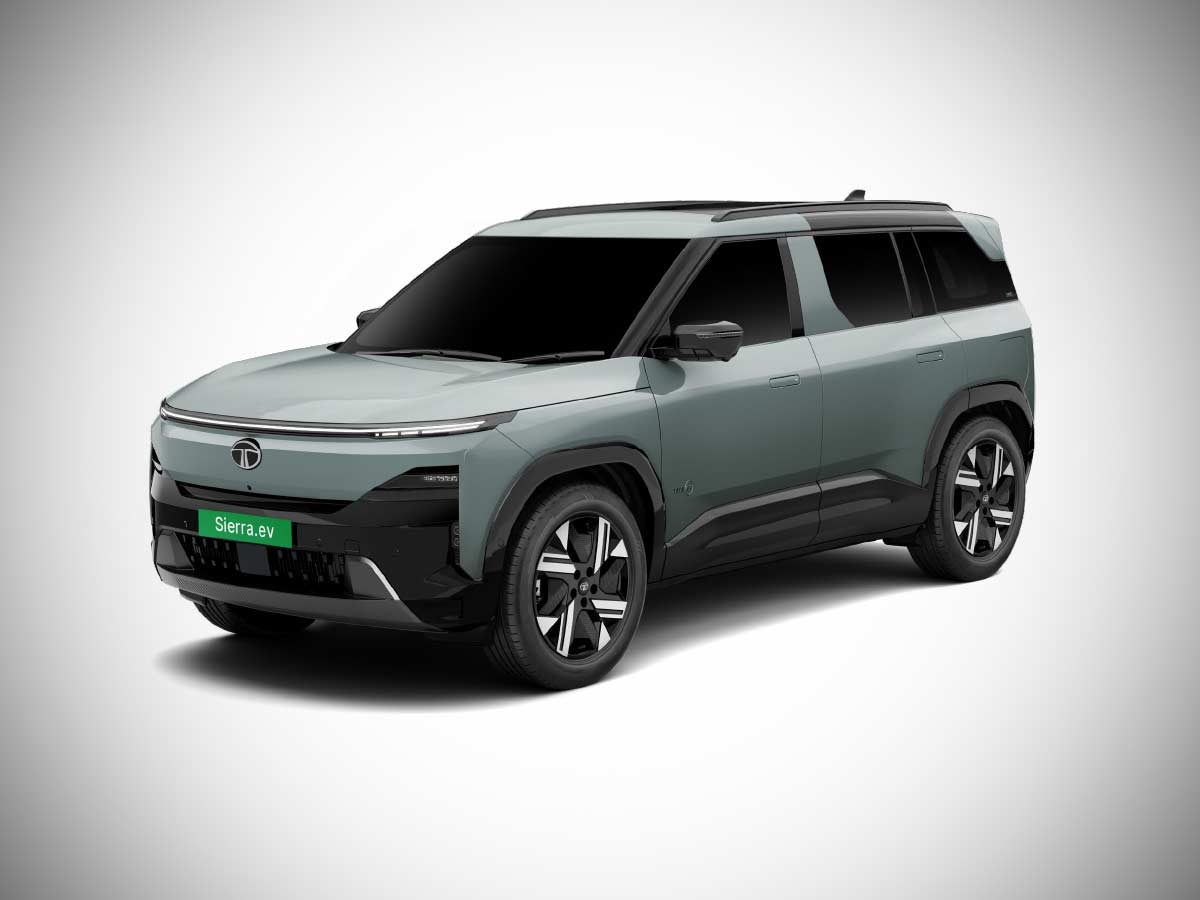
Unlike many manufacturers that overwhelm buyers with an extensive list of overlapping trims, Tata Motors has adopted a structured approach for the Sierra.ev. The lineup comprises six variants – Pure, Pure S, Adventure, Empowered, Empowered A, and Empowered A QWD – each representing a clear step up in equipment, technology and performance rather than merely cosmetic differentiation. The range opens with an introductory ex-showroom price of ₹18.79 lakh for the Pure variant, establishing the Sierra.ev as an accessible entry into the premium midsize electric SUV segment while allowing buyers to progressively add technology and capability as they move through the lineup.
Perhaps more importantly, Tata has avoided restricting the Sierra.ev to a single battery or drivetrain configuration. Instead, the product strategy gives customers a choice based on driving requirements rather than forcing them into expensive flagship variants simply to access greater range.
Battery Strategy Designed Around Different Use Cases
The Sierra.ev is available with two battery capacities – 63 kWh and 75 kWh – although their availability varies depending on the chosen variant.
The 63 kWh battery is offered on the Pure, Pure S, Adventure and Empowered variants, making it the default choice for buyers whose usage is primarily urban or regional. The larger 75 kWh battery becomes available from the Adventure variant onwards, continuing through Empowered, Empowered A, and the range-topping Empowered A QWD. This overlap allows customers to prioritise either equipment or driving range without necessarily moving to the top of the hierarchy.
It is a more flexible strategy than many competitors employ. Rather than tying the larger battery exclusively to flagship trims, Tata permits buyers to select a long-range configuration from the middle of the lineup, broadening its appeal for customers planning frequent highway travel.
Rear-Wheel Drive as the Core Offering
Most variants utilise a single permanent magnet synchronous motor driving the rear wheels. This rear-wheel-drive configuration marks a notable departure from the front-wheel-drive layouts commonly found in the segment and aligns the Sierra.ev with a growing number of dedicated electric platforms that favour rear-driven dynamics.
The 63 kWh version produces 238 PS and 315 Nm, while the 75 kWh rear-wheel-drive model delivers 209 PS and 315 Nm. Although the larger battery sacrifices peak horsepower in favour of range optimisation, both versions retain identical torque output, ensuring strong low-speed responsiveness typical of electric drivetrains.
Empowered A QWD – A Genuine Flagship
The Empowered A QWD occupies a distinctly different position within the range.
Rather than simply adding additional equipment, Tata introduces an entirely separate drivetrain. The flagship combines a 140 PS front induction motor with a 209 PS rear permanent magnet synchronous motor, creating the company’s Quad Wheel Drive (QWD) system. Together, the dual motors generate 504 Nm of combined torque while enabling intelligent torque distribution across all four wheels.
This configuration also unlocks several features unavailable elsewhere in the lineup, including:
- Boost Mode, delivering the strongest acceleration in the range.
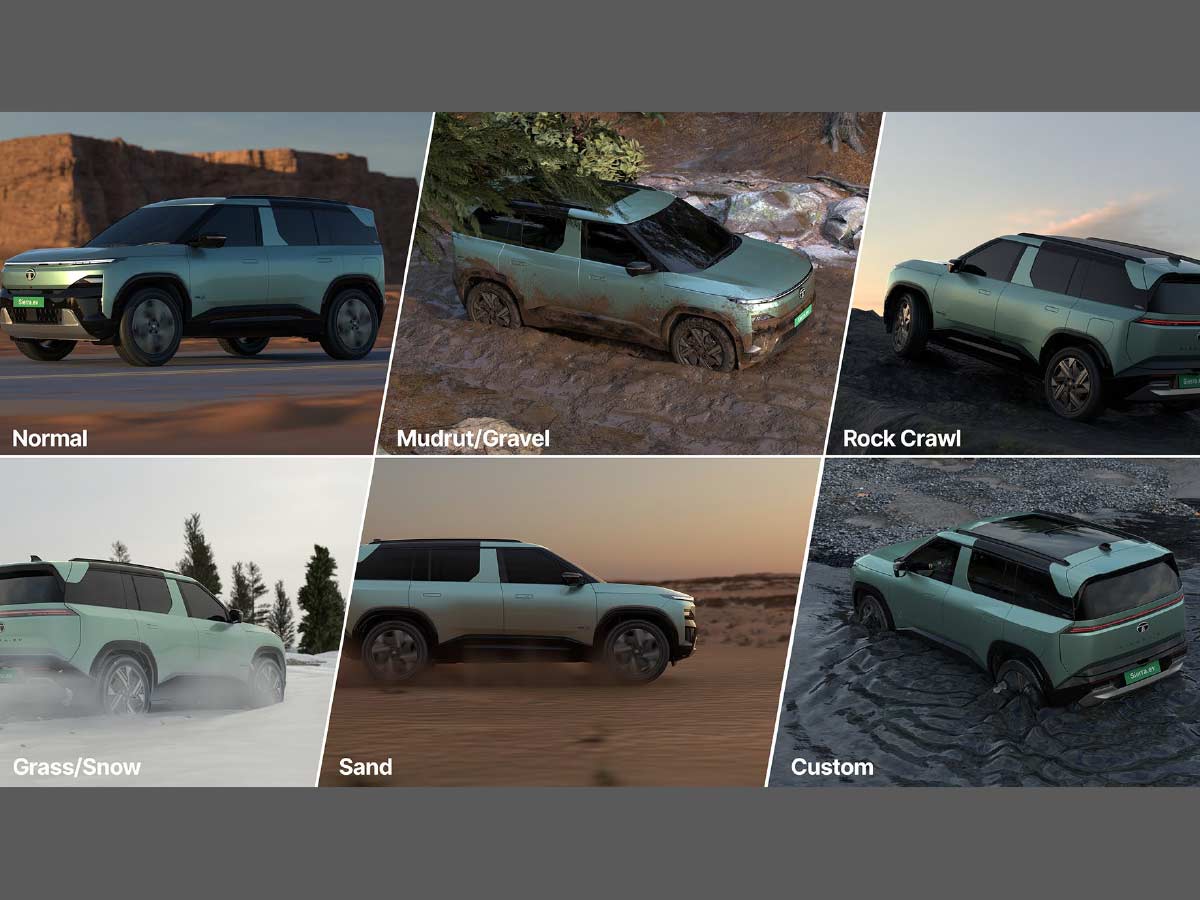
- Six Terrain Modes comprising Normal, Grass/Snow, Mud-Ruts, Sand, Rock Crawl and Custom.
- Off-road Assist for improved traction on challenging surfaces.
The result is a flagship variant differentiated by meaningful engineering enhancements rather than cosmetic exclusivity.
A Progressive Equipment Hierarchy
The feature progression across the lineup follows a logical pattern.
The Pure establishes the Sierra.ev’s fundamentals with LED lighting, 18-inch alloy wheels, a 31.24 cm infotainment touchscreen, a 26.03 cm digital cockpit, six airbags, automatic climate control, rear AC vents, rain-sensing wipers, connected voice assistance, all-wheel disc brakes, an air purifier, and electronic parking brake with Auto Hold. Even at this level, the equipment list avoids the impression of an entry-level compromise.
Moving to Pure S introduces lifestyle-focused additions rather than outright luxury. A voice-assisted PanoraMax panoramic sunroof, Vehicle-to-Load (V2L), Vehicle-to-Vehicle (V2V) charging, wireless Apple CarPlay and Android Auto, paddle shifters for regenerative braking, OTA software updates, tyre pressure monitoring, iRA.ev connected services, and Tata’s comprehensive ESP package significantly expand both convenience and EV functionality.
The Adventure variant marks the transition towards premium territory. Features such as the 360-degree HD Surround View System, 12-speaker JBL Black audio system with Dolby Atmos, Harman AudioworX processing, AirConsole gaming, integrated navigation, wireless charging, four terrain modes and enhanced ambient lighting transform the Sierra.ev from a well-equipped electric SUV into a technology-focused touring vehicle.
The Empowered variant shifts emphasis towards occupant comfort. The cabin gains the Horizon View Triple Screen Infotainment Experience, a passenger display, ventilated front seats, powered driver’s seat with memory, dual-zone climate control, leatherette upholstery, BreatheIQ air purification, gesture-controlled clamshell tailgate and additional ambient lighting zones.
Above this sits Empowered A, which introduces the Sierra.ev’s most advanced driver assistance technologies. Buyers gain the 540-degree transparent view camera, HypAR head-up display, powered co-driver seat, Level 2+ ADAS with 22 functions, Blind Spot View Monitor, Adaptive Cruise Control with Stop & Go, Autonomous Emergency Braking, Auto Park Assist, Summon functionality and Reverse Assist.
Finally, the Empowered A QWD combines this complete technology package with the dual-motor drivetrain, Boost Mode and six-terrain capability, making it the undisputed flagship of the Sierra.ev range.
A Pricing Strategy Focused on Value
Perhaps the most impressive aspect of the Sierra.ev’s variant strategy is that the hierarchy rarely feels artificial. Each successive trim introduces genuinely meaningful upgrades, whether in terms of charging capability, infotainment, comfort, safety or drivetrain sophistication.
The availability of the 75 kWh battery from the Adventure variant onwards also avoids forcing buyers into flagship pricing solely for greater range, while reserving the QWD system for the top specification ensures the flagship retains a meaningful engineering advantage.
Rather than relying on cosmetic packages or optional extras, Tata has created a lineup where each variant has a clearly defined identity. The Pure targets value-conscious EV adopters, Adventure balances touring capability with premium technology, Empowered focuses on luxury, while Empowered A QWD showcases the Sierra.ev at its technological and engineering peak.
In a segment where variant structures can often appear unnecessarily complex, the Sierra.ev stands out for offering a product hierarchy that is both easy to understand and aligned with distinct customer priorities.
Tata Sierra.ev ex-showroom prices:
63 kWh
- Pure: Rs 18.79 lakh
- Pure S: Rs 19.99 lakh
- Adventure: Rs 20.99 lakh
- Empowered: Rs 22.79 lakh
75 kWh
- Adventure: Rs 22.19 lakh
- Empowered: Rs 23.79 lakh
- Empowered A: Rs 24.79 lakh
- Empowered A QWD: Rs 25.99 lakh
Powertrain, Range & Performance: Engineered Beyond the Numbers
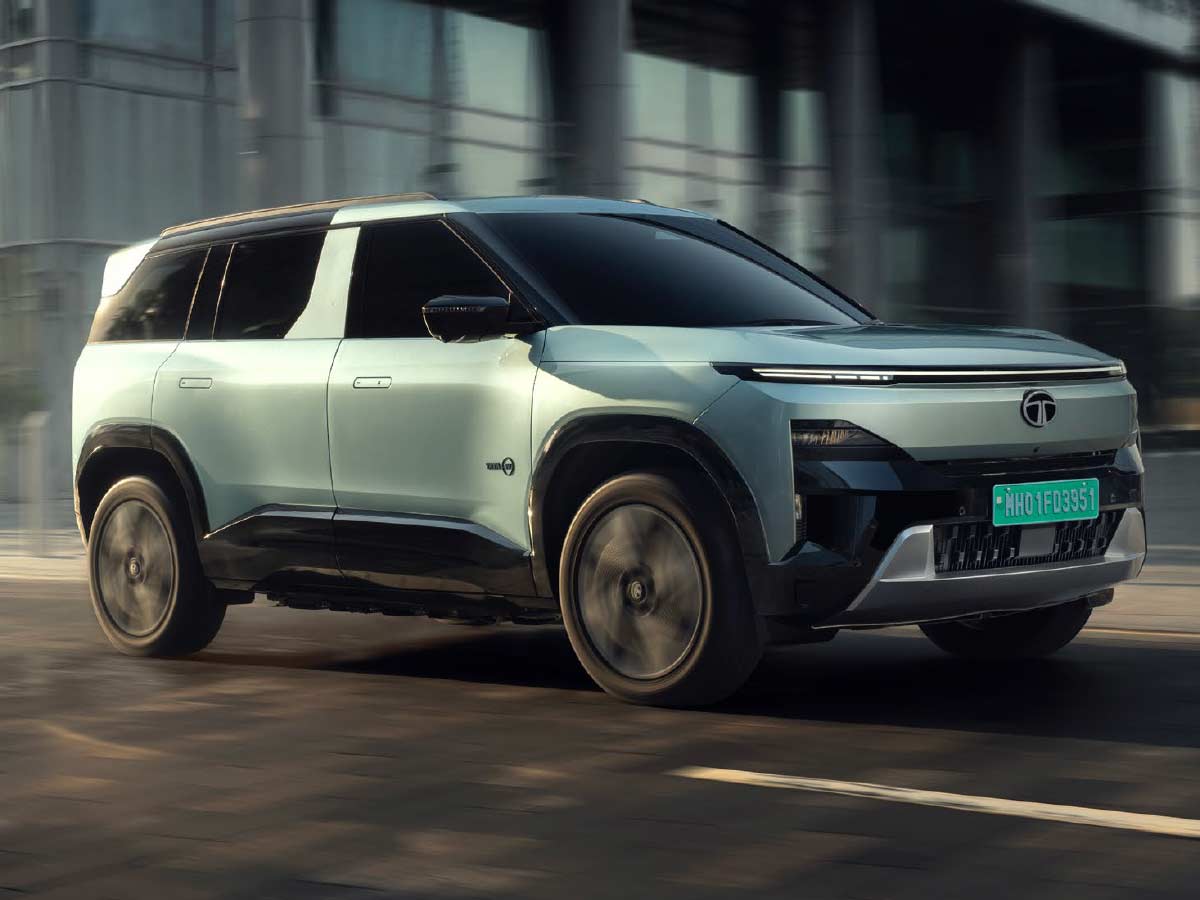
While the Sierra.ev’s heritage-inspired styling may attract the initial attention, its most significant engineering advances lie beneath the sheet metal. Built from the ground up on Tata Motors’ dedicated acti.ev+ architecture, the Sierra.ev has been designed around the advantages of an electric-first platform rather than adapting an existing internal combustion engine chassis. The result is an SUV that combines long-distance touring capability, modern charging technology and rear-wheel-drive dynamics with a level of drivetrain flexibility rarely seen in its price segment.
Unlike several competitors that rely on a single battery configuration, Tata has developed the Sierra.ev around two distinct battery packs and two drivetrain layouts, allowing buyers to prioritise either affordability, extended touring range or all-weather performance depending on individual requirements.
Two Battery Options, Two Distinct Missions
The Sierra.ev range begins with a 63 kWh lithium-ion battery pack, available on the Pure, Pure S, Adventure and Empowered variants. This version is paired with a rear-mounted Permanent Magnet Synchronous Motor (PMSM) producing 238 PS (175 kW) and 315 Nm of torque. Designed primarily for urban commuting and regional travel, it delivers a certified MIDC range of 535 km, while Tata estimates a more representative real-world driving range of 440-460 km under mixed operating conditions.
For buyers seeking greater touring capability, Tata offers a 75 kWh battery pack from the Adventure variant onwards. Interestingly, the larger battery is paired with a recalibrated rear motor producing 209 PS (154 kW) while retaining 315 Nm of torque. Although the reduction in peak horsepower may appear unusual on paper, it reflects a calibration focused on maximising efficiency and extending range rather than chasing outright performance figures. The strategy allows the long-range rear-wheel-drive Sierra.ev to achieve a claimed 665 km MIDC range, with Tata quoting a realistic operating window of 510-530 km in everyday driving conditions.
Publishing both certified and estimated real-world figures is a notable departure from conventional industry practice. While laboratory-certified numbers remain useful for regulatory comparison, Tata’s decision to openly communicate expected real-world performance provides buyers with a clearer understanding of how the Sierra.ev is likely to perform outside controlled testing environments.
Rear-Wheel Drive Brings a Different Character
Perhaps one of the Sierra.ev’s most distinctive engineering decisions is its use of rear-wheel drive across the majority of the lineup.
Within the midsize electric SUV segment, front-wheel-drive configurations remain the norm due to packaging simplicity and cost advantages. Tata has instead adopted a rear-driven layout that better exploits the characteristics of a dedicated EV platform. Positioning the drive motor at the rear not only frees the front axle from propulsion duties but also contributes to improved weight distribution and potentially more balanced handling characteristics under acceleration.
Complementing the drivetrain is Tata’s Ultra Glide Suspension, featuring independent front suspension with MacPherson struts, an independent multilink rear suspension, stabiliser bars at both ends and Frequency Dependent Dampers (FDD). Rather than relying on a conventional torsion beam arrangement commonly found in this class, the multilink rear suspension is designed to improve ride isolation, wheel control and stability over uneven surfaces.
The dedicated EV architecture also supports four levels of regenerative braking, adjustable through steering-mounted paddle shifters, allowing drivers to tailor the degree of energy recovery according to driving conditions.
QWD – The Sierra’s Performance Flagship
The range-topping Empowered A QWD introduces a fundamentally different drivetrain philosophy.
Rather than relying solely on a more powerful rear motor, Tata adds a 140 PS (103 kW) induction motor to the front axle while retaining the 209 PS rear permanent magnet motor, creating what the company calls Quad Wheel Drive (QWD). Together, the system produces 504 Nm of combined torque, enabling continuous torque distribution between the front and rear axles according to available grip.
Unlike mechanical all-wheel-drive systems that rely on transfer cases and differentials, the QWD arrangement independently controls each motor through software, allowing near-instantaneous torque delivery while reducing mechanical complexity.
This drivetrain also unlocks several exclusive capabilities.
A physical Boost Mode button, positioned within the centre console’s Drive Command Centre, temporarily sharpens accelerator response and unlocks maximum available performance. Tata claims a 0-100 km/h acceleration time of 5.8 seconds under internal testing conditions, placing the Sierra.ev among the quickest domestically manufactured electric SUVs currently on sale.
The flagship additionally receives six Terrain Modes:
- Normal
- Grass/Snow
- Mud-Ruts
- Sand
- Rock Crawl
- Custom
Working alongside Off-road Assist, these modes recalibrate power delivery, traction control and regenerative braking behaviour to improve confidence across low-grip surfaces. While the Sierra.ev is not positioned as a hardcore off-roader, these electronic systems considerably broaden its capability beyond sealed roads.
Charging Speeds Designed for Long-Distance Touring
Charging capability has become one of the defining measures of an electric vehicle’s usability, and the Sierra.ev demonstrates meaningful progress in this area.
Both battery configurations support CCS2 DC fast charging, with the 63 kWh battery capable of charging from 20% to 80% in approximately 25 minutes using a charger delivering more than 110 kW, while the 75 kWh battery completes the same cycle in around 26 minutes when connected to a 120 kW DC charger.
Tata also claims that the larger battery can recover up to 263 km of certified range in just 15 minutes, reinforcing the Sierra.ev’s credentials as a genuine long-distance touring vehicle rather than one intended solely for urban commuting.
Home charging is supported through a 7.2 kW AC wall box, requiring approximately 8.9 hours for the 63 kWh battery and 10.5 hours for the 75 kWh version from 10% to 100%. Portable charging through a standard 15A household socket is also included for greater flexibility.
More Than Just an Electric SUV
The Sierra.ev extends beyond conventional charging through its bidirectional energy capabilities.
Vehicle-to-Load (V2L) enables the SUV to supply up to 3.3 kVA of power to external electrical equipment, allowing appliances, camping accessories or power tools to operate directly from the vehicle’s battery. Meanwhile, Vehicle-to-Vehicle (V2V) charging supports energy sharing with compatible electric vehicles at up to 5 kVA, transforming the Sierra.ev into a mobile energy source when required.
These functions reinforce Tata’s vision of the Sierra.ev as more than simply a mode of transportation. Instead, the vehicle is positioned as part of a broader connected energy ecosystem.
Performance Verdict
On paper, the Sierra.ev’s specifications are impressive. More importantly, they reveal a thoughtfully engineered product rather than one developed around headline figures alone.
The combination of two battery options, rear-wheel-drive architecture, a sophisticated multilink suspension, transparent real-world range estimates and an advanced dual-motor QWD flagship demonstrates a level of engineering maturity that extends beyond simple electrification. Add rapid charging, bidirectional energy capability and one of the segment’s strongest touring ranges, and the Sierra.ev establishes itself as a compelling long-distance electric SUV.
Rather than chasing outright acceleration or record-breaking power outputs, Tata has focused on creating a drivetrain that balances efficiency, usability and driver confidence – an approach that aligns closely with the practical expectations of premium EV buyers in India.
Interior & Technology Architecture: Where the Sierra.ev Makes Its Strongest Statement
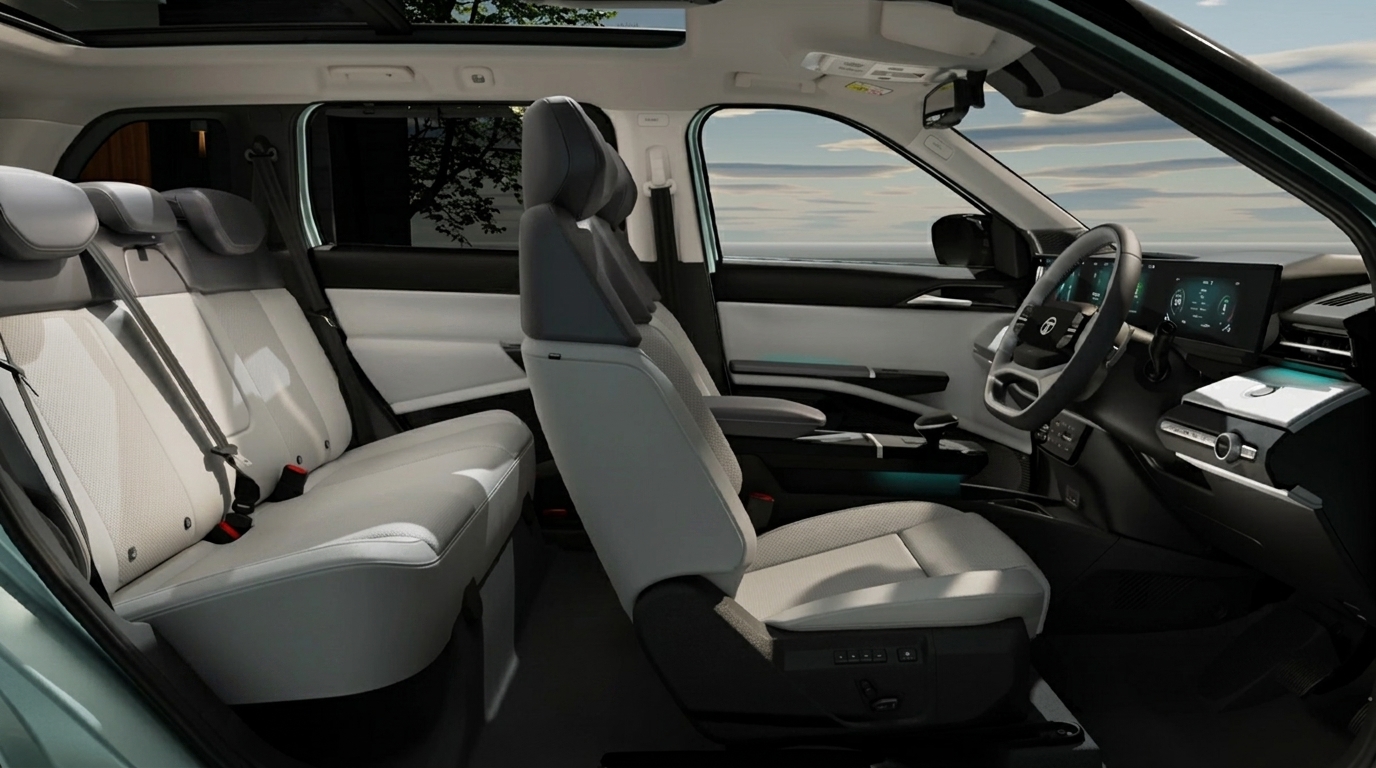
If the exterior of the Sierra.ev is an exercise in restrained evolution, the cabin is where Tata Motors has allowed itself greater creative freedom. While the original Sierra earned recognition for its distinctive styling, the 2026 Sierra.ev seeks to redefine expectations of what an Indian premium electric SUV can offer from behind the wheel. Rather than merely increasing screen sizes or adding connected features, Tata has redesigned the interior around the principles of openness, digital integration and everyday usability, resulting in what is arguably the brand’s most sophisticated production cabin to date.
Unlike several competitors that pursue minimalism through the removal of physical controls, the Sierra.ev adopts a more balanced philosophy. Digital interfaces dominate the dashboard, yet essential driving functions remain immediately accessible through dedicated switches and rotary controls, reducing the need to navigate multiple touchscreen menus while driving.
A Triple-Screen Cockpit Designed Around the Occupants
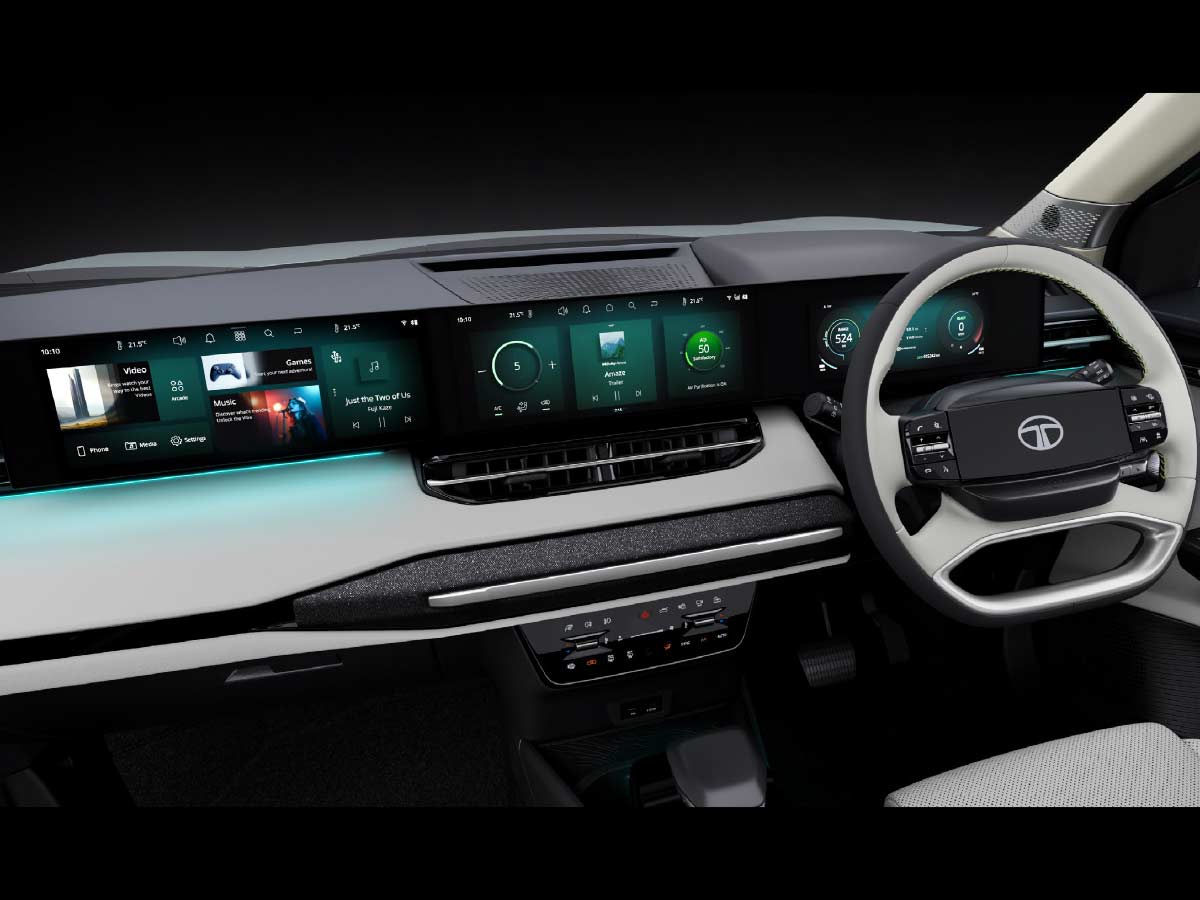
The centrepiece of the Sierra.ev’s interior is the Horizon View Triple Screen Infotainment Experience, introduced on the Empowered and higher variants. Rather than relying on a single oversized display, Tata has created a panoramic digital dashboard integrating three individual screens into one continuous visual layout.
The configuration comprises:
- A fully digital driver instrumentation display.
- A central infotainment touchscreen.
- A dedicated 31.24 cm Personal Infotainment Display (PID) for the front passenger.
This arrangement transforms the front cabin into a collaborative digital environment rather than a driver-centric workspace. While the driver retains access to navigation, vehicle information and charging controls, the passenger can independently operate entertainment functions without interrupting the primary infotainment interface.
Supporting this ecosystem is Tata’s Theater Pro entertainment architecture, which extends the passenger display beyond conventional media playback. Combined with the Arcade.ev application suite, occupants gain access to more than 30 integrated applications, including streaming services, web browsing and AirConsole, making the Sierra.ev India’s first production vehicle to offer in-car gaming through this platform.
Wireless Android Auto and Apple CarPlay are supported, while the infotainment system also integrates Mappls navigation, DrivePay for in-car UPI payments and Tata’s EV Route Planner, capable of estimating battery charge remaining at the destination before a journey even begins.
Technology That Extends Beyond Entertainment
The Sierra.ev’s digital ecosystem has been developed around Tata’s iRA.ev Connected Suite, offering more than 70 connected features and four years of complimentary connected services.
Through the accompanying smartphone application, owners can remotely:
- Monitor charging progress.
- Lock or unlock the vehicle.
- Plan charging stops.
- Receive over-the-air software updates.
- Access vehicle diagnostics.
- Schedule journeys.
Rather than functioning as an optional connected package, iRA.ev forms an integral part of the ownership experience, allowing the Sierra.ev to evolve through software updates long after delivery.
The vehicle also introduces Digi Access, supporting Ultra-Wideband (UWB) technology for digital key functionality. Owners can use compatible smartphones, NFC cards or the supplied key fob to unlock, start or even summon the vehicle, reducing reliance on traditional physical keys.
Comfort Designed Around Long Journeys
Although the Sierra.ev is technology-rich, Tata has clearly recognised that premium ownership extends beyond displays and software.
Front occupants benefit from ventilated seats, while the driver’s seat gains six-way power adjustment with memory and welcome functions. The co-driver receives four-way electric adjustment on higher variants, allowing both front occupants to personalise seating positions with minimal effort.
Additional ergonomic enhancements include:
- Extendable thigh support.
- Sliding centre armrest.
- Leatherette upholstery.
- Leather-wrapped steering wheel.
- Eight-way extendable sun visors with illuminated mirrors.
- Floating door armrests.
Rear passengers receive equal attention.
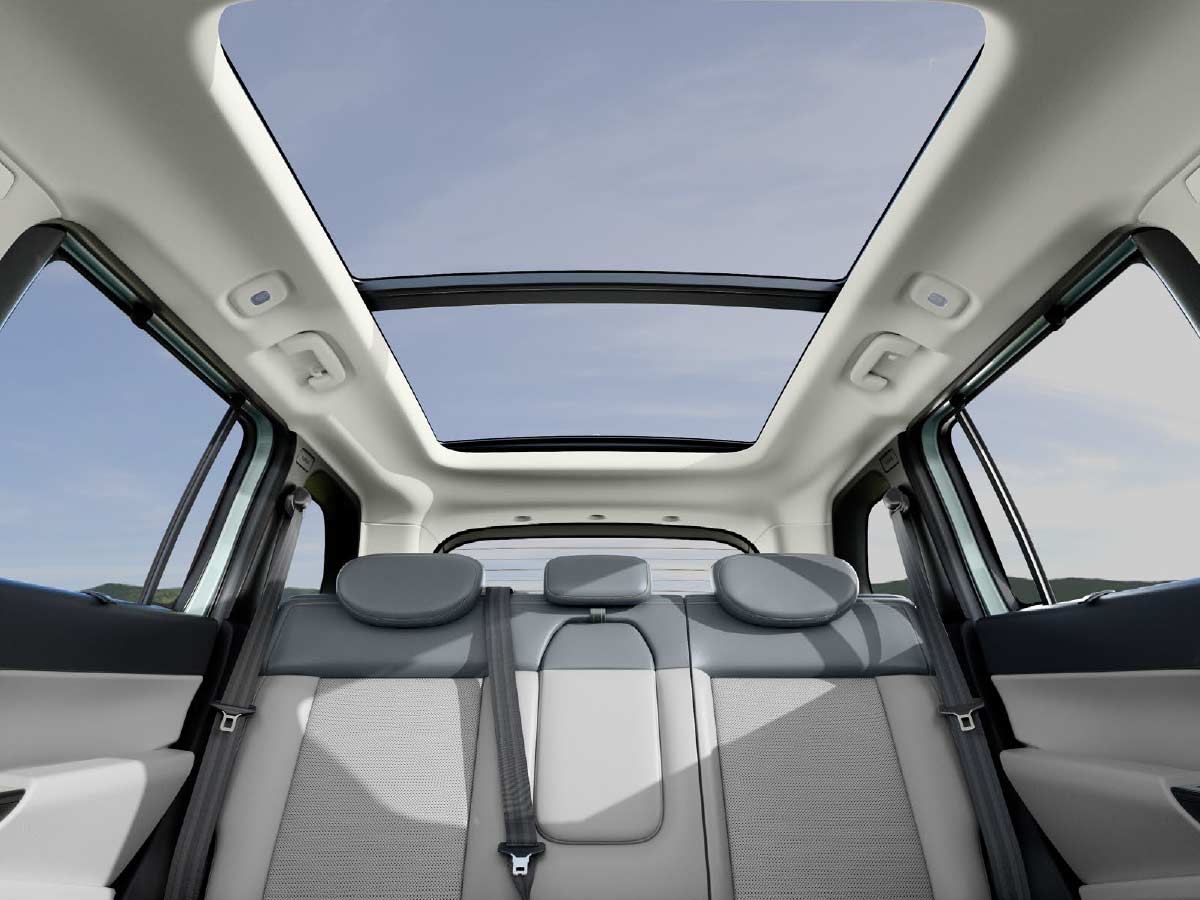
The Sierra.ev incorporates 60:40 split-folding rear seats with two-stage recline, three adjustable headrests, rear AC vents, a central armrest with cupholders, powered rear window sunshade and Tata’s Boss Mode, allowing rear occupants to maximise legroom by electrically adjusting the front passenger seat.
These features collectively position the Sierra.ev closer to executive crossovers than conventional family SUVs.
PanoraMax Creates an Airier Cabin
One of the defining visual elements inside the Sierra.ev is the PanoraMax panoramic sunroof, described by Tata as the segment’s largest.
Rather than functioning purely as a styling feature, the expansive glass roof works alongside the Sierra’s generous window area to create a noticeably brighter cabin. Combined with the signature Alpine rear quarter glass, the interior benefits from abundant natural light, reducing the enclosed feeling often associated with modern SUVs featuring high waistlines.
Complementing the open atmosphere is configurable multi-mood ambient lighting, extending across the dashboard, centre console, front doors, overhead console and sunroof surrounds on higher trims.
Premium Features with Everyday Relevance
The Sierra.ev avoids falling into the trap of adding technology for its own sake.
The BreatheIQ air purification system continuously monitors cabin air quality through an integrated AQI display while incorporating an ioniser on flagship variants.
Climate comfort is managed through Dual-Zone Fully Automatic Temperature Control (DATC), allowing driver and passenger to independently select preferred cabin temperatures. Rear occupants benefit from dedicated air vents to ensure more consistent cooling throughout the cabin.
Storage solutions also demonstrate thoughtful packaging.
The Sierra.ev includes:
- A 55-litre front trunk (frunk) on rear-wheel-drive variants.
- Sliding centre console storage.
- Wireless smartphone charging.
- Multiple USB-C ports offering up to 65 W charging.
- Umbrella holder.
- Smart seat-back pockets.
- Bottle holders throughout the cabin.
- Up to 622 litres of luggage space, expandable to 1,257 litres with the rear seats folded.
Entertainment Without Compromise
Audio performance receives equal emphasis.
Higher variants feature a 12-speaker JBL Black audio system, complemented by a central speaker, subwoofer and SonicShaft soundbar, with Dolby Atmos and Harman AudioworX signal processing delivering an immersive listening experience. Rather than relying on speaker quantity alone, the system has been developed to create a genuine surround-sound environment throughout the cabin.
Interior Verdict
The Sierra.ev’s cabin represents a significant milestone for Tata Motors.
It is not simply larger, more digital or better equipped than previous Tata interiors; it demonstrates a clear understanding of how premium electric vehicles are evolving. The combination of the Horizon View Triple Screen layout, Theater Pro entertainment ecosystem, connected software architecture and thoughtfully engineered seating creates an interior that feels contemporary without sacrificing usability.
Crucially, the experience extends beyond headline technology. Features such as the PanoraMax sunroof, BreatheIQ air purification, powered seating, dual-zone climate control and extensive storage solutions ensure the Sierra.ev delivers tangible day-to-day benefits rather than merely impressive brochure specifications.
Within the midsize electric SUV segment, few cabins currently combine digital sophistication, long-distance comfort and practical functionality with the same degree of completeness. The Sierra.ev therefore establishes a new benchmark not only for Tata Motors, but also for what buyers can reasonably expect from a domestically developed premium electric SUV.
Safety, Driver Assistance Systems & Ownership: Confidence Beyond the Drive
As electric vehicles become increasingly defined by software, connectivity and battery technology, safety has evolved into a far broader consideration than crash protection alone. Structural engineering, electronic driver assistance, battery durability and long-term ownership support now play equally significant roles in shaping consumer confidence. The Sierra.ev reflects this changing landscape by combining Tata Motors’ established emphasis on occupant protection with one of the most comprehensive technology and warranty packages currently available in the Indian EV market.
Rather than positioning safety as an optional upgrade, Tata has ensured that the Sierra.ev offers a strong baseline specification across the entire lineup, while reserving its most sophisticated driver assistance technologies for the higher variants.
A Dedicated EV Structure Built Around Safety
The Sierra.ev’s safety story begins with its acti.ev+ architecture.
Unlike electric vehicles adapted from combustion-engine platforms, the dedicated EV architecture allows Tata’s engineers to integrate the battery pack as a structural element within the floor, contributing to overall rigidity while lowering the centre of gravity. The liquid-cooled battery system and electric motors are protected to IP67 standards against water and dust ingress, enhancing durability under diverse operating conditions.
Although the Sierra.ev had not yet undergone an independent Bharat NCAP or Global NCAP assessment at launch, Tata Motors enters this segment with one of the strongest safety reputations among Indian manufacturers. Vehicles such as the Nexon, Punch, Harrier and Safari have consistently demonstrated high crash-test performance, creating expectations that the Sierra.ev has been engineered with a similar philosophy centred on occupant protection.
Strong Standard Safety Equipment
Even the entry-level Pure variant arrives with a comprehensive list of passive and active safety features rather than relying on higher trims for essential protection.
Standard equipment includes:
- Six airbags (front, side and curtain)
- All-wheel disc brakes
- Electronic Parking Brake with Auto Hold
- Rear parking camera with guidance lines
- ISOFIX child-seat anchorages
- Automatic headlamps
- Rain-sensing wipers
- Rear wiper and washer
- Perimetric alarm system
- Height-adjustable front seatbelts.
This baseline specification ensures that buyers selecting lower variants are not required to compromise on fundamental safety equipment.
Electronic Stability Systems Go Far Beyond the Basics
Progressing to the Pure S introduces one of the Sierra.ev’s most technically comprehensive safety upgrades.
Instead of offering only conventional Electronic Stability Control, Tata integrates an expanded Electronic Stability Program (ESP) incorporating 19 individual assistance functions.
Among these are:
- Vehicle Dynamic Control (VDC)
- Corner Stability Control (CSC)
- Torque Vectoring by Brake (TVB)
- Hill Hold Control (HHC)
- Hill Descent Control (HDC)
- Hydraulic Brake Assist (HBA)
- Brake Fade Compensation (BFC)
- Traction Control System (TCS)
- Electronic Brake-force Distribution (EBD)
- Intelligent Vacuum-less Brake & Active Control (i-VBAC)
- After Impact Braking (AIB)
- Automatic Vehicle Hold
- Rollover Mitigation.
Collectively, these systems operate continuously in the background, enhancing vehicle stability during emergency manoeuvres, slippery road conditions and steep gradients without demanding driver intervention.
From Surround View to 540-Degree Vision
Driver visibility has become a major differentiator in premium SUVs, and the Sierra.ev adopts a progressively layered approach.
The Adventure variant introduces a 360-degree HD Surround View System, accompanied by Tata’s 4Sight Blind Spot monitoring technology, helping drivers negotiate tight urban environments with greater confidence.
Moving to the Empowered A expands this into a 540-degree camera system incorporating Transparent View technology. By digitally projecting the area beneath the vehicle, the system effectively creates an “underbody” view that can assist when navigating rough terrain, steep inclines or confined parking spaces.
Additional visibility aids include:
- Blind Spot View Monitor
- Adaptive front and rear turn cameras
- Dynamic Steering Torque assistance
- Rear Cross Traffic Alert
- Rear Collision Warning
- Door Open Alert
- Blind Spot Detection.
Rather than functioning independently, these systems operate as part of a broader sensor network designed to improve situational awareness in both urban traffic and highway driving.
Level 2+ ADAS Brings Semi-Autonomous Capability
The Sierra.ev reaches its technological peak with the Empowered A, which introduces Level 2+ Advanced Driver Assistance Systems (ADAS) comprising 22 key safety functions.
The suite includes:
- Adaptive Cruise Control with Stop & Go
- Lane Keep Assist
- Lane Centring System
- Adaptive Steering Assist
- Lane Departure Warning
- Traffic Sign Recognition
- Intelligent Speed Assist
- High Beam Assist
- Blind Spot Detection
- Lane Change Alert
- Forward Collision Warning for vehicles, pedestrians and cyclists
- Autonomous Emergency Braking for vehicles, pedestrians and cyclists.
While these technologies cannot replace attentive driving, they substantially reduce driver workload during long highway journeys and provide an additional layer of protection in demanding traffic conditions.
Auto Park Assist Moves Beyond Basic Parking Aids
Perhaps the Sierra.ev’s most advanced feature is its Auto Park Assist (APA) system.
Unlike simpler parking assistance technologies that merely provide steering guidance, Tata’s implementation supports 16 individual parking functions, including:
- Parallel Park In
- Parallel Park Out
- Perpendicular Park In
- Perpendicular Park Out
- Angular Parking
- Remote Park Assist
- Reverse Assist
- Remote Crank and Summon
- Lead Vehicle Movement Detection
- Manoeuvre Emergency Braking
- Low-Speed Autonomous Emergency Braking.
Together, these systems significantly reduce the complexity of manoeuvring a midsize SUV within congested urban environments.
Ownership Confidence Extends Beyond Delivery
Perhaps the Sierra.ev’s strongest competitive advantage emerges after the purchase rather than before it.
Tata offers a Lifetime High-Voltage Battery Warranty for the first registered private owner, defined as 15 years from the date of first vehicle registration. This represents one of the most comprehensive battery warranty programmes currently offered by any mainstream manufacturer in India.
Complementing this are:
- 8-year / 1,60,000 km motor warranty
- 3-year / 1,25,000 km vehicle warranty.
For buyers transitioning to electric mobility, these warranties directly address one of the most common concerns surrounding long-term battery durability and replacement costs.
Safety & Ownership Verdict
The Sierra.ev demonstrates that Tata Motors views safety as a complete ownership ecosystem rather than simply a crash-test objective.
From its dedicated EV structure and comprehensive standard equipment to its sophisticated Level 2+ ADAS suite, 540-degree camera technology and intelligent parking systems, the SUV offers one of the most advanced safety packages currently available in its class.
Equally significant is the ownership proposition. The lifetime battery warranty, extended motor coverage and transparent real-world range estimates help reduce many of the uncertainties traditionally associated with EV ownership. Combined with Tata.ev’s rapidly expanding charging ecosystem and connected software platform, the Sierra.ev delivers reassurance that extends well beyond the showroom floor.
Within the premium midsize electric SUV segment, few rivals currently offer such a balanced combination of active safety, electronic assistance and long-term ownership support, making this one of the Sierra.ev’s most compelling strengths.
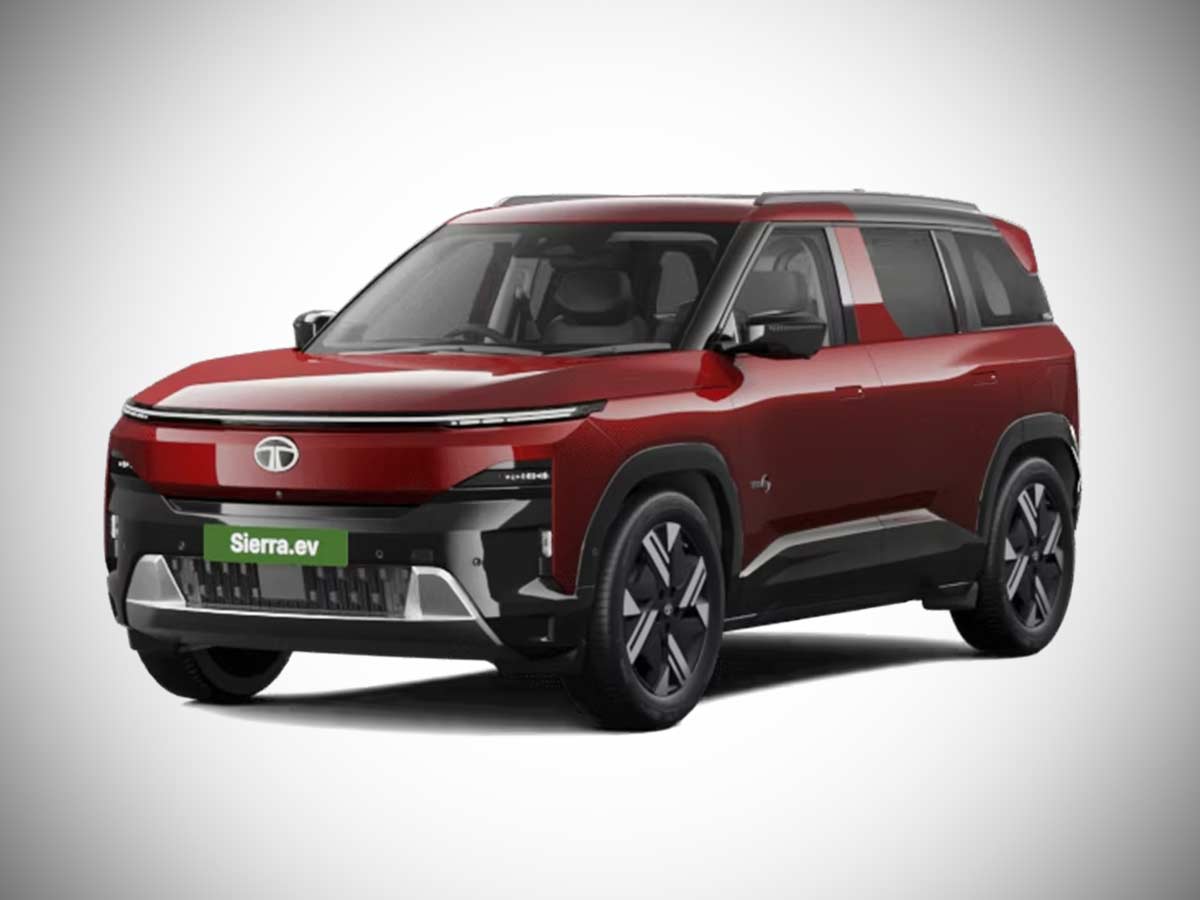
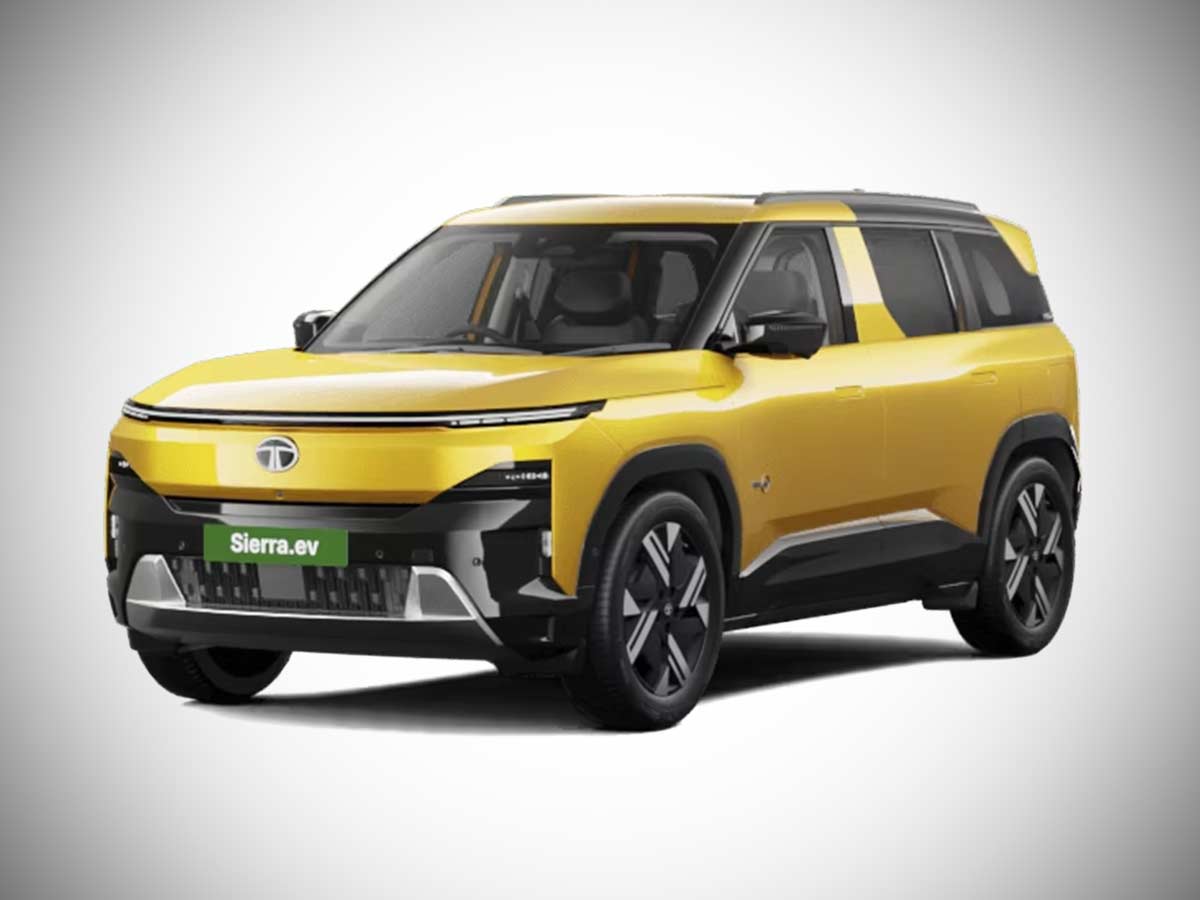
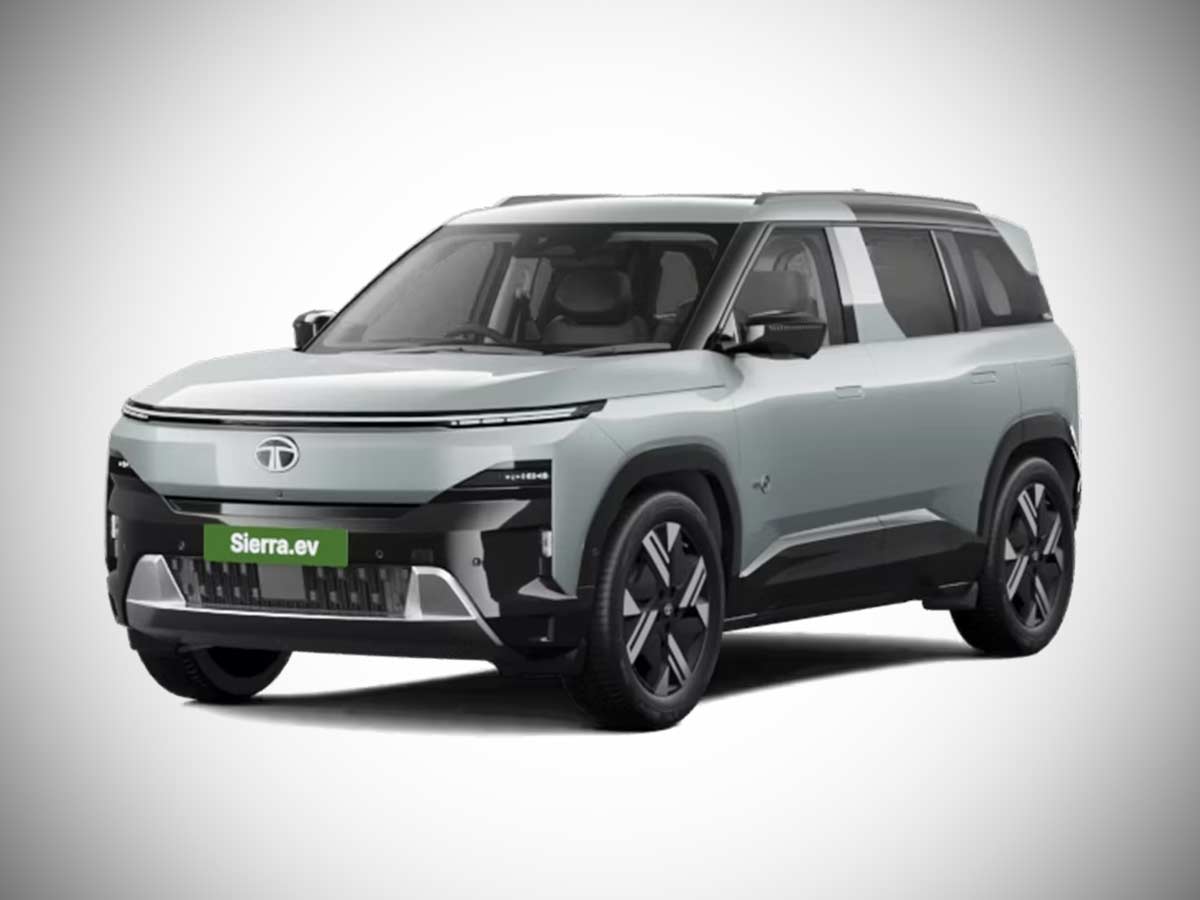
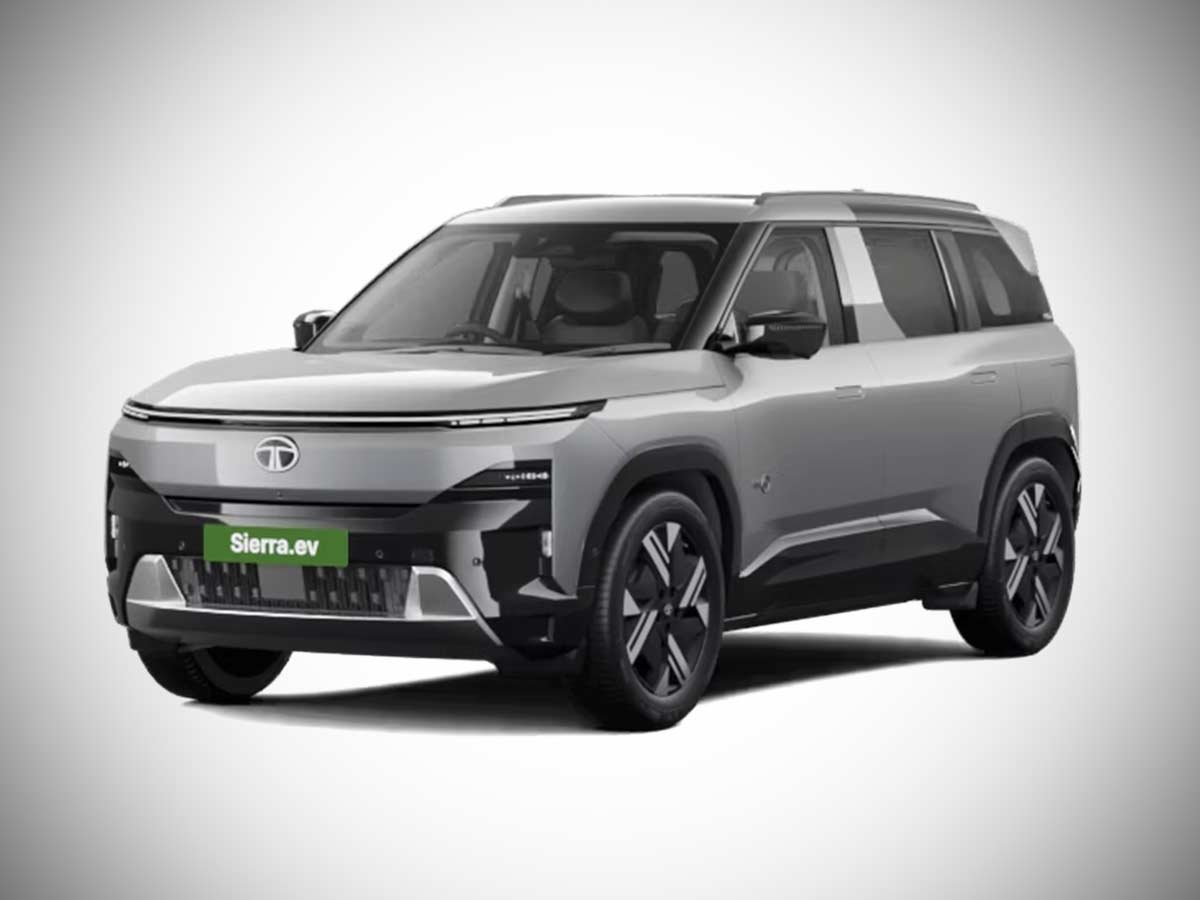
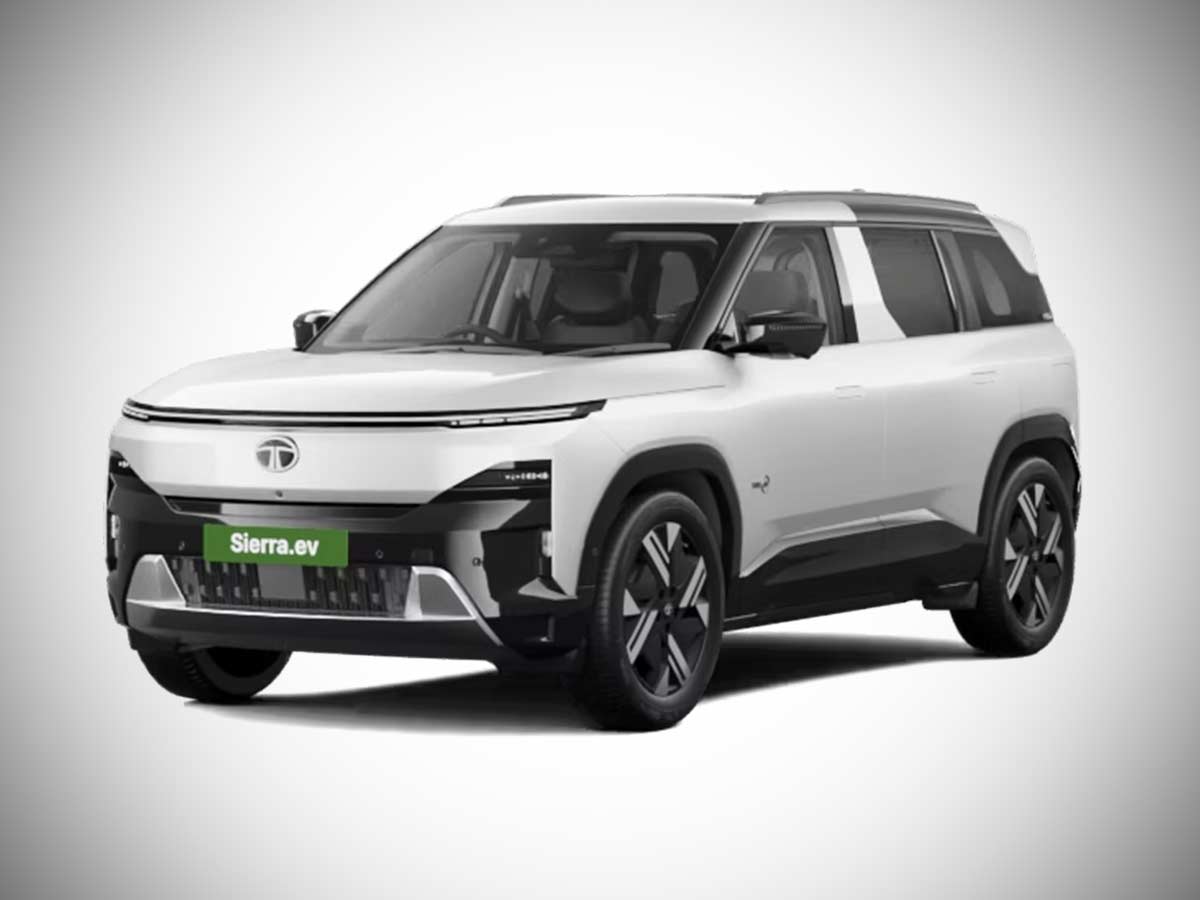
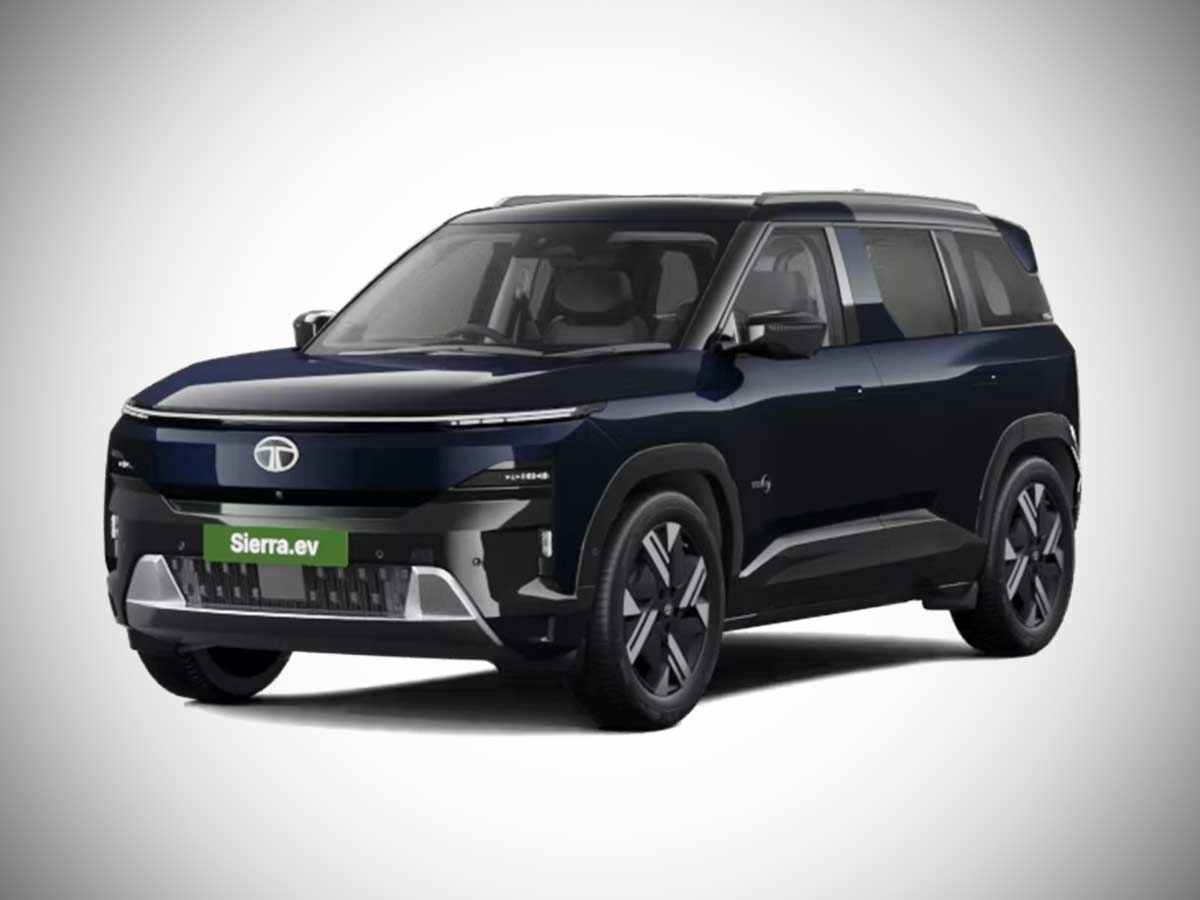
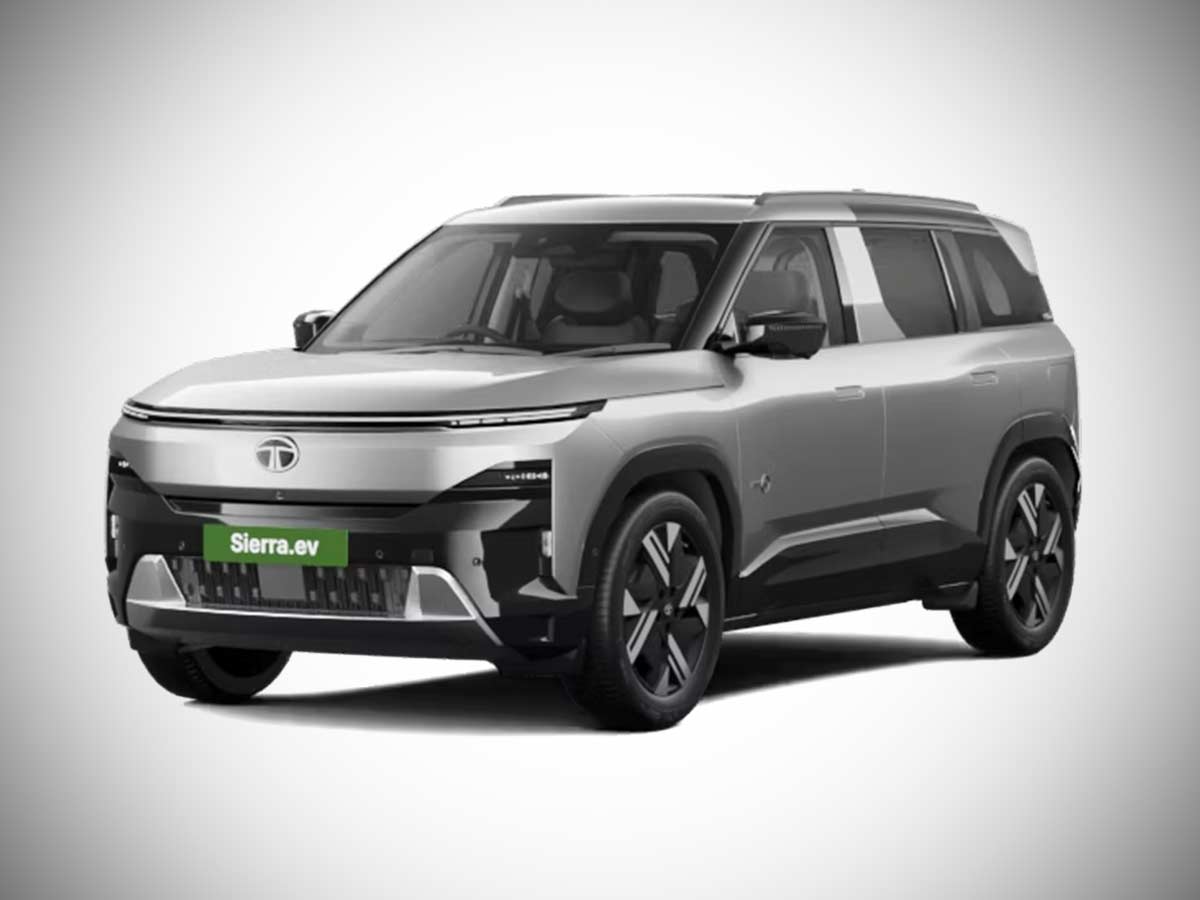
Seven Exterior Colours, Each with a Distinct Personality
While battery capacity, charging performance and technology often dominate discussions surrounding electric vehicles, design remains one of the primary reasons buyers choose one model over another. Recognising this, Tata Motors has developed a carefully curated colour palette for the Sierra.ev that reflects the SUV’s dual identity – a heritage-inspired nameplate wrapped in a thoroughly contemporary design language.
Rather than relying on conventional colour names, Tata has adopted destination-inspired nomenclature, reinforcing the Sierra.ev’s positioning as a lifestyle-oriented electric SUV built for exploration rather than simply urban mobility.
The Sierra.ev is available in seven exterior paint finishes, although availability varies across the variant range.
The official colour palette comprises:
- Rishikesh Rapids
- Nainital Nocturne
- Coorg Clouds
- Pure Grey
- Pristine White
- Andaman Adventure
- Bengal Rouge
Unlike many manufacturers that reserve distinctive colours exclusively for flagship variants, Tata has distributed the palette across the lineup while gradually expanding the available choices as buyers move up the range. This approach enables even entry-level variants to retain much of the Sierra.ev’s visual identity without feeling visually diluted.
Among the available finishes, Rishikesh Rapids and Andaman Adventure emphasise the Sierra.ev’s adventurous character through richer, more expressive tones, while Pure Grey, Pristine White and Coorg Clouds cater to buyers seeking a more understated aesthetic. Nainital Nocturne lends itself particularly well to the SUV’s connected LED lighting signatures, allowing the illuminated front and rear light bars to become more visually pronounced after dark. Meanwhile, Bengal Rouge introduces a warmer, more contemporary appearance that complements the Sierra’s sculpted body surfaces.
Combined with the signature Alpine rear quarter glass, floating roof treatment and full-width lighting elements, each colour presents a noticeably different personality despite sharing the same underlying design.
Ownership Benefits & Consumer Value
The Sierra.ev’s strongest competitive advantage may ultimately lie not in its specification sheet, but in the ownership proposition surrounding it.
Electric vehicle adoption in India continues to be influenced by several recurring concerns – battery longevity, charging convenience, long-term reliability and resale value. Tata has attempted to address each of these areas through a combination of engineering and after-sales support rather than relying solely on headline performance figures.
Lifetime Battery Warranty Changes the Ownership Conversation
Among the most significant announcements accompanying the Sierra.ev’s launch is Tata.ev’s Lifetime High-Voltage Battery Warranty.
For the first registered private owner, the warranty remains valid for 15 years from the date of first registration, effectively covering the battery throughout the expected ownership cycle of most private buyers. Should the vehicle change ownership, revised warranty conditions apply, but the initial offering remains one of the most comprehensive battery warranty programmes introduced by any mainstream manufacturer in India.
Given that battery replacement costs remain one of the largest perceived barriers to EV adoption, this warranty significantly reduces long-term ownership uncertainty and strengthens the Sierra.ev’s overall value proposition.
Supporting this are an 8-year/1,60,000 km motor warranty and a 3-year/1,25,000 km vehicle warranty, providing comprehensive coverage across the vehicle’s primary mechanical and electrical systems.
Practicality Matches Premium Aspirations
The Sierra.ev has also been engineered to deliver everyday practicality alongside its technology-focused positioning.
Its dimensions place it comfortably within the premium midsize SUV segment:
| Specification | Tata Sierra.ev |
|---|---|
| Length | 4,340 mm |
| Width | 1,841 mm |
| Height | 1,750 mm |
| Wheelbase | 2,730 mm |
| Ground Clearance | 205 mm |
| Boot Capacity | 622 litres |
| Frunk | 55 litres (RWD) / 35 litres (QWD) |
These figures position the Sierra.ev competitively against rivals such as the Mahindra BE 6, Hyundai Creta Electric, MG Windsor EV and BYD Atto 3. While individual competitors may exceed the Sierra in specific areas, Tata’s combination of cabin space, luggage capacity and long-range battery options creates a balanced package that should appeal to both family buyers and long-distance travellers.
The availability of two battery capacities also broadens the SUV’s appeal. Buyers focused primarily on city commuting can opt for the 63 kWh version, while frequent highway users benefit from the 75 kWh battery’s officially claimed 665 km MIDC range and Tata’s estimated 510-530 km real-world range.
Heritage Meets Genuine Innovation
Reviving an iconic automotive nameplate is rarely straightforward. Nostalgia alone is seldom enough to create a compelling modern vehicle, while excessive reinvention risks disconnecting the new product from the legacy that gave it significance in the first place.
The 2026 Tata Sierra.ev avoids both pitfalls.
Rather than attempting to recreate the original Sierra, Tata Motors has distilled its defining characteristics into a thoroughly contemporary electric SUV. The unmistakable Alpine rear quarter glass, upright stance and distinctive proportions ensure the vehicle remains immediately recognisable, while the underlying acti.ev+ architecture, rear-wheel-drive platform and available QWD dual-motor system firmly establish it as a product designed for the future rather than the past.
Beyond its styling, the Sierra.ev demonstrates a notable level of engineering maturity. The availability of two battery options, transparent publication of real-world driving range estimates, rapid DC charging, bidirectional V2L and V2V functionality, sophisticated suspension hardware and one of the most comprehensive digital cabins in its segment indicate that Tata has focused on creating a genuinely usable premium EV rather than chasing isolated specification headlines.
The interior arguably represents the vehicle’s greatest achievement. The Horizon View Triple Screen architecture, Theater Pro infotainment ecosystem, premium JBL audio system, PanoraMax panoramic sunroof and extensive connected technology elevate the cabin beyond what has traditionally been expected from a domestically developed electric SUV. Importantly, these features are integrated thoughtfully rather than feeling like standalone marketing additions.
Safety and ownership confidence further reinforce the Sierra.ev’s credentials. A comprehensive Level 2+ ADAS suite, advanced parking assistance technologies, extensive standard safety equipment and the landmark 15-year lifetime battery warranty for the first registered owner collectively create one of the strongest ownership propositions currently available in the Indian EV market.
The Sierra.ev is not without formidable competition. Rivals continue to offer strengths in specific areas, whether outright performance, software ecosystems or brand positioning. However, few currently combine heritage-inspired design, dedicated EV engineering, long-distance usability, premium technology and long-term ownership assurance with the same level of completeness.
Ultimately, the Sierra.ev succeeds because it is not merely a revival of a celebrated nameplate. It is a convincing demonstration of how heritage can inform modern engineering without constraining it. More importantly, it establishes a new benchmark for what buyers should expect from a premium midsize electric SUV developed and manufactured in India.