





The arrival of the Ferrari Luce marks one of the most important moments in modern automotive history. For decades, Ferrari has defined high-performance motoring through naturally aspirated V12s, turbocharged V8s, Formula 1 engineering, and emotional combustion-powered experiences. Now, Ferrari has officially entered the fully electric era with a car that does not merely replace an engine with batteries, but completely reimagines what a Ferrari can be.
Unveiled in Rome on May 25, 2026, the Ferrari Luce is the first fully electric Ferrari road car ever created. But Ferrari is careful not to position the Luce as simply “the electric Ferrari.” Instead, the company calls it an entirely new Ferrari designed around deeper engagement, radical performance, comfort, versatility, and unprecedented technological integration.
The Ferrari Luce combines four electric motors, a 122 kWh battery, over 1050 cv of power, all-wheel drive, torque vectoring, advanced regenerative braking, and one of the most sophisticated vehicle control systems ever developed by the Italian marque. It also introduces a five-seat layout, four doors, an entirely new design language, and an interface developed alongside legendary designer Jony Ive and the creative collective LoveFrom.
This is not just another luxury EV entering the market. Ferrari Luce represents a strategic turning point for Ferrari itself and perhaps the broader high-performance automotive industry.
>>> Great Discounts on Car & Bike Accessories <<<
What Does “Ferrari Luce” Mean?
The name “Luce” translates to “light” in Italian, but Ferrari says the name symbolizes clarity, direction, and illumination toward the future. The company describes the Luce as a Ferrari 360°, meaning a vehicle designed around a complete experience rather than just raw acceleration numbers.
The name also reflects Ferrari’s broader multi-energy strategy. Ferrari has repeatedly emphasized that electrification will coexist alongside hybrid and combustion technologies rather than replace them entirely. The Luce therefore expands Ferrari’s lineup instead of redefining it completely.
Ferrari views electric architecture as a way to unlock new design freedom, new packaging opportunities, and new forms of driver engagement impossible with traditional combustion platforms.
Why the Ferrari Luce Is Such a Historic Car
The Ferrari Luce is historic for several reasons:
- It is Ferrari’s first fully electric production car
- It introduces Ferrari’s first five-seat layout
- It is Ferrari’s first electric all-wheel-drive system
- It debuts Ferrari’s new Vehicle Control Unit architecture
- It introduces over 60 new Ferrari patents
- It was co-designed with LoveFrom and Jony Ive
- It uses four independent electric motors
- It introduces Ferrari’s most advanced regenerative braking system ever
- It is Ferrari’s most aerodynamically efficient road car in history
- It becomes Ferrari’s most comfortable production car ever created
Ferrari chose Rome as the unveiling location because the city holds symbolic significance in Ferrari history. On May 25, 1947, Ferrari achieved its first-ever victory at the Gran Premio di Roma with the Ferrari 125 S driven by Franco Cortese. Nearly 79 years later, Ferrari returned to Rome to launch what it sees as the next defining chapter.
Ferrari Luce Specs at a Glance
Before diving deeper, here are the headline specifications that make the Ferrari Luce one of the most advanced EVs ever built.
Ferrari Luce Performance Specifications
- Power Output: 1050 cv (772 kW)
- Maximum Torque: 11,500 Nm at wheels
- Battery Capacity: 122 kWh
- Drivetrain: Four electric motors, one per wheel
- 0-100 km/h: 2.5 seconds
- 0-200 km/h: 6.8 seconds
- Top Speed: Over 310 km/h
- Range: Over 530 km
- Fast Charging: Up to 350 kW
- Architecture: 800V
- Weight: 2260 kg
Ferrari claims the Luce delivers best-in-class performance while also offering remarkable usability and long-distance comfort.
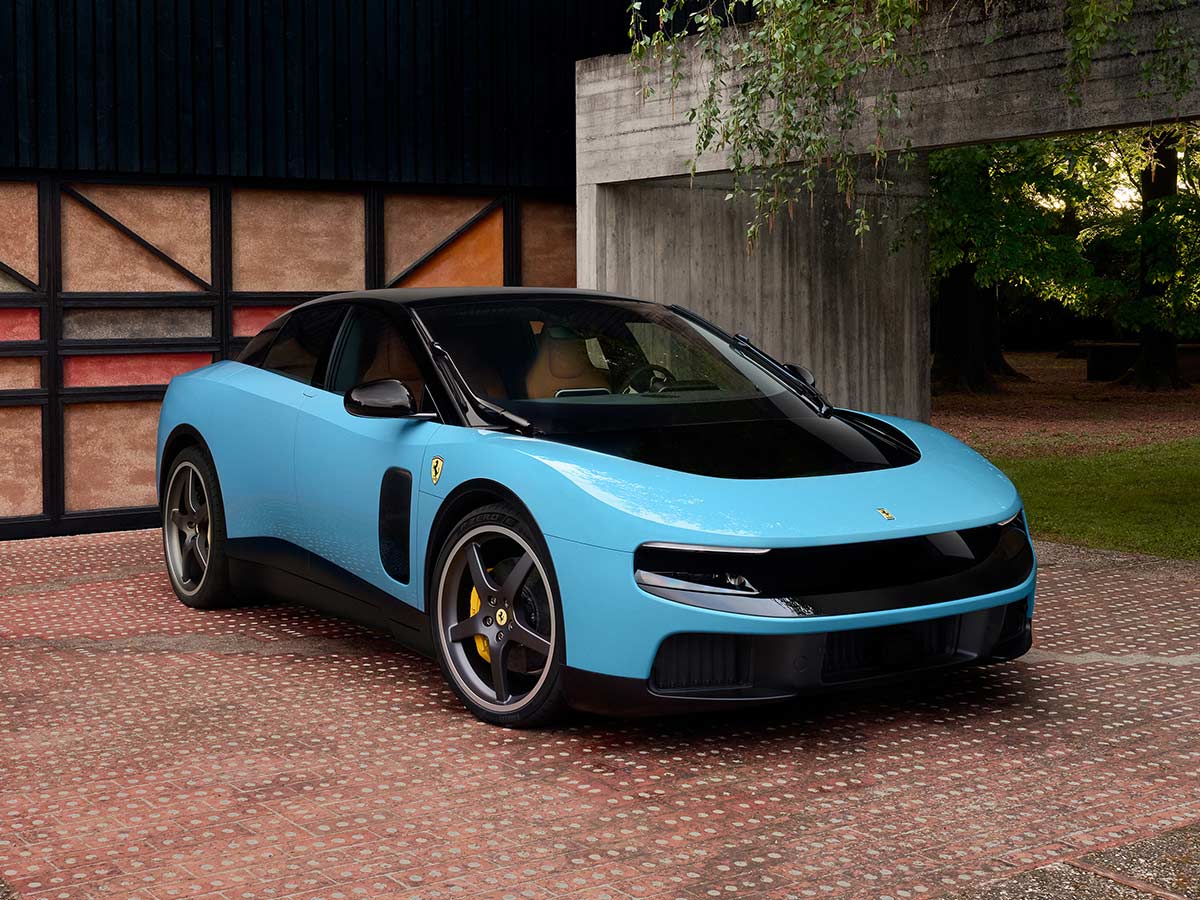
Ferrari Luce Design: A Radical New Direction
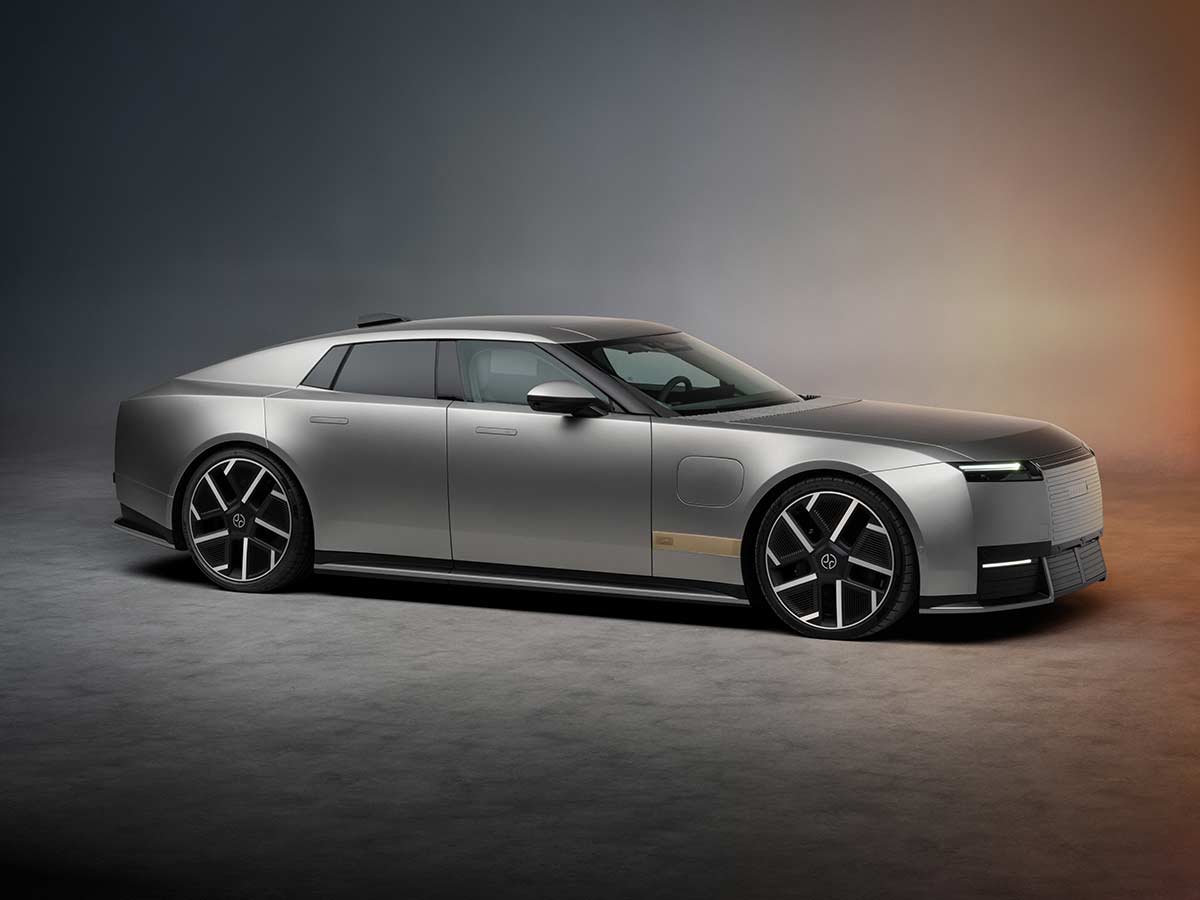
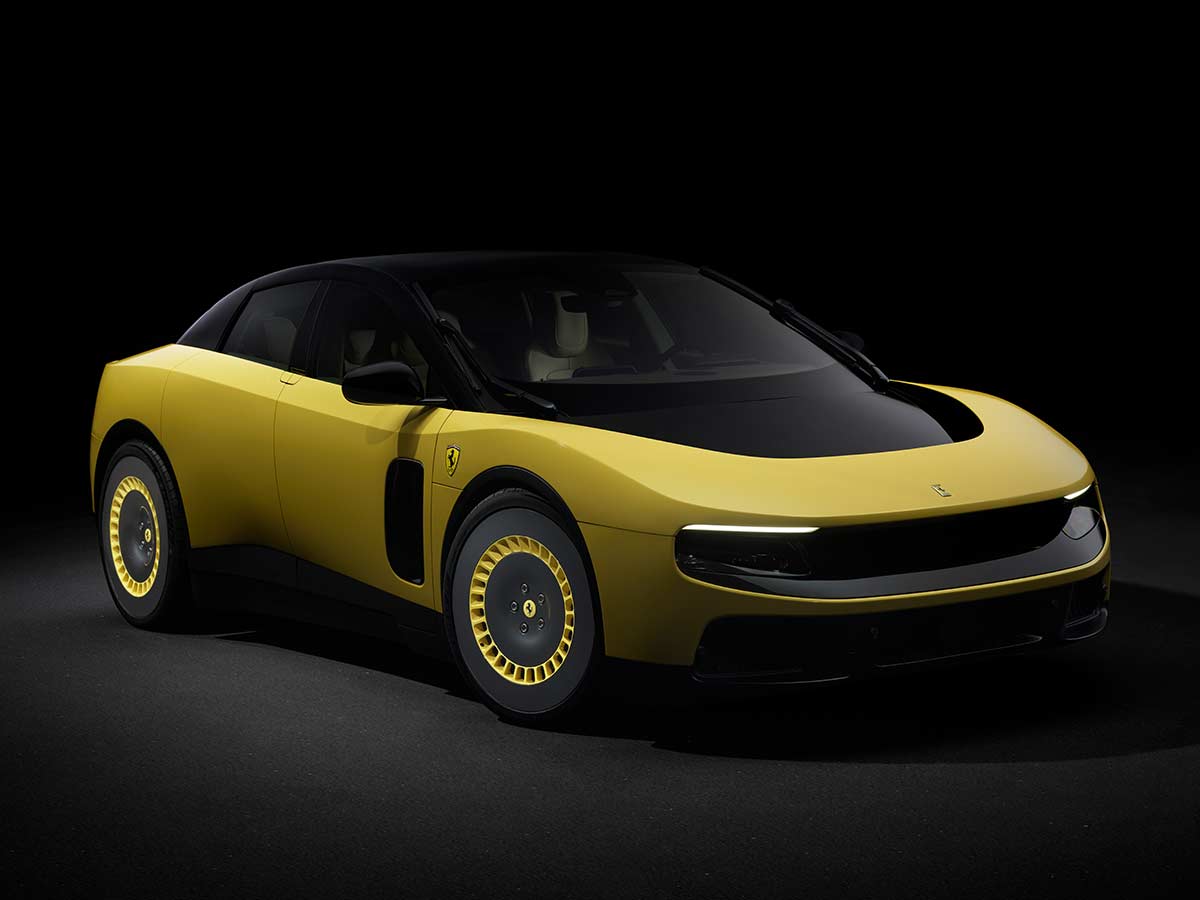
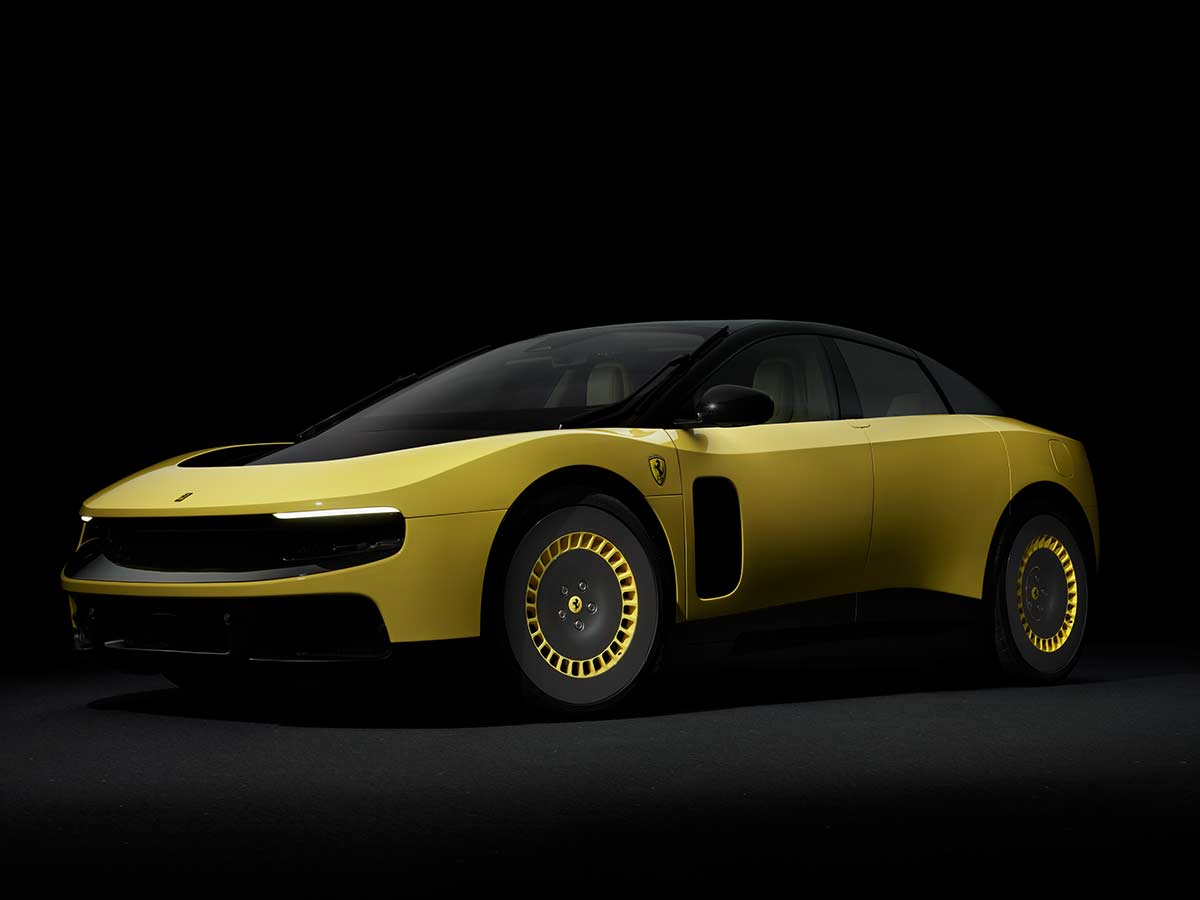
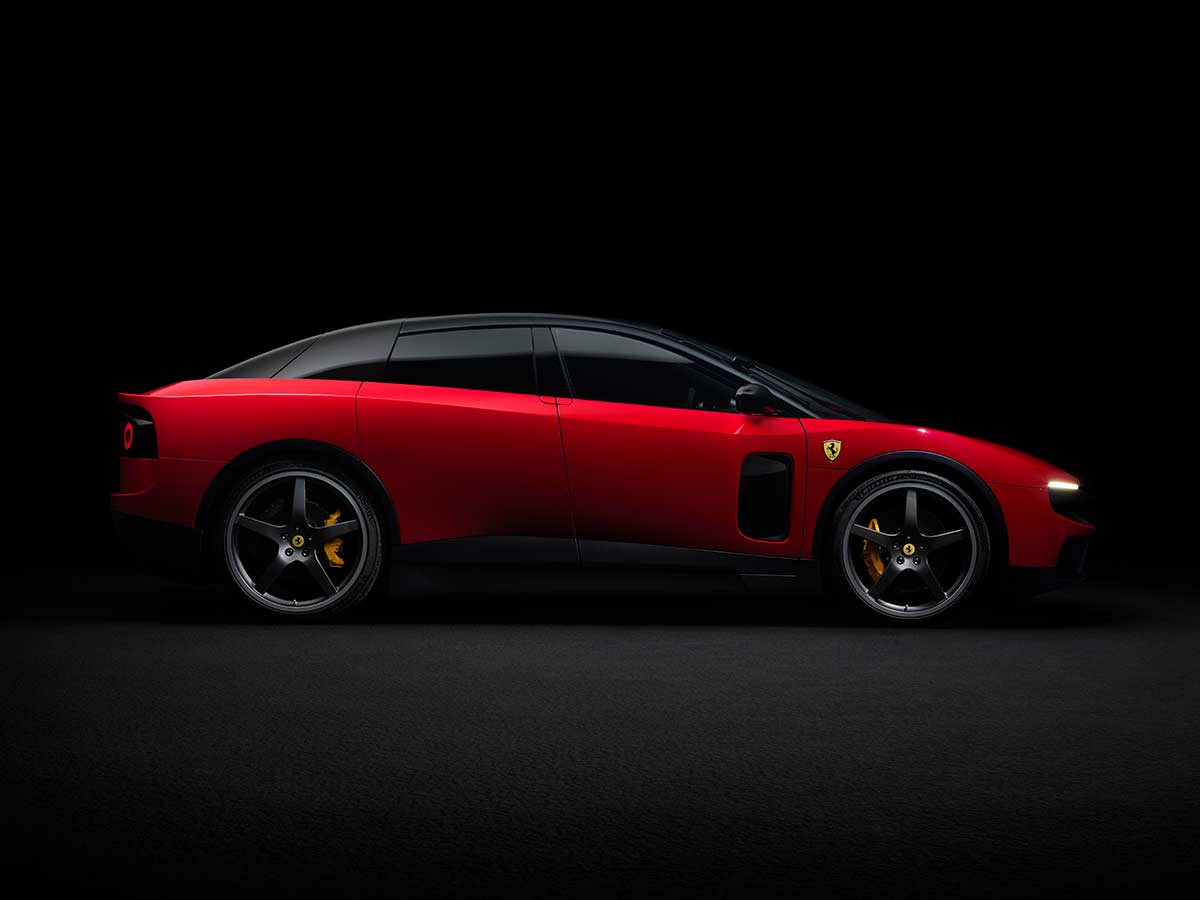
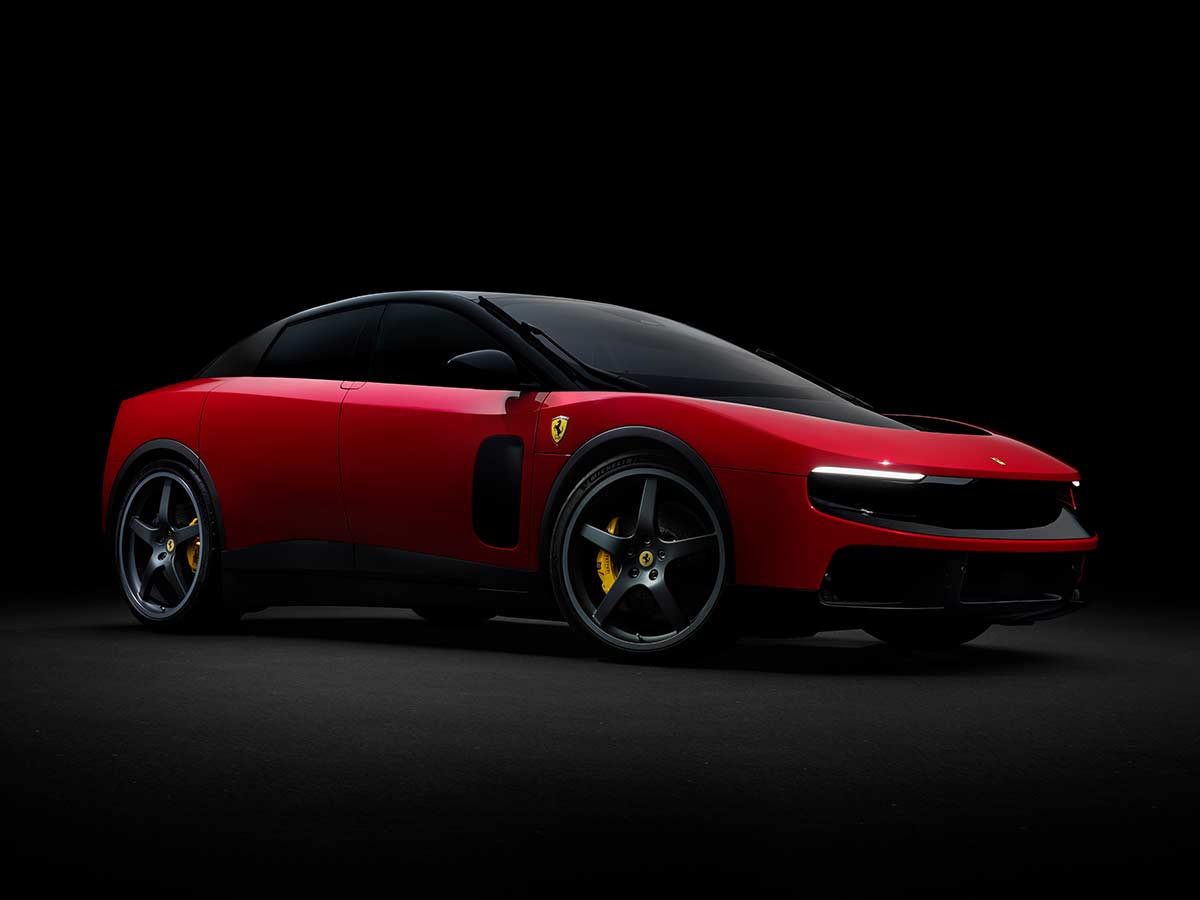
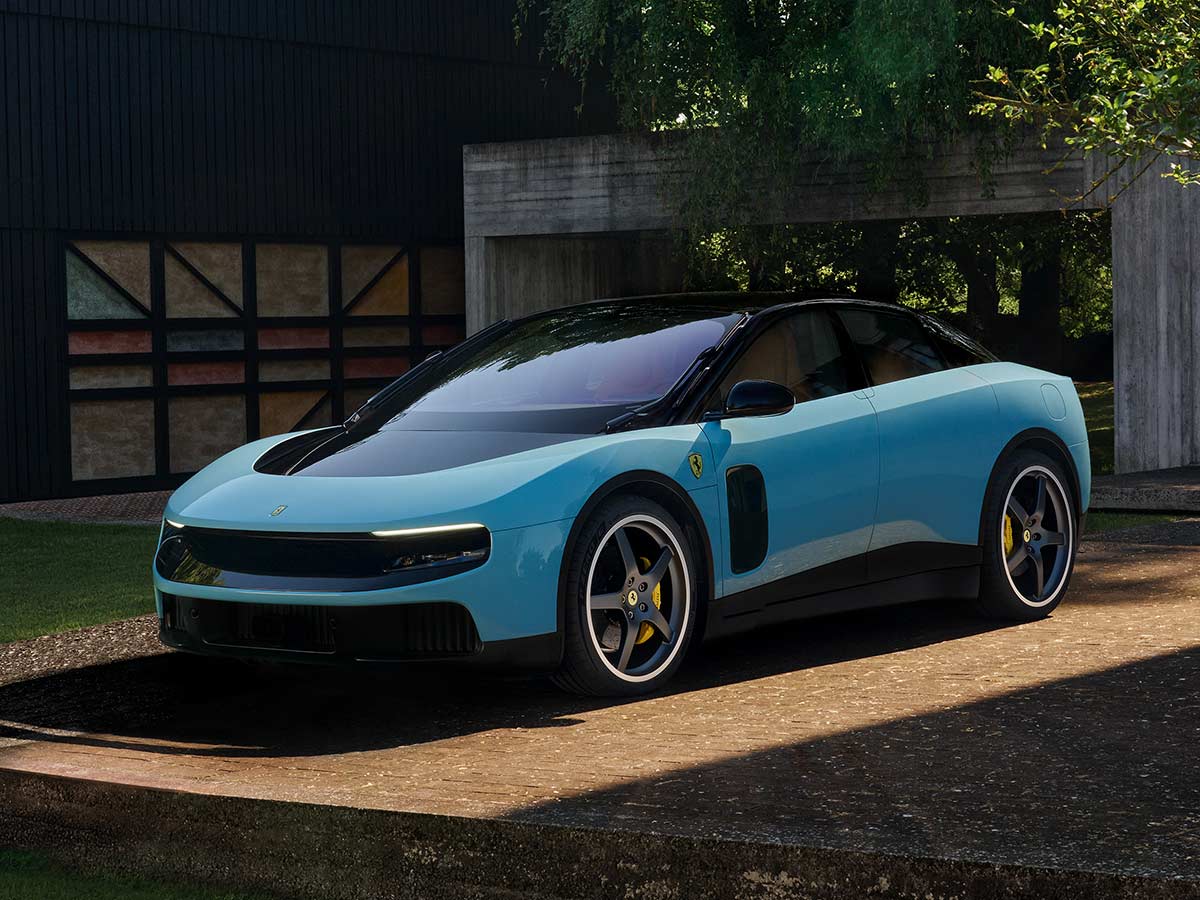
One of the most striking things about the Ferrari Luce is its appearance. Unlike aggressive hypercars filled with vents, wings, and sculpted surfaces, the Luce adopts a dramatically cleaner aesthetic philosophy.
Ferrari entrusted the design project to LoveFrom, the design collective founded by Jony Ive and Marc Newson. This collaboration instantly made headlines because Ive is widely known for shaping many of the most iconic products from Apple.
Ferrari intentionally wanted an external perspective rather than relying solely on the Ferrari Design Studio led by Flavio Manzoni.
The result is a vehicle built around simplicity, purity, and minimalism.
The Glass House Concept
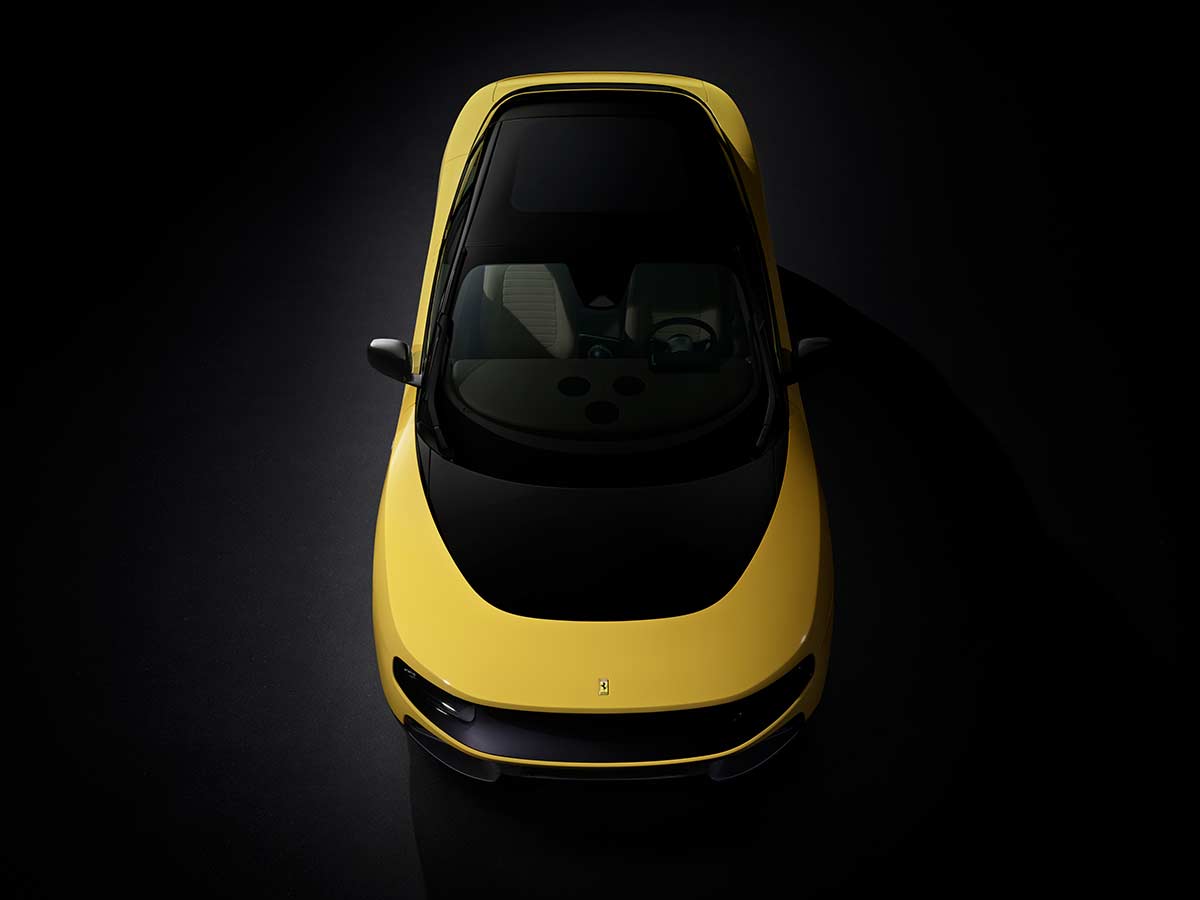
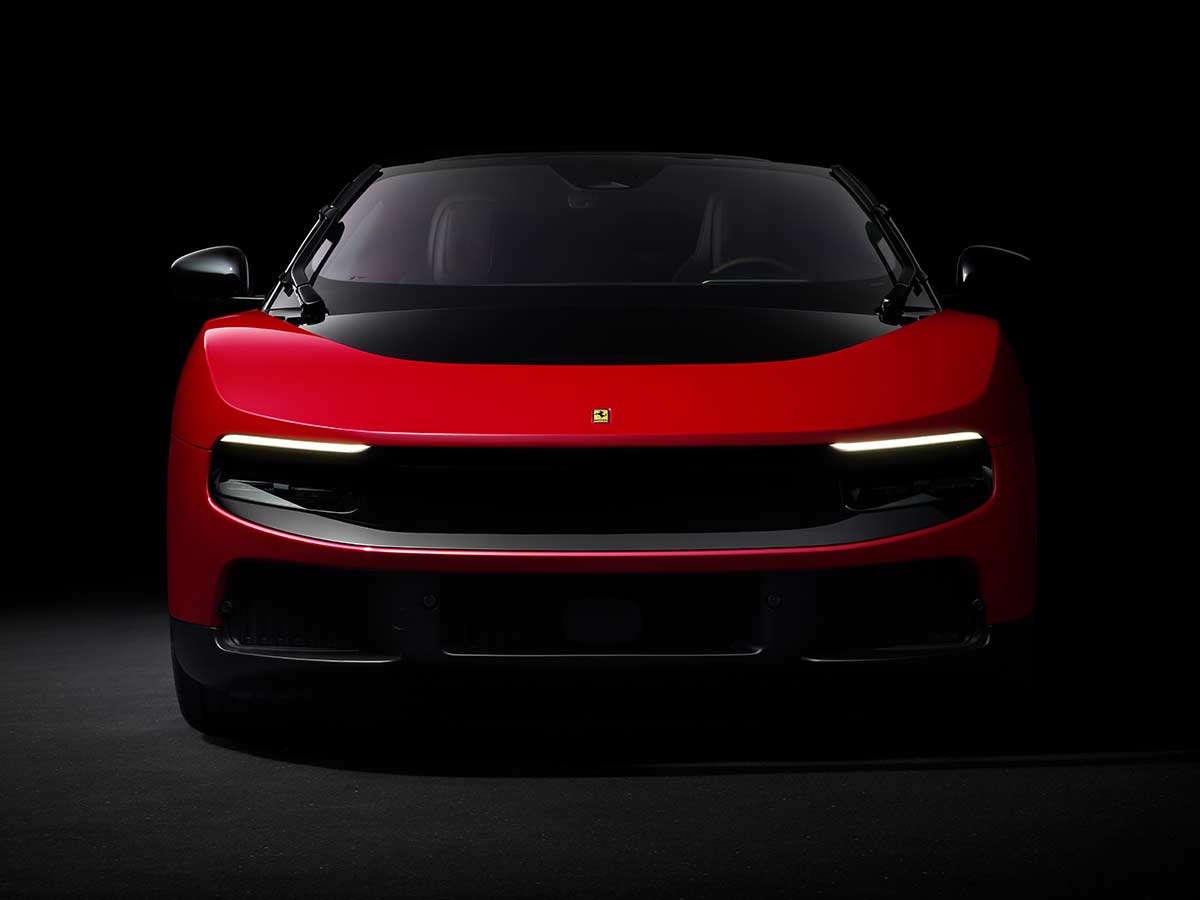
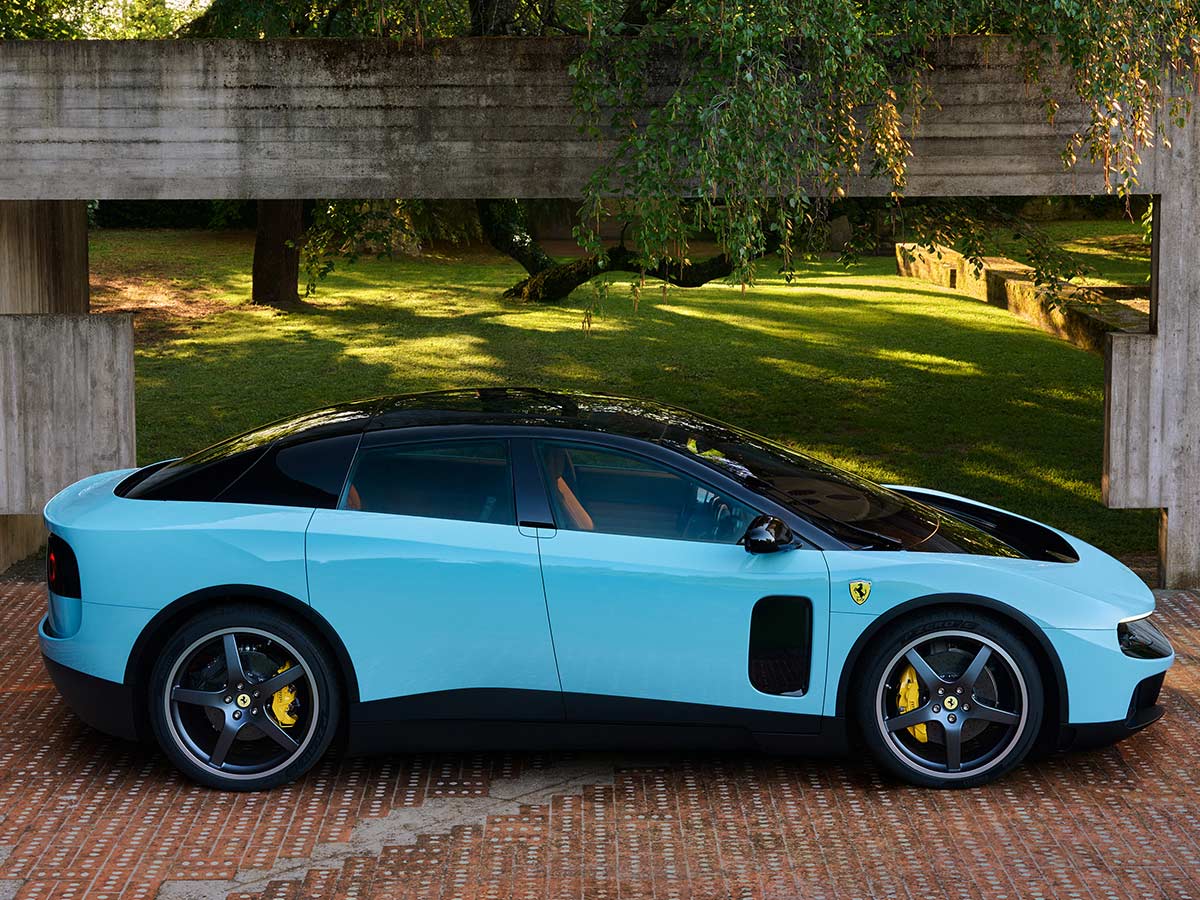
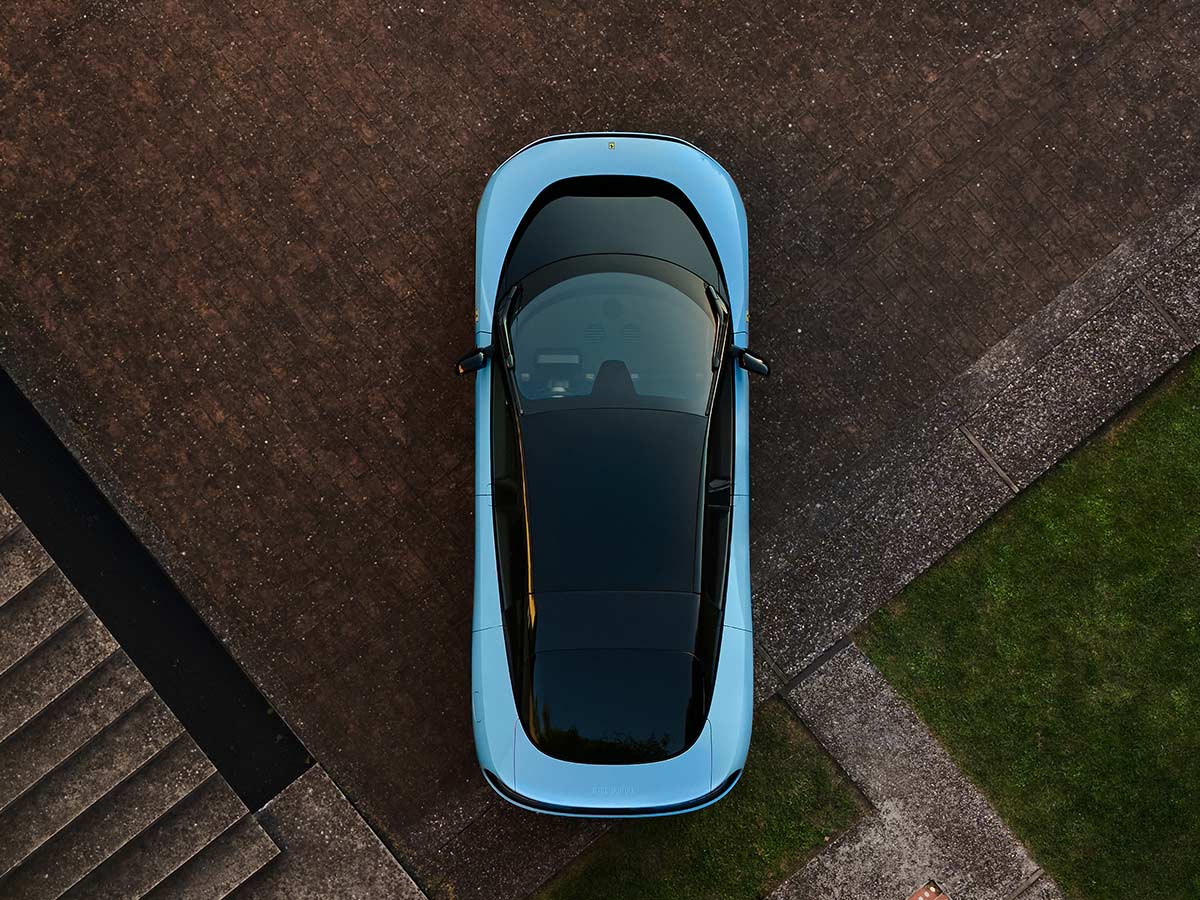
The defining visual element of the Ferrari Luce is what Ferrari calls its “glass house.” The cabin appears as a pure shell-like form extending below the beltline toward the car’s extremities.
Instead of conventional body sculpting, the Luce uses floating front and rear aerodynamic wings surrounding the central cabin volume.
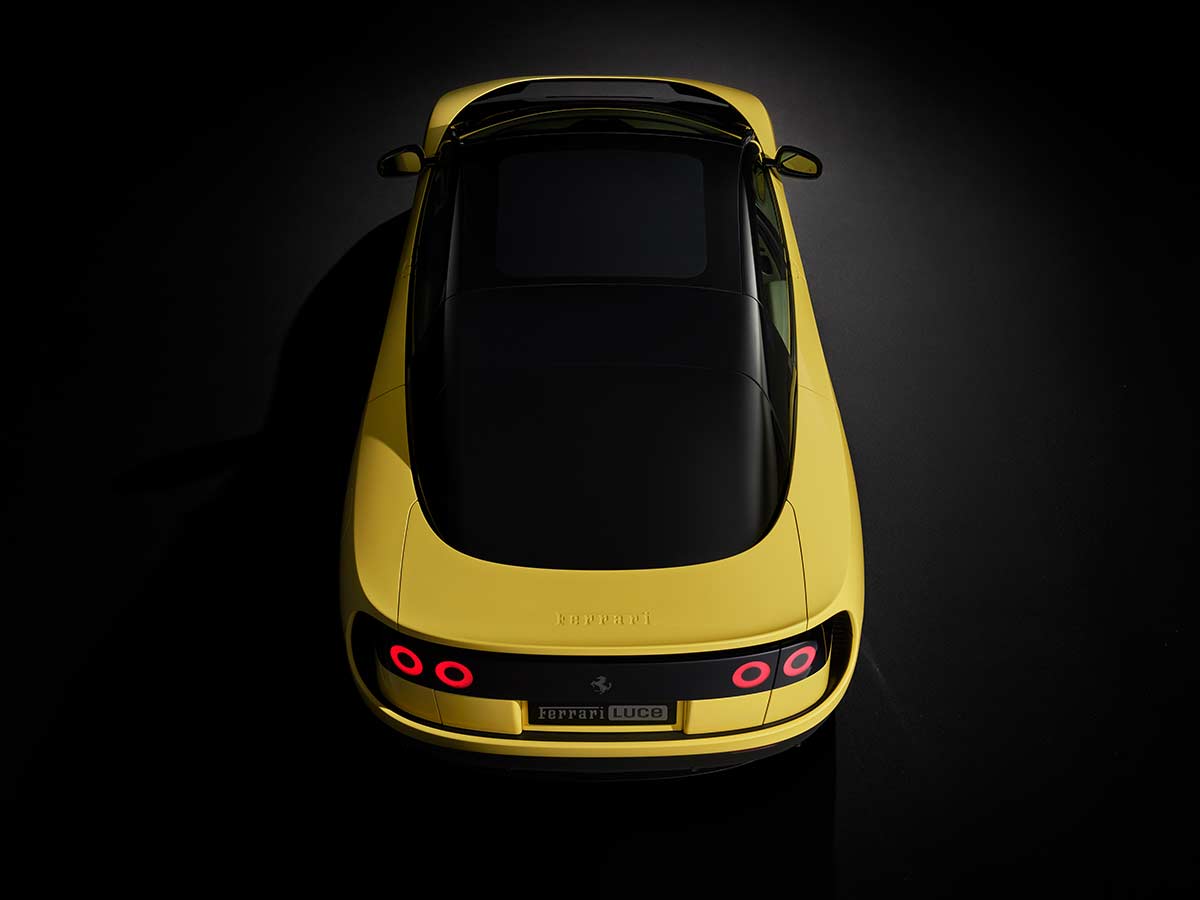
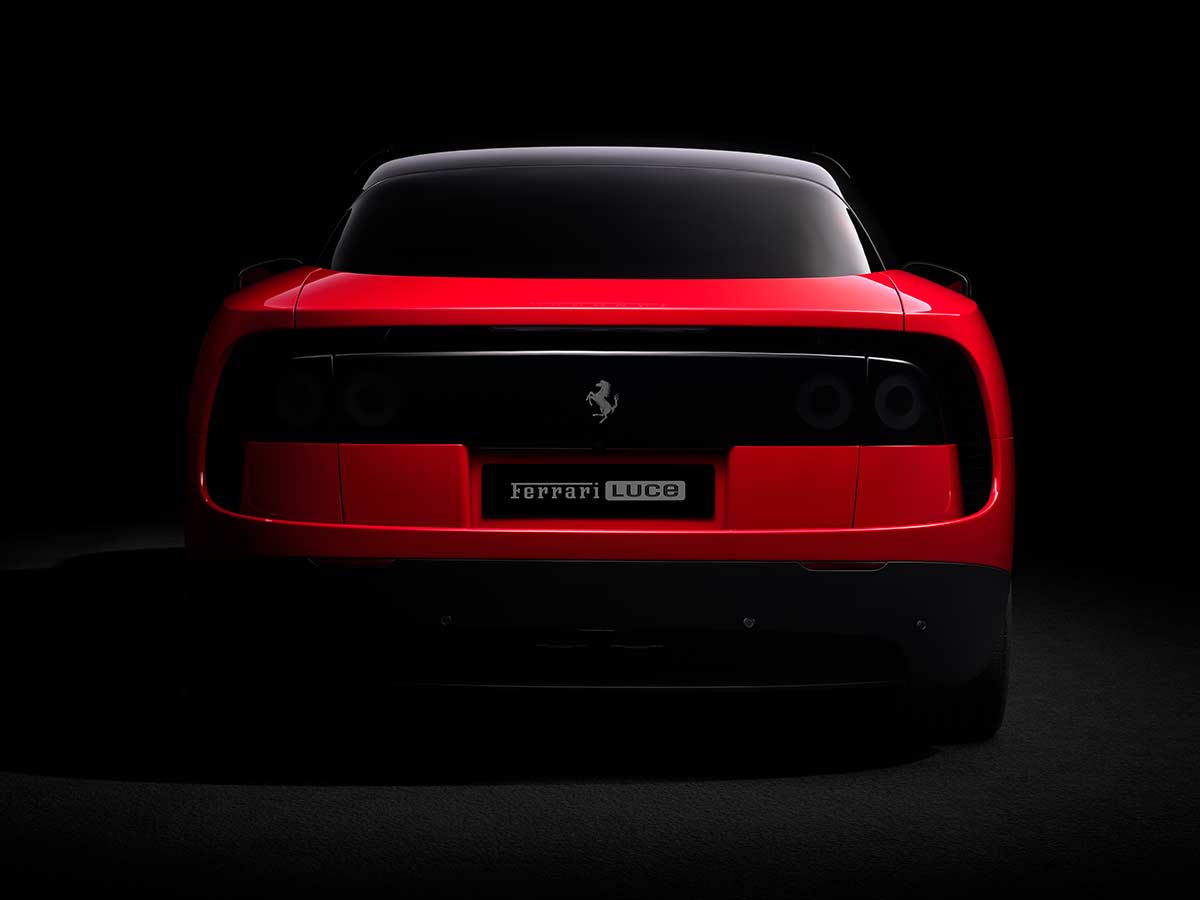
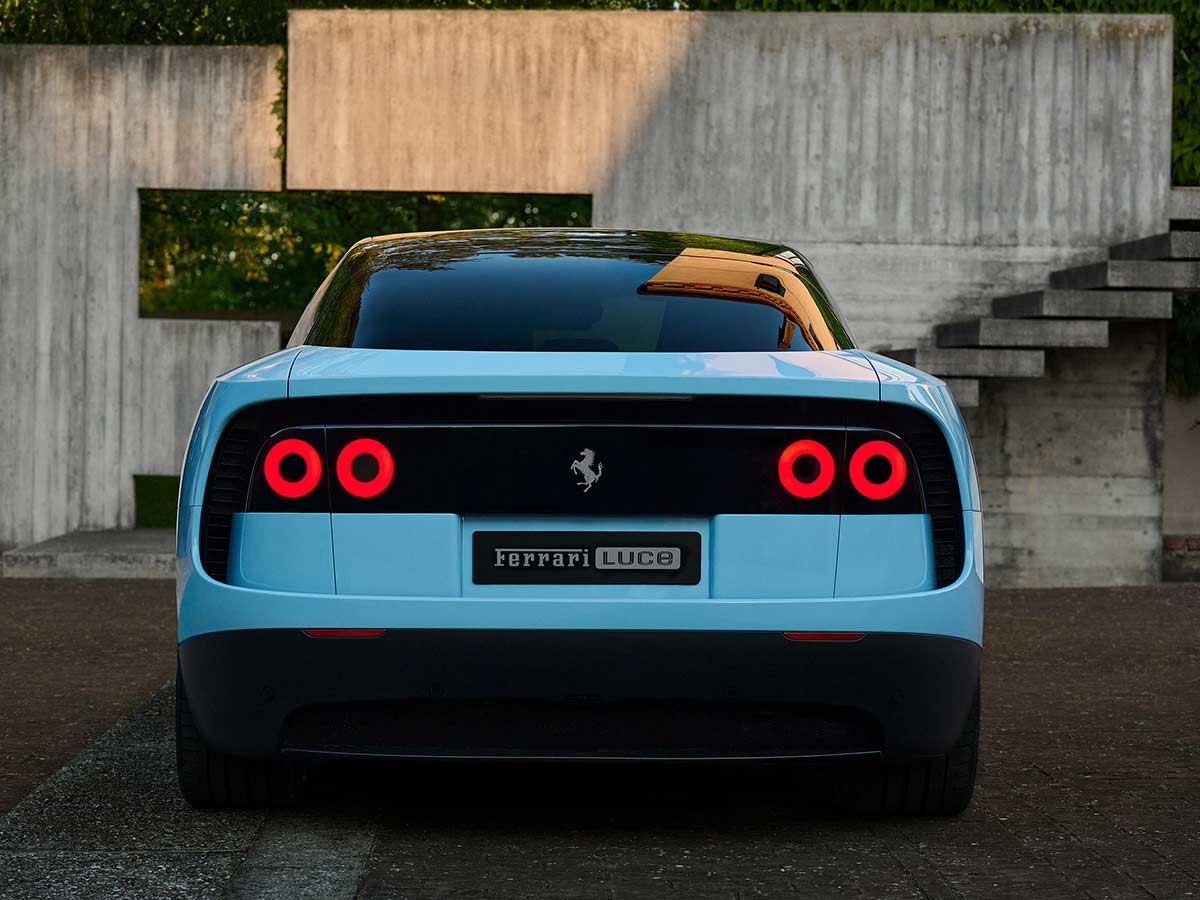
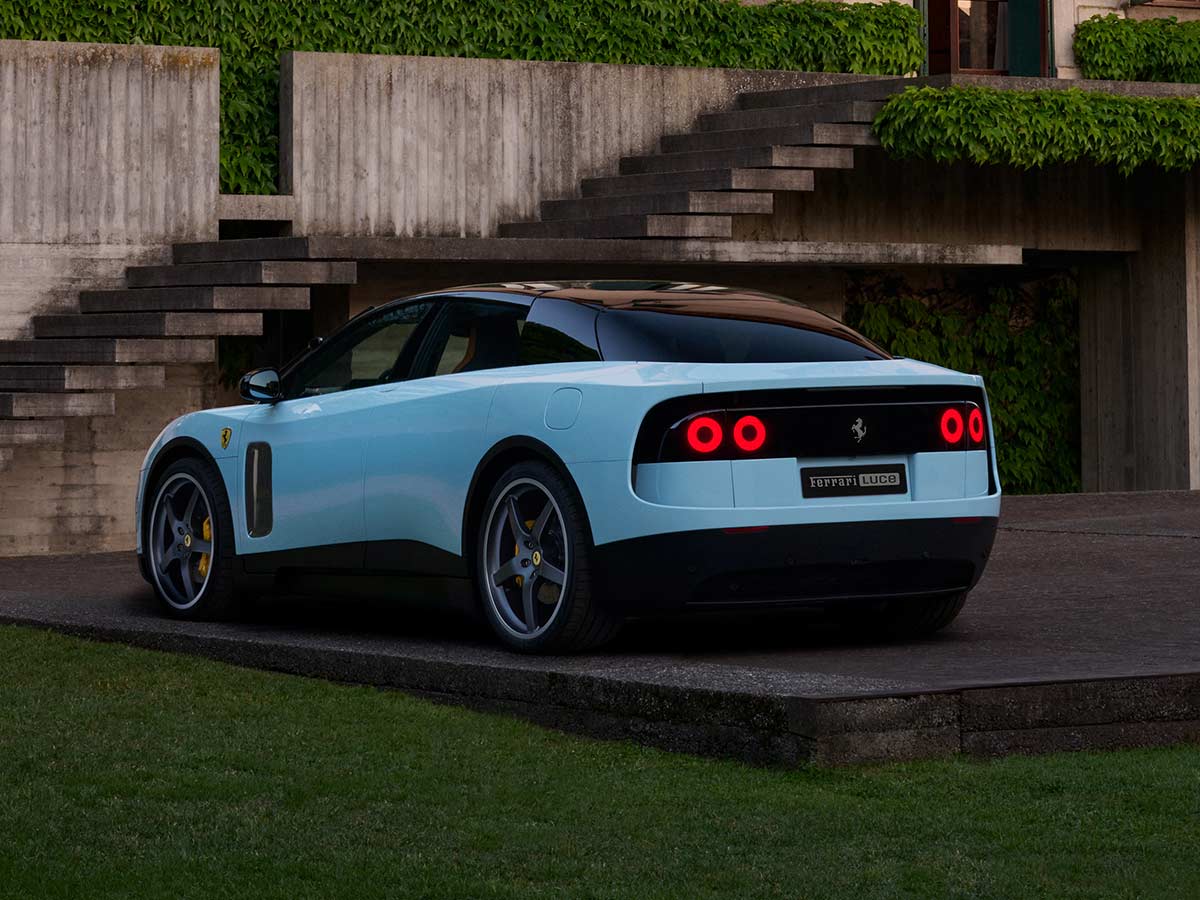
The lighting system is equally unusual. Transparent front and rear light panels visually disappear when switched off, preserving the purity of the surfaces.
Ferrari says the halo-style taillights were inspired by iconic models like the Ferrari 360 Modena and Ferrari 458 Italia.
Read More: Beyond the Screen: How the Ferrari Luce is Reigniting the Soul of the Electric Sports Car
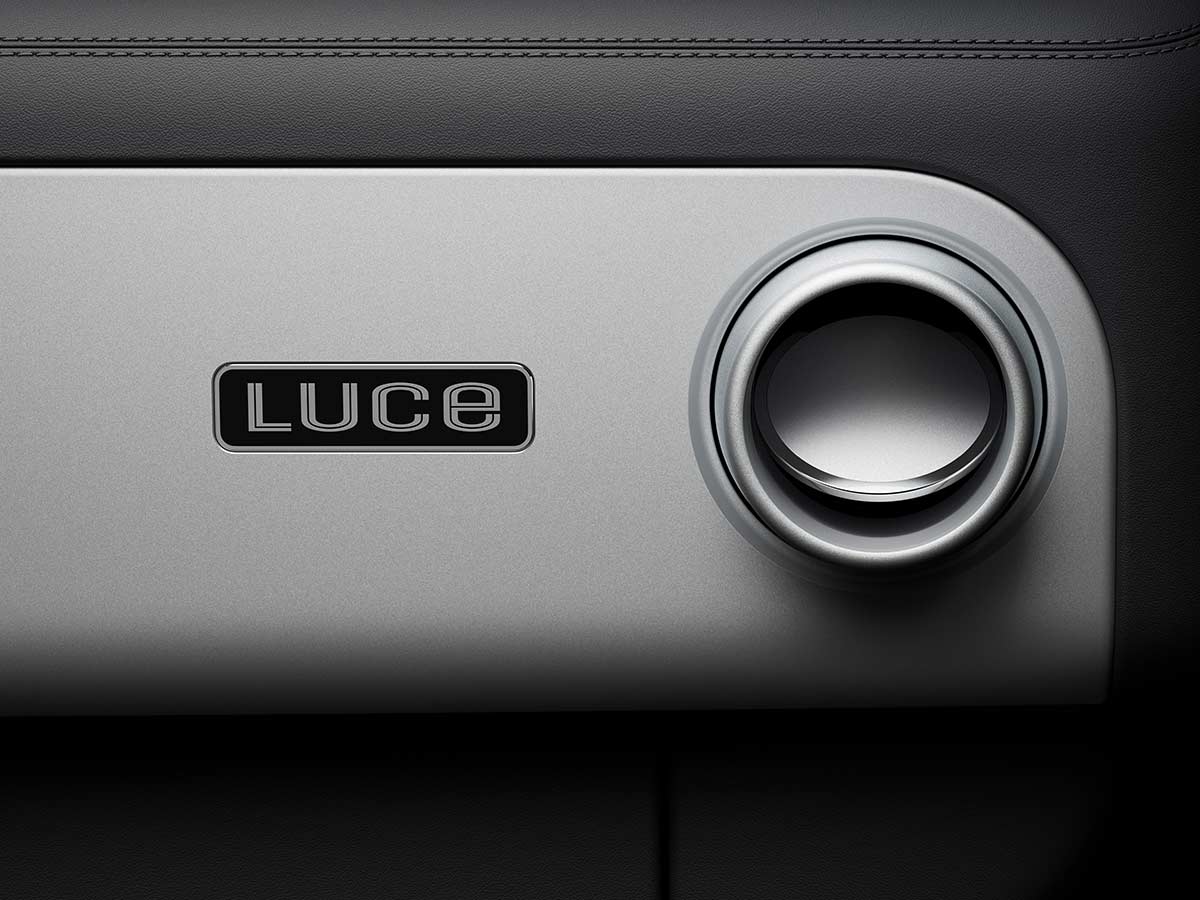
Ferrari Luce Interior: Luxury Meets High Technology
The Ferrari Luce interior may be even more revolutionary than the exterior.
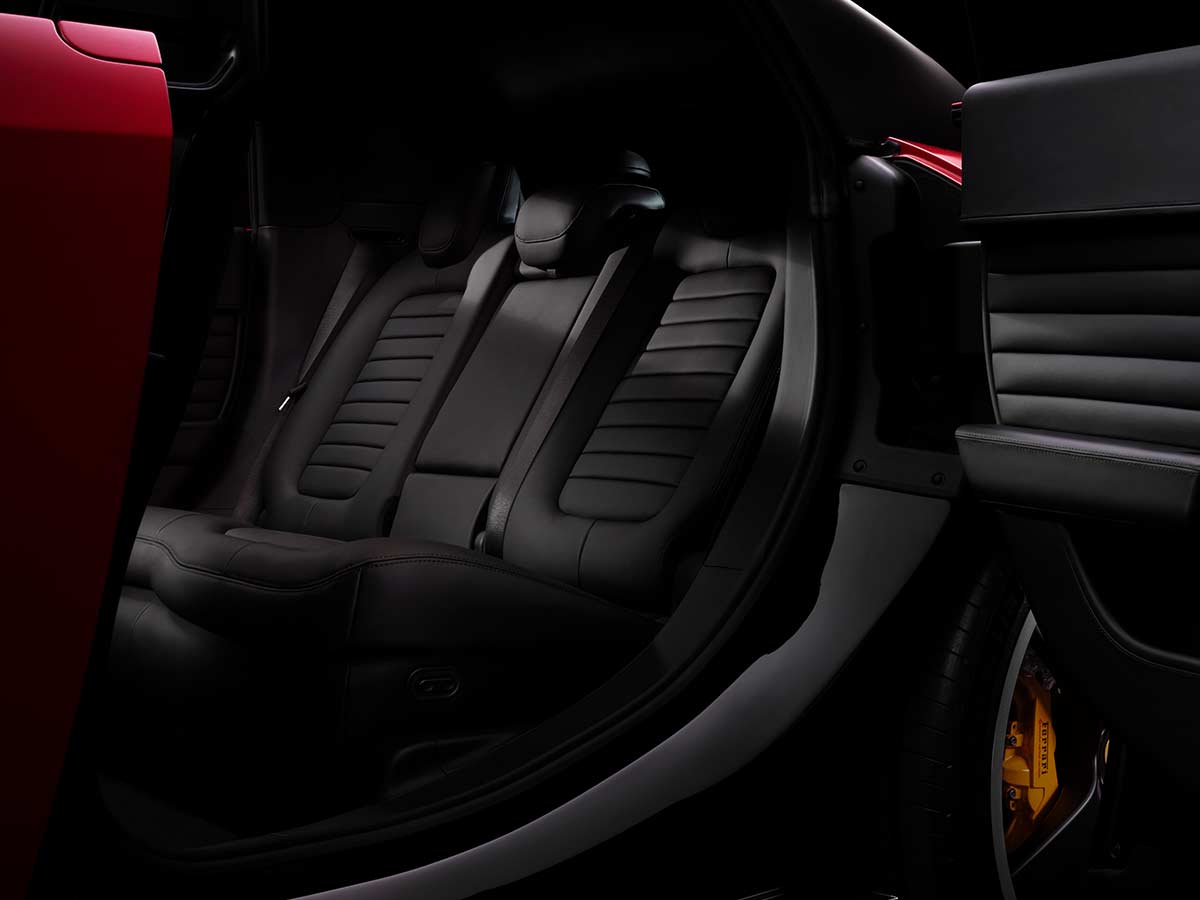
This is Ferrari’s first genuine five-seat car. Previous Ferrari four-door layouts could not accommodate five seats because of their transaxle architecture. The electric platform completely changes this.
The Luce interior focuses heavily on openness, symmetry, and space efficiency.
Key Interior Highlights
- Four doors
- Five-seat configuration
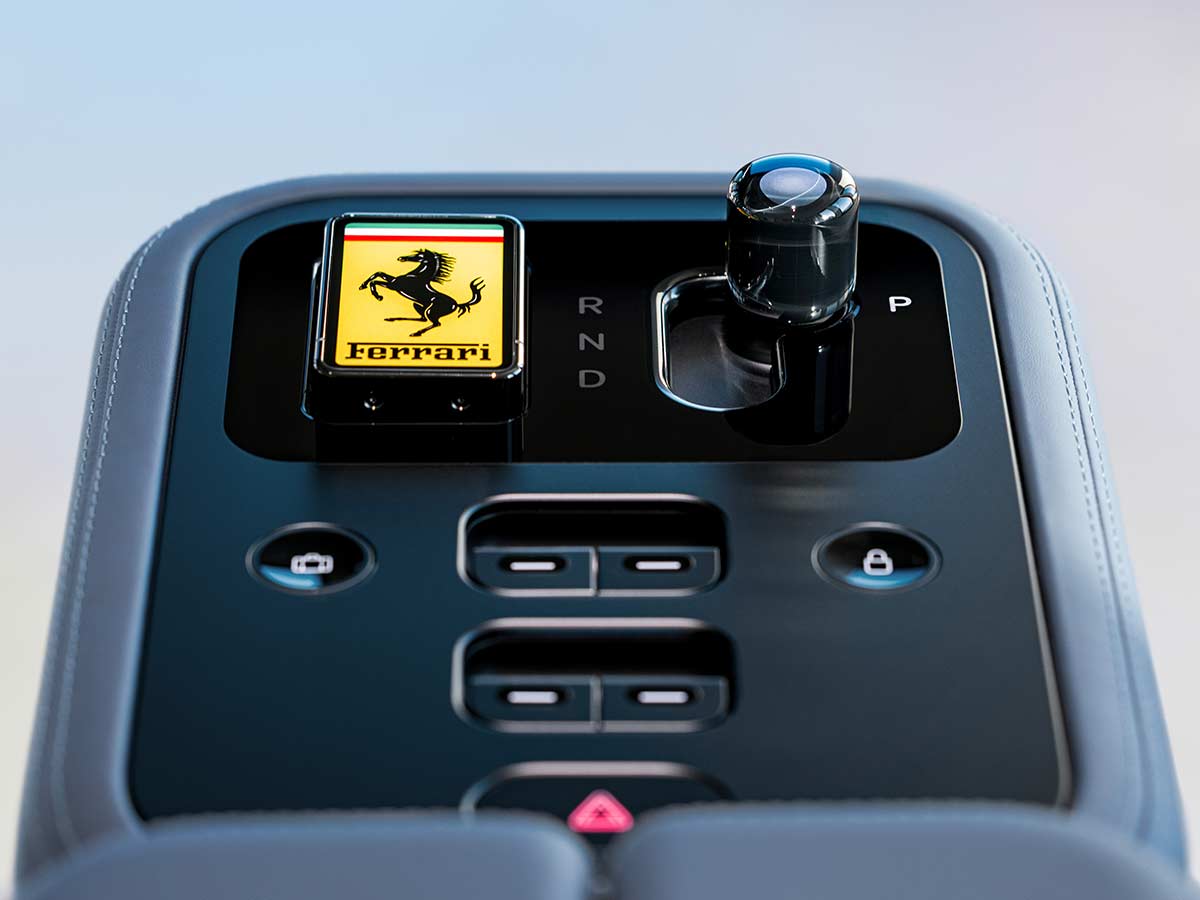
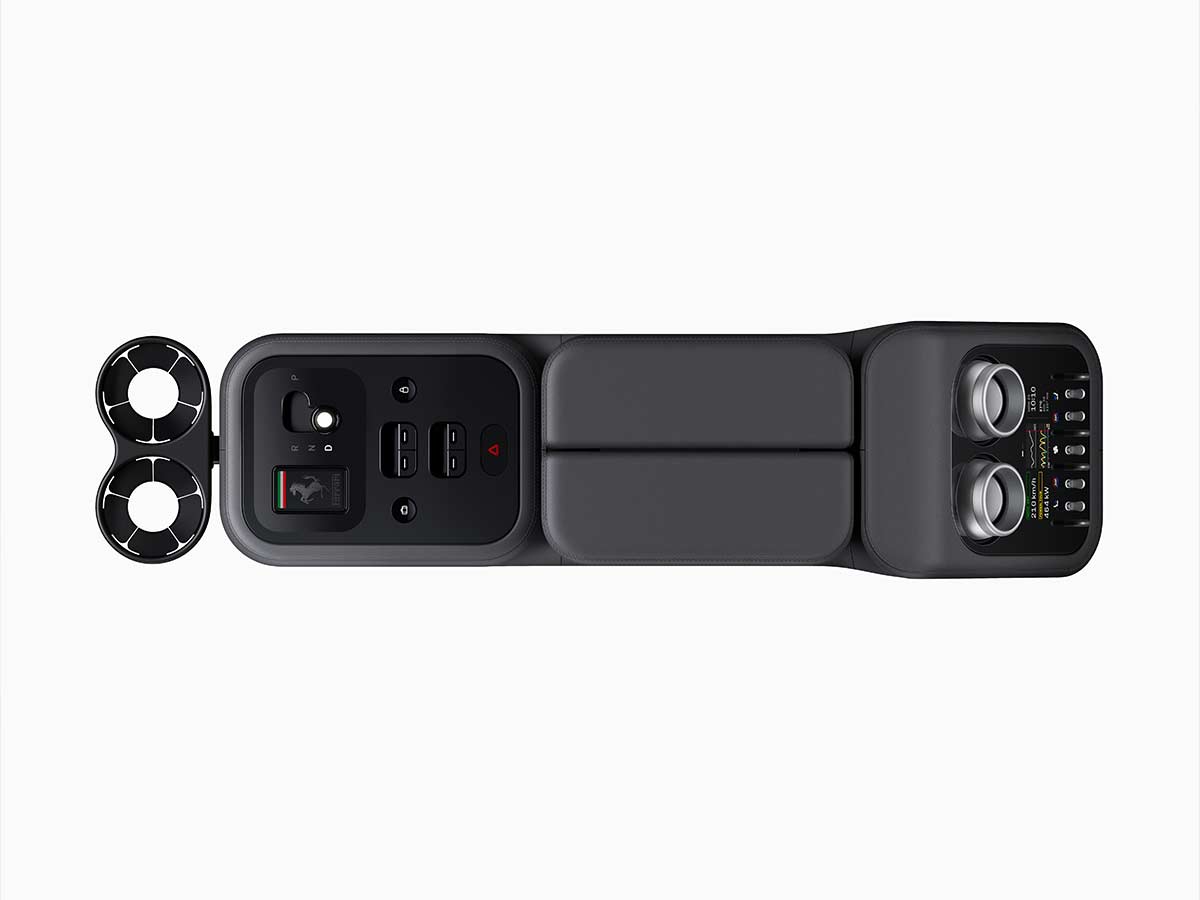
- Floating center console
- Recycled anodized aluminum construction
- Corning Gorilla Glass surfaces
- OLED displays developed with Samsung Display
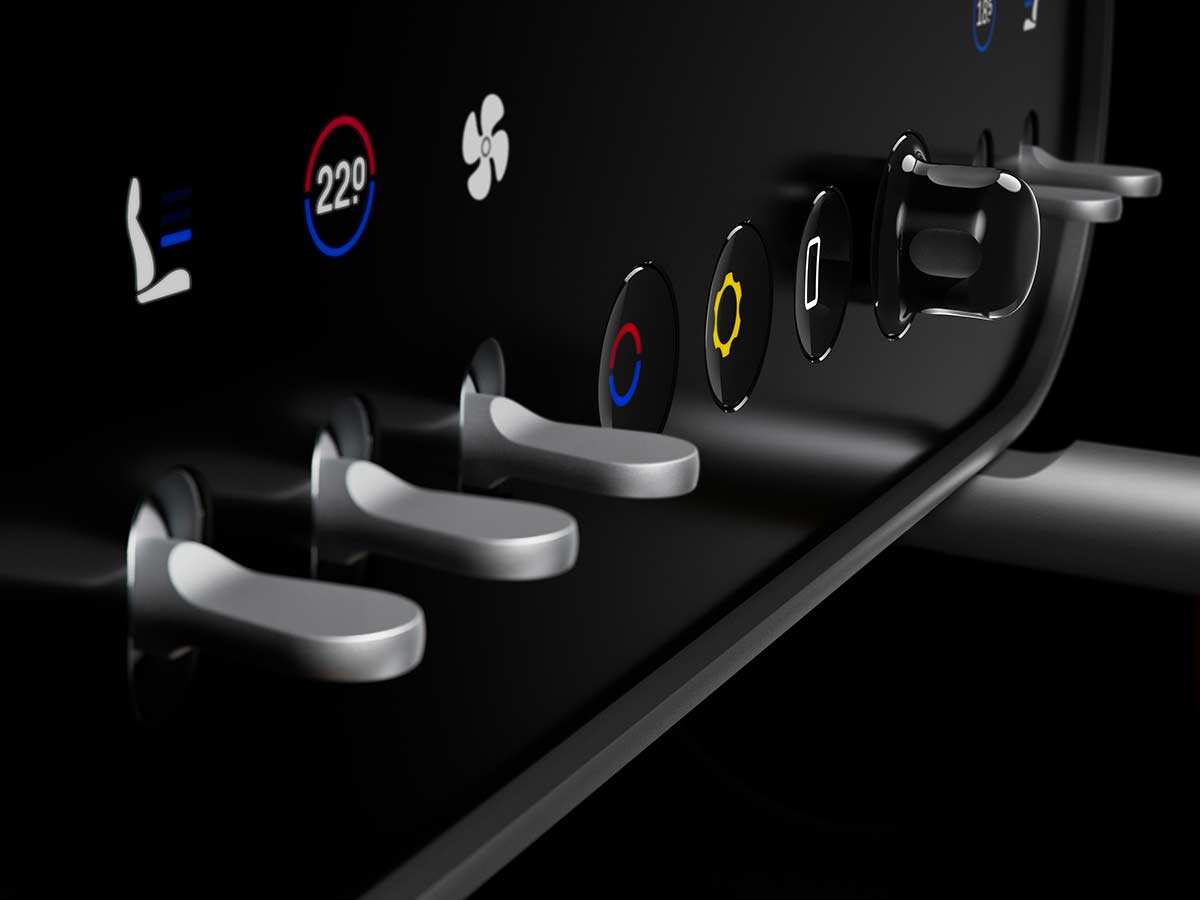
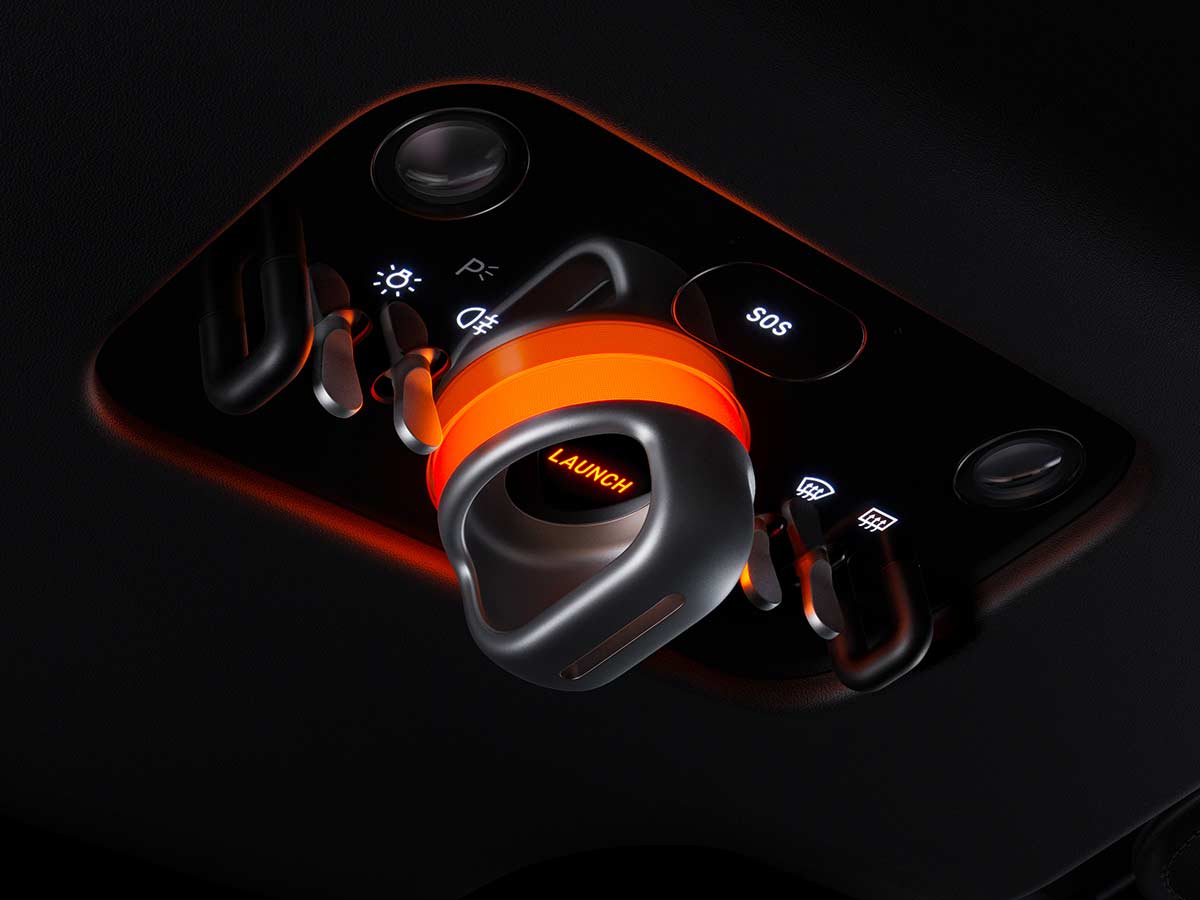
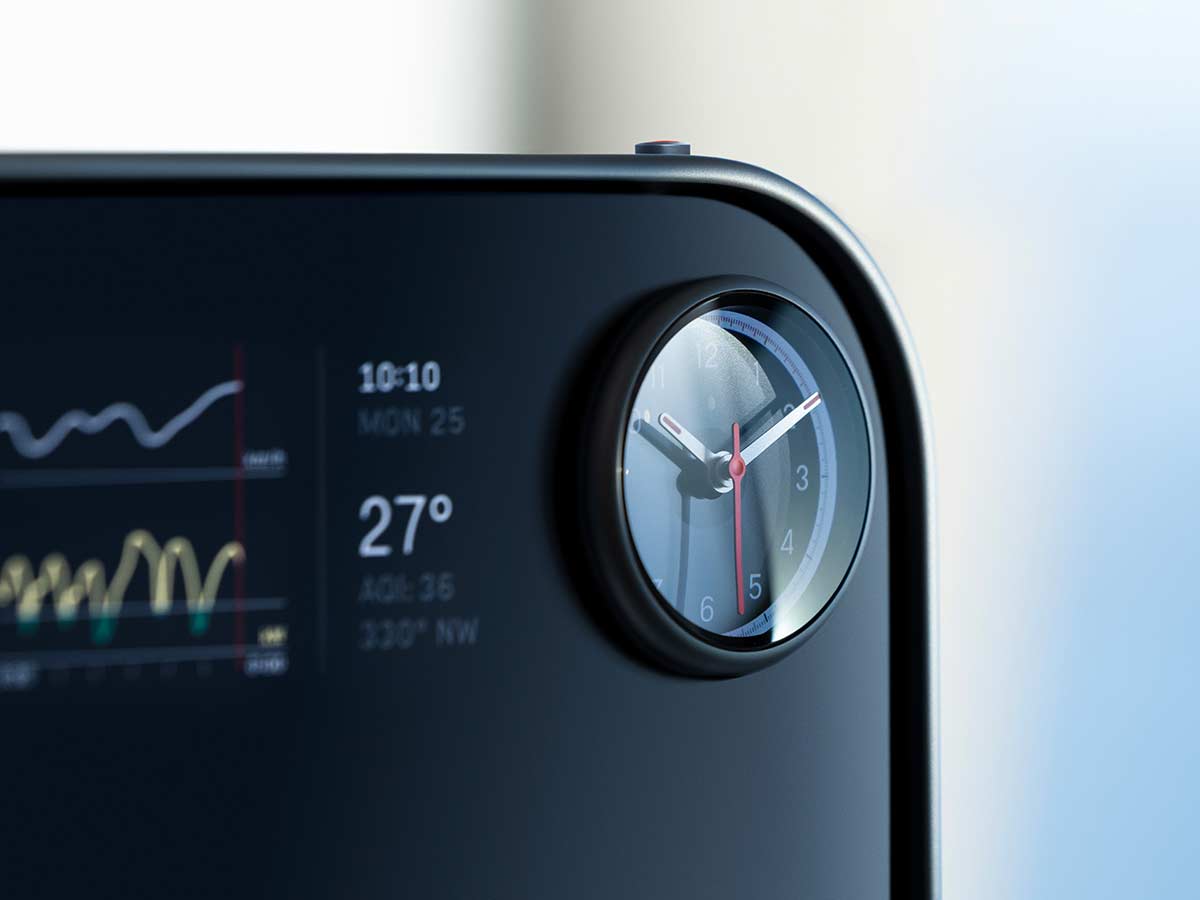
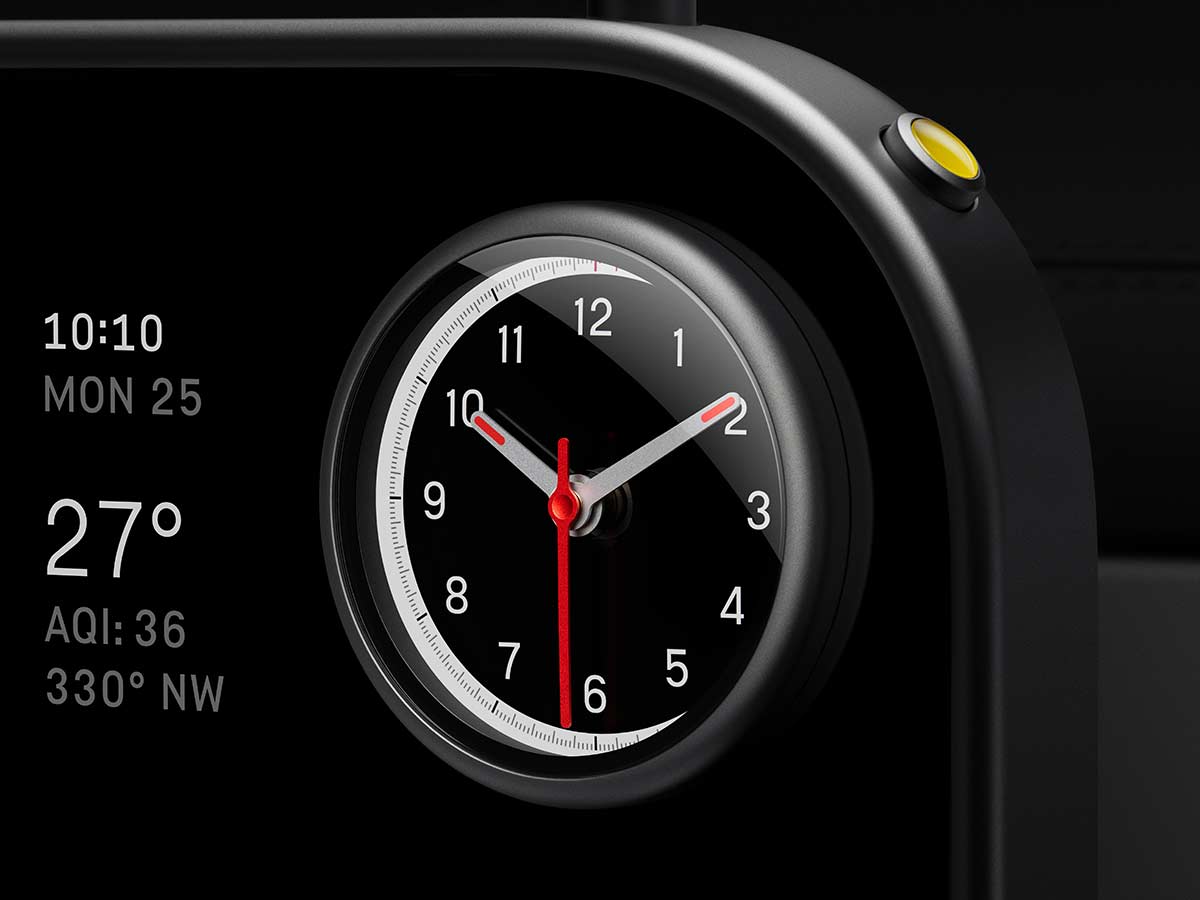
- Mechanical controls combined with digital interfaces
- Massive panoramic openness
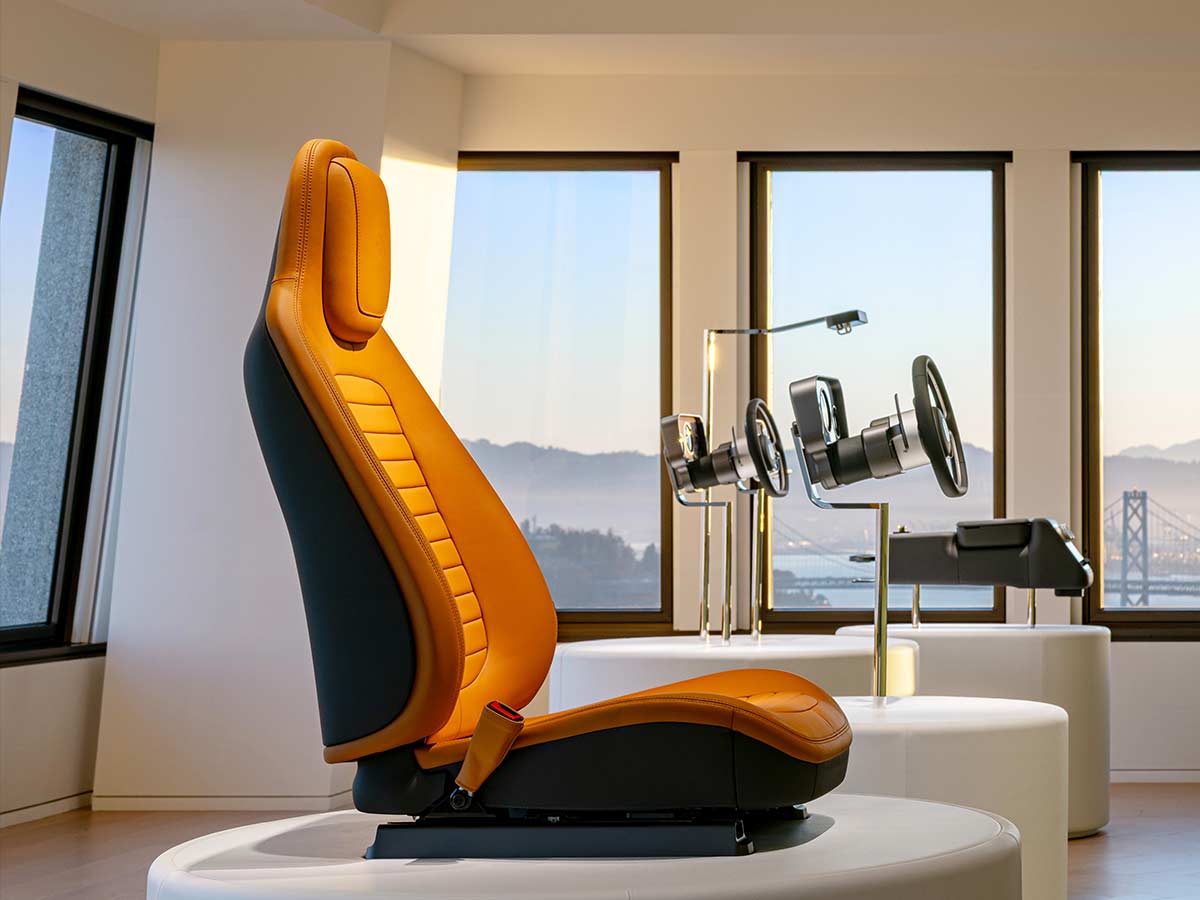
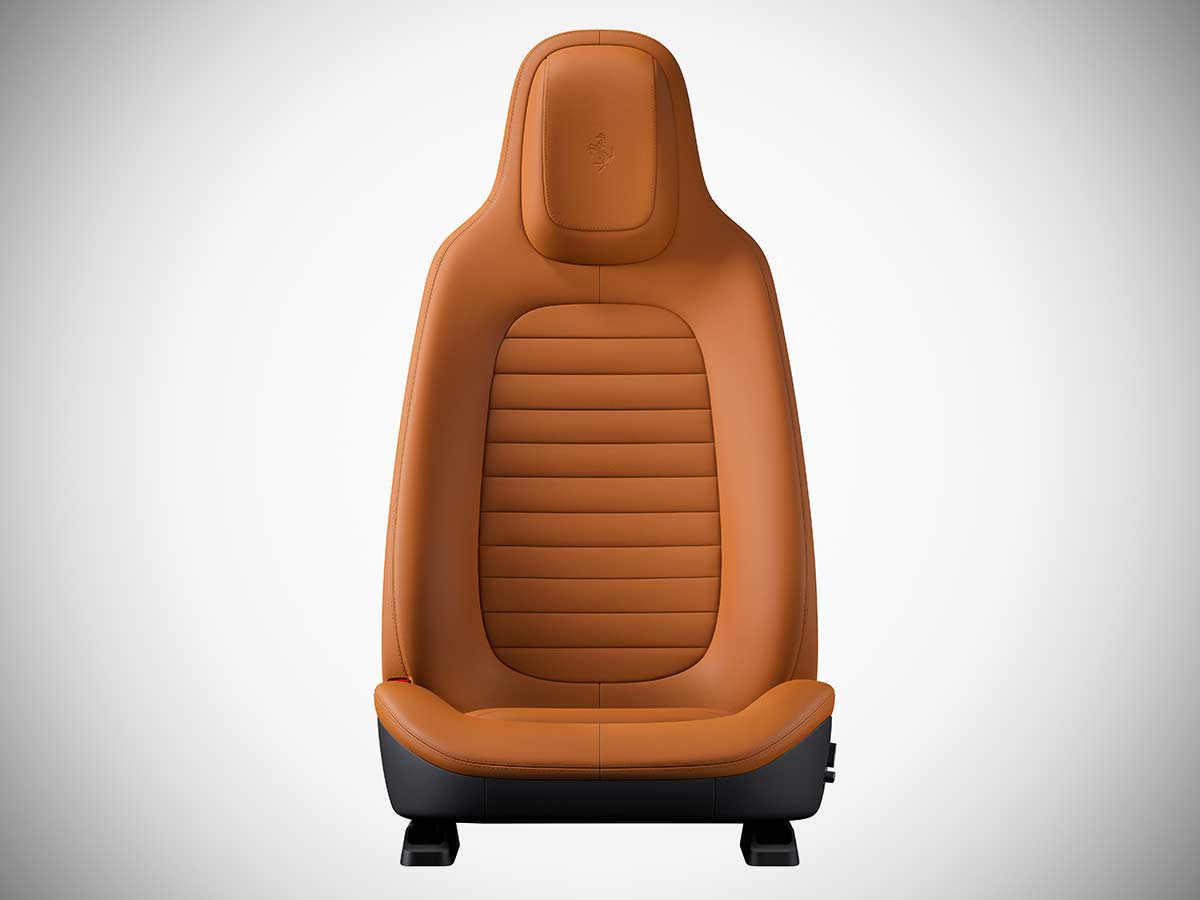
- Heated and massage seats
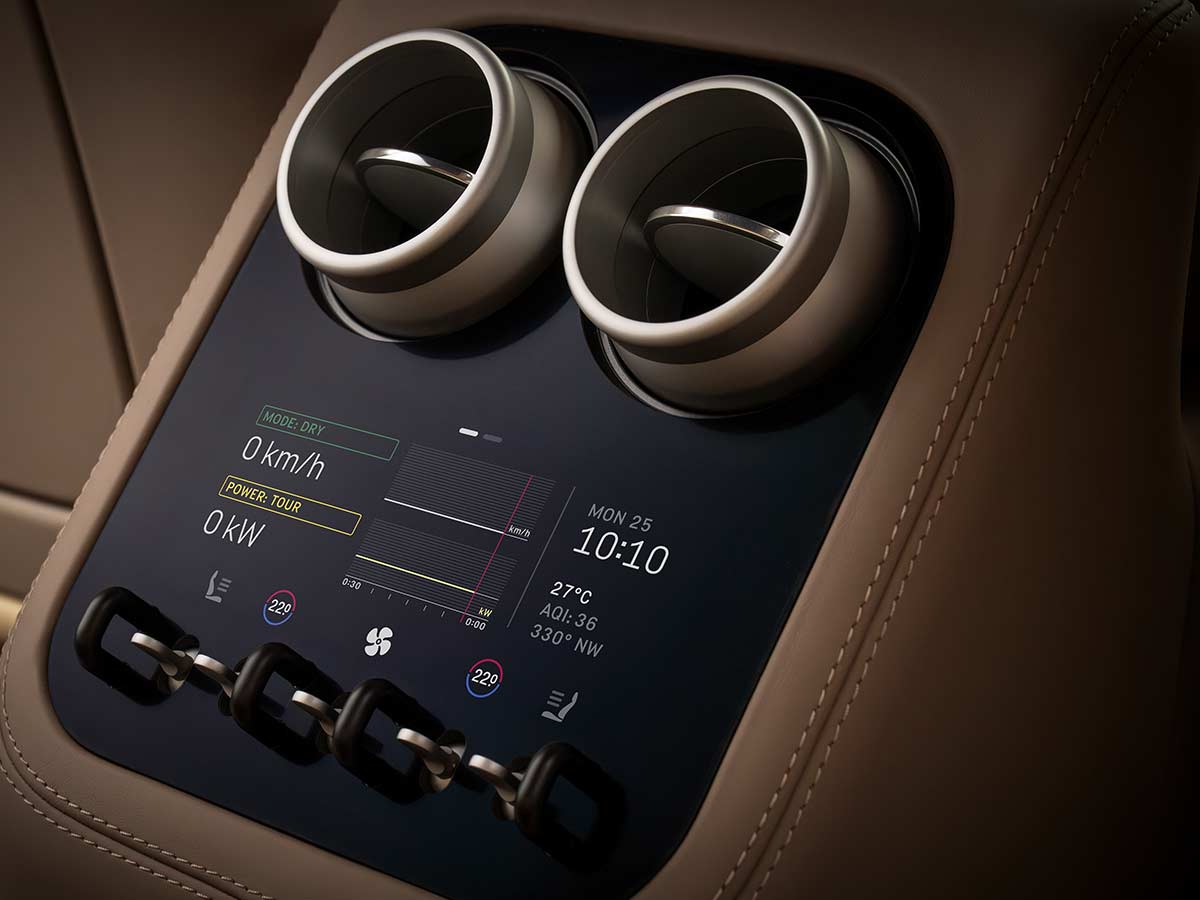
- Rear passenger controls
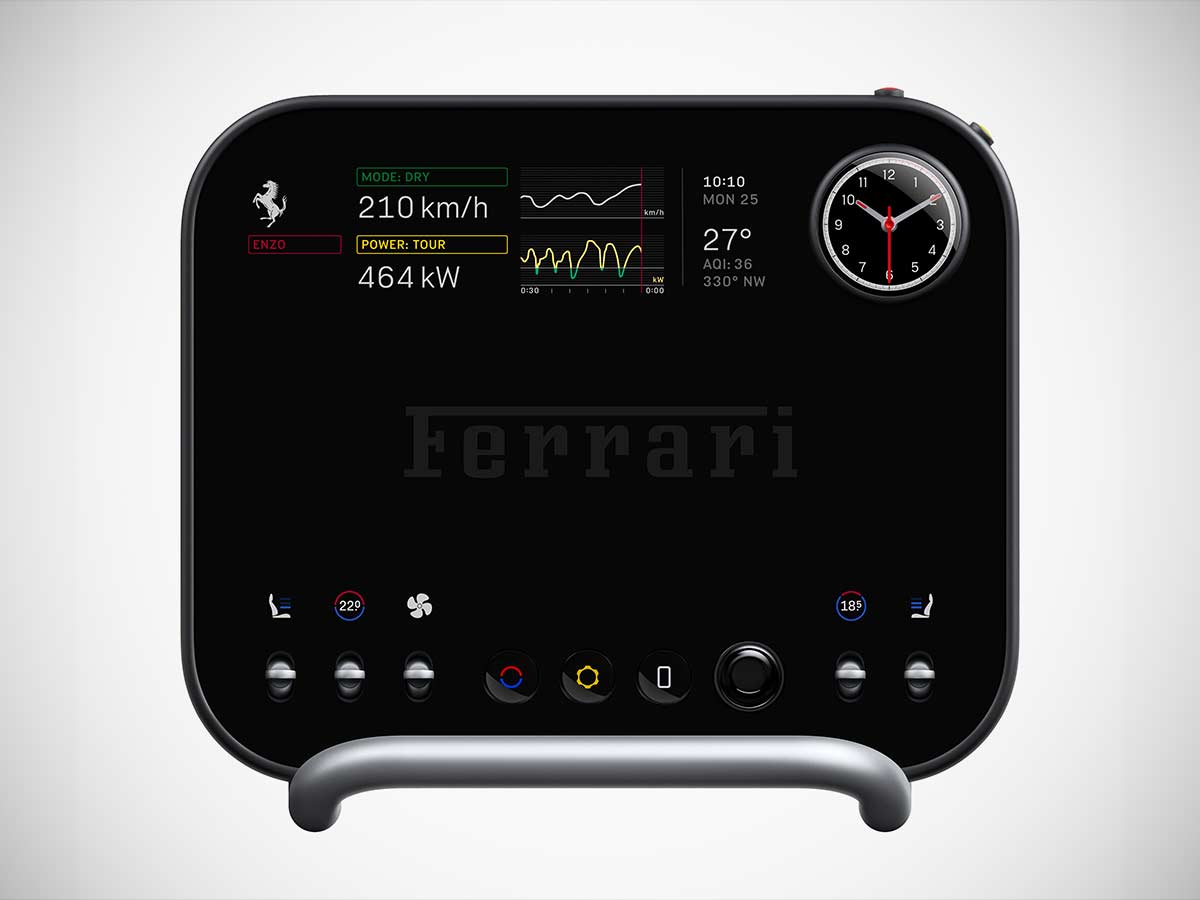
- Dedicated rear display
Ferrari describes the interior as a collection of hundreds of meticulously designed individual objects unified into one cohesive volume.
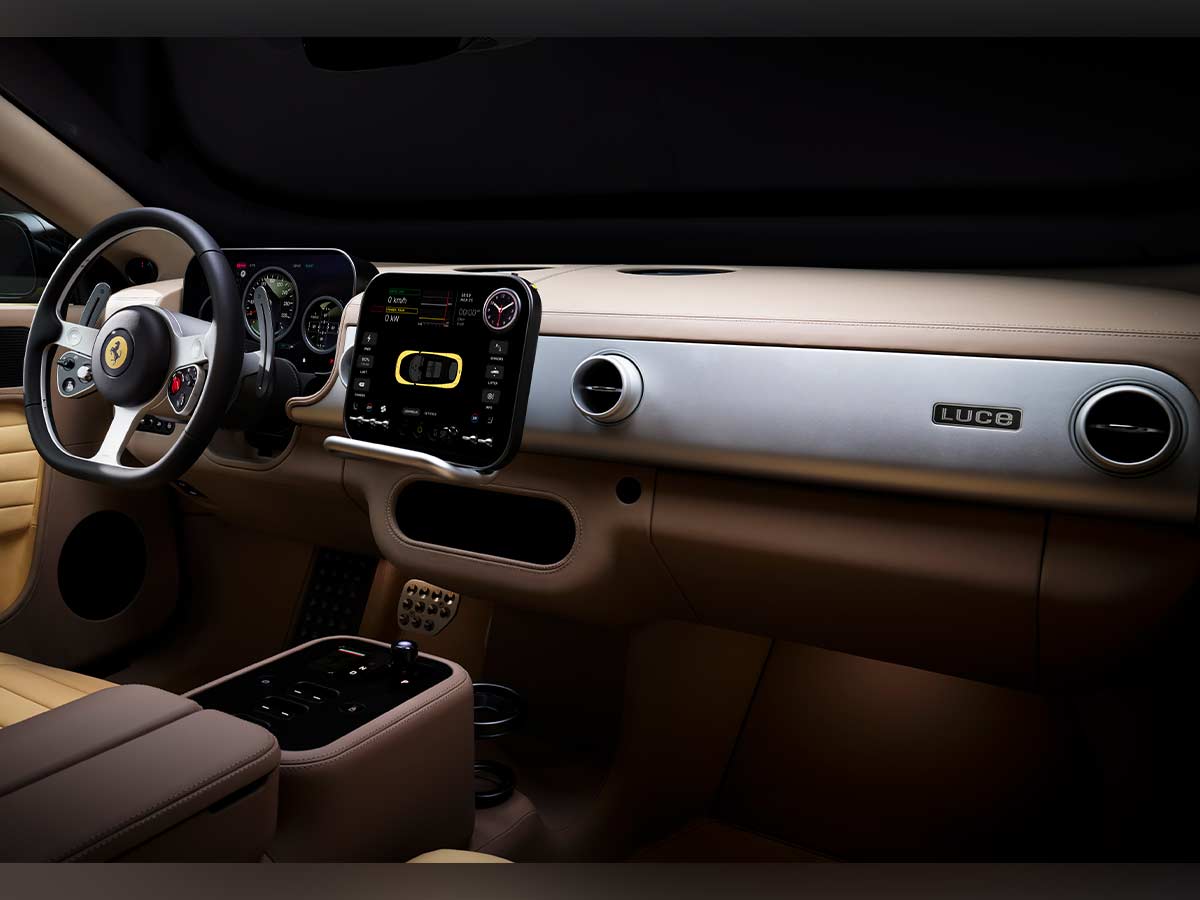
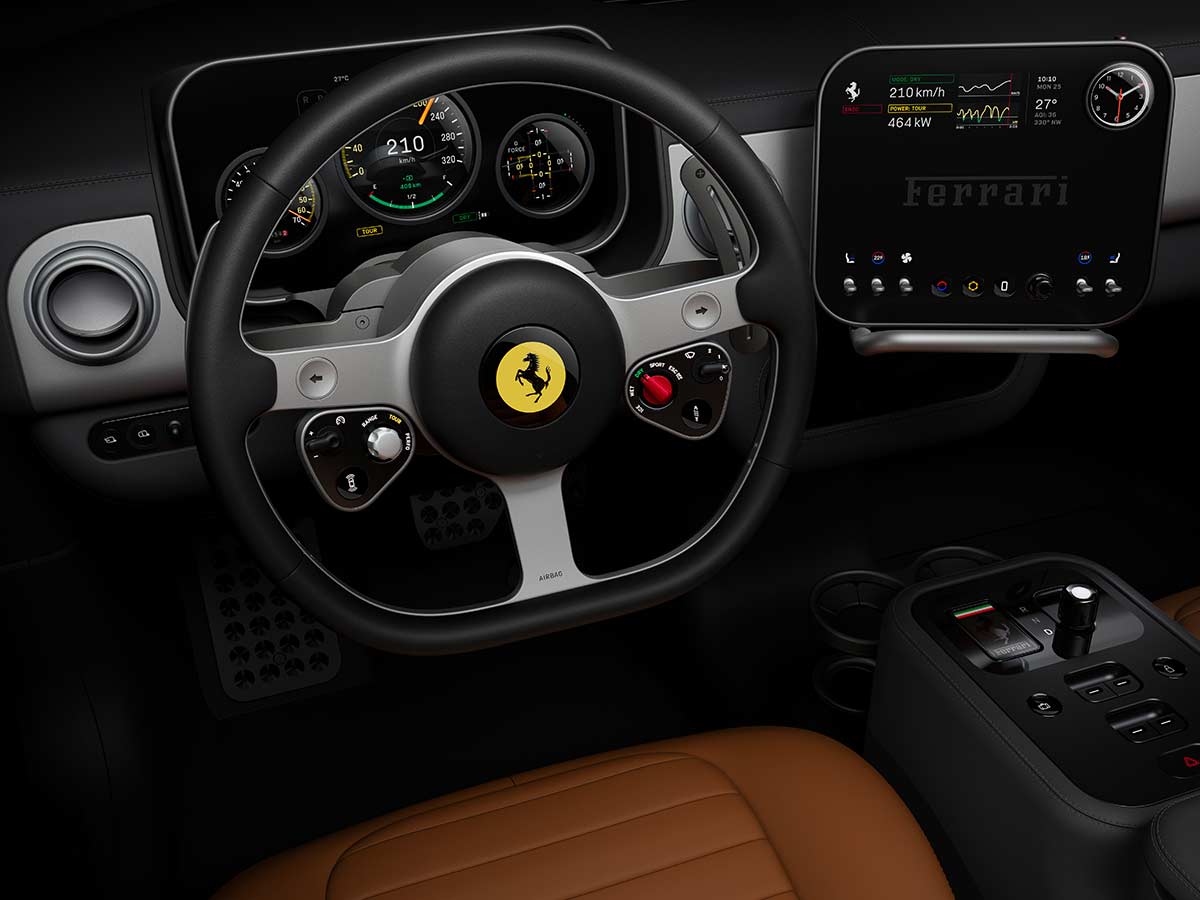
Ferrari Luce Steering Wheel and Controls
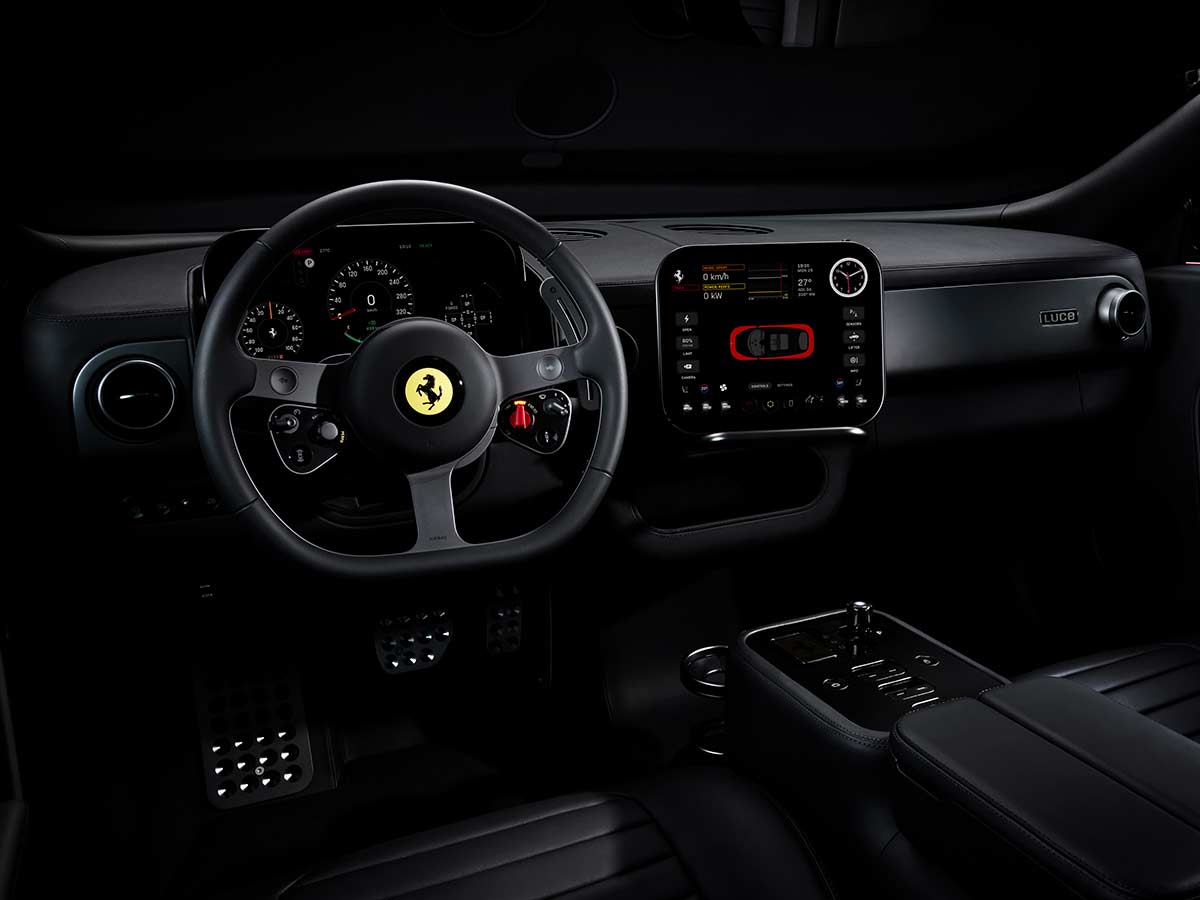
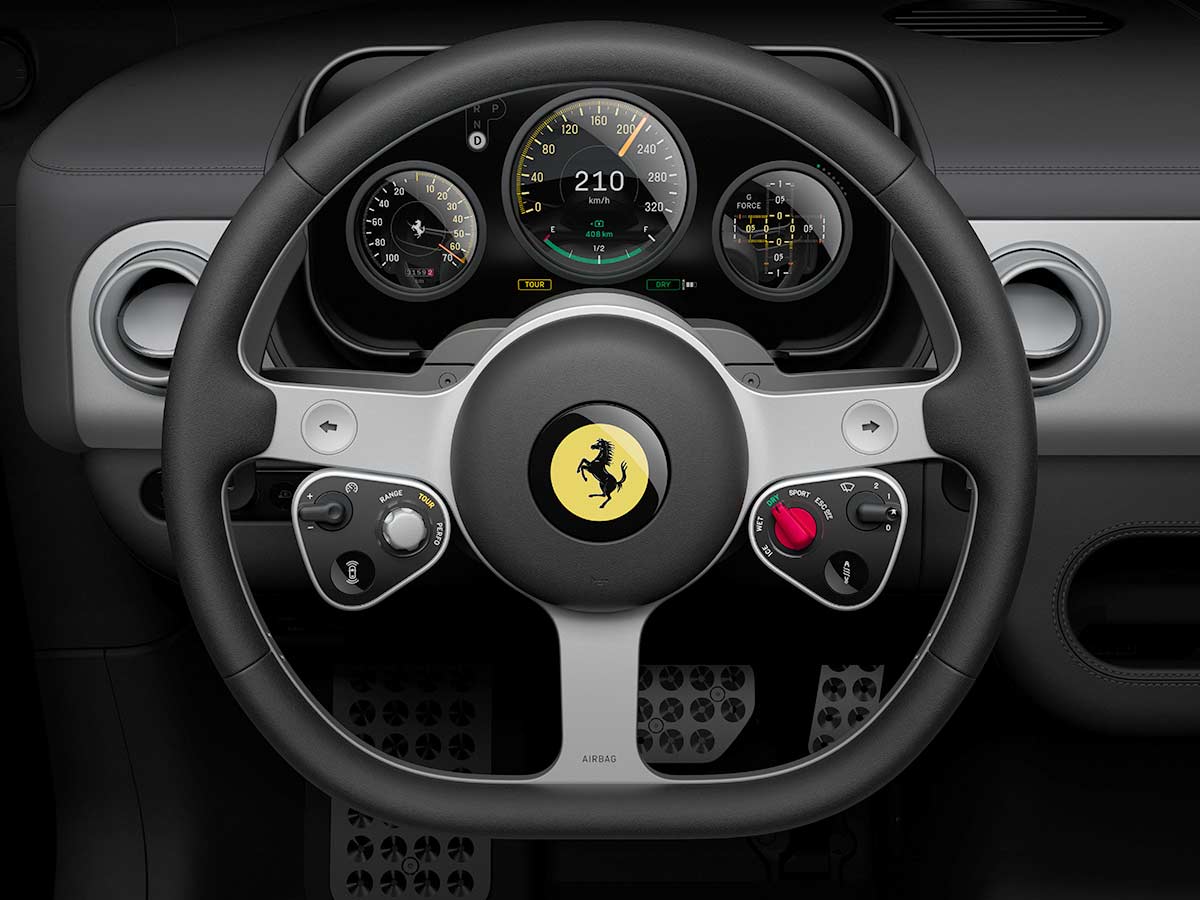
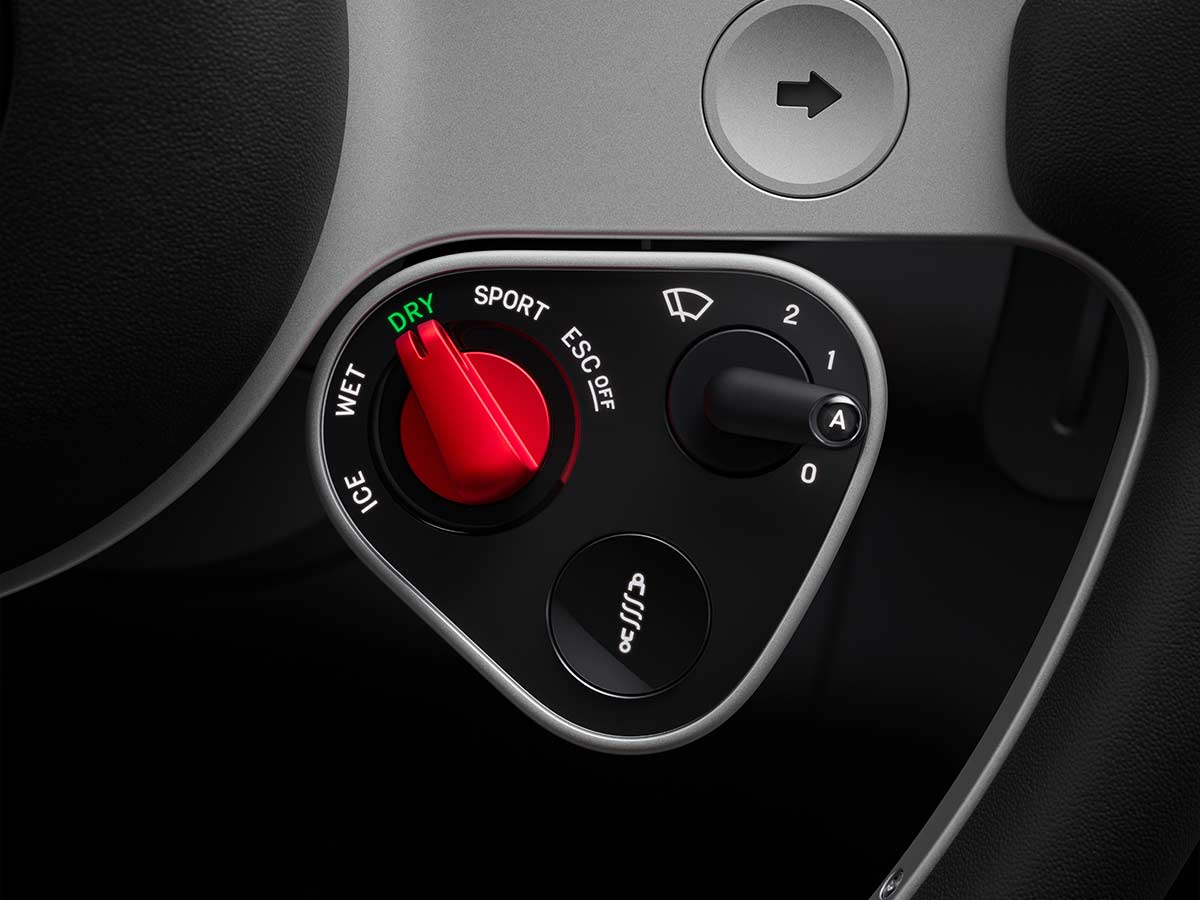
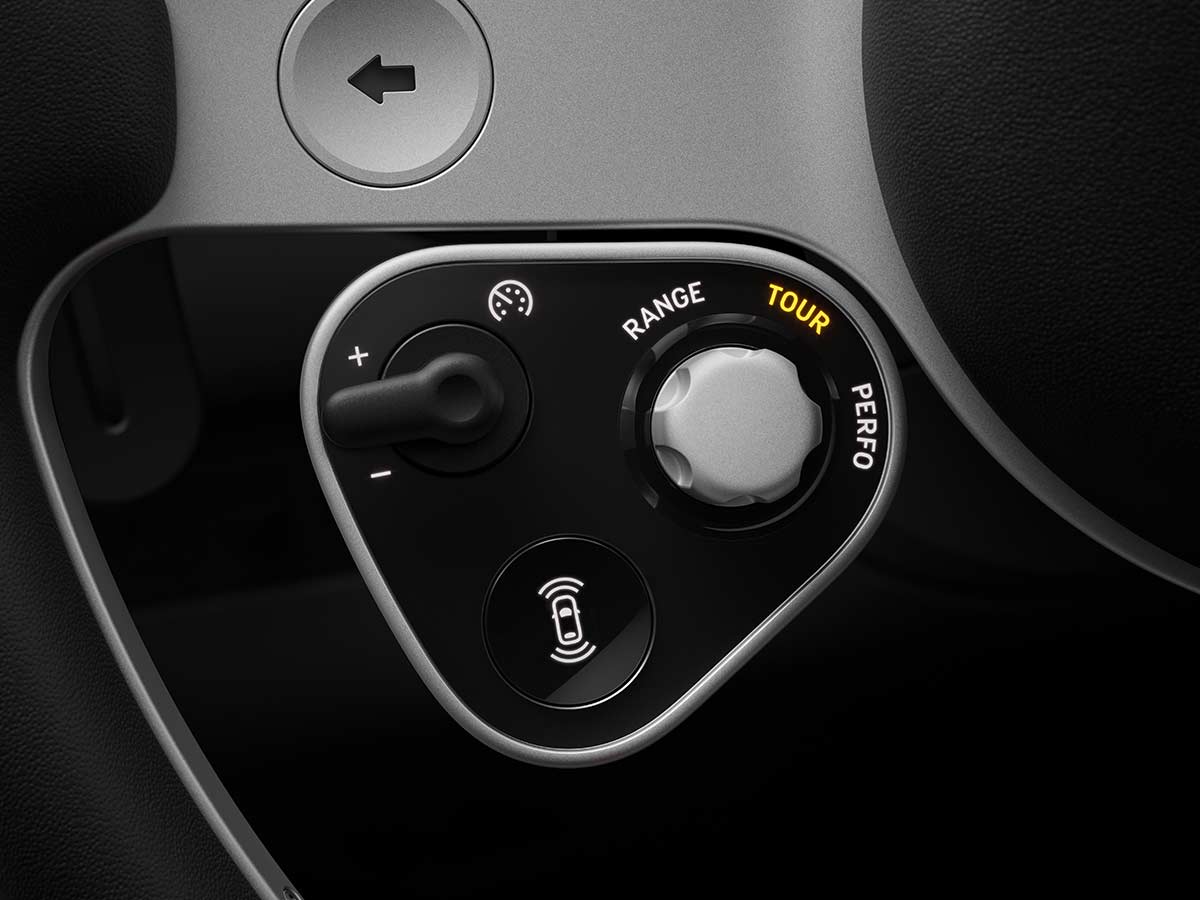
Unlike many modern EVs that rely heavily on touchscreens, Ferrari intentionally retained physical interaction points.
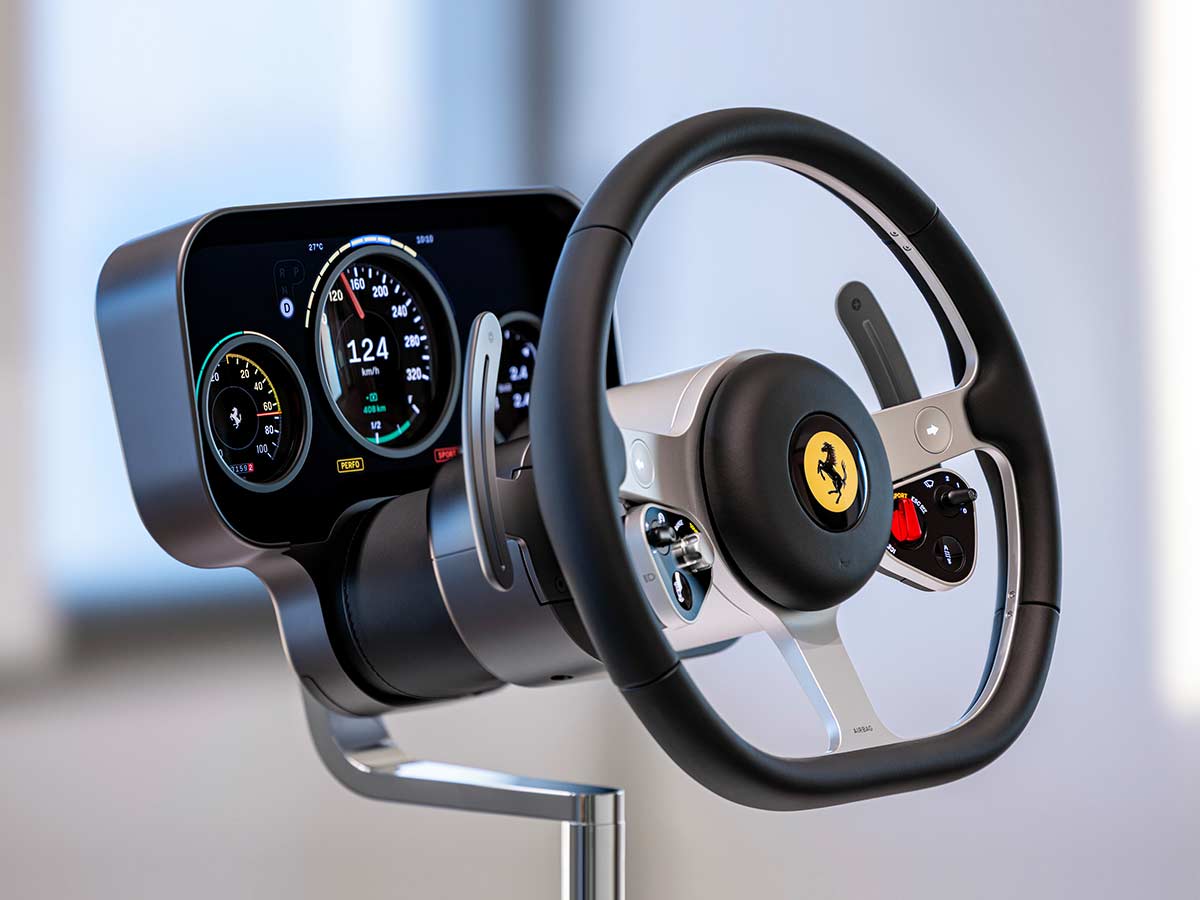
The steering wheel is machined from 100% recycled aluminum and combines:
- Physical buttons
- Precision-machined toggles
- Torque-control paddles
- The classic Ferrari Manettino
- The new e-Manettino
Ferrari says tactile feedback remains central to the driving experience.
The torque-control paddles are particularly fascinating. Instead of simulating fake gear shifts, they let the driver progressively control acceleration and regenerative braking characteristics.
This creates what Ferrari calls a completely new “torque language.”
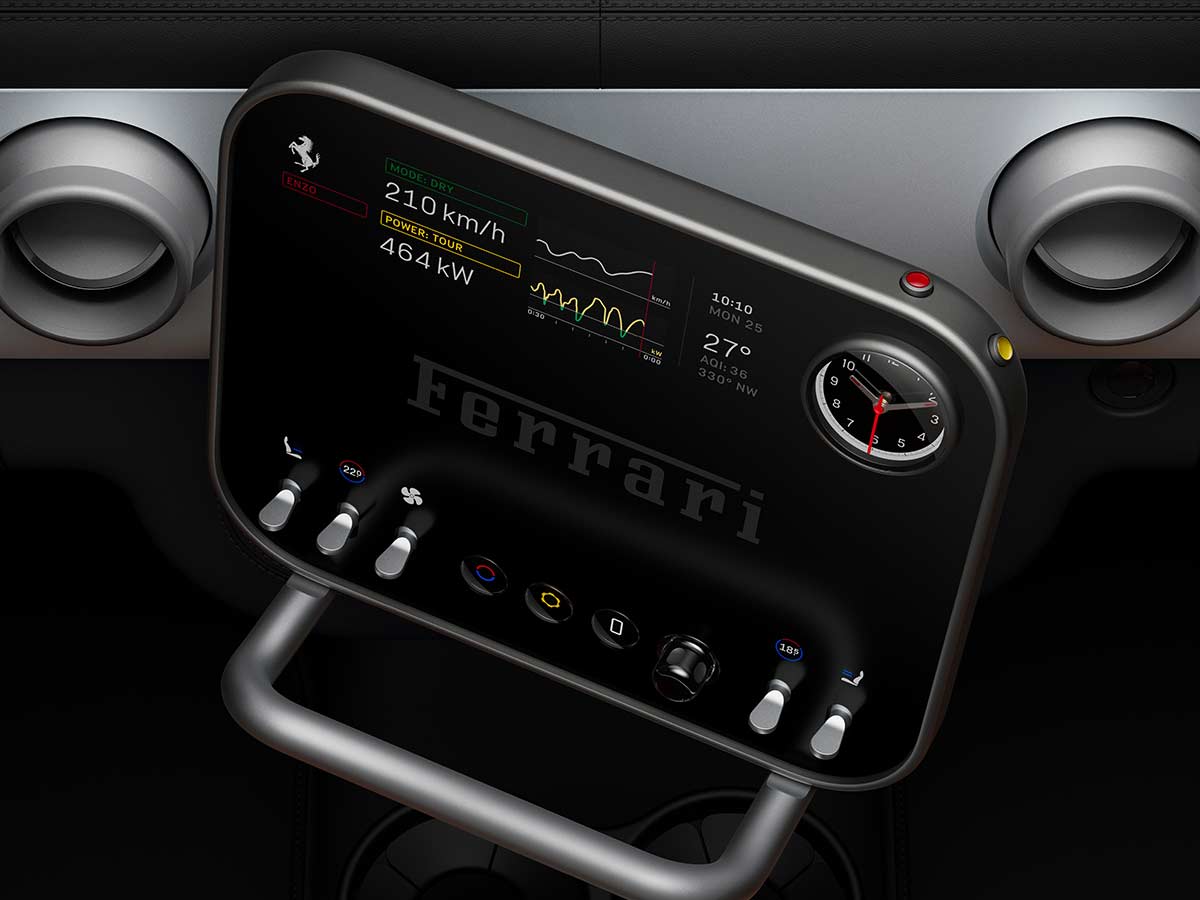
Ferrari Luce Digital Interface and Displays
The Ferrari Luce features multiple OLED displays developed specifically with Samsung Display.
Display sizes include:
- 12.9-inch display
- 12-inch display
- 10.1-inch display
- 6.3-inch rear display
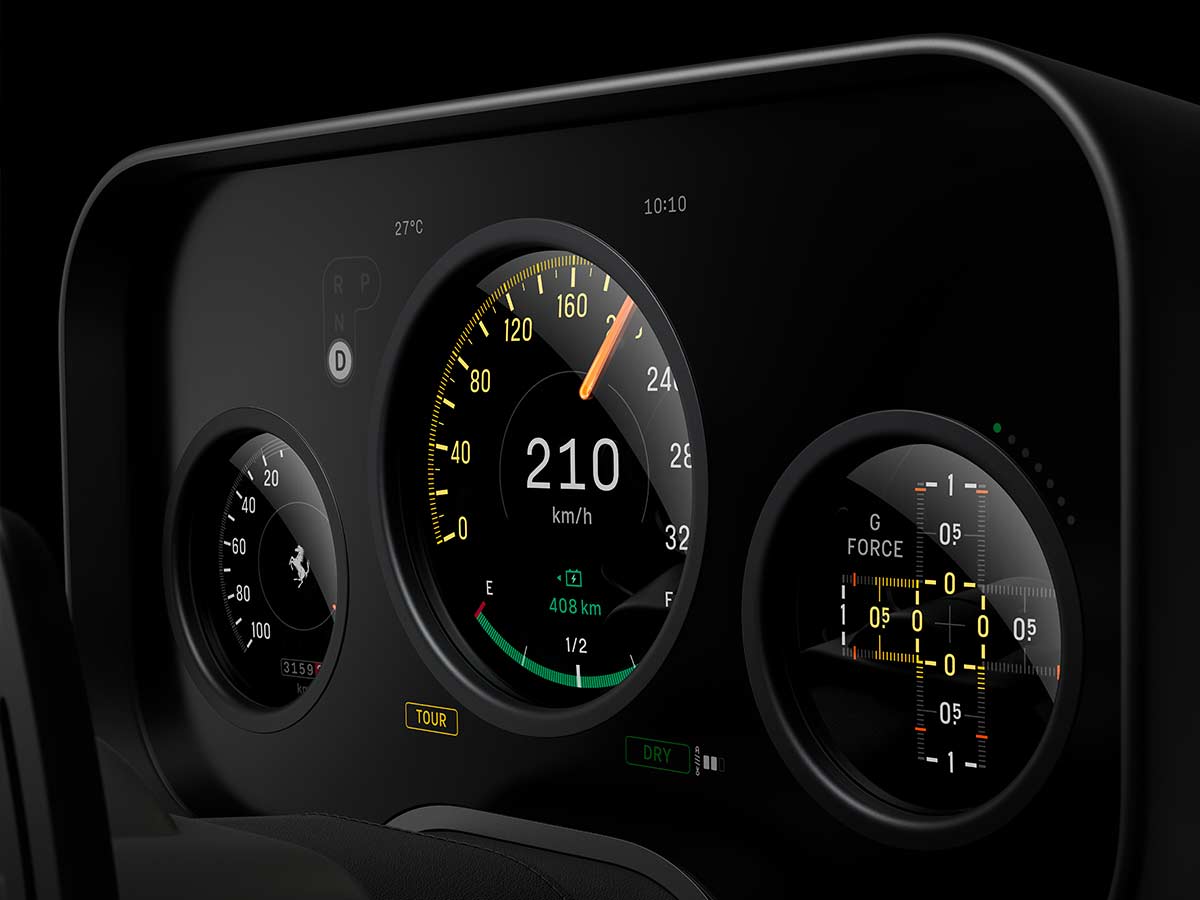
Ferrari avoided creating a generic screen-heavy EV cabin. Instead, the interface combines analog emotion with digital precision.
The central binnacle includes:
- Power meter
- Speed display
- Battery status
- Dynamic performance information
- Regenerative braking feedback
- Torque indicators
Ferrari says thousands of small details were engineered to maximize intuitive interaction.
Ferrari Luce Sound: Ferrari’s Most Controversial Innovation?
One of the biggest challenges for any electric performance car is sound. Ferrari knew this would become one of the most scrutinized aspects of the Luce.
Rather than creating artificial synthesized noises, Ferrari developed a patented system that amplifies real vibrations generated by the electric drivetrain.
How Ferrari Luce Sound Works
A precision accelerometer mounted in the rear axle captures:
- Rotational vibrations
- Gear interaction
- Electric motor textures
- Mechanical harmonics
Ferrari then processes and amplifies those natural sounds in real time.
The result is a soundscape Ferrari claims is:
- Authentic
- Functional
- Mechanical
- Emotional
- Dynamic
The sound changes based on:
- Vehicle speed
- Torque delivery
- e-Manettino position
- Paddle interaction
- Driving mode
Importantly, Ferrari says the Luce can also become almost silent in Range mode for maximum comfort.
Ferrari Luce Performance: More Than Straight-Line Speed
The Ferrari Luce delivers breathtaking acceleration numbers:
- 0-100 km/h in 2.5 seconds
- 0-200 km/h in 6.8 seconds
- Top speed above 310 km/h
But Ferrari insists the Luce is not simply about explosive EV acceleration.
Instead, the company focused on:
- Repeatable performance
- Progressive torque delivery
- Predictable handling
- Driver engagement
- Cornering dynamics
- Emotional interaction
This philosophy separates Ferrari from many EV competitors focused primarily on headline acceleration figures.
Ferrari Luce Four-Motor System Explained
The Luce uses four independent electric motors, one at each wheel.
Front Axle
- 210 kW total
- 3400 Nm wheel torque
- 30,000 rpm capability
Rear Axle
- 620 kW total
- 7750 Nm wheel torque
- 25,500 rpm capability
Ferrari developed these motors entirely in-house using technology derived from:
- Formula 1
- The Ferrari F80
- The 499P endurance race car
- World Endurance Championship experience
The motors use:
- Permanent magnet synchronous technology
- Radial flux architecture
- Halbach magnet configurations
- Carbon-fiber rotor sleeves
Ferrari spent more than 120,000 hours on research and development for the electric powertrain.
Ferrari Luce Battery Technology
The Ferrari Luce battery pack is another major engineering achievement.
Battery Specifications
- Capacity: 122 kWh
- Voltage: 800V
- Cells: 210
- Architecture: 15 modules
- Fast Charging: Up to 350 kW
Ferrari says the battery was fully designed, validated, and built in Maranello.
The pack is integrated into the vehicle structure itself, improving rigidity while lowering the center of gravity.
Charging Performance
Ferrari claims the Luce can recharge 70 kWh in approximately 20 minutes using 350 kW fast charging.
That places it among the fastest charging high-performance EVs in the world.
Ferrari Luce Range and Efficiency
The Ferrari Luce delivers a claimed range exceeding 530 km.
Ferrari achieved this through:
- Advanced aerodynamics
- Active grille systems
- Intelligent thermal management
- Lightweight aluminum architecture
- Regenerative braking optimization
- Ultra-efficient inverters
The Luce reportedly has the lowest drag coefficient of any Ferrari road car ever built.
Ferrari Luce Aerodynamics
Aerodynamics became a central engineering focus during development.
Ferrari spent:
- More than 6000 CFD simulations
- 250 hours of wind tunnel testing
- 80 hours of full-scale testing
Key aerodynamic features include:
- Floating aerodynamic wings
- Active grille shutters
- Smooth uninterrupted surfaces
- Turbine-inspired wheels
- Flat underbody
- Active ride-height adjustment
The front suspension can lower the car by 10 mm at speed to improve efficiency and stability.
Ferrari Luce Vehicle Dynamics
Ferrari believes the Luce offers one of the most advanced dynamic control systems ever installed in a production car.
Key Dynamic Technologies
- Four-wheel steering
- Torque vectoring
- Side Slip Control X
- Ferrari Dynamic Enhancer+
- ABS Evo
- eTrac traction control
- Active suspension
- Torque Shift Engagement
Every wheel independently controls:
- Acceleration
- Regeneration
- Steering angle
- Vertical motion
Ferrari claims this creates an unprecedented level of fluidity and control.
Ferrari Luce Vehicle Control Unit (VCU)
The Luce debuts Ferrari’s new Vehicle Control Unit architecture.
This system integrates:
- Powertrain management
- Chassis dynamics
- Regenerative braking
- Suspension control
- Energy efficiency
- Thermal systems
The VCU updates control targets 200 times per second.
Ferrari says this allows the Luce to deliver natural and intuitive responses despite the complexity of the electric architecture.
Ferrari Luce Driving Modes
The e-Manettino introduces several dedicated EV modes.
Range Mode
- Limited to 320 kW
- Rear-wheel-drive bias
- Top speed capped at 260 km/h
- Maximum efficiency focus
Tour Mode
- 460 kW output
- Permanent all-wheel drive
- Balanced comfort and performance
Performance Mode
- 725 kW available
- Full dynamic response
- Maximum emotional engagement
- Top speed above 310 km/h
Launch Control unlocks up to 765 kW for maximum acceleration.
Ferrari Luce Regenerative Braking
Ferrari developed an extremely advanced regenerative braking system called eCRB.
The system can regenerate:
- Up to 0.5 MW
- Up to 0.5 g of braking force
Ferrari claims this increases efficiency significantly, especially:
- 20% range improvement on mountain roads
- 5% improvement on highways
The system intelligently distributes braking across all four wheels.
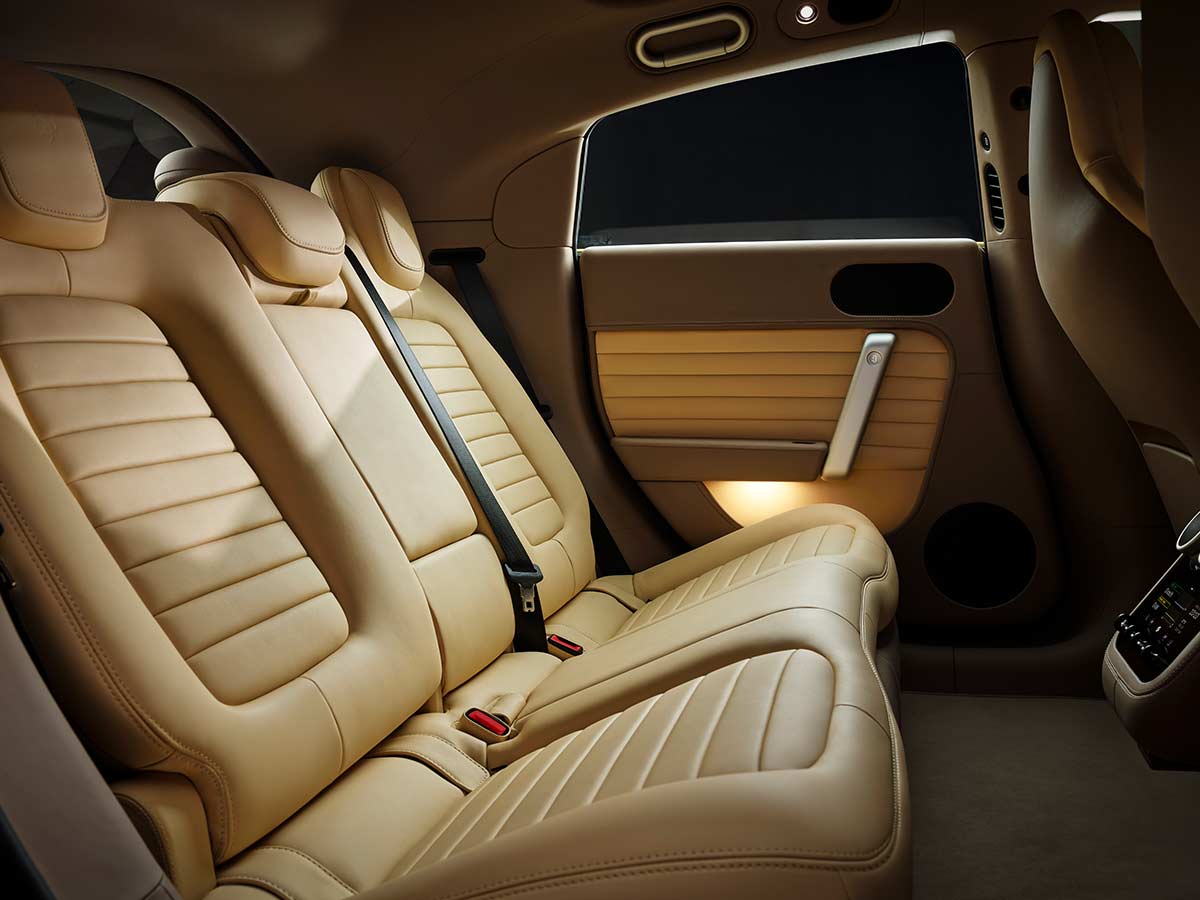
Ferrari Luce Comfort and NVH
Ferrari says the Luce is the most comfortable Ferrari ever created.
This was achieved through extensive NVH development focused on:
- Acoustic isolation
- Vibration management
- Aerodynamic quietness
- Suspension refinement
The car uses:
- Elastically mounted rear subframe
- Specialized bushings
- Multi-layer glass
- Advanced soundproofing
- Active suspension refinement
Ferrari also integrated vibration dampers into the steering column to reduce harshness over rough roads.
Ferrari Luce Audio System
The Ferrari Luce introduces a premium 21-speaker sound system with:
- 3000W amplification
- Ribbon tweeters
- Dedicated subwoofer
- Surround speakers
- Ferrari Audio Signature technology
Ferrari created five dedicated sound presets:
- Studio
- Concerto
- Immersive
- Opera
- Electronic
There is also a Solo mode optimized for individual seating positions.
Ferrari Luce Connectivity and Apps
Ferrari developed an entirely new digital ecosystem for the Luce.
Features Include
- MyFerrari Luce app
- Remote climate preconditioning
- Charge management
- Lock/unlock controls
- Journey reporting
- Vehicle monitoring
- Battery analytics
- Third-party driver management
Navigation integrates both:
- Google Maps EV support
- Apple Maps EV support
The system uses real-time battery and charging data to optimize route planning.
Ferrari Luce Sustainability Strategy
Ferrari clearly wanted the Luce to represent environmental responsibility without compromising luxury or performance.
The vehicle uses:
- Recycled aluminum alloys
- Reduced CO₂e production methods
- Lightweight structural engineering
- Energy-efficient electronics
- Highly optimized thermal systems
Ferrari says recycled aluminum alone reduces production emissions by approximately 70% relative to vehicle weight.
Ferrari Luce Dimensions and Practicality
Unlike traditional Ferrari supercars, the Luce also emphasizes usability.
Dimensions
- Length: 5026 mm
- Width: 1999 mm
- Height: 1544 mm
- Wheelbase: 2961 mm
Practical Features
- Five seats
- Four doors
- 597-liter trunk
- Spacious rear cabin
- Everyday comfort focus
This positions the Luce closer to a high-performance luxury GT rather than a stripped-out supercar.
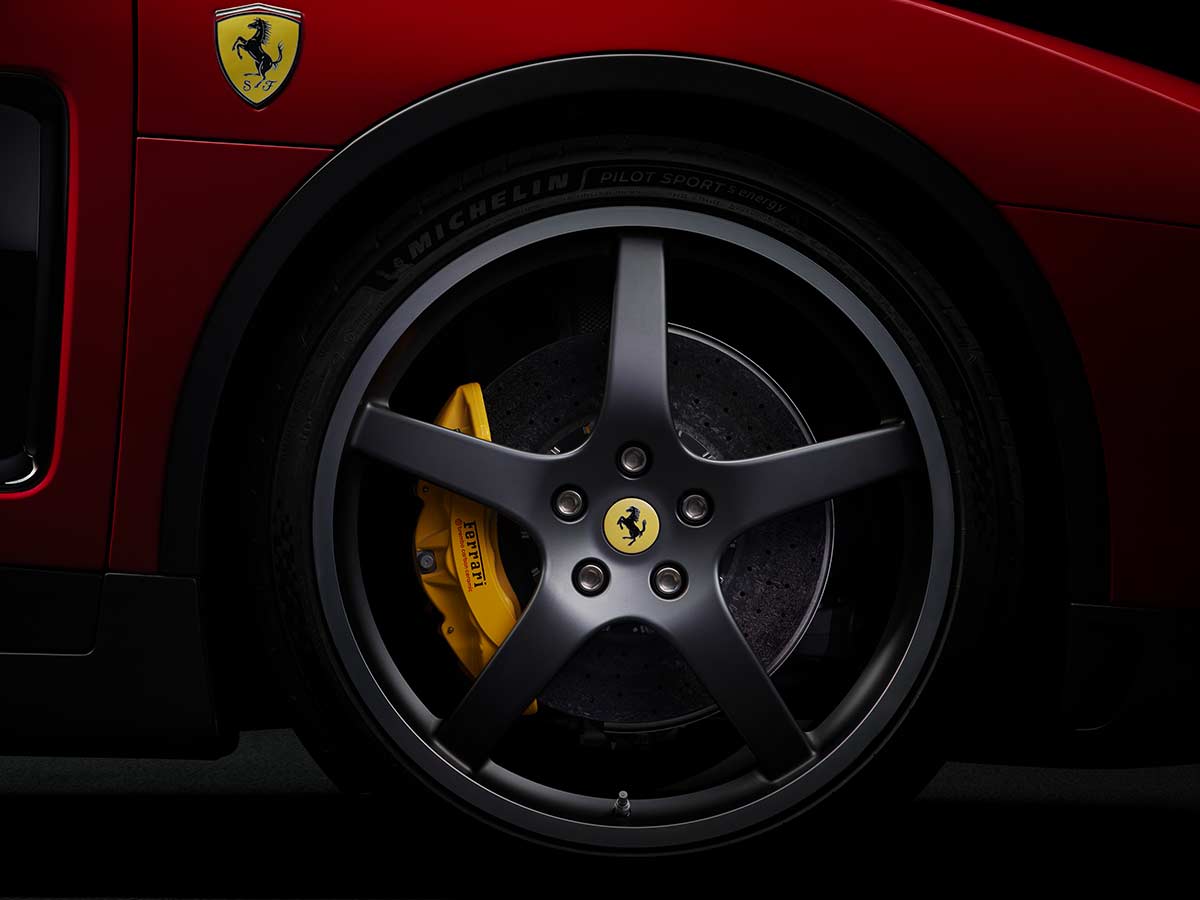
Ferrari Luce Wheels and Tires
The Luce introduces the largest wheel setup ever fitted to a series-production Ferrari road car.
Wheel Sizes
- Front: 23-inch
- Rear: 24-inch
Ferrari collaborated with:
- Pirelli
- Michelin
- Bridgestone
The companies developed dedicated tires optimized for:
- Rolling resistance
- Grip
- Efficiency
- Torque vectoring
- Regenerative braking
Ferrari Luce Warranty and Maintenance
Ferrari includes:
- 7-year maintenance program
- 8-year EV powertrain warranty
The maintenance package covers:
- Annual inspections
- Genuine Ferrari parts
- Dealer servicing
- Diagnostic evaluations
The EV warranty covers:
- Battery system
- Front axle
- Rear axle
- Charging components
Ferrari Luce vs Other Electric Supercars
The Ferrari Luce enters a competitive but still emerging segment.
Potential rivals include:
- Porsche Taycan Turbo GT
- Lotus Evija
- Rimac Nevera
- Tesla Model S Plaid
- Lucid Air Sapphire
However, Ferrari is targeting something different.
The Luce is not purely a hypercar, luxury sedan, or EV technology showcase. Ferrari wants it to deliver:
- Emotional connection
- Motorsport DNA
- Grand touring comfort
- Everyday usability
- Long-distance practicality
- Distinctive Ferrari character
Why Ferrari Luce Matters for the Entire Auto Industry
The Ferrari Luce represents more than a new model launch.
It signals how legacy performance brands may approach electrification without abandoning emotional identity.
Many enthusiasts feared electric Ferraris would lose:
- Character
- Drama
- Sound
- Driver involvement
Ferrari’s response was not to imitate combustion engines artificially, but to redefine engagement itself.
The Luce introduces new forms of interaction:
- Torque paddles
- Dynamic sound amplification
- Regenerative braking engagement
- Physical tactile controls
- Driver-centric torque modulation
Ferrari is effectively arguing that emotional performance can evolve rather than disappear.
Ferrari Luce Expected Price
Ferrari has not officially confirmed pricing at launch.
However, considering:
- The bespoke EV platform
- Four-motor architecture
- Luxury positioning
- Limited production philosophy
- Advanced materials
- In-house engineering
Industry expectations suggest the Ferrari Luce could easily exceed €500,000 depending on configuration and market.
Highly customized versions may cost significantly more.
Final Thoughts: Ferrari’s Most Important Car in Decades?
The Ferrari Luce may ultimately become one of the most significant vehicles Ferrari has ever produced.
Not because it is electric, but because it fundamentally rethinks what a Ferrari experience can be in the modern era.
Ferrari did not simply electrify an existing model. The company rebuilt its philosophy around:
- Interaction
- Simplicity
- Performance
- Comfort
- Efficiency
- Emotional engagement
The result is a machine that combines 1050 horsepower, four independent electric motors, a 530 km range, 350 kW charging capability, and astonishing performance with a level of refinement and usability never before associated with Ferrari.
At the same time, Ferrari carefully preserved the brand’s core identity by focusing heavily on tactile controls, authentic sound, driver communication, and dynamic precision.
Whether enthusiasts fully embrace Ferrari’s electric future remains to be seen. But one thing is certain: the Ferrari Luce is not merely Ferrari’s first EV.
It is Ferrari’s declaration that the future of performance cars can still be thrilling, emotional, and unmistakably Ferrari.
Source: Ferrari