






The roar of an internal combustion engine has defined the motorcycle experience for over a century. It is the heartbeat of the machine, a visceral connection between man, metal, and explosion. To remove it is to remove the very soul of the bike – or so we thought.
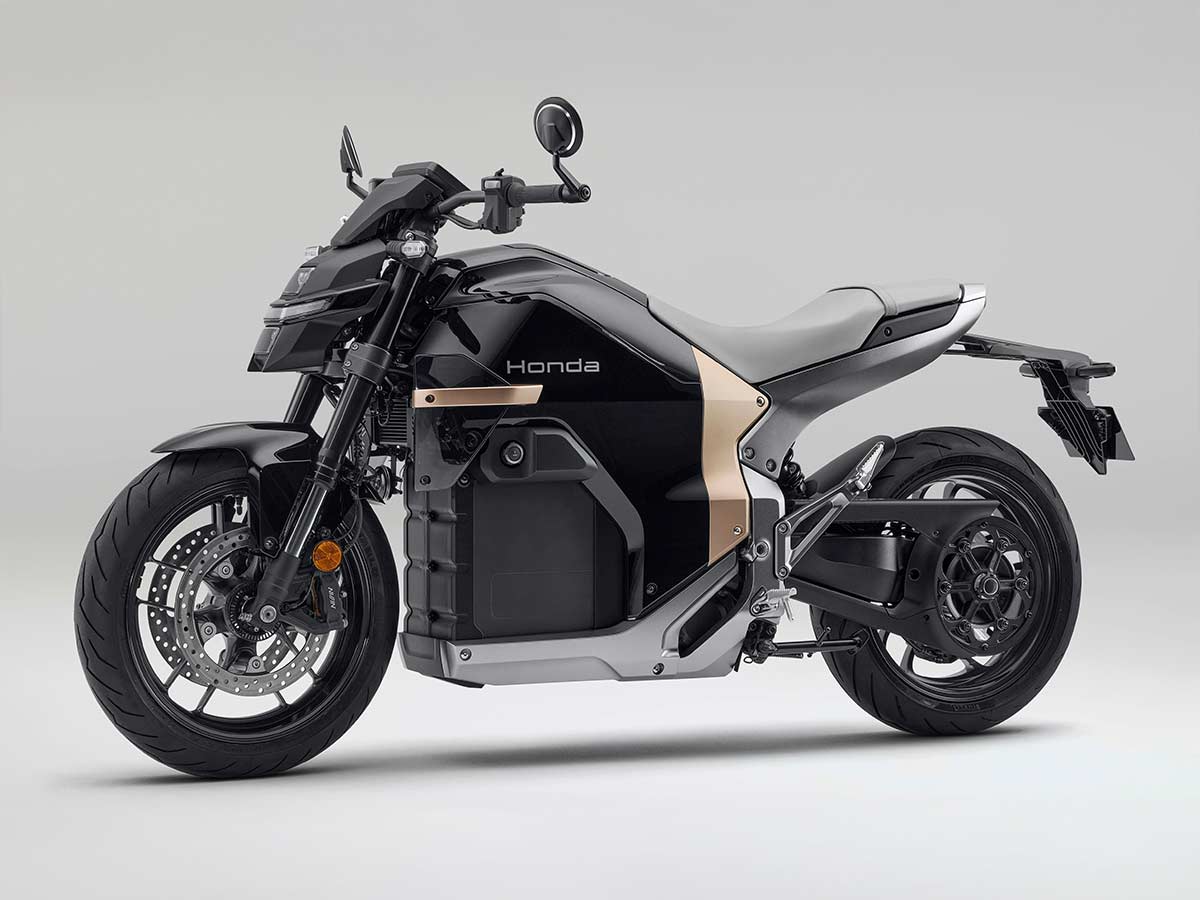
Honda, a company whose history is written in piston strokes and exhaust notes, has just rewritten the rulebook. Enter the Honda WN7, a motorcycle that doesn’t just swap gas for electrons, but fundamentally reimagines what a motorcycle is.
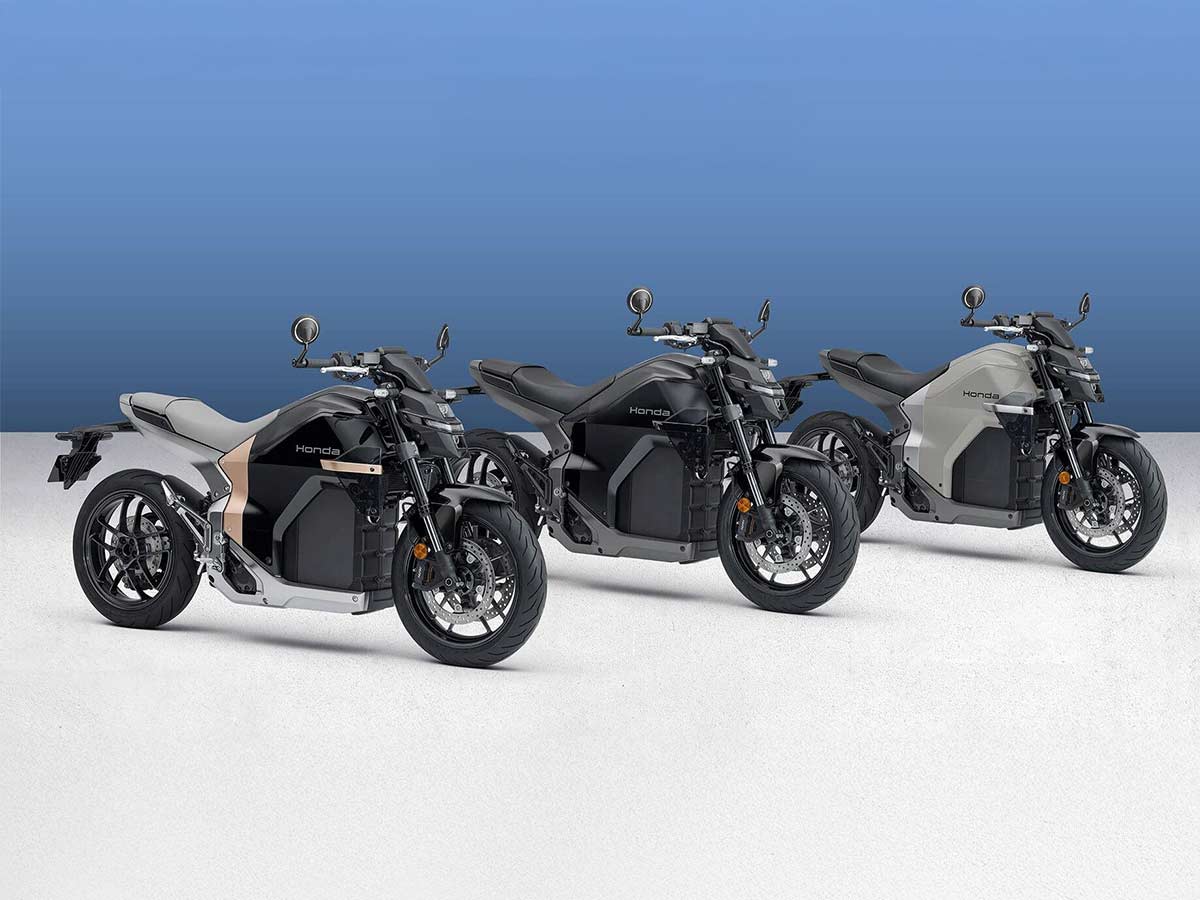
Unveiled to a stunned crowd at EICMA 2025 in Milan, the WN7 is Honda’s first “FUN” category electric motorcycle. It isn’t a scooter. It isn’t a commuter appliance. It is a naked streetfighter with the torque of a liter-bike, the agility of a 600, and a soundtrack composed entirely of wind and tire noise. What makes this bike truly interesting isn’t just that it’s electric. It’s that Honda built it so that it feels like a proper bike but gives you the smoothness, silence, and ease of an EV.
>>> Great Discounts on Car & Bike Accessories <<<
Why WN7 Matters: Honda’s Jump into Electric FUN Biking
- The WN7 is the first production model from Honda’s new electric motorcycle direction, targeted at those who want a fun, stylish ride, not just commuting wheels.
- Honda says the WN7 embodies “over 75 years” of its motorcycle development experience.
- The concept name “Be the Wind” expresses the idea of riding freely, quietly – hearing the world around you, not drowning it out with engine noise.
In short: WN7 isn’t just an electric bike. For Honda, it’s a re-imagining of what enjoyment on two wheels can look and feel like in the EV era.
The Philosophy: “Be the Wind”
More Than Just a Slogan
Marketing slogans are often fluff, but for the WN7, “Be the Wind” is an engineering directive.
Tomoya Ohashi, the design lead for the WN7, explains that the goal was to create a sensory experience impossible on a gas bike. On a traditional motorcycle, your senses are dominated by the engine: the heat, the vibration, the noise. You are fighting the machine as much as you are riding it.
The WN7 removes this filter.
- Auditory Clarity: Without exhaust noise, Honda engineers realized riders could hear things they never heard before—the rustling of leaves, the sound of water splashing under tires, even conversations of pedestrians as you glide through a city.
- Vibration-Free: The electric motor eliminates the high-frequency buzzing that numbs hands on long rides, leaving only the feedback from the road surface.
This isn’t about losing the engine; it’s about gaining the world around you.
Design: The Art of “Sophisticated Functionality”
The “Unfinished” Challenge
Designing an electric motorcycle is harder than it looks. A gas bike relies on the fuel tank, engine, and exhaust to give it shape and character. An EV is effectively a brick (battery) and a cylinder (motor).
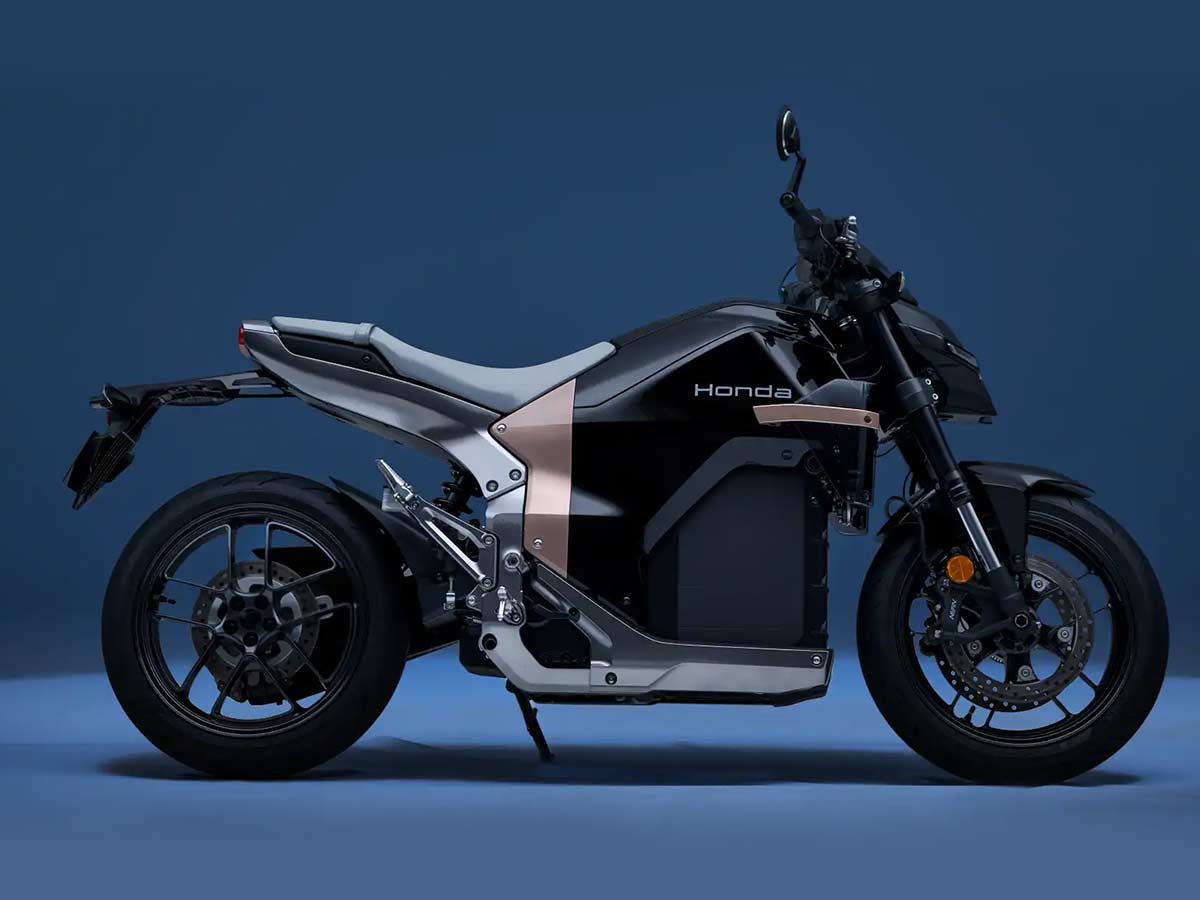
Ohashi’s team faced a crisis: How do you make a battery look sexy? Early in development, the team considered adding fake cooling fins to the battery case to make it look like a traditional engine. It would have been the safe choice. Instead, they chose bravery. They stripped away the fake plastic and exposed the battery as a structural element, embracing a design philosophy they call “Sophisticated Functionality.”
Styling Keys
The WN7 is built around three visual pillars:
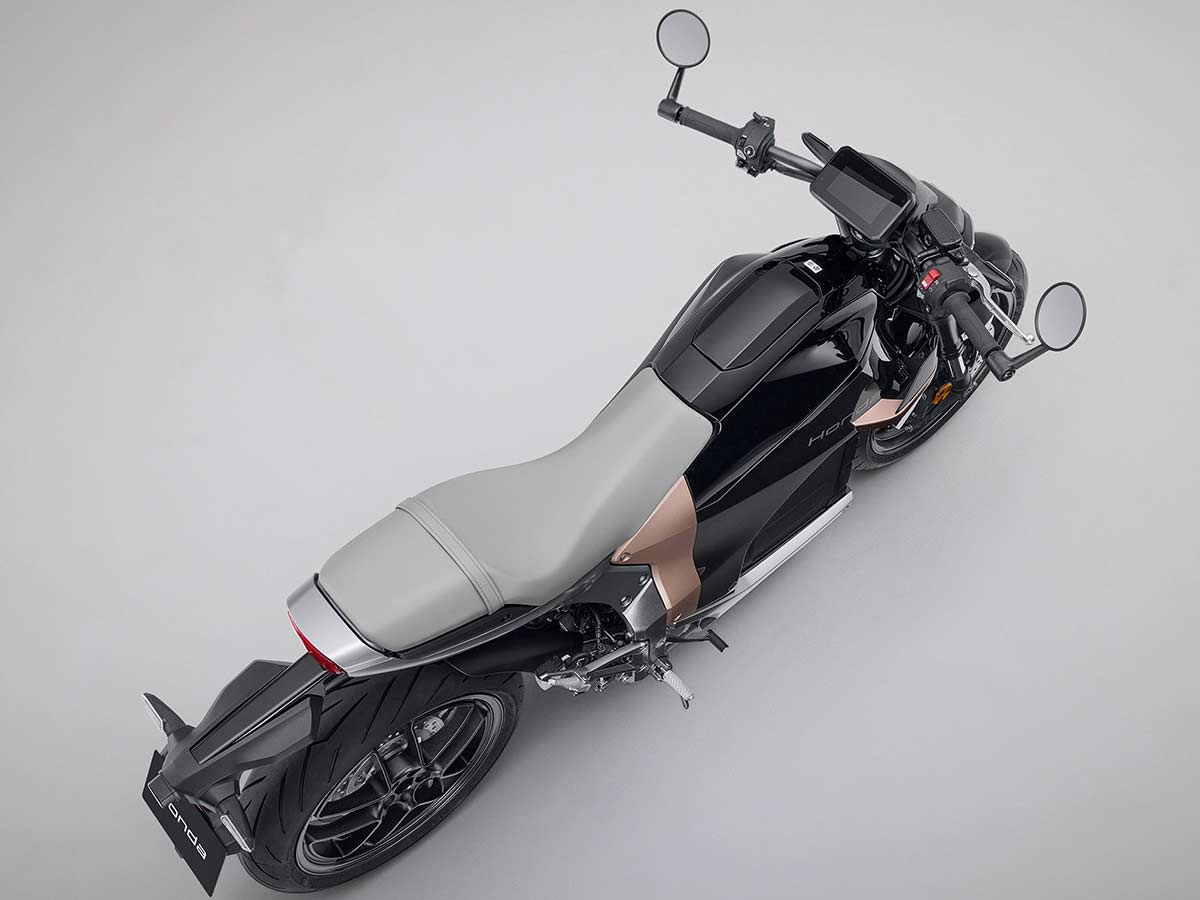
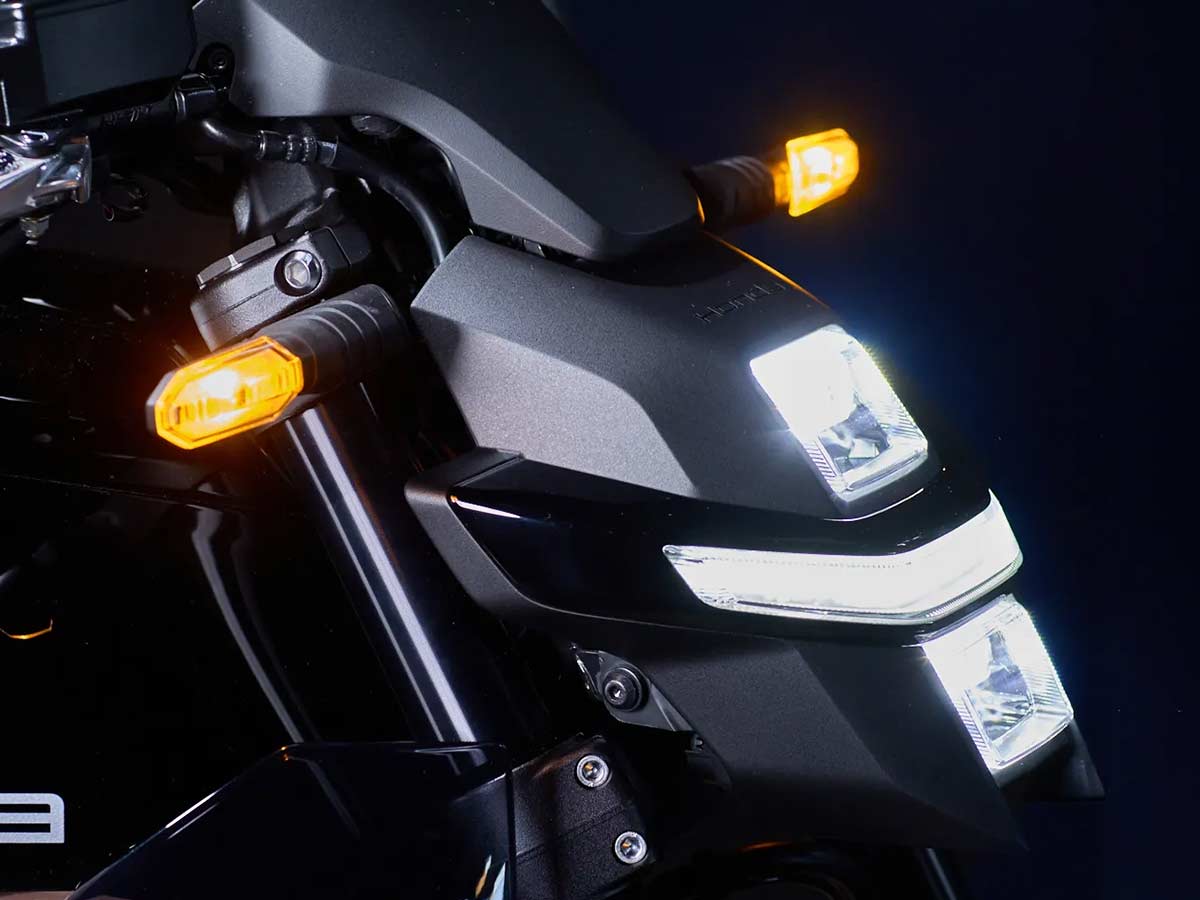
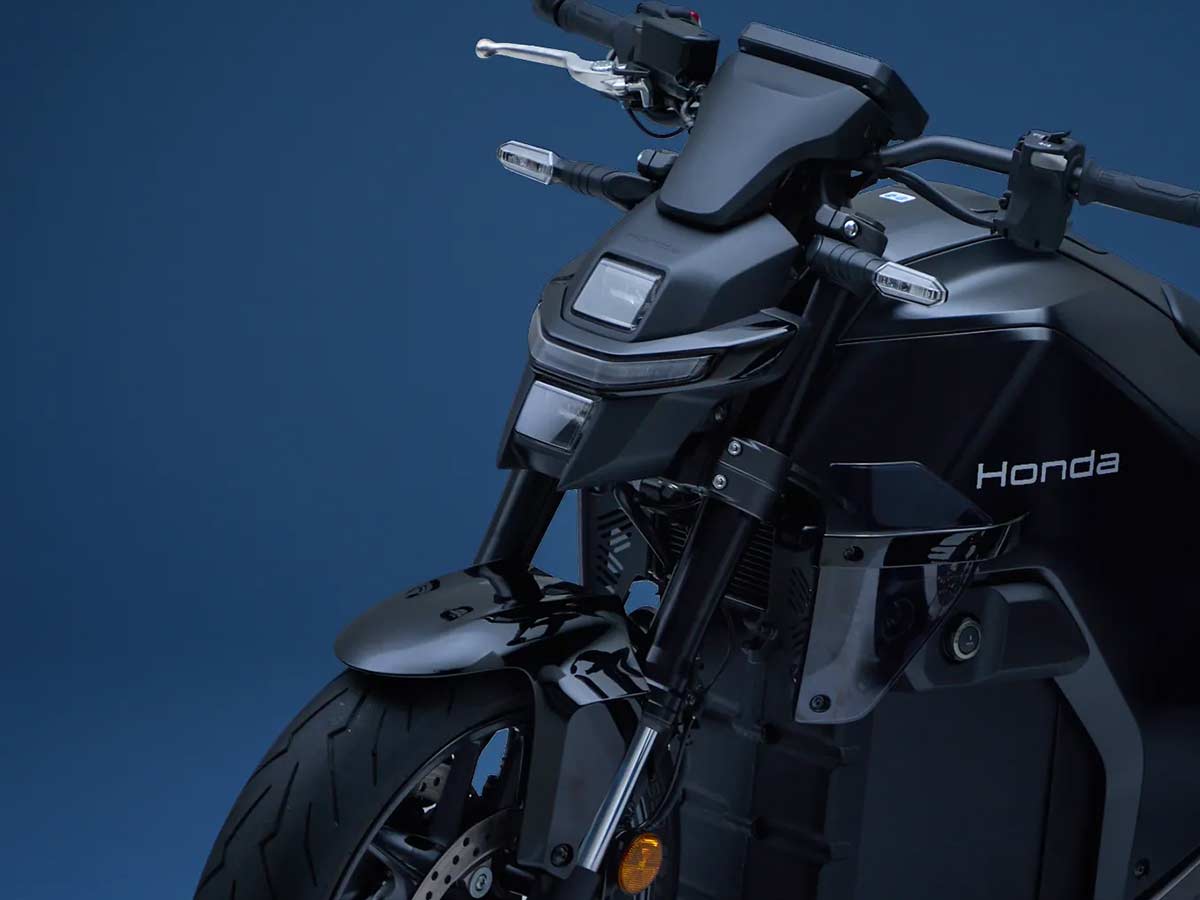
- Seamless Feel: There are almost no visible screws, bolts, or chaotic lines on the bodywork. The surfaces flow into each other like liquid metal.
- Clear Impression: The silhouette is unmistakable—a massive, dense center (the battery) with a light, airy tail and front end.
- Dynamic Stance: Despite being electric, it leans forward aggressively, like a sprinter in the starting blocks.
The “Dawn” Gold
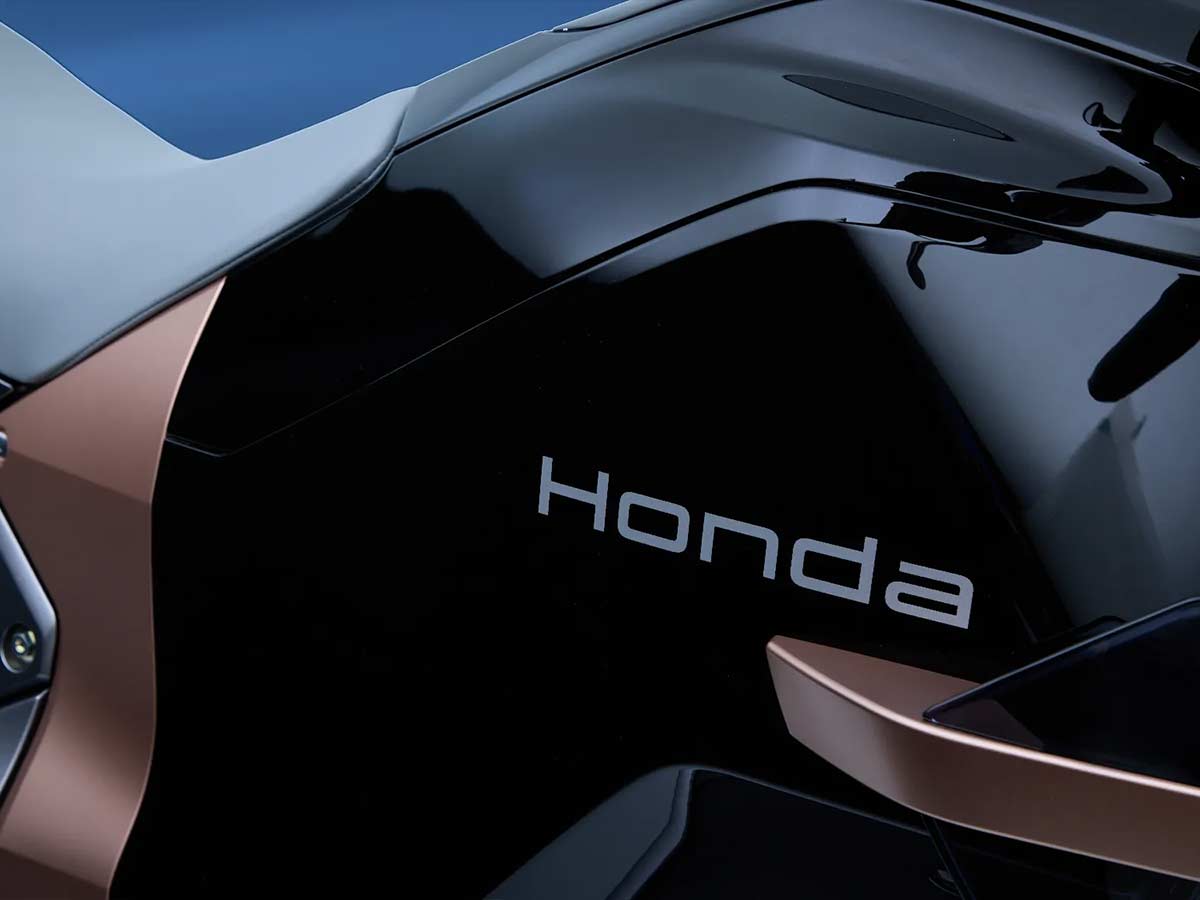
You’ll notice the color immediately. The WN7 debuts a dedicated color scheme for Honda EVs: Black and Gold. But this isn’t just any gold. The design team created dozens of samples to find a specific hue—a reddish, subdued gold reminiscent of “Dawn.” It symbolizes the dawn of a new era for Honda. This gold is used sparingly on the suspension and brakes, contrasting sharply with the “Iconic Graphite” and matte black bodywork.
Engineering the “Invisible” Frame
The Frameless Revolution
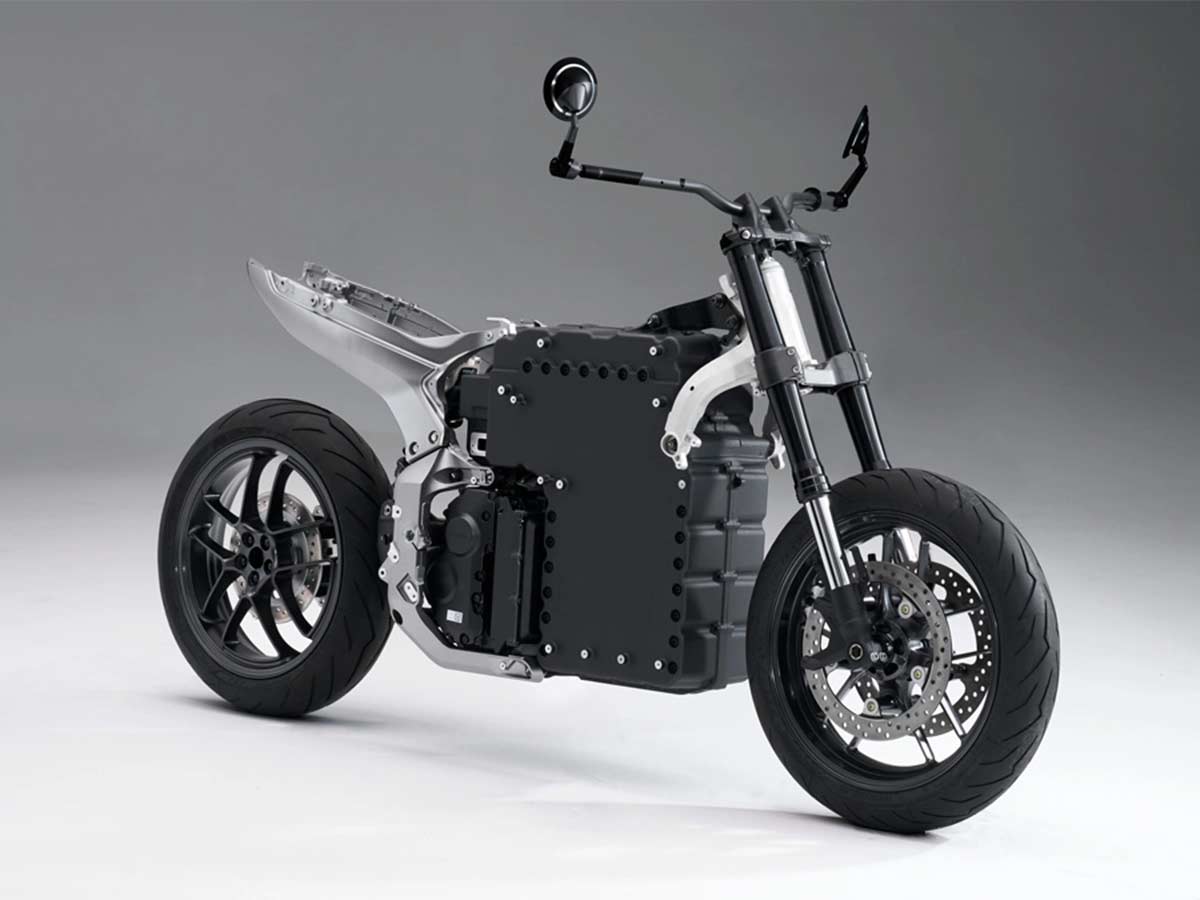
If you strip the bodywork off a Honda CBR600RR, you’ll find a massive aluminum twin-spar frame wrapping around the engine. If you strip the WN7, you’ll find… nothing.
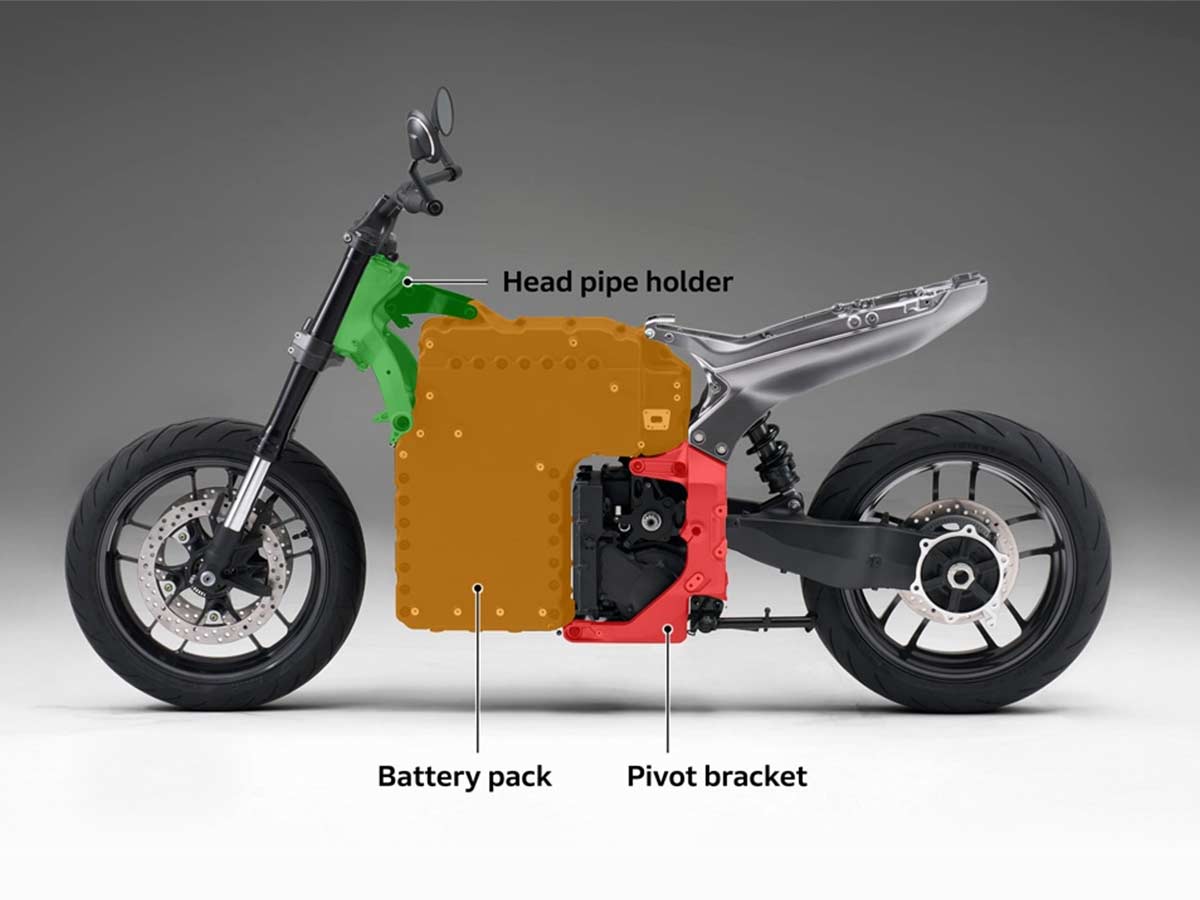
The WN7 uses a “Frameless” Chassis Configuration. This is a radical departure from tradition. Instead of a frame holding the components, the 9.3 kWh battery pack IS the frame.
How It Works:
- Front: The head pipe (which holds the front fork and handlebars) bolts directly to the top front of the battery case.
- Rear: The pivot bracket (which holds the swingarm and rear wheel) bolts directly to the rear of the battery case.
- Center: The battery case itself is a rigid aluminum box that handles all the stress of cornering, braking, and accelerating.
The “Flex” Problem
Here is the engineering genius: A battery box is extremely rigid. It doesn’t bend. But a motorcycle needs to “flex” slightly when leaned over in a corner to absorb bumps and give the rider feedback. If the bike is too stiff, it feels wooden and harsh.
To solve this, Honda engineered specific “flex zones” into the bolt-on parts:
- The Head Pipe Holder: The upper section is made of High-Tensile Steel for strength, while the lower section is Aluminum Alloy. The lower aluminum arms are elongated and curved. Why? To intentionally introduce “load transfer loss.” In simple terms, they act like a spring, allowing the front end to wiggle just enough to give the rider “feel” without compromising stability.
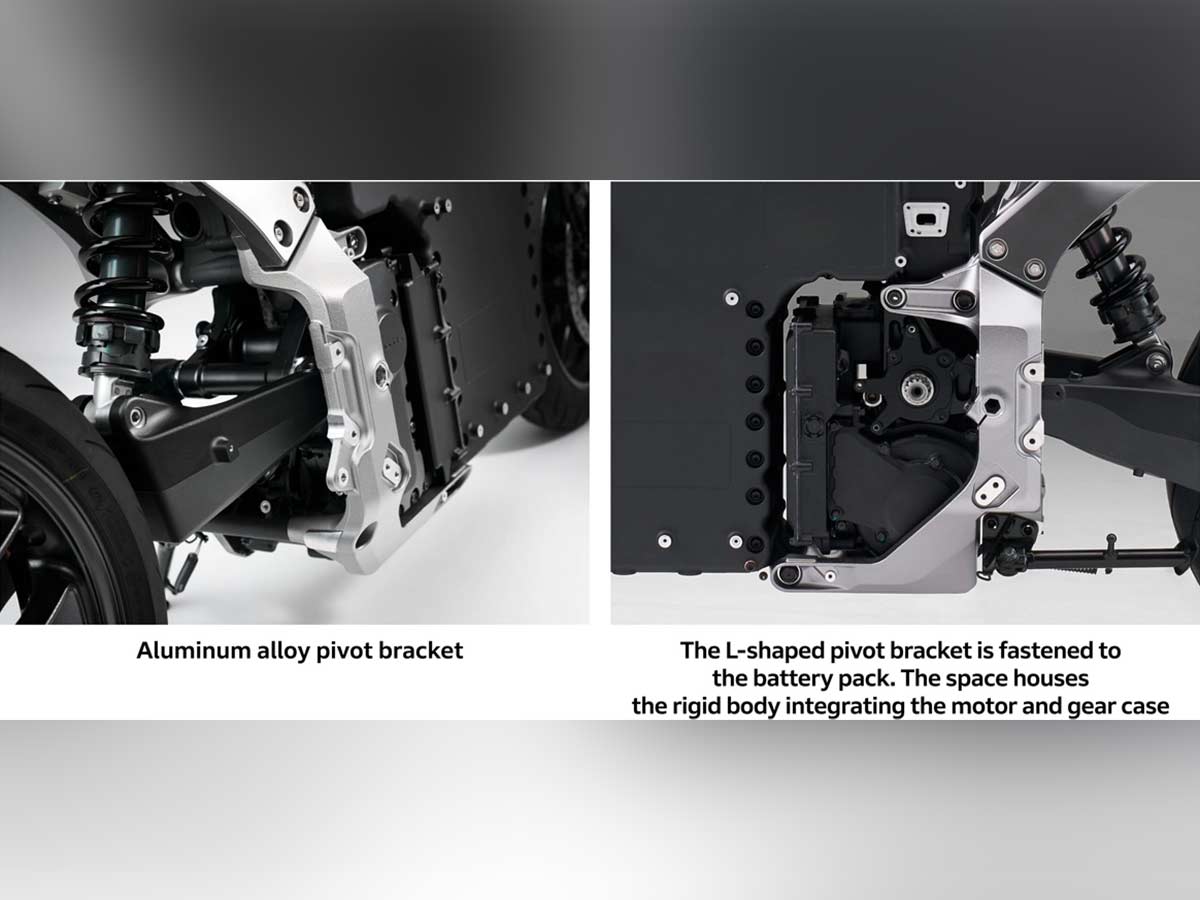
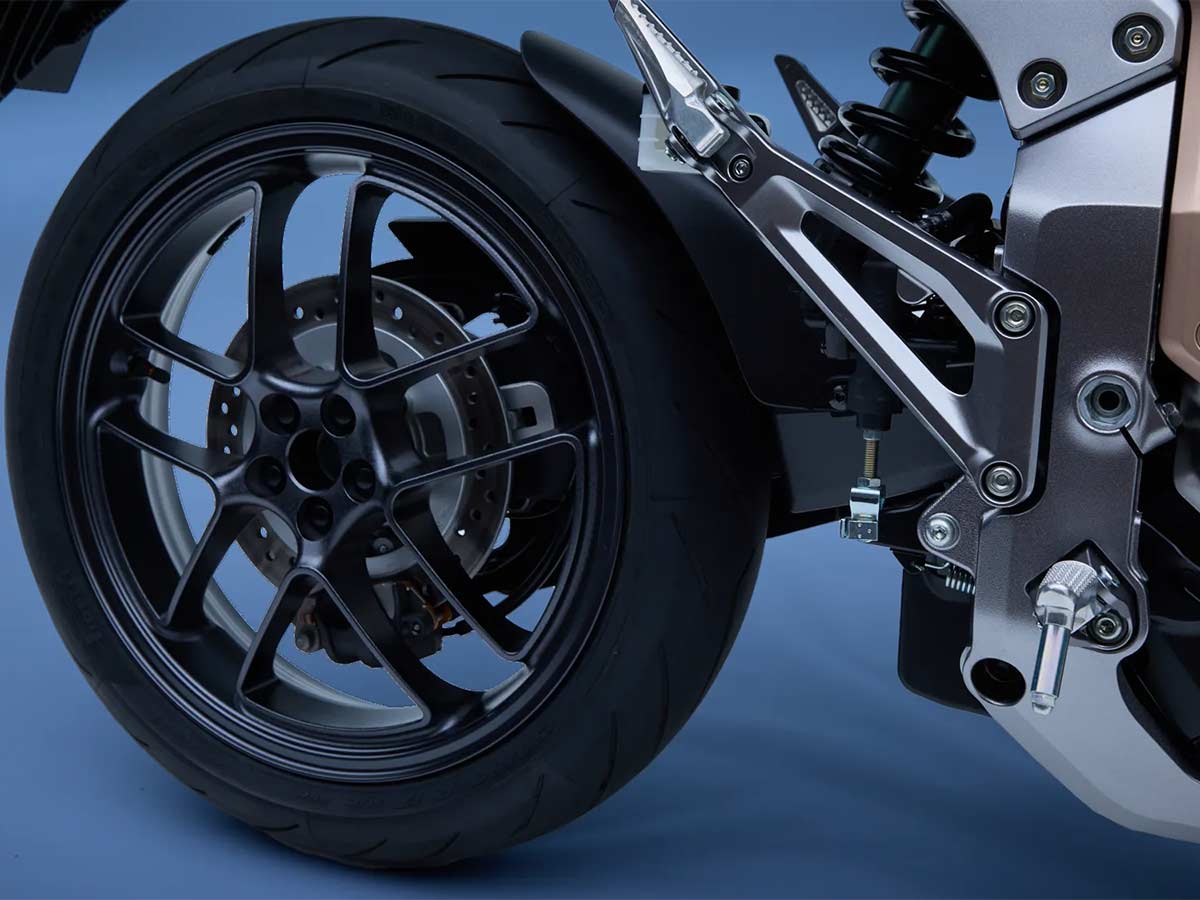
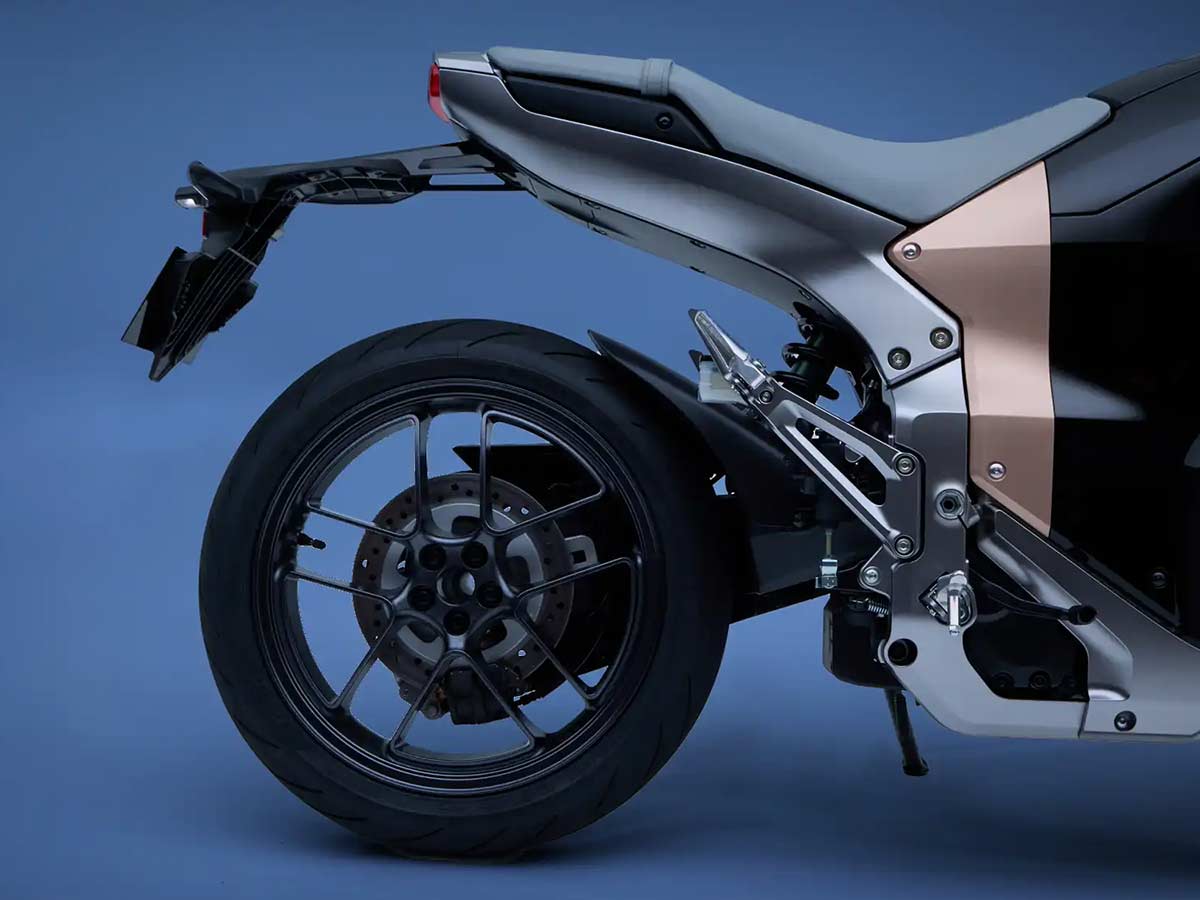
- The Pivot Bracket: This aluminum piece connects the motor and rear swingarm. It is fastened with a wide span to ensure rigidity but designed with an L-shape to allow subtle twisting forces during hard cornering.
Machined, Not Welded
Because the battery, head pipe, and swingarm are separate pieces bolted together, accuracy is critical. A variance of even 1mm would ruin the bike’s handling geometry. Traditional frames are welded, which introduces heat warping. For the WN7, Honda machines (cuts from solid metal) the mating surfaces of the head pipe and pivot bracket. This ensures aerospace-level precision that welding cannot match.

Powertrain: 1000cc Torque, 600cc Power
The Numbers
- Max Power: 50 kW (approx. 67 hp)
- Max Torque: 100 Nm (approx. 74 lb-ft)
- 0-60 mph: (Estimated) < 3.5 seconds
- Two output variants: 11 kW (11.2 kW) & 18 kW – In Europe, the 11 kW version will suit riders with an “A1” licence; the 18 kW version is for “A2” licence holders – good flexibility.
The “Torque Trap”
Don’t let the “67 hp” figure fool you. In the world of electrics, torque is king. The WN7 produces 100 Nm of torque – that is effectively the same as a Honda CBR1000RR Fireblade. Crucially, that torque is available at 1 RPM. On a gas bike, you need to rev to 10,000 RPM to feel the power. On the WN7, you twist, and you are gone. This makes it a weapon in city traffic, capable of gaps that other bikes can only dream of.
The Weight Balancing Act
Electric motors are heavy. To keep the bike agile, Honda used a transverse motor mounting.
- The motor shaft extends out to the right side of the bike.
- Power goes up through a “Triple Gear” transmission.
- It then crosses back to the left side to drive the belt. Why so complex? If they put everything on one side, the bike would constantly want to tip over. By placing the heavy triple-gear assembly on the right and the belt drive on the left, the WN7 achieves perfect lateral balance.
The Drive System: Silence Engineering
Belt vs. Chain
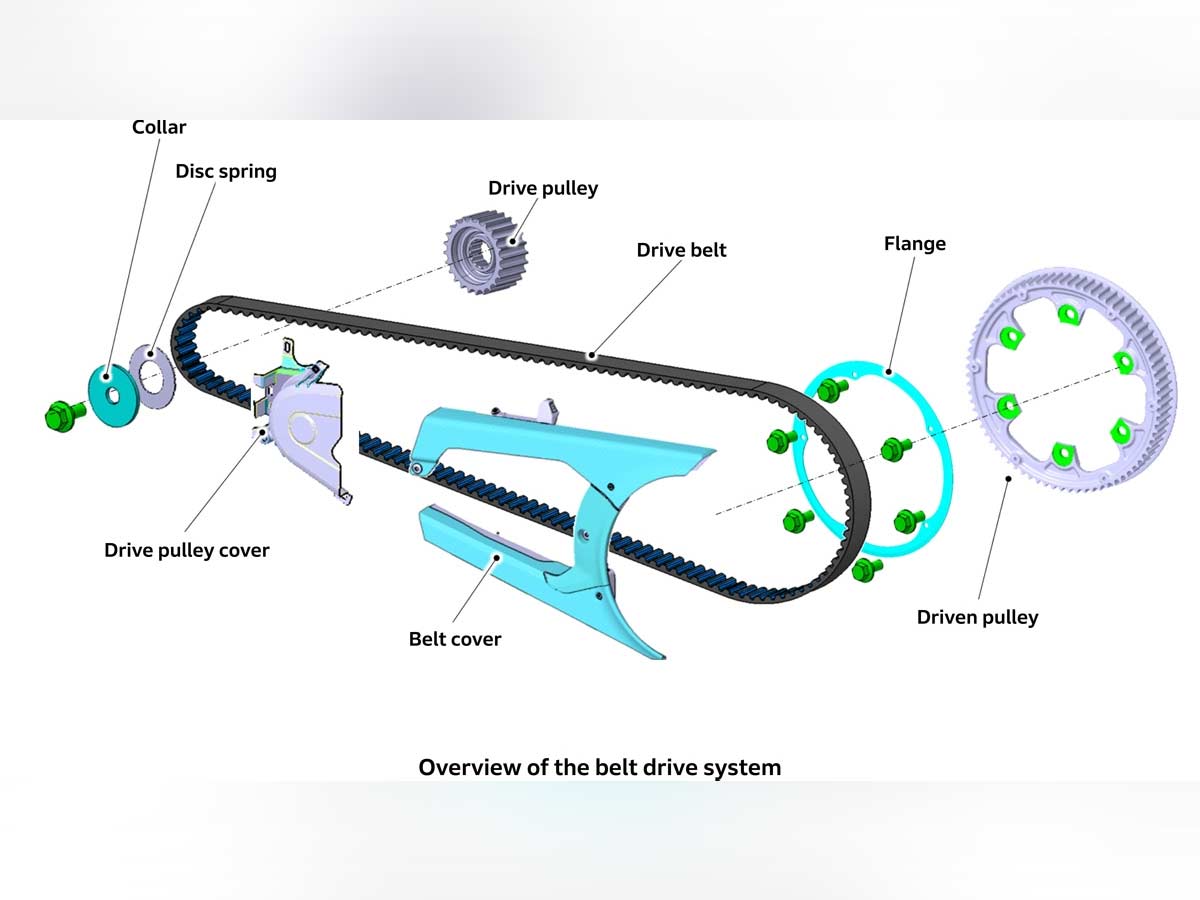
Honda ditched the traditional chain drive for a Carbon-Core Belt Drive.
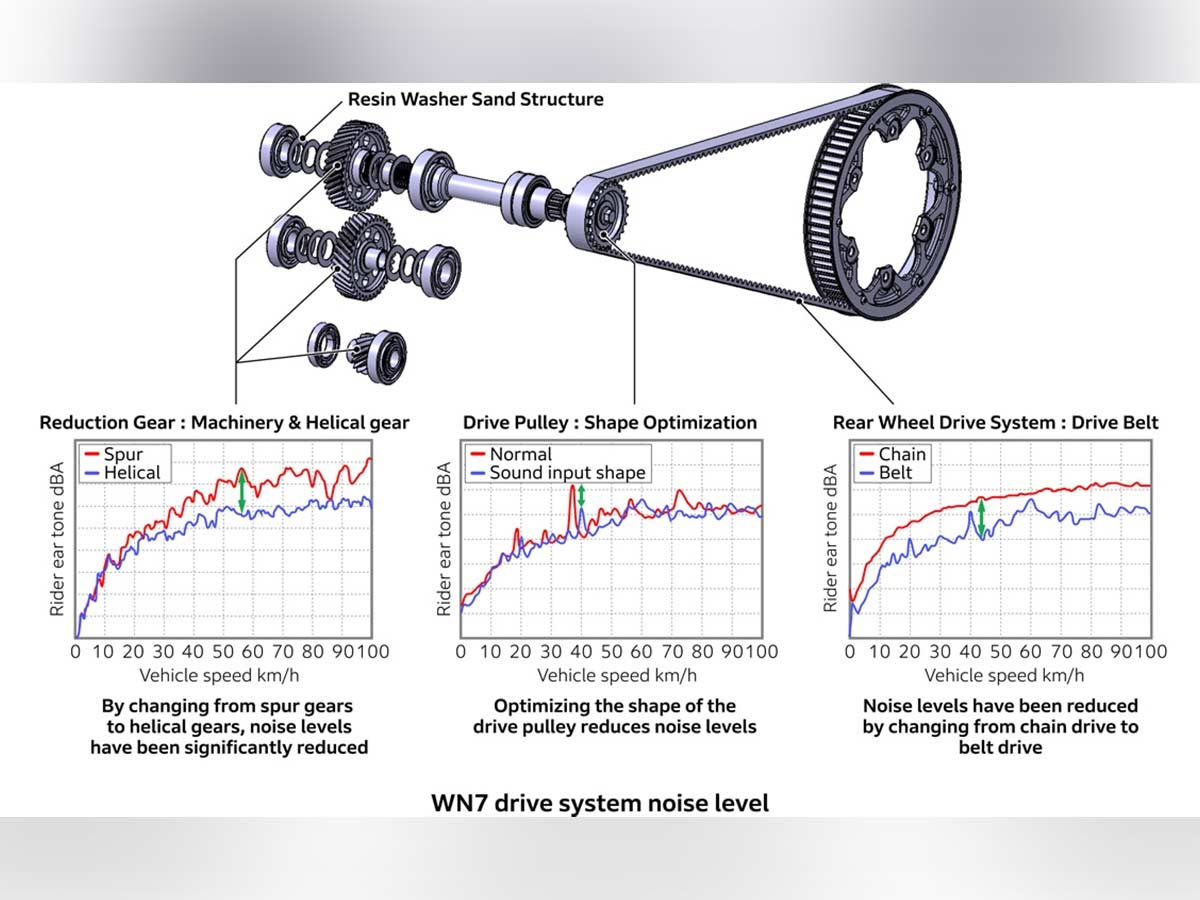
- Noise: Chains rattle as metal rollers hit metal sprockets. Belts are silent.
- Maintenance: Chains stretch and need oiling every 500 miles. Belts are maintenance-free and clean.
- Feel: Chains have “lash” (slack). Belts provide a direct, elastic connection between the motor and the wheel, smoothing out the jerky throttle response typical of powerful EVs.
Helical Gears
Inside the transmission, Honda swapped standard “spur” gears (straight teeth) for helical gears (angled teeth).
- Spur Gears: Efficient but loud (think of the whining noise in a race car).
- Helical Gears: The angled teeth slide against each other rather than banging together. This virtually eliminates the high-pitched “mosquito” whine that plagues many electric motorcycles.
Battery & Real-World Range
The Heart of the Beast
- Capacity: 9.3 kWh Lithium-Ion
- Cooling: Air-cooled case with internal thermal management (assumed based on “fins” discussion, though motor is water-cooled).
Range Reality
- WMTC Claimed Range: 140 km (87 miles) This figure is achieved in mixed city/highway testing.
- Real World: Expect closer to 100-120 km if you are riding aggressively.
- Is it enough? For a city commuter or weekend canyon carver? Yes. For a cross-country tourer? No. This is a focused tool for specific missions.
Charging Ecosystem
- CCS2 Fast Charging: The game changer. 20% to 80% takes just 30 minutes. This means a lunch break gets you a full tank.
- Home Charging (Type 2 / 200V): 0% to 100% in 2.4 hours. You will wake up to a full charge every single morning.
Rider Ergonomics & Interface
The “Slim” Factor
Because there is no frame wrapping around the battery, the WN7 is incredibly narrow between the knees.
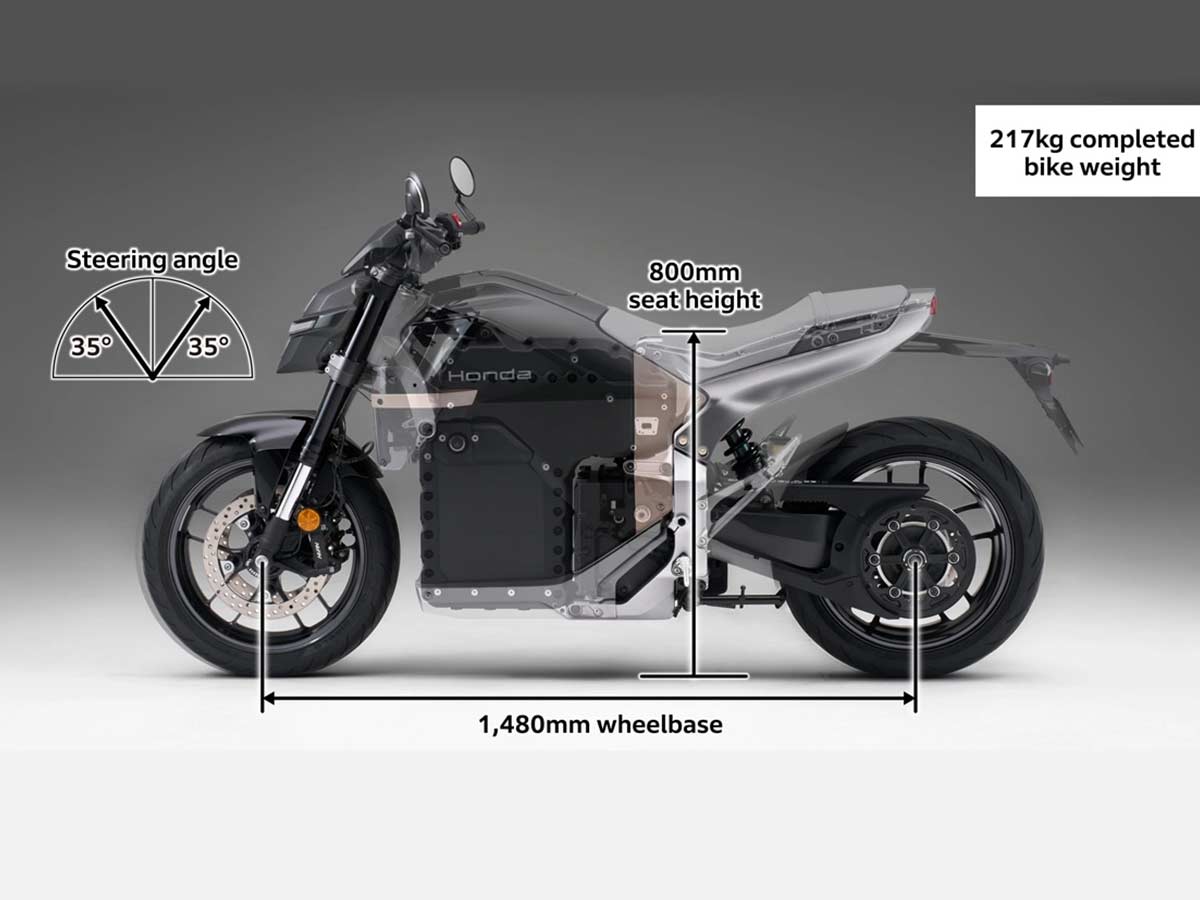
- Seat Height: 800mm (Accessible for most riders).
- The Stance: The seat is longer than usual, allowing you to slide back for a tuck or sit forward for control.
- Footing: The slim “waist” of the bike means even shorter riders can get their feet flat on the ground comfortably.
The Cockpit
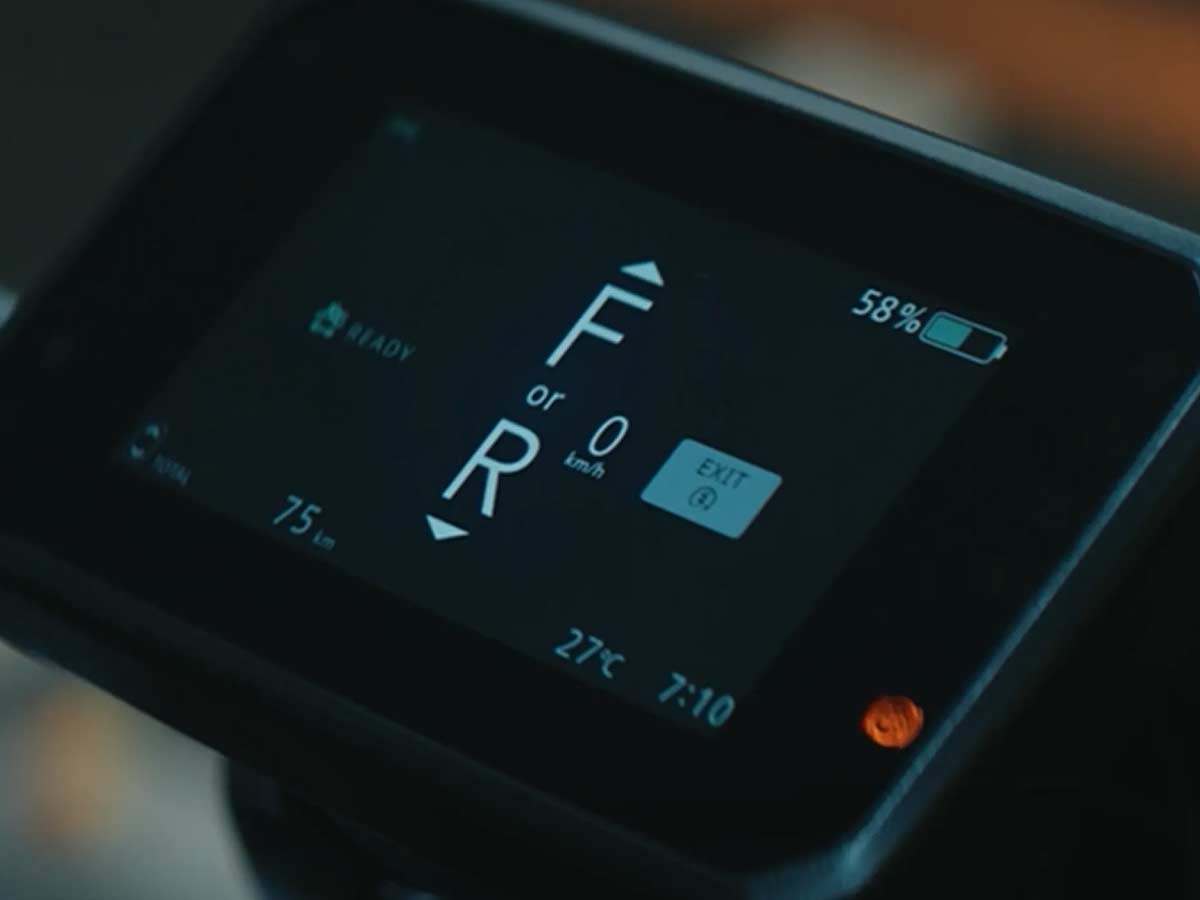
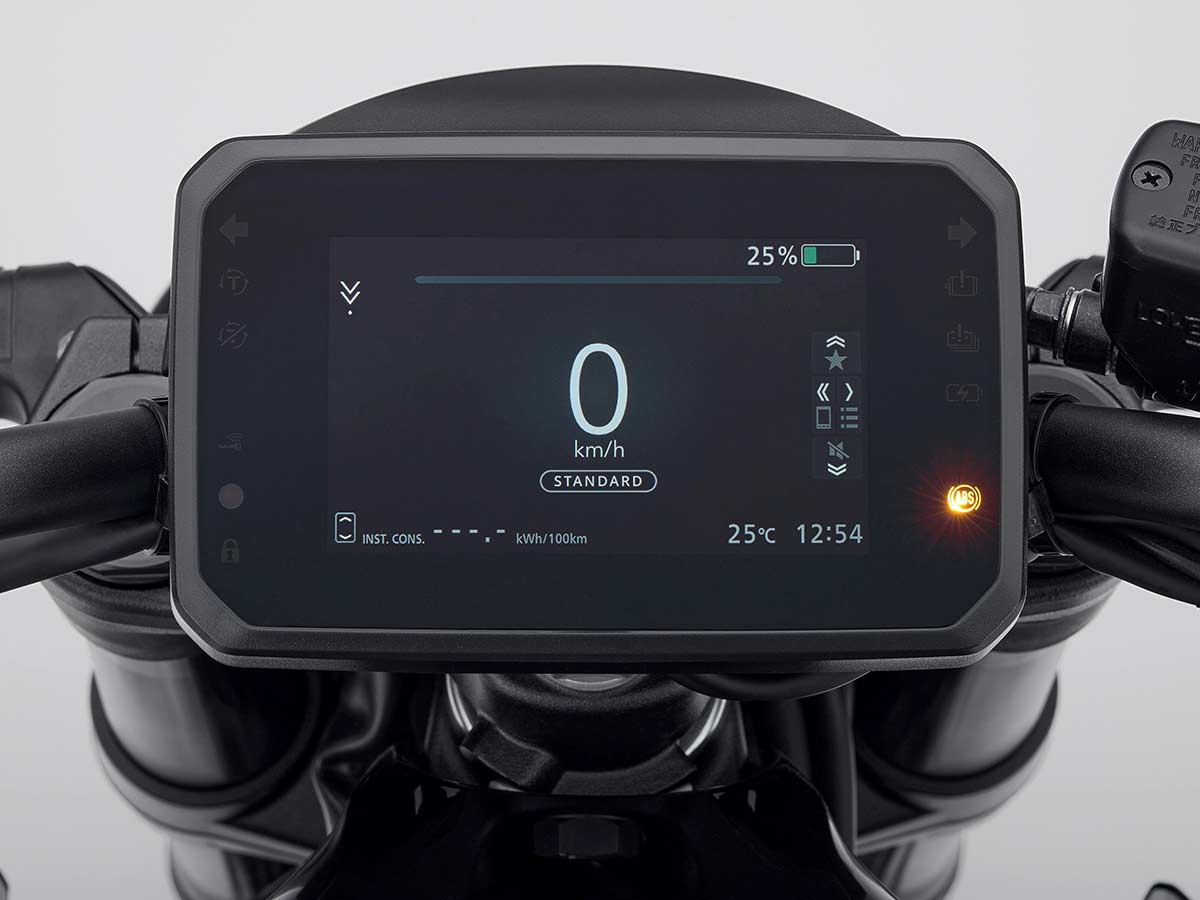
- Display: A high-contrast TFT screen bonded directly to the glass (no air gap) for glare reduction.
- No Tachometer: Since an electric motor has no “redline” in the traditional sense, the tachometer is gone. Instead, you get a “Power Bar” that grows as you twist the throttle.
- Sport Mode Easter Egg: Switch to Sport Mode, and the display morphs into a circular, analog-style gauge, paying homage to Honda’s racing heritage.
- Mirrors: Bar-end mirrors are standard. This isn’t just for style; it lowers the visual profile of the bike, keeping your field of view wide and unobstructed.
Electronics: The Invisible Hand
Deceleration Power Selector (DPS)
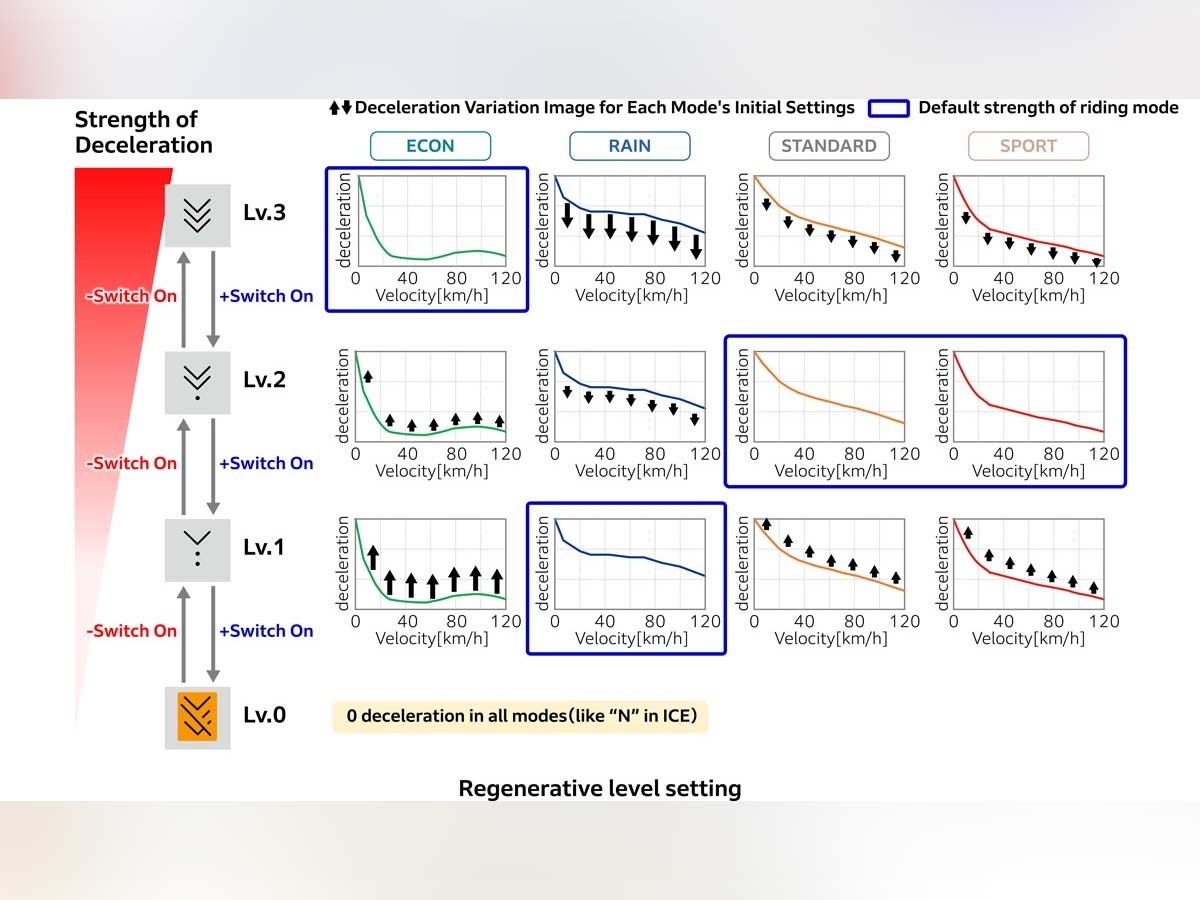
This is Honda’s answer to “Engine Braking.” On the left handlebar, you have a paddle shifter. It doesn’t shift gears; it shifts regeneration levels.
- Level 0 (Coast): The bike rolls freely like a bicycle.
- Level 1 (Rain): Gentle drag, good for slippery surfaces.
- Level 2 (Standard): Feels like a standard gas bike closing the throttle.
- Level 3 (Sport): Heavy drag. You can ride winding roads almost entirely without touching the brake lever.
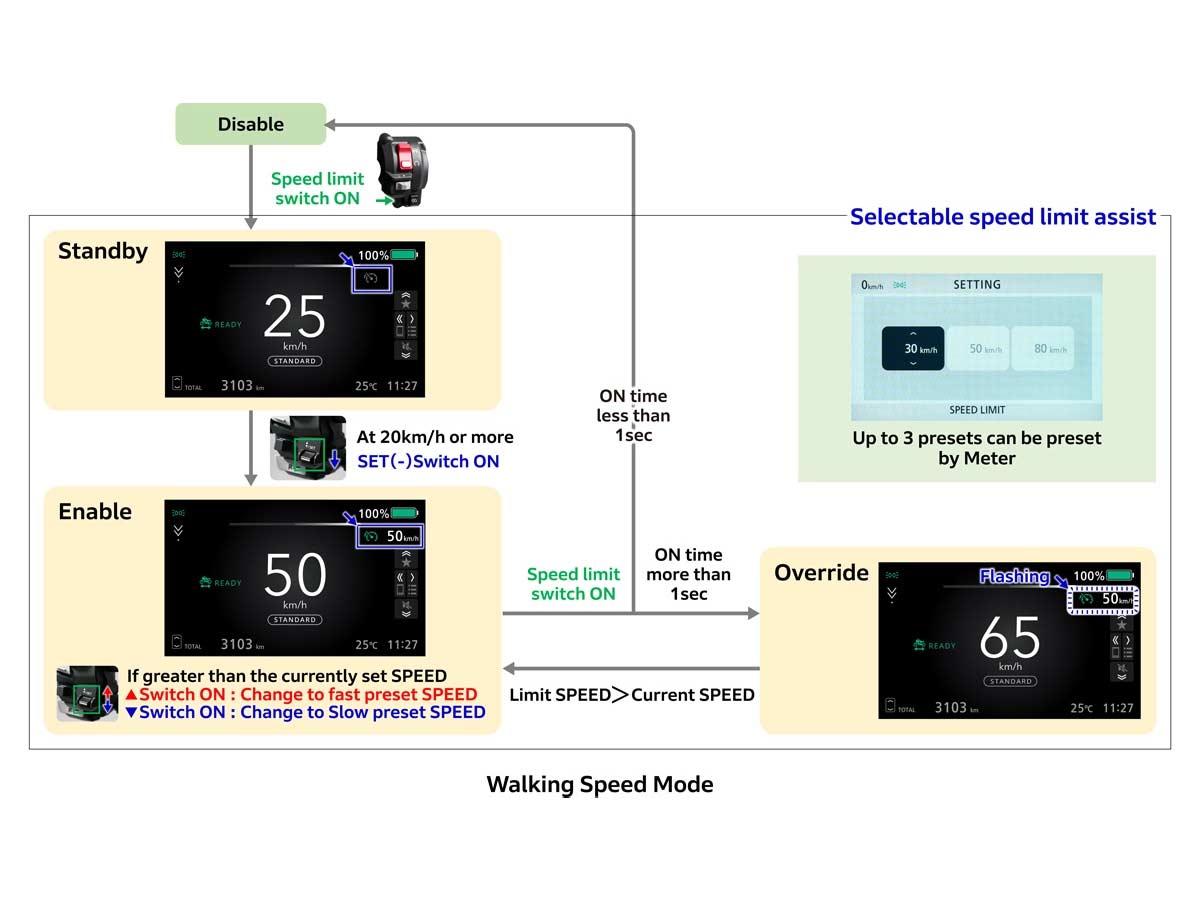
Walking Speed Mode
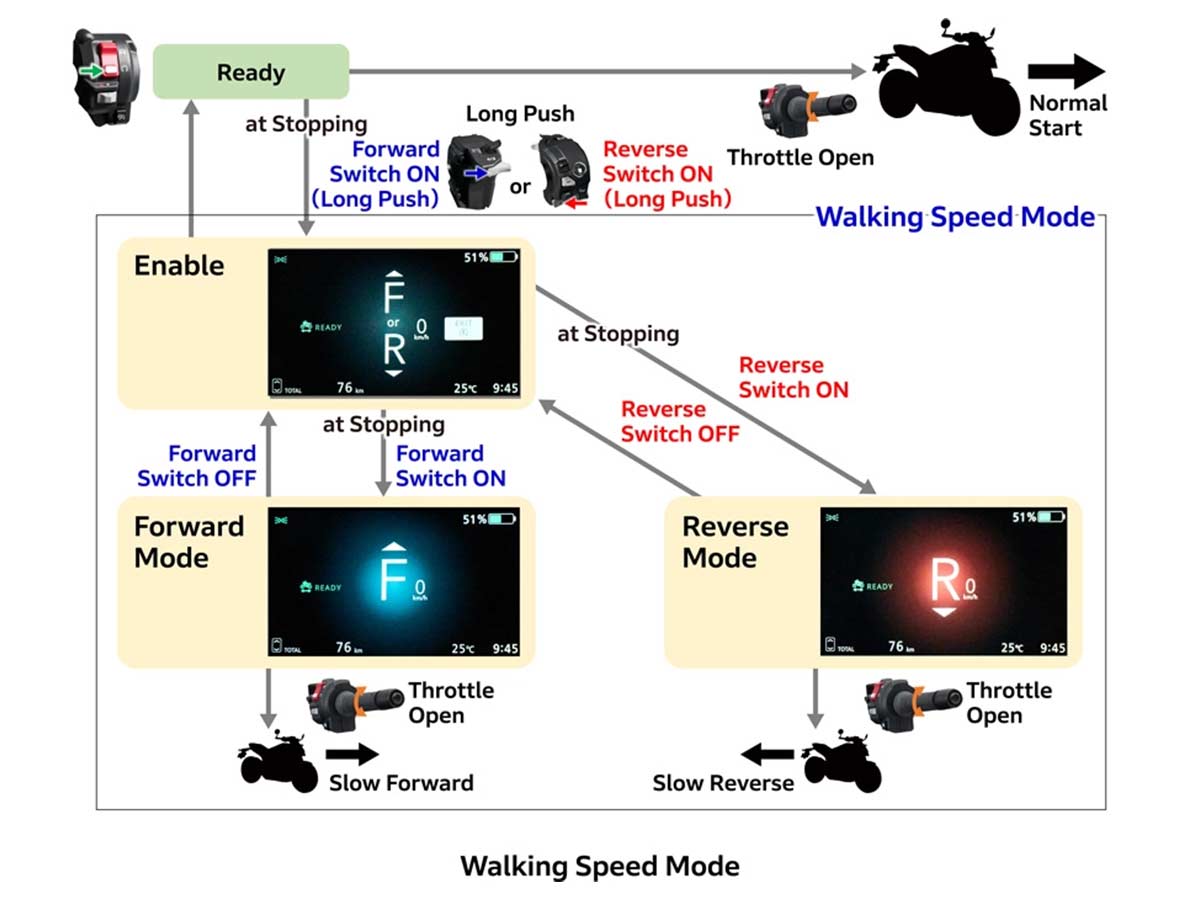
A 217kg bike can be heavy to move in a parking spot. The WN7 features a dedicated maneuvering mode:
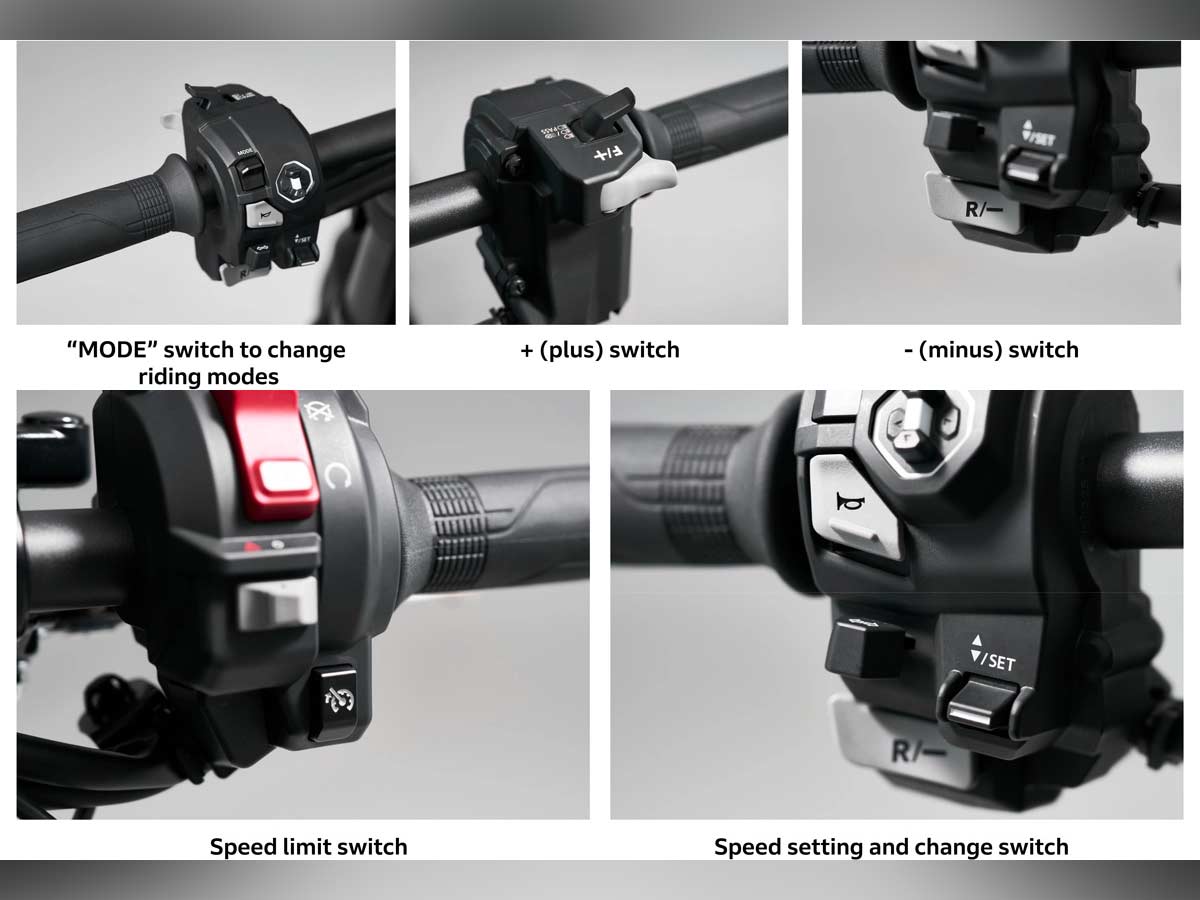
- Hold the “+” button: Bike creeps forward at walking pace.
- Hold the “-” button: Bike creeps backward. You control the speed with the throttle, giving you precise control when parking on inclines.
Selectable Speed Limit Assist
Designed for Europe’s strict speed cameras.
- Entering a 30 km/h zone? Tap a button, and the bike physically refuses to go faster than 30 km/h.
- Need to overtake? Smash the throttle or hold the button to override it instantly.
Full Specifications Table
| Category | Feature | Details |
| Powertrain | Motor Type | Water-Cooled, Interior Permanent Magnet (IPM) |
| Max Power | 50 kW (67 HP) | |
| Max Torque | 100 Nm | |
| Transmission | Single Speed, Triple-Gear Reduction | |
| Final Drive | Carbon-Core Belt Drive | |
| Battery | Capacity | 9.3 kWh |
| Range (WMTC) | 140 km (87 miles) | |
| Fast Charging | CCS2 (20-80% in 30 mins) | |
| AC Charging | Type 2 (0-100% in 2.4 hrs) | |
| Chassis | Frame Type | Frameless (Battery Stress Member) |
| Front Suspension | Inverted Telescopic Fork | |
| Rear Suspension | Monoshock with Pro-Link | |
| Swingarm | Single-Sided Aluminum | |
| Dimensions | Curb Weight | 217 kg (478 lbs) |
| Seat Height | 800 mm | |
| Wheelbase | 1480 mm | |
| Tech | Modes | ECON, STANDARD, SPORT, RAIN |
| Key Features | Reverse Gear, Walking Mode, Regen Paddles |
A New Chapter for Riding
The Honda WN7 is a triumph of engineering over convention. It proves that an electric motorcycle doesn’t have to be a soulless appliance. By focusing on the “Wind” – the sensory joy of movement – Honda has created a machine that offers a purer, more distilled riding experience than perhaps any gas bike ever could.
It is not a replacement for your touring bike. It is a replacement for your adrenaline.
Launch Date: Late 2025 Production: Kumamoto Factory, Japan Price: TBD (Expected premium pricing due to materials and tech).