



















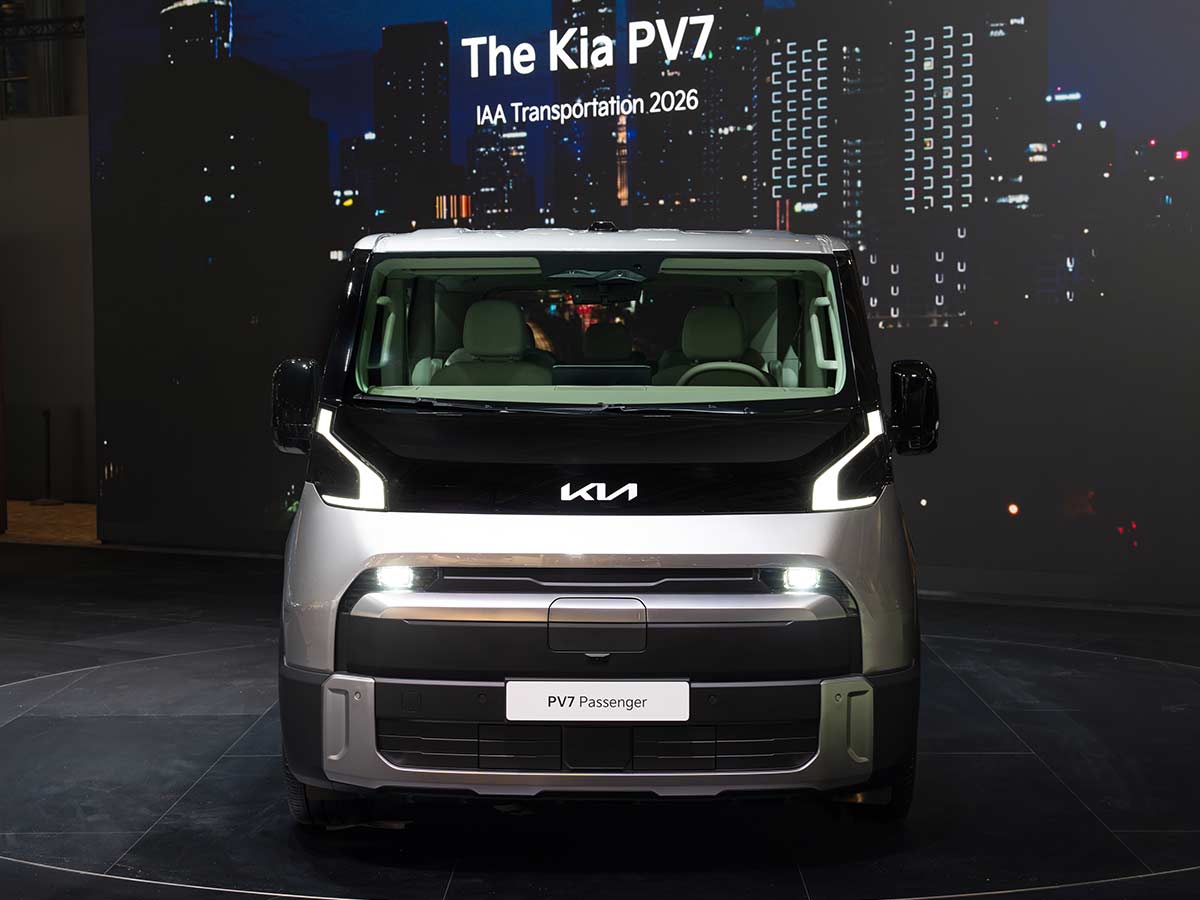
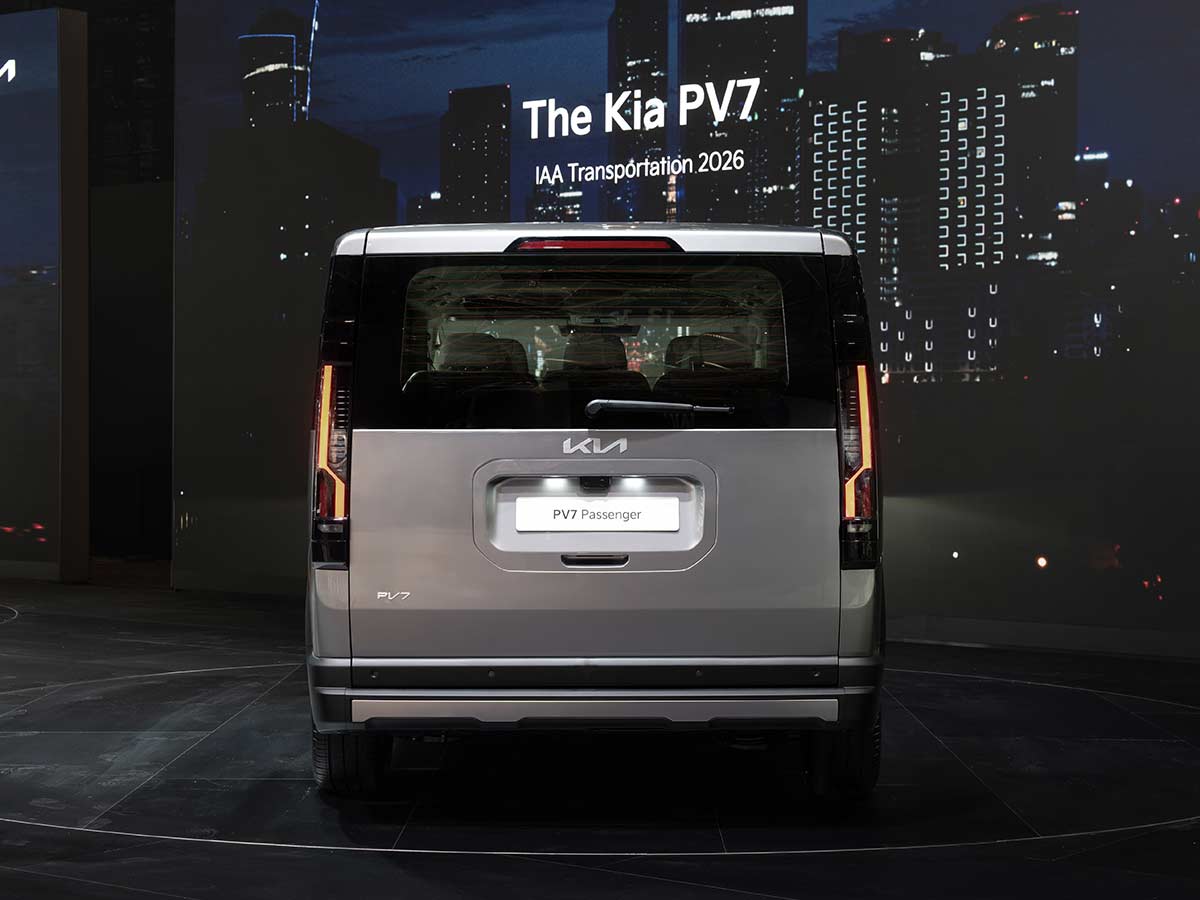
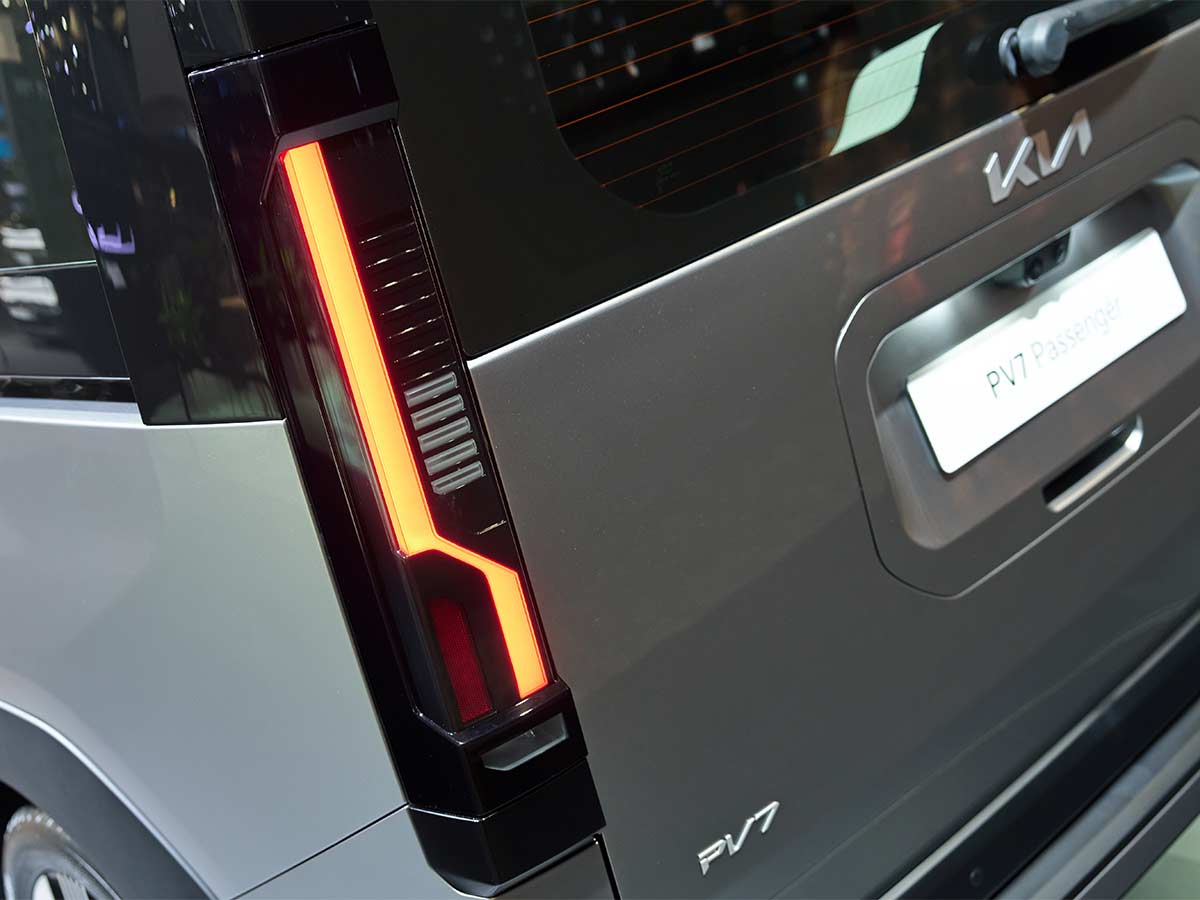
Kia has expanded its electric commercial-vehicle strategy with the new PV7, a larger Platform Beyond Vehicle (PBV) model designed to serve both cargo and passenger applications. Unveiled at IAA Transportation 2026 in Hanover, the PV7 combines a dedicated electric-vehicle architecture, flexible body configurations, two battery sizes and a range of fleet-focused technologies.
The PV7 will be offered in Cargo and Passenger forms, with Kia planning its launch in Korea and Europe in the second half of 2027. The company says the wider programme will eventually grow to 23 PV7 variants, including additional body styles and conversion models.
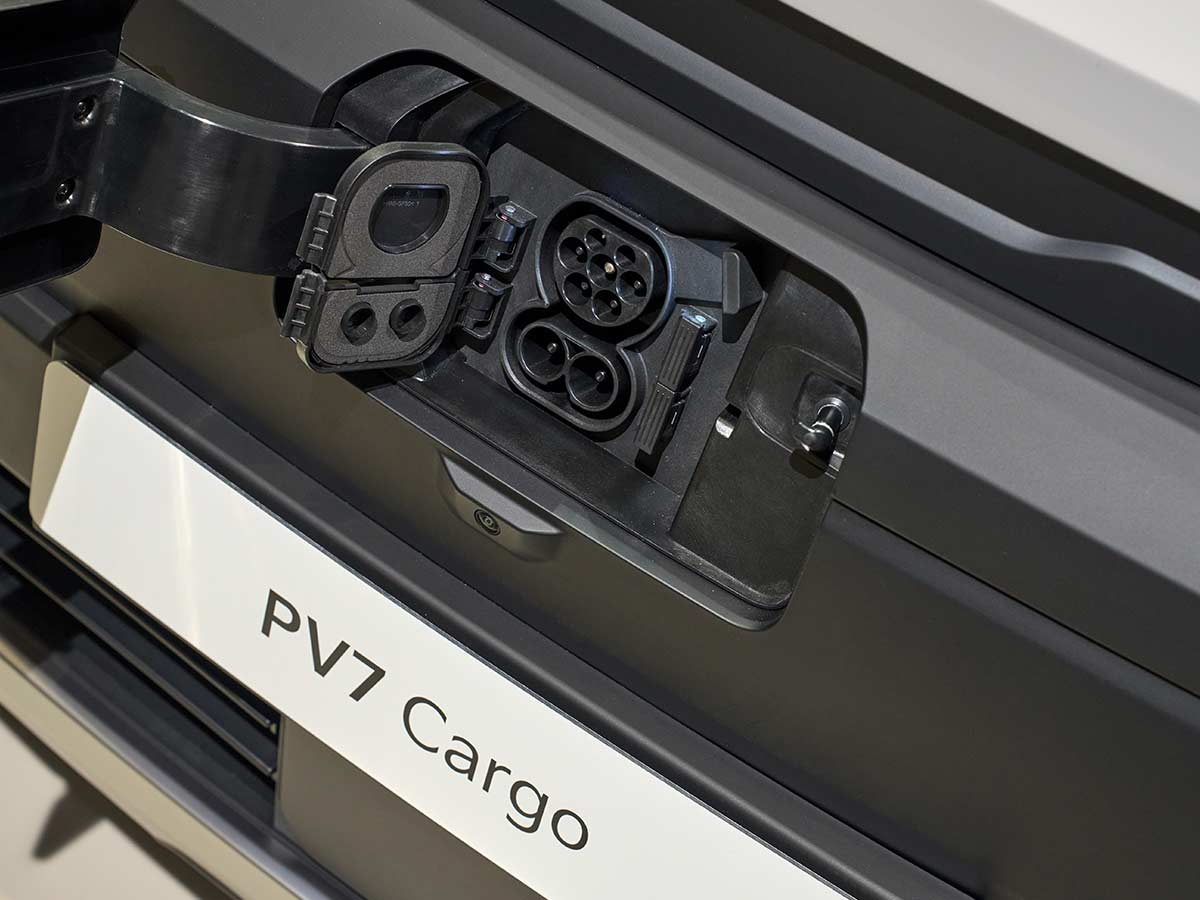
The headline numbers are significant for an electric van: battery capacities of 71.5kWh and 96.2kWh, up to 200kW of power and 420Nm of torque, an 800V electrical architecture and more than 460km of targeted WLTP range for the long-range Cargo version.
But the PV7 is about more than battery capacity. Kia has designed it around a business-use case in which loading height, payload, charging downtime, vehicle uptime, cabin access and fleet management can matter just as much as outright range.
>>> Great Discounts on Car & Bike Accessories <<<
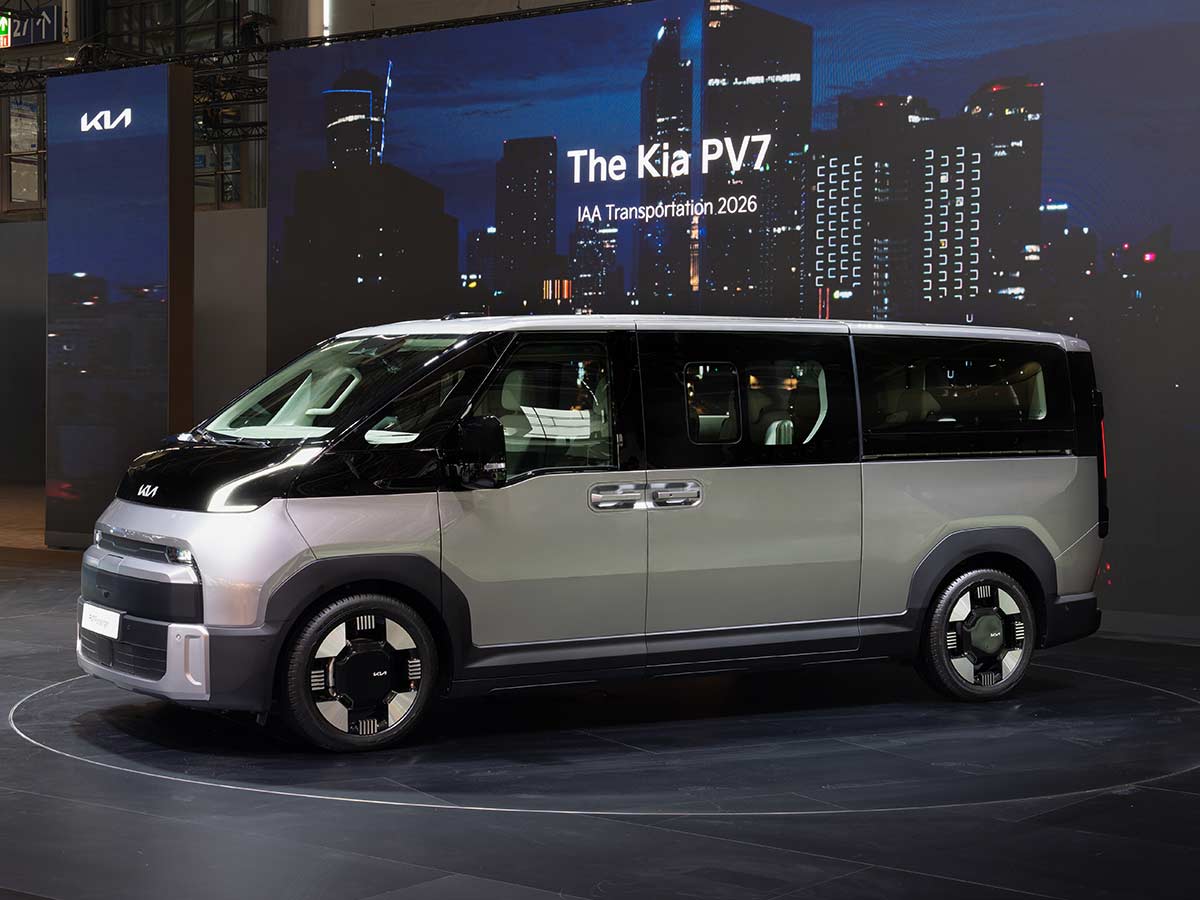
What is the Kia PV7?
The Kia PV7 is the second model in Kia’s dedicated all-electric PBV family, following the Kia PV5. It is positioned as a larger and more capable vehicle for commercial operators, logistics companies, shuttle services, passenger transport and other applications requiring substantial interior volume.
Unlike a conventional van that is developed primarily around a fixed body configuration, Kia’s PBV strategy treats the underlying vehicle as a platform for multiple applications. The Kia PV7 uses the company’s E-GMP.S architecture and Flexible Body System, allowing different body styles, derivatives and conversion vehicles to be developed from a standardised vehicle structure.
That approach is particularly relevant to commercial customers. A delivery company, airport shuttle operator and specialist conversion business may have completely different requirements, even though all three need a large electric vehicle.
Kia’s stated plan is to address those differences with a combination of hardware, software and services rather than simply offering one van in several trim levels.
Kia PV7 specifications at a glance
| Specification | PV7 Passenger Long | PV7 Cargo Long |
|---|---|---|
| Battery options | 71.5kWh / 96.2kWh | 71.5kWh / 96.2kWh |
| Drive | Front-wheel drive | Front-wheel drive |
| Maximum power | Up to 200kW | Up to 200kW |
| Maximum torque | Up to 420Nm | Up to 420Nm |
| Length | 5,350mm | 5,350mm |
| Width* | 1,995mm | 1,995mm |
| Height** | 1,990mm | 1,990mm |
| Wheelbase | 3,500mm | 3,500mm |
| Targeted long-range capability | Market/configuration dependent | More than 460km WLTP target |
| Maximum cargo volume | Not applicable | Up to 6.1m³ Long / 8.0m³ High Roof |
| Maximum payload | Configuration dependent | Up to 1,165kg Long / 1,200kg Compact |
* Excluding exterior mirrors and door handles. Including door handles, Kia quotes 2,030mm.
** Excluding antenna.
These are preliminary figures. Kia says final specifications, equipment and performance can change following testing, homologation and market-specific certification.
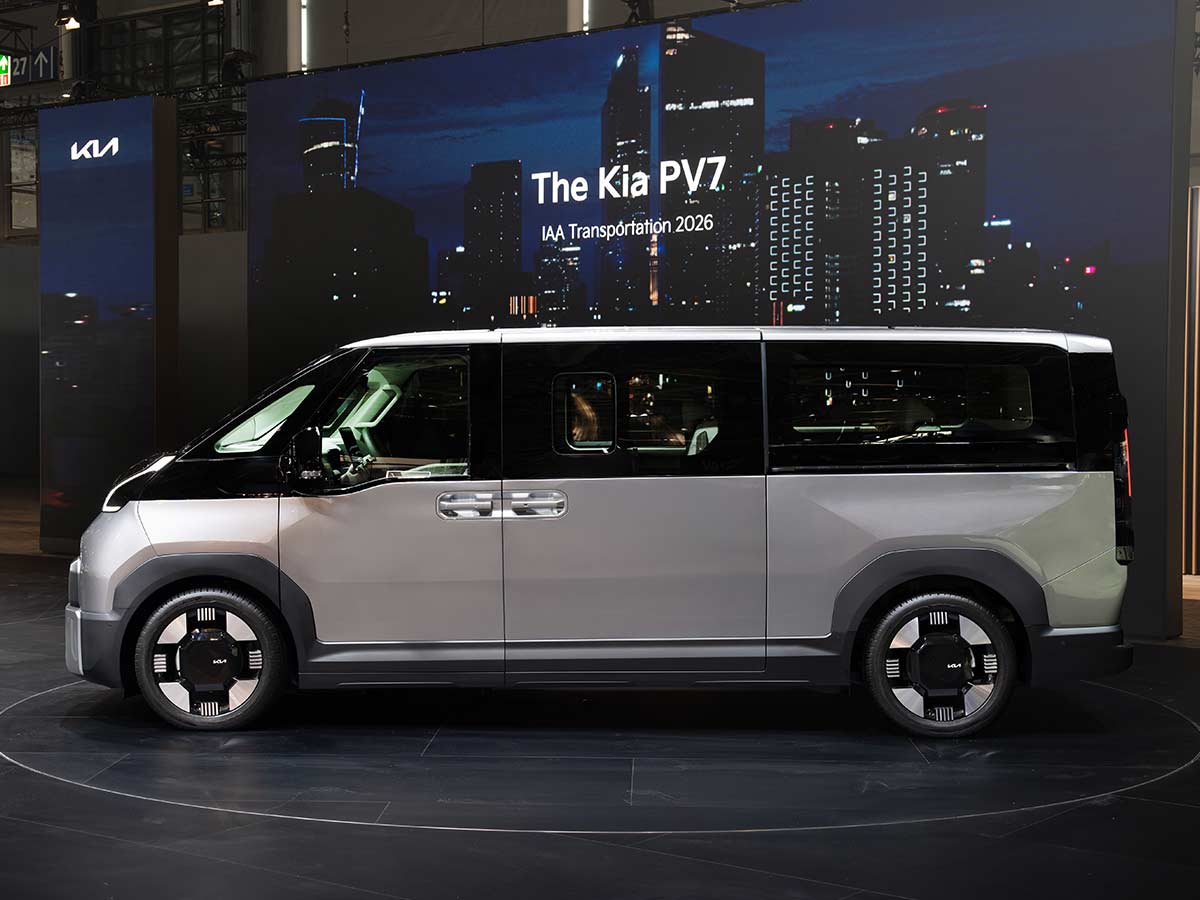
Two batteries, one 800V electrical architecture
The Kia PV7 will use nickel-cobalt-manganese (NCM) battery packs with capacities of 71.5kWh and 96.2kWh.
The larger battery is the key option for operators covering longer daily routes. Kia is targeting more than 460km of WLTP range for the Long Range Cargo version. That figure should not be interpreted as a guaranteed real-world distance. Actual range depends on factors including speed, temperature, terrain, payload and the use of heating or air conditioning.
The distinction matters more in a commercial vehicle than it does in many passenger cars. A delivery van carrying several hundred kilograms of cargo can have very different energy consumption from the same vehicle travelling empty. Kia therefore includes a dedicated heavy-load driving mode for the PV7 Cargo, designed to adapt vehicle behaviour to changing payload conditions.
The electrical architecture is another important part of the equation.
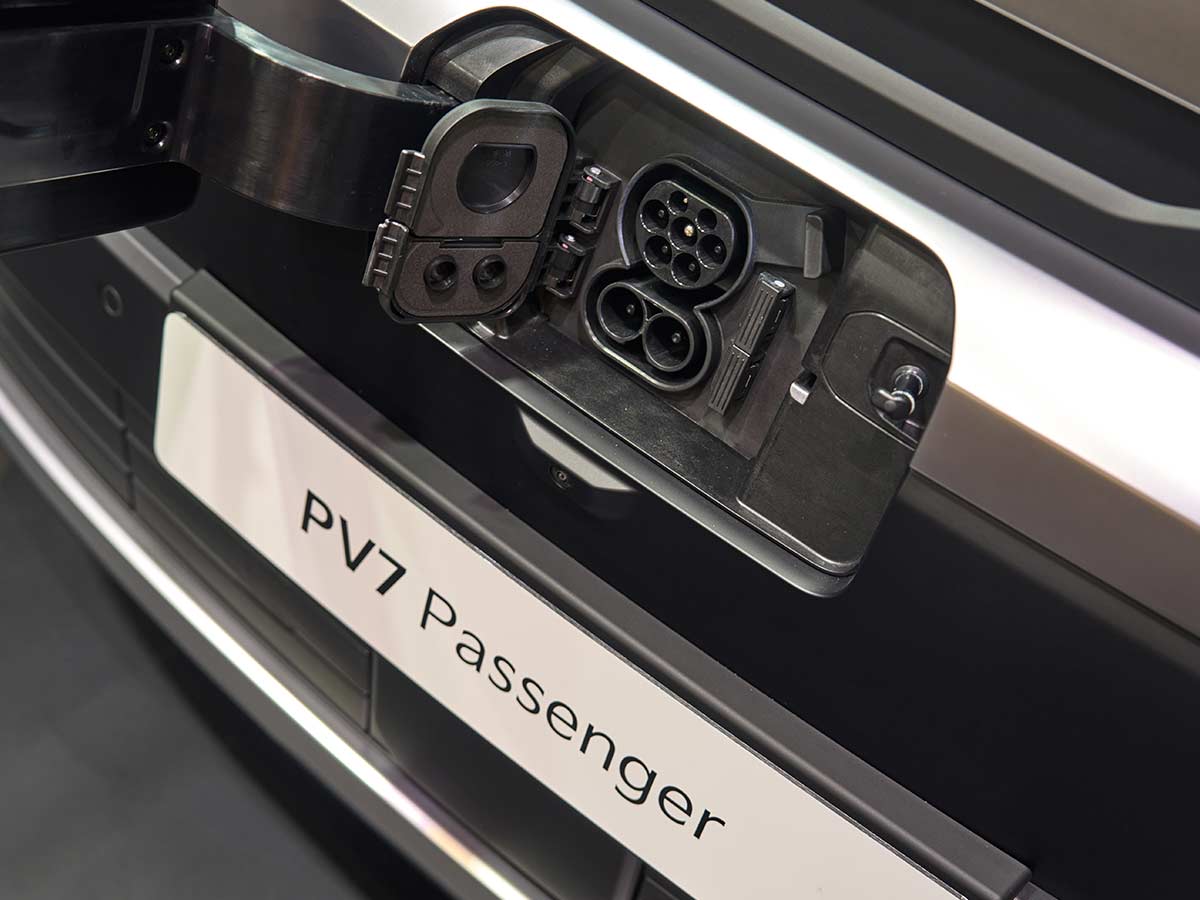
The PV7 uses an 800V system, allowing high-power DC charging. Kia says a 350kW DC fast charger can replenish the battery from 10 to 80 percent in the mid-20-minute range, based on its internal testing. The company’s European material currently describes the target as roughly 25 minutes, although final figures remain subject to certification and market specification.
For a commercial fleet, charging speed is not simply a convenience feature. A van that spends less time stationary can potentially spend more of its operating day on productive work. Actual benefit, however, will depend on charger availability, site electrical capacity, charging tariffs and the vehicle’s operating schedule.
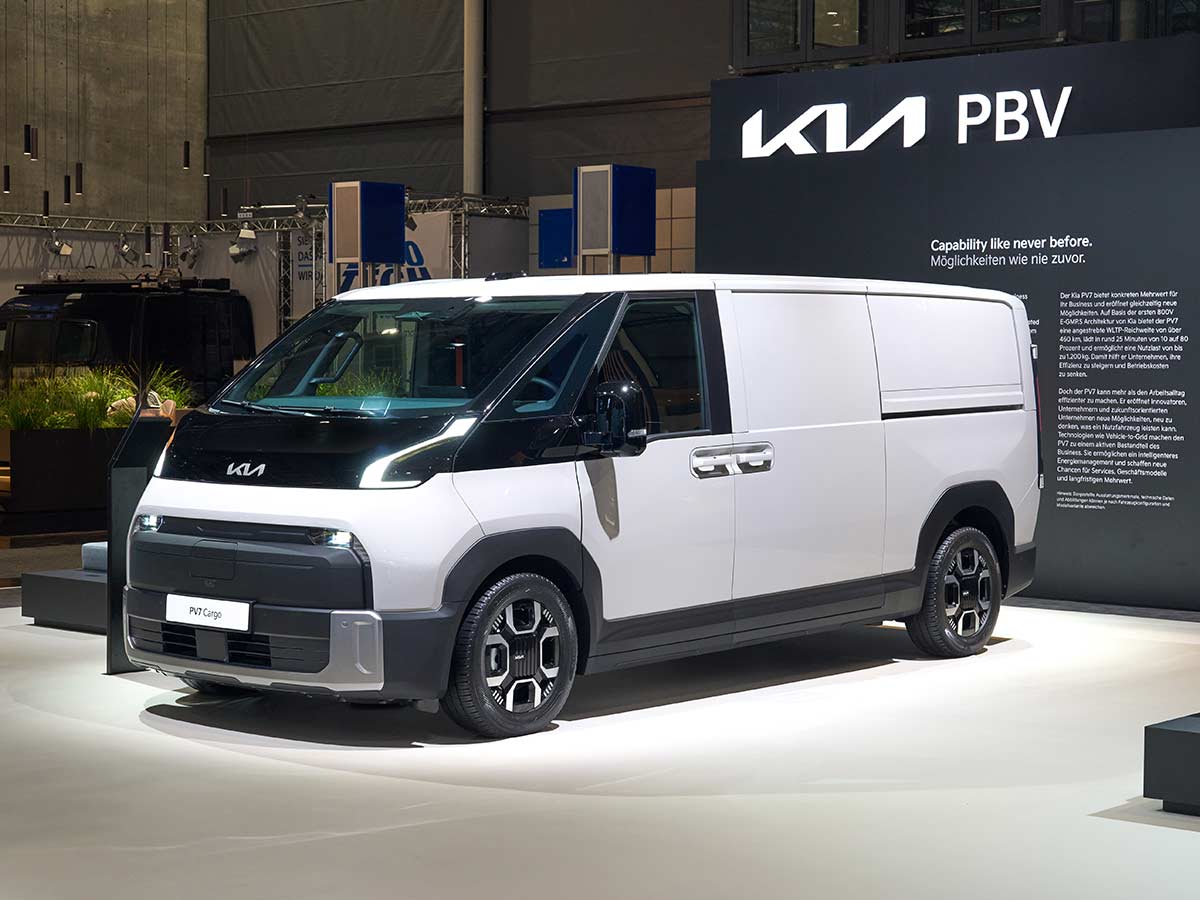
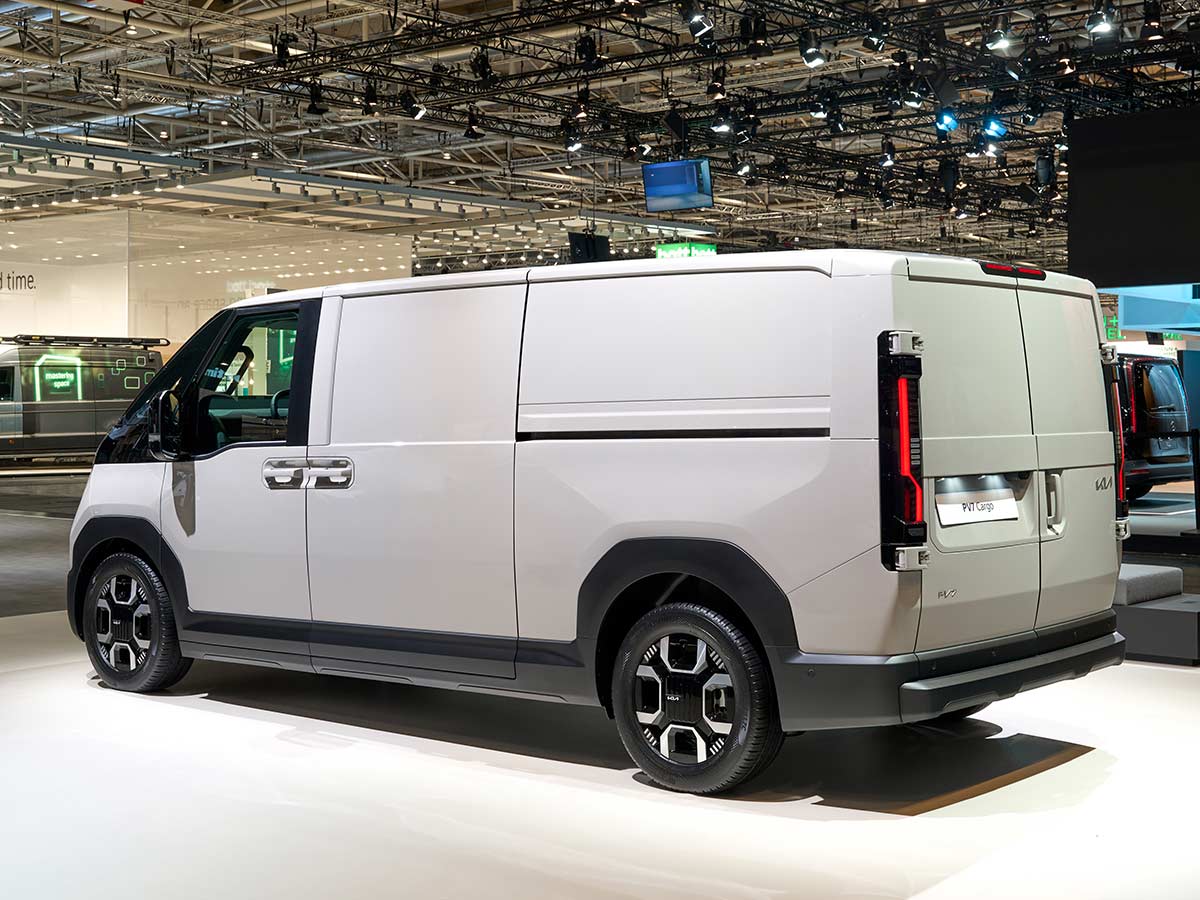
The Kia PV7 Cargo is built around loading efficiency
The Cargo version illustrates where the PV7’s engineering priorities differ from those of a passenger EV.
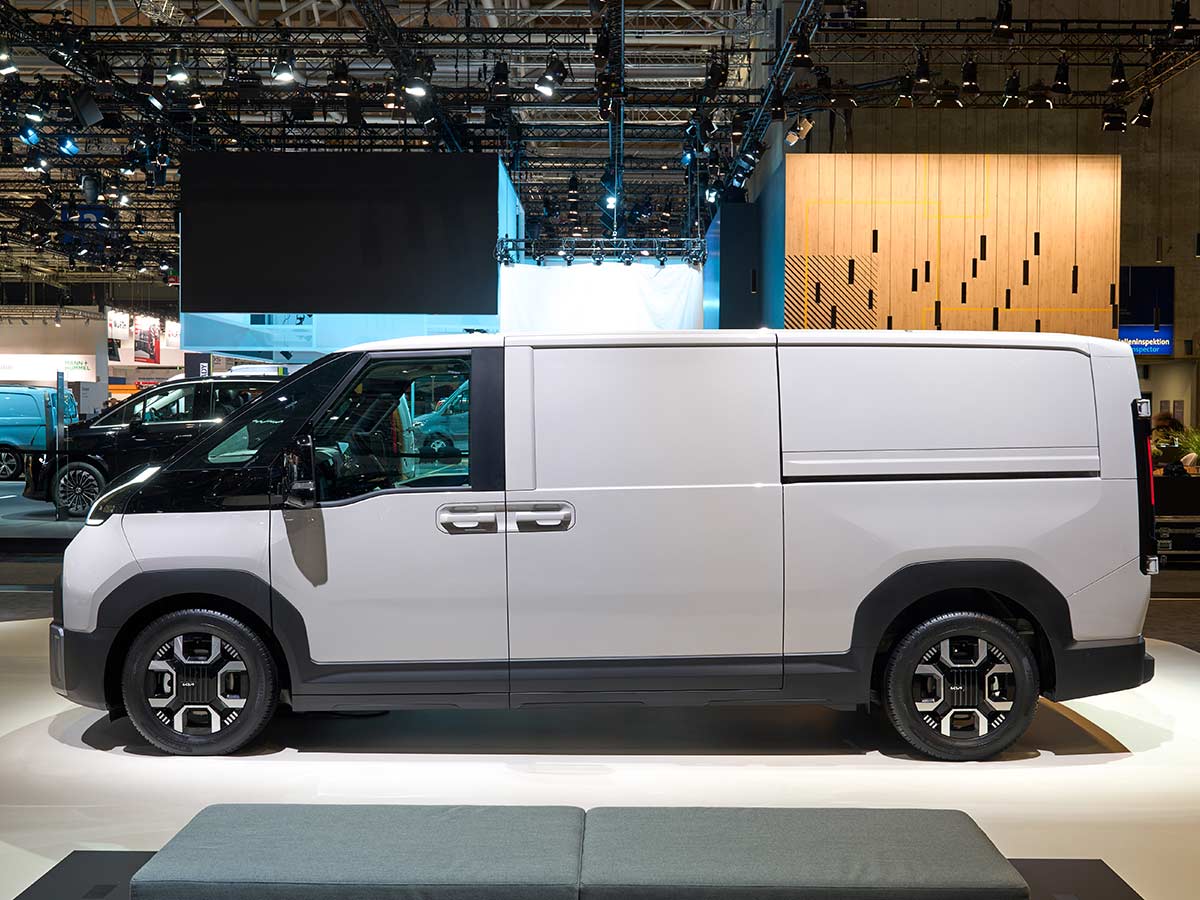
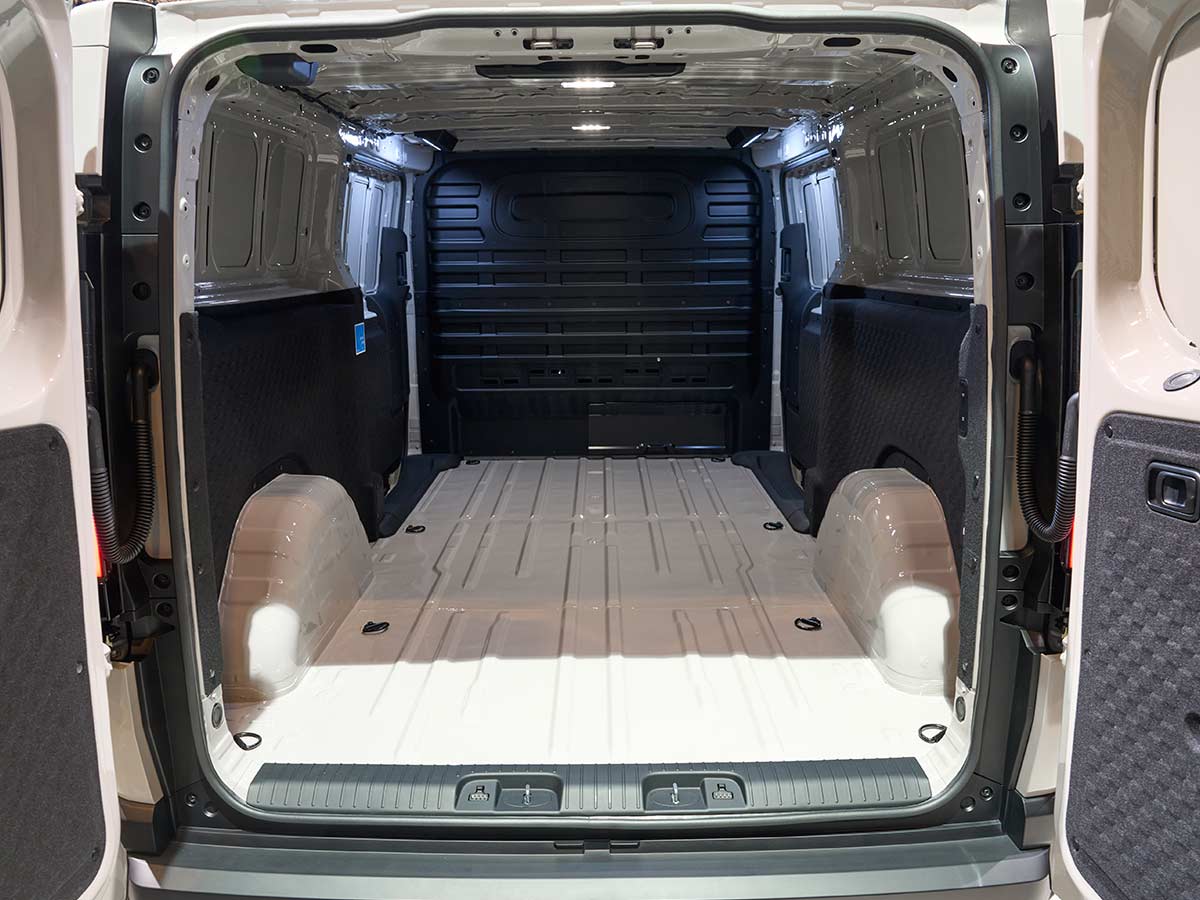
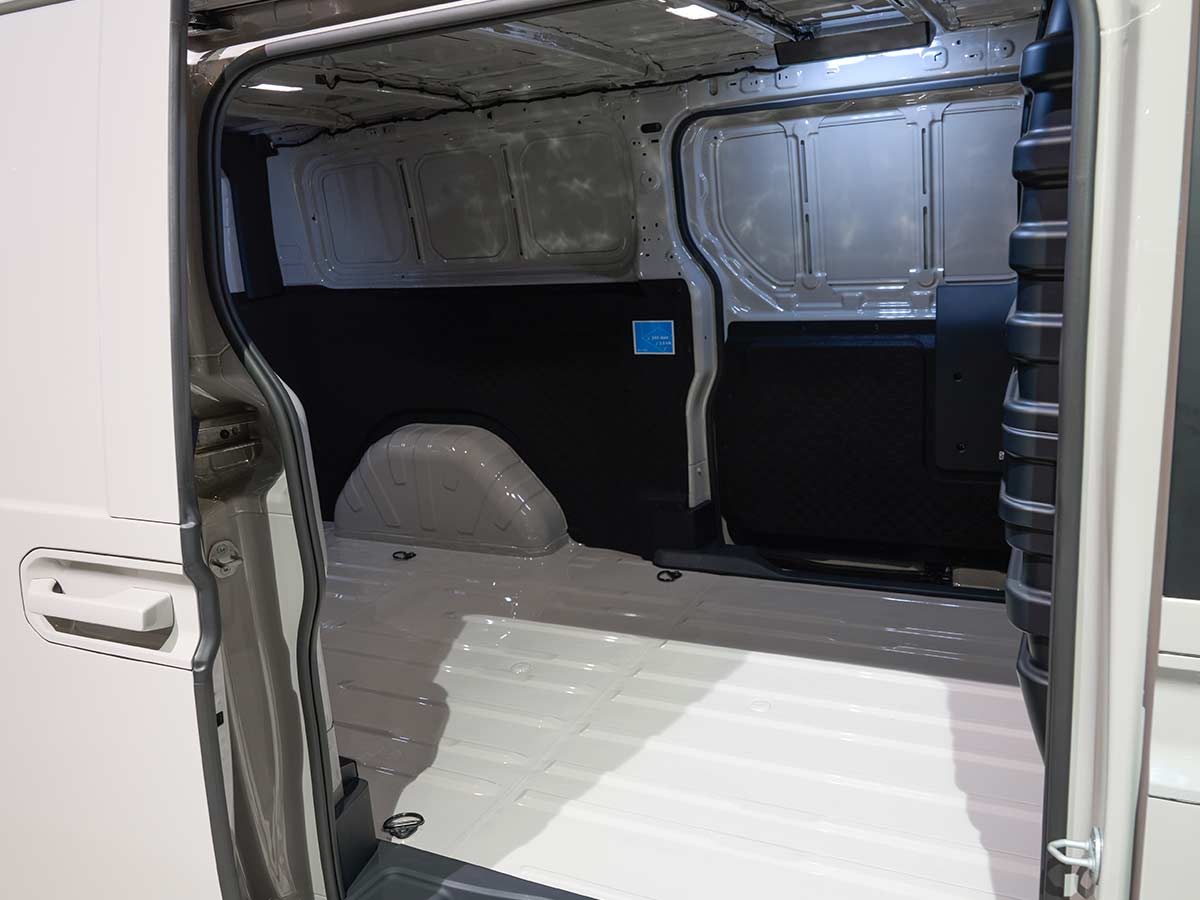
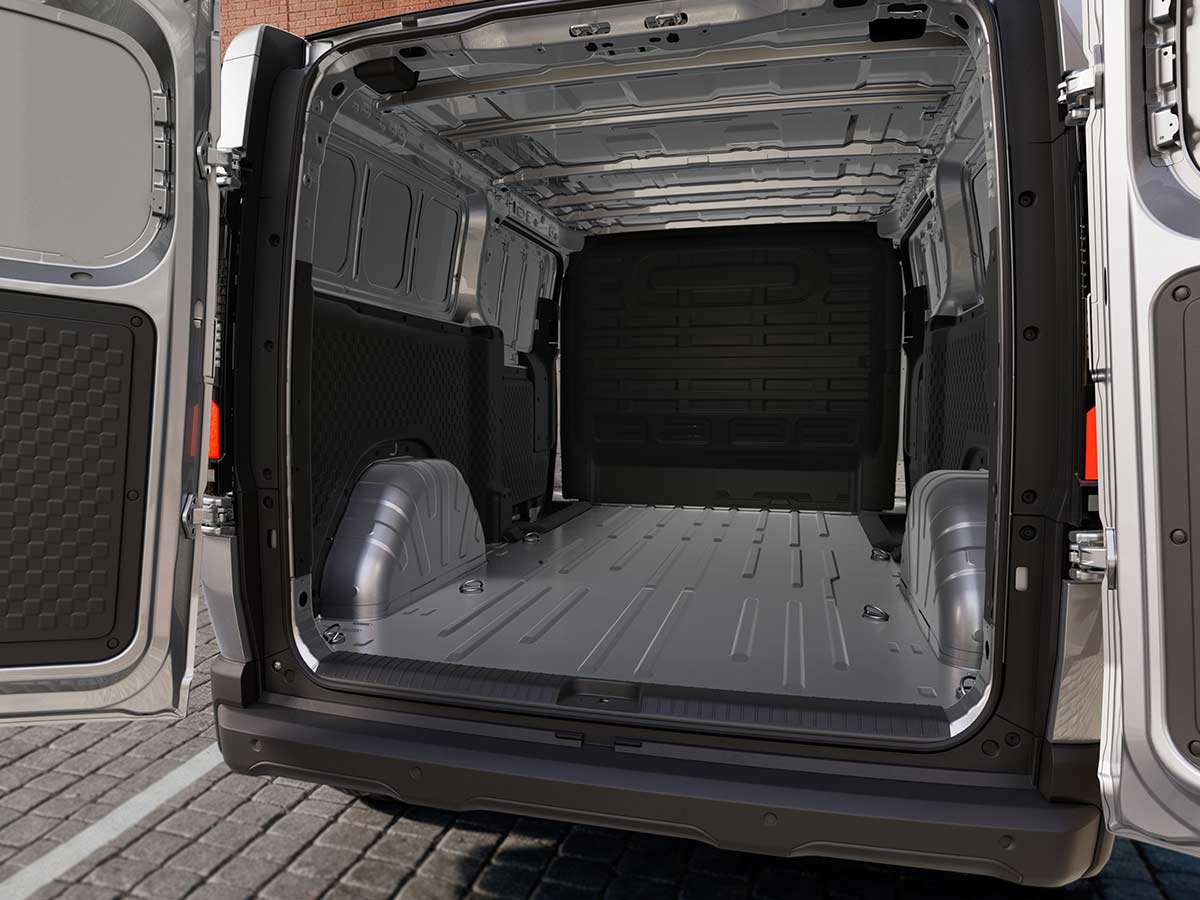
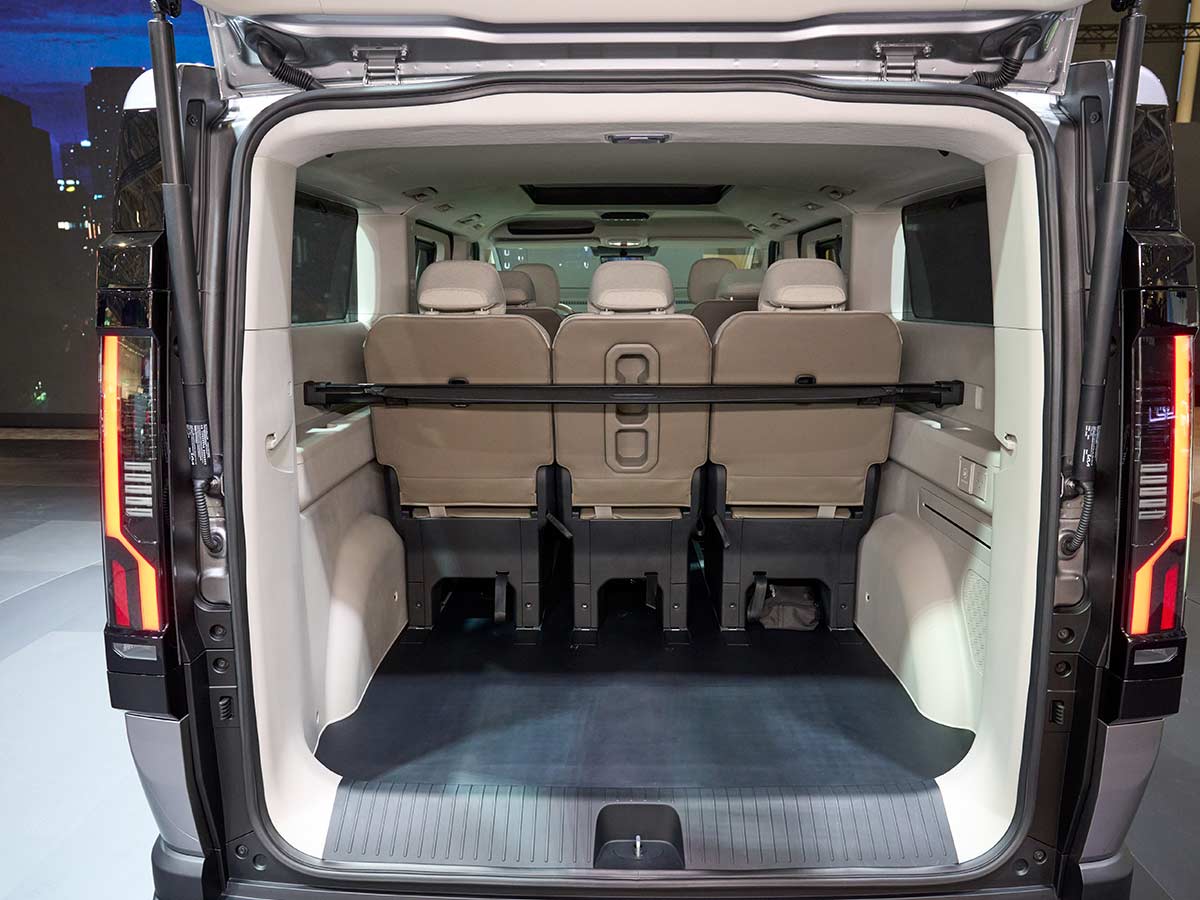
The Long Cargo can provide up to 6.1m³ of cargo volume, while the High Roof version increases this to as much as 8.0m³. Maximum payload is quoted at up to 1,165kg for the Long version and up to 1,200kg for the Compact variant.
The Long model also has a 550mm loading height and can accommodate up to three Euro pallets measuring 800 x 1,200mm.
Those figures are more meaningful to an operator than a simple statement that the van has a “large” cargo area. Loading height directly affects how frequently heavy or bulky goods must be lifted, while pallet capacity determines how efficiently a vehicle can be matched to particular delivery routes.
Kia also offers different approaches to rear access. The Cargo can be specified with a full-opening twin-swing tailgate or a conventional lift-up tailgate. The twin-swing arrangement is intended to make loading easier in confined locations where a conventional upward-opening door may be difficult to use.
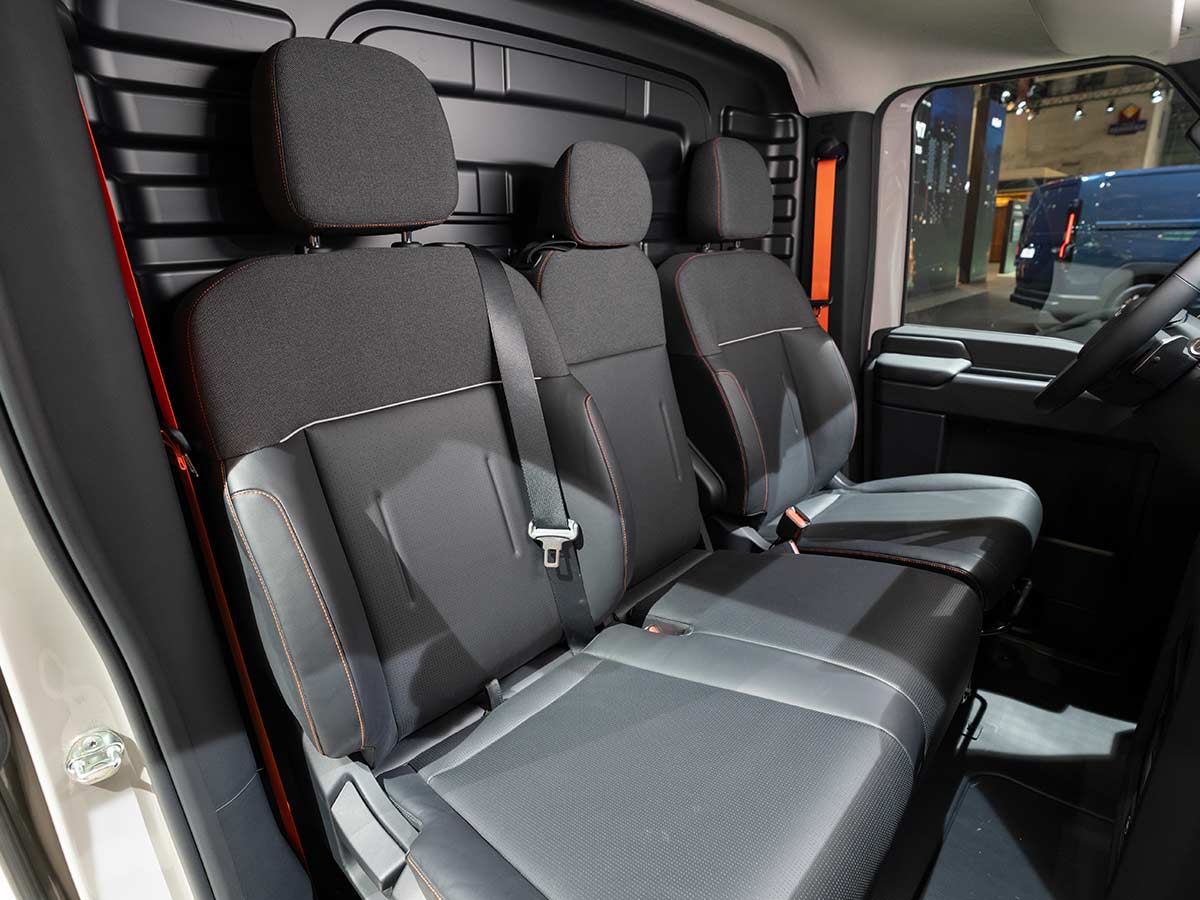
Other commercial features include a load-through bulkhead on three-seat versions, independent cargo-door locking and remote cargo-door status monitoring.
The emphasis is clear: the Kia PV7 is being designed around the repetitive tasks that define commercial vehicle operation rather than simply adapting a passenger-car interior to a van body.
Kia PV7 Passenger turns the same platform into a people mover
The Passenger version takes the underlying architecture in a different direction.
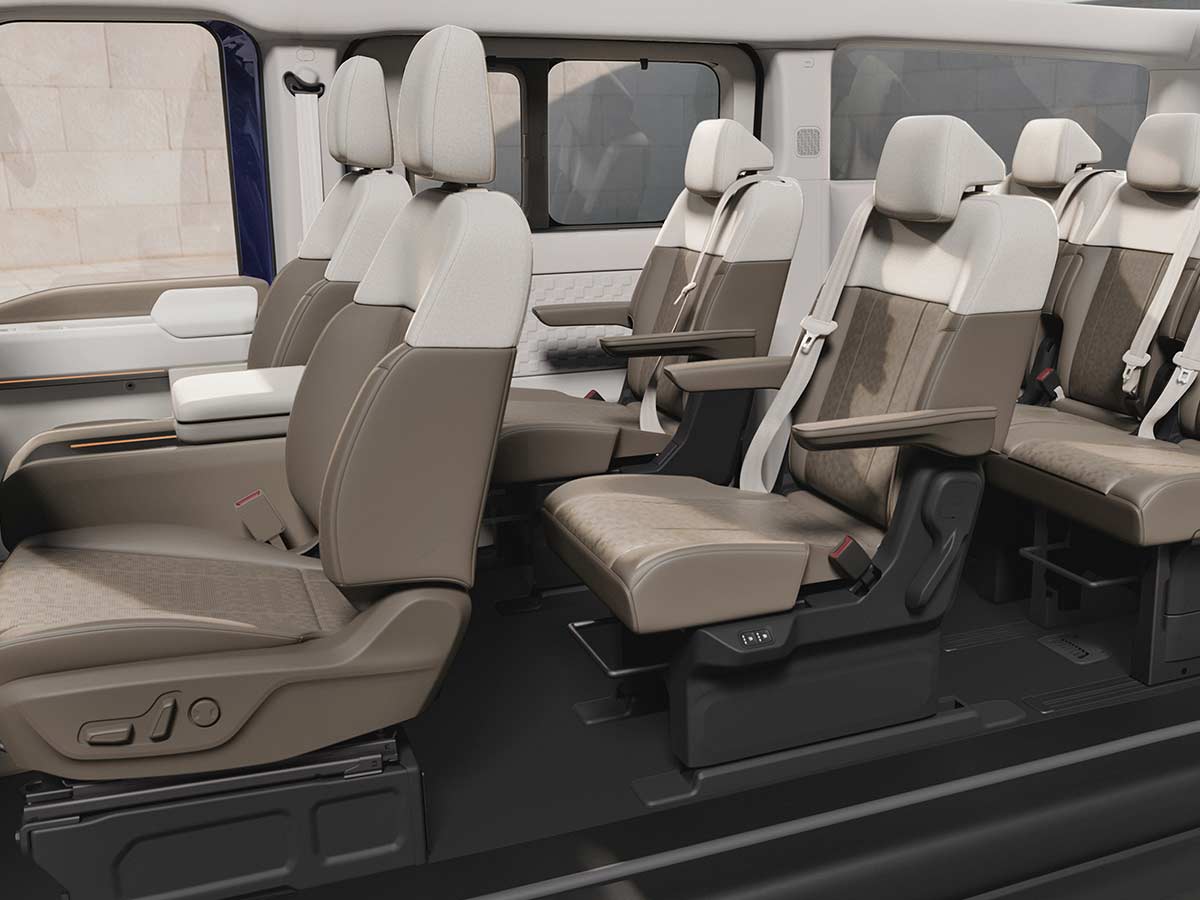
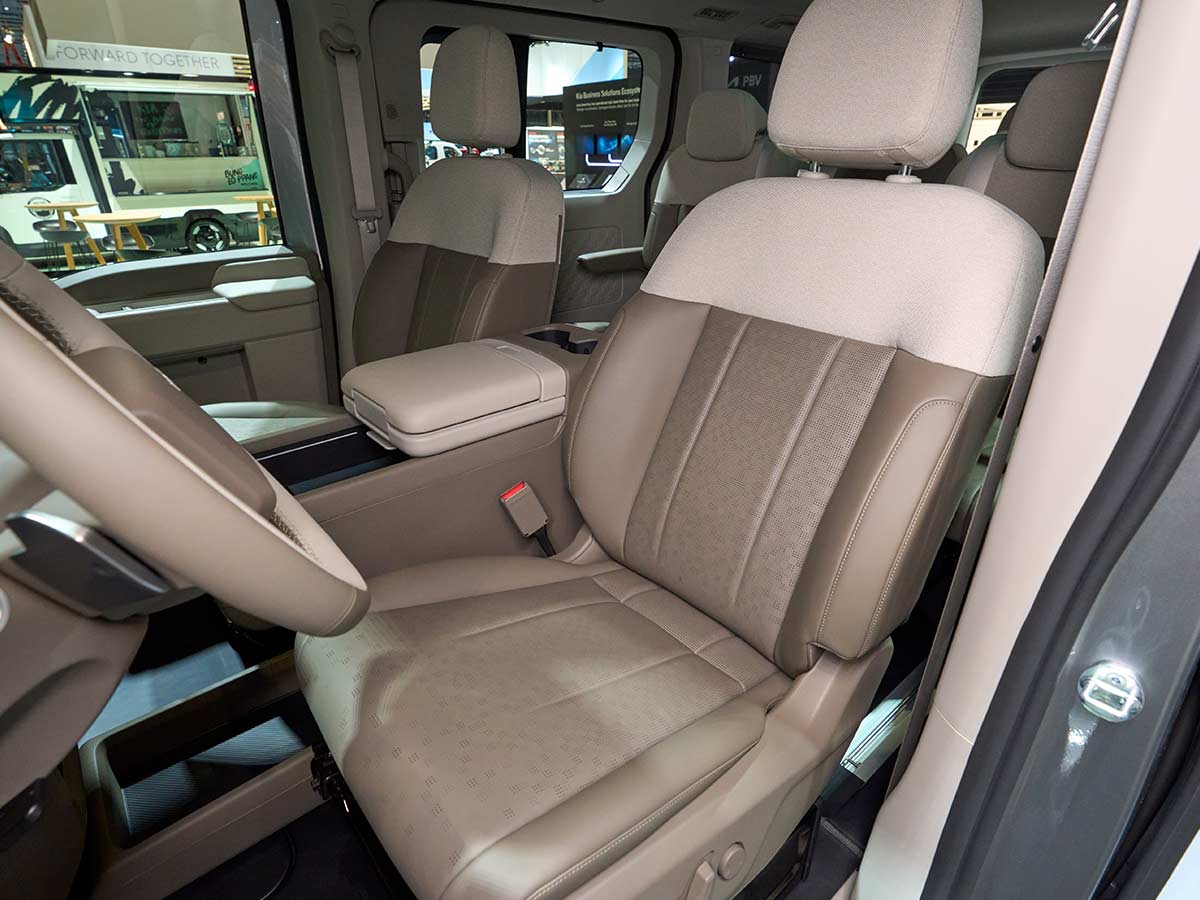
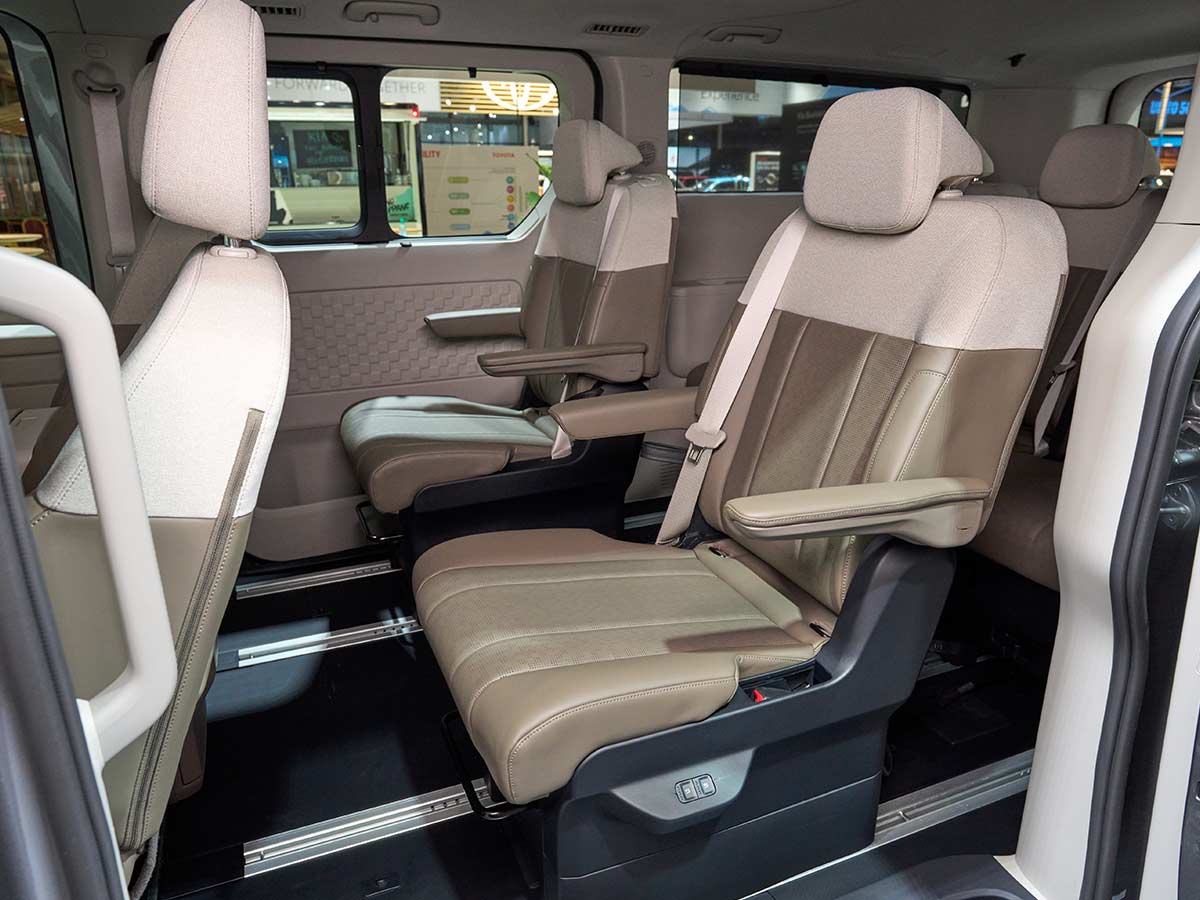
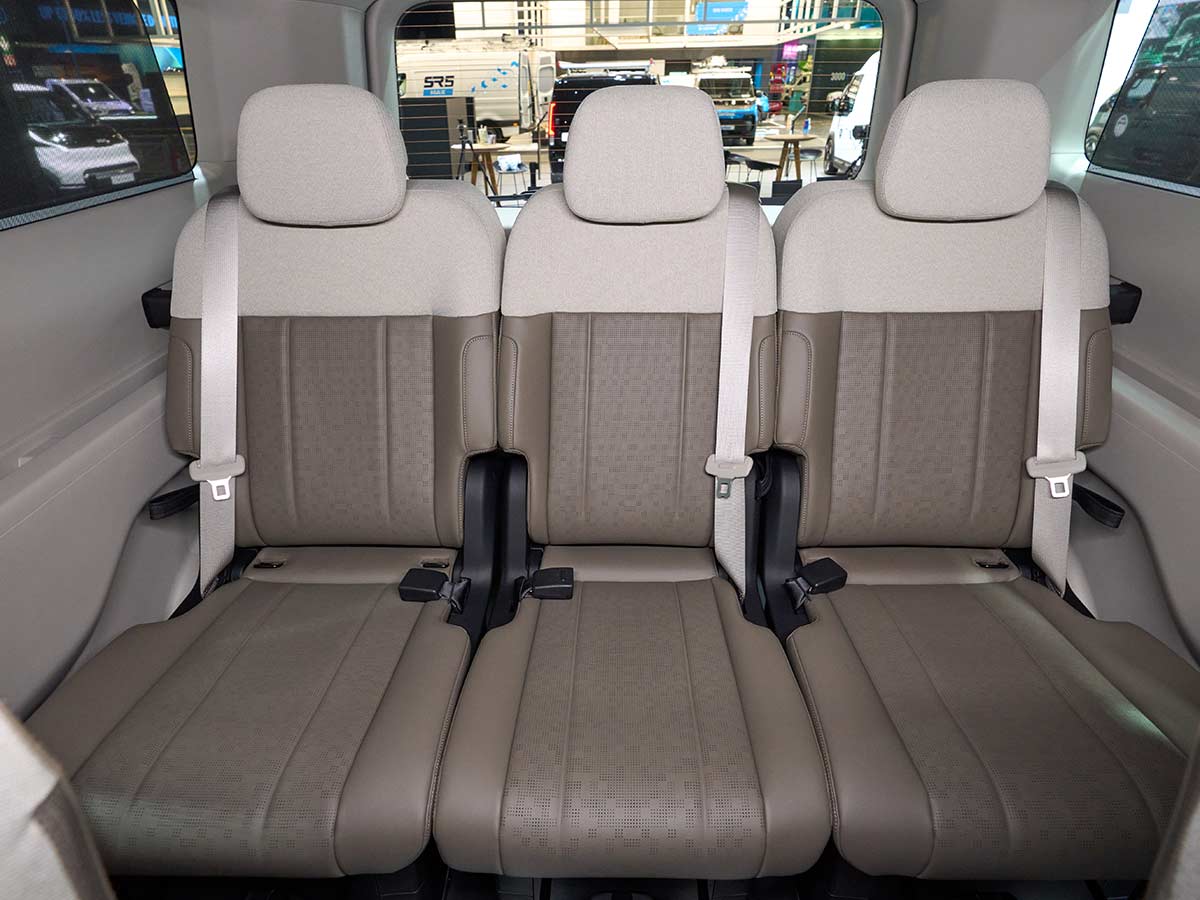
It can accommodate up to nine occupants globally and up to 11 in Korea, depending on configuration. Kia is offering multiple seating layouts, including a seven-seat configuration with Long-Rail Easy Remove Seats.
The system allows the seating arrangement to be changed according to the intended use. That could be relevant to shuttle services, crew transport, rental fleets and other applications in which the balance between passenger capacity and interior flexibility changes regularly.
The nine-seat configuration can also be specified with or without a fourth row.
Rear climate controls, USB-C charging and additional storage are among the available passenger-oriented features. Power-sliding doors are also available, reinforcing the vehicle’s role as a people carrier rather than simply a cargo van with additional seats.
The result is an unusual degree of overlap between commercial and passenger transport. The same basic Kia PV7 architecture can be configured around carrying goods, carrying people or supporting a specialist conversion.
A flat floor is more important than it sounds
The PV7’s E-GMP.S platform allows Kia to use a flat-floor architecture.
In an electric commercial vehicle, this has practical consequences. Removing the traditional constraints associated with a longitudinal engine, transmission and driveshaft can free more usable space between the axles and simplify movement through the cabin.
For passengers, that can improve accessibility and seating flexibility. For cargo operators, it can help make the load area easier to organise.
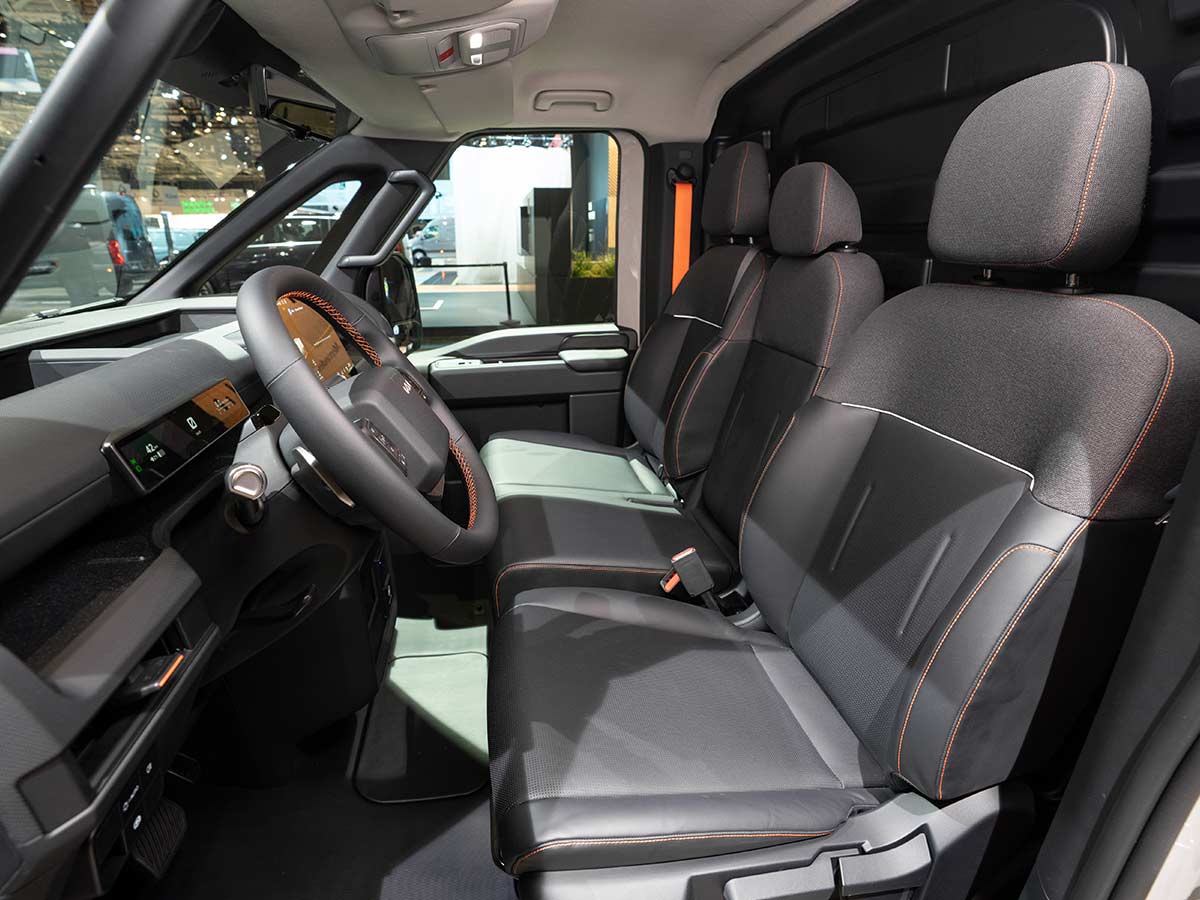
Kia has also paid attention to driver access. The company says the cabin has been developed around users who may enter and exit the vehicle dozens of times during a working day. An A-pillar grab handle, revised seating position and step geometry are intended to reduce the physical effort involved in repeated entry and exit.
That may sound like a small detail compared with a 96.2kWh battery, but for a professional driver working a full shift, repeated movements can matter considerably.
V2L turns the Kia PV7 into a mobile power source
The Kia PV7 also supports Vehicle-to-Load, or V2L.
V2L allows electricity stored in the traction battery to power external equipment and electrical devices. For commercial users, this can have a more direct practical application than it does in an ordinary passenger EV.
Tools, temporary work equipment and other electrical devices can potentially be powered at locations where conventional mains electricity is unavailable.
Kia says the PV7 has both interior and exterior outlets for this purpose. Its broader PBV strategy also includes connected energy-management capabilities, although the availability of specific bidirectional charging functions can vary by market.
The underlying idea is straightforward: the battery does not have to stop being useful when the vehicle stops moving.
Fleet management is part of the PV7’s proposition
Kia is positioning the PV7 as more than an electric van with connected infotainment.
The Kia Business Solutions Portal is designed to bring together fleet management, charging and maintenance functions. Standardised fleet-management systems and connected vehicle-data APIs are intended to give business customers greater visibility of their vehicles.
The company is also introducing dedicated Uptime services incorporating real-time monitoring, predictive diagnostics and proactive maintenance management.
For fleet operators, this is potentially as significant as the vehicle’s charging speed.
An electric commercial vehicle can reduce some conventional maintenance requirements because it has fewer moving powertrain components than an internal-combustion vehicle. But fleet operators still have to manage tyres, brakes, suspension, body components, charging systems and battery-related diagnostics.
The ability to monitor vehicles remotely and anticipate maintenance requirements can therefore affect utilisation and operating costs.
Kia’s PBV strategy explicitly targets total cost of ownership and vehicle uptime, although the actual financial benefit will depend on fleet size, operating conditions, energy prices, financing and local service arrangements.
Pleos Connect brings a smartphone-style interface
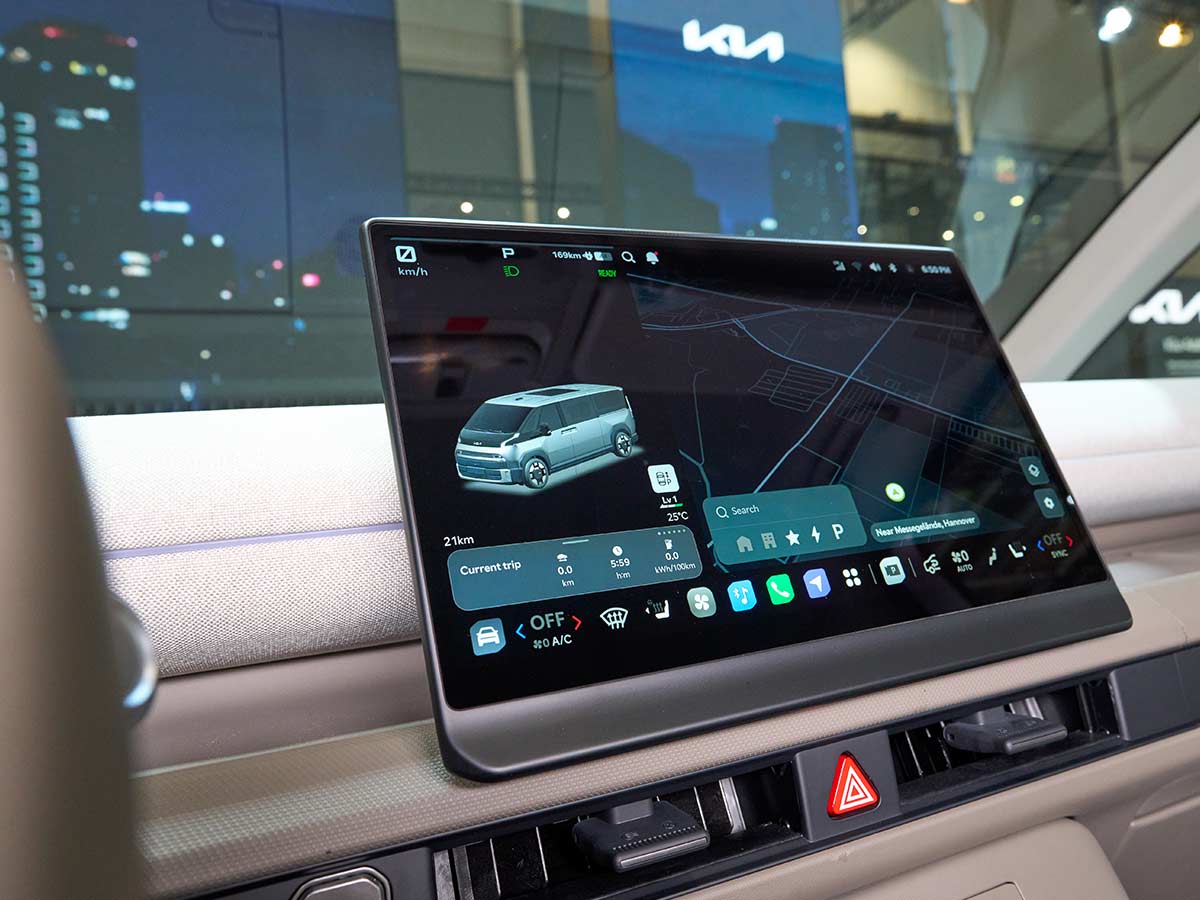
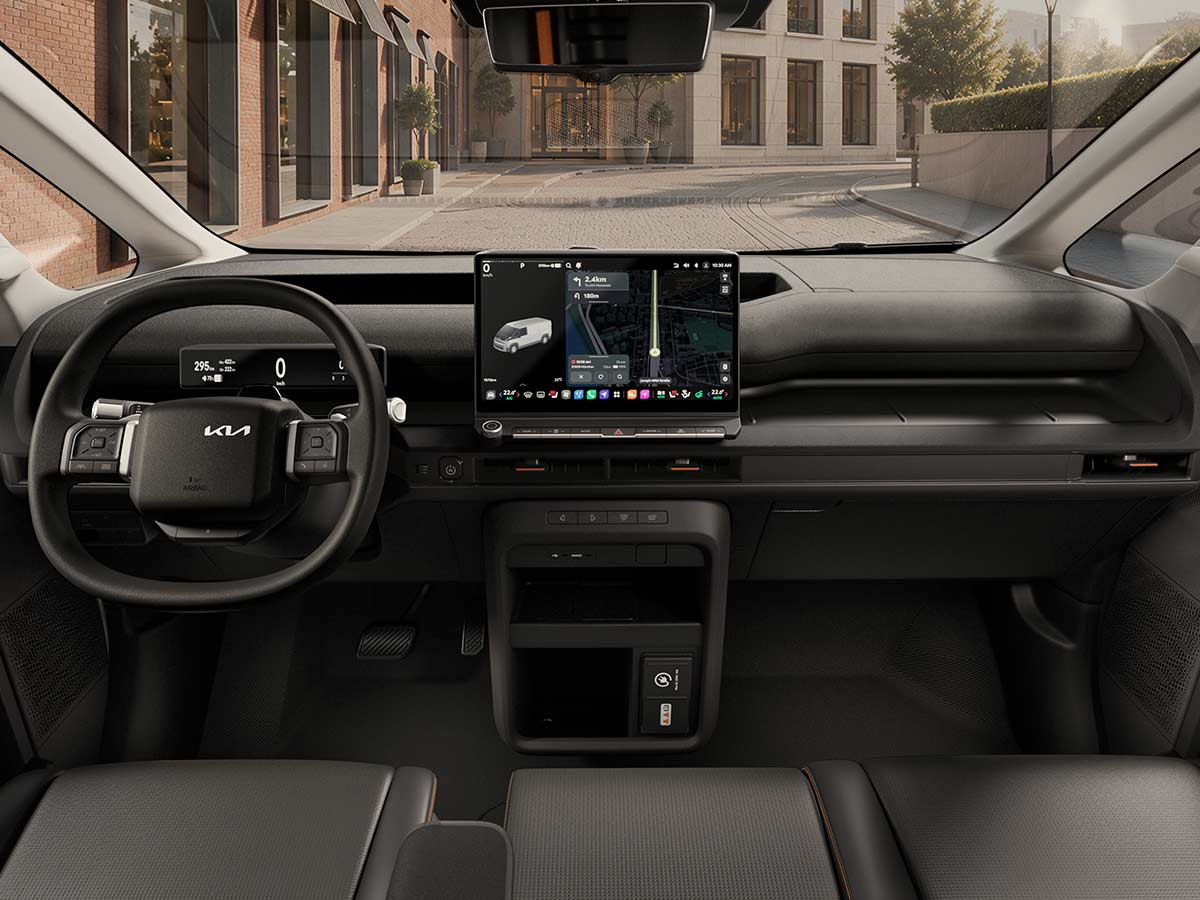
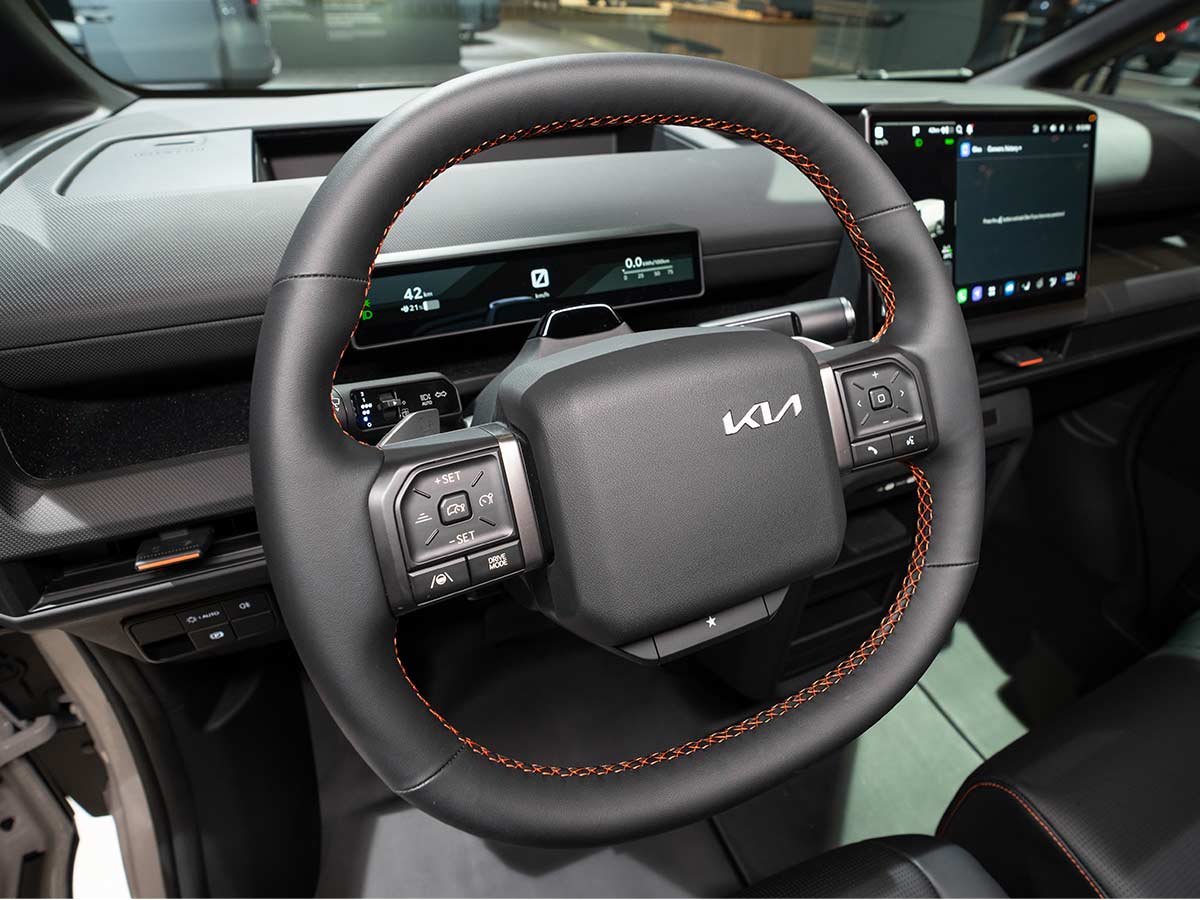
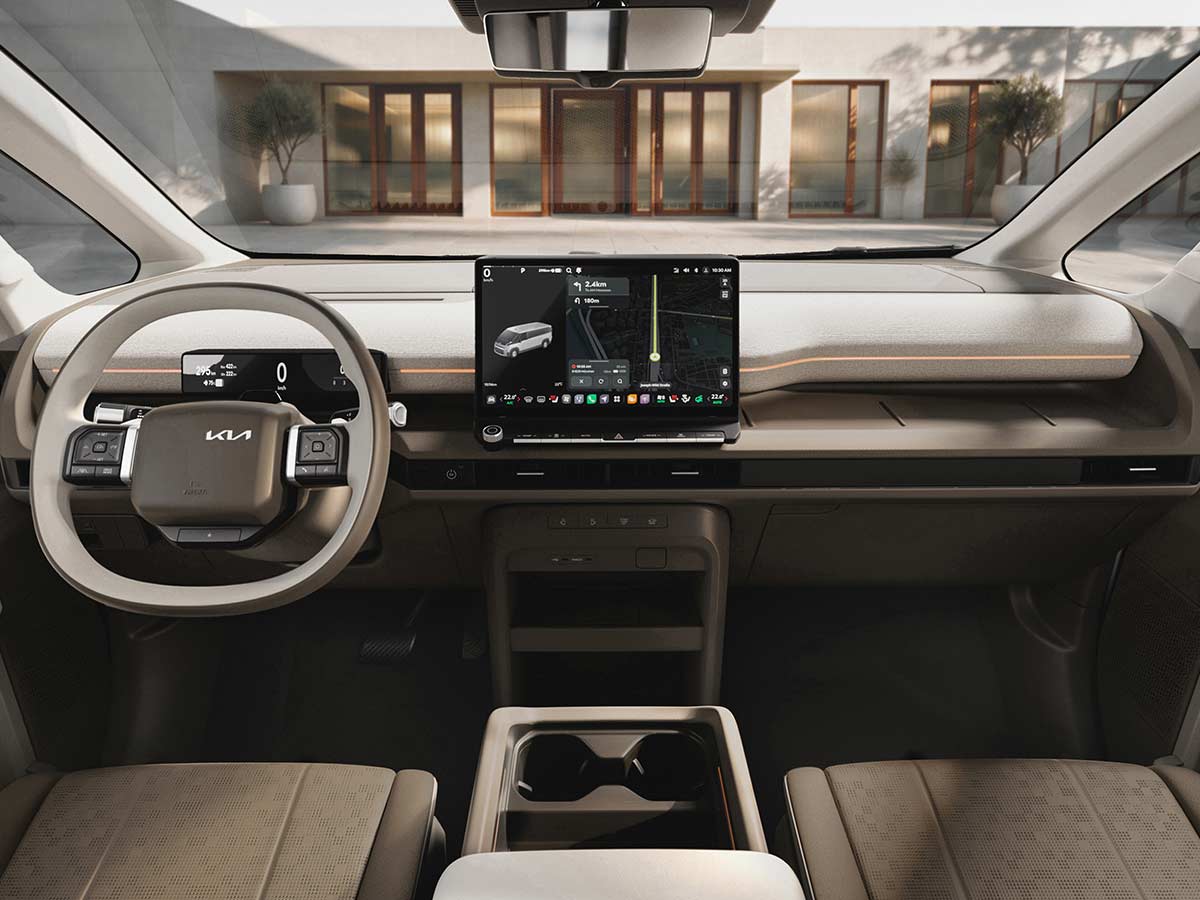
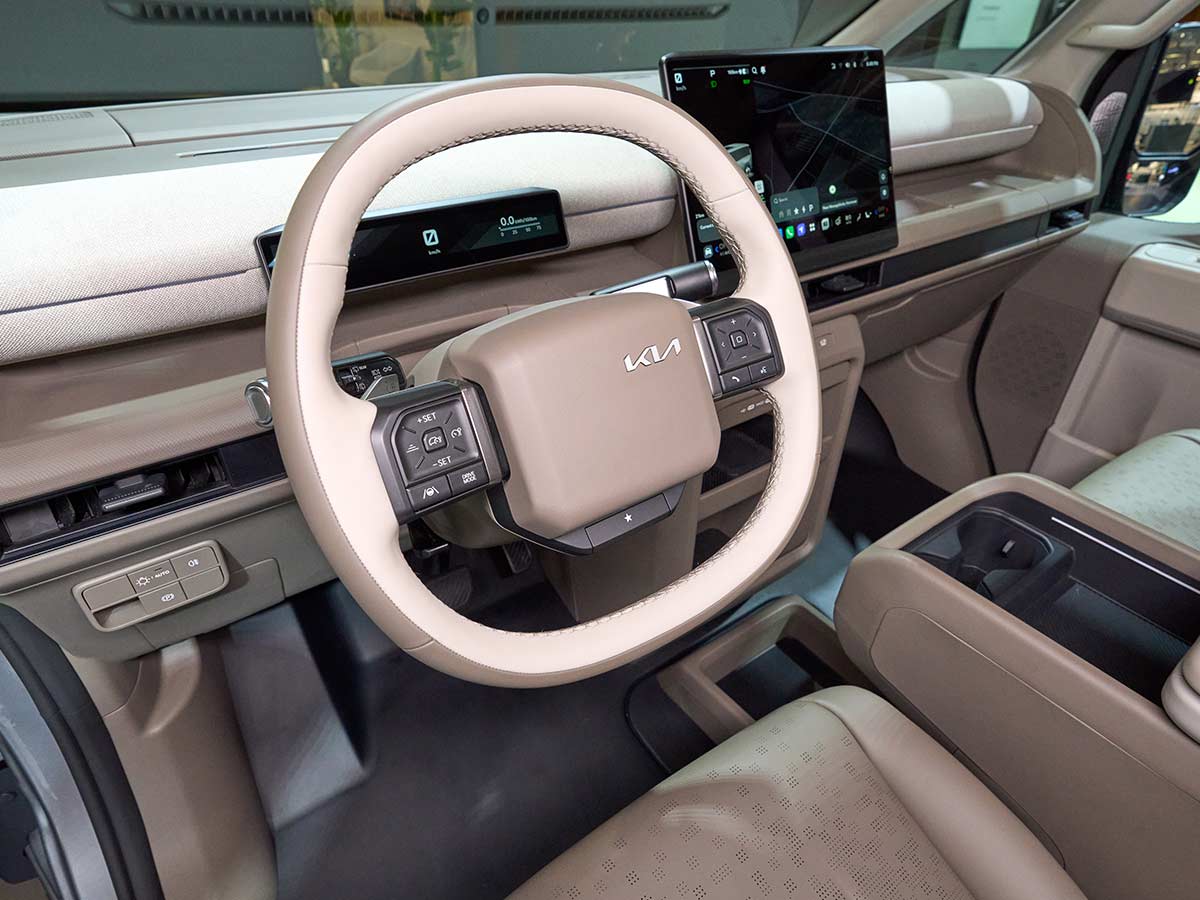
Inside the PV7, Kia uses its Pleos Connect platform, based on Android Automotive OS.
The system supports connected navigation, flexible screen layouts, an application marketplace and over-the-air software updates. Kia also incorporates Gleo AI, an AI-powered voice assistant designed to handle vehicle, navigation and messaging functions using natural-language commands.
The digital architecture is intended to make the van more adaptable over its operating life. That is particularly relevant for commercial vehicles, which can remain in service for years and may change drivers or operational roles several times.
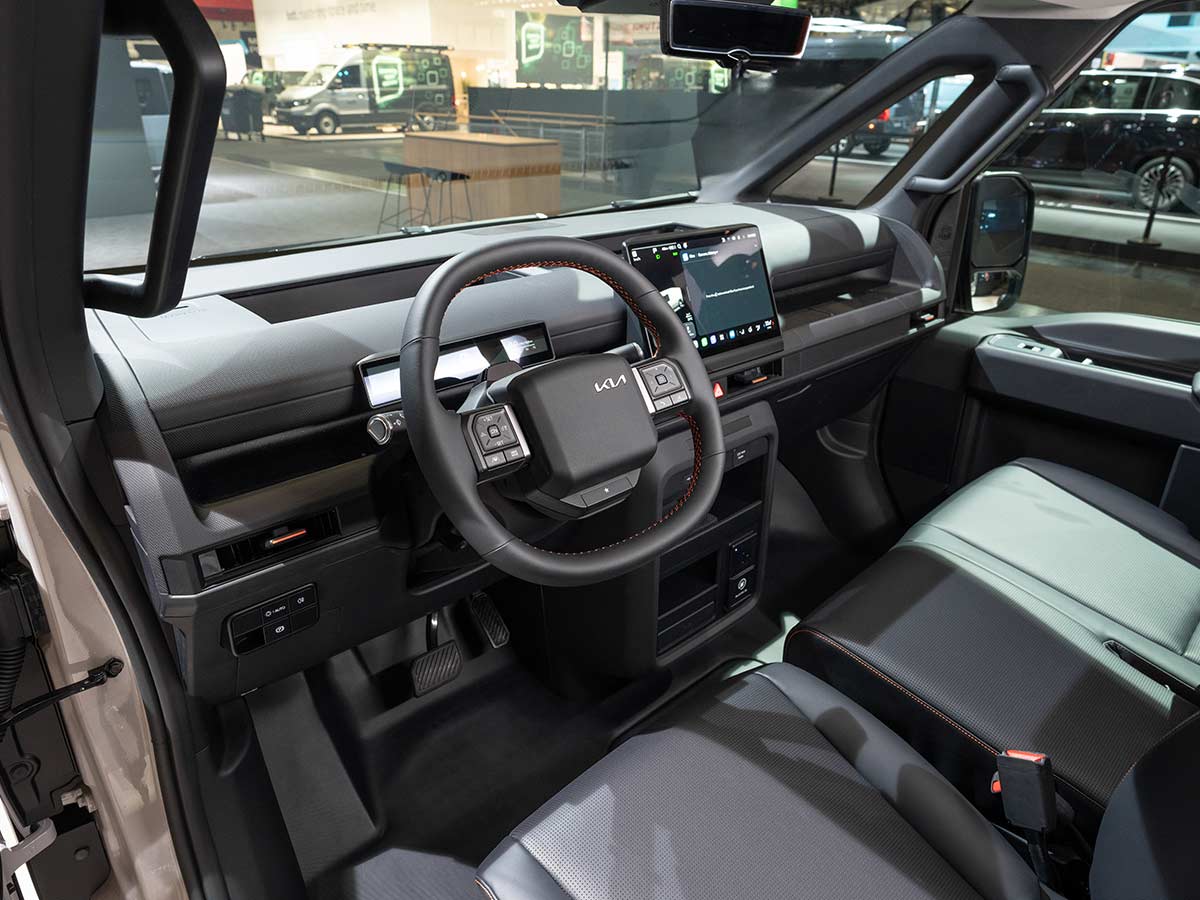
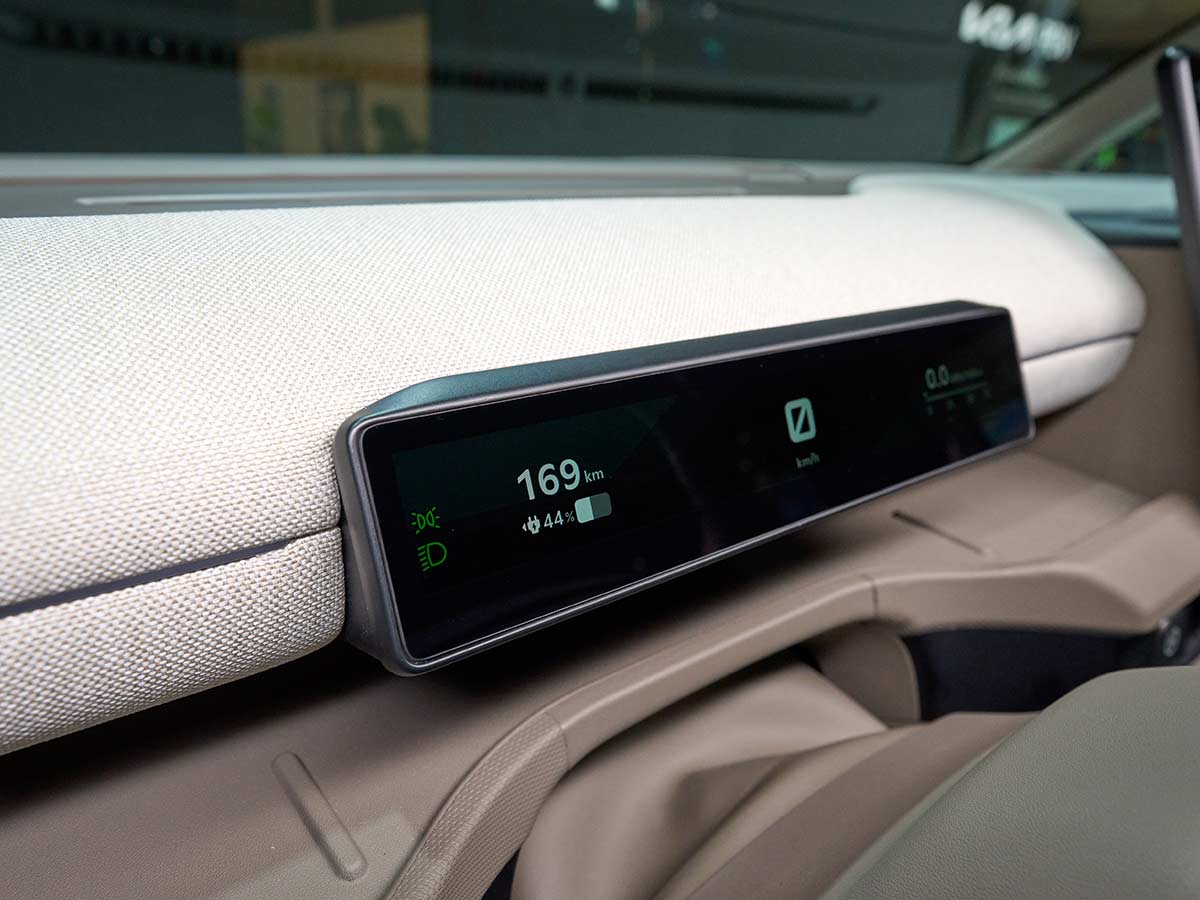
The Kia PV7’s interior also retains physical controls for frequently used functions. That is a sensible distinction in a commercial vehicle, where drivers may need to operate common controls repeatedly and quickly rather than navigating a touchscreen for every adjustment.
The main displays measure 12.9 inches and 14.6 inches, depending on the configuration.
Safety and driver assistance
The Kia PV7 comes with a broad range of active safety and driver-assistance technologies, although equipment availability can vary according to market, derivative and trim level.
The announced systems include:
- Forward Collision-Avoidance Assist
- Lane Keeping Assist 2.0
- Navigation-based Smart Cruise Control
- Highway Driving Assist 2.0
- Front, side and rear Parking Distance Warning
- Remote Smart Parking Assist
- Rear View Monitor
- Surround View Monitor
- Built-in Cam 3.0
- Pedal Misapplication Safety Assist 2.0
The vehicle also has a seven-airbag system, including a roof-mounted front passenger airbag.
Pedal Misapplication Safety Assist is designed to reduce the risk of unintended acceleration caused by incorrect pedal operation. This is particularly relevant to a large vehicle that may operate frequently in loading areas, car parks and other environments with limited space.
As with all driver-assistance systems, these technologies should be understood as aids rather than substitutes for driver attention. Their availability and exact operating characteristics can also differ between markets.
Kia’s “Tool Box” philosophy explains the PV7’s many versions
Kia describes the PV7’s development concept as a “Tool Box”.
The phrase captures an important difference between a PBV programme and a conventional model range. Rather than asking customers to choose from a small number of predetermined body styles, Kia intends to create a base vehicle that can be adapted for different jobs.
The planned Kia PV7 range includes:
- Cargo Compact
- Cargo Long
- Cargo High Roof
- Passenger Compact
- Passenger Long
- Chassis Cab
- Additional conversion models
Kia says the complete programme is planned to reach 23 variants.
The company is also establishing a dedicated production and conversion ecosystem. Its Hwaseong EVO West PBV Plant and PBV Conversion Center will support standard and converted vehicles, alongside regional conversion partners.
A single connector interface is intended to allow conversion equipment to be controlled from within the vehicle.
This could prove important for specialist applications. Commercial vehicles often become far more valuable when their body and equipment are matched precisely to the job, whether that means passenger transport, mobile services, specialist logistics or other applications.
What does the PV7 mean for Kia’s electric commercial-vehicle strategy?
The PV7 gives Kia a larger commercial EV to sit above the PV5 and expands the company’s PBV ambitions beyond a single van format.
The broader strategy is built around three linked areas: hardware, software and service.
Hardware provides the adaptable electric platform. Software connects the vehicle to fleet operations and digital services. The service layer is intended to support uptime and total cost of ownership over the vehicle’s working life.
Kia has said the PV7 will launch in Korea and Europe in the second half of 2027, with other markets and derivatives to follow. The company also plans a larger Kia PV9 model for 2029 as it expands its PBV portfolio.
That means the Kia PV7 should be viewed less as an isolated new van and more as a central part of Kia’s attempt to establish a scalable electric commercial-vehicle ecosystem.
What remains unknown about the Kia PV7?
Despite the amount of information released, several details remain open.
Kia has not yet published final market-specific pricing, and final homologated specifications can differ from the preliminary figures announced at the world premiere.
The company has also said that an all-wheel-drive variant is planned for a later date. Details such as its final output, battery configuration, range and availability have not been fully specified in the launch material.
Real-world energy consumption is also not yet established. The headline range figure is a WLTP target based on Kia’s testing and remains subject to homologation.
For commercial operators, other unanswered questions will include local payload ratings, towing capability where applicable, charging compatibility, service intervals, warranty terms, conversion pricing and the precise availability of different body configurations.
Those details will become more important as the PV7 approaches individual market launches.
Kia PV7: the key takeaways
The Kia PV7 is significant because it treats an electric van as an operating platform rather than simply an alternative powertrain.
Its combination of a 96.2kWh battery, 800V charging system, up to 200kW of power, substantial cargo volume and flexible passenger configurations gives Kia a broad technical foundation. More importantly, the vehicle’s loading ergonomics, fleet software, V2L capability and planned conversion programme show where the company believes commercial EVs can deliver value beyond eliminating tailpipe emissions.
The headline range will attract attention, but the more consequential question for fleet operators may be how effectively the PV7 integrates charging, loading, maintenance, software and vehicle utilisation into one system.
The answers will become clearer when production specifications, pricing and market-specific operating data are released ahead of the Kia PV7’s planned 2027 launch.
Source: Kia