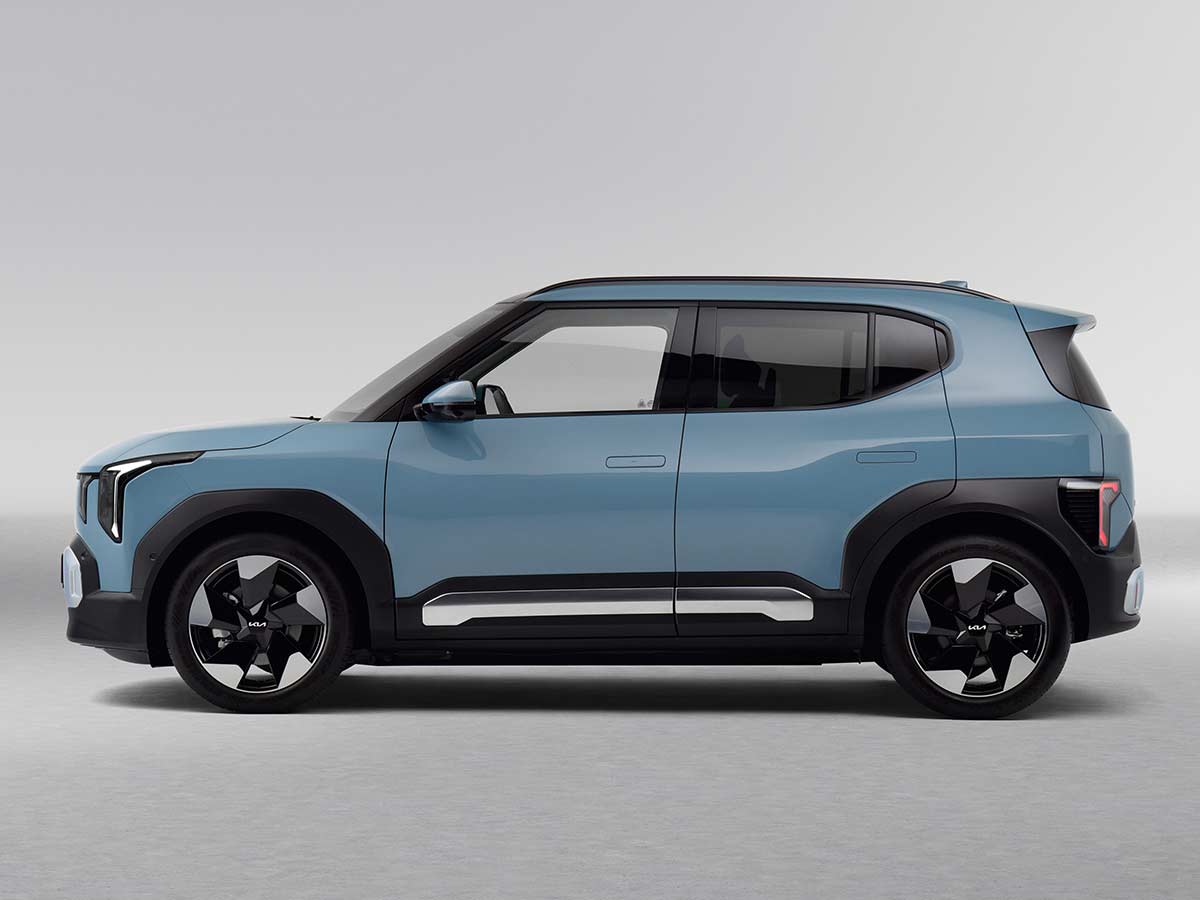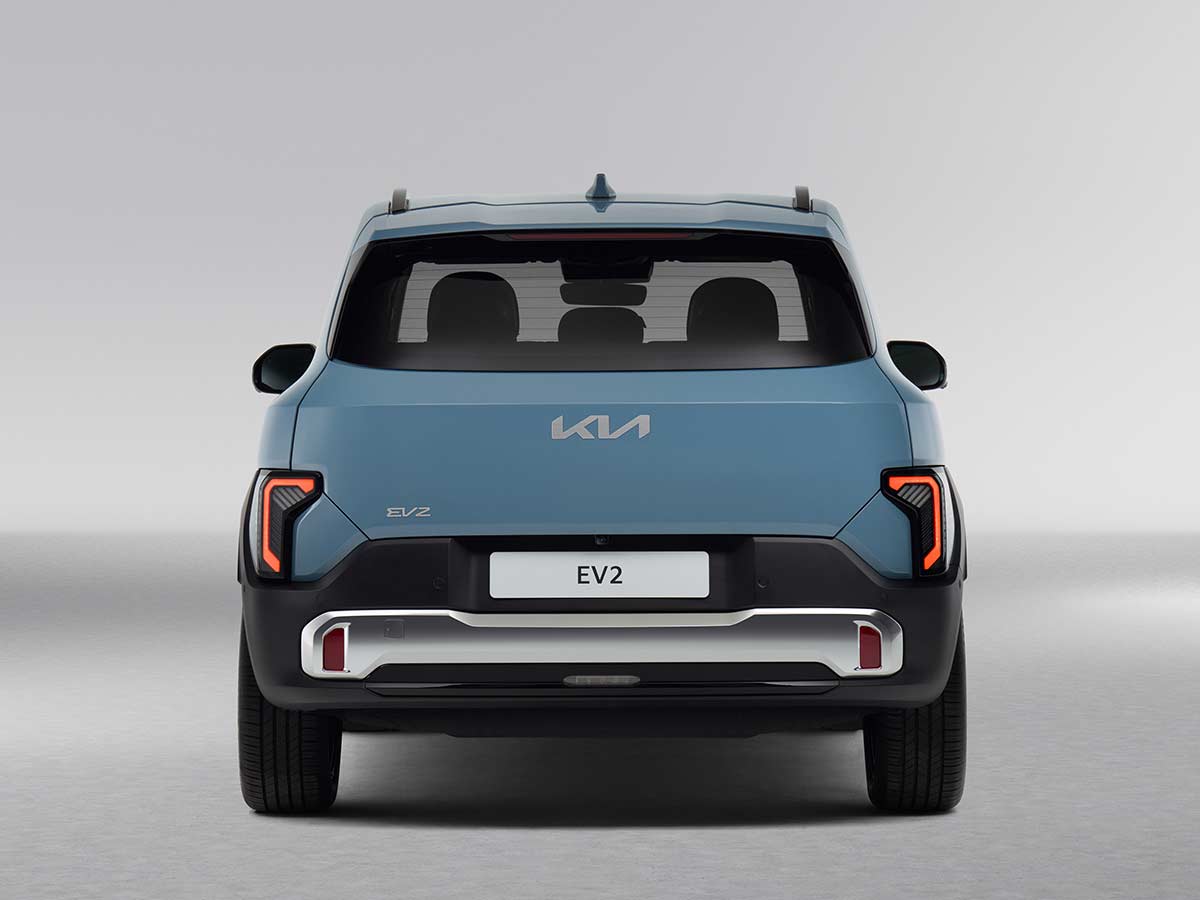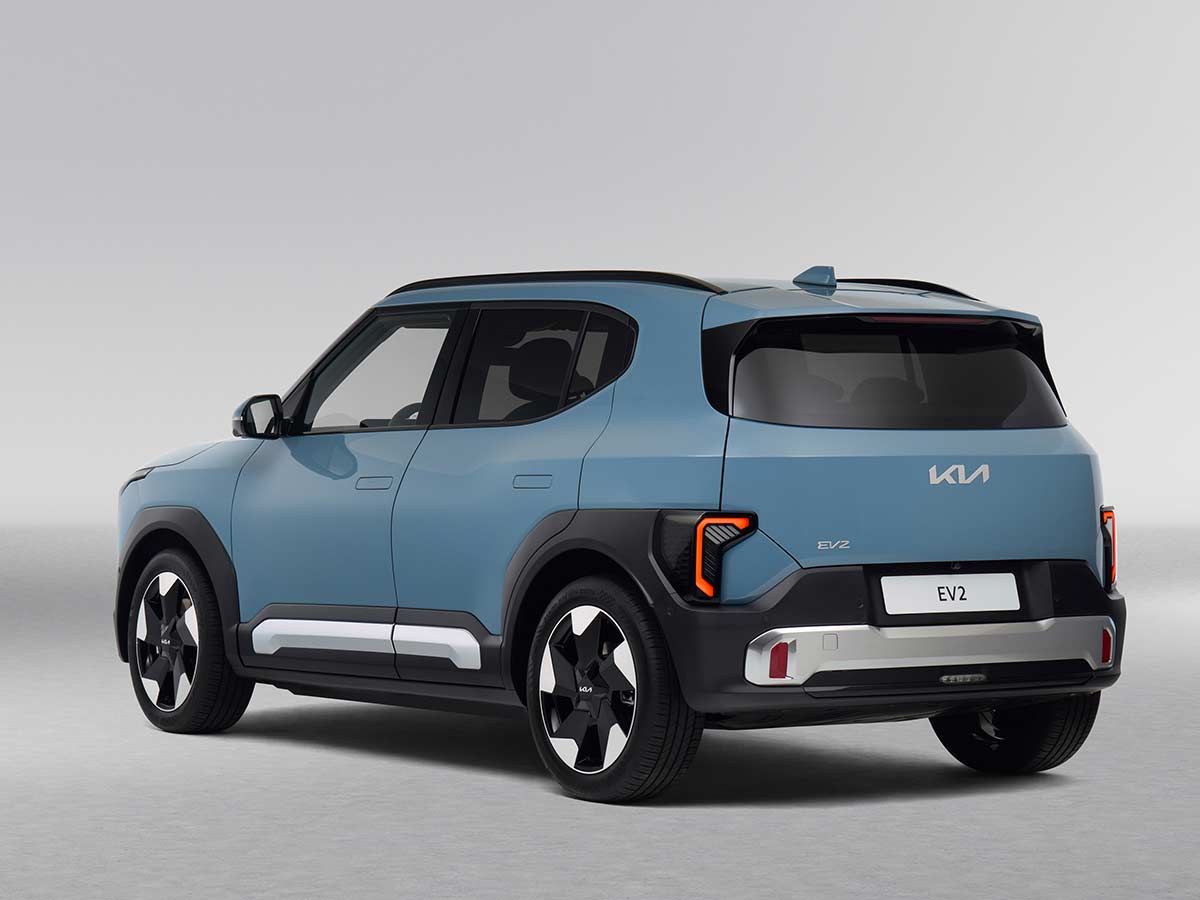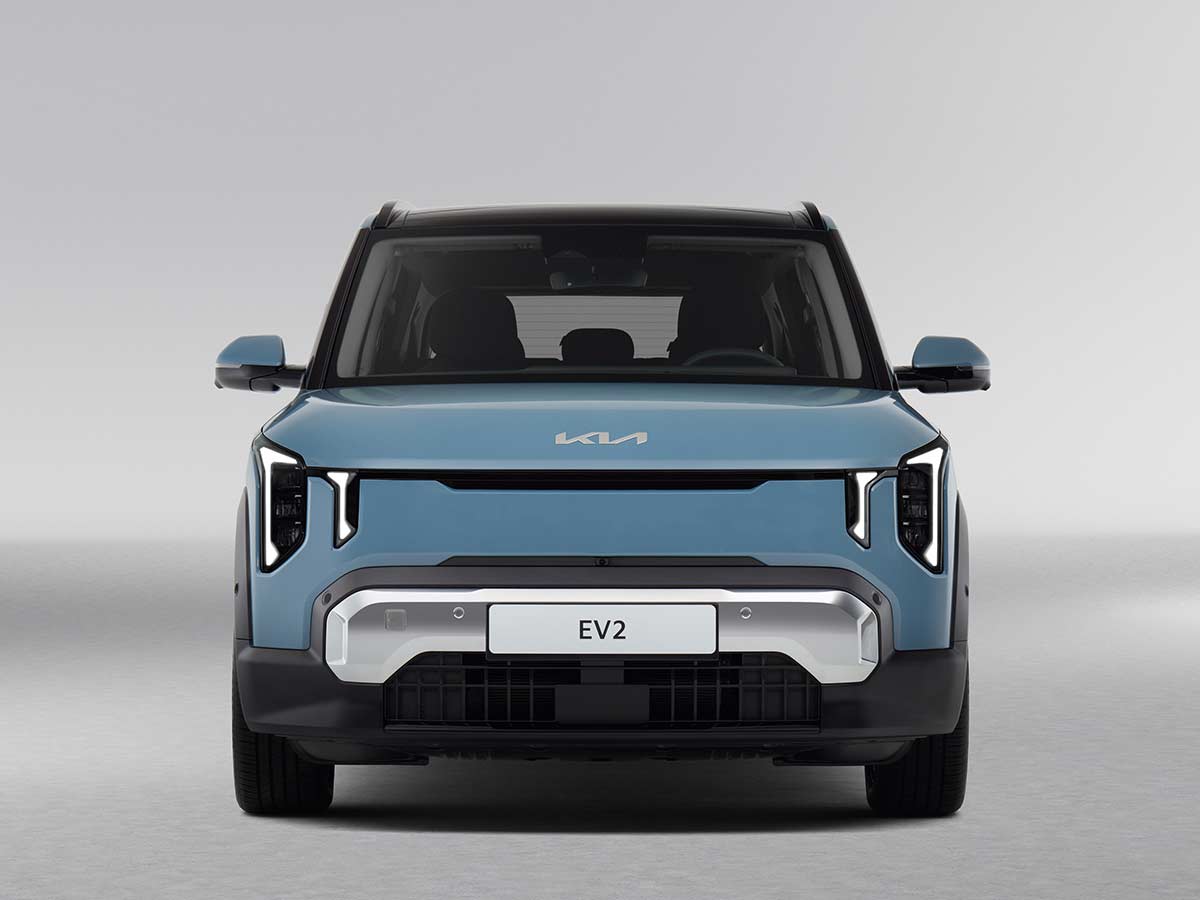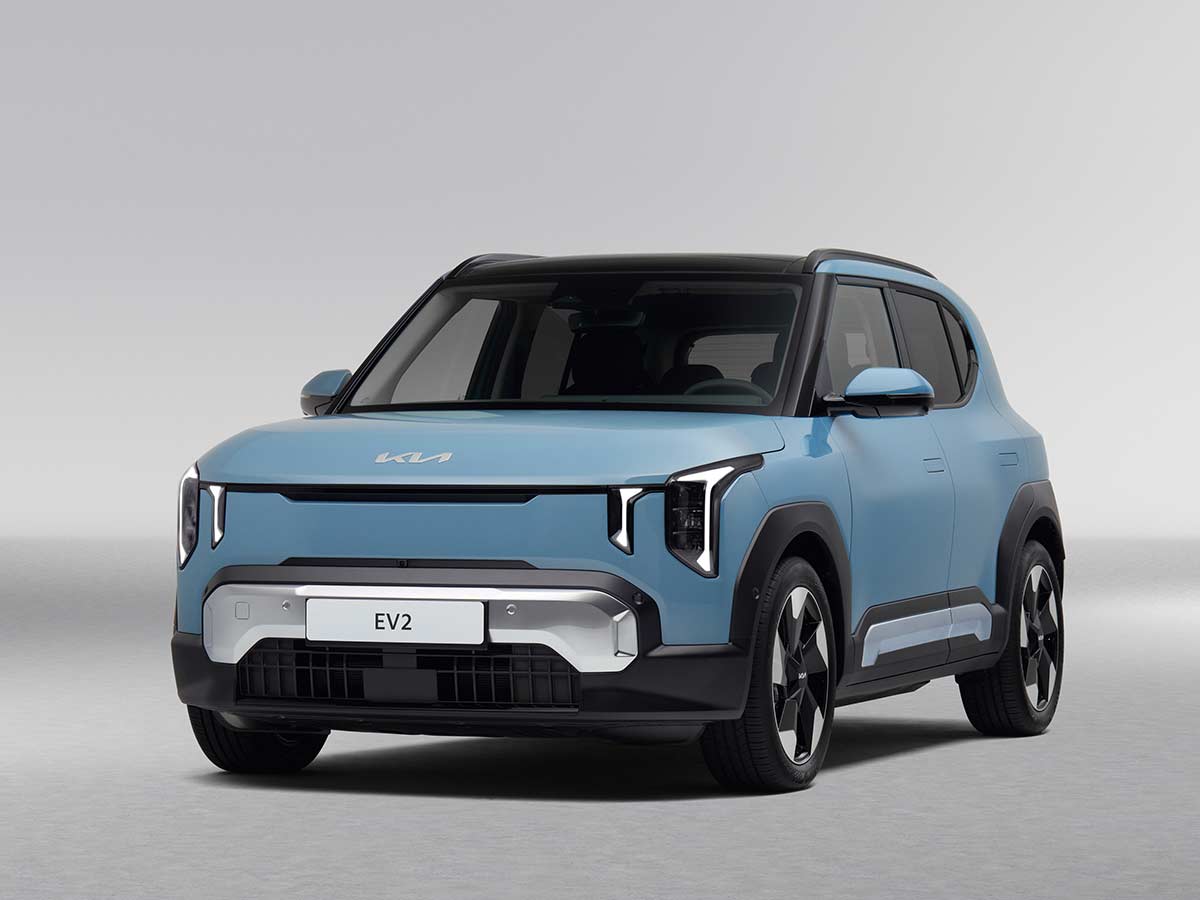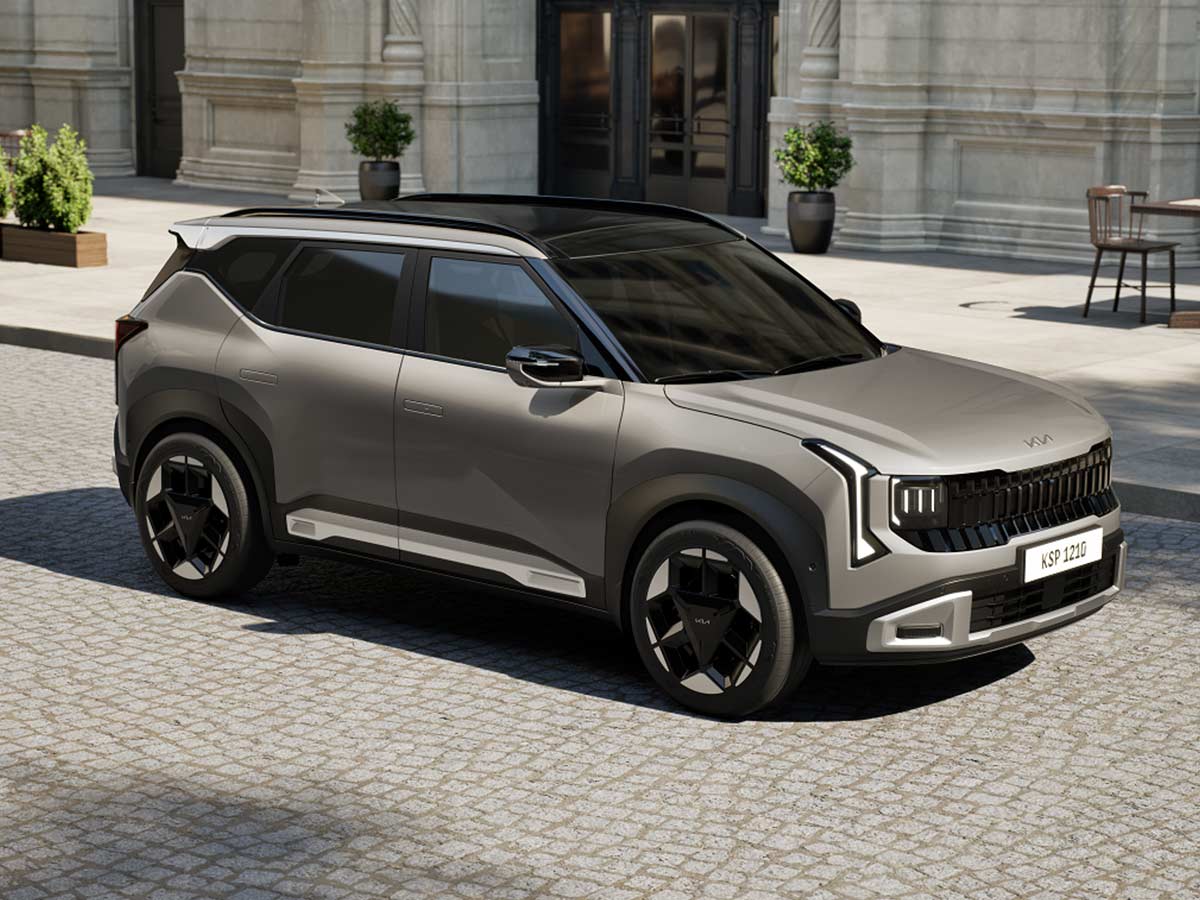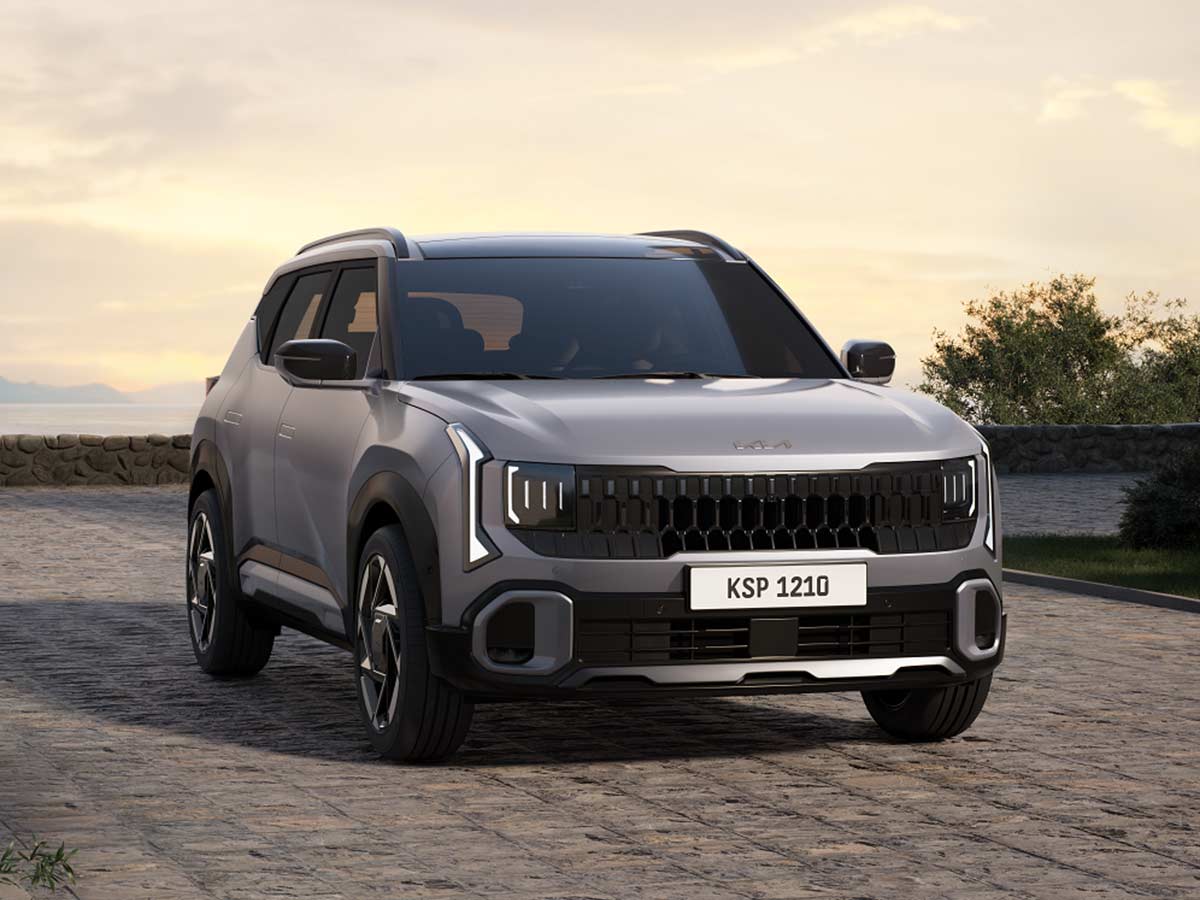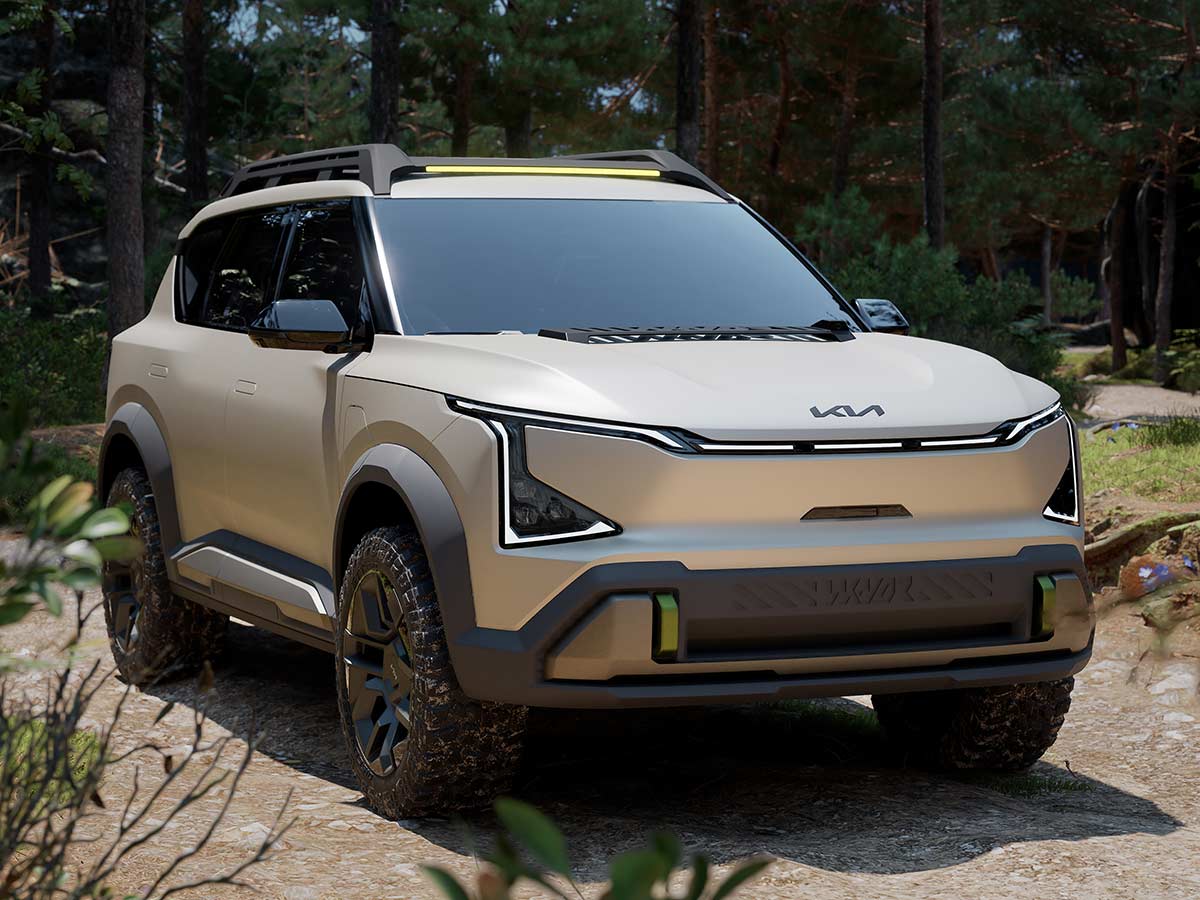








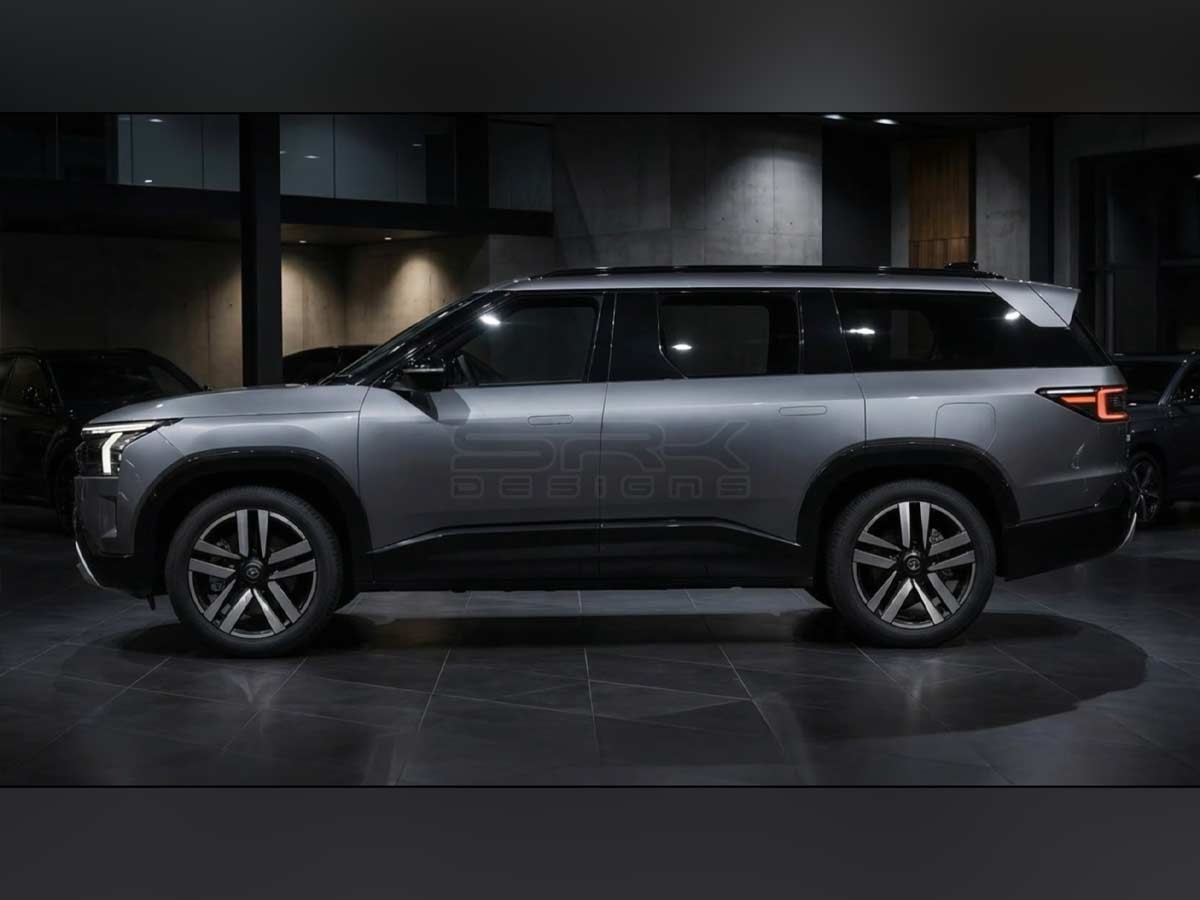


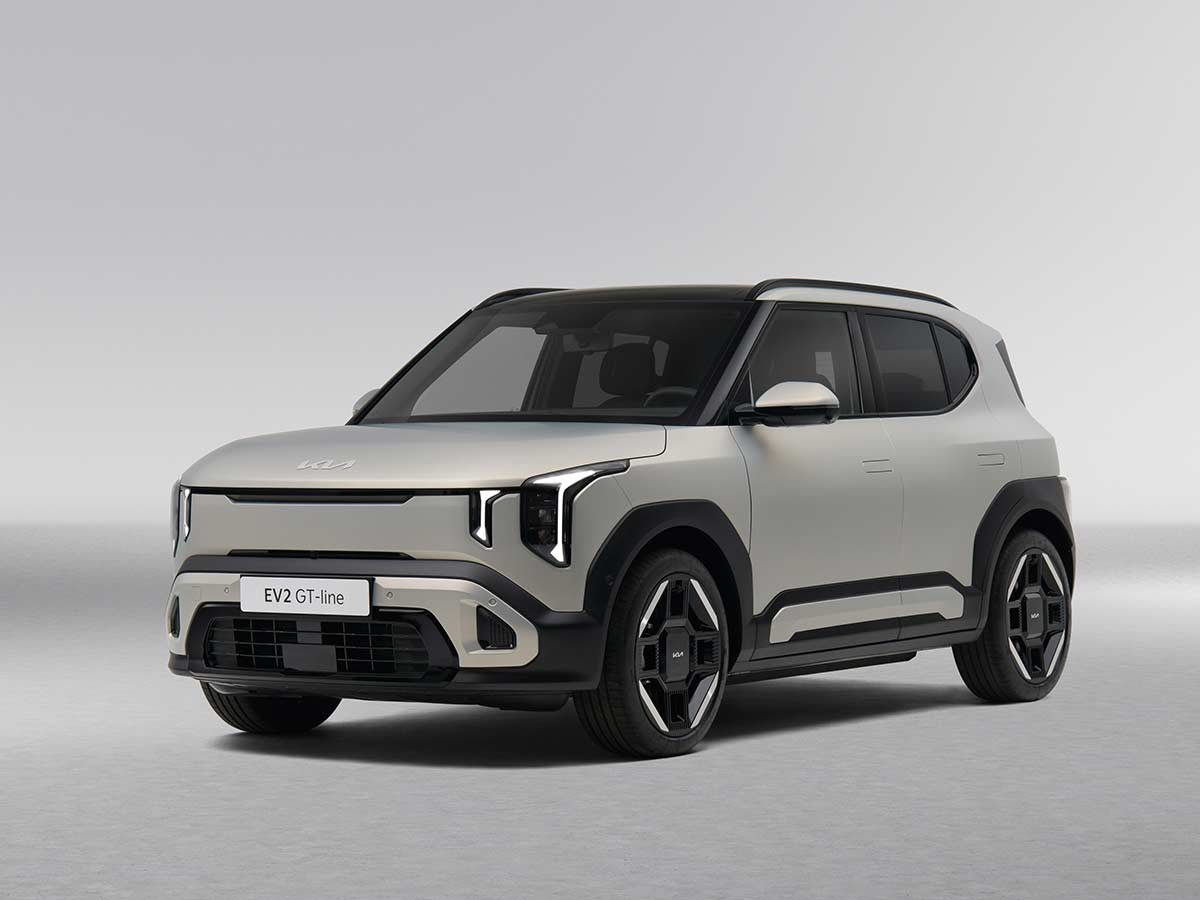
Kia has officially expanded its “EV” nomenclature into the high-volume B-SUV segment with the world premiere of the EV2 at the Brussels Motor Show. While the EV6 and EV9 demonstrated Kia’s capability in high-performance and luxury electric mobility, the EV2 represents perhaps a more significant strategic move: democratizing that technology for the mass European market.
Designed specifically with European cities and lifestyles in mind, the EV2 is not merely a downsized electric car; it is a purpose-built compact SUV manufactured in Slovakia that aims to be the primary vehicle for households.
>>> Great Discounts on Car & Bike Accessories <<<
Engineering and Dimensions: Maximizing the Footprint
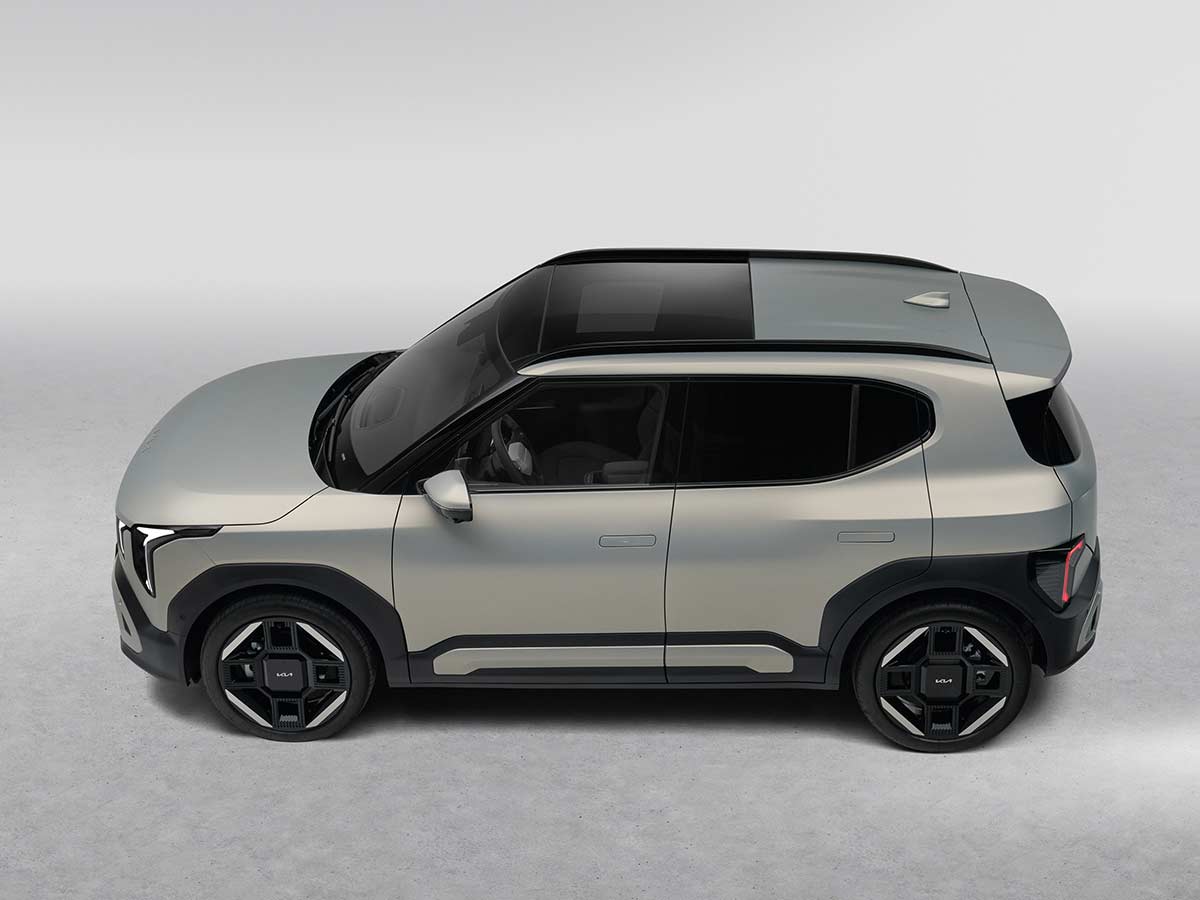
The primary challenge in the B-segment is balancing compact exterior dimensions with usable interior volume. The EV2 measures 4,060mm in length, 1,800mm in width, and 1,575mm in height. To put this in perspective, it maintains a compact footprint ideal for urban navigation while utilizing the dedicated electric platform (E-GMP) to push the wheels to the corners.
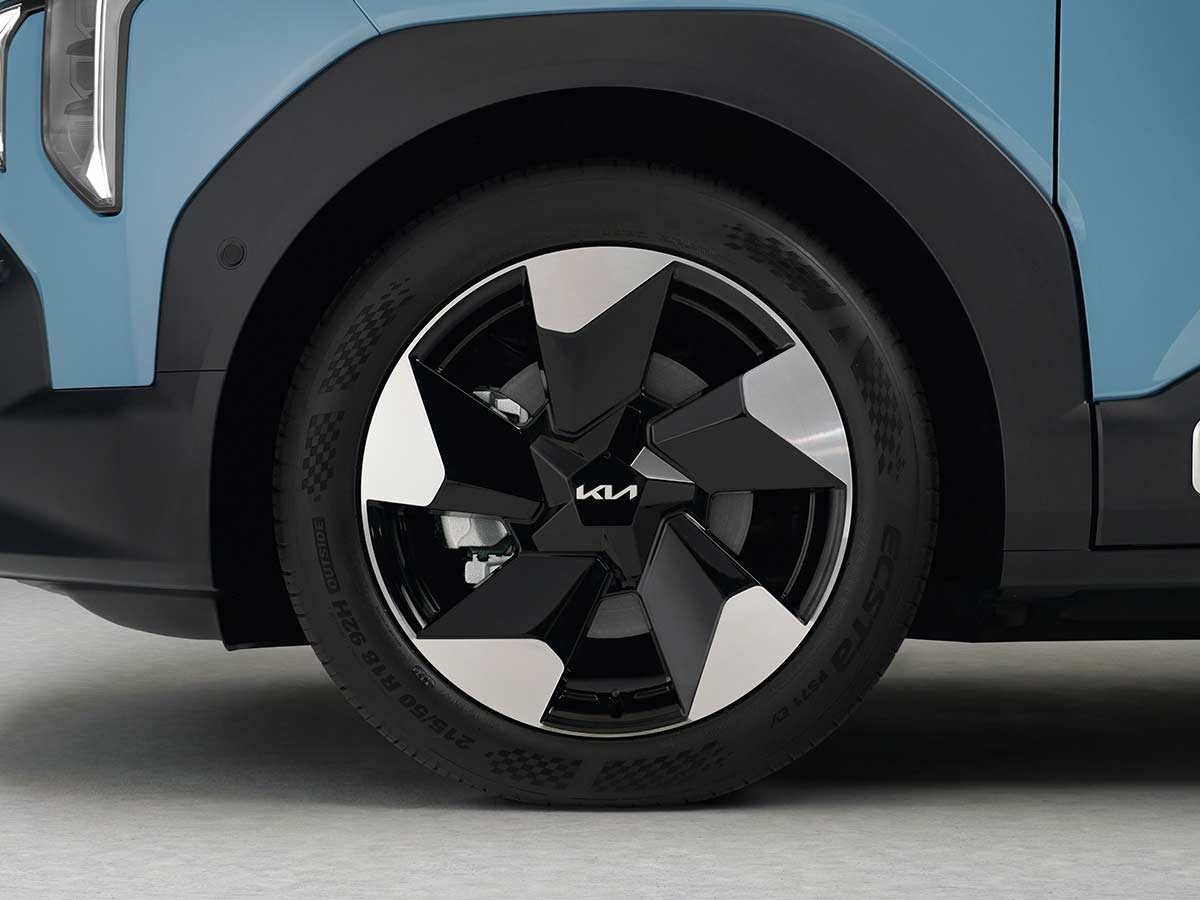
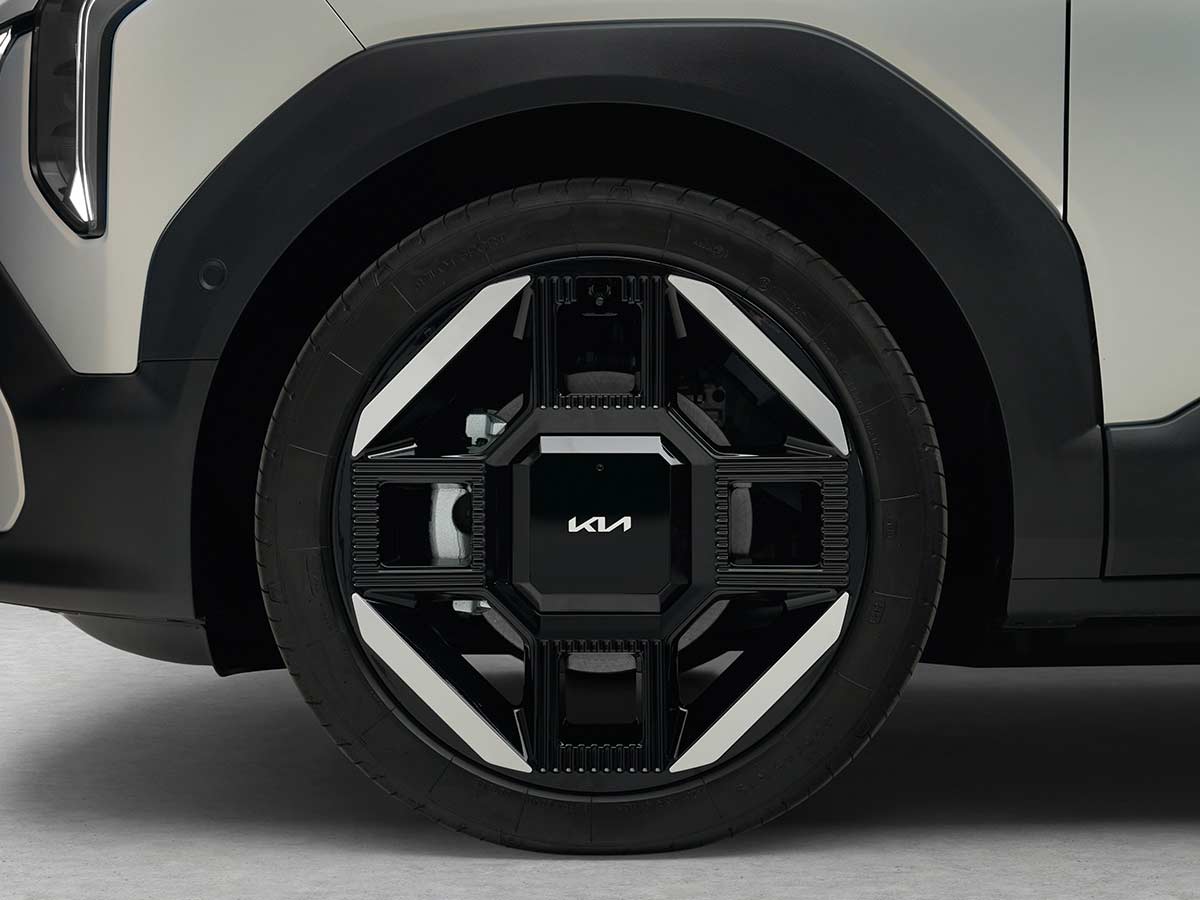
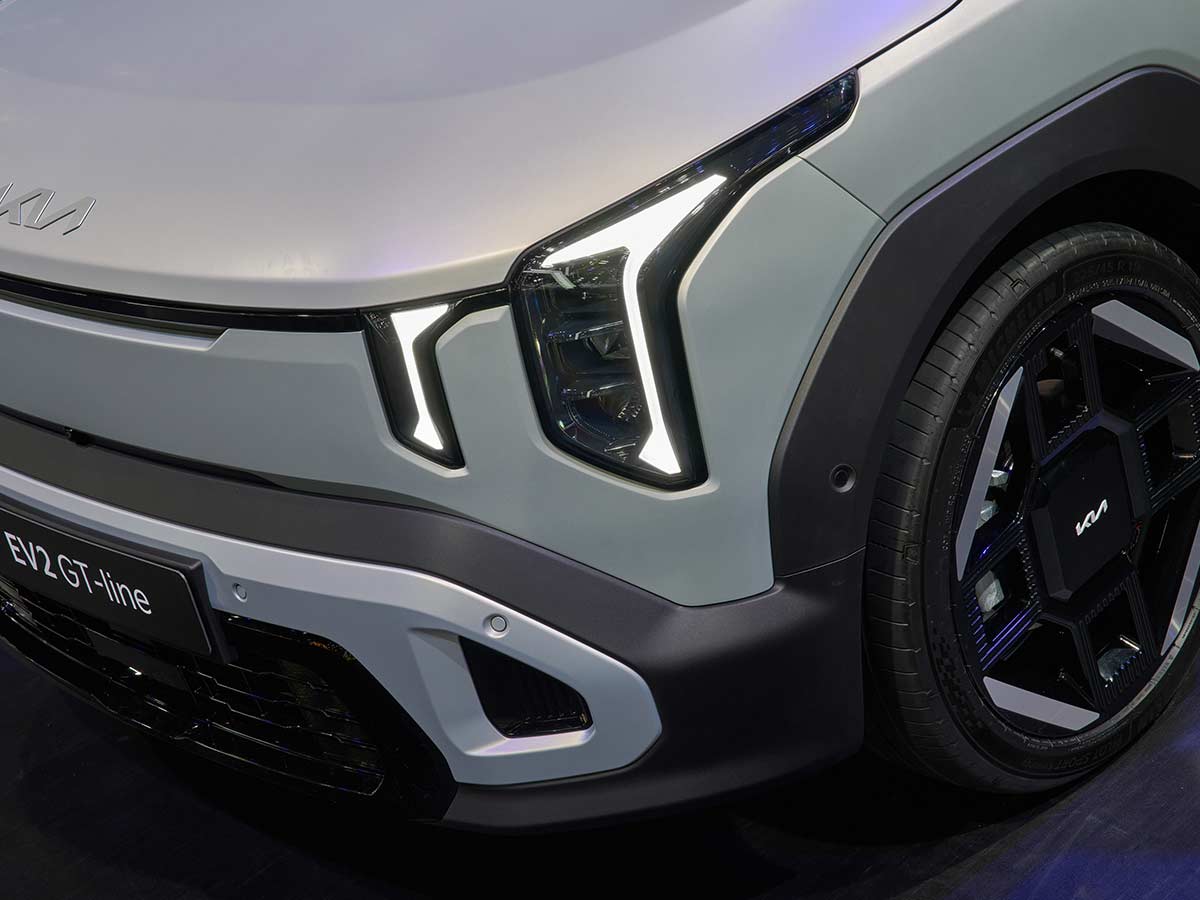
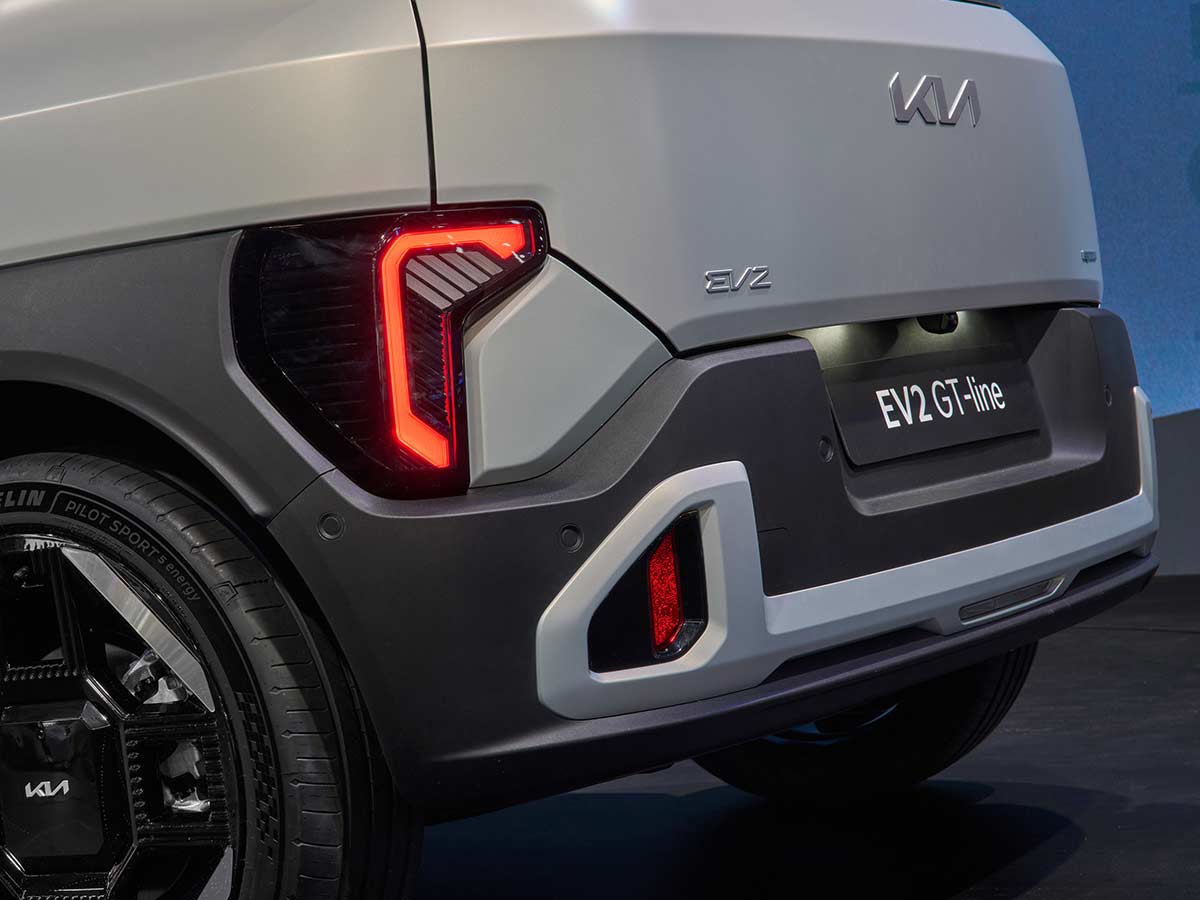
The resulting wheelbase of 2,565mm allows for interior packaging that rivals vehicles in larger segments. Kia has adopted a “tall and boxy” approach, utilizing its ‘Opposites United’ design philosophy to give the car a confident SUV stance with robust wheel arches and a pronounced shoulder line.
Powertrain and Charging: Analysis of the Two-Tier Strategy
Kia is offering the EV2 with two distinct battery configurations, catering to different usage profiles:
- Standard-Range: A 42.2kWh battery offering an anticipated range of up to 317km.
- Long-Range: A 61.0kWh battery pushing the range to an anticipated 448km (WLTP pending).
The standard battery should cover most daily commutes and short weekend trips without daily charging, while the long-range version takes you comfortably into longer weekend journeys for most drivers.
Charging Infrastructure Compatibility Crucially, the EV2 runs on a 400V architecture. While this is lower than the 800V system found in the EV6, it is sufficient for this battery size, allowing a 10-80% DC fast charge in approximately 30 minutes for both battery variants.
However, the standout feature for urban dwellers is the AC charging capability. For the first time at launch, a Kia model supports both 11kW and 22kW AC charging. This is a significant advantage in Europe, where public AC chargers are far more prevalent than DC rapid hubs. It allows drivers to utilize the full speed of kerbside chargers, drastically reducing dwell time during street parking.
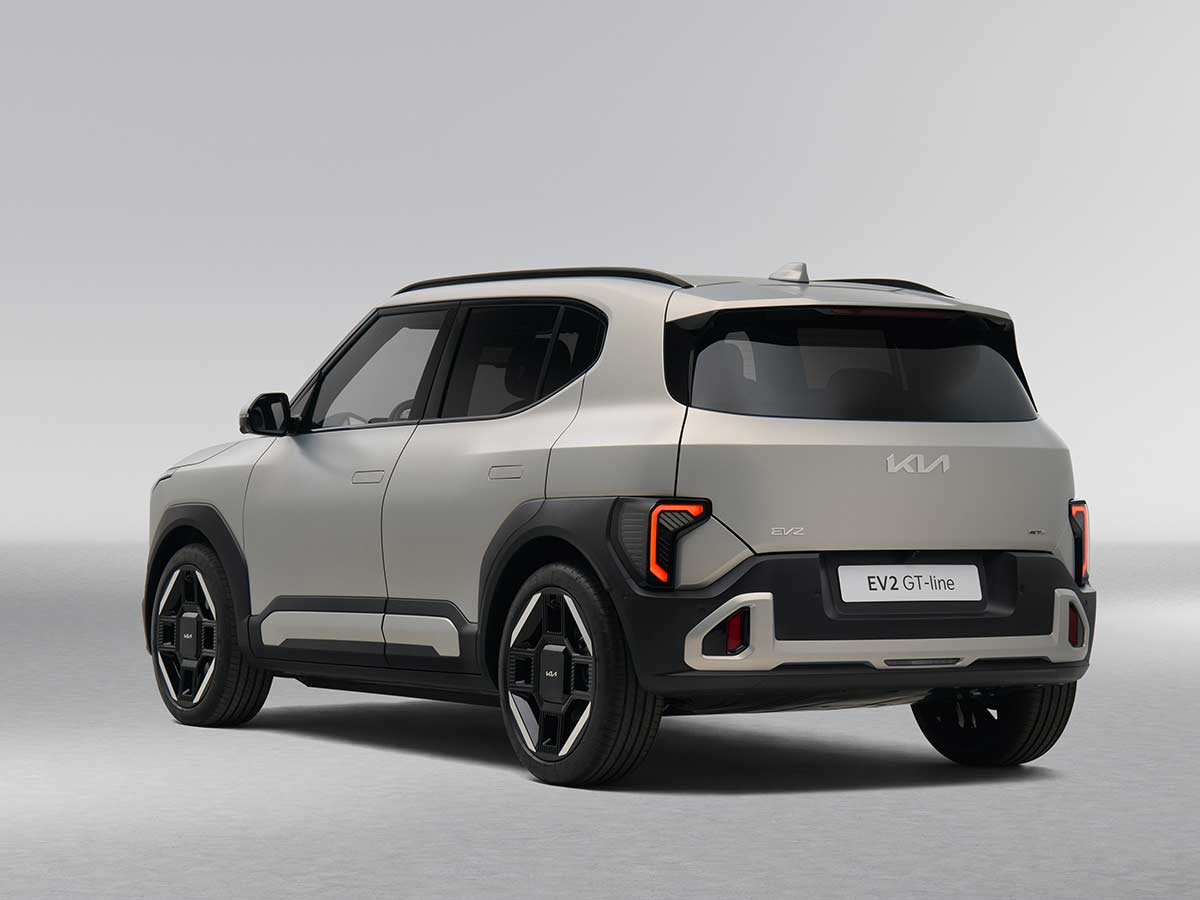
- 22 kW AC charging support – most compact EVs are capped at lower AC rates. For people with access to 3-phase AC at home or at workplaces, 22 kW reduces overnight or daytime top-ups significantly compared with 11 kW. That can change ownership calculus for apartment dwellers who rely on public AC charging.
- Practical DC fast charging – Kia quotes about 30 minutes from 10 to 80% on DC. That’s broadly on par with expectations for this architecture and useful for longer trips. Coupled with Plug & Charge capability and an integrated route planner linked to Kia Charge, the EV2 removes a lot of friction from the charging process.
An owner who commutes about 50 km round-trip and charges at 11 kW at home will typically need top-ups every few days on the 42.2 kWh car, but with 22 kW available this becomes less of a constraint. For someone without private parking, Plug & Charge on public networks avoids juggling apps and RFID cards.
Interior Versatility: The “Picnic Box” Concept
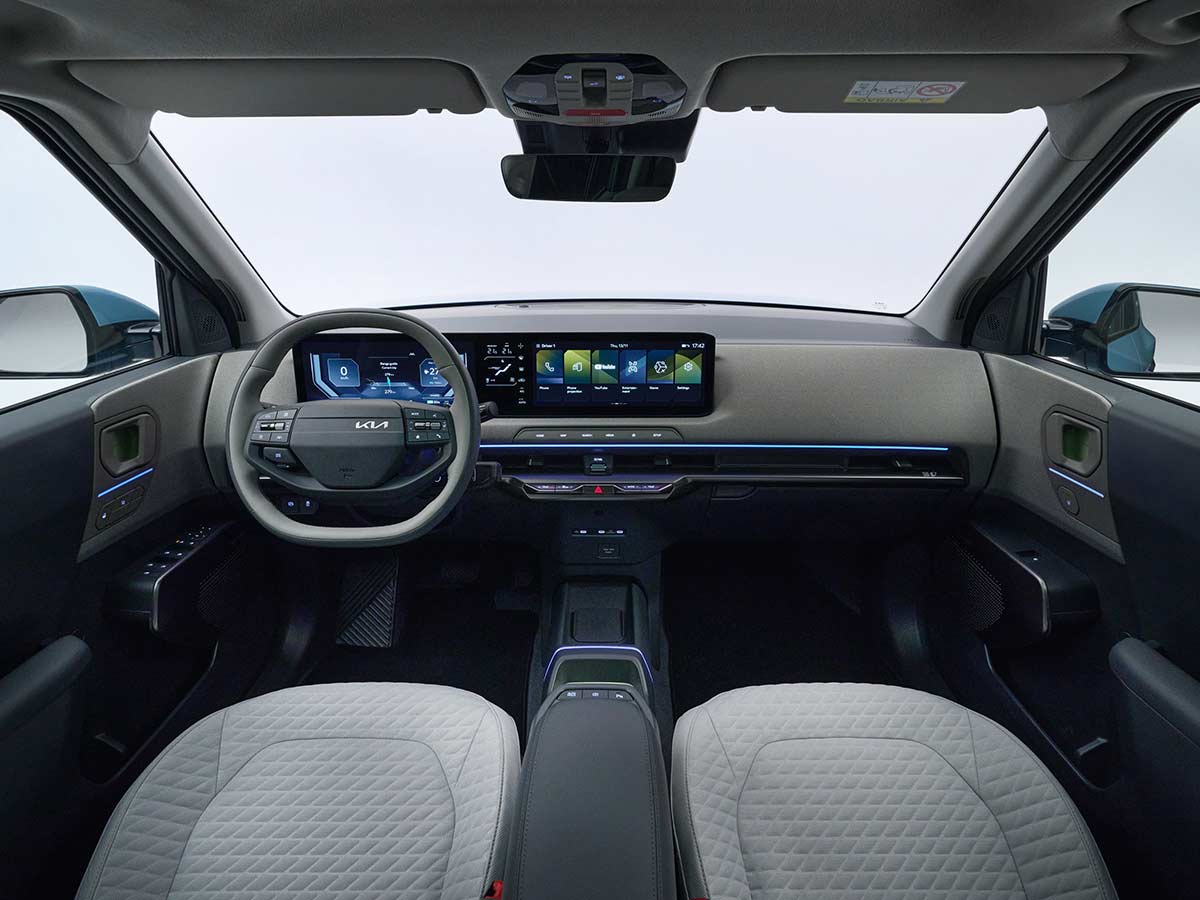
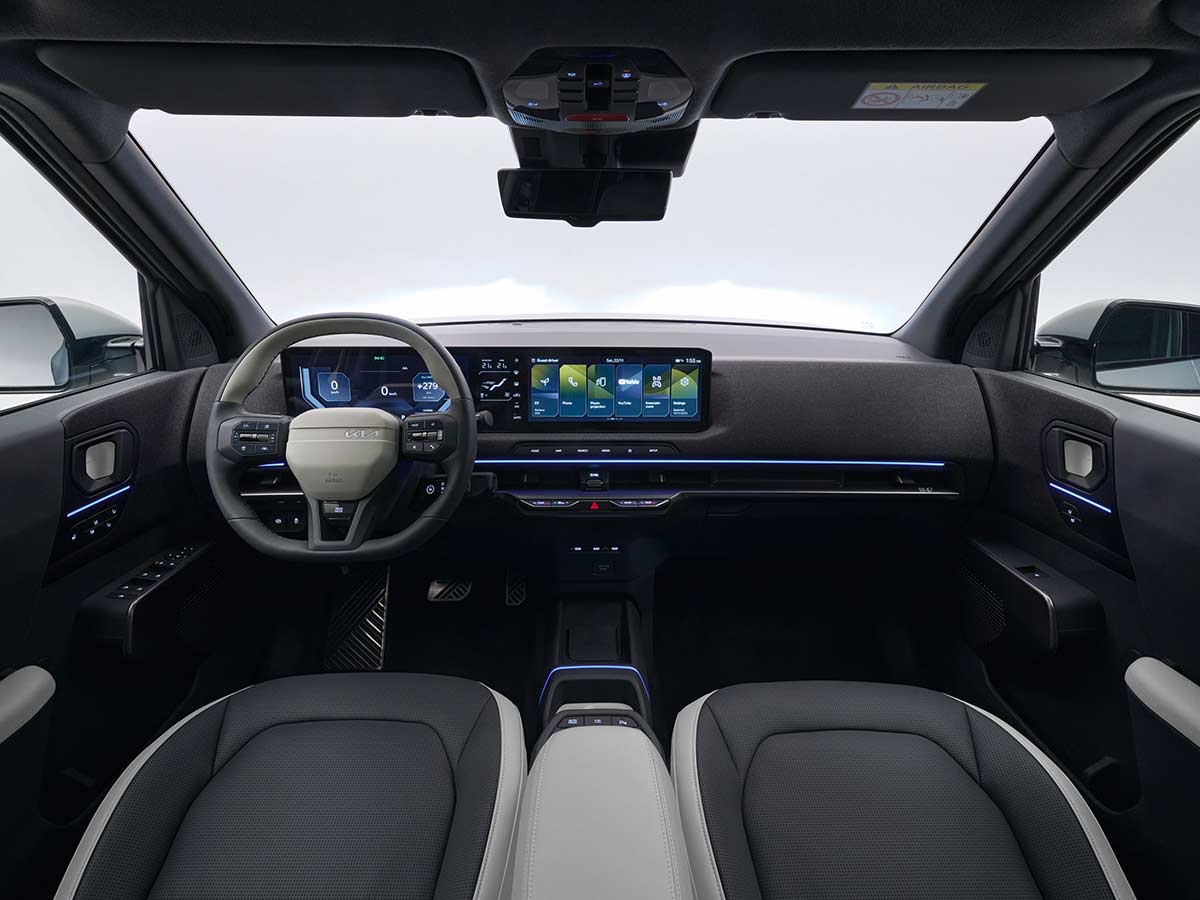
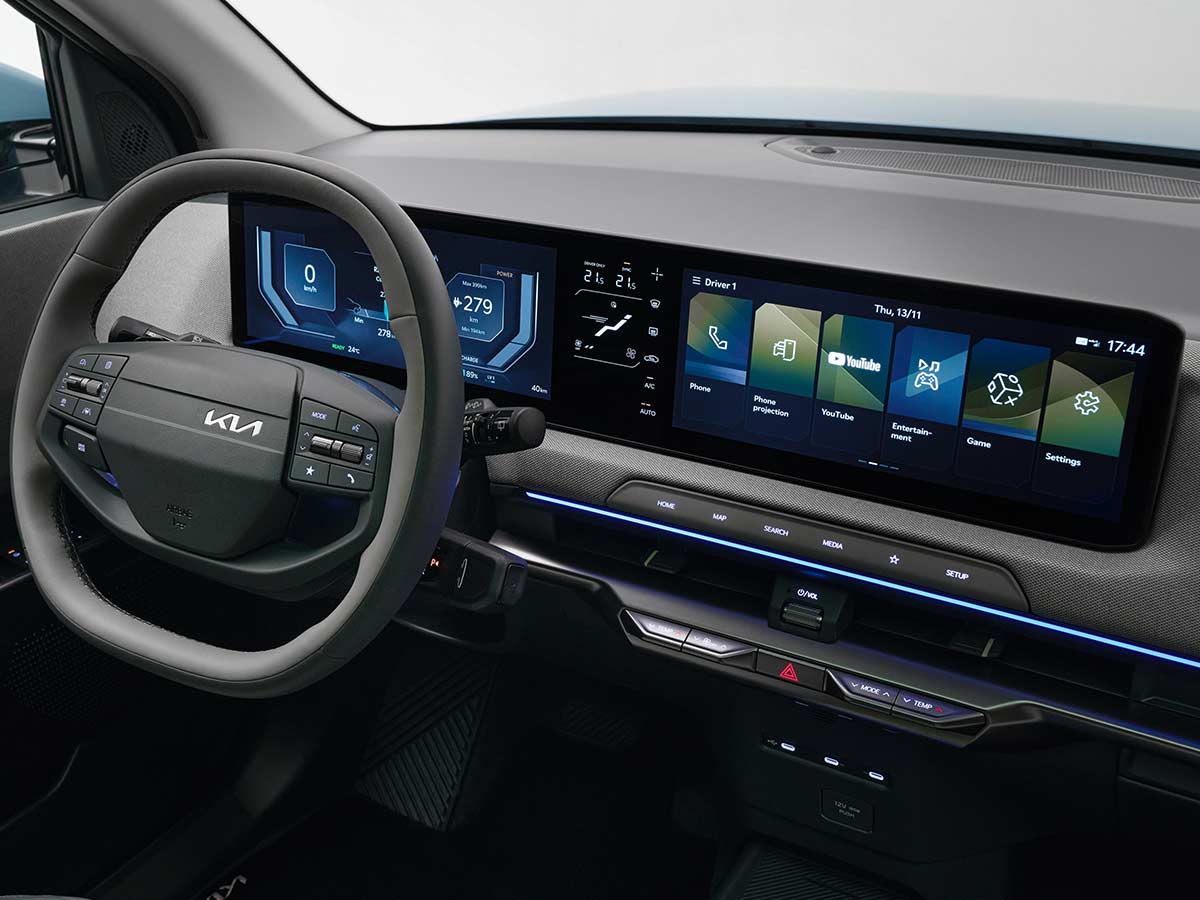
The interior design, dubbed the “Picnic Box,” prioritizes logic and space efficiency. The dashboard features a wraparound design that houses Kia’s triple-screen panoramic display, consisting of a 12.3-inch cluster, a 5.3-inch climate segment, and a 12.3-inch central infotainment screen.
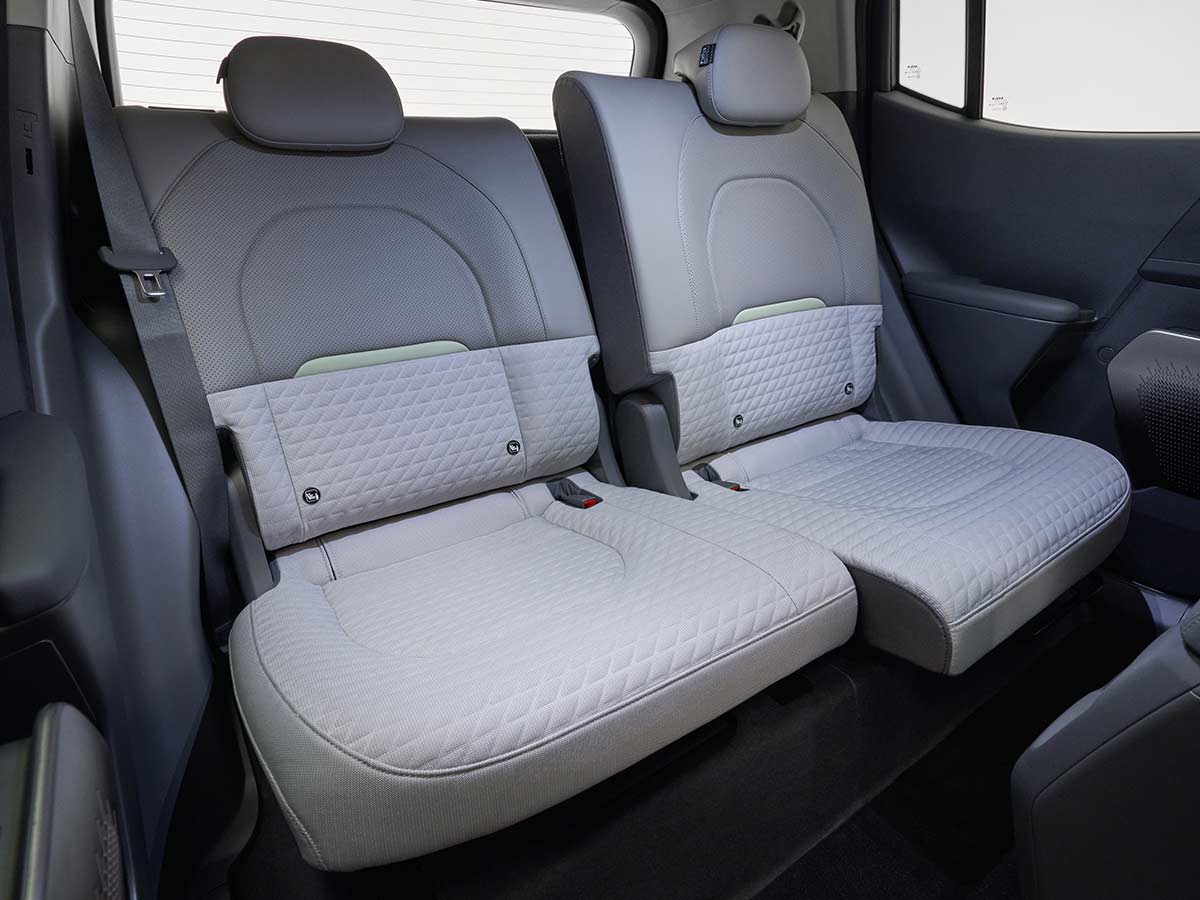
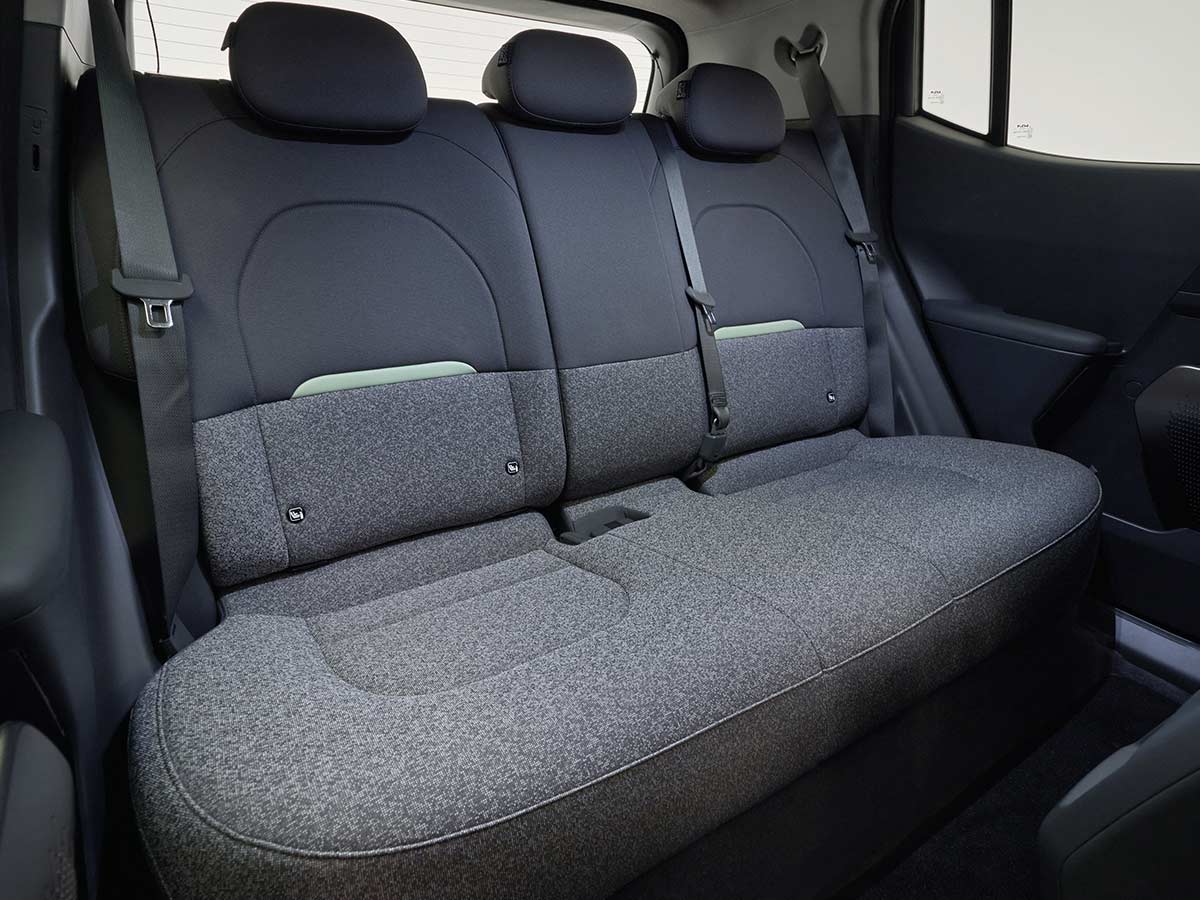
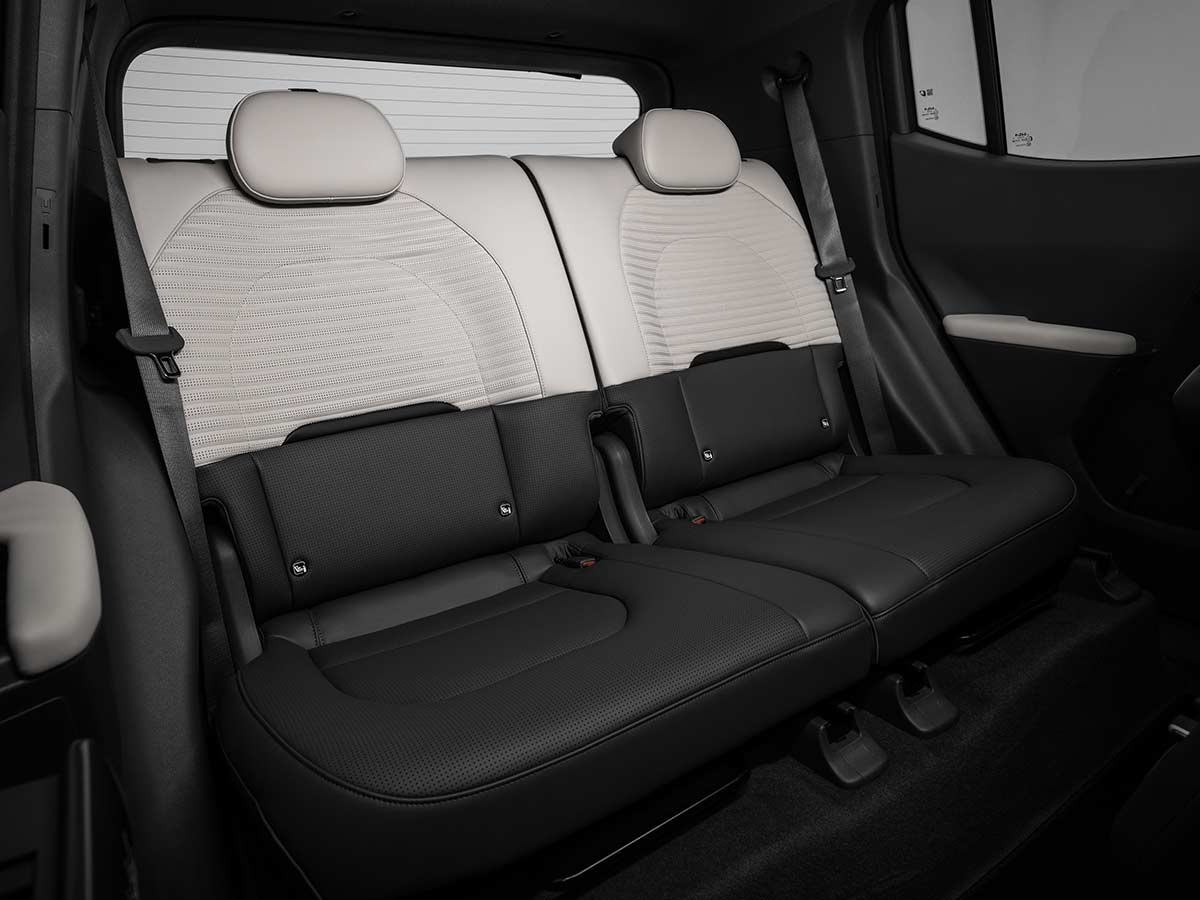
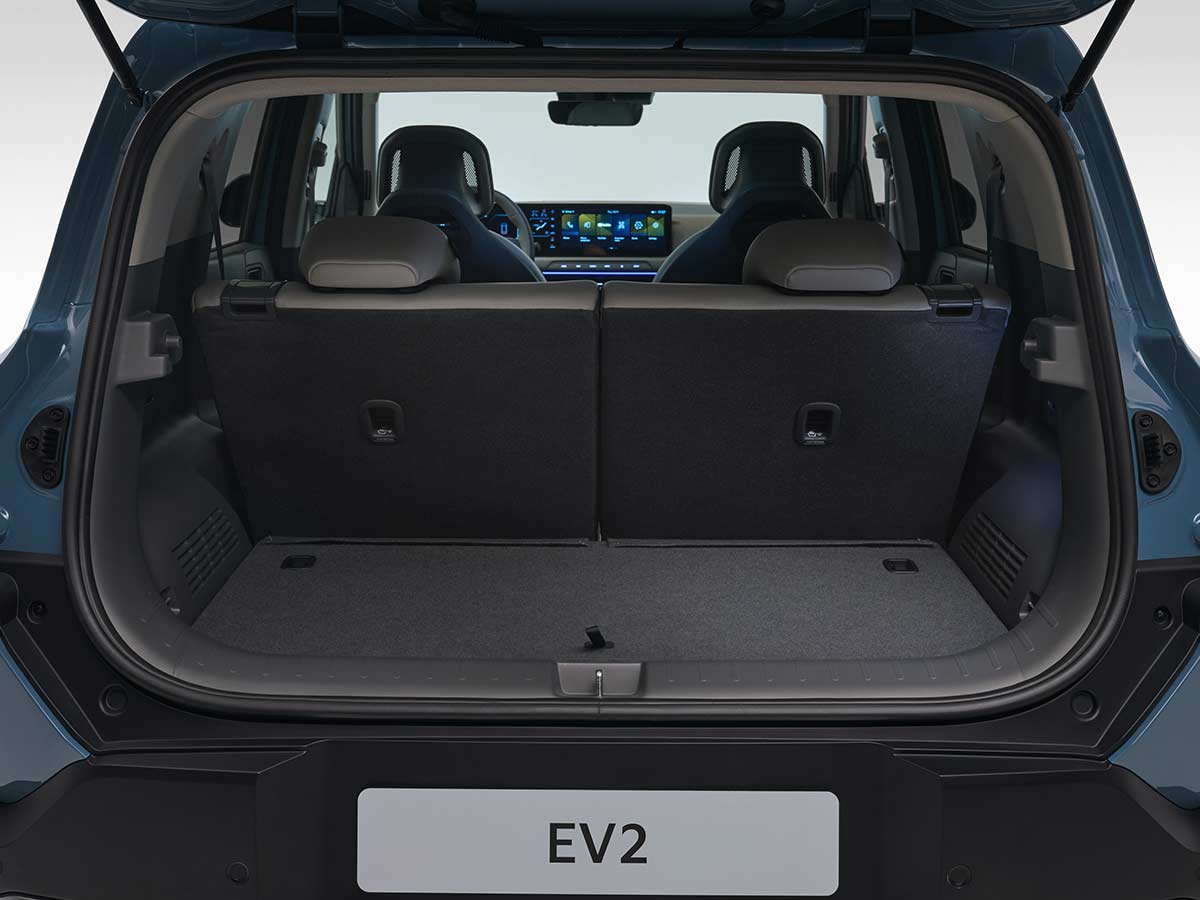
Flexible Seating Configurations The EV2 introduces a high degree of modularity rare in this segment. It features a sliding and reclining rear seat system. This allows owners to prioritize passenger legroom (up to a segment-leading 958mm) or cargo capacity based on immediate needs.
- Cargo Capacity: With seats slid forward, the boot offers 403 liters of space.
- Frunk: An additional 15-liter front trunk provides storage for charging cables.
This flexibility supports Kia’s claim that the EV2 can serve as a household’s main car rather than just a city runabout.
Technology Transfer: Flagship Features in an Entry Model
One of the most compelling aspects of the EV2 is the trickle-down of “upper-segment” technology. It does not feel stripped down compared to its larger siblings.
- Connectivity: The vehicle supports Over-The-Air (OTA) updates and Kia Digital Key 2.0 (using NFC and Ultra-Wideband), allowing a smartphone to replace the physical key.
- Energy Management: The EV2 supports Vehicle-to-Load (V2L) and Vehicle-to-Grid (V2G) functionality. This bidirectional charging capability allows the car to power external devices or even stabilize the local energy grid, a feature often omitted in entry-level EVs.
- ADAS: The safety suite includes Highway Driving Assist 2 and Remote Smart Parking Assist Entry, which allows the driver to maneuver the car into tight spaces while standing outside the vehicle.
Note on Infotainment: The EV2 introduces “ccNC Lite” for entry trims. While it mirrors the layout of the standard system, it lacks OTA map updates and in-car payment capabilities, though it still supports music streaming upgrades.
Sustainability and European Production
The EV2 is the second fully electric model to be produced at Kia’s facility in Žilina, Slovakia. Localizing production reduces the carbon footprint associated with logistics and ensures the vehicle is tailored to European quality expectations.
Internally, the cabin utilizes extensive sustainable materials, including bio-PU upholstery and carpets made from recycled PET fishing nets, aligning with the industry’s shift toward responsible manufacturing.
Where the Kia EV2 fits best
- Single-car European household – needs room for kids, weekly shopping and occasional motorway trips. The long-range battery and flexible seating make the EV2 a strong candidate.
- Apartment dweller with workplace charging – benefits from 22 kW AC support for faster top-ups at public charging stations.
- Weekend camper or gadget user – V2L (vehicle-to-load) lets you run appliances or power tools, and V2G support (where available) opens future possibilities for energy flexibility. Check local V2G availability before assuming it’s provided.
Conclusion
The Kia EV2 appears to be a robust answer to the growing demand for affordable yet capable electric vehicles in Europe. By retaining high-end features like V2G, 22kW charging, and advanced ADAS in a B-segment package, Kia is positioning the EV2 not just as an “economy” option, but as a high-tech compact SUV.
Production for the standard-range model begins in February 2026, with the long-range and GT-Line variants following in June 2026.
If Kia’s pricing and specification balance match expectations, the EV2 could be one of the most sensible, usable compact EVs for European households – not because it is loud, but because it covers the everyday things that matter.