






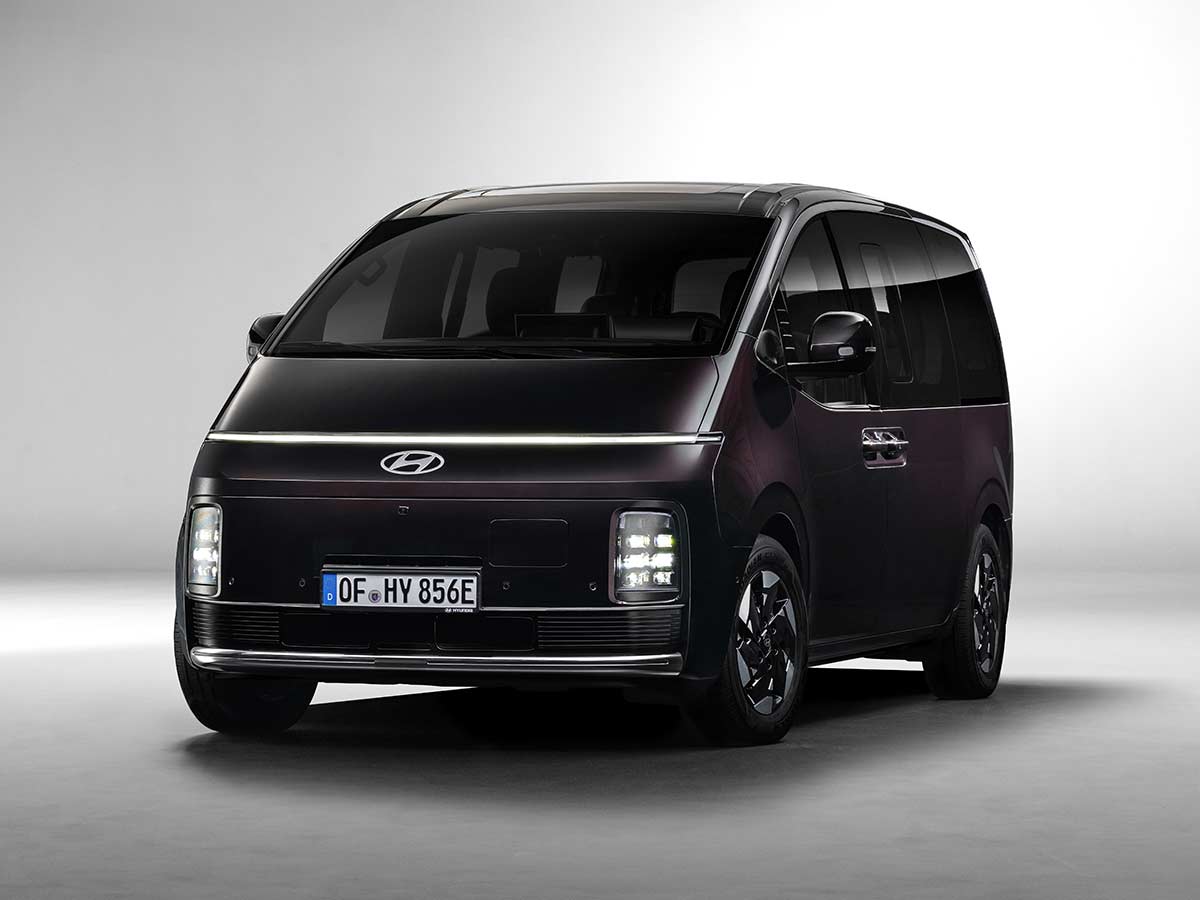
The multi-purpose vehicle (MPV) segment has long been the unsung hero of family and commercial transport. With the debut of the Hyundai STARIA Electric at the Brussels Motor Show, the landscape for large-format electric mobility has shifted significantly.
Scheduled to hit European and Korean markets in the first half of 2026, the STARIA Electric is not merely a battery-swapped version of its combustion predecessor. It represents a ground-up rethinking of space, utilizing Hyundai’s advanced 800-volt architecture to solve the two biggest pain points of electric vans: charging downtime and range anxiety.
>>> Great Discounts on Car & Bike Accessories <<<
The Powertrain: Why 800-Volt Architecture Matters
For a vehicle of this size—designed to haul up to 9 people or heavy cargo—efficiency and charging speed are paramount. The STARIA Electric’s standout feature is its 800-volt electrical system.
While many competitors still utilize 400-volt systems, Hyundai’s adoption of 800-volt architecture (similar to the IONIQ 5 and 6) is a game-changer for long-distance travel.
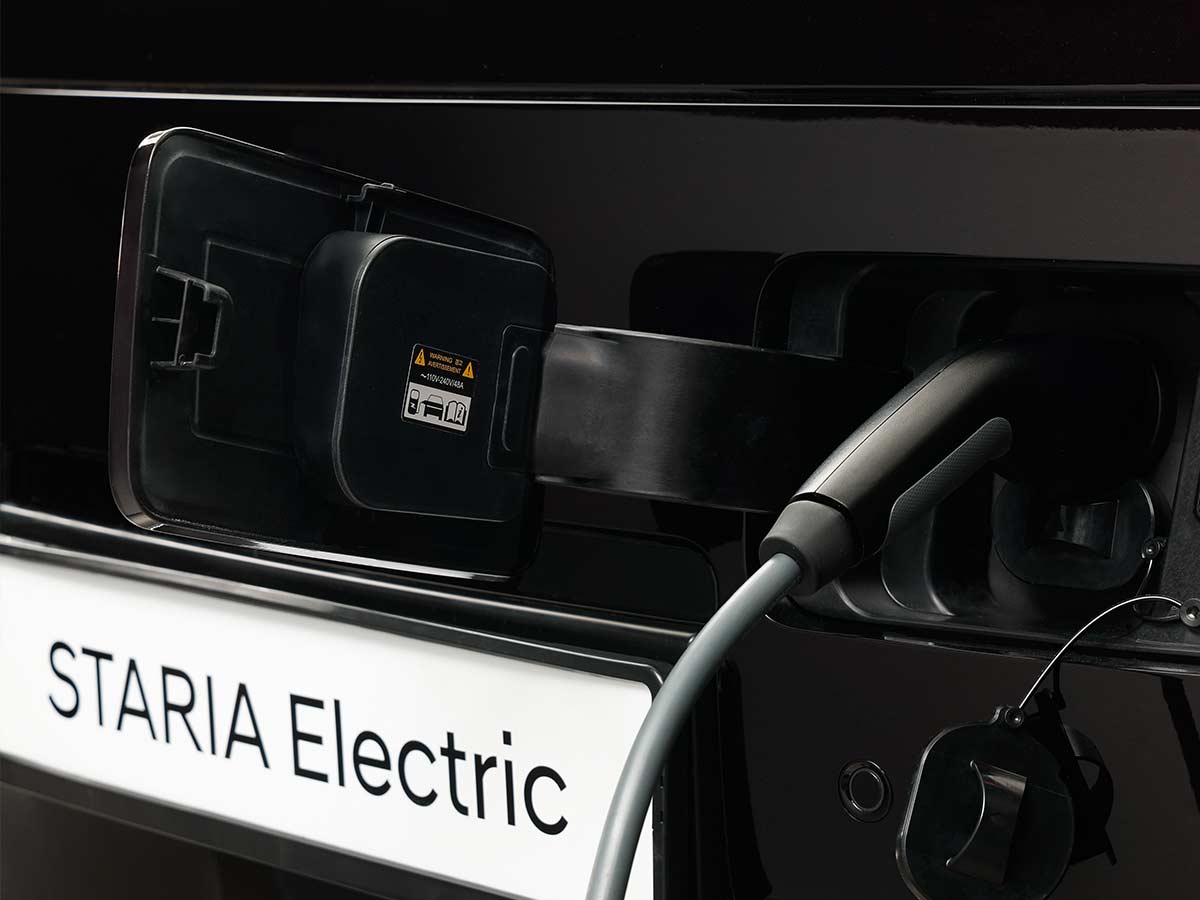
- Rapid Charging: Under optimal DC fast-charging conditions, the vehicle can charge from 10% to 80% in approximately 20 minutes. For shuttle operators or families on road trips, this reduces stop times to a quick coffee break.
- Battery & Range: The vehicle is equipped with a high-capacity 84 kWh lithium-ion battery, offering an estimated WLTP range of up to 400 km.
- Performance: A front-mounted 160 kW (218 PS) motor delivers 350 Nm of torque. While not a sports car, the instant torque of the electric motor ensures smooth, linear acceleration—crucial when merging onto highways with a full load.
Insight: The inclusion of an 800-volt system minimizes heat generation during high power flow. This is critical for towing or continuous highway driving, ensuring consistent performance without the “thermal throttling” often seen in older electric architectures.
Interior: The “Inside-Out” Design Philosophy
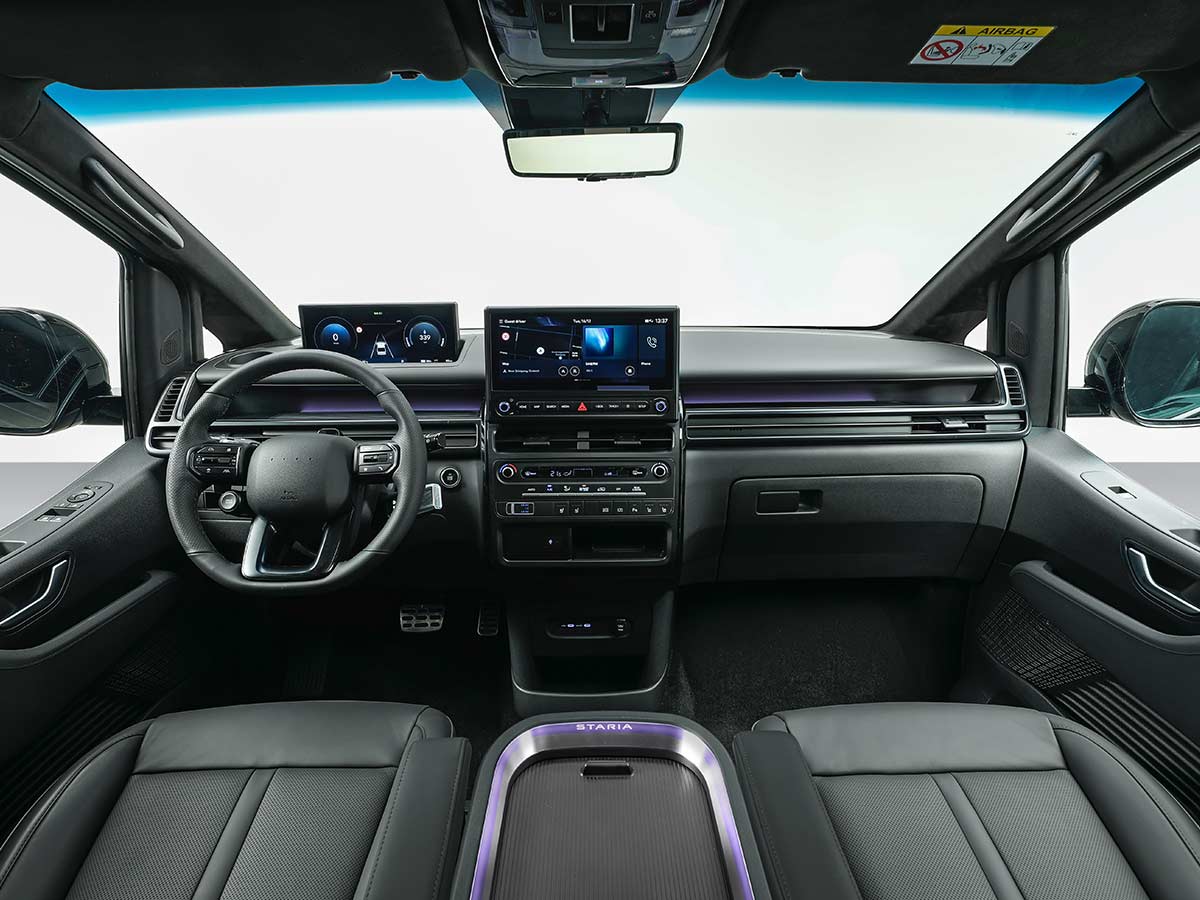
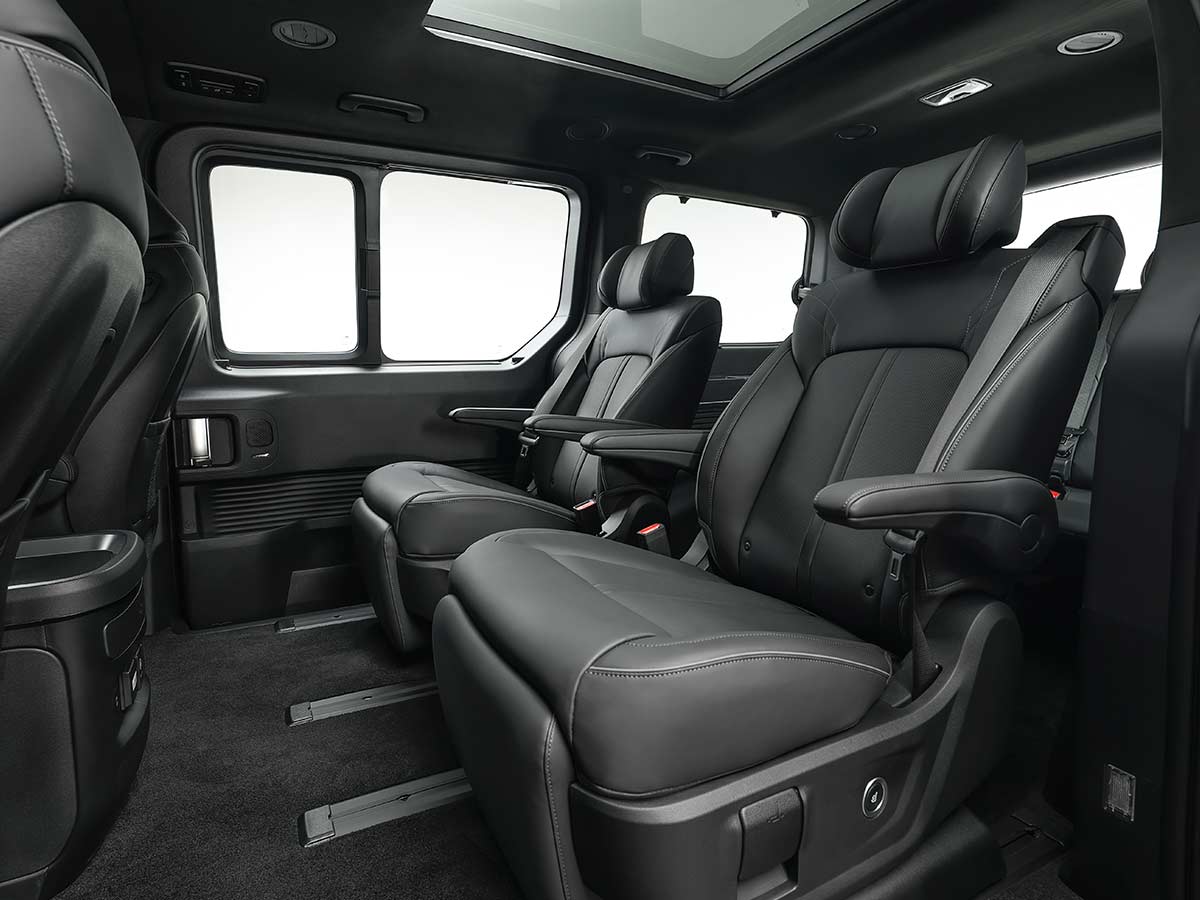
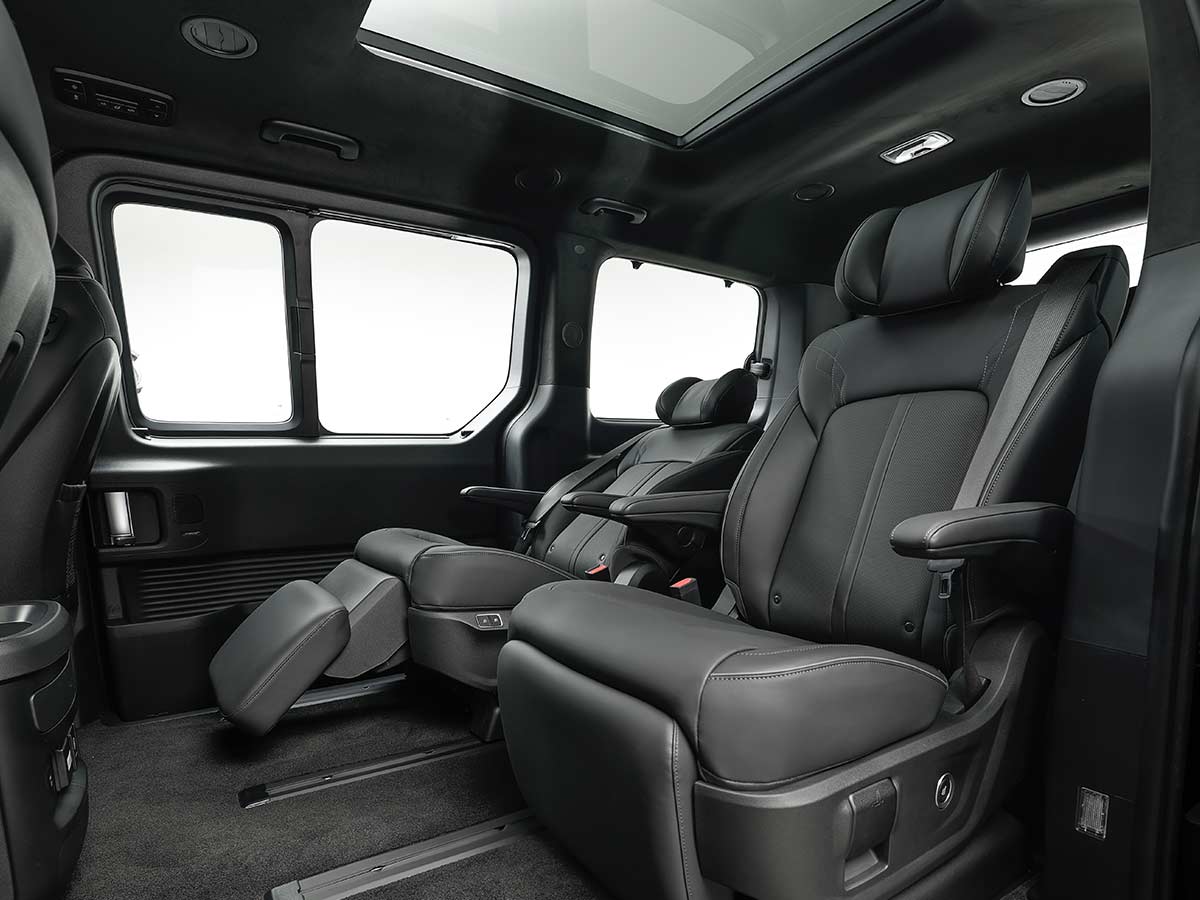
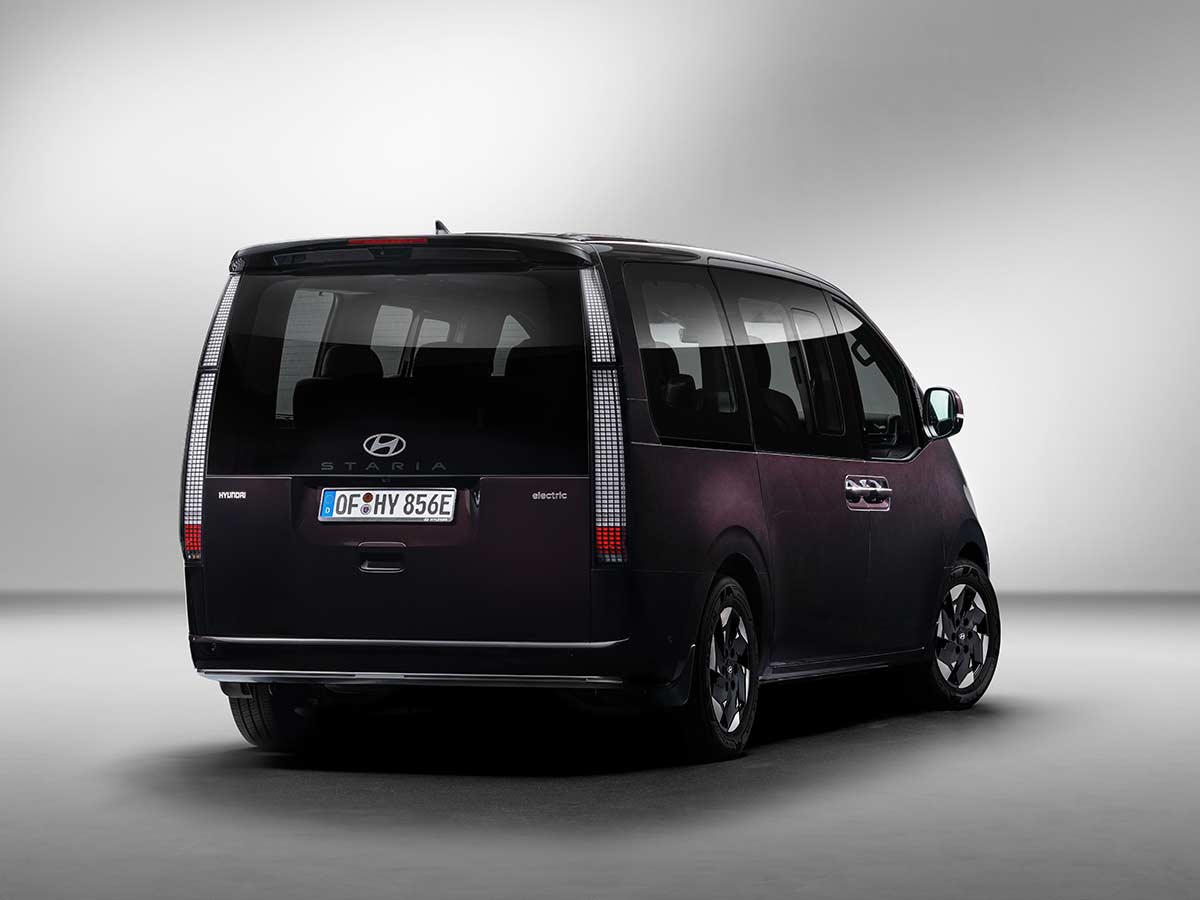
Hyundai markets the STARIA Electric under an “Inside-Out” design theme, meaning the exterior was shaped around the interior volume. The result is a cabin that prioritizes “lounge-like” openness and visibility.
Seating Configurations for Every User
Hyundai is launching two distinct variants tailored to specific use cases:
The LUXURY (7-Seater)
- Target Audience: Private families and VIP transport.
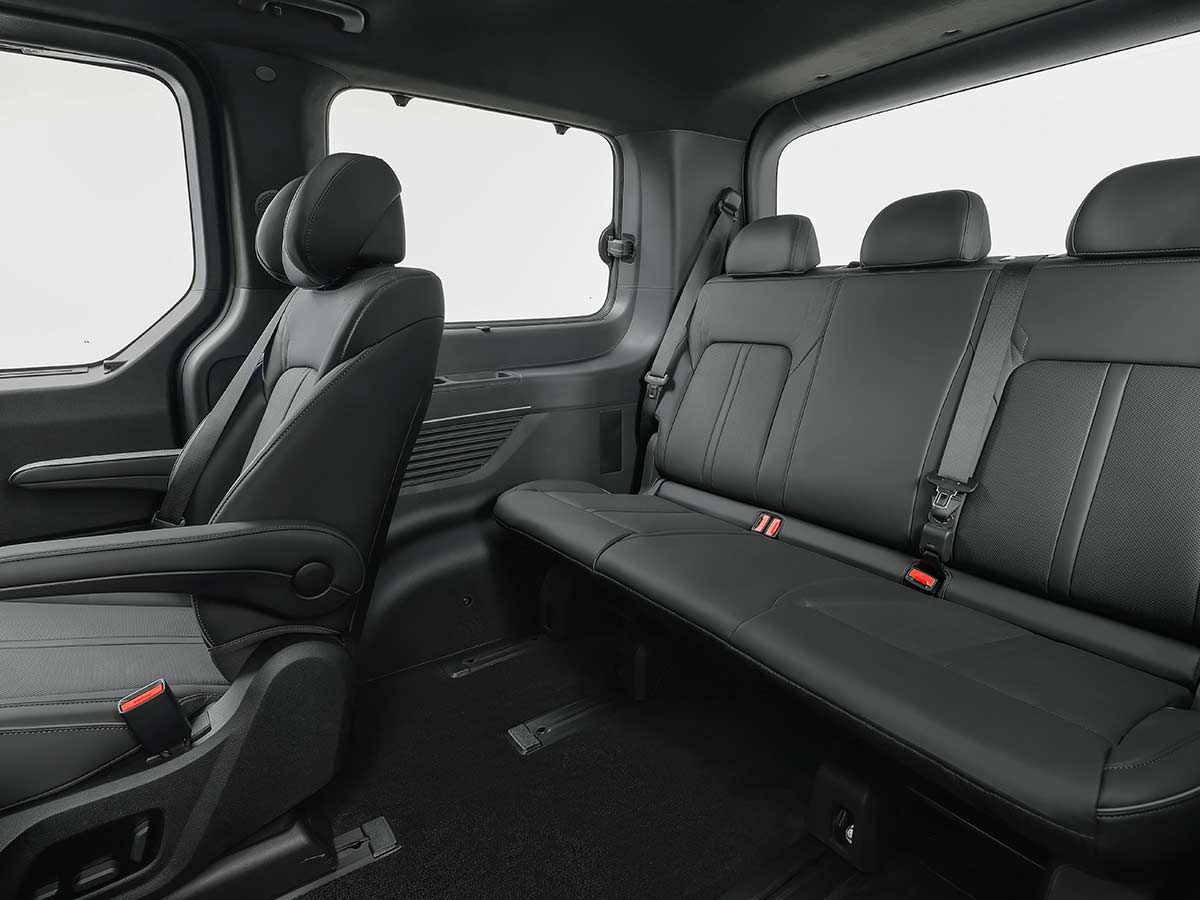
- Experience: Focuses on maximum passenger comfort with a flexible layout that allows for generous legroom.
- Cargo: Offers 435 liters of luggage space behind the third row.
- Comfort: Features electrically operated sliding doors and tailgate as standard.
The WAGON (9-Seater)
- Target Audience: Large families, shuttle services, and group travel.
- Experience: Prioritizes capacity without sacrificing accessibility.
- Cargo: A massive 1,303 liters of luggage capacity behind the third row.
- Flexibility: Sliding and foldable seating allows for rapid reconfiguration between passenger comfort and cargo hauling.
Both variants benefit from a flat floor layout and high roofline, creating a sense of freedom and ease of movement that is difficult to achieve in combustion-engine platforms.
Practicality & Utility: Beyond Just Driving
The STARIA Electric is designed to function as a mobile power hub, increasing its utility for camping, mobile offices, or outdoor work.
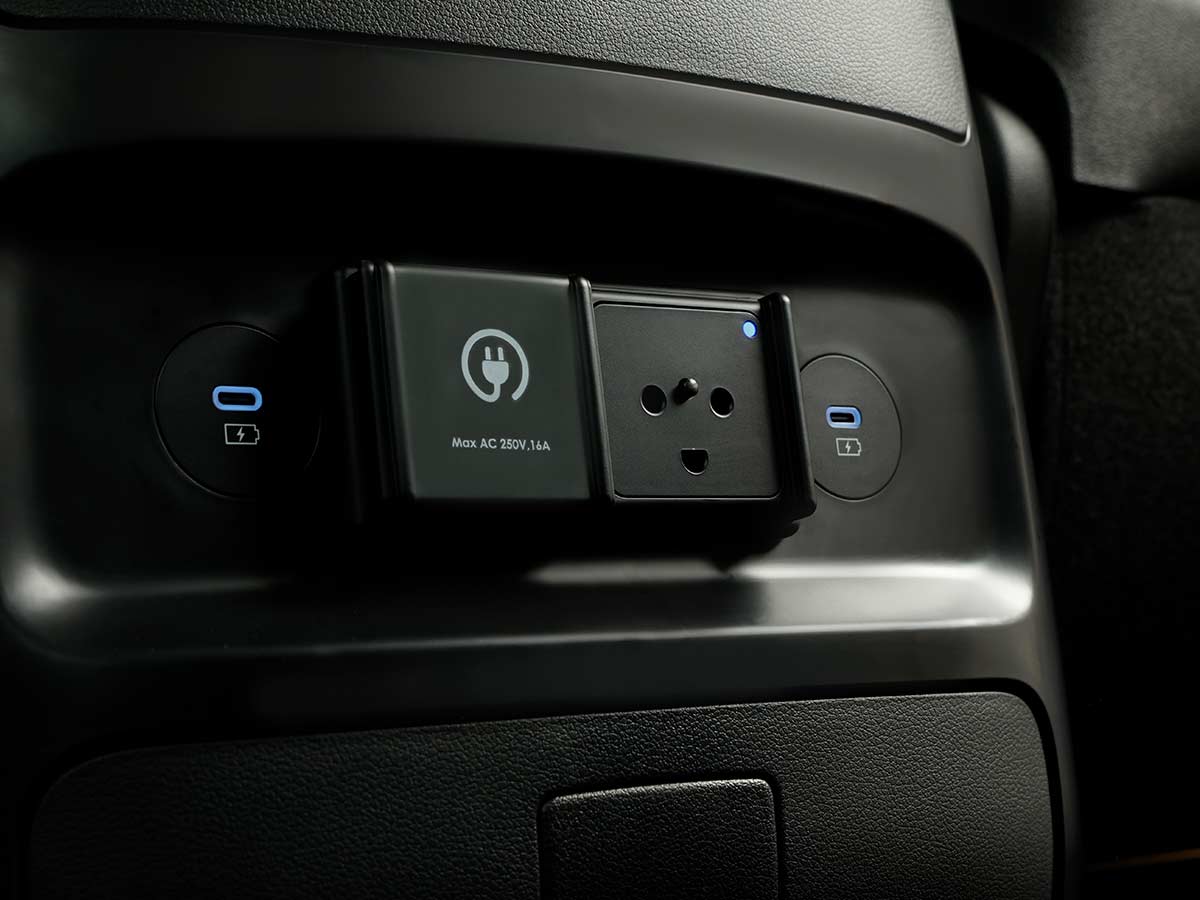
- Vehicle-to-Load (V2L): The vehicle functions as a power bank on wheels. It includes V2L functionality both inside and outside the vehicle, allowing users to power laptops, camping gear, or tools directly from the main battery.
- Towing Capacity: Unlike many early EVs which struggled with towing, the STARIA Electric is rated for up to 2,000 kg (braked). This makes it a viable option for towing boats, caravans, or utility trailers.
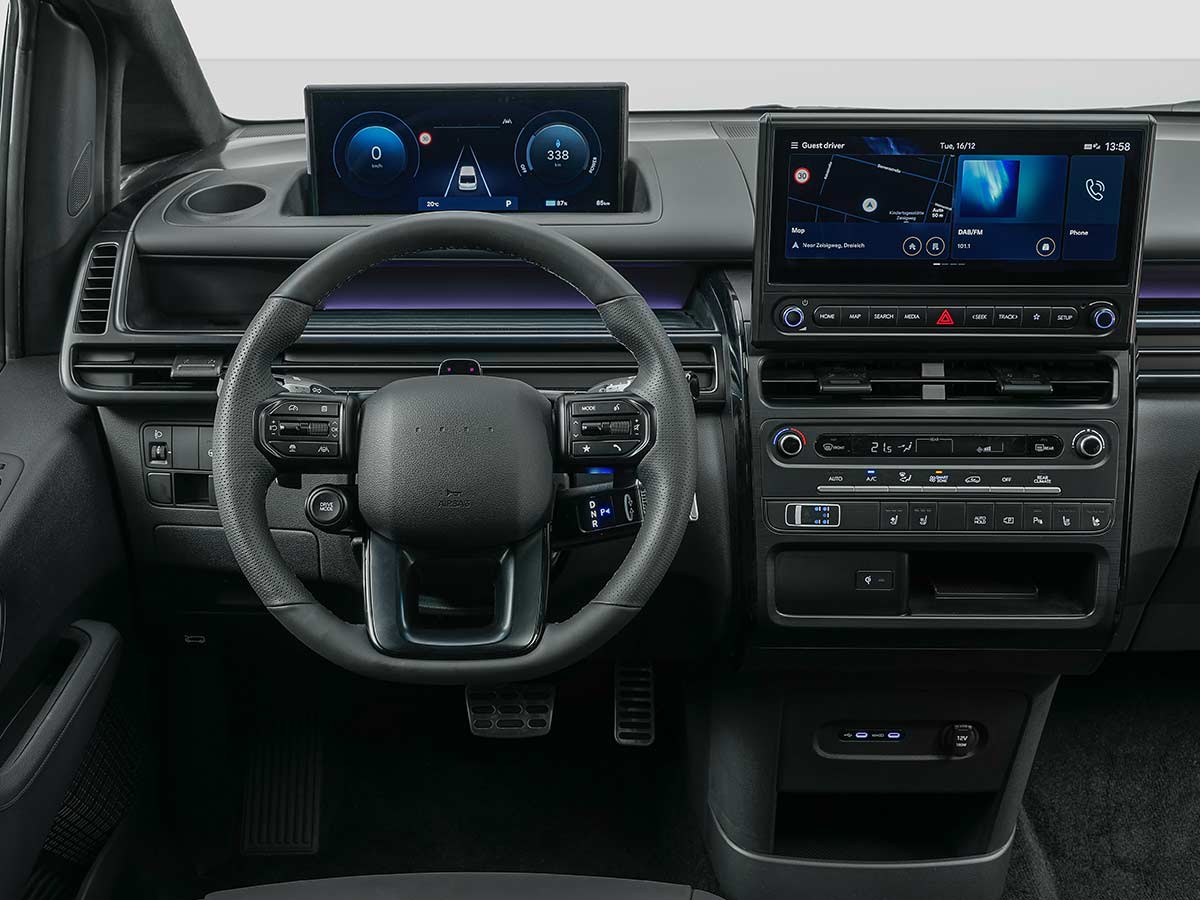
- Connectivity: The vehicle features the “Connected Car Navigation Cockpit” (ccNC) with dual 12.3-inch displays and Over-the-Air (OTA) update capabilities.
- Communication: A “Rear View and Talk” function uses a camera and microphone system to allow the driver to see and speak to rear passengers through the speakers—eliminating the need to shout back at the third row.
Safety and Driver Assistance
Driving a vehicle over 5.2 meters long requires confidence, particularly in urban environments. Hyundai has equipped the STARIA Electric with the SmartSense ADAS suite to mitigate the challenges of its size.
- Highway Driving Assist (HDA): Combines adaptive cruise control with lane guidance to reduce driver fatigue on motorways.
- Blind-Spot & Parking: The Surround View Monitor (SVM) provides a 360-degree view for tight spaces, while Blind-Spot Collision-Avoidance Assist (BCA) helps managing lane changes with such a long vehicle.
- Cross-Traffic Safety: Rear Cross-Traffic Collision-Avoidance Assist (RCCA) is essential for backing a large van out of parking spots where visibility might be blocked.
Who is the STARIA Electric For?
The Hyundai STARIA Electric sets a new benchmark by combining the utility of a traditional van with the high-performance electrical architecture of a modern EV.
This vehicle is an ideal fit for:
- Eco-conscious large families who need more than 5 seats but refuse to compromise on range or charging speed.
- Shuttle operators and hotels looking to decarbonize their fleets while maintaining high uptime thanks to 20-minute fast charging.
- Active lifestyle users who require significant cargo space and towing capability (2,000 kg) for equipment and trailers.
With sales beginning in Korea and Europe in the first half of 2026, the STARIA Electric appears ready to prove that zero-emission mobility does not require sacrificing space or practicality.